

P1682 on 2016-2017 Buick Enclave: Ignition Circuit Fault Causes and Fixes
On a 2016-2017 Buick Enclave, code P1682 is most often caused by a poor connection or corrosion in the underhood fuse block (UBEC). Inspecting the fuse block connectors on the underside for a burnt or corroded pin at terminal 51 of the X3 connector is the critical diagnostic step. Replacing the ignition relay is a less common but simple first step. A replacement relay costs about $10-$30, while a new fuse block can cost $250-$450.
- P1682 on a 2016-2017 Enclave indicates a serious electrical fault that can cause the engine to stall unexpectedly.
- Do not drive the vehicle until the issue is resolved due to the high risk of stalling in traffic.
- The most likely cause is a problem with the underhood fuse block (UBEC), either a faulty relay or, more commonly, corrosion/damage to the connectors underneath it.
- Always start diagnosis by inspecting the fuse block and swapping the ignition/powertrain relays before moving to more complex components like the ignition switch or ECM.
What's Unique About the 2016-2017 Buick ENCLAVE
The first-generation Buick Enclave and its GM Lambda platform siblings (Chevy Traverse, GMC Acadia, Saturn Outlook) are known for electrical issues related to the Underhood Bussed Electrical Center (UBEC). A class-action lawsuit alleges that the design allows engine vibration and heat to cause a loss of tension in the terminals, leading to loose relays and intermittent power loss. Water intrusion can also cause corrosion. This combination of factors leads to arcing and poor connections, specifically at terminal 51 of the X3 connector, triggering code P1682. This is so common that GM has issued multiple Technical Service Bulletins addressing this exact failure point.
Diagnostic Flowchart
Tap your situation to follow the diagnostic path that matches what you're seeing on this vehicle.
Symptoms You May Notice
- Engine may stall while driving.
- Reduced Engine Power message displayed on the dash.
- Check Engine Light is on.
- Engine cranks but will not start (no-start condition).
- Engine continues to run after the key is turned off.
- Parasitic battery drain, leading to a dead battery.
- Traction control and ABS warning lights may illuminate.
- Vehicle jerks or loses acceleration suddenly.
- Replacing the battery without checking for a parasitic draw caused by the P1682 fault.
- Replacing the alternator when the issue is an intermittent power supply to the ECM.
- Replacing the ignition switch before thoroughly inspecting the underside of the fuse block, which is the more common failure point for this platform.
Most Likely Causes
- Corrosion or Loose Terminals in Underhood Fuse Block (UBEC) 🔴 High Probability This is a well-documented issue on the GM Lambda platform. TSBs #PIT5643 and #19-NA-276 specifically call out poor terminal tension and arcing/corrosion on terminal 51 of the X3 connector as a primary cause. The damage can appear as a very small, dark burn mark or discoloration.
How to confirm: Disconnect the battery. Remove the underhood fuse block and carefully inspect the large connectors on the underside for any signs of green or white corrosion, discoloration, or burnt/arced pins. Pay special attention to terminal 51 of the X3 connector. Using a phone camera to zoom in can help identify subtle arc spots. A technician in a YouTube video demonstrated finding just such a minor mark that was causing major stalling problems.
Typical fix: If corrosion or damage is found, the affected terminal pigtail must be replaced. In severe cases where the pin on the fuse block itself is damaged, the entire underhood fuse block must be replaced.
Est. part cost: $15-$40 for a terminal lead, $250-$450 for a new fuse block. - Faulty Ignition or Powertrain Relay 🟡 Medium Probability Relays are electromechanical switches that can fail over time. An owner complaint (ODI #11718425) for a similar model year confirmed that replacing the ignition relay resolved the P1682 code and stalling symptoms. This is an easy and inexpensive diagnostic step.
How to confirm: Locate the Run/Crank, Ignition, or Powertrain relays in the underhood fuse block. Swap a suspect relay with an identical one from a non-critical circuit (like the horn or wipers) and see if the problem is resolved.
Typical fix: Replace the faulty relay.
Est. part cost: $10-$30 - Faulty Ignition Switch ⚪ Low Probability The ignition switch provides the primary signal to the relays and ECM. While less common than fuse block issues for this code, its internal contacts can wear out, causing an incorrect voltage signal. One common symptom of a failing switch on these vehicles is the engine continuing to run after the key is removed.
How to confirm: This requires using a multimeter to test the voltage outputs of the ignition switch in different key positions to ensure they match the vehicle's specifications. A YouTube video shows this replacement process on a platform-mate. 🎬 Watch this step-by-step guide to replacing the ignition switch.
Typical fix: Replace the ignition switch.
Est. part cost: $20-$60
Rare But Worth Checking
- Faulty Engine Control Module (ECM): This is rarely the cause. The ECM should only be considered after all other possibilities, including wiring, relays, and the fuse block, have been thoroughly ruled out. Often, other 'U' codes like U0100 will be present if the ECM is failing.
- Open or Short in Wiring Harness: A wire between the ignition switch, fuse block, and ECM could be damaged. TSB #21-NA-032 points to a compromised dual-crimp connection at terminal H6 of the X3 connector as a possible cause, which would require a wiring repair.
Diagnosis Steps
- Scan for all stored DTCs. If P0689 or P0685 are present, address them first as they are directly related.
- Inspect all fuses related to the ECM and ignition circuits in the underhood fuse block.
- Swap the Run/Crank and/or Powertrain relays with a known-good relay of the same type to quickly rule out a faulty relay.
- Disconnect the battery. Remove the underhood fuse block (UBEC).
- Thoroughly inspect the connectors on the bottom of the fuse block for any signs of corrosion, arcing, or burnt terminals. Pay close attention to terminal 51 of the X3 connector, as specified in TSB #PIT5643, and terminal H6 of the X3 connector, as specified in TSB #21-NA-032.
- If corrosion or a burnt pin is found, clean the terminals if possible or replace the affected connector pigtail and/or the fuse block itself.
- If the fuse block appears clean, inspect the wiring harness leading to the fuse block and ECM for any visible damage or poor connections.
- If no issues are found, perform electrical tests on the ignition switch circuits to verify correct voltage output.
- If all other components and wiring test good, the final step would be to consider a faulty ECM.
Parts You'll Likely Need
- Underhood Fuse Block (UBEC)
(OEM #23436803 (replaces 23436806, 23436809))— This is the most common point of failure for this code on this platform due to known issues with corrosion and loose internal connections. The pin on the fuse block itself often gets damaged by arcing, requiring full replacement.
Trusted brands: ACDelco (GM Genuine), Dorman
OEM price range: $350-$450
Aftermarket price range: $250-$350 - Ignition/Powertrain Relay — A failing relay can cause an intermittent voltage drop to the ECM, triggering the code. It's an inexpensive and easy part to replace for diagnosis.
Trusted brands: ACDelco, Standard Motor Products
OEM price range: $20-$40
Aftermarket price range: $10-$25 - Fuse Block Connector Terminal Lead
(OEM #84757974)— If a single terminal in the fuse block connector is burnt or corroded, this terminated lead allows for repair without replacing the entire wiring harness, as specified in TSB #19-NA-276.
Trusted brands: ACDelco (GM Genuine)
OEM price range: $15-$40
Related Codes That Often Appear With This One
- P0689 — This code, 'ECM/PCM Power Relay Control Circuit Low,' is frequently stored alongside P1682. Both codes are mentioned together in TSBs #19-NA-276 and #PIT5643, as they both relate to a fault in the ECM's power supply circuit originating from the fuse block.
- P0685 — Similar to P0689, this code for 'ECM/PCM Power Relay Control Circuit /Open' points to a problem with the relay that powers the engine computer. A diagnostic guide notes that if P0685 is present, it should be diagnosed before P1682.
- P0101 — This code for 'Mass Air Flow (MAF) Sensor Performance' can sometimes appear with P1682. TSB #21-NA-032 warns technicians not to replace the MAF sensor if P1682 is also present, as the root cause may be a compromised wire connection in the UBEC's X3 connector at position H6.
Technical Service Bulletins (TSBs) & Recalls
- 19-NA-276: 'Reduced Eng
Platform-Specific Known Issues
- NHTSA TSB #19-NA-276 directly addresses P1682 on the 2013-2017 Enclave, linking it to reduced power or stalling caused by poor terminal tension on terminal 51 in the X50A Fuse Block - Underhood X3 connector.
- NHTSA TSB #PIT5643 provides specific diagnostic information for P1682, pointing technicians to check for arcing or corrosion on terminal 51 of the X3 connector at the underhood fuse block (UBEC). It suggests using a cell phone camera to zoom in to see the small arc spot.
- NHTSA TSB #21-NA-032 identifies a compromised dual-crimp wire at position H6 of the X3 connector as another potential cause for P1682, which may also set a P0101 MAF code.
Mechanic-Grade Diagnostic Values
- Voltage difference between 'Ignition 1 Voltage' and 'EC Ignition Relay Feedback' scan tool parameters — expected: < 3.0 Volts. Failure: A difference greater than 3.0 Volts for one second will set the code.
- Resistance in either Ignition 1 voltage circuit to the ECM — expected: < 5.0 Ohms. Failure: A resistance of 5.0 Ohms or greater is sufficient to cause the DTC to set.
- Voltage drop test on ECM ground circuits — expected: < 0.1 Volts. Failure: A reading greater than 0.3V indicates corrosion or a faulty wire that needs to be cleaned or replaced.
Scan Tool Commands That Help
- GM GDS2: Data Display > ECM > Ignition 1 Voltage & EC Ignition Relay Feedback — This is the primary diagnostic screen to use with the key on, engine off. It allows a technician to directly observe the voltage difference between the two circuits the ECM is monitoring. If a discrepancy greater than 3V is seen, it confirms the fault condition.
- GM GDS2: Data Bus Diagnostic Tool > Detected State — If multiple communication codes are present with P1682, this tool can be used to poll all modules on the data bus to see which ones are responding. This helps isolate whether the fault is specific to the ECM's power supply or part of a larger network communication failure.
Wiring & Ground Locations
- X50A — The Underhood Fuse Block (UBEC) assembly.. This is the central component where the fault typically occurs. It houses the relays and has connectors (X1, X2, X3) on its underside that are prone to corrosion.
- X3 Connector, Pin 51 — A specific pin within one of the large electrical connectors on the bottom of the X50A Underhood Fuse Block.. This specific terminal is called out in multiple GM TSBs as the most common point of failure due to arcing, corrosion, or poor pin tension, directly causing code P1682.
- G101 / G106 — G101 is on the lower front of the engine block. It jumpers to G106, located on the front center of the frame cross rail under the crank pulley.. These are the primary ground points for the Engine Control Module (ECM). A poor ground connection at these locations can cause the ECM to incorrectly measure voltage differences between circuits, potentially setting a false P1682.
- ECM/Throttle Cont Fuse — A 15-amp fuse in the underhood fuse block (may be labeled F5).. This fuse protects one of the ignition circuits feeding the ECM. A loose connection at this fuse's terminals within the fuse block can create intermittent voltage drops, triggering P1682 even if the fuse itself is not blown.
Real Owner Repair Stories
- YouTube channel 'Fixing it with Friends' (2013 Chevy Traverse LTZ (Lambda platform-mate)) — Intermittent P1682 code, traction control and ABS lights illuminating, reduced power messages, and dangerous engine stalling in the middle of the road.
❌ Tried (didn't work) Replacing the ignition and powertrain relays in the underhood fuse block.
✅ What actually fixed it The entire underhood fuse block assembly was replaced. The owner noted this is a known issue and the replacement part resolved the stalling and codes completely for four years. - YouTube channel 'The Lo-fi Mofo' (Pontiac G6 (different platform, but same GM code)) — Crank no-start condition with P1682 stored.
❌ Tried (didn't work) Initial diagnosis pointed towards common causes like relays or ignition switch.
✅ What actually fixed it The problem was traced to loose bolts securing the wire harness connectors to the bottom of the fuse box. After removing the fuse box, inspecting the pins, and reinstalling the connectors with Loctite on the bolts to ensure they stayed tight, the problem was resolved.
OEM Part Supersession History
23436809, 23436806→23436803— Part revision and consolidation by the manufacturer.
Heads up: Part 23436803 is the current replacement for the earlier numbers and should be compatible with 2016-2017 models. Note that fuse blocks may differ based on options like a tow package or HID headlamps, so verifying with a VIN is critical.
Helpful Videos
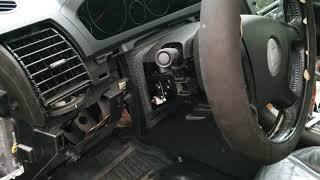
![P1682 Ignition 1 switch circuit 2 [SOLVED]](https://img.youtube.com/vi/KZFTjjczhPg/mqdefault.jpg)
We Have This Part in Stock



The information in this article is provided for general reference and educational purposes only. Vehicle specifications, procedures, and part compatibility can vary by production date, trim level, and region. Always consult your vehicle's factory service manual and verify part numbers before purchasing or performing repairs. Safety-critical components such as airbags, seat belts, and braking systems should be installed by a qualified professional.
- Buick ENCLAVE:
- 🎬 Helpful Videos
- 🛍️ Shop This Part
- What's Unique About the 2016-2017 Buick ENCLAVE
- Diagnostic Flowchart
- Symptoms You May Notice
- Most Likely Causes
- Rare But Worth Checking
- Diagnosis Steps
- Parts You'll Likely Need
- Related Codes That Often Appear With This One
- Technical Service Bulletins (TSBs) & Recalls
- Platform-Specific Known Issues
- Mechanic-Grade Diagnostic Values
- Scan Tool Commands That Help
- Wiring & Ground Locations
- Real Owner Repair Stories
- OEM Part Supersession History
- 🎟️ Get 5% Off