

P1682 on 2008-2015 Buick Enclave: Ignition Circuit Fault Causes and Fixes
On a 2008-2015 Buick Enclave, code P1682 is most often caused by a faulty ignition/run-crank relay or corrosion in the underhood fuse box (UBEC). A relay swap is a quick diagnostic, but a corroded fuse box is a more involved repair. Stalling is a major risk.
- P1682 on a Buick Enclave means the engine computer is seeing two different voltage readings from its main power circuits.
- The most likely causes are a bad ignition relay or corrosion in the underhood fuse box (UBEC).
- This code is serious because it can cause the engine to stall unexpectedly while driving.
- Always check for the companion code P0689, as they frequently appear together for the same root cause.
- A simple relay swap can quickly diagnose or rule out one of the most common failures.
What's Unique About the 2008-2015 Buick ENCLAVE

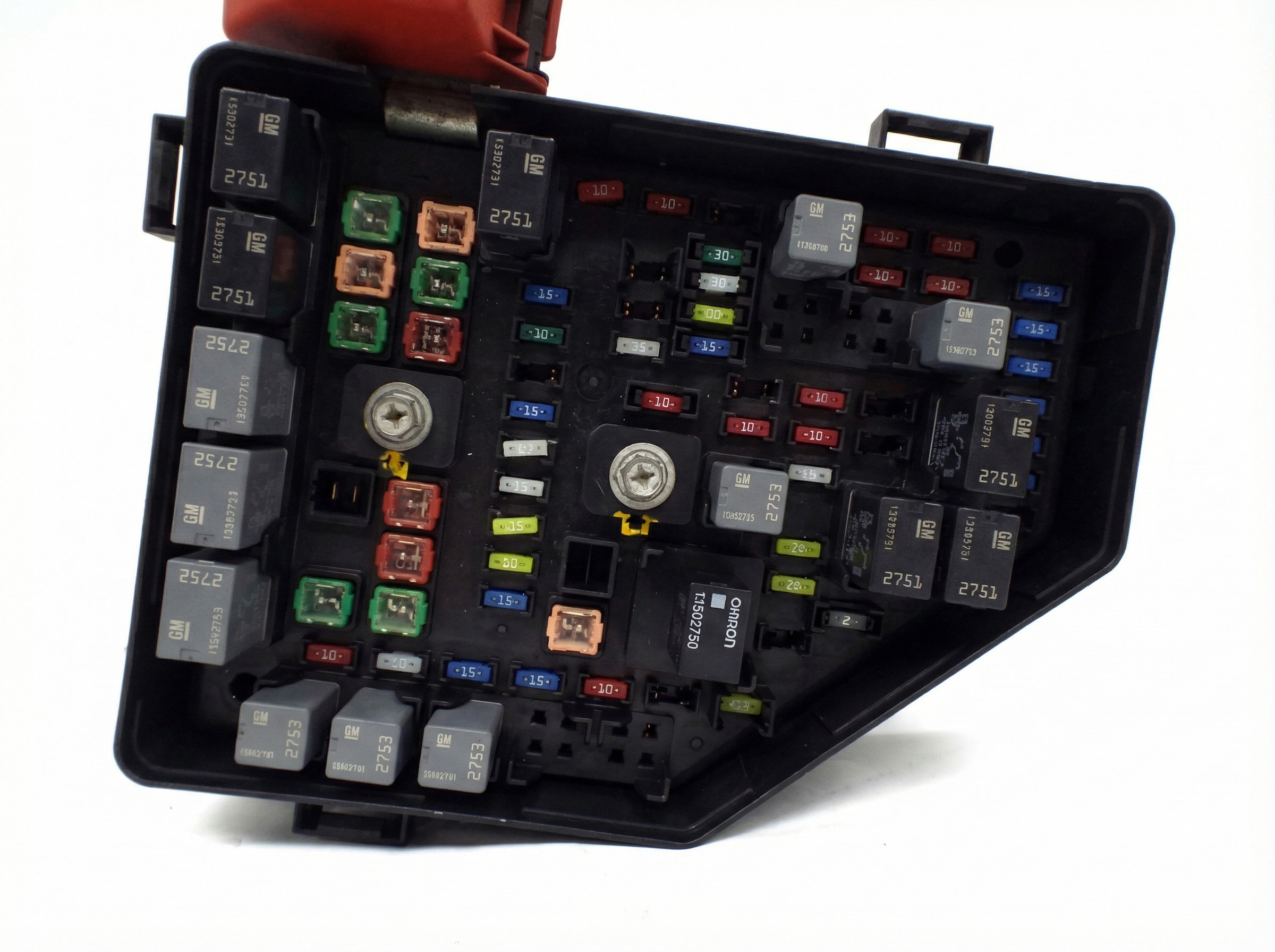
The first-generation Buick Enclave, along with its GM Lambda platform siblings (Chevrolet Traverse, GMC Acadia, and Saturn Outlook), is known for issues with the Underhood Bussed Electrical Center (UBEC), also known as the fuse box. These units are susceptible to water intrusion from sources like leaking cowl or sunroof drains, leading to corrosion on internal terminals. This corrosion, specifically at terminal 51 of the X3 connector, causes the voltage discrepancy flagged by P1682. This is a well-documented pattern confirmed by multiple GM Technical Service Bulletins and a known weak point that can cause stalling.
🎬 Watch: A quick breakdown of why this code triggers.Diagnostic Flowchart

Tap your situation to follow the diagnostic path that matches what you're seeing on this vehicle.
Symptoms You May Notice
- Engine suddenly stalls while driving
- Reduced Engine Power message on the dash
- Engine cranks but will not start
- Check Engine Light is on
- Battery drain when the vehicle is off
- Engine continues to run for a moment after the key is turned off.
- Intermittent no-start condition.
- Humming or buzzing noise from the ECM/fuse box area.
- Replacing the battery
- Replacing the alternator
- Replacing the ECM without checking the UBEC first
Most Likely Causes

- Corrosion or Poor Terminal Tension in the Underhood Fuse Box (UBEC) 🔴 High Probability As noted in GM TSB #PIT5643 and the superseding #19-NA-276, the UBEC is prone to water intrusion or simply poor terminal tension over time. This causes arcing and corrosion specifically on terminal 51 of the X3 connector, which corresponds to the Run/Crank Relay circuit, disrupting a key power feed to the ECM.
How to confirm: Disconnect the battery. Remove the UBEC and unplug the connectors from the bottom. Thoroughly inspect pin 51 of the X3 connector for green/white corrosion, black burn marks from arcing, or a loose-fitting female terminal. A cell phone camera can be used to zoom in and see the damage more clearly.
Typical fix: If corrosion is minor, the terminal can be cleaned and the tension retightened. More often, the affected terminal must be replaced with a new terminated lead (GM Part #84757974 as per TSB 19-NA-276). If the fuse box itself is melted or severely corroded, the entire UBEC assembly must be replaced.
Est. part cost: $15-$30 for a terminal repair kit, $250-$450 for a new UBEC. - Faulty Ignition or Run/Crank Relay 🟡 Medium Probability Relays are electromechanical switches that can wear out over time. A failing relay can cause an intermittent connection, leading to the voltage drop that triggers P1682. An owner complaint to the NHTSA specifically cited this as the fix.
How to confirm: Locate the ignition and/or run/crank relays in the underhood fuse box. Swap the suspect relay with an identical one from a non-critical circuit (like the horn or rear defogger). If the problem goes away, the relay is bad. The Run/Crank relay is often labeled KR73 in service manuals.
Typical fix: Replace the faulty relay. A common replacement is ACDelco part #13500113.
Est. part cost: $10-$30 - Faulty Ignition Switch ⚪ Low Probability While less common than UBEC or relay issues on this platform, the ignition switch itself can fail, causing erratic voltage on the circuits it controls. This can sometimes manifest as the engine continuing to run after the key is removed.
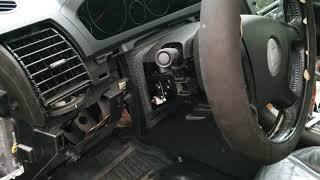
How to confirm: This requires using a multimeter to test the voltage outputs from the ignition switch in different key positions to ensure they are stable and correct according to the service manual. A DIY repair video shows this process on a platform-mate.
Typical fix: Replace the ignition switch. This is a relatively inexpensive part but requires removing steering column covers to access.
Est. part cost: $40-$100
Rare But Worth Checking
- Damaged Wiring Harness: A wire between the ignition switch, UBEC, and ECM could be chafed, broken, or shorted to ground. This is less common but should be checked if the main components are good. This can also include poor pin fitment at the ECM connector itself.
- Faulty Engine Control Module (ECM): This is very rare. The ECM is a robust component. Before condemning the ECM, all other possibilities (relays, fuse box, wiring) must be exhaustively ruled out. Usually, other codes would be present if the ECM was failing.
Diagnosis Steps
- Scan for all diagnostic trouble codes. Pay close attention if P0689 is also present, as this strongly points to the TSB-documented issue.
- Check for any relevant Technical Service Bulletins (TSBs) for your vehicle's VIN, specifically #19-NA-276.
- Locate the Run/Crank relay in the underhood fuse box. As a simple first test, swap the relay with a known-good, identical relay from a non-essential system (e.g., horn). Clear codes and see if the problem returns.
- If the relay swap doesn't work, disconnect the negative battery terminal.
- Carefully unclip and remove the underhood fuse box (UBEC) to access the large connectors underneath. This typically involves removing 5-6 plastic retaining tabs.
- Unplug the X3 connector (it may be a different color, often gray or black) and thoroughly inspect terminal 51 for any signs of green or white corrosion, black marks from arcing, or physical damage, as specified in TSB #PIT5643 and #19-NA-276.
- Inspect all other terminals and connectors on the UBEC for similar damage or signs of water intrusion.
- If terminal 51 is damaged, perform the terminal replacement procedure outlined in TSB #19-NA-276 using the specified terminated lead part. If the UBEC housing is melted, replace the entire unit.
- If no corrosion is found, use a multimeter to check for proper voltage and continuity on the ignition circuits between the ignition switch, the UBEC, and the ECM connector, referencing a vehicle-specific wiring diagram.
- If all wiring and components test good, the final step would be to consider a faulty ECM, though this is the least likely cause.
Parts You'll Likely Need

- Ignition Relay / Run-Crank Relay
(OEM #13500113)— This is a common failure point that can cause the voltage discrepancy. It's inexpensive and easy to replace, making it a good first step in diagnosis.
Trusted brands: ACDelco, Standard Motor Products
OEM price range: $20-$40
Aftermarket price range: $10-$25 - Underhood Bussed Electrical Center (UBEC)
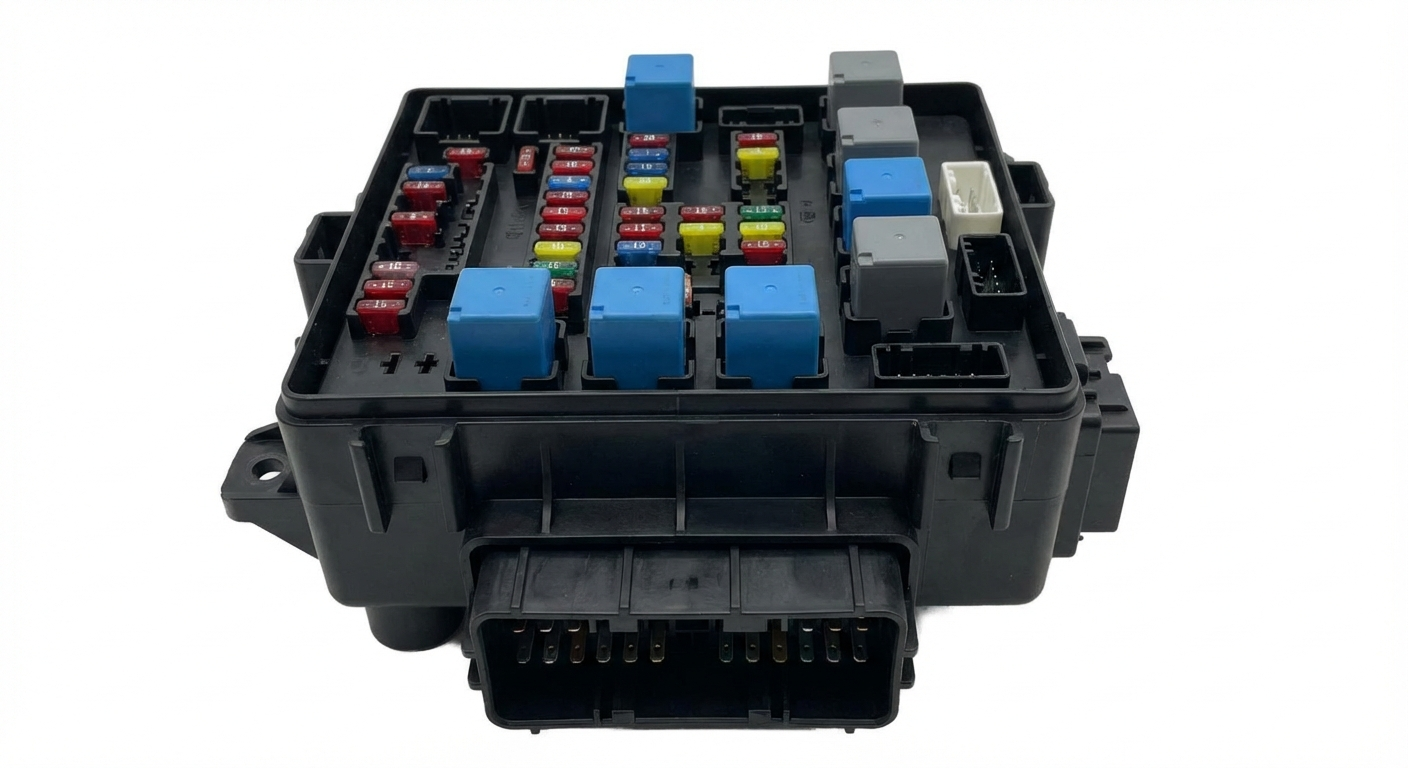
(OEM #20997643 (Verify by VIN))— Often the root cause due to corrosion or poor terminal tension from water intrusion or vibration, as documented in TSBs. Sometimes the terminals can be repaired, but often the entire unit needs replacement if the damage is extensive.
Trusted brands: ACDelco (OEM)
OEM price range: $300-$450
Aftermarket price range: $250-$350 - Terminated Lead Repair Wire
(OEM #84757974)— This is the specific part number called out in TSB #19-NA-276 to repair the damaged terminal 51 in the X3 connector without replacing the entire harness.
Trusted brands: GM Genuine Parts
OEM price range: $15-$30
Related Codes That Often Appear With This One
- P0689 — This code relates to the ECM/PCM Power Relay Control Circuit. Both P1682 and P0689 are triggered by issues in the power supply to the engine computer, and GM TSBs #PIT5643 and #19NA276 explicitly mention them occurring together as a result of the faulty terminal in the fuse box.
Technical Service Bulletins (TSBs) & Recalls
- PIT5643: 'This Preliminary information communicates information for diagnosing dtc?s P0689 and/or P1682 and the possibility of arcing/corrosion on terminal 51 of the X3 connector at the UBEC.'
- 19NA276: '...bulletin provides repair information to correct a customer concern of potential reduced engine power message displayed and/or engine stall with DTCs P1682 and/or P0689 Set.'
- PIT4649D: 'Diagnostic Tip - Service Engine Soon MIL With DTC P1682 - Battery Draw - No Start
Platform-Specific Known Issues
- A known issue on this platform is water leaking onto the underhood fuse box, causing corrosion. TSB #PIT5643 specifically points to terminal 51 of the X3 connector as a common point of failure for this code.
- TSB #19NA276 supersedes earlier bulletins and addresses customer concerns of reduced engine power or stalling associated with P1682 and P0689 by providing a more robust terminal repair procedure.
- Early TSBs like #PIT4649D and #PIT4649B link P1682 to no-start and battery drain conditions, further confirming the electrical nature of the fault.
- A class-action lawsuit was filed against GM for issues related to loose terminals in the fuse block causing stalling on these and other vehicles, directly referencing the conditions that set code P1682.
Mechanic-Grade Diagnostic Values
- Ignition 1 Voltage vs. Ignition 2 Voltage at ECM — expected: Both circuits should show voltage very near battery voltage (approx. 12.6V with key on, engine off; ~14V with engine running). The voltage difference between the two circuits should be minimal.. Failure: A voltage difference greater than 3.0V between the two circuits will trigger the P1682 code.
Scan Tool Commands That Help
- GDS2 (GM Dealer/Professional Scan Tool): Module Diagnostics -> ECM -> Data Display -> Ignition Voltage Data — Use this to monitor the 'Ignition 1 Signal' and 'Run/Crank Ignition 1 Signal' PIDs in real-time. This allows a technician to see the voltage the ECM is reporting on both circuits simultaneously to confirm the discrepancy without back-probing wires initially.
- GDS2 (GM Dealer/Professional Scan Tool): Module Diagnostics -> BCM -> Output Controls -> [Specific Relay Control] — A technician can command relays on and off to test their functionality. For P1682, commanding the Run/Crank relay on and listening for a click or checking for output voltage can help determine if the relay itself is faulty or if the control side of the circuit has a problem.
Wiring & Ground Locations
- X3 Connector — Underneath the Underhood Bussed Electrical Center (UBEC) / fuse box.. This is a major harness connector for the UBEC. Pin 51 on this connector is the specific circuit for the Run/Crank relay output that feeds the ECM. TSBs #PIT5643 and #19NA276 identify this exact pin as the most common point of corrosion and failure causing P1682.
- G103 / G105 — G103 is typically located on the cowl, near the brake booster. G105 is often located at the front of the engine compartment behind the cooling fans.. These are primary engine compartment ground points. The ECM, BCM, and underhood fuse block rely on clean, tight grounds. A corroded or loose G103 or G105 can cause floating voltages and unpredictable electrical behavior, potentially contributing to the voltage difference seen in a P1682 code.
- G110 / G113 — G110 is typically mounted on the right front of the engine cylinder head. G113 is on the left side of the engine, often at an engine-to-transmission stud.. These are the primary engine block grounds. The ECM is often grounded via these points. A poor connection here can lead to incorrect sensor readings and erratic ECM behavior, which could manifest as various electrical fault codes, including P1682.
Real Owner Repair Stories
- YouTube video by 'Money Saving DIY' (2013 Chevrolet Traverse LTZ (Lambda platform sibling)) — Intermittent P1682 code, traction control and ABS lights, reduced engine power, and complete stalling in the road.
❌ Tried (didn't work) Replacing the ignition and powertrain relays did not solve the problem.
✅ What actually fixed it The owner replaced the entire underhood fuse block (UBEC). The problem went away for four years before recurring, at which point he replaced it again to fix the issue. This confirms the UBEC as the root cause in this case. - YouTube video by 'Randy Barton' (Saturn Outlook (Lambda platform sibling)) — Engine would not shut off after removing the key. The owner mentions the code as P1862 but the fix shown is for the ignition switch, a known, though less common, cause for P1682.
❌ Tried (didn't work) The video focuses directly on the successful repair.
✅ What actually fixed it Replacing the ignition switch assembly in the steering column resolved the issue. This was a $15 part and a 30-minute fix for the owner.
OEM Part Supersession History
19116059, 88988889→13500113— Standard part consolidation and design updates over time.
Heads up: The newer part number 13500113 is the current replacement for a wide range of GM vehicles, including the Enclave, and is fully compatible.
Model Year Variations Within This Range
- 2008-2012 vs 2013-2017: The Buick Enclave received a significant facelift for the 2013 model year. While the fundamental electrical design and UBEC location remained the same, the interior fuse box access changed. On 2008-2012 models, access is by removing the glove box bottom, while 2013-2017 models have a dedicated access lid under the glove box.
Helpful Videos
We Have This Part in Stock




The information in this article is provided for general reference and educational purposes only. Vehicle specifications, procedures, and part compatibility can vary by production date, trim level, and region. Always consult your vehicle's factory service manual and verify part numbers before purchasing or performing repairs. Safety-critical components such as airbags, seat belts, and braking systems should be installed by a qualified professional.
- Buick ENCLAVE:
- 🎬 Helpful Videos
- 🛍️ Shop This Part
- What's Unique About the 2008-2015 Buick ENCLAVE
- Diagnostic Flowchart
- Symptoms You May Notice
- Most Likely Causes
- Rare But Worth Checking
- Diagnosis Steps
- Parts You'll Likely Need
- Related Codes That Often Appear With This One
- Technical Service Bulletins (TSBs) & Recalls
- Platform-Specific Known Issues
- Mechanic-Grade Diagnostic Values
- Scan Tool Commands That Help
- Wiring & Ground Locations
- Real Owner Repair Stories
- OEM Part Supersession History
- Model Year Variations Within This Range
- 🎟️ Get 5% Off