

OBD-II Code P1649: Manufacturer-Specific Fault
What P1649 means, why it triggers, and how to fix it
- Identify your vehicle's specific P1649 definition first, as this manufacturer-specific code means entirely different things for a Jeep (EVAP system) versus a Volkswagen (ABS communication).
- On gasoline Chrysler, Dodge, Jeep, and Ram vehicles, replace the EVAP purge solenoid (a $75-$230 repair) if it tests outside the normal 14-18 ohm resistance range.
- For VW and Audi models, do not replace the $1,500 ABS module until you scan for and fix underlying wheel speed sensor codes like 00283.
- If your Chevrolet cranks but will not start with a P1649 code, perform a 30-minute key relearn procedure to resynchronize the immobilizer before buying any parts.
What Does P1649 Mean?

P1649 is a manufacturer-specific code, meaning its definition changes depending on your vehicle's make. For Chrysler, Dodge, Jeep, and Ram (FCA) gasoline vehicles, it points to an electrical failure in the EVAP purge solenoid circuit. On FCA diesel models, it indicates a Glow Plug Module Power Supply Circuit fault. For Volkswagen and Audi, it flags a communication failure between the engine computer and the ABS module. For Chevrolet, it relates to the anti-theft immobilizer system preventing startup.
Technical definition: Because P1649 is not a universal SAE/ISO code, its formal definition varies by manufacturer. Common definitions include: - **FCA (Chrysler/Jeep/Dodge/Ram - Gasoline):** EVAP Purge Solenoid Control Circuit Open or Purge Solenoid Performance Fault. - **FCA (Chrysler/Jeep/Dodge/Ram - Diesel):** Glow Plug Module Power Supply Circuit. - **Volkswagen/Audi:** Powertrain Data Bus: Missing Message from ABS Controller. - **Jaguar:** Flash Memory - FCCP (Ford Computer Configuration Program) Monitoring Malfunction. - **Mazda/Ford:** Fuel Injection Pump Module. - **Chevrolet:** Immobilizer Security Code Not Programmed or Central Gateway Internal. - **BMW:** Internal Control Module Random Access Memory (RAM) Writing Error. - **Honda (Civic Hybrid):** ABS Operation Signal Circuit Malfunction.
Can I Drive With P1649?
Yes, But With Caution. Drivability depends entirely on your vehicle's make. FCA EVAP faults are safe to drive but guarantee a failed emissions test. VW, Audi, or Honda ABS faults disable your Anti-Lock Brakes (ABS) and stability control, increasing stopping distances and skid risks. Chevrolet immobilizer faults prevent the engine from starting. Diesel vehicles with a glow plug module fault are difficult or impossible to start in cold weather, but safe to operate once running.
Common Causes


- Faulty EVAP Purge Solenoid (FCA gasoline vehicles) (Very Common) — The solenoid fails electrically or mechanically, preventing it from opening or closing. This is the most frequent cause for P1649 on Chrysler, Dodge, Jeep, and Ram gasoline vehicles.
- Faulty Wheel Speed Sensor (VW/Audi vehicles) (Very Common) — A failing wheel speed sensor is the most frequent root cause on VW and Audi models. The sensor fault (which sets its own code, like 00283) forces the ABS module offline, prompting the ECM to log P1649. 🎬 Watch: How to test and replace a VW wheel speed sensor.
- Faulty ABS Control Module (VW/Audi, Jaguar vehicles) (Common) — The Anti-Lock Brake System module stops communicating with the main engine computer. This is usually caused by cracked internal solder joints resulting from age and heat cycles.
- Faulty Glow Plug Control Module (FCA diesel vehicles) (Common) — On diesel engines like the Ram 1500 EcoDiesel, this code points to a power supply circuit fault within the module that controls the glow plugs required for cold starting.
- Weak 12V Battery or Poor Connection (Less Common) — A weak battery or corroded terminals cause communication errors between modules. On early Honda Civic Hybrids, a weak 12V battery is a known cause of P1649, even if the ABS components are perfectly fine.
- Damaged Wiring or Connectors (Less Common) — Frayed, shorted, corroded, or rodent-chewed wires interrupt the signal to the affected component (purge solenoid, ABS module, or glow plug module).
- Blown Fuse (Less Common) — A blown fuse for the specific circuit (EVAP system, ABS module, or ignition system) cuts power and triggers a fault code.
- Faulty Engine Control Module (ECM) (Rare) — The ECM's internal driver circuit fails, or a software glitch causes it to incorrectly report a fault. Consider this only after ruling out all other possibilities.
Symptoms

- Check Engine Light is On — This is the most common and often the only symptom.
- ABS and/or Traction Control Light is On — On VW, Audi, and Honda, this code is accompanied by warning lights for the brake and stability systems, indicating they are disabled.
- Engine Will Not Start or is Hard to Start — For Chevrolet immobilizer faults, the engine cranks but fails to start. For diesel vehicles with a glow plug module fault, the engine is difficult or impossible to start in cold weather.
- Failed Emissions Test — FCA vehicles with EVAP-related P1649 codes automatically fail emissions inspections.
- Rough Idle or Stalling — A stuck-open EVAP purge solenoid on an FCA vehicle creates a vacuum leak, causing rough idling. On some BMW models, a DME RAM error causes the engine to stall 20-30 seconds after a cold start.
- Slight Decrease in Fuel Economy — When the EVAP system malfunctions, fuel vapors escape instead of being burned by the engine, leading to a 1-2 MPG drop.
- Speedometer Inoperative — On Audi A4 (B6) models, a failing ABS module triggering P1649 concurrently causes the speedometer to stop working.
Diagnostic Flowchart
Tap your situation to follow the diagnostic path that matches what you're seeing on this code.
Common Fixes & Costs
- Replace EVAP Purge Solenoid — Parts: $25-$80, Labor: $50-$150, ~0.8 hr book time (DIY)
- Replace Wheel Speed Sensor — Parts: $40-$150, Labor: $80-$150, ~1.0 hr book time (DIY)
- Replace/Repair ABS Control Module — Parts: $200-$800, Labor: $150-$300, ~2.0 hr book time (Professional)
- Replace Glow Plug Control Module — Parts: $70-$200, Labor: $100-$200, ~1.2 hr book time (DIY)
- Repair Damaged Wiring or Connector — Parts: $5-$20, Labor: $100-$250, ~1.5 hr book time (Intermediate)
- Replace Blown Fuse — Parts: $1-$10, Labor: $0-$50, ~0.2 hr book time (DIY)
Used vs. New Parts: Buying Guide
When a used part is worth it: For expensive electronic modules like an ABS Control Module, a professionally rebuilt part is a viable, cost-effective option. For inexpensive parts like EVAP purge solenoids or wheel speed sensors, always buy new.
Donor-vehicle mileage cap: roughly under 100000 miles for the part to have meaningful remaining life.
Donor quality checklist:
- For ABS modules, a professionally rebuilt unit with a warranty is superior to a used one from a junkyard.
- Verify the part number matches exactly; modules are VIN-specific.
- Purchase from a reputable seller offering a warranty and clear return policy.
Decision logic:
- If The part is an inexpensive sensor or solenoid (under $100 new) → Always buy new. The labor to replace a failed used part negates any savings.
- If The part is an expensive electronic module (e.g., ABS module) → Favor a professionally rebuilt original module to avoid VIN reprogramming.
- If A rebuilt service is not available and the new OEM part is over $1000 → A tested, used part from a reputable supplier with a warranty is an acceptable budget option.
Warranty tradeoff: Used parts have a 30-90 day warranty. Professionally rebuilt modules offer a 1-year to lifetime warranty. New aftermarket parts come with a 1-3 year warranty.
Worst-case if a used part fails: $300-$600 if a used module fails after the warranty period, accounting for repeat labor costs and a replacement part.
What Happens If You Wait — Timeline
- Immediate: For VW/Audi/Honda ABS faults: ABS and Traction Control lights turn on. The systems are disabled. For FCA EVAP faults: Check Engine Light on. No drivability symptoms. (MPG impact: 0%% · Added cost: $0. The immediate risk for ABS faults is safety-related (increased crash risk), not financial.)
- 1-3 months: For ABS faults: Continued risk of skidding in emergency braking. For FCA EVAP faults (stuck open solenoid): A slight vacuum leak causes a rough idle and a minor drop in fuel economy. The vehicle fails emissions tests. (MPG impact: 0-5%% · Added cost: $20-$60 in wasted fuel. Potential emissions re-inspection fees.)
- 3-12 months: For ABS faults: Ignoring the warning masks a deteriorating module that eventually fails completely, possibly affecting speedometer function. For FCA EVAP faults (stuck open): The constant vacuum leak forces the engine to run rich, straining the catalytic converter. (MPG impact: 5-10%% · Added cost: $200-$500. Ignoring a communication fault leads to a more expensive module repair. Early-stage catalytic converter strain begins.)
- 12+ months: For ABS faults: A potential insurance claim is denied if an accident is caused by the known, unfixed safety system defect. For FCA EVAP faults: Long-term rich running condition destroys the catalytic converter. (MPG impact: 10-15%% · Added cost: $1000-$2500+. The primary risk is damage to other expensive components, like the catalytic converter, from ignoring the initial fault.)
Cost of Not Fixing It
- Immediate: For VW/Audi/Honda ABS faults: Anti-lock Braking and Stability Control are disabled, significantly increasing the risk of skidding and losing control in a panic stop. (Added cost: Potential for accident-related costs.)
- 0-3 months: For FCA EVAP faults: Guaranteed failure of state emissions tests and a slight decrease in fuel economy. For Chevy immobilizer faults: Risk of being stranded with a no-start condition. (Added cost: Negligible, aside from towing or re-inspection fees.)
- 3+ months: Ignoring a communication fault (VW/Audi/Jaguar) masks a deteriorating module that eventually fails completely. An EVAP solenoid stuck open causes long-term strain on the catalytic converter due to a consistently rich fuel mixture. (Added cost: $500-$2000+ if another module or the catalytic converter is damaged.)
Diagnosis Steps
- Identify Your Vehicle's P1649 Definition
Before starting any diagnosis, search your specific make, model, and year (e.g., '2013 Ram 1500 P1649') to find the exact meaning. The diagnostic path depends entirely on this definition.
Tools: Internet Access (Beginner) - Scan for All Other Codes in All Modules
Use an OBD-II scanner capable of reading codes from all modules (Engine, ABS, Body). P1649 is often a secondary code. For a VW, an ABS wheel speed sensor code (like 00283) is the real problem. Always diagnose and fix other codes first.
Tools: Advanced Scan Tool (Beginner) - Inspect Fuses and Battery
Check the fuse box for blown fuses related to the system in question (Emissions, EVAP, ABS, Ignition). Visually inspect the battery terminals for corrosion and ensure connections are tight. A weak battery causes various communication codes.
Tools: Owner's Manual, Fuse Puller, Battery Terminal Cleaner (Beginner) - [Pro Tip] Test FCA EVAP Solenoid Circuit
For an FCA EVAP fault, test the solenoid. Disconnect it and turn the ignition on. Confirm ~12V at the power pin in the connector with a multimeter. Next, measure resistance across the solenoid's pins. A good solenoid is typically 14-18 ohms. Infinite resistance (O.L.) means an open coil; near-zero ohms means a shorted coil.
Tools: Digital Multimeter (Intermediate) - [Pro Tip] Test VW/Audi CAN Bus at the OBD-II Port
If you have P1649 with no other ABS codes, test the CAN bus. Disconnect the battery. Measure resistance between Pin 6 (CAN-H) and Pin 14 (CAN-L) at the diagnostic port. It should be ~60 ohms. A reading of ~120 ohms indicates a break in the wiring or a faulty terminating resistor in a module.
Tools: Digital Multimeter (Advanced) - Perform Chevrolet Immobilizer Key Relearn
For a no-start on a Chevy with P1649, try a key relearn. Turn the key to 'ON' for 10-15 minutes until the security light goes out. Turn off for 10 seconds. Repeat this 3 times. On the 4th cycle, the car should start. This resynchronizes the key's transponder with the Body Control Module.
Tools: Vehicle Key (Beginner) - Check Power at Diesel Glow Plug Module
For diesel FCA vehicles, locate the Glow Plug Control Module. Disconnect its connector and, with the ignition on, use a multimeter to verify battery voltage is present at the main power supply pin and that the ground circuit has continuity. If power and ground are good, the module itself is faulty.
Tools: Digital Multimeter, Vehicle-specific wiring diagram (Intermediate) - Visual Inspection of Wiring and Connectors
Visually inspect the wiring harness and connector for the component identified in Step 1. Look for frayed or melted wires, rodent damage, or corrosion in the connector pins.
Tools: Flashlight (Intermediate) - [Advanced] Test Honda Civic Hybrid 12V Battery Health
For a 2003-2005 Civic Hybrid with P1649, a weak 12V battery is a prime suspect. A healthy battery reads approximately 12.6V with the car off. A reading below 12.2V indicates a discharged state that causes module communication errors.
Tools: Digital Multimeter (Advanced) - [Advanced] Live Data Scan Tool Analysis (PID)
For EVAP faults, use a bidirectional scanner to command the purge solenoid open and closed. Monitor the 'EVAP Purge Commanded' PID and listen for a clicking sound. For VW/Audi ABS faults, monitor live data from all four wheel speed sensors while driving slowly. A sensor reading 0 MPH is faulty.
Tools: Advanced Bidirectional Scan Tool (Advanced)
When This Code Triggers (Freeze-Frame Conditions)
- Engine Coolant Temp: 170-210°F (77-99°C) (Engine at normal operating temperature. Required for many EVAP and communication tests to run.)
- Vehicle Speed: 30-65 mph (48-105 kph) (Steady cruise. An EVAP purge solenoid fault is detected during steady-state driving. ABS communication faults are checked during initial drive-off and cruise.)
- Fuel Level: 15-85% (For EVAP-related P1649 definitions, the monitor will not run if the tank is full or nearly empty.)
- System Voltage: 12.0-14.8V (The code sets on startup if system voltage is low, indicating a weak battery causing communication errors between modules.)
Related Codes
- P0455 / P0442 — On FCA vehicles, P1649 indicates an electrical problem with the purge solenoid circuit. P0455 (Large Leak) and P0442 (Small Leak) indicate a physical leak in the EVAP system. A bad gas cap causes P0455/P0442, not P1649.
- U0121 — This is the generic SAE code for 'Lost Communication With ABS Control Module.' It is the standardized equivalent of the VW/Audi definition for P1649.
- 00283 (VW/Audi specific) — This code for a faulty 'ABS Wheel Speed Sensor' is often the root cause of P1649. The sensor failure forces the ABS module offline, triggering P1649 in the ECM. Fix 00283 first.
- P1626 / P1631 (Chevrolet) — These are immobilizer-related codes on GM vehicles. P1649 often appears with them, pointing to a failure in the key-recognition handshake between the key, immobilizer module, and ECM.
Climate & Environmental Factors
- Cold Weather: Significantly impacts diesel vehicles with a P1649 glow plug module fault, making the engine impossible to start. It also exposes weak 12V batteries, triggering communication codes on Honda Hybrids.
- High Humidity / Road Salt: Accelerates corrosion on wiring harnesses, connector pins, and fuses. This leads to open or shorted circuits in exposed components like ABS modules and wheel speed sensors.
How to Talk to a Mechanic About This Code
Say this: "I have a P1649 code on my [Make, Model, Year]. I know this is a manufacturer-specific code. For my [Make], it means [State the specific definition, e.g., 'Missing Message from ABS Controller' for a VW, or 'EVAP Purge Solenoid Circuit' for a Jeep]. I would like to schedule a diagnostic appointment."
This immediately tells the shop you've done your research and are not a target for a speculative diagnosis. It frames the conversation around a specific system (ABS, EVAP, etc.) and prevents them from starting with a generic, vague approach.
Avoid saying:
- 'My check engine light is on, can you look at it?'
- 'Just fix whatever's wrong.'
- 'I think it's the gas cap.'
Questions to ask before authorizing the repair:
- For VW/Audi: Did you scan the ABS module for other codes, like a wheel speed sensor fault, before recommending an ABS module replacement?
- For FCA EVAP: Did you test the purge solenoid's resistance and check for voltage at the connector before quoting a replacement?
- For Jaguar: Are you aware that P1649 is often a 'ghost code' caused by the ABS module, and have you inspected it?
- Can you provide a detailed breakdown of the parts and labor costs?
- What is the warranty on this specific repair and the parts used?
Where to Take It: Dealer vs Independent vs Chain
- Dealer:
Best for: Vehicles under warranty., Complex manufacturer-specific issues (e.g., Jaguar ghost codes, BMW DME faults)., Repairs requiring proprietary software or security authorization (e.g., key programming for a Chevy immobilizer fault).
Downsides: Significantly higher labor rates and parts costs., Defaults to replacing entire assemblies instead of repairing a smaller component. (Typical cost: +40% vs. baseline) - Independent Shop:
Best overall fit, especially a specialty shop (e.g., a European specialist for VW/Audi). They are more likely to have seen the specific failure pattern for your vehicle and are motivated to find the most cost-effective fix.
Best for: Out-of-warranty vehicles., Common, well-documented P1649 causes (FCA EVAP solenoid, VW wheel speed sensor)., Owners seeking a better value and a direct relationship with the technician.
Downsides: Diagnostic skill varies greatly; a shop without experience in your specific brand struggles with the nuance of P1649. (Typical cost: +0% vs. baseline) - Chain Shop:
AVOID for P1649 diagnosis. They are unlikely to correctly diagnose the root cause, especially for VW/Audi or Jaguar communication faults, leading to wasted money on incorrect repairs.
Best for: Simple, unrelated maintenance like oil changes or tires.
Downsides: Technicians lack the advanced diagnostic tools or specific training for a complex, manufacturer-specific code like P1649., Business model incentivizes upselling unnecessary services. (Typical cost: -10% vs. baseline)
When to Walk Away From the Repair
If the estimated repair cost exceeds 40-50% of your car's private-party value (from KBB or Edmunds), seriously consider selling or trading it in instead of repairing it.
- Car worth $3000, fix is $250: Fix it. A $250 EVAP solenoid replacement on a $3,000 Jeep is a clear and easy decision.
- Car worth $4000, fix is $1800: Walk away. Spending $1800 to replace an ABS module at a dealer on a $4,000 VW is not a good investment. The repair is 45% of the car's value.
- Car worth $8000, fix is $500: Fix it. Sending an ABS module for a $500 rebuild service on an $8,000 Jaguar is well below the threshold and avoids costly dealer programming.
What Scan Tool You Need for This Code
Minimum: A scanner that reads manufacturer-specific codes and accesses other modules like the ABS system.
A generic $20 code reader only shows a 'P1' code with no definition. For VW/Audi/Honda, it cannot read the crucial codes from the ABS module, which is where the real problem lies. You will be diagnosing blind.
Budget: BlueDriver Pro (~$100) — Reads and clears enhanced codes (ABS, Airbag, etc.) for most major brands, including VW, FCA, and Honda. It displays live data from wheel speed sensors, which is essential for diagnosing the VW/Audi version of this code.
Mid-range: Foxwell NT510 Elite (~$180) — Provides dealer-level diagnostics for a single chosen brand (e.g., VW/Audi group). It offers bi-directional control to test components directly, like commanding an EVAP solenoid to open/close or cycling the ABS pump for brake bleeding.
Professional: Autel MaxiCOM MK808 / MK808BT (~$450) — A full-featured tablet scanner that accesses all vehicle modules on a wide range of brands. It offers advanced functions like bi-directional control, service functions like key immobilizer programming (for Chevy), and detailed live data graphing.
Rent vs buy: For a one-time diagnosis, auto parts stores offer free loaner tools. However, their tools may not read the manufacturer-specific or ABS codes needed for P1649. Given the complexity, buying a capable scanner like the BlueDriver is a worthwhile investment.
How to Clear the Code After You Fix It
- Fix the underlying mechanical or electrical fault.
- Use an OBD-II scan tool to clear the Diagnostic Trouble Codes (DTCs).
- Perform a complete drive cycle to allow the vehicle's readiness monitors to run.
Drive cycle (~20 minutes): A generic drive cycle includes a cold start (vehicle sat for 8+ hours), 2-3 minutes of idling, 5-10 minutes of mixed city driving (stop-and-go), and 5-10 minutes of steady highway driving between 45-65 mph.
Readiness monitors affected: Evaporative System (EVAP), Catalyst (CAT), Oxygen Sensor (O2)
Before emissions retest: drive at least 50 miles to fully set monitors.
Watch out for:
- Disconnecting the battery clears the code but resets all readiness monitors, causing an automatic emissions test failure.
- The code returns immediately if the root cause (bad wiring, faulty sensor) is not repaired.
- The EVAP monitor is difficult to set and requires specific fuel levels (15-85%) and multiple cold starts.
Will This Fail Emissions / State Inspection?
Yes — this code typically fails an OBD-II emissions inspection.
- California: An active Check Engine Light results in an automatic smog check failure. For model years 2000 and newer, only the EVAP monitor is permitted to be 'Not Ready'.
- New York: A Check Engine Light causes an automatic failure. After repairs, a complete drive cycle must be performed to set the readiness monitors before re-inspection.
- Texas: An illuminated Check Engine Light is an automatic failure. Model year 2001+ vehicles pass with one monitor 'Not Ready', while 1996-2000 vehicles pass with two.
Most Commonly Affected Vehicles

- Jeep Wrangler, Grand Cherokee (2012-2020) — Prone to the EVAP purge solenoid circuit fault (gasoline engines) or glow plug module fault (diesel engines).
- Dodge Charger, Ram 1500 (2011-2021) — Commonly experiences the P1649 code related to the EVAP purge solenoid on 3.6L and 5.7L engines. On EcoDiesel models, the code points to the glow plug module.
- Volkswagen Golf, Jetta, Passat, Polo (2002-2014) — Frequently logs P1649 for 'Missing Message from ABS Controller'. This is often caused by a failing ABS module (Bosch 5.3/5.7) or a faulty wheel speed sensor.
- Audi A4, A6 (2002-2008) — Shares the same 'Missing Message from ABS Controller' issue as Volkswagen. The B6 A4 (2002-2005) is known for this, where it also causes the speedometer to fail.
- Jaguar XK8, X-Type (1999-2006) — P1649 points to an ECM flash memory malfunction, but acts as a 'ghost code' caused by a failing ABS module with bad internal solder joints. Repairing the ABS module clears the code.
- Chevrolet Cruze, Silverado, Epica (2005-2016) — Defines P1649 as 'Immobilizer Security Code Not Programmed', resulting in a no-start condition. Requires a key relearn procedure or BCM diagnosis.
- BMW 3 Series (E46), 5 Series (E60), X3 (E83) (2001-2006) — Defines P1649 as an 'Internal Control Module RAM Writing Error' in the MS45 DME. Causes stalling 20-30 seconds after a cold start.
- Honda Civic Hybrid (2003-2005) — P1649 indicates an 'ABS Operation Signal Circuit Malfunction'. A common cause is a weak 12-volt auxiliary battery creating communication glitches.
Manufacturer-Specific Notes
- FCA (Chrysler, Dodge, Jeep, Ram): For gasoline engines, P1649 points to the EVAP purge solenoid circuit. For diesel engines, it points to the glow plug module power supply. The diagnostic path is completely different for each.
- Volkswagen / Audi: This code means the ECM isn't hearing from the ABS module. The root cause is almost always a fault within the ABS system itself (like a bad wheel speed sensor). Do not replace the ABS module without checking for wheel speed sensor codes first.
- Jaguar: The code relates to the ECM's programming circuit but acts as a 'ghost code'. It is triggered by a failing ABS module with bad internal solder joints. Repairing the ABS module resolves the P1649 code.
- Chevrolet: This code is tied to the anti-theft system. It means the key needs to be reprogrammed via a 'key relearn' procedure, or there is a fault in the Body Control Module (BCM) preventing the car from starting.
Real Owner Stories
2013 Ram 1500 with 5.7L Hemi at 110K miles
Check engine light came on. Code P1649 for EVAP purge solenoid circuit. No other symptoms.
What they tried:
- Replaced the gas cap, cleared code, but it returned.
- Bought an aftermarket Dorman purge valve. After installation, the code cleared but a loud ticking noise started from the engine bay.
- Replaced the Dorman part with an OEM Mopar purge valve.
Outcome: The OEM Mopar purge valve fixed the P1649 code and the ticking noise went away. The issue was resolved for good.
Lesson: For critical electronic parts like solenoids, using OEM parts prevents unexpected issues like noise or premature failure, even if aftermarket options are cheaper.
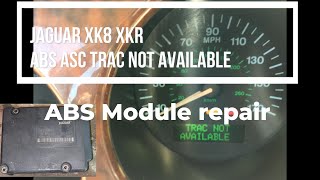
2005 Jaguar XK8 at 95K miles
ABS, TRAC, and ASC NOT AVAILABLE lights were on, accompanied by a P1649 code in the engine module.
What they tried:
- Initially suspected an ECM issue due to the P1649 definition.
- Read forums suggesting the P1649 was a 'ghost code' triggered by the ABS module.
- Removed the ABS module, opened it, and found two cracked solder joints on the main power pins.
Outcome: Resoldered the two cracked joints on the ABS module's circuit board. After reinstalling the module, both the ABS warnings and the P1649 code were gone and did not return.
Lesson: On Jaguars of this era, P1649 is often a secondary fault. Always diagnose and fix primary safety system codes (like ABS) first, as this resolves the engine code without further work.
2004 Honda Civic Hybrid at 165K miles
Check Engine Light and IMA light on. Multiple codes stored, including P1649 (ABS Signal Circuit) and P1449 (IMA Battery Deterioration). Car ran okay but MPG dropped from ~50 to ~30.
What they tried:
- The owner was concerned about total hybrid system failure.
- Forum advice pointed out that a weak 12V auxiliary battery causes a cascade of seemingly unrelated codes on these hybrids.
- The 12V battery was tested and found to be weak.
Outcome: Replacing the conventional 12V battery resolved the P1649 communication code and other electronic glitches. The IMA battery deterioration code (P1449) remained, indicating a separate problem with the high-voltage battery.
Lesson: On older hybrids, always test the 12V battery first when facing multiple, strange electronic fault codes. A weak 12V battery causes communication errors between modules, leading to misdiagnosis.
How to Prevent This Code From Triggering
- Change brake fluid every 2-3 years (Every 2-3 years) — Brake fluid absorbs moisture, which corrodes the delicate internal valves and electronic components of the ABS module, a common cause of failure on VW, Audi, and Jaguar models.
- Avoid overfilling the gas tank (Every fill-up) — Topping off the tank forces liquid gasoline into the charcoal canister. This saturates the canister and damages the EVAP purge and vent valves, leading to FCA P1649 faults.
- Protect wiring with rodent-repellent tape or spray (Once, or as needed) — Rodents are attracted to soy-based insulation. Wrapping key harnesses with capsaicin-laced tape prevents them from chewing wires and causing an open circuit.
- Periodically clean battery terminals and check connections (Every oil change) — Corroded or loose battery terminals cause voltage drops and electrical noise that trigger random communication fault codes between modules.
- Install a heat shield for the ABS module (on specific models) (Once) — On some cars, the ABS module is located directly above the exhaust manifold. Constant high heat contributes to solder joint failure. Fabricating a simple aluminum heat shield prolongs the module's life.
Frequently Asked Questions
Why does the meaning of code P1649 change between car brands?
Codes starting with 'P0' are generic and mean the same thing for all cars. Codes starting with 'P1' are manufacturer-specific, allowing automakers to create codes for their unique systems, meaning P1649 is defined by the manufacturer, not a universal standard.
What are the most common misdiagnosis mistakes for P1649?
The most common mistake is replacing the wrong part by ignoring the manufacturer-specific definition. For VW/Audi, technicians often replace the $1,500 ABS module when a $50 wheel speed sensor is the true culprit. On FCA vehicles, mechanics waste time smoke-testing for EVAP leaks when P1649 strictly indicates an electrical circuit fault.
My Jaguar has a P1649 and an ABS light. Are they related?
Yes, they are directly related. On Jaguars, the P1649 code is triggered as a 'ghost code' by an internal failure of the ABS module (often bad solder joints). Repairing the ABS module makes the P1649 code disappear.
Can a bad gas cap cause code P1649?
No. A loose or faulty gas cap causes a general EVAP system leak code (like P0455 or P0442), not P1649. P1649 on an FCA vehicle points to an electrical circuit problem with the purge solenoid, not a physical leak.
How much does it cost to fix code P1649?
The cost depends entirely on your vehicle's make. Replacing an EVAP purge solenoid on a Jeep costs $75-$230. If the cause is a failed ABS module on an Audi, sending it for repair costs $350-$700, while a full replacement at a dealer exceeds $1,500.
Is it safe to drive with code P1649?
For FCA EVAP faults, it is safe to drive but you will fail an emissions test. If the code is on a VW, Audi, or Honda, your anti-lock brakes and stability control are disabled, making it a critical safety issue that requires immediate attention.
What's the difference between P1649 and U0121?
U0121 is the generic, standardized code for 'Lost Communication With ABS Control Module.' The VW/Audi definition of P1649 is the manufacturer-specific equivalent of this exact same fault.
Key Takeaways
- Identify your vehicle's specific P1649 definition first, as this manufacturer-specific code means entirely different things for a Jeep (EVAP system) versus a Volkswagen (ABS communication).
- On gasoline Chrysler, Dodge, Jeep, and Ram vehicles, replace the EVAP purge solenoid (a $75-$230 repair) if it tests outside the normal 14-18 ohm resistance range.
- For VW and Audi models, do not replace the $1,500 ABS module until you scan for and fix underlying wheel speed sensor codes like 00283.
- If your Chevrolet cranks but will not start with a P1649 code, perform a 30-minute key relearn procedure to resynchronize the immobilizer before buying any parts.
Helpful Videos


The information in this article is provided for general reference and educational purposes only. Vehicle specifications, procedures, and part compatibility can vary by production date, trim level, and region. Always consult your vehicle's factory service manual and verify part numbers before purchasing or performing repairs. Safety-critical components such as airbags, seat belts, and braking systems should be installed by a qualified professional.
- 🎬 Helpful Videos
- What Does P1649 Mean?
- Can I Drive With P1649?
- Common Causes
- Symptoms
- Diagnostic Flowchart
- Common Fixes & Costs
- Used vs. New Parts: Buying Guide
- What Happens If You Wait — Timeline
- Cost of Not Fixing It
- Diagnosis Steps
- When This Code Triggers (Freeze-Frame Conditions)
- Related Codes
- Climate & Environmental Factors
- How to Talk to a Mechanic About This Code
- Where to Take It: Dealer vs Independent vs Chain
- When to Walk Away From the Repair
- What Scan Tool You Need for This Code
- How to Clear the Code After You Fix It
- Will This Fail Emissions / State Inspection?
- Most Commonly Affected Vehicles
- Manufacturer-Specific Notes
- Real Owner Stories
- 2013 Ram 1500 with 5.7L Hemi at 110K miles
- 2005 Jaguar XK8 at 95K miles
- 2004 Honda Civic Hybrid at 165K miles
- How to Prevent This Code From Triggering
- Frequently Asked Questions
- Why does the meaning of code P1649 change between car brands?
- What are the most common misdiagnosis mistakes for P1649?
- My Jaguar has a P1649 and an ABS light. Are they related?
- Can a bad gas cap cause code P1649?
- How much does it cost to fix code P1649?
- Is it safe to drive with code P1649?
- What's the difference between P1649 and U0121?
- Key Takeaways
- 🎟️ Get 5% Off