

OBD-II Code P1634: A Manufacturer-Specific Electrical Fault Guide
What P1634 means, why it triggers, and how to fix it on your specific vehicle
- Identify your manufacturer's specific definition for P1634 before opening the hood, as it means 'Ignition Low Voltage' on GM vehicles but 'TCM Watchdog Performance' on Jeeps.
- Test your 12-volt battery and clean the terminals first, as voltage drops below 9.6V during engine cranking trigger this code on 80% of affected vehicles.
- Check for Technical Service Bulletins (TSBs) immediately; 2014-2017 Jeep models fix this code with a $150-$300 dealer software update rather than a mechanical repair.
- Stop driving the vehicle to prevent being stranded, as P1634 frequently causes sudden engine stalling or disables the starter motor entirely.
What Does P1634 Mean?

The trouble code P1634 is not a one-size-fits-all problem; its meaning changes dramatically depending on your car's manufacturer. Most commonly, it points to a problem with the car's electrical system, either low voltage in the ignition circuit powering the engine computer (GM vehicles) or a failure in the communication wiring connecting different computers (Ford and Jaguar). Your car's Engine Control Unit (ECU) sets this code when it detects a key power source or communication line is failing.
Technical definition: The official SAE/OBD-II definition for P1634 is not standardized and varies by manufacturer. Common definitions include 'Ignition 1 Power Circuit Low Voltage' (General Motors), 'Data Output Link Circuit Failure' (Ford, Jaguar), 'TCM Internal Watchdog Performance' (Jeep/Chrysler), 'Throttle Valve Adaptation Spring Test Failed' (BMW), 'Generator Terminal B Open Circuit' (Kia/Mazda), 'Auxiliary Heater Relay Malfunction' (Hyundai Diesel), and 'Motor Power Inverter Signal Circuit Malfunction' (Honda Hybrid).
Can I Drive With P1634?
Yes, But With Caution. Driving is not recommended due to the risk of sudden failure. Depending on the vehicle, this code causes the engine to stall in traffic, the transmission to shift erratically or get stuck in gear, or a complete loss of electrical power to critical systems like ABS and traction control. The most significant risk is the engine failing to restart, leaving you stranded without warning. Ignoring the issue leads to more severe component damage.
Common Causes

- Weak or dying 12V battery (Very Common) — A battery that cannot provide stable voltage during startup is a primary cause. Modern car computers trigger this code if power dips below their operational threshold (often around 9.6V).
- Corroded or loose battery terminals and ground straps (Very Common) — A bad connection prevents electricity from flowing properly. Corrosion or a loose clamp on the battery posts or main ground wire causes significant voltage drops under load.
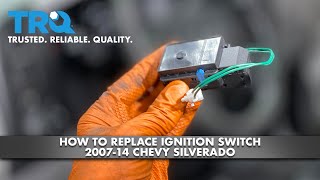
- Faulty ignition switch (Common) — Worn-out electrical contacts inside the ignition switch fail to deliver full power, causing a low voltage condition on ignition-fed circuits. This is a highly documented failure on GM trucks and SUVs. 🎬 Watch: How to replace the ignition switch on Chevy trucks.
- Blown fuse or faulty relay (Common) — A blown fuse protecting the ignition circuit, a specific computer module, or an auxiliary component cuts off power. A failed relay prevents power from reaching its destination.
- Damaged wiring or corroded connectors (Common) — Wires damaged from heat, vibration, or rubbing cause a short or open circuit in the ignition power feed or data communication lines (CAN bus) between modules.
- Failing alternator (Less Common) — A failing alternator fails to produce enough voltage, leading to a system-wide low voltage condition that triggers this code, especially on makes like Kia.
- Improperly installed aftermarket accessories (Less Common) — Aftermarket remote starters or alarms wired incorrectly interfere with the vehicle's electrical system, causing voltage drops or data communication errors on the CAN bus network.
- Faulty control module or outdated software (Rare) — With certain manufacturers like Jeep, the problem is internal software of a control module (like the TCM). In other rare instances, the module itself (PCM, BCM, TCM) fails internally and cannot communicate.
Symptoms

- Check Engine Light is on — This is the first and sometimes only sign of a problem. A 'Service Transmission' or other system-specific warning also appears on some models.
- Engine stalls or won't start — The engine shuts off unexpectedly while driving or cranks but fails to start because the ECU lacks the power or communication signals needed to function.
- Erratic instrument cluster or warning lights — Gauges stop working, or multiple warning lights (ABS, Battery, Transmission) turn on and off randomly due to communication or power loss.
- Limp Mode or poor engine performance — The vehicle enters a reduced power mode to protect the engine and transmission, resulting in sluggish acceleration or being stuck in one gear.
- Electrical accessories not working — The radio, power windows, cruise control, or other electronic features work intermittently or not at all.
Diagnostic Flowchart
Tap your situation to follow the diagnostic path that matches what you're seeing on this code.
Common Fixes & Costs
- Clean or Replace Battery Terminals/Cables — Parts: $10-$30, Labor: $0-$50, ~0.5 hr book time (DIY)
- Replace 12V Battery — Parts: $150-$250, Labor: $20-$50, ~0.5 hr book time (DIY)
- Update Control Module Software (Jeep TCM) — Parts: $0, Labor: $150-$300, ~1.0 hr book time (Professional)
- Replace Ignition Switch (GM) — Parts: $50-$150, Labor: $150-$250, ~1.5 hr book time (Intermediate)
- Replace Honda IMA Battery Cooling Fan & Fuse — Parts: $150-$250, Labor: $100-$200, ~1.5 hr book time (Intermediate)
- Replace Alternator — Parts: $250-$500, Labor: $150-$300, ~1.8 hr book time (Intermediate)
- Repair Damaged Wiring or Connectors — Parts: $10-$50, Labor: $200-$600, ~3.0 hr book time (Professional)
- Replace Control Module (Hardware) — Parts: $300-$1200, Labor: $200-$500, ~2.5 hr book time (Professional)
Used vs. New Parts: Buying Guide
When a used part is worth it: For an alternator or ignition switch, a remanufactured part provides the best balance of cost and reliability. Avoid used electrical parts due to high failure rates.
Donor-vehicle mileage cap: roughly under 80000 miles for the part to have meaningful remaining life.
Donor quality checklist:
- Verify the donor vehicle's mileage and reason for being salvaged (accident damage is better than electrical failure).
- Avoid donors from flood-damaged vehicles or regions with heavy road salt use.
- Match the part number exactly. Electrical components have many variations that are not interchangeable.
Decision logic:
- If The part is a simple battery or fuse → Always buy new; the savings on a used part are negligible and not worth the risk.
- If The part is an alternator or ignition switch on a vehicle >10 years old → A quality remanufactured part with a warranty is the best value.
- If The part is a control module (PCM, TCM, BCM) → Favor new or professionally remanufactured units. A used module requires professional programming to your vehicle's VIN, adding cost and complexity.
Warranty tradeoff: Used parts typically have a 30-90 day warranty (part only). New aftermarket parts offer a 1-year to limited lifetime warranty. New OEM parts offer a 1-2 year warranty.
Worst-case if a used part fails: $200-$500 if a used alternator or ignition switch fails after installation, requiring repeat labor costs plus another part.
What Happens If You Wait — Timeline
- 0-1 month: Intermittent Check Engine Light, possibly with flickering dash lights or slow-operating accessories. The car is occasionally slow to crank but still starts. (MPG impact: 0-2%% · Added cost: $0)
- 1-3 months: Check Engine Light is on constantly. Stalling becomes more frequent, especially at idle or under high electrical load. The battery dies overnight, requiring jump starts. (MPG impact: 2-5%% · Added cost: $75-$250 (for towing, service call, or a new battery if repeatedly drained))
- 3-6 months: The vehicle is unreliable, with frequent no-start conditions. Sustained low or fluctuating voltage from a failing alternator strains other electronic modules. Repeated jump starts damage a healthy battery. (MPG impact: 5-10%% · Added cost: $200-$500 (for premature battery replacement and potential damage to the starter))
- 6+ months: Catastrophic failure is likely. The car stalls while driving and will not restart. Sustained voltage issues cause permanent damage to sensitive computers like the PCM, TCM, or BCM. (MPG impact: 10-15%% · Added cost: $500-$2000+ (for replacement of damaged control modules or other electronics))
Cost of Not Fixing It
- 0-1 month: Causes a no-start or stalling condition. A failing alternator or bad ignition switch drains the battery completely, requiring a jump start or tow. (Added cost: $75-$250 (for towing or a new battery))
- 1-6 months: Repeatedly draining and jump-starting a standard lead-acid battery permanently damages it, shortening its life significantly. A failing alternator also overcharges and destroys a battery. (Added cost: $150-$300 (for premature battery replacement))
- 6+ months: Sustained low or fluctuating voltage causes stress and premature failure of sensitive electronic components, such as control modules, sensors, or the instrument cluster. (Added cost: $500-$2000+ (for replacing damaged control modules or other electronics))
Diagnosis Steps

- Check for Applicable TSBs
Before touching any tools, check for Technical Service Bulletins. For Jeep/Chrysler P1634 ('TCM Internal Watchdog'), TSBs 21-016-15 REV. B and 21-021-15 REV. E fix this code with a software update. A dealer verifies if your vehicle's software is outdated.
Tools: VIN, Smartphone or PC for TSB database access (Beginner) - Check the Battery and Terminals
Visually inspect the battery terminals for corrosion (a white or blue fuzzy substance). Clean them thoroughly with a wire brush and ensure the terminal clamps are tight. A loose or corroded connection is a very common cause.
Tools: Wrench set, wire brush, battery terminal cleaner (Beginner) - Test Battery Voltage
Use a multimeter to test the battery voltage with the car off. A healthy battery reads 12.4-12.7 volts. Have a helper crank the engine while you watch the voltage. If it drops below 9.6 volts, the battery is weak and needs replacement.
Tools: Digital Multimeter (Beginner) - Inspect Fuses and Relays
Check your vehicle's fuse box for blown fuses related to the 'Ignition,' 'PCM,' 'ECM,' or 'TCM.' For a 2010-2014 Honda Insight, specifically check the 10-amp fuse in position #53, labeled 'IMA 2'. Replace blown fuses with the same amperage.
Tools: Fuse puller, owner's manual (Beginner) - Test the Charging System
With the engine running, use a multimeter to test the voltage at the battery terminals. A healthy alternator puts out between 13.5 and 14.5 volts. A reading below 13.2V or above 14.8V indicates a charging system problem.
Tools: Digital Multimeter (Intermediate) - Inspect for Aftermarket Devices
Visually inspect the wiring around the steering column, under the dash, and near the fuse box for non-factory devices like remote starters or alarm systems. Poorly installed devices cause electrical and communication faults.
Tools: Flashlight (Intermediate) - Inspect Wiring and Connectors
Visually inspect the wiring harnesses connected to the ECU, ignition switch, and related modules. Look for chafed, burnt, or broken wires and corroded or loose connector pins.
Tools: Flashlight (Intermediate) - Perform a Voltage Drop Test
For an 'Ignition Power' code, measure the voltage difference between the battery positive post and the ignition power pin at the ECU connector with the key on. A reading of more than 0.5 volts indicates a problem in the wiring, switch, or relay.
Tools: Digital Multimeter with long leads (Advanced) - [PRO TIP] Check CAN Bus Network Resistance
For 'Data Output Link Failure' codes (Ford, Jaguar), disconnect the battery. Set a multimeter to Ohms (Ω) and measure resistance between Pin 6 (CAN-H) and Pin 14 (CAN-L) on the OBD-II port. A healthy network reads approximately 60 Ω. 120 Ω indicates a broken wire or missing resistor; 0 Ω indicates a short.
Tools: Digital Multimeter (Advanced) - [PRO TIP] Test Throttle Body with a Scan Tool
For BMW's 'Throttle Valve Adaptation' code, use a bidirectional scan tool to monitor live data for Throttle Position Sensors 1 and 2. Command a throttle sweep test. Glitches, flat spots, or non-linear responses in the voltage indicate a faulty electronic throttle body.
Tools: Advanced Bidirectional Scan Tool (Advanced)
When This Code Triggers (Freeze-Frame Conditions)
- Engine State: During Crank or KOER (The code sets during engine start-up when a voltage drop is most likely, or during the Key-On-Engine-Running self-test.)
- System Voltage: < 11.5V or > 15V (The fault triggers when the ECU detects voltage on a critical circuit outside the normal operating range.)
- Engine RPM: 0 (during crank) or 1500-2500 (Triggers during a failed start (0 RPM) or at a steady cruise RPM when the charging system or wiring fault becomes apparent.)
- Engine Load: Variable, often high (The fault appears under high electrical load (A/C, defroster, headlights on) which stresses a weak charging system or poor connection.)
Related Codes
- U0100, U0101, U-series codes — These are communication codes. If P1634 means 'Data Output Link Failure,' you will see U-codes stored, indicating a loss of communication. Fix the P1634 code first, as it indicates the root power or wiring problem causing the communication loss.
- P0562 — This code means 'System Voltage Low.' It appears with the 'Ignition 1 Power Circuit Low Voltage' version of P1634, as both point to a problem with the main power supply. Focus on diagnosing the ignition switch and its dedicated circuit first.
- P1448 — On Honda hybrids, this code for an 'Intelligent Power Module Fan Problem' is commonly seen with P1634. The failing fan is the root cause. Diagnose P1448 first by inspecting the IMA battery cooling fan and its associated fuse (Fuse 53).
- P0685 — This code means 'ECM/PCM Power Relay Control Circuit /Open.' It is closely related to the GM version of P1634. Both are caused by a bad relay, wiring issues, or a faulty ignition switch.
Climate & Environmental Factors
- Cold Weather: Cold temperatures reduce a battery's available power by 20-50%. This makes the system highly susceptible to low voltage conditions that trigger P1634 during engine cranking when demand is highest.
- High Humidity: Moisture in the air accelerates the corrosion of electrical connectors, ground points, and wiring. This corrosion increases electrical resistance, causing voltage drops and intermittent signal loss in power and data circuits.
How to Talk to a Mechanic About This Code
Say this: "I have a check engine light with code P1634 on my [Year, Make, Model]. I know this is a manufacturer-specific code, so I'd like to book a diagnostic appointment. Please start with basic electrical checks—battery load test, alternator output, and checking main ground connections—before moving to more complex diagnostics."
This signals you've done research and understand the code's complexity. It directs the technician to follow a logical, cost-effective diagnostic path, starting with common, inexpensive failures rather than immediately suspecting an expensive control module.
Avoid saying:
- 'My check engine light is on, can you just fix it?'
- 'I think I need a new computer, can you give me a price?'
- 'Just do whatever you think is necessary.'
Questions to ask before authorizing the repair:
- What is the specific definition of P1634 for my vehicle?
- What were the results of the battery and charging system tests?
- If it's a wiring or communication issue, what specific tests did you perform (e.g., voltage drop test, CAN bus resistance test)?
- For a module failure, have you checked for any Technical Service Bulletins (TSBs) regarding a software update first?
- Can you provide a detailed breakdown of the parts and labor costs?
- What is the warranty on this specific repair, including both parts and labor?
Where to Take It: Dealer vs Independent vs Chain
- Dealer:
Recommended for software-related fixes (like on a Jeep TCM) or if the vehicle is still under warranty. They are a strong, albeit expensive, choice for complex electrical diagnosis out of warranty.
Best for: Vehicles under warranty., Manufacturer-specific quirks, especially software updates for Jeep, BMW, or VW., Complex electrical issues where access to proprietary diagnostic tools and TSBs is critical.
Downsides: Typically the highest labor rates and parts costs., Defaults to replacing a whole assembly when a smaller component or wiring repair would suffice. (Typical cost: +50% vs. baseline) - Independent Shop:
Best fit for most common versions of P1634 (e.g., GM, Ford, Kia) if the shop is well-regarded and has strong electrical diagnostic skills. Ask if they perform module programming/updates if that's a suspected cause.
Best for: Out-of-warranty vehicles where cost is a factor., Common electrical faults like battery, alternator, or ignition switch replacements (e.g., on a GM truck)., Shops with ASE-certified technicians, especially an L1 Advanced Engine Performance Specialist.
Downsides: Quality and diagnostic capability vary widely; vetting is crucial., Lacks access to the latest manufacturer software or programming tools for module replacement. (Typical cost: +0% vs. baseline) - Chain Shop:
AVOID for initial diagnosis. An intermittent electrical or communication fault is beyond the scope of most chain shops. Only use them if a trusted diagnostic has already confirmed the problem is a simple battery or alternator replacement.
Best for: Simple, confirmed battery or alternator replacements.
Downsides: Technician skill varies dramatically; not equipped for complex electrical or communication diagnosis., High pressure to upsell common items; misdiagnoses the root cause of P1634 as just a bad battery. (Typical cost: -10% vs. baseline)
When to Walk Away From the Repair
If the estimated repair cost exceeds 50% of the car's private-party value (from a source like Kelley Blue Book), seriously consider selling or trading in the vehicle.
- Car worth $3000, fix is $1800: Walk away. A repair costing 60% of the car's value is a poor investment, especially since other age-related issues are likely.
- Car worth $10000, fix is $800: Fix it. The repair cost is well under the threshold and restores a valuable asset.
- Car worth $4500, fix is $350: Fix it. A low-cost fix like a software update or ignition switch replacement makes clear economic sense even on an older vehicle.
What Scan Tool You Need for This Code
Minimum: A scanner that reads manufacturer-specific trouble codes and displays live data streams (e.g., system voltage, module communication status).
A basic $20 code reader only shows the 'P1634' number, not the manufacturer's specific definition (e.g., 'Ignition Circuit Low Voltage' vs 'TCM Watchdog'). Without the definition and live data, diagnosis is impossible.
Budget: BlueDriver Pro (~$99) — Connects to your phone and provides manufacturer-specific code definitions, freeze-frame data, and live data graphing to monitor system voltage, which is crucial for diagnosing most P1634 variants.
Mid-range: XTOOL D7 (~$350) — Offers full system diagnostics and bidirectional controls. This allows you to actively test components (like relays or solenoids) and is powerful enough to diagnose communication network faults (Ford/Jaguar) or check throttle body sensor data (BMW).
Professional: Autel MaxiCOM MK808S / MK900 series (~$450-700) — Provides full bidirectional control, extensive service functions like module coding, and access to guided diagnostics for some brands. This level of tool is necessary for tasks like programming a new control module or performing software updates that a dealer would do.
Rent vs buy: AutoZone's Loan-A-Tool program offers scanners, but they are often basic code readers. For P1634, these are not sufficient. If this is a one-time, complex issue, paying for a professional diagnosis is more effective. Buy a midrange scanner only if you plan to perform your own diagnostics and repairs regularly.
How to Clear the Code After You Fix It
- Reconnect battery if disconnected for repair
- Use an OBD-II scan tool to clear the P1634 and any related fault codes
- Perform a complete OBD-II drive cycle to allow readiness monitors to run
Drive cycle (~30 minutes): A generic drive cycle includes: 1) A cold start (engine off for 8+ hours). 2) Idle for 2-3 minutes with electrical loads on (like A/C and rear defroster). 3) Accelerate to highway speed (55 mph) and hold steady for 5-10 minutes. 4) Perform 15-20 minutes of stop-and-go city driving. 5) Allow the vehicle to coast down from speed where possible.
Readiness monitors affected: Catalyst Monitor, Evaporative System Monitor, Oxygen Sensor Monitor
Before emissions retest: drive at least 100 miles to fully set monitors.
Watch out for:
- Disconnecting the battery or clearing the code will not fix the underlying issue, and the code will return.
- Clearing the code resets all OBD-II readiness monitors to 'Not Ready.' The vehicle must be driven 50-100 miles through varied conditions to complete the drive cycle and pass an emissions test.
- Failure to perform a full drive cycle results in a failed emissions test due to 'Not Ready' monitors, even if the Check Engine Light is off.
Will This Fail Emissions / State Inspection?
Yes — this code typically fails an OBD-II emissions inspection.
- California: An illuminated Check Engine Light is an automatic failure of the Smog Check. After clearing the code, you must complete a drive cycle to set the readiness monitors before re-testing.
- New York: Vehicles subject to the NYVIP3 inspection fail if the Check Engine Light is on. For 2001 and newer vehicles, only one readiness monitor is allowed to be 'Not Ready' to pass.
- Texas: In counties requiring emissions testing, an active Check Engine Light causes an automatic failure. After a repair, drive 50-100 miles to reset the readiness monitors before a re-inspection.
Most Commonly Affected Vehicles
- Jeep Cherokee (KL), Grand Cherokee (2014-2017) — Very prone to P1634 ('TCM Internal Watchdog Performance') due to Transmission Control Module (TCM) software glitches in the 9-speed transmission. The fix is almost always a dealer software update (reflash) as specified in TSBs like 21-016-15 REV. B.
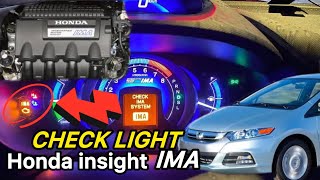
- Honda Insight (2010-2014) — On these hybrids, P1634 ('Motor Power Inverter Signal Circuit Malfunction') is most often caused by a shorted IMA (hybrid) battery cooling fan. This blows the 10-amp fuse in position #53, disabling the 12V charging system.
- General Motors (Chevy, GMC, Cadillac) Various Trucks and SUVs (e.g., Silverado, Tahoe) (2000-2014) — Frequently logs P1634 for 'Ignition 1 Power Circuit Low Voltage,' caused by a failing ignition switch. This was the subject of a massive recall affecting millions of vehicles.
- Ford / Jaguar Various Models (2000-2010) — These brands define P1634 as 'Data Output Link Circuit Failure,' pointing to issues with CAN bus communication wiring between modules. Diagnosis involves checking network integrity.
- BMW / MINI Various Models (e.g., E46 3-Series) (1999-2006) — P1634 means 'Throttle Valve Adaptation; Spring Test Failed,' indicating a problem with the electronic throttle body's self-test. This is often due to a sticking throttle plate or a weak internal return spring.
- Volkswagen Jetta, Golf, various models (2005-2015) — VW has multiple definitions. It means 'Accelerator Pedal Position Sensor 2 Signal Too High' or 'Front or Rear Tire Pressure Sensor Location Undetermined'. For electrical faults, it relates to the Comfort Control Module.
- Kia Various models with 1.8L engine (2010-2018) — P1634 is defined as 'Generator terminal B - open circuit.' This points directly to a fault with the alternator, its wiring, or the battery's state of charge.
- Hyundai Diesel models (e.g., Santa Fe CM, Veracruz) (2007-2012) — P1634 indicates 'Aux. Heater Malfunction' or 'Engine coolant heater relay - wiring open/short.' This relates to the supplemental PTC heater and is often caused by a bad relay or glow plug.
Manufacturer-Specific Notes

- Jeep/Chrysler/Fiat: P1634 often means 'TCM Internal Watchdog Performance.' It is almost always a software issue in the transmission computer, not a bad part. The standard fix is a software reflash at a dealership.
- General Motors: GM defines this code as 'Ignition 1 Power Circuit Low Voltage.' The ignition switch itself is a very common failure point that causes this specific code, highlighted by a massive recall campaign (NHTSA Recall No. 14V-047).
- Ford/Jaguar: These manufacturers use P1634 to indicate a 'Data Output Link Circuit Failure.' This is a CAN bus communication line fault requiring network wiring tests.
- Honda (Hybrid): In models like the 2010-2014 Insight, a failing IMA battery cooling fan shorts out, blows the 10A 'IMA 2' fuse, and causes the P1634 code, which disables the 12-volt charging system.
- BMW/MINI: P1634 indicates 'Throttle Valve Adaptation; Spring Test Failed.' This means the electronic throttle body failed its startup self-check due to carbon buildup or a defective internal return spring.
- Volkswagen: On some VW models, P1634 means 'Front or Rear Tire Pressure Sensor Location Undetermined.' This is related to the TPMS and is completely different from the electrical definitions used by other brands.
- Kia: For Kia, P1634 typically means 'Generator terminal B - open circuit.' Diagnosis focuses immediately on the charging system, including the alternator, wiring harness, and battery.
Real Owner Stories
2015 Jeep Grand Cherokee, ~80K miles
Check Engine Light appeared with code P1634. Transmission was occasionally shifting harshly or seemed to get 'stuck' before shifting.
What they tried:
- Owner was concerned about a major transmission failure. Initial research suggested replacing the Transmission Control Module (TCM).
Outcome: Took the vehicle to a Jeep dealership. The dealer diagnosed it as a known software glitch and performed a TCM software update (reflash) according to TSB 21-016-15 REV-B. The total cost was around $200. The code was cleared and did not return, and the shifting issues were resolved.
Lesson: For Jeep P1634 ('TCM Internal Watchdog'), always check for software-related TSBs before considering expensive hardware replacement. A dealer reflash is the most common and cost-effective solution.
2005 Chevy Silverado 1500, ~150K miles
Vehicle intermittently failed to start (crank-no-start). When it did run, the gauges would sometimes act erratically. Code P1634 'Ignition 1 Power Circuit Low Voltage' was stored.
What they tried:
- The owner first replaced the battery, assuming it was weak. The problem continued.
- Next, they suspected the alternator and had it tested, but it passed.
- Finally, they researched the specific GM code and found many forum posts pointing to the ignition switch.
Outcome: The owner replaced the ignition switch, a common failure item on these trucks. The part cost approximately $70. After replacement, the no-start condition and gauge issues disappeared, and the code did not return.
Lesson: On GM vehicles with P1634, the ignition switch is a very common point of failure and a more likely culprit than the PCM or other modules, especially if symptoms include intermittent no-start or weird gauge behavior.
2011 Honda Insight, ~120K miles
Check Engine Light and IMA (hybrid system) warning light came on. Codes P1634 and P1448 were present. The car seemed to run fine, but the 12V battery was not charging.
What they tried:
- The owner initially thought there was a major hybrid battery or inverter problem.
- Forum research for the specific Honda codes revealed a common, unusual cause.
Outcome: The owner discovered that the IMA battery cooling fan had failed and shorted out. This blew the 10-amp 'IMA 2' fuse (position #53), which in turn disabled the 12V charging system and set code P1634. The owner replaced the IMA cooling fan (around $180 for the part) and the 10A fuse. This cleared both codes and restored normal operation.
Lesson: When multiple codes are present, their relationship is key. For this specific Honda hybrid issue, the P1448 fan code was the root cause of the P1634 electrical code. Fixing the fan and its fuse resolved everything.
How to Prevent This Code From Triggering
- Clean Battery Terminals and Check Connections (Every 6 months or during oil changes) — Corrosion on battery terminals acts as a resistor, impeding current flow and causing voltage drops. Ensuring terminals are clean and clamps are tight prevents many electrical faults.
- Test Battery Health Annually (Once per year (especially before winter)) — A weak battery is a primary cause of low voltage codes. An annual load test identifies a failing battery before it leaves you stranded or causes stress on the alternator.
- Apply Dielectric Grease to Critical Connectors (When replacing parts or if connectors are exposed) — Dielectric grease seals out moisture and oxygen, preventing corrosion on connector pins. This is especially important for connectors exposed to the elements.
- Inspect and Secure Wiring Harnesses (Annually or during other under-hood maintenance) — Visually check for wires rubbing against sharp edges, resting on hot exhaust components, or showing signs of rodent damage. Securing loose harnesses prevents chafing that leads to shorts.
- Avoid Frequent Short Trips (Daily habit) — Short drives (under 20 minutes) do not give the alternator enough time to fully recharge the battery from the energy used to start the engine, leading to a chronically undercharged battery.
Frequently Asked Questions
Can I fix P1634 myself?
It depends on the cause and your skill level. Simple fixes like cleaning battery terminals, replacing a fuse, or replacing a battery are DIY-friendly. Take the vehicle to a professional diagnostic shop if you need to diagnose wiring faults, replace an ignition switch, or update module software.
Will clearing the code make it go away?
You can clear the code with a scanner, but it will return if the underlying problem remains. If the code triggers from a temporary voltage drop like a jump start, it might stay off. Otherwise, clearing it only hides the issue temporarily.
My battery is new, so why do I have this code?
A new battery doesn't guarantee a good connection or a healthy charging system. The code often stems from loose battery terminals, a bad ground wire, or a failing alternator. A faulty ignition switch providing low voltage to the computers also triggers it.
What does 'Data Output Link Failure' mean in simple terms?
Think of it as a dropped phone call between the computers in your car. The 'Data Output Link' is the CAN bus wiring that modules use to communicate. This fault means a signal was lost due to a wiring break, bad connection, or faulty module.
My Jeep has code P1634. Is my transmission failing?
Not likely. On 2014-2017 Jeeps, P1634 is almost always a software glitch in the Transmission Control Module (TCM), not a mechanical failure. The fix is a $150-$300 software update from a dealer.
Can a remote starter or alarm cause code P1634?
Yes, absolutely. Improperly installed aftermarket remote starters and alarms that tap into ignition and data circuits frequently cause this code. They introduce resistance or electrical noise that disrupts sensitive vehicle electronics.
Why are there so many different meanings for P1634?
OBD-II codes starting with 'P1' are manufacturer-specific, unlike generic 'P0' codes. This allows carmakers to create custom codes for their unique systems. Consequently, the same code number points to completely different problems depending on the brand.
What is the most common misdiagnosis for P1634?
A common mistake is replacing an expensive control module without performing basic electrical checks first. Technicians often find the root cause is a corroded ground wire, a weak battery, or a $50 ignition switch starving the module of power. Always diagnose the power supply and wiring before condemning a computer.
Key Takeaways
- Identify your manufacturer's specific definition for P1634 before opening the hood, as it means 'Ignition Low Voltage' on GM vehicles but 'TCM Watchdog Performance' on Jeeps.
- Test your 12-volt battery and clean the terminals first, as voltage drops below 9.6V during engine cranking trigger this code on 80% of affected vehicles.
- Check for Technical Service Bulletins (TSBs) immediately; 2014-2017 Jeep models fix this code with a $150-$300 dealer software update rather than a mechanical repair.
- Stop driving the vehicle to prevent being stranded, as P1634 frequently causes sudden engine stalling or disables the starter motor entirely.
Helpful Videos


The information in this article is provided for general reference and educational purposes only. Vehicle specifications, procedures, and part compatibility can vary by production date, trim level, and region. Always consult your vehicle's factory service manual and verify part numbers before purchasing or performing repairs. Safety-critical components such as airbags, seat belts, and braking systems should be installed by a qualified professional.
- 🎬 Helpful Videos
- What Does P1634 Mean?
- Can I Drive With P1634?
- Common Causes
- Symptoms
- Diagnostic Flowchart
- Common Fixes & Costs
- Used vs. New Parts: Buying Guide
- What Happens If You Wait — Timeline
- Cost of Not Fixing It
- Diagnosis Steps
- When This Code Triggers (Freeze-Frame Conditions)
- Related Codes
- Climate & Environmental Factors
- How to Talk to a Mechanic About This Code
- Where to Take It: Dealer vs Independent vs Chain
- When to Walk Away From the Repair
- What Scan Tool You Need for This Code
- How to Clear the Code After You Fix It
- Will This Fail Emissions / State Inspection?
- Most Commonly Affected Vehicles
- Manufacturer-Specific Notes
- Real Owner Stories
- 2015 Jeep Grand Cherokee, ~80K miles
- 2005 Chevy Silverado 1500, ~150K miles
- 2011 Honda Insight, ~120K miles
- How to Prevent This Code From Triggering
- Frequently Asked Questions
- Can I fix P1634 myself?
- Will clearing the code make it go away?
- My battery is new, so why do I have this code?
- What does 'Data Output Link Failure' mean in simple terms?
- My Jeep has code P1634. Is my transmission failing?
- Can a remote starter or alarm cause code P1634?
- Why are there so many different meanings for P1634?
- What is the most common misdiagnosis for P1634?
- Key Takeaways
- 🎟️ Get 5% Off