

OBD-II Code P1630: Manufacturer-Specific Fault (Anti-Theft, PCM, or Sensor)
The Ultimate Guide to P1630: What it means for your GM, Ford, VW, or Toyota, and how to fix it for good.
- P1630 is a manufacturer-specific code: it means an anti-theft failure on GM, a dead PCM on Ford, a faulty accelerator pedal on VW, and a traction control network error on Toyota.
- For 1999-2007 GM vehicles, P1630 is almost always caused by a failing Passlock sensor in the ignition switch, which costs $175 to $350 to replace.
- On Ford vehicles, P1630 indicates a fatal internal 5-volt reference (Vref) failure, requiring a complete PCM replacement and programming that costs $700 to $1,500.
- Before buying any parts for a GM P1630, attempt the free 30-minute security relearn procedure (three 10-minute key-on cycles) to rule out a simple memory loss.
What Does P1630 Mean?

P1630 is a manufacturer-specific code with completely different definitions based on your vehicle brand. For General Motors (GM), it is an anti-theft system code indicating the system is in 'learn mode' and disabling fuel. For Ford, it signals a fatal internal voltage failure within the Powertrain Control Module (PCM). For Volkswagen/Audi, it points to a failed accelerator pedal sensor. For Toyota, it indicates a communication error with the traction control system.
Technical definition: The SAE J2012 definition for P1630 is not standardized. Manufacturer definitions include: General Motors (GM) - 'Theft Deterrent Learn Mode Active'; Ford/Mazda - 'Internal Vref Malfunction'; Toyota/Lexus - 'Communication Error from VSC to ECM'; Mercedes-Benz - 'Drive Authorization Signal'; Volkswagen/Audi - 'Accelerator Pedal Position Sensor 1 Signal too Low'; Honda - 'Transmission Control Module (TCM) Internal Malfunction'.
Can I Drive With P1630?
No — Do Not Drive. Driving is impossible or highly dangerous. For GM and Ford, this code causes a hard no-start or unexpected engine stalling. For VW and Audi, it forces the vehicle into a severely restricted 'limp mode' with minimal throttle response.
Common Causes

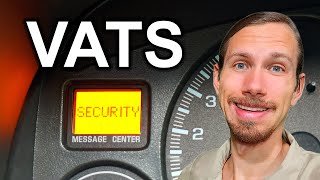
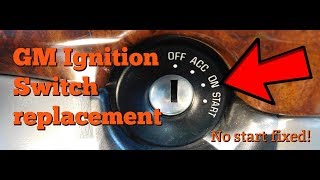
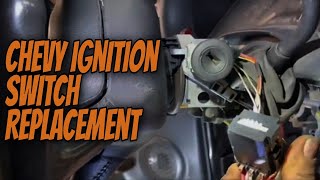
- Faulty ignition switch or lock cylinder (GM) (Very Common) — The ignition switch contains the GM Passlock sensor. Wear on the switch's internal contacts prevents it from reading the key correctly, triggering a no-start condition and setting a B2960 code alongside P1630.
- Internal Powertrain Control Module (PCM) failure (Ford) (Very Common) — On Ford vehicles, this code specifically points to a failure of the internal 5-volt reference circuit (Vref) inside the PCM. This circuit powers engine sensors, and its failure requires complete PCM replacement.
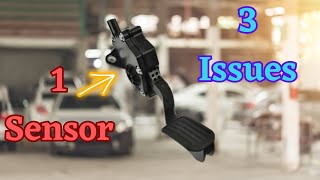
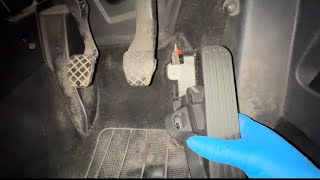
- Faulty Accelerator Pedal Position (APP) Sensor (VW/Audi) (Very Common) — On Volkswagen and Audi models, P1630 is caused by a failing accelerator pedal position sensor sending an incorrect low signal to the PCM, resulting in limp mode.
- Failed or unprogrammed BCM/PCM (GM) (Common) — On GM vehicles, if the BCM or PCM is replaced, or if a security relearn procedure is interrupted, the modules lose their anti-theft synchronization. This permanently disables the fuel injectors until properly reprogrammed. 🎬 Watch: How to perform the GM security relearn procedure.
- Low battery voltage or weak battery (Common) — Control modules require stable voltage above 10.5V during cranking. A weak battery causes communication errors between anti-theft modules or internal voltage faults in the PCM.
- Skid Control ECU Communication Failure (Toyota/Lexus) (Less Common) — On Toyota and Lexus models, P1630 triggers during a communication breakdown between the Skid Control ECU (brake actuator assembly) and the main Engine Control Module (ECM).
- Damaged wiring or poor connections (Less Common) — Corroded, broken, or loose wires between the BCM, PCM, ignition switch, or accelerator pedal interrupt the security handshake or critical voltage signals.
- Aftermarket Component Interference (Uncommon) — Improperly installed aftermarket remote starters or alarm systems interfere with the factory anti-theft system's data bus communication, leading to a no-start.
Symptoms

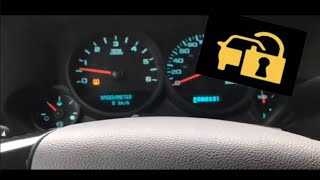
- Engine starts and immediately stalls — The hallmark symptom of a GM anti-theft issue. The PCM allows the engine to fire briefly before shutting off the fuel injectors because it lacks the correct security password.
- Engine cranks but will not start, or refuses to crank — The starter turns the engine over, but the PCM disables fuel/spark due to anti-theft lockouts or a failed PCM (Ford). In severe GM Passlock failures, the starter will not engage at all.
- Security or anti-theft light is flashing — The dashboard security light flashes to indicate the vehicle's immobilizer system is active and actively preventing the car from starting.
- Reduced Engine Power or 'Limp Mode' — On VW, Audi, or Mercedes vehicles, a P1630 forces the vehicle into a limp mode with severely limited throttle response, capping speeds around 20-30 mph.
Diagnostic Flowchart
Tap your situation to follow the diagnostic path that matches what you're seeing on this code.
Common Fixes & Costs
- Replace Ignition Switch / Lock Cylinder (GM)
— Parts: $50-$150, Labor: $125-$200, ~1.5 hr book time
(Intermediate)
Chevrolet Silverado (2003-2007): OEM ACDelco D1462G (Alt: Dorman 924-725)
Chevrolet Cavalier (2000-2005): OEM ACDelco D1432D (Alt: Dorman 924-709) - Perform Security Relearn Procedure (GM) — Parts: $0, Labor: $0-$150, ~1 hr book time (DIY)
- Replace Accelerator Pedal Sensor (VW/Audi)
— Parts: $70-$280, Labor: $75-$150, ~1 hr book time
(Intermediate)
VW Jetta / Golf (1999-2005): OEM VAG 6Q1721503L (Alt: Bosch APS165)
Audi A4 (2002-2008): OEM VAG 8E1721523C (Alt: Hella) - Replace and Program Powertrain Control Module (PCM) (Ford)
— Parts: $400-$1,100, Labor: $150-$300, ~1.5 hr book time
(Professional)
Ford F-150 (2004-2008): OEM VIN-specific (Alt: Cardone Remanufactured) - Replace and Program Body Control Module (BCM) (GM)
— Parts: $250-$450, Labor: $150-$250, ~2 hr book time
(Professional)
GMC Sierra (2003-2007): OEM GM 15136224 (Alt: Dorman Remanufactured)
Used vs. New Parts: Buying Guide
When a used part is worth it: Used parts are rarely recommended for P1630. Used PCMs and BCMs are high-risk because they are VIN-locked and require professional programming that may fail on a pre-owned unit.
Donor-vehicle mileage cap: roughly under 60000 miles for the part to have meaningful remaining life.
Donor quality checklist:
- For an accelerator pedal, ensure the part number is an exact match.
- Verify the donor vehicle did not have flood or fire damage.
- Avoid used PCMs/BCMs unless a specialized service guarantees it has been 'unlocked'.
Decision logic:
- If The fix is a PCM or BCM → Buy a new or professionally remanufactured unit with a warranty. The cost of programming makes gambling on a used module a poor financial decision.
- If The fix is an ignition switch → Buy a new OEM or high-quality aftermarket part. The labor involved is too high to risk using a worn part.
- If The fix is an accelerator pedal and budget is very tight → A used part from a low-mileage vehicle is a possibility, but a new part is strongly preferred.
Warranty tradeoff: Used parts typically have a 30-90 day warranty that doesn't cover labor. New aftermarket parts offer 1-year to lifetime warranties.
Worst-case if a used part fails: $500-1000 if a used PCM/BCM fails after installation, requiring repeat labor and programming.
What Happens If You Wait — Timeline
- Immediate: For GM and Ford, the vehicle is immediately disabled (no-start or start-and-stall). For VW/Audi, the vehicle enters 'limp mode' with severely restricted speed. The car is unsafe for normal driving. (MPG impact: N/A (undrivable) or 20-50% (limp mode)% · Added cost: $75-$250 for an immediate tow and diagnostic scan fee.)
- 1-7 Days: Repeated start attempts drain a healthy battery. Owners often attempt incorrect fixes, replacing perfectly good batteries, starters, or spark plugs based on generic symptoms. (MPG impact: N/A% · Added cost: $150-$600 in wasted parts and labor from misdiagnosis.)
- 1-4 Weeks: An attempt to bypass a GM Passlock system without proper wiring knowledge damages the BCM. The vehicle remains disabled until towed to a professional. (MPG impact: N/A% · Added cost: $500+ if complex electrical components like the BCM are shorted during a failed DIY repair.)
Cost of Not Fixing It
- Immediate: For GM and Ford, the vehicle will not start or will stall unpredictably, making it undrivable. This results in immediate costs for towing. (Added cost: $75-$250)
- 0-1 Month: For VW/Audi, driving in 'limp mode' is a major safety hazard due to severely limited power and speed. (Added cost: Negligible)
- 1-6 Months: Repeatedly trying to start a GM vehicle with a Passlock fault drains the battery. Ignoring a module communication error masks other developing problems. (Added cost: $150-$500)
Diagnosis Steps
- Verify Code Definition and Check for Other Codes
Confirm the P1630 meaning for your exact vehicle brand. Use a scanner to read all modules (BCM, TCM, ABS). GM anti-theft issues log 'B' codes (like B2960) in the BCM that reveal the true root cause.
Tools: OBD-II Scanner (capable of reading BCM/ABS codes) (Beginner) - Check the Battery and Connections
Ensure the battery has at least 12.4V (engine off) and terminals are tight. A module triggers a fault if input voltage drops below 10.5V during cranking.
Tools: Multimeter, Battery terminal cleaner (Beginner) - Perform a Security Relearn Procedure (GM)
Turn the ignition ON (engine off). Wait 10-11 minutes for the security light to turn off. Turn the ignition OFF for 30 seconds. Repeat this two more times. After the third cycle, attempt to start the vehicle.
Tools: Timer/Watch (Intermediate) - [PRO TIP] Test GM Passlock Sensor Voltage
Access the 3-wire ignition switch connector. With the key ON, back-probe the yellow signal wire. When the key turns, voltage must drop to a specific learned value (e.g., 1.4V to 3.8V). If voltage stays at 5V or drops to 0V, the sensor is bad.
Tools: Multimeter, Back-probe pins (Advanced) - [PRO TIP] Test Ford Vref Circuit Voltage
Turn the ignition ON. Back-probe the 5V reference wire on the Throttle Position Sensor (TPS). A healthy PCM shows 4.0V to 6.0V. A reading near 0V confirms the internal Vref circuit has failed and the PCM requires replacement.
Tools: Multimeter, Vehicle-specific wiring diagram (Advanced) - [PRO TIP] Test VW Accelerator Pedal Sensor (APP) Sweep
Back-probe both signal wires at the pedal connector with the key ON. Slowly press the pedal. Signal 1 should sweep smoothly from ~0.4V to ~4.5V. Signal 2 should sweep from ~0.2V to ~2.25V. Spikes or dropouts confirm a faulty pedal.
Tools: Multimeter, Vehicle-specific wiring diagram (Advanced) - Try a Spare Key and Inspect the Ignition
Try a different key to rule out a failed transponder chip. Inspect the ignition lock cylinder for excessive wear or binding, which affects the key-reading sensor.
Tools: Spare vehicle key (Beginner) - Check Fuel Pressure Drop-off (GM)
Connect a fuel pressure gauge. Start the engine. If it stalls after 2 seconds and fuel pressure immediately drops to zero, the PCM is actively commanding the fuel pump off due to a security fault.
Tools: Fuel pressure gauge (Advanced) - Inspect Wiring and Connectors
Visually inspect harnesses to the PCM, BCM, and steering column for chafing or corrosion. On VWs, check the pedal connector. On Fords, check the main PCM connector for water intrusion.
Tools: Flashlight (Intermediate) - Test Control Modules
Use a bi-directional scan tool to check communication data streams and confirm if a module (PCM, BCM, TCM) is unresponsive. This requires professional equipment.
Tools: Advanced diagnostic scan tool (Professional)
When This Code Triggers (Freeze-Frame Conditions)
- Engine RPM: 0 RPM (Key On) or 600-800 RPM (Stall) (For GM and Ford vehicles, the fault occurs at key-on or during the initial crank attempt. RPM sits at 0 just before starting or briefly rises and falls as the engine stalls.)
- Vehicle Speed: 0 mph (For no-start conditions (GM/Ford), the vehicle is stationary. For VW/Toyota, the code sets at various speeds during a change in throttle or a communication check while driving.)
- Battery Voltage: 10.5-12.0V (Data often shows lower-than-normal battery voltage during cranking, a direct cause of module communication errors that trigger P1630.)
Related Codes
- B2960 — This GM body code ('Security System Sensor Data Incorrect') is the root cause of P1630. It sets when the BCM receives an illogical voltage from the Passlock sensor in the ignition switch, prompting the PCM to disable fuel.
- P1631 — On GM vehicles, P1631 ('Theft Deterrent Password Incorrect') sets after a relearn attempt fails. It points to a hard fault in the BCM, PCM, or wiring, not just a loss of memory.
- P1639 — On VW vehicles, this code ('Accelerator Pedal Position Sensor 2 Signal Inplausible') accompanies P1630. Seeing both strongly confirms a failed accelerator pedal assembly.
- U1000 — A general network communication error. If P1630 is accompanied by U-codes, a wider bus communication failure is preventing the security handshake.
Climate & Environmental Factors
- Low Temperatures: Cold weather lowers a battery's effective amperage. A weak battery fails to maintain stable voltage for all modules during cranking, leading to communication errors and P1630.
- High Humidity / Water Intrusion: Moisture accelerates corrosion on wiring harnesses. On Ford trucks, windshield water leaks drip directly onto the PCM, causing short circuits that destroy the internal Vref circuit.
- Extreme Cold/Heat Cycles: Repeated temperature swings cause the fine internal contacts within the GM Passlock ignition switch to become brittle and fail, leading to intermittent open circuits.
How to Talk to a Mechanic About This Code
Say this: "My [Make/Model] has a P1630 code. For GM: 'Please scan the BCM for codes like B2960 before quoting parts.' For Ford: 'Can you test the 5V reference circuit to confirm PCM failure?' For VW: 'Please diagnose the accelerator pedal sensor.'"
This language directs the technician to the most likely cause based on your manufacturer, preventing them from starting a broad, expensive, and unnecessary diagnostic process.
Avoid saying:
- 'Just fix whatever's wrong'
- 'My check engine light is on, can you look at it?'
- 'The internet said to replace the BCM'
Questions to ask before authorizing the repair:
- For GM: Did you find any 'B' codes in the Body Control Module? Did you attempt the 30-minute security relearn procedure?
- For Ford: What was the voltage reading on the 5-volt reference circuit? Does your quote for the PCM include programming?
- For VW: Did you test the accelerator pedal sensor's voltage sweep to confirm it's faulty?
Where to Take It: Dealer vs Independent vs Chain
- Dealer:
Recommended for Ford PCM replacement or complex GM/Toyota diagnostics where specialized tools and access to manufacturer software are essential.
Best for: Vehicles under warranty, Complex PCM/BCM programming and replacement (Ford, GM), Advanced network diagnostics (Toyota)
Downsides: Highest labor rates, May replace a whole assembly when a smaller component is the only issue (Typical cost: +50% vs. baseline) - Independent Shop:
Best overall fit, IF they are well-equipped. Ask directly: 'Can you program a new PCM/BCM for my vehicle?' If they can, they will be more affordable than the dealer.
Best for: Out-of-warranty vehicles, Straightforward component swaps (VW accelerator pedal, GM ignition switch)
Downsides: Quality varies greatly; you must verify they can program modules if needed. (Typical cost: +0% vs. baseline) - Chain Shop:
AVOID. The complexity of P1630, especially the need for module-level diagnostics and programming, is far beyond the scope of a typical chain repair shop.
Best for: Simple jobs like battery replacement or oil changes.
Downsides: Technicians lack the training or tools for module programming or advanced electrical diagnostics. (Typical cost: -10% vs. baseline)
When to Walk Away From the Repair
If the estimated repair cost exceeds 40-50% of the car's Kelley Blue Book private-party value, consider selling the car as-is or trading it in.
- Car worth $2000, fix is $800: Walk away. The repair cost is 40% of the car's value. This is typical for an older GM vehicle needing a BCM replacement.
- Car worth $12000, fix is $1500: Fix it. The repair cost for a Ford F-150 PCM replacement is significant but is only 12.5% of the truck's value.
- Car worth $5000, fix is $2200: Borderline. This is a common scenario for a Toyota needing a brake actuator assembly. At 44% of the vehicle's value, get a second opinion before proceeding.
What Scan Tool You Need for This Code

Minimum: A scanner that can read manufacturer-specific codes from all modules, including the Body Control Module (BCM), ABS, and Transmission.
A basic $20 code reader only sees generic 'P' codes and misses the critical 'B' (Body) or 'U' (Network) codes essential for diagnosing P1630 on GM and Toyota vehicles.
Budget: BlueDriver Pro or Autel AP200 (~$60) — Reads codes from all modules (BCM, ABS, etc.) to reveal the true root cause (like a GM B2960 code) and provides live data to test sensors.
Mid-range: Foxwell NT510 Elite or CGSULIT SC530 (~$180) — Offers manufacturer-specific software and basic bi-directional controls to run specific system tests helpful for Toyota/GM diagnostics.
Professional: Autel MaxiCOM MK808BT or Launch X431 series (~$450) — Provides full bi-directional control to command modules and perform security relearn procedures.
Rent vs buy: Buy. Auto parts store loaner tools are usually basic readers that cannot access the BCM or other necessary modules required for P1630.
How to Clear the Code After You Fix It
- For GM, perform the 30-minute security relearn procedure.
- For all makes, use an OBD-II scan tool to formally clear the DTCs from all modules.
- Perform a complete OBD-II drive cycle to allow all system readiness monitors to run their self-tests.
Drive cycle (~30 minutes): A cold start (after sitting for 8+ hours), 2-3 minutes of idling, 10-15 minutes of mixed city/highway driving, and several stop-and-go periods with idle time.
Readiness monitors affected: Comprehensive Component Monitor, Misfire Monitor
Before emissions retest: drive at least 50 miles to fully set monitors.
Watch out for:
- Disconnecting the battery clears the code but won't fix the underlying anti-theft fault; the code returns immediately.
- Failing to complete a full drive cycle results in a 'Not Ready' status, causing an automatic smog test failure.
Will This Fail Emissions / State Inspection?
Yes — this code typically fails an OBD-II emissions inspection.
- California: An illuminated Check Engine Light from a P1630 code is an automatic failure. A full drive cycle must be completed before a re-test.
- New York: NYS vehicle inspection includes an OBD-II scan. A P1630 code causes the vehicle to fail the emissions portion.
- Texas: In counties requiring emissions testing, an active P1630 code results in an automatic inspection failure.
Most Commonly Affected Vehicles
- Chevrolet / GMC Silverado, Sierra, Cavalier, Impala, Tahoe (1999-2007) — These models extensively use the GM Passlock anti-theft system. Failures in the ignition switch's Passlock sensor are extremely common, leading to P1630 and B2960.
- Ford F-150, Focus, Explorer, Ranger (1999-2011) — These vehicles set P1630 for an 'Internal Vref Malfunction,' which definitively points to a failed PCM requiring replacement.
- Volkswagen / Audi Jetta, Golf, Passat, A4 (2002-2010) — P1630 means 'Accelerator Pedal Position Sensor 1 Signal too Low.' The sensor is integrated into the pedal assembly, which must be replaced.
- Toyota / Lexus RAV4, Camry, Avalon, RX350 (1998-2011) — P1630 signifies a 'Communication Error from VSC to ECM,' pointing to a CAN bus fault between the Skid Control ECU and the engine computer.
- Saturn Ion, Vue, L-Series (2000-2007) — As a GM brand, these use a Passlock system susceptible to ignition switch errors. TSB #06-02-35-017 specifically addresses this on the Ion.
Manufacturer-Specific Notes

- General Motors (Chevrolet, GMC, Buick, Saturn, Pontiac): P1630 is an informational code meaning 'Theft Deterrent Learn Mode Active.' It appears when the PCM is waiting for a security password. The real problem is whatever caused the password loss, almost always a faulty ignition switch that set a B2960 code first.
- Ford, Lincoln, Mercury, Mazda: P1630 means 'Internal Vref Malfunction.' This is a terminal diagnosis for the PCM. The internal 5-volt reference circuit has failed, and the only fix is to replace the PCM.
- Volkswagen, Audi: P1630 is 'Accelerator Pedal Position Sensor 1 Signal too Low.' It points directly to a problem with the drive-by-wire throttle system, requiring replacement of the pedal assembly.
- Toyota, Lexus, Scion: P1630 indicates a 'Communication Error from VSC to ECM.' This is a network fault between the Vehicle Stability Control ECU and the main engine computer, requiring advanced CAN bus diagnostics.
Real Owner Stories
2004 Chevrolet Impala with P1630 & B2960
Owner experienced a 'start and stall' symptom where the engine fired up and died after 2 seconds. The security light flashed on the dash.
What they tried:
- Attempted the 30-minute relearn procedure multiple times without success.
- Scanned the BCM and found code B2960, pointing to the Passlock sensor.
Outcome: The owner installed a $10 resistor bypass kit to trick the BCM, bypassing the faulty ignition switch. After the bypass and a final relearn procedure, the car started reliably.
Lesson: On GM vehicles, P1630 is a symptom of a B2960 code caused by a faulty Passlock sensor. While replacing the ignition switch is the standard fix, a resistor bypass is a proven, cheaper alternative for advanced DIYers.
2010 Ford F-150 with P1630
While driving on the highway, the truck lost power, the speedometer dropped to zero, and the check engine light illuminated.
What they tried:
- Initial troubleshooting pointed towards a communication failure between multiple modules.
Outcome: The P1630 code on a Ford indicates an 'Internal Vref Malfunction,' a terminal failure of the PCM. The owner paid $1,100 to have the PCM replaced and programmed at a dealer.
Lesson: For Ford owners, P1630 is rarely an intermittent sensor issue; it means the PCM is dead. Misdiagnosis wastes money, so confirm the 5V reference circuit is dead before replacing parts.
2011 VW GTI with Accelerator Fault
The EPC light illuminated, and the car entered limp mode with severely reduced power. A scan revealed P1630.
What they tried:
- Received a dealer quote for $850 to replace the accelerator pedal assembly.
Outcome: The owner purchased an OEM pedal assembly online for $130 and swapped it out in 20 minutes using a single Torx driver, instantly resolving the limp mode.
Lesson: On VW/Audi vehicles, P1630 points directly to the accelerator pedal. This is a highly cost-effective DIY fix that saves hundreds of dollars over dealer labor rates.
How to Prevent This Code From Triggering
- Maintain a healthy, fully charged battery (Ongoing) — Low voltage during cranking is a primary cause of communication errors between the BCM, PCM, and other modules. A stable voltage above 12.4V prevents spurious security fault codes.
- Minimize keychain weight and turn the key gently (Every start) — On GM vehicles, heavy keychains and forceful turning put mechanical stress on the delicate Passlock sensor inside the ignition lock cylinder, accelerating its failure.
- Address windshield and cowl water leaks immediately (After car washes or rain) — On Ford trucks, water leaking past a degraded cowl seal drips directly onto the PCM connector, causing corrosion, short circuits, and terminal PCM failure.
- Avoid installing low-quality aftermarket alarms (During vehicle ownership) — Improperly installed electronics that tap into the vehicle's data bus interfere with sensitive security module communication, triggering a P1630 no-start condition.
Frequently Asked Questions
Why does my GM car start and then die after 2 seconds?
This is the classic symptom of the GM Passlock anti-theft system. The computer allows the engine to start but shuts down the fuel injectors immediately because it doesn't recognize the key.
What is the GM 30-minute relearn procedure for P1630?
Turn the key to ON (not start) and wait 10-11 minutes for the security light to go out. Turn the key OFF for 30 seconds. Repeat this process two more times to force the computer to relearn the key.
I replaced the PCM/BCM and now the car won't start. What's wrong?
You must perform a security relearn procedure after replacing a major control module. These parts must be programmed to recognize your vehicle's specific anti-theft key. Without this, the modules trigger P1630 to prevent the engine from running.
Can a bad key cause a P1630 code?
Yes, on systems with a transponder chip, a faulty key prevents the car from starting. However, for GM's Passlock system, the fault is almost always in the ignition switch that reads the key, not the key itself.
What is the difference between GM codes P1630 and P1631?
P1630 means the system is in 'learn mode,' ready to accept a new password. P1631 means 'Theft Deterrent Password Incorrect,' indicating a hard failure between the BCM and PCM.
How much does it cost to fix P1630?
A GM security relearn is free to DIY. A GM ignition switch replacement costs $175-$350. The most expensive fix is a Ford PCM replacement, which costs $700 to $1,500.
Will disconnecting the battery clear the P1630 code?
Disconnecting the battery clears the code temporarily, but it does not fix the root cause. The code returns instantly, and the no-start condition persists as soon as you try to start the car.
Key Takeaways
- P1630 is a manufacturer-specific code: it means an anti-theft failure on GM, a dead PCM on Ford, a faulty accelerator pedal on VW, and a traction control network error on Toyota.
- For 1999-2007 GM vehicles, P1630 is almost always caused by a failing Passlock sensor in the ignition switch, which costs $175 to $350 to replace.
- On Ford vehicles, P1630 indicates a fatal internal 5-volt reference (Vref) failure, requiring a complete PCM replacement and programming that costs $700 to $1,500.
- Before buying any parts for a GM P1630, attempt the free 30-minute security relearn procedure (three 10-minute key-on cycles) to rule out a simple memory loss.
Helpful Videos



The information in this article is provided for general reference and educational purposes only. Vehicle specifications, procedures, and part compatibility can vary by production date, trim level, and region. Always consult your vehicle's factory service manual and verify part numbers before purchasing or performing repairs. Safety-critical components such as airbags, seat belts, and braking systems should be installed by a qualified professional.
- 🎬 Helpful Videos
- What Does P1630 Mean?
- Can I Drive With P1630?
- Common Causes
- Symptoms
- Diagnostic Flowchart
- Common Fixes & Costs
- Used vs. New Parts: Buying Guide
- What Happens If You Wait — Timeline
- Cost of Not Fixing It
- Diagnosis Steps
- When This Code Triggers (Freeze-Frame Conditions)
- Related Codes
- Climate & Environmental Factors
- How to Talk to a Mechanic About This Code
- Where to Take It: Dealer vs Independent vs Chain
- When to Walk Away From the Repair
- What Scan Tool You Need for This Code
- How to Clear the Code After You Fix It
- Will This Fail Emissions / State Inspection?
- Most Commonly Affected Vehicles
- Manufacturer-Specific Notes
- Real Owner Stories
- 2004 Chevrolet Impala with P1630 & B2960
- 2010 Ford F-150 with P1630
- 2011 VW GTI with Accelerator Fault
- How to Prevent This Code From Triggering
- Frequently Asked Questions
- Why does my GM car start and then die after 2 seconds?
- What is the GM 30-minute relearn procedure for P1630?
- I replaced the PCM/BCM and now the car won't start. What's wrong?
- Can a bad key cause a P1630 code?
- What is the difference between GM codes P1630 and P1631?
- How much does it cost to fix P1630?
- Will disconnecting the battery clear the P1630 code?
- Key Takeaways
- 🎟️ Get 5% Off