

P1629 on 2003-2007 Saturn Ion: Theft System No-Start Causes and Fixes
On a 2003-2007 Saturn Ion, code P1629 almost always means the engine won't start because of a faulty ignition switch or a failing Body Control Module (BCM). Due to major recalls on the ignition system, the switch is the most likely culprit. Expect to pay $50-$150 for a new switch and potentially more for BCM replacement and programming.
- P1629 means your car thinks it's being stolen and has shut off the fuel; it is not a fuel pump or starter problem.
- The entire 2003-2007 Saturn Ion line was recalled for faulty ignition switches, making the switch the number one suspect for this code.
- A temporary fix may be possible using the 30-minute 'Security Relearn Procedure'.
- The second most likely cause is a failed Body Control Module (BCM), which requires professional replacement and programming.
- Before buying parts, check if your vehicle's VIN has had the ignition switch recalls (14V-047 and 14V-171) completed.
What's Unique About the 2003-2007 Saturn Ion
The 2003-2007 Saturn Ion's entire production run was subject to major GM safety recalls for faulty ignition switches and lock cylinders (NHTSA 14V-047 and 14V-171). These defects, which can cause the car to stall or behave erratically, directly relate to the components that trigger a P1629 code. Therefore, unlike on other vehicles where this code might point to a wiring issue first, on the Ion, the ignition switch assembly itself is a highly probable root cause due to its documented history of failure. The Passlock system in these cars does not use a chip in the key; the security sensor is in the ignition lock cylinder housing itself.
Symptoms You May Notice
- Engine cranks but does not start.
- Engine starts and immediately dies (stalls).
- Flashing or constantly illuminated 'SECURITY' light on the instrument cluster.
- Intermittent stalling while driving.
- In some cases, the key may be difficult to remove from the ignition or will not turn.
- A cluster of other electrical issues, like malfunctioning gauges, lights, or power locks, may occur if the BCM is the cause.
- Replacing the fuel pump, assuming the no-start is due to a lack of fuel pressure.
- Replacing the starter motor, even though the engine is cranking properly.
- Replacing the key, which is not the issue on a Passlock system (the sensor is in the ignition switch, not the key). The 2003-2007 Ion does not require key programming.
Most Likely Causes
- Faulty Ignition Switch / Passlock Sensor 🔴 High Probability This entire vehicle range was recalled for defective ignition switches that can cause stalling and electrical issues (GM Recall 14063, NHTSA 14V-047). The Passlock sensor, which sends the security signal, is integrated into this failure-prone switch assembly. Wear and tear on the switch contacts and sensor is extremely common.
How to confirm: Check if your vehicle had the ignition switch recall performed via the GM recall website. If the problem is intermittent, jiggling the key in the ignition may temporarily restore function, a classic sign of a worn switch. A professional diagnosis involves measuring the voltage on the Passlock sensor's yellow signal wire during cranking to see if it drops from its 5V reference to a stable, learned value. If the security light fails to turn off after the 10-minute relearn wait, it strongly suggests the sensor is bad.
Typical fix: Replace the ignition switch and/or ignition lock cylinder. After replacement, a security relearn procedure is required. The recall service performed by GM dealers included replacing the switch, cylinder, and cutting two new keys.
Est. part cost: $50-$150 - Failing Body Control Module (BCM) 🟡 Medium Probability The BCM is located under the center console, making it vulnerable to damage from spilled liquids which can short out the module. It is the central hub for the security system, and an internal failure will prevent it from sending the 'fuel enable' signal to the PCM.
How to confirm: Use a high-end scan tool to check for communication with the BCM and look for other BCM-related trouble codes (B-codes or U-codes). Check for other BCM-related symptoms like erratic interior lights, power locks, radio problems, or a parasitic battery drain that kills the battery overnight. A visual inspection of the module for corrosion or burn marks can also confirm failure.
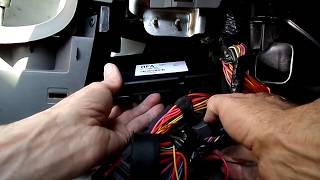
Typical fix: Replace the Body Control Module. 🎬 Watch: How to remove the BCM from the center console The new BCM must be programmed to the vehicle's VIN and options using a dealer-level scan tool like a Tech 2.
Est. part cost: $200-$400 - Wiring or Connector Problem ⚪ Low Probability The main harness passes through the dash and center console area, where it can be subject to chafing or damage from previous repairs or liquid spills directed at the BCM.
How to confirm: Inspect the wiring harness and connectors between the ignition switch, the BCM (under the console), and the PCM (in the engine bay). Check for chafed wires, loose pins, or corrosion, especially at the large BCM connectors. A 'wiggle test' on the harness while trying to start the car can sometimes pinpoint the location of a bad connection.
Typical fix: Repair the damaged section of the wiring harness or clean/replace the faulty connector.
Est. part cost: $10-$50 - Weak or Dead Vehicle Battery ⚪ Low Probability
How to confirm: Test the battery with a multimeter or a load tester. A reading below 12.4 volts at rest indicates a weak battery. Low voltage during cranking can cause modules to fail to communicate correctly, leading to a false anti-theft trigger.
Typical fix: Recharge or replace the battery. If the battery is good, this was likely a symptom of another issue (like a parasitic drain from a bad BCM) rather than the root cause.
Est. part cost: $150-$250
Rare But Worth Checking
- Faulty Powertrain Control Module (PCM): This is uncommon. The PCM is more likely to be suspected after all other components in the theft deterrent system have been ruled out. Replacing the PCM with a used, un-programmed unit will also set this code because it hasn't learned the Passlock signal from the BCM.
Diagnosis Steps
- Verify the battery is fully charged (above 12.4V) and the connections are clean and tight. A battery charger is recommended during diagnosis.
- Scan for all codes in all modules (PCM, BCM, etc.) using a capable OBD-II scanner. Note any B-codes or U-codes as they can point to the root cause.
- Check the status of the 'SECURITY' light. Is it on solid, flashing, or off when the key is in the 'ON' position?
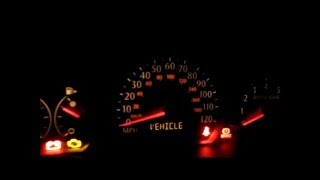
- Attempt the 30-Minute Passlock Security Relearn Procedure: Turn the key to 'ON' (not start). The security light will be on. Wait approximately 10-11 minutes until the security light turns off. Turn the key off for 10 seconds. Repeat this cycle two more times for a total of three cycles. On the fourth try, the car should start. 🎬 See this video for tips on handling cold-weather Passlock issues This often works as a temporary fix if the components are not completely failed.
- Check if the vehicle is covered under GM recalls 14V-047 or 14V-171 and if the repair was performed. A GM dealer can check this with your VIN.
- If the relearn fails (security light never turns off), the ignition switch/Passlock sensor is the primary suspect.
- If the relearn works but the problem returns, or if you have other strange electrical issues, inspect the BCM under the center console for signs of liquid damage or corrosion.
- Inspect the wiring and connectors between the ignition switch and the BCM for any visible damage.
Parts You'll Likely Need
- Ignition Switch
(OEM #23215459)— This is the most common failure point and was subject to a massive safety recall. It contains the Passlock sensor that sends the security signal.
Trusted brands: ACDelco (GM Genuine), Dorman, Standard Motor Products (SMP)
OEM price range: $70-$120
Aftermarket price range: $40-$80 - Body Control Module (BCM)
(OEM #Varies by year and options. Must be matched to VIN.)— The BCM processes the security signal. It can fail from internal faults or external damage (like liquid spills), causing a P1629.
Trusted brands: ACDelco (OEM), Dorman (Remanufactured, e.g., 924-719)
OEM price range: $250-$400
Aftermarket price range: $150-$300
Related Codes That Often Appear With This One
- B2960 — This GM-specific code often means 'Security System Sensor Data Incorrect but Valid', pointing directly to a problem with the Passlock sensor signal from the ignition switch.
- P1626 — This code means the PCM received an incorrect security signal, whereas P1629 means it received NO signal. They point to similar failures in the same system.
- U-codes (e.g., U0140) — Various 'U' or network communication codes indicate a loss of communication between modules (like the BCM), which can be the root cause of the P1629.
Technical Service Bulletins (TSBs) & Recalls
- NHTSA ID: 14V047000 / GM Recall 14063 - Ignition switch may move out of the run position, resulting in a loss of electrical power.
- NHTSA ID: 14V171000 / GM Recall 14113 - The ignition key may be removed when the ignition is not in the 'OFF' position.
- GM Bulletin No. 14115B - Addresses the related recall for loss of Electric Power Steering (EPS) assist, another common electrical issue on this platform.
Platform-Specific Known Issues
- The 2003-2007 Saturn Ion was part of GM Safety Recall 14V-047 (GM #14063) for a defective ignition switch that could unexpectedly move out of the 'RUN' position, causing the engine to stall and disabling airbags.
- The same vehicles were also part of GM Safety Recall 14V-171 (GM #14113) for a faulty ignition lock cylinder that could allow the key to be removed when not in the 'OFF' position.
- The BCM's location under the center console makes it susceptible to damage from spilled drinks, a common cause of failure reported by owners.
- When replacing the ignition switch under recall, dealers were instructed to cut new keys. For the Ion, some replacement keys were wide
Mechanic-Grade Diagnostic Values
- Passlock Sensor Signal Wire Voltage — expected: Approximately 5V with key on, engine off. This voltage should drop to a specific, consistent value between 1V and 4V when the key is turned to the 'CRANK' position.. Failure: Voltage does not drop, drops to 0V, or is unstable/inconsistent with each key turn. If the voltage stays at 5V, the BCM is not receiving the signal.
- Passlock Sensor Power Supply Voltage — expected: Above 10V, typically matching battery voltage (~12V).. Failure: Voltage below 10V indicates a problem with the BCM's power supply to the sensor.
- Passlock Bypass Resistor Value (for diagnosis/bypass) — expected: There are 10 possible resistance values; a common value for many Saturns is 2.2k Ohms (2200 Ohms), but values can range from 500 to 14,000 Ohms. The value must be stable.. Failure: This is not a failure indicator but a method to determine the vehicle's required resistance value by measuring between the signal wire and ground with the key in the 'RUN' position.
Hidden / Shadow Codes Worth Checking
- B2960: Security System Sensor Data Incorrect but Valid. This BCM code is more specific than P1629 and indicates the BCM is receiving a signal from the Passlock sensor, but the value is not the one it has learned for the vehicle. It often points directly to a failing sensor. (see via Requires a scan tool capable of reading Body Control Module (BCM) codes, not just generic OBD-II P-codes.)
Scan Tool Commands That Help
- GM Tech 2 / GDS2: Special Functions -> BCM -> New BCM Setup — This function is mandatory after installing a new or refurbished Body Control Module. It programs the vehicle's VIN and RPO (option) codes into the new module.
- GM Tech 2 / GDS2: Special Functions -> Passlock Learn — Used after replacing the BCM, PCM, or ignition switch/Passlock sensor. It forces the modules to learn the new security signal. The automated tool procedure takes about 10 minutes, versus the 30-minute manual method.
- GM Tech 2 / GDS2: BCM Data Display -> Passlock Sensor Voltage — To view the live voltage signal the BCM is receiving from the Passlock sensor. This is used to confirm if the sensor is sending a signal and if the BCM is reading it correctly, without needing to back-probe wires.
- TIS2000 (on a PC with Tech 2): Service Programming System (SPS) - Pass-Thru Mode — For reflashing or updating the software on any module, including the BCM or PCM. The Tech 2 acts as an interface between the vehicle and the PC, allowing for faster programming.
Wiring & Ground Locations
- BCM — Located in the lower center of the dashboard, in front of the gear shifter. It is often integrated with the interior fuse panel.. The BCM is the brain of the Passlock system. All relevant wiring from the ignition switch terminates here. Its location makes it vulnerable to liquid spills from the cup holders.
- G201 / G203 — Located behind the lower left side of the dashboard, to the left of the steering column.. These are the primary interior ground points for the BCM and instrument panel cluster. A poor connection here can cause a host of intermittent electrical issues, including false theft-deterrent activation.
- Passlock Sensor Connector — A 3-wire connector attached to the ignition lock cylinder housing, accessible after removing the steering column shrouds.. This is the source of the security signal. The wires are typically Yellow (Signal), Black (Ground), and a power feed (Pink or White). Testing voltage and signal at this point is a key diagnostic step.
- BCM Connector C4 — This is a 56-pin GRAY connector at the Body Control Module.. This connector contains several key circuits for the Passlock system, including power, ground, and the signal from the ignition switch, making it a central point for inspection.
Real Owner Repair Stories
- Synthesized from multiple SaturnFans.com & SaturnForum.com threads (2005 Saturn Ion 2.2L) — Intermittent crank-no-start. Security light would flash when it wouldn't start. Sometimes waiting 10-15 minutes would allow it to start. Problem became more frequent over time.
❌ Tried (didn't work) Replacing the battery., Performing the 30-minute relearn procedure (only worked temporarily)., Checking all fuses.
✅ What actually fixed it The owner replaced the ignition switch assembly (ACDelco P/N 23215459). After installing the new switch, they performed the 30-minute security relearn procedure one final time. The car started reliably afterward, and the P1629 code did not return. - Synthesized from multiple SaturnFans.com & Reddit threads (2003 Saturn Ion) — Car suddenly died while driving, then crank-no-start. Security light was on solid. Also noticed the radio and power locks were acting erratically for a few weeks prior.
❌ Tried (didn't work) Replacing the ignition switch (did not solve the problem)., Bypassing the Passlock sensor with a resistor (did not solve the problem).
✅ What actually fixed it The owner discovered the carpet under the center console was damp from a spilled drink. Upon removing the BCM, they found visible green corrosion on the connector pins. Replacing the BCM with a programmed, refurbished unit (Dorman) and cleaning the harness connectors resolved all issues.
OEM Part Supersession History
10392423, 12450250→23215459— Updated design to address failures that prompted GM safety recall 14V-047.
Heads up: The new part is a direct replacement. A security relearn procedure is required after installation.
Model Year Variations Within This Range
- 2003-2007: While the Passlock system function is the same across all years, the specific part number for the Body Control Module (BCM) can vary based on the model year and vehicle options (e.g., coupe vs. sedan, power accessories). A BCM must be sourced for the correct year and option package to ensure full functionality after programming.
Diagnostic Flowchart
Other Known Issues on This Vehicle
Issues unrelated to this code that are worth knowing about as an owner of this generation:
- Electric Power Steering (EPS) Failure 🔴 High — Extremely common across all model years. Subject to a major safety recall (NHTSA 14V153000, GM recall 14115). (Ref: NHTSA 14V153000)
- Worn Front Lower Control Arm Bushings 🟠 Medium — Very common, typically after 60,000 miles. Causes a loud clunking or popping noise from the front suspension when turning or going over bumps.
- Ecotec Timing Chain Wear/Failure 🔴 High — Common on high-mileage engines (100k+ miles), especially if oil levels are not maintained. Can be preceded by rattling noises on startup. Failure is catastrophic as it is an interference engine.
- CVT Transmission Failure (2003-2004 models) 🔴 High — The VTi continuously variable transmission used in 2003-2004 models was notoriously unreliable and prone to failure, often before 100,000 miles.
- Malfunctioning Turn Signal/Daytime Running Lamp 🟡 Low — Commonly caused by loss of contact between the bulb and socket in the front lamp assembly. Subject to recall NHTSA 04V251000. (Ref: NHTSA 04V251000)
Used vs. New Parts: Buying Guide for This Vehicle
When a used part is the smart pick: A used Body Control Module (BCM) from a salvage yard can be a cost-effective option, but it absolutely requires reprogramming by a professional with a GM Tech 2 or equivalent tool to match your car's VIN and features.
Donor-vehicle mileage cap: roughly under 150000 miles for the part to have meaningful remaining life.
What to inspect on the donor part:
- Ensure the donor vehicle was not in a flood; inspect the BCM case and connectors for any signs of water intrusion, such as white or green powdery corrosion.
- Verify the part number on the used BCM matches your original BCM as closely as possible.
- Obtain the VIN of the donor car if possible, as this can sometimes aid in the reprogramming process.
OEM-only on this vehicle (don't cheap out):
- Ignition Switch / Lock Cylinder Assembly
Aftermarket brands forum-validated for this vehicle:
- ACDelco (GM Genuine) for ignition switch
- Dorman (for ignition switch or remanufactured BCM)
- Standard Motor Products (SMP) for ignition switch
Brands owners have reported issues with on this vehicle:
- Unbranded, 'white box' ignition switches from online marketplaces, as their internal sensor tolerances can be inconsistent and lead to repeat failures.
Real Owner Stories
Aggregated from forums and TSBs cited above. Mileages and costs reflect what owners reported in those sources.
2004 Saturn Ion
Symptoms: The car had an intermittent starting problem, sometimes cranking but not starting.
What fixed it: The owner had the ignition switch replaced, which required dealer programming to resolve the issue.
Source hint: saturnforum.com/forum/saturn-ion-17/2004-ion-ignition-switch-3843/
2003 Saturn Ion
Symptoms: After the owner replaced the ignition switch to fix a no-start issue, the car still would not start and the security light was on.
What fixed it: The issue was resolved by performing the Passlock security relearn procedure, which the owner was seeking help with.
Source hint: 2carpros.com/questions/saturn-ion-2003-saturn-ion-changed-ignition-switch
2005 Saturn Ion
Symptoms: Owner experienced a no-start condition with a P1629 code, along with other electrical issues like malfunctioning gauges and power locks after a drink was spilled in the center console.
What fixed it: The Body Control Module (BCM), which was found to have corrosion from liquid damage, was replaced and programmed to the vehicle's VIN.
Source hint: Vehicle Specific Issues section regarding BCM location and vulnerability
Related OBD-II Codes
Frequently Asked Questions
My 2005 Saturn Ion has a P1629 code and won't start. Is this related to a recall?
Why is my 'SECURITY' light flashing on my Ion's dashboard?
I replaced the ignition switch on my Saturn Ion myself, but it still won't start. What did I miss?
Can I use the 30-minute relearn procedure to permanently fix my Ion's starting problem?
Along with P1629, my Ion's interior lights, radio, and power locks are acting erratically. Are these issues connected?
I can remove the key from my 2006 Ion's ignition when it's not in the 'OFF' position. Is this related to the P1629 code?
Helpful Videos
Used OEM Parts in Stock


New Aftermarket Parts Available


The information in this article is provided for general reference and educational purposes only. Vehicle specifications, procedures, and part compatibility can vary by production date, trim level, and region. Always consult your vehicle's factory service manual and verify part numbers before purchasing or performing repairs. Safety-critical components such as airbags, seat belts, and braking systems should be installed by a qualified professional.
- Saturn Ion:
- 🎬 Helpful Videos
- 🛍️ Shop This Part
- What's Unique About the 2003-2007 Saturn Ion
- Symptoms You May Notice
- Most Likely Causes
- Rare But Worth Checking
- Diagnosis Steps
- Parts You'll Likely Need
- Related Codes That Often Appear With This One
- Technical Service Bulletins (TSBs) & Recalls
- Platform-Specific Known Issues
- Mechanic-Grade Diagnostic Values
- Hidden / Shadow Codes Worth Checking
- Scan Tool Commands That Help
- Wiring & Ground Locations
- Real Owner Repair Stories
- OEM Part Supersession History
- Model Year Variations Within This Range
- Diagnostic Flowchart
- Other Known Issues on This Vehicle
- Used vs. New Parts: Buying Guide for This Vehicle
- Real Owner Stories
- 2004 Saturn Ion
- 2003 Saturn Ion
- 2005 Saturn Ion
- Related OBD-II Codes
- Frequently Asked Questions
- 🎟️ Get 5% Off