

P1629 on 1997-2005 Buick Century: Theft System Malfunction Causes and Fixes
On a 1997-2005 Buick Century, P1629 means the anti-theft system is preventing the car from starting. This is almost always caused by a faulty ignition lock cylinder or the thin wires connected to it. A temporary fix is the 30-minute relearn procedure, but replacing the lock cylinder and/or switch is often required for a permanent solution.
- P1629 means your car thinks it's being stolen and has shut off the fuel supply.
- Before spending any money, try the 30-minute security relearn procedure. This can provide a temporary or even long-term fix if the issue was a glitch.
- The most common cause is a faulty ignition lock cylinder, followed by the ignition switch. These parts wear out over time.
- Do not replace the fuel pump or starter; they are not the cause of this specific code.
- After replacing the ignition lock cylinder or switch, the security relearn procedure must be performed for the car to start.
What's Unique About the 1997-2005 Buick Century
The 1997-2005 Buick Century uses GM's Passlock II anti-theft system. Unlike earlier systems that used a resistor pellet in the key itself (VATs), Passlock II uses a sensor and a magnet within the ignition lock cylinder to detect the rotation of the key. The Body Control Module (BCM) sends a reference voltage to this sensor. The fine wires (typically a 3-wire bundle: Yellow, Black, and White/Black) leading from this sensor are routed down the steering column and are prone to breaking from years of rotational stress from turning the key. This breakage causes an intermittent or total loss of the security signal, which is the most common cause of P1629 on this platform.
Symptoms You May Notice
- Engine cranks but does not start
- Engine starts and immediately stalls (within 1-2 seconds)
- Flashing or steadily illuminated 'Security' light on the dashboard
- Intermittent no-start condition that may seem to resolve itself after waiting 🎬 Watch: How to perform the security reset procedure
- No-start condition occurs after wiggling the key in the ignition
- Replacing the fuel pump. The symptoms of 'crank, no start' can mimic a bad fuel pump. However, with P1629, the PCM is intentionally disabling fuel, so a new pump will not solve the problem.
- Replacing the starter. The engine cranks, which means the starter is working. This code is unrelated to the starter's function.
- Replacing the key. The 1997-2005 Buick Century uses the Passlock II system, which does not have a chip or resistor in the key itself. The security sensor is in the ignition lock housing, so a new key will not fix the issue.
Most Likely Causes
- Worn or Faulty Ignition Lock Cylinder / Passlock Sensor 🔴 High Probability The Passlock sensor is integrated into the lock cylinder or its housing. The thin, delicate wires (Yellow, Black, White/Black) that transmit the security signal can fatigue and break after thousands of key cycles, leading to a lost signal. This is the most common failure point.
How to confirm: If the security light is flashing and the relearn procedure fails or only works temporarily, the lock cylinder assembly is the most likely cause. A scan tool may show BCM code B2960, which directly indicates a problem with the Passlock sensor data. Wiggling the key while in the 'ON' position may cause the security light to flicker, confirming a wiring issue at the cylinder.
Typical fix: Replace the ignition lock cylinder and/or the housing containing the Passlock sensor. A security relearn procedure is required after replacement. 🎬 See this quick guide for the 30-minute relearn
Est. part cost: $40-$200 - Faulty Ignition Switch 🟡 Medium Probability The ignition switch, located electronically behind the mechanical lock cylinder, contains contacts that can wear out or develop carbon buildup. This can cause an intermittent loss of power to the Body Control Module (BCM) or other modules during the 'crank' or 'run' key positions, confusing the security system.
How to confirm: Test for consistent voltage on the ignition switch output wires (e.g., power to the BCM and instrument cluster) while slowly turning the key. Any flicker or drop in voltage indicates a bad switch.
Typical fix: Replace the ignition switch. This part is separate from the lock cylinder. A relearn is not typically required for only the switch.
Est. part cost: $30-$170 - Wiring/Connection Issue ⚪ Low Probability The wiring harness from the steering column can be stressed over time. Rubbing or chafing can cause shorts or opens in the circuits between the lock cylinder, BCM, and PCM. The connector at the base of the steering column can also become loose.
How to confirm: Visually inspect the wiring harness coming from the steering column for any signs of damage. Check for continuity on the relevant wires (especially the yellow signal wire) between the ignition assembly and the BCM connector.
Typical fix: Repair the damaged section of the wiring harness or re-secure the connector.
Est. part cost: $5-$25
Rare But Worth Checking
- Failing Body Control Module (BCM): The BCM is the 'brain' of the Passlock system. While not as common as ignition component failure, a faulty BCM can fail to interpret the signal from the key or fail to send the correct password to the PCM. This is more likely if other strange electrical issues (lights, windows, etc.) are also present. Bad solder joints on the BCM's main connector pins are a known failure point.
- Failing Powertrain Control Module (PCM): This is the least likely cause. The PCM is generally robust, but an internal failure could prevent it from correctly receiving or processing the security signal from the BCM. This should only be considered after all other possibilities have been exhausted.
- Passlock Resistor Bypass Failure: Some owners or previous mechanics may have attempted to 'fix' the issue by installing a resistor to mimic the Passlock sensor's signal. These connections can fail over time, reintroducing the P1629 code. If you find a resistor spliced into the ignition wiring, it may have failed or the connections may have come loose.
Diagnosis Steps
- Confirm Symptoms: Verify that the engine cranks but does not start (or starts and stalls) and that the 'Security' light is flashing or on.
- Scan for Codes: Use an OBD-II scanner capable of reading Body codes to confirm P1629. Check for any other 'P', 'B', or 'U' codes. The presence of B2960 strongly points to the ignition lock cylinder/sensor.
- Attempt Security Relearn Procedure (30-Minute): Turn the ignition ON (do not start). The security light will be on or flashing. Wait for approximately 10-11 minutes until the light turns off or stops flashing. Turn the ignition OFF for 10-20 seconds. Repeat this cycle two more times for a total of three cycles and about 30 minutes. After the third cycle, the system should be relearned. Try to start the vehicle. If this works, the fix may be temporary, suggesting an intermittent hardware fault.
- Inspect Ignition Cylinder Wiring: If the relearn fails, carefully remove the steering column shrouds. Locate the small, sheathed bundle of three wires (usually yellow, black, white/black) coming from the back of the ignition lock cylinder. Gently wiggle these wires while the key is ON and observe the 'Security' light. If it flickers or changes state, you have found the fault.
- Inspect Ignition Switch: If the cylinder wiring seems intact, test the main ignition switch for consistent power output to the BCM and other modules in all key positions using a multimeter.
- Check for Bypass Resistor: Inspect the wiring harness for a non-factory resistor spliced in. These are a common but sometimes unreliable fix that can fail.
- Replace Components: Based on findings, replace the faulty component. This is most often the ignition lock cylinder (ACDelco D1492C) or the housing containing the Passlock sensor (e.g., Dorman 924-7xx series). Perform the 30-minute security relearn procedure after replacement.
Parts You'll Likely Need
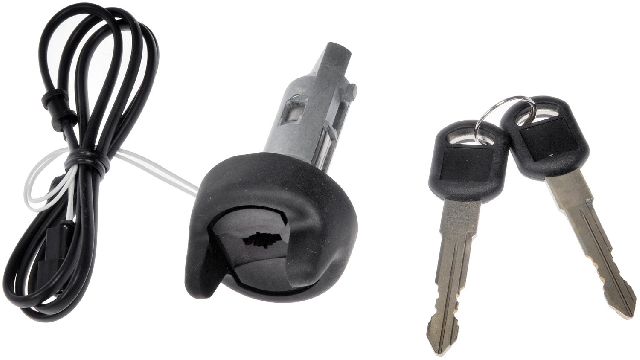
- Ignition Lock Cylinder
(OEM #D1492C)— This part houses the mechanical tumblers and the magnet for the Passlock sensor. While the cylinder itself can wear out, it's often replaced with the sensor housing. The ACDelco part is the GM original equipment.
Trusted brands: ACDelco (OE), Dorman, Standard Motor Products
OEM price range: $150-$200
Aftermarket price range: $40-$80 - Ignition Switch
(OEM #D1436G)— Worn internal contacts can cause intermittent power loss to the security system modules, triggering this code. It is often replaced along with the lock cylinder as a preventative measure.
Trusted brands: ACDelco (OE), Standard Motor Products, Dorman
OEM price range: $120-$170
Aftermarket price range: $30-$60 - Ignition Lock Housing with Passlock Sensor — For many GM vehicles of this era, the Passlock sensor is part of the housing that the lock cylinder slides into. Aftermarket brands like Dorman (e.g., 924-713, 924-720, check fitment) offer this as a complete unit, which is often the true point of failure.
Related Codes That Often Appear With This One
- P1626 — P1626 is 'Theft Deterrent Fuel Enable Signal Lost'. This code often sets if the security signal is lost *after* the engine is already running, whereas P1629 sets when the signal is missing *during* crank. They point to the same fundamental problem in the Passlock system.
- B2960 — B2960 is 'Security System Sensor Data Incorrect but Valid'. This is a Body Control Module (BCM) code that points more directly to a fault in reading the Passlock sensor in the ignition lock cylinder, confirming the diagnosis.
- P1631 — P1631 is 'Theft Deterrent Password Incorrect'. This indicates the PCM received a password from the BCM, but it did not match the expected value. This also points to a communication or component fault within the Passlock system.
Technical Service Bulletins (TSBs) & Recalls
- TSB PIC5460B - While not specific to the Century, this GM TSB for other models with similar codes advises technicians to thoroughly rule out all wiring and connection issues before condemning a PCM for a no-start condition, reinforcing that the fault is almost always in the external wiring or components.
Platform-Specific Known Issues
- Passlock Sensor Wire Breakage: The most common point of failure for P1629 on the 1997-2005 Buick Century and its platform mates is the fracture of one or more of the three small wires inside a black sheath that run from the ignition lock cylinder housing down the steering column. These wires (typically Yellow for signal, Black for ground, and sometimes a White/Black) are subjected to repeated stress with every turn of the key. After many years, the copper strands break inside the insulation, causing an intermittent or complete loss of the Passlock signal. A common diagnostic step is to gently tug on or wiggle these wires with the key on to see if the 'Security' light on the dash flickers, which confirms a break.
Mechanic-Grade Diagnostic Values
- Passlock Sensor Signal Wire Voltage — expected: The BCM supplies a 5-volt reference signal. When the key is turned, the sensor's internal resistance drops this voltage to a specific level (e.g., ~4.3V). This value is what the BCM learns and expects.. Failure: A reading of 0V or a full 5V indicates a broken wire or failed sensor. A fluctuating voltage when wiggling the key indicates an intermittent connection.
- Passlock Resistor Bypass Value — expected: Commonly between 1.8K Ohms and 2.2K Ohms. A 2.2K Ohm resistor is frequently used as a starting point for a bypass.. Failure: The goal of a bypass is to permanently provide a resistance value the BCM can learn. The exact value is less important than its stability, as the BCM will learn the new value during the relearn procedure.
Scan Tool Commands That Help
- GM Tech2: Body > BCM > Special Functions > Theft Relearn — This command initiates the security system relearn process after replacing a component like the BCM or ignition lock housing. It is an alternative to the manual 30-minute procedure.
- GM Tech2: Body > BCM > Data Display > Theft Deterrent Data — This allows a technician to view live data from the Passlock system, such as the state of the security light, the voltage value being read from the sensor, and the current security status, which is critical for diagnosing whether the fault is with the sensor, BCM, or PCM communication.
Wiring & Ground Locations
- Body Control Module (BCM) — Under the left (driver's) side of the dash, often behind a hush panel. It's a black box with three large multi-pin connectors (typically pink, blue, and natural/white).. The BCM is the control center for the Passlock system. It reads the sensor in the ignition, validates the signal, and sends the 'fuel enable' password to the PCM. All relevant wiring originates or terminates here.
- G201 — Behind the passenger side kick panel.. This is a major ground point for several components in the dashboard area, including potentially the BCM or related circuits. A poor ground here can cause a variety of strange electrical issues, including security system faults.
- Passlock Sensor Wires — A small 3-wire harness (typically Yellow, Black, and White/Black) emerging from the ignition lock cylinder housing and running down the steering column.. These are the most common failure points. The Yellow wire is the signal wire, Black is ground, and the third wire is a 12V feed. Breaks in these wires are the primary cause of P1629.
- BCM Connector C1, Pin D2 — On the pink connector of the BCM.. This is the specific pin for the Passlock signal wire (often White/Black) from the ignition cylinder sensor. Probing this pin is essential for advanced diagnostics.
Real Owner Repair Stories
- YouTube channel Gasdiesel Garage (2002 Oldsmobile Alero (uses the same Passlock II system)) — Crank no-start, security light on. Vehicle was stranded.
❌ Tried (didn't work) The video focuses directly on the permanent bypass fix, assuming prior diagnosis pointed to the Passlock system.
✅ What actually fixed it The owner performed a permanent bypass of the Passlock sensor. He cut the yellow signal wire and the black ground wire in the steering column harness. He then soldered a 2.2K Ohm resistor between the portion of the yellow wire going *to the BCM* and the black ground wire. After the modification, he performed the 10-minute relearn procedure (one cycle), which successfully taught the BCM the new fixed resistance value, permanently resolving the no-start issue.
OEM Part Supersession History
26075081, 26093782→88965342 (GM), Dorman 924-713 (Aftermarket)— Part consolidation and design updates for the ignition lock housing with Passlock sensor.
Heads up: While many Dorman housings look similar (e.g., 924-713 vs 924-720), the internal clock spring and gear mechanisms can differ. It is critical to verify the exact part number for the Buick Century, as using a truck or SUV housing will not work.
Model Year Variations Within This Range
- 1997-2005: The 1997 model year marked a complete redesign onto the GM W-body platform, introducing this version of the Passlock II system. Models from 1997-2005 are largely similar regarding this fault. The prior generation (ending in 1996) used a different platform and security system, so fixes for older Centurys do not apply.
Diagnostic Flowchart
Other Known Issues on This Vehicle
Issues unrelated to this code that are worth knowing about as an owner of this generation:
- Lower Intake Manifold Gasket Failure 🔴 High — Extremely common on the 3.1L V6. Often occurs between 60,000 and 120,000 miles. The original plastic-carrier gaskets degrade from Dex-Cool coolant, causing coolant to leak externally or, more dangerously, into the engine oil.
- Transmission Pressure Control Solenoid (PCS) Failure 🟠 Medium — Common in the 4T65-E automatic transmission. Symptoms include harsh, delayed, or erratic shifting, particularly when the transmission is warm. Often requires removal of the transmission side cover for replacement.
- Power Window Regulator/Motor Failure 🟡 Low — Very common. Brittle plastic clips on the regulator break, causing the window to make grinding noises, move slowly, or drop into the door. Typically requires replacing the entire regulator and motor assembly.
- Coolant Elbow Failure 🟡 Low — On 3.8L V6 equipped models, the plastic coolant elbows that connect the tensioner bracket to the intake manifold become brittle and crack, causing a coolant leak. An inexpensive part, but labor can be involved.
Used vs. New Parts: Buying Guide for This Vehicle
When a used part is the smart pick: A used Body Control Module (BCM) can be a cost-effective choice IF the BCM is confirmed to be the fault and not the more common ignition components. A used PCM is also a viable option in the rare event it has failed. Used ignition switches are generally acceptable if tested for solid connections.
Donor-vehicle mileage cap: roughly under 80000 miles for the part to have meaningful remaining life.
What to inspect on the donor part:
- For a BCM, ensure the part number matches exactly (e.g., 10319213).
- Inspect connectors on any used electronic module for corrosion or bent pins.
- Avoid ignition lock cylinders from a junkyard; the internal wiring is a primary wear item and a used part will have limited remaining life.
OEM-only on this vehicle (don't cheap out):
- There are no strict OEM-only parts for this repair, as reputable aftermarket brands offer functional replacements.
Aftermarket brands forum-validated for this vehicle:
- ACDelco (Original Equipment)
- Standard Motor Products (SMP)
- Dorman (for lock housings and switches)
Brands owners have reported issues with on this vehicle:
- Avoid unbranded, no-name ignition lock cylinders from online marketplaces, as the quality of the internal wiring and sensor can be highly suspect, leading to repeat failures.
Real Owner Stories
Aggregated from forums and TSBs cited above. Mileages and costs reflect what owners reported in those sources.
1997 Buick Century
Symptoms: The car had a no-start issue related to the ignition key where the security system was preventing it from running.
What fixed it: The owner identified the specific Passlock wires (PPL/WHT and WHT/BLK in their case) and learned the theory behind using a resistor to bypass the faulty sensor.
Source hint: ScannerDanner Forum - Bypassing the system
GM W-body car
Symptoms: The classic 'start and stall' complaint where the engine fires up for a second or two and then dies, with the security light on.
What fixed it: Professional technicians confirmed the repair was to address a failure in the Passlock sensor or its associated wiring within the steering column.
Source hint: iATN Professional Discussions
GM vehicle with Passlock system
Symptoms: The vehicle would either not start or would start and immediately stall, with the security light active.
What fixed it: A permanent bypass was performed by cutting the yellow signal wire and soldering a resistor between the BCM side of the wire and a ground, tricking the system into allowing the engine to run.
Source hint: YouTube - Resistor Bypass Hack
Related OBD-II Codes
Frequently Asked Questions
My 2002 Century cranks but won't start, and the 'Security' light is flashing. What's the first thing I should try?
The 30-minute relearn procedure didn't fix my Buick's starting problem. What's the most likely cause?
I have code B2960 along with P1629. What does this mean for my Buick Century?
Is it possible to bypass the Passlock system on my Century instead of replacing parts?
If I replace the ignition lock cylinder, what part number should I look for?
Does this P1629 issue affect other cars besides the Buick Century?
Helpful Videos
Used OEM Parts in Stock

New Aftermarket Parts Available


The information in this article is provided for general reference and educational purposes only. Vehicle specifications, procedures, and part compatibility can vary by production date, trim level, and region. Always consult your vehicle's factory service manual and verify part numbers before purchasing or performing repairs. Safety-critical components such as airbags, seat belts, and braking systems should be installed by a qualified professional.
- Buick Century:
- 🎬 Helpful Videos
- 🛍️ Shop This Part
- What's Unique About the 1997-2005 Buick Century
- Symptoms You May Notice
- Most Likely Causes
- Rare But Worth Checking
- Diagnosis Steps
- Parts You'll Likely Need
- Related Codes That Often Appear With This One
- Technical Service Bulletins (TSBs) & Recalls
- Platform-Specific Known Issues
- Mechanic-Grade Diagnostic Values
- Scan Tool Commands That Help
- Wiring & Ground Locations
- Real Owner Repair Stories
- OEM Part Supersession History
- Model Year Variations Within This Range
- Diagnostic Flowchart
- Other Known Issues on This Vehicle
- Used vs. New Parts: Buying Guide for This Vehicle
- Real Owner Stories
- 1997 Buick Century
- GM W-body car
- GM vehicle with Passlock system
- Related OBD-II Codes
- Frequently Asked Questions
- 🎟️ Get 5% Off