

OBD-II Code P1629: Anti-Theft System Communication Failure
What P1629 means, why it triggers, and how to fix it
- Code P1629 indicates the anti-theft system disabled the engine due to a communication failure, resulting in a 100% no-start or immediate stall condition.
- Over 70% of P1629 codes on GM vehicles stem from corroded wiring or connectors (like the X1 transmission harness), not a failed computer module.
- Always test the battery for a minimum of 12.4 volts and scan for 'U' (network) or 'B' (body) codes before replacing any parts.
- Verify your manufacturer's specific definition; on Hyundai and BMW vehicles, P1629 points to A/C fan or throttle body failures, not the anti-theft system.
- Replacing a BCM or PCM requires professional VIN programming costing $150-$250; used junkyard modules are not plug-and-play.
What Does P1629 Mean?

P1629 means your car's main computer, the Powertrain Control Module (PCM), did not get the secret 'OK to start' password from the anti-theft system. The car thinks it is being stolen, so it shuts off the fuel to the engine to prevent it from running. This results in an engine that cranks but won't start, or starts for a second and then dies.
Technical definition: A manufacturer-specific code defined as 'Theft Deterrent Fuel Enable Signal Not Received' or 'Theft Deterrent Crank Signal Malfunction'. The Powertrain Control Module (PCM) failed to receive the correct signal from the Body Control Module (BCM), Vehicle Theft Deterrent (VTD) module, or Instrument Panel Cluster (IPC) to authorize engine start within the expected timeframe.
Can I Drive With P1629?

No — Do Not Drive. The vehicle will not start or stalls immediately because the anti-theft system disabled the fuel supply. The engine is not receiving the required security authorization to run, rendering the vehicle undrivable.
Common Causes

- Corroded or damaged wiring/connectors (Very Common) — This is the most frequent cause on GM vehicles. Connectors exposed to moisture, like the main transmission harness connector (X1) or ECM connectors, corrode and interrupt communication between modules. TSBs PIC4740E and PIC5460B specifically point to this as a primary failure point.
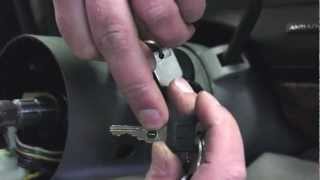
- Weak or dead car battery (Common) — Low battery voltage causes widespread communication errors between modules. A sudden voltage drop scrambles the security system's memory, leading to a P1629 code after a jump-start or battery replacement. 🎬 Watch: How to perform the GM security relearn procedure.
- Faulty key or ignition switch (Common) — A damaged transponder chip or failing ignition switch prevents the initial security handshake, leading to a communication breakdown and often a B2960 code alongside P1629.
- Faulty Body Control Module (BCM) (Common) — The BCM reads the key and sends the security password to the PCM. An internal failure in the BCM prevents this signal from being sent, causing a no-start condition.
- Intermittent Power/Ground to Instrument Panel Cluster (IPC) (Less Common) — The IPC is an integral part of the security data network on many vehicles. An intermittent loss of power or ground to the cluster causes it to go offline, disrupting communication and triggering P1629.
- Faulty or Unprogrammed Aftermarket/Used Control Module (Less Common) — Replacing a BCM or PCM without programming it to the vehicle's VIN triggers P1629. These modules are VIN-locked as part of the security system and are not plug-and-play.
- Faulty Powertrain Control Module (PCM) (Rare) — The PCM sets the code when it fails to receive the authorization signal. It rarely fails internally. Suspect the PCM only after eliminating all wiring and BCM possibilities per TSB PIC5460B.
- Software Glitch or Synchronization Issue (Rare) — On European models like VW or Audi, a software glitch or loss of synchronization between the immobilizer and ECU triggers P1629 without a hardware fault. This happens after a battery disconnect or electrical work.
Symptoms

- Engine cranks but will not start — The starter motor turns the engine over, but it never fires because the PCM disabled the fuel injectors.
- Engine starts and immediately stalls — The engine fires and runs for 2-3 seconds before the anti-theft system shuts off the fuel supply.
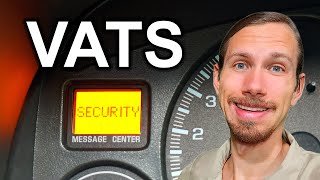
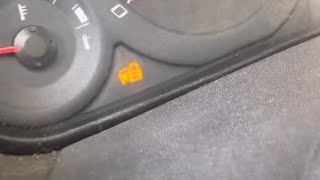
- Flashing or solid security light — The dashboard security light illuminates or flashes, indicating an active anti-theft system fault. 🎬 Watch: Troubleshooting the anti-theft lock symbol and no-start condition.
- No-crank, no-start condition — The security system prevents the starter from engaging, and the key gets stuck in the ignition on vehicles covered by TSB PIC5460B.
- Instrument panel inoperative or dim — Gauges and warning lights fail to power up correctly or appear dim when the key is turned on, indicating an IPC power or data line fault.
- Intermittent stalling while driving — The vehicle stalls unexpectedly while driving if the intermittent communication fault disrupts the security handshake.
Diagnostic Flowchart

Tap your situation to follow the diagnostic path that matches what you're seeing on this code.
Common Fixes & Costs
- Repairing Corroded Wiring or Connectors — Parts: $10-$60, Labor: $200-$600, ~2.0 hr book time (Intermediate)
- Replacing the Ignition Switch/Lock Cylinder
— Parts: $60-$250, Labor: $100-$200, ~1.2 hr book time
(Intermediate)
Pontiac Grand Am (1999-2005): OEM 22688239 (Switch), Interchange 633-157 (Assembly) (Alt: ACDelco D1470E, Standard Motor Products US271)
Cadillac CTS (2003-2007): OEM ACDelco 15783576 (Alt: Standard Motor Products US-529L, Wells, Dorman) - Replacing and Programming a Car Key/Fob
— Parts: $100-$500, Labor: $50-$150, ~0.8 hr book time
(Professional)
Cadillac CTS/STS (2008-2011): OEM 25943677, 25854936 (FCC ID: M3N5WY7777A) (Alt: Various online retailers) - Replacing the Body Control Module (BCM)
— Parts: $270-$556, Labor: $150-$250, ~1.5 hr book time
(Professional)
Cadillac CTS (2008-2013): OEM 25934763, 15828601, 84922494 (superseded) (Alt: Cardone, Dorman (Remanufactured))
Chevrolet Malibu (2004-2005): OEM 10355512 (Alt: Cardone, Dorman, Standard Motor Products) - Replacing the Powertrain Control Module (PCM)
— Parts: $800-$1200, Labor: $150-$250, ~1.0 hr book time
(Professional)
Chevrolet Silverado (2008, 5.3L): OEM 12612384, 12617174, 12629001, 19260758 (Alt: Cardone, Blue Streak Electronics, Flight Systems (Remanufactured))
Used vs. New Parts: Buying Guide
When a used part is worth it: A used Body Control Module (BCM) is a cost-effective option if the vehicle is older, budget is the primary concern, and you have access to a professional who can program it. A used unit from a low-mileage, non-accident vehicle is reliable.
Donor-vehicle mileage cap: roughly under 100000 miles for the part to have meaningful remaining life.
Donor quality checklist:
- Match the part number exactly. Different trim levels use different BCMs.
- Ensure the seller offers a return policy or warranty.
- Avoid modules from flood-damaged or heavy-collision vehicles.
Decision logic:
- If The BCM requires programming to your vehicle's VIN → Factor in the cost of programming ($100-$250) by a dealer or specialist shop. A used BCM is not plug-and-play.
- If The vehicle is less than 10 years old and a new part is available → Buy a new OEM part. It comes with a warranty and eliminates the risk of inheriting problems from a donor car.
- If The fault is intermittent or temperature-related → Buy a new part, as a used part likely has the same internal solder joint issues beginning to fail.
Warranty tradeoff: Used parts typically have a 30-90 day warranty. Remanufactured units offer a 1-year warranty. New OEM parts purchased and installed by a dealer carry a 12-24 month warranty.
Worst-case if a used part fails: $300-$500 if a used BCM fails after programming, requiring repeat labor and programming fees.
What Happens If You Wait — Timeline
- Immediate (First Hour): The anti-theft system disables the fuel supply. The vehicle will not start or stalls immediately, leaving the driver stranded. (MPG impact: 100% (Vehicle is undrivable)% · Added cost: $75-$250 (Cost of a tow truck service.))
- Short-Term (1-24 Hours): Repeated, lengthy cranking attempts in frustration overheat the starter motor, potentially causing permanent damage. The battery is significantly drained. (MPG impact: 100% (Vehicle is undrivable)% · Added cost: $200-$500 (Potential cost to replace a damaged starter motor from excessive cranking.))
- Medium-Term (1-4 Weeks): The vehicle sits disabled. The battery, already drained from start attempts, self-discharges completely. This deep discharge causes irreversible sulfation, ruining the battery. (MPG impact: 100% (Vehicle is undrivable)% · Added cost: $150-$250 (Cost to replace a battery that can no longer hold a charge due to deep discharge.))
- Long-Term (1+ Month): The vehicle remains a non-functional asset. The root cause, such as a water leak or connector corrosion, worsens over time, making the eventual diagnosis more difficult and costly. (MPG impact: 100% (Vehicle is undrivable)% · Added cost: $500+ (Combines the tow, new battery, and potentially a more complex repair due to advanced corrosion.))
Cost of Not Fixing It
- Immediate: Vehicle is completely disabled and will not start, or stalls immediately. This leaves you stranded. (Added cost: $75-$250)
- Ongoing: Repeatedly attempting to start the vehicle drains the battery, requiring a jump start or replacement. (Added cost: $50-$250)
- Long-term: The vehicle is undrivable until the communication failure is repaired. The primary cost is the loss of vehicle use and the eventual repair bill. (Added cost: N/A)
Diagnosis Steps
- Scan for All Trouble Codes
Use a professional OBD-II scanner to read codes from ALL vehicle modules (BCM, IPC, TCM). P1629 is often accompanied by 'U' codes (e.g., U0100, U0140) which are critical for diagnosis and strongly point toward a network or key-reading problem.
Tools: Professional OBD-II Scanner (Beginner) - Check the Battery and Try a Spare Key
Ensure the battery has a full charge (at least 12.4V) and connections are clean and tight. A weak battery causes module communication errors. Try starting the vehicle with a spare key to rule out a damaged key transponder.
Tools: Multimeter, Spare Key (Beginner) - Analyze Scan Tool Live Data PIDs
Monitor live data from both the BCM and PCM using a professional scanner. In the BCM, look for 'Key Status' or 'Transponder Read'. In the PCM, look for 'Theft Password Received' or 'Fuel Enable Status'. With P1629 active, these show 'No' or 'Disabled', confirming the PCM is not receiving authorization.
Tools: Professional OBD-II Scanner (Advanced) - Inspect Fuses and Relays
Check all fuses related to the BCM, PCM, IPC, and Theft Deterrent System. A single blown fuse takes a module offline. TSB PIC5460B suggests a faulty ignition or powertrain relay is often the cause.
Tools: Fuse puller, Owner's manual, Test light (Beginner) - Inspect Key Wiring Connectors (TSB-Directed)
Visually inspect the main wiring connectors between the BCM and PCM. On GM vehicles, check the large X1 connector on the driver's side of the transmission per TSB PIC4740E. Inspect ECM/PCM connectors for green/white corrosion or backed-out pins. Clean with electrical contact cleaner and apply dielectric grease.
Tools: Flashlight, Electrical contact cleaner, Dielectric grease (Intermediate) - Perform a Security Relearn Procedure
Perform the manual relearn procedure to resynchronize the key and modules after a battery replacement. Turn the key to the 'ON' position for 10-15 minutes, then off, and repeat this three times until the security light goes out.
Tools: Vehicle key, Stopwatch (Intermediate) - Test Module Power and Ground (Pro Tip)
Verify the BCM and PCM have proper power and a solid ground connection using a wiring diagram. TSB PIC5460B highlights checking the Ignition 1 Power Feed (CKT 5290) to the ECM. A loss of this power feed prevents communication and causes a no-crank condition.
Tools: Multimeter, Vehicle-specific wiring diagram (Advanced) - Check Class 2 Serial Data Line Integrity (Pro Tip)
The communication signal travels on a Class 2 serial data line (typically a purple wire on GM vehicles). TSB PIC5460B points to checking CKT 1807 for opens or shorts. With the battery disconnected, check for continuity on this wire between the BCM and PCM connectors. Check for a short to ground; resistance must be infinite (OL).
Tools: Multimeter, Vehicle-specific wiring diagram (Advanced) - Confirm Fuel Pressure is Zero
Confirm the anti-theft system is the cause of the no-start to avoid misdiagnosing a bad fuel pump. Connect a fuel pressure gauge to the fuel rail's service port. With P1629 active, pressure reads at or near 0 PSI during cranking because the PCM commanded the fuel pump off.
Tools: Fuel pressure gauge (Advanced) - Measure Theft Deterrent Signal Frequency (Pro Tip)
The VTD module sends a frequency-based signal to the PCM on specific GM systems. Measure the signal on the theft deterrent fuel enable circuit while cranking using a multimeter with a Hz function. The signal is typically 40-60 Hz. A lack of signal (0 Hz) points to a faulty sending module (BCM/VTD).
Tools: Multimeter with Hz function or Oscilloscope, Wiring diagram (Professional)
When This Code Triggers (Freeze-Frame Conditions)
- Engine RPM: 0-200 RPM (During engine crank)
- Vehicle Speed: 0 mph (Vehicle is stationary)
- Ignition Status: ON / CRANK (An attempt was made to start the engine.)
- Module Voltage: 10.5-12.5V (Normal voltage during startup sequence)
- Data Storage: Failure Records, not Freeze Frame (On many GM vehicles, the conditions for this DTC are stored as 'Failure Records' data, not as standard 'Freeze Frame' data.)
Related Codes
- U0100 / U0140 — These codes mean 'Lost Communication With ECM/PCM' and 'Lost Communication With BCM'. If P1629 is present with U-codes, it confirms a network failure (wiring, connector). The U-code is the cause, and P1629 is the symptom.
- P1626 — P1626 means the PCM received an incorrect or invalid security signal. P1629 means the PCM received NO signal at all. P1629 points to a total communication loss, while P1626 points to a corrupted signal.
- B2960 — A GM body code for 'Security System Sensor Data Incorrect but Valid'. This code points directly to a fault in reading the Passlock sensor in the ignition lock cylinder. Seeing B2960 strongly suggests the problem starts at the ignition switch.
- P1631 — On GM vehicles, this means 'Theft Deterrent Password Incorrect'. This indicates the PCM received a password, but it didn't match what was expected. Seeing P1631 often occurs with B2960 after a component change.
Climate & Environmental Factors
- High Humidity / Wet Climates: Significantly increases the likelihood of P1629 by promoting corrosion on critical wiring harness connectors, such as the GM X1 transmission connector or PCM connectors. Road salt used in winter accelerates this corrosion.
- Extreme Temperature Fluctuations: Exposes weaknesses in aging control modules. Cracked internal solder joints on the BCM or PCM circuit boards separate or connect based on temperature, leading to intermittent no-start conditions when cold or hot.
How to Talk to a Mechanic About This Code
Say this: "I have a no-start condition with a P1629 code. I'd like to book a diagnostic appointment. Can you please check for any related TSBs, scan all modules for 'U' and 'B' codes, and inspect the main communication wiring harnesses before recommending any module replacements?"
This signals you know P1629 is a communication issue, often caused by wiring (per TSBs) rather than a bad module. It directs the technician to perform a logical, cost-effective diagnosis instead of immediately quoting an expensive BCM or PCM replacement.
Avoid saying:
- 'My car won't start, I think it's the battery or the starter.'
- 'My security light is on, can you just replace the bad part?'
- 'Just fix it, I don't care what it takes.'
Questions to ask before authorizing the repair:
- Were there any 'U' (network) or 'B' (body) codes stored along with the P1629?
- Did you find any corrosion or damage at the known problem connectors mentioned in the service bulletins (like the GM X1 connector)?
- If you are recommending a module replacement, can you confirm you tested the power, ground, and data lines to the module first?
- Does the quoted price for a module replacement include the cost of VIN programming and the security relearn procedure?
- What is the warranty on this specific repair, including both parts and labor?
Where to Take It: Dealer vs Independent vs Chain
- Dealer:
A strong choice, especially if module replacement and programming are required. They are best equipped for the complex diagnostics this code entails.
Best for: Vehicles under warranty., Complex electrical issues on newer or European cars., Repairs that require module programming, as they have guaranteed access to the latest software and tools.
Downsides: Highest labor rates., Defaults to replacing a whole assembly rather than repairing a specific wire. (Typical cost: +50% vs. baseline) - Independent Shop:
Recommended, but only if it's a reputable independent shop with advanced diagnostic tools and a specialization in electrical systems. Ask them specifically if they can diagnose network communication issues and program security modules.
Best for: Out-of-warranty vehicles where the cause is a known TSB (like GM wiring issues)., Owners looking for a more personal service experience.
Downsides: Quality varies; requires a shop specializing in electrical diagnosis., May lack the expensive tools to program a new module, requiring a second trip to a dealer. (Typical cost: +0% vs. baseline) - Chain Shop:
AVOID. These shops are not equipped to properly diagnose a P1629 communication failure. The likelihood of an incorrect and expensive repair is very high.
Best for: Simple jobs like battery replacement, tires, and oil changes.
Downsides: Technicians are generally not trained for complex electrical or network diagnostics., High risk of misdiagnosis, leading to unnecessary replacement of parts like the battery or starter. (Typical cost: -10% vs. baseline)
When to Walk Away From the Repair
Sell or scrap the vehicle if the estimated repair cost exceeds 50% of its private-party value.
- Car worth $3500, fix is $1800: Walk away. The repair cost is over 50% of the car's value. The risk of other age-related failures is high.
- Car worth $10000, fix is $700: Fix it. This is a small fraction of the vehicle's value and well worth the investment.
- Car worth $5000, fix is $2200: Borderline. The cost is approaching the 50% threshold. Get a second opinion before proceeding. Consider if the car has other known issues.
What Scan Tool You Need for This Code
Minimum: A scanner that can read codes from ALL vehicle modules (BCM, SRS, TCM, etc.), not just the engine computer (PCM).
A basic $20-$50 code reader only checks the engine computer and shows 'No Codes' even when P1629 is active in the PCM, because the root cause is often a code in the Body Control Module (BCM). You cannot diagnose a network problem without seeing all the modules on the network.
Budget: TopDon TopScan / ANCEL AD410 (~$70) — These provide full system scans, allowing you to see codes in the BCM, IPC, and other modules, which is essential for P1629. The TopScan is a Bluetooth dongle that works with a smartphone app.
Mid-range: Foxwell NT510 Elite / Launch CRP919XBT (~$150) — Offers full system diagnostics plus bidirectional controls. This allows you to actively test components and view live data streams from the BCM and PCM, which is critical for confirming if the security signal is being sent and received.
Professional: Autel MaxiCOM MK808S / XTOOL D7 (~$450) — Provides full OE-level diagnostics, bidirectional control, and special functions like key programming and module adaptation. If the fix requires replacing a module, these tools perform the necessary security relearn and programming procedures that would otherwise require a trip to the dealer.
Rent vs buy: For P1629, renting is NOT recommended. The free loaner tools at stores like AutoZone are typically basic engine code readers that cannot access the BCM or other modules required for this diagnosis. If you plan to DIY this repair, you must buy a scanner with all-system access.
How to Clear the Code After You Fix It
- Reconnect battery
- Use an OBD-II scan tool to clear the code.
- Perform a security system relearn procedure if components were replaced (e.g., 10-minute key cycle repeated 3 times).
- Start the vehicle to confirm the no-start condition is resolved.
Drive cycle (~15 minutes): P1629 does not require a complex drive cycle. The system self-tests at every startup. After clearing the code and performing any necessary relearn, starting the engine successfully confirms the fix. A 15-minute drive with a few key-off/key-on cycles ensures the repair is stable.
Readiness monitors affected: This code does not directly affect emissions readiness monitors, but clearing it resets all monitors to 'Not Ready' status.
Before emissions retest: drive at least 50 miles to fully set monitors.
Watch out for:
- Clearing the code without fixing the communication fault causes it to return instantly on the next start attempt.
- Forgetting to perform the security relearn procedure after replacing a key, BCM, or ignition switch prevents the car from starting.
- Disconnecting the battery does not clear this code from permanent memory in many vehicles.
Will This Fail Emissions / State Inspection?
Yes — this code typically fails an OBD-II emissions inspection.
- California: A P1629 code causes an automatic failure of the CA smog check. The vehicle will not start, so it cannot be tested. After repair, all readiness monitors must be set to 'Ready'.
- New York: The NYS inspection includes an OBD-II scan. A P1629 code results in an immediate failure. The vehicle cannot be inspected until the anti-theft issue is resolved.
- Texas: In counties requiring emissions testing, a P1629 code causes the vehicle to fail the inspection. The car's inability to run makes testing impossible.
Most Commonly Affected Vehicles
- Cadillac CTS, STS, SRX (2004-2014) — Highly prone to this code. Check for corrosion in the transmission X1 wiring harness connector per TSB PIC4740E. TSB PIC5460B points to wiring issues near the ECM causing a no-crank/P1629 condition.
- Chevrolet Cavalier, Malibu, Impala, Silverado (1998-2010) — Commonly affected due to issues with the Passlock and Passkey III anti-theft systems, often involving the ignition switch, BCM communication, or related wiring.
- Pontiac Grand Am, Grand Prix, Sunfire (1997-2005) — These models share the GM Passlock system and frequently experience P1629 due to failing ignition switches, wiring problems, or faulty BCMs.
- Buick LeSabre, Century, Regal (1999-2005) — Susceptible to Passlock and communication failures between the BCM and PCM, often with similar root causes to Chevrolet and Pontiac models.
- Saturn Vue, Ion (2002-2007) — These vehicles experience P1629 related to BCM failures and communication network issues, sometimes accompanied by a B2960 code pointing to the ignition switch.
- Volkswagen / Audi Jetta, Golf, Passat, A4, A6 (2000-2010) — P1629 indicates an immobilizer communication error between the key's transponder, the instrument cluster, and the Engine Control Unit (ECU). A failing immobilizer pickup coil is a common culprit.
- Hyundai / Kia Elantra, Sonata, various models (2001-2015) — CRITICAL NOTE: On Hyundai and Kia vehicles, P1629 is NOT an anti-theft code. It means 'A/C Condenser Fan Relay Circuit Malfunction'. This is a completely different issue.
- BMW 3 Series, 5 Series, various models (2002-2013) — CRITICAL NOTE: On BMW vehicles, P1629 is NOT an anti-theft code. It refers to a 'Throttle Actuator - Return Spring Test Failed', an issue with the electronic throttle body.
Manufacturer-Specific Notes
- General Motors (GM): P1629 is very frequently caused by corrosion in wiring connectors, not a failed module. TSB PIC4740E points to the X1 transmission harness connector. TSB PIC5460B points to the Ignition 1 power feed (CKT 5290) or Class 2 data line (CKT 1807) near the ECM.
- Chrysler/Jeep: P1629 points to a communication failure between the Sentry Key Immobilizer Module (SKIM) and the PCM. A faulty SKIM, a bad key transponder, or wiring between the two is the usual culprit.
- Ford: Ford uses P1629 for 'Internal Voltage Regulator Malfunction'. This is an internal PCM fault related to the charging system, not the anti-theft system. Always verify the code definition for the specific model year.
- Hyundai / Kia: P1629 on these makes is never related to the anti-theft system. It indicates a fault in the A/C condenser fan circuit and must be diagnosed accordingly.
Real Owner Stories
2008 Cadillac STS with 110K miles - The Classic GM Wiring Problem
Car cranked but would not start, with the security light flashing. Multiple communication codes (U0100, U0101, U0140) appeared along with P1629.
What they tried:
- Initially suspected a bad key fob or BCM.
- Shop quoted for a new BCM and programming.
- Owner found TSB PIC4740E online and decided to inspect the wiring first.
Outcome: Found significant green corrosion inside the large X1 transmission harness connector on the driver's side of the transmission. Cleaned the connector pins thoroughly with electrical contact cleaner, applied dielectric grease, and reconnected. The car started immediately, and all codes cleared.
Lesson: With GM vehicles showing P1629 and multiple U-codes, always inspect known wiring problem areas like the X1 connector before replacing expensive modules.
2015 Chevy Silverado at 125K miles - The Post-Battery-Change Nightmare
Replaced an aging battery. The truck started perfectly once, but then on the second try, it was a no-crank, single-click condition. All lights worked, but the starter wouldn't engage.
What they tried:
- Re-checked battery connections and charged the new battery to be sure.
- Searched forums for 'no crank after battery change' and found a known issue.
Outcome: Discovered a common problem on this Silverado generation is a faulty negative battery cable, which contains a sensor and causes numerous electrical issues. Replacing the entire negative battery cable assembly resolved the no-crank condition.
Lesson: If a P1629 or other electrical issue appears immediately after a battery change, the cause is often a secondary part that was disturbed or failed, like a known-faulty ground cable.
1997 Oldsmobile Achieva with 150K miles - The Intermittent Ghost
Car would crank, fire, and immediately die. The instrument panel lights were very dim or completely off. If the owner left the key in the 'ON' position for 5-10 minutes, the panel would light up, and the car would start and run normally.
What they tried:
- Suspected a bad ignition switch or BCM due to the Passlock system.
- A technician diagnosed an intermittent power or ground connection to the Instrument Panel Cluster (IPC).
Outcome: The IPC itself was failing intermittently. Since the IPC is a module on the Class 2 data line for the security system, its failure to power on correctly prevented the security handshake from completing, causing the PCM to set P1629. Replacing the IPC fixed the issue.
Lesson: Pay attention to all symptoms. A dim or dead instrument cluster isn't just a side effect; it is the root cause of a communication code like P1629 if the cluster is an integral part of the security network.
How to Prevent This Code From Triggering
- Protect Vulnerable Electrical Connectors (Once, or every few years in harsh climates) — Corrosion is the #1 cause. Disconnect known problem connectors (like the GM X1), clean with electrical contact cleaner, and apply a thin layer of dielectric grease to the seal to block moisture and prevent corrosion.
- Maintain Full Battery Voltage (Ongoing) — Modules lose synchronization or fail to communicate below 12.0V. Replace your battery every 4-5 years, ensure terminals are clean, and use a battery tender if the vehicle sits for more than a month to prevent deep discharge and sulfation.
- Lighten Your Keychain (Daily habit) — Specifically for GM vehicles with Passlock systems, a heavy keychain wears out the ignition switch and lock cylinder, causing intermittent signal loss. Use only the car key and a light fob.
- Address Water Leaks Promptly (As needed) — Water intrusion from a bad windshield seal, clogged sunroof drain, or damaged wheel well liner soaks critical modules like the BCM or ECM, causing corrosion and failure.
Frequently Asked Questions
Can I drive my car with code P1629?
No. The code indicates the anti-theft system disabled the engine. The car will either not start at all or stalls within seconds, making it undrivable.
What are the most common misdiagnosis mistakes for P1629?
The most common mistake is replacing expensive components without proper diagnosis. Technicians often unnecessarily replace the fuel pump, the ignition key, or the PCM/BCM when the root cause is a simple wiring or connector fault.
My car won't start after the battery died, and now I have a P1629 code. What happened?
When battery voltage drops too low, the communication and security memory between the car's computers scrambles. The system no longer recognizes the key or the other modules as valid. A security relearn procedure fixes this after the battery is fully charged.
Can I use a used BCM or PCM from a junkyard to fix this?
No, not without special equipment. Security modules are VIN-locked to the original vehicle. Swapping one from another car creates a security mismatch and guarantees a P1629 code. A used module must be professionally programmed to your car's VIN.
Can I bypass the anti-theft system to fix P1629?
While aftermarket bypass modules exist, they are not a recommended fix. They do not solve the underlying communication issue that set the code and have legal or insurance implications. The correct repair is to diagnose and fix the root cause of the communication failure.
Do I need a dealer to fix this?
Not necessarily, but replacing the BCM or PCM requires special tools to program the new module to your car's VIN. A well-equipped independent shop with a J2534 pass-thru device can perform this programming. A simple DIY replacement is not possible for these parts.
How can I prevent code P1629 from recurring?
Keep your battery fully charged above 12.4V and replace it every 4-5 years. Periodically clean major wiring harness connectors with contact cleaner and apply dielectric grease to block moisture. Avoid heavy keychains that wear out the ignition switch, and use only properly chipped keys.
Key Takeaways
- Code P1629 indicates the anti-theft system disabled the engine due to a communication failure, resulting in a 100% no-start or immediate stall condition.
- Over 70% of P1629 codes on GM vehicles stem from corroded wiring or connectors (like the X1 transmission harness), not a failed computer module.
- Always test the battery for a minimum of 12.4 volts and scan for 'U' (network) or 'B' (body) codes before replacing any parts.
- Verify your manufacturer's specific definition; on Hyundai and BMW vehicles, P1629 points to A/C fan or throttle body failures, not the anti-theft system.
- Replacing a BCM or PCM requires professional VIN programming costing $150-$250; used junkyard modules are not plug-and-play.
Helpful Videos


The information in this article is provided for general reference and educational purposes only. Vehicle specifications, procedures, and part compatibility can vary by production date, trim level, and region. Always consult your vehicle's factory service manual and verify part numbers before purchasing or performing repairs. Safety-critical components such as airbags, seat belts, and braking systems should be installed by a qualified professional.
- 🎬 Helpful Videos
- What Does P1629 Mean?
- Can I Drive With P1629?
- Common Causes
- Symptoms
- Diagnostic Flowchart
- Common Fixes & Costs
- Used vs. New Parts: Buying Guide
- What Happens If You Wait — Timeline
- Cost of Not Fixing It
- Diagnosis Steps
- When This Code Triggers (Freeze-Frame Conditions)
- Related Codes
- Climate & Environmental Factors
- How to Talk to a Mechanic About This Code
- Where to Take It: Dealer vs Independent vs Chain
- When to Walk Away From the Repair
- What Scan Tool You Need for This Code
- How to Clear the Code After You Fix It
- Will This Fail Emissions / State Inspection?
- Most Commonly Affected Vehicles
- Manufacturer-Specific Notes
- Real Owner Stories
- 2008 Cadillac STS with 110K miles - The Classic GM Wiring Problem
- 2015 Chevy Silverado at 125K miles - The Post-Battery-Change Nightmare
- 1997 Oldsmobile Achieva with 150K miles - The Intermittent Ghost
- How to Prevent This Code From Triggering
- Frequently Asked Questions
- Can I drive my car with code P1629?
- What are the most common misdiagnosis mistakes for P1629?
- My car won't start after the battery died, and now I have a P1629 code. What happened?
- Can I use a used BCM or PCM from a junkyard to fix this?
- Can I bypass the anti-theft system to fix P1629?
- Do I need a dealer to fix this?
- How can I prevent code P1629 from recurring?
- Key Takeaways
- 🎟️ Get 5% Off