

OBD-II Code P1627: A/D Performance / Module Power Supply Fault
What P1627 means, why it triggers, and how to fix it
- Identify your vehicle's specific P1627 definition first, as it means an internal PCM failure on GM vehicles but a charging system fault on Fords.
- Test the battery and alternator output with a multimeter, aiming for 13.2V-14.5V while running, before replacing any expensive computer modules.
- Inspect the PCM wiring harness and ground straps for corrosion, as a voltage drop above 0.2V mimics a failed computer.
- Do not drive the vehicle with an active P1627 code, as the engine stalls without warning and causes a severe safety hazard.
What Does P1627 Mean?

P1627 means very different things depending on your car's manufacturer. For GM and Isuzu, it signals a problem inside the main computer (PCM), specifically with its 'Analog-to-Digital' converter which processes sensor information. An A/D converter translates continuous analog signals from sensors into discrete digital values the computer understands. For other brands, it points to a bad alternator, a fuel pump communication error, or a faulty seat heater.
Technical definition: The official SAE/OBD-II definition for P1627 varies by manufacturer. For General Motors, it is 'EC-PCM Analog to Digital Converter Conditions'. For Ford and Jaguar, it is 'Module Supply Voltage Out Of Range'. For Volkswagen, it is 'Data Bus Powertrain Missing Message From Fuel Injection Pump'. For Toyota, it means 'Idle Signal Output Value Too High'. For Mazda, it is 'Powertrain Control Module (ECM/TCS) Line Communication Error'.
Can I Drive With P1627?
No — Do Not Drive. Driving is not recommended. The most common failure mode for this code is an internal computer fault that causes the engine to stall completely and without warning, creating a severe safety risk in traffic or at highway speeds. Even if the cause is a less critical system, the vehicle's reliability is compromised, and continued driving leads to expensive damage to other electronic modules.
Common Causes

- Internal Powertrain Control Module (PCM) Failure (Very Common) — This is the most frequent cause for GM and Isuzu vehicles. The internal A/D circuit fails, making the computer unable to correctly process analog sensor signals. This causes intermittent stalling or a sudden no-start condition.
- Faulty Alternator or Charging System (Common) — A failing alternator produces unstable, low, or high voltage, triggering this code on vehicles like MINIs or Fords where the code relates to module voltage. Abnormal voltage also damages the PCM, leading to internal failure.
- Dead or Weak Battery (Common) — A failing battery with low voltage causes a variety of electrical problems, setting this code during startup. Improper jump-starting procedures also create voltage spikes that instantly destroy the PCM.
- Damaged Wiring or Poor Connections (Common) — Corroded, shorted, or loose wires leading to the PCM cause incorrect voltage readings. Water leaking onto the PCM or a bad main ground connection are frequent culprits.
- Faulty Fuel Pump Control Module (VW) (Less Common) — On many 2.0T VW models, P1627 points to a communication loss with the fuel injection pump, caused by a failing fuel pump control module that overheats and burns out internally.
- Failing Battery Management System (BMS) Sensor (Ford) (Rare) — On modern Ford vehicles with smart charging systems, a faulty BMS sensor on the negative battery terminal provides incorrect data to the PCM, leading to charging system errors and a P1627 voltage code.
Symptoms

- Engine Will Not Start — The engine cranks over but does not fire up because the PCM cannot manage engine functions or communicate with essential modules.
- Engine Stalls Randomly — The engine shuts off unexpectedly while driving or idling. This happens when the PCM momentarily fails or loses correct power.
- Poor Engine Performance — The engine runs rough, hesitates during acceleration, lacks power, or gets stuck in a restricted limp mode.
- Erratic Gauge Behavior — A failing PCM causes strange secondary issues, such as the fuel gauge reading empty or cooling fans running constantly.
- Check Engine Light is On (also visible on scanner) — A constant Check Engine Light illuminates, often accompanied by other seemingly unrelated trouble codes.
- Battery Light is On (also visible on scanner) — On vehicles where the code relates to the charging system, the red battery warning light illuminates on the dashboard.
- Multiple Unrelated Warning Lights (also visible on scanner) — ABS, Traction Control, or 4WD lights turn on as different modules fail to communicate with each other across the CAN bus.
Diagnostic Flowchart
Tap your situation to follow the diagnostic path that matches what you're seeing on this code.
Common Fixes & Costs
- Replace the Alternator
— Parts: $250-$600, Labor: $150-$400, ~2.0 hr book time
(Intermediate)
: OEM - Replace the Car Battery — Parts: $150-$300, Labor: $0-$50, ~0.5 hr book time (DIY)
- Replace the Powertrain Control Module (PCM)
— Parts: $300-$1000, Labor: $150-$300, ~1.5 hr book time
(Professional)
: OEM - Repair Damaged Wiring or Connectors — Parts: $10-$100, Labor: $150-$600, ~2.5 hr book time (Professional)
- Replace Fuel Pump Control Module (Volkswagen)
— Parts: $100-$250, Labor: $50-$100, ~0.8 hr book time
(DIY)
: OEM
DIY vs Professional
- Replace the Alternator — Beginner:
Tools: ['Socket set and wrenches', 'Serpentine belt tensioner tool', 'Pry bar'] - Replace the Car Battery — Beginner:
Tools: ['Wrench or socket set', 'Terminal cleaning brush'] - Replace the Powertrain Control Module (PCM) — Beginner:
Tools: ['Basic hand tools', 'J2534 Pass-Thru programming tool', 'Laptop with stable internet connection', "Subscription to manufacturer's service software", 'Stable automotive battery charger/maintainer'] - Repair Damaged Wiring or Connectors — Beginner:
Tools: ['Digital Multimeter', 'Wiring diagrams', 'Wire cutters/strippers', 'Soldering iron or quality crimp tools', 'Heat shrink tubing'] - Replace Fuel Pump Control Module (Volkswagen) — Beginner:
Tools: ['Basic hand tools']
Used vs. New Parts: Buying Guide
When a used part is worth it: A used PCM from a reputable salvage yard is a cost-effective option for older, high-mileage vehicles (over 150k miles) where the cost of a new module is a significant portion of the car's value. It makes sense only if the part number is an exact match.
Donor-vehicle mileage cap: roughly under 100000 miles for the part to have meaningful remaining life.
Donor quality checklist:
- Verify the donor vehicle was not scrapped due to electrical or flood damage.
- Match the OEM part number exactly; superseded numbers are not compatible without dealer programming.
- Buy from sellers who test the unit and offer a warranty (30-90 days is typical).
Decision logic:
- If Vehicle is newer or has low mileage (<80K miles) → Buy a new or remanufactured PCM. The risk of premature failure with a used part outweighs the savings.
- If Budget is the primary concern and the vehicle is old → A tested, used part with a warranty is acceptable, but be prepared for the possibility of it failing sooner than a new one.
- If The specific PCM has a known high failure rate (like on Isuzu Rodeos) → Favor a remanufactured unit, as it is rebuilt with updated components to correct original flaws.
Warranty tradeoff: Used parts typically offer a 30-90 day functional warranty. Remanufactured units often come with a 1-year or lifetime warranty. New OEM parts carry the manufacturer's warranty, usually 1 year.
Worst-case if a used part fails: $300-$600 if a used part is dead on arrival or fails shortly after installation, covering repeat labor for diagnosis and installation.
What Happens If You Wait — Timeline
- 0-2 weeks: Code appears, Check Engine Light is on. Symptoms are intermittent, like an occasional rough idle, hesitation, or flickering lights. The vehicle is drivable but unreliable. (MPG impact: 0-5%% · Added cost: $0)
- 2 weeks - 3 months: Symptoms become more frequent. If caused by a failing alternator, the battery is constantly undercharged, leading to slow cranking. If it's a failing PCM, stalling becomes more common. (MPG impact: 5-10%% · Added cost: $150-$300 (Cost of a new battery damaged by repeated deep discharge cycles).)
- 3-6 months: The root cause progresses to a hard failure. A failing alternator stops charging completely. An overcharging alternator damages sensitive electronics. A failing PCM causes persistent no-start conditions. (MPG impact: 10-15%% · Added cost: $500-$1500 (Potential damage to other modules, starter, or ignition components from unstable voltage).)
- 6+ months: Catastrophic failure is likely. The vehicle is undrivable. Prolonged operation with a faulty PCM leads to internal engine or transmission damage from incorrect fuel/ignition/shift commands. (MPG impact: N/A (Vehicle likely inoperable)% · Added cost: $1500-$5000+ (Cost of major engine/transmission repairs or replacement of multiple electronic modules).)
Cost of Not Fixing It
- Immediate: Vehicle does not start or stalls in traffic, creating a significant safety risk. Continued operation with unstable voltage damages other electronic modules. (Added cost: Towing costs ($100-$300) plus potential for cascading electronic failures ($500+).)
- 1-3 months: If caused by a failing alternator, the battery is repeatedly drained and damaged, requiring premature replacement. Erratic PCM signals cause poor fuel economy. (Added cost: $150-$300 for a new battery, plus cost of wasted fuel.)
- 6+ months: Prolonged driving with a malfunctioning PCM leads to severe engine or transmission damage due to incorrect timing, fuel mixture, or shifting commands. (Added cost: $1,500-$5,000+ for major engine or transmission repairs.)
Diagnosis Steps
- Check the Battery and Charging System
Ensure the foundation of your electrical system is solid. Use a multimeter to check battery voltage (12.6V with the engine off) and alternator output (13.2-14.5V with the engine running). A running voltage outside this range points directly to a charging system issue.
Tools: ['Digital Multimeter'] - Perform a Thorough Visual Inspection
Look closely at the wiring harness connected to the PCM. Check for melted plastic, corrosion on the pins, or frayed wires. Inspect the area around the PCM for water intrusion or damp carpets. Verify the main ground straps from the battery and engine to the chassis are clean and tight.
Tools: ['Flashlight'] - Clear Codes and Test Drive
Clear the trouble code with an OBD-II scanner and drive the vehicle. If the code does not return immediately, it is an intermittent issue related to a loose connection. If it returns quickly, it points to a permanent hardware fault.
Tools: ['OBD-II Scan Tool'] - Test PCM Power and Ground Circuits
Using a vehicle-specific wiring diagram, verify the PCM receives proper voltage and has a solid ground connection on all correct pins. This confirms the problem isn't in the wiring that supplies power to the computer.
Tools: ['Digital Multimeter', 'Vehicle-Specific Wiring Diagram'] - Pro Tip: Perform a Voltage Drop Test
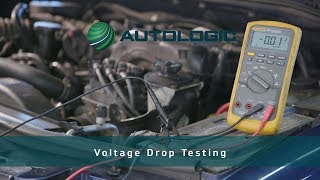
With the circuit operating (key on, engine off), connect the positive multimeter lead to the battery positive post and the negative lead to the PCM's main power pin. A reading above 0.2 volts indicates excessive resistance. Repeat for the ground side. A reading above 0.2 volts indicates a bad ground connection.
Tools: ['Digital Multimeter'] - Pro Tip: Analyze Signals with an Oscilloscope (GM)
For a GM P1627, connect an oscilloscope to a key analog sensor signal wire, like the Camshaft Position Sensor, first at the sensor and then at the PCM connector. If the signal is clean at the sensor but noisy or distorted at the PCM, the PCM's internal A/D converter is failing.
Tools: ['Automotive Oscilloscope', 'Back-probe pins'] - Advanced: Check Scan Tool PIDs for Charging System
On Ford or MINI vehicles, monitor live data PIDs. Compare 'Alternator Commanded Duty Cycle' to 'Module Voltage'. If the PCM commands a high duty cycle but voltage remains below 13.0V, the alternator is failing. If voltage exceeds 15.0V, the alternator's internal voltage regulator has failed.
Tools: ['Professional Bi-Directional Scan Tool'] (Advanced) - Advanced: Test Injector Driver Circuit (Toyota)
For a Toyota P1627, disconnect the ECM and Injector Driver Unit (EDU) connectors. Check for continuity between the IDLO pin on the ECM and the IJEN pin on the EDU; resistance must be below 1 Ω. Check for a short to ground from the IDLO pin to the chassis; it must be 10 kΩ or higher. Failure indicates a wiring problem.
Tools: ['Digital Multimeter', 'Vehicle-Specific Wiring Diagram'] (Advanced) - Suspect the PCM
If all wiring, power, and ground checks come back normal, the charging system is healthy, and specific module tests pass, the PCM itself is the cause. PCM replacement is the final step when all other possibilities are eliminated.
Tools: ['None']
When This Code Triggers (Freeze-Frame Conditions)
- Engine Coolant Temp: 180-205°F (82-96°C) (The fault often occurs once the vehicle reaches full operating temperature.)
- RPM: 0 or Cranking (For a no-start condition, the code sets when RPM is at 0 or during cranking when the PCM fails its self-test.)
- System Voltage: <11.8V or >15.0V (On Ford or MINI, the code triggers when module voltage goes outside the acceptable range due to a failing alternator.)
- Engine Load: Variable (For internal A/D converter failures, the fault triggers under specific load or temperature conditions that stress the failing component.)
Related Codes
- P0601 — This code means 'Internal Control Module Memory Check Sum Error' and confirms the PCM has failed internally. If you see this with P1627, the PCM is bad and requires replacement.
- P0562 — This code for 'System Voltage Low' supports a P1627 defined as 'Module Supply Voltage Out Of Range'. Seeing both codes strongly suggests a failing battery, alternator, or high-resistance wiring problem.
- P0341 — This code for 'Camshaft Position Sensor Circuit Range/Performance' appears with P1627 because the failing PCM cannot correctly interpret the analog signal from the cam sensor.
- P1631 — On GM vehicles, this code for 'Theft Deterrent Password Incorrect' appears alongside P1627 after a PCM has been replaced but not correctly programmed to the immobilizer system.
Climate & Environmental Factors
- High Humidity / Salt: Regions with high humidity or road salt see a higher incidence of P1627. Moisture and salt accelerate corrosion of PCM connectors and wiring harness grounds, leading to voltage drops.
- Extreme Heat: Sustained high ambient temperatures put thermal stress on electronic components, accelerating the degradation of internal PCM circuits and solder joints, leading to intermittent failure.
- Extreme Cold: Very cold temperatures cause metal to contract, opening up marginal connections in a wiring harness. It also causes brushes in an aging alternator to stick, preventing proper function.
How to Talk to a Mechanic About This Code
Say this: "I have a P1627 code and I'd like to schedule a diagnostic. Based on my vehicle's make, this could be a few different things. Can you please start by testing the battery and charging system, and performing a voltage drop test on the PCM's power and ground wires before recommending a module replacement?"
This signals you are an informed customer. It directs the technician to follow a logical, cost-effective diagnostic path, starting with the most common and cheapest-to-fix external causes before jumping to the most expensive one.
Avoid saying:
- 'My check engine light is on, can you just fix it?'
- 'My car is stalling, I think it's the computer.'
- 'Just do whatever you think is best.'
Questions to ask before authorizing the repair:
- What were the specific voltage readings from the battery and alternator test?
- What were the results of the voltage drop test on the PCM power and ground circuits?
- If you are recommending a module replacement, can you explain how you ruled out a wiring or connection issue?
- Does the estimate for the module replacement include the cost of programming it to my vehicle's VIN?
Where to Take It: Dealer vs Independent vs Chain
- Dealer:
Recommended for in-warranty vehicles or after a qualified independent shop has confirmed a dealer-only fix is required.
Best for: Vehicles still under warranty, Complex manufacturer-specific versions of the code (e.g., Hyundai 4WD CAN error, Toyota injector driver fault), Repairs requiring security-related PCM programming that independent shops cannot perform.
Downsides: Highest labor rates and part costs, often 40-50% more than independent shops., May default to expensive module replacement instead of more nuanced wiring or component-level repair. (Typical cost: +50% vs. baseline) - Independent Shop:
Best fit for most P1627 scenarios, provided you choose a reputable shop specializing in diagnostics.
Best for: Out-of-warranty vehicles where cost is a factor., Diagnosing the most common P1627 causes like charging system faults (Ford/MINI) or internal PCM failure (GM)., Vehicles with intermittent electrical issues that require flexible, in-depth diagnostic time.
Downsides: Capabilities vary widely; must choose a shop with ASE-certified technicians and modern diagnostic tools., May not have access to the very latest technical service bulletins (TSBs) or certain software updates. (Typical cost: +0% vs. baseline) - Chain Shop:
AVOID for full diagnosis and repair. Use only for a free initial charging system check before going to a specialist.
Best for: Free or low-cost battery and alternator testing as a preliminary step.
Downsides: Technician skill varies dramatically; not equipped for complex electrical diagnostics., High pressure to sell parts leads to misdiagnosis (e.g., recommending a new PCM when only a battery was needed). (Typical cost: -10% vs. baseline)
When to Walk Away From the Repair
If the estimated repair cost exceeds 40-50% of the car's private-party value, you should seriously consider selling the car as-is or trading it in.
- Car worth $2000, fix is $1500: Walk away. The repair cost is 75% of the car's value. It is not a sound financial decision.
- Car worth $4500, fix is $1200: Fix it. The repair cost is ~27% of the car's value, which is well below the threshold.
- Car worth $2500, fix is $1400: Borderline. The cost is over 50% of the vehicle's value. Get a second opinion before authorizing, especially if the diagnosis is a PCM replacement on an older vehicle.
What Scan Tool You Need for This Code

Minimum: A scanner that can read and graph live data, specifically 'Module Voltage' and other charging system PIDs (Parameter IDs).
A simple $20 code reader only shows the P1627 code. It cannot show the live system voltage critical for diagnosing whether the cause is the alternator, wiring, or the PCM itself.
Budget: BlueDriver Pro Scan Tool (~$120) — Connects to your smartphone via Bluetooth. It reads manufacturer-specific definitions for P1627 and displays live data like system voltage, allowing you to test the charging system.
Mid-range: Foxwell NT809 / Autel MaxiCOM MK808S (~$350-450) — These tablet-style scanners offer full-system diagnostics and bi-directional control. This allows you to actively test components, such as commanding the alternator on a modern Ford.
Professional: Autel MaxiSys MS906 Pro / Innova 5610 (~$500-1200) — Provides full bi-directional control, advanced actuator tests, and PCM programming functions. The Innova 5610 tests ABS and SRS systems affected by a P1627 communication fault.
Rent vs buy: Rent a basic scanner from an auto parts store for the initial code read. However, to properly diagnose P1627, you need to monitor live data. Buying a budget pick like the BlueDriver is a cost-effective investment.
How to Clear the Code After You Fix It
- Reconnect battery if disconnected for repair.
- Use an OBD-II scan tool to formally clear all diagnostic trouble codes.
- Perform a complete drive cycle to allow readiness monitors to run.
Drive cycle (~30 minutes): From a cold start, idle for 2-3 minutes with electrical loads on. Drive for 15-20 minutes with mixed stop-and-go city driving. Drive for 5-10 minutes at a steady highway speed (55-60 mph). Allow the vehicle to cool down completely.
Readiness monitors affected: Comprehensive Component Monitor (CCM), Catalyst (CAT) Monitor, Oxygen (O2) Sensor Monitor
Before emissions retest: drive at least 100 miles to fully set monitors.
Watch out for:
- Disconnecting the battery clears the code but resets all readiness monitors to 'Not Ready', guaranteeing an emissions test failure.
- The code returns immediately if the underlying electrical or module fault is not properly repaired.
- Not driving long enough under the correct conditions leaves monitors 'Not Ready'.
Will This Fail Emissions / State Inspection?
Yes — this code typically fails an OBD-II emissions inspection.
- California: An active Check Engine Light results in an automatic smog check failure. After repair, a full drive cycle must be completed to set readiness monitors before a re-test is possible.
- New York: The NYS DMV inspection includes an OBD-II scan. An illuminated Check Engine Light from code P1627 is an automatic failure.
- Texas: In counties requiring emissions testing, an illuminated Check Engine Light is an automatic failure. After clearing the code, the vehicle must be driven 50-100 miles for the readiness monitors to reset.
Most Commonly Affected Vehicles
- Isuzu Rodeo (1998-2002) — Extremely common for internal PCM failure. Often appears with a P0341 cam sensor code and causes bizarre secondary symptoms like a non-functional fuel gauge.
- Chevrolet Express Van (2001-2008) — P1627 is a classic sign of internal PCM microprocessor faults related to the A/D converter.
- MINI Cooper (R53) (2002-2006) — P1627 is defined as 'Alternator Load Sensor Input High' and points to a failing alternator. Repair costs for this component are significantly higher than average.
- Ford Focus, Fusion (2000-2015) — P1627 means 'Module Supply Voltage Out Of Range'. Diagnosis must focus on the battery, alternator, and the Battery Management System (BMS) sensor.
- Volkswagen Jetta, Golf (2.0T) (2006-2013) — Indicates 'Data Bus Powertrain Missing Message From Fuel Injection Pump'. This is caused by a failed fuel pump control module located under the rear seat.
- Hyundai Santa Fe, Tucson (2007-2013) — On 4WD models, this appears as a chassis code (C1627) meaning 'CAN Time-out 4WD', indicating a communication loss with the 4WD control module.
Manufacturer-Specific Notes

- General Motors (Chevrolet, GMC, Buick, Cadillac): The code almost always indicates an internal failure of the PCM's analog-to-digital converter. The most common fix is replacing the PCM, but charging and wiring issues must be ruled out first.
- Volkswagen: On 2.0T models, P1627 is 'Data Bus Powertrain Missing Message From Fuel Injection Pump', indicating a failed Fuel Pump Control Module, not a faulty PCM.
- Ford / Jaguar: Uses P1627 to indicate 'Module Supply Voltage Out Of Range,' pointing to a general electrical issue (battery, alternator, wiring, or BMS sensor) rather than a specific component failure.
- Hyundai: The meaning varies significantly. It is a generic ECU communication fault, a 'CAN time-out' error with the 4WD module (C1627), or an A/C condenser fan fault. The specific definition is critical.
- MINI: Defines this code as 'Alternator Load Sensor Input High,' which means the alternator is failing or there is a problem in the charging system.
- Toyota: Defines P1627 as 'Idle Signal Output Value Too High,' pointing to a fault in the injector driver circuit, not a general PCM failure. Diagnosis involves checking resistance between the ECM and the Injector Driver Unit.
- Isuzu: P1627 is a well-documented code for PCM failure in these vehicles. Repair is entirely out-of-pocket and typically involves a remanufactured PCM.
Real Owner Stories
2001 Isuzu Rodeo, 155K miles - The Classic PCM Failure
Owner experienced intermittent hesitation, stalling, and a Check Engine Light with codes P1627 and P0341 (Cam Sensor). The vehicle sometimes cranked but did not start.
What they tried:
- The owner replaced the camshaft position sensor based on the P0341 code, but the problem persisted.
- They inspected wiring to the PCM for corrosion or damage and found none.
- Battery and alternator were tested and confirmed to be in good working order.
Outcome: A remanufactured PCM was purchased and installed. Both the P1627 and P0341 codes cleared and did not return. The vehicle started reliably and hesitation issues resolved.
Lesson: On early 2000s Isuzu and GM vehicles, P1627 is frequently a sign of internal PCM failure. If it appears with other sensor codes like P0341, diagnose the P1627 first, as a faulty PCM causes false sensor readings.
2006 Ford Focus, 117K miles - Misleading Symptoms Point to Alternator
A sudden whining noise from the engine bay changed pitch with RPM. The alternator casing became very hot within a minute of starting. Battery voltage was low (~11.5V) with the engine running.
What they tried:
- The owner disconnected the 3-wire control plug from the alternator, which made the noise and heat stop, but turned on the battery light.
- They checked for resistance between the battery and alternator, which was fine, ruling out a bad power cable.
Outcome: An auto electrical specialist diagnosed failed diodes inside the Denso alternator. The specialist replaced the diode pack for approximately $180. The whining and overheating stopped, and charging voltage returned to normal.
Lesson: On Fords with a 'Module Supply Voltage' P1627, symptoms like whining and overheating point directly to the charging system. An alternator fails in ways that don't immediately trigger the battery light. Testing charging voltage is a critical first step.
2008 VW Jetta 2.0T - An Easy Fix, If You Know Where to Look
The car suddenly wouldn't start and threw code P1627, defined for VW as 'Data Bus Powertrain Missing Message From Fuel Injection Pump.' The engine cranked but did not fire.
What they tried:
- Initial thoughts were a failed main PCM or a complex wiring issue.
- Based on forum advice for this specific code on VWs, the owner checked the Fuel Pump Control Module (FPCM).
Outcome: The owner located the FPCM under the rear seat cushion. The module had a visible burn mark and smelled of burnt electronics. They replaced the module with a new OEM part for $150. The car started immediately.
Lesson: The definition of P1627 is manufacturer-specific. For VW, it points directly to the FPCM, a known failure point. This diagnosis saves hundreds of dollars by avoiding unnecessary PCM replacement.
2003 Chevy Express Van - The Intermittent Stall That Wasn't the Fuel Pump
Van experienced intermittent chugging and stalling, especially in hot weather (95°F+). Eventually, it cranked but did not start. Mechanics suspected a fuel pump issue.
What they tried:
- A mechanic tested fuel pressure and found it slightly low. They replaced the fuel pump, relay, and filter, but the problem persisted.
- The van was taken back to the shop; they checked for vacuum leaks and cleaned sensors with no success.
Outcome: The owner noted the PCM was mounted on the driver's side fender. Suspecting heat failure, they directed a small fan at the PCM after a hot-soak stall. The van started and ran normally once the PCM cooled. The final fix was replacing the heat-sensitive PCM.
Lesson: Environmental factors like heat cause electronic components to fail intermittently. When a problem only occurs under specific temperature conditions, consider thermal failure of a control module.
How to Prevent This Code From Triggering
- Maintain a Healthy Battery (Annual check) — A weak or failing battery forces the alternator to work much harder, leading to premature alternator failure. A bad battery is a leading cause of alternator strain, triggering a voltage-related P1627.
- Keep Electrical Connections Clean and Tight (Every oil change) — Corrosion on battery terminals and ground straps creates resistance, causing voltage drops and triggering codes. Regularly cleaning these connections ensures the PCM receives stable voltage.
- Check for and Prevent Water Leaks (Annually) — Water is a primary killer of electronic modules. Periodically check that windshield seals, sunroof drains, and A/C evaporator drains are clear and not leaking water into the cabin.
- Use Proper Jump-Starting Procedures (As needed) — Incorrectly connecting jumper cables causes a massive voltage surge that instantly destroys the internal circuits of the PCM and other modules. Always connect to designated points.
- Avoid Overloading the Electrical System (Ongoing) — Adding high-power aftermarket accessories exceeds the alternator's capacity, causing it to overheat and fail prematurely. Consider upgrading to a high-output alternator for heavy loads.
Frequently Asked Questions
What is the most common mistake when diagnosing P1627?
The most common mistake is immediately replacing the PCM without performing due diligence. Technicians must first confirm the charging system provides stable voltage (13.2V-14.5V) and that all power and ground wires to the PCM are clean and tight. A bad alternator or a poor ground mimics a bad PCM.
My car has P1627 and other codes. Which should I fix first?
Always start by diagnosing the P1627 code, as it often causes other codes to appear. For example, if the PCM's internal converter fails, it cannot read the camshaft sensor, triggering a P0341. Fixing the P1627 often resolves the other codes automatically.
What is a PCM A/D converter?
An Analog-to-Digital (A/D) converter is a circuit inside the Powertrain Control Module (PCM). It samples continuously variable analog voltages from car sensors and converts them into digital ones and zeros. The computer requires this digital data to make engine management decisions.
Can a bad ground cause a P1627 code?
Yes, a poor or corroded ground connection to the PCM is a very common cause. It creates resistance that alters the voltage the PCM sees, leading to a 'Module Supply Voltage' code or erratic behavior. A voltage drop test on the ground side must show less than 0.2 volts.
Can I just replace the PCM to fix a P1627 code?
Only replace the PCM if you have confirmed a PCM-related definition (like on GM vehicles) and ruled out wiring and charging system issues. A new PCM requires dealer-level programming to sync with your car's keys and immobilizer. Skipping diagnosis leads to expensive and unnecessary repairs.
Why did my car get a P1627 code after a jump-start?
Improperly jump-starting a vehicle causes a massive voltage spike. This spike destroys sensitive electronics, including the internal circuits of the PCM, leading directly to this code. Always follow the exact jump-starting procedure in your owner's manual.
Is P1627 an expensive fix?
Repair costs range from $150 for a new battery to over $1,200 for a programmed PCM. If the cause is a bad battery, loose wire, or blown fuse, the fix is cheap. Proper electrical diagnosis is the only way to control the cost.
Key Takeaways
- Identify your vehicle's specific P1627 definition first, as it means an internal PCM failure on GM vehicles but a charging system fault on Fords.
- Test the battery and alternator output with a multimeter, aiming for 13.2V-14.5V while running, before replacing any expensive computer modules.
- Inspect the PCM wiring harness and ground straps for corrosion, as a voltage drop above 0.2V mimics a failed computer.
- Do not drive the vehicle with an active P1627 code, as the engine stalls without warning and causes a severe safety hazard.
Helpful Videos

The information in this article is provided for general reference and educational purposes only. Vehicle specifications, procedures, and part compatibility can vary by production date, trim level, and region. Always consult your vehicle's factory service manual and verify part numbers before purchasing or performing repairs. Safety-critical components such as airbags, seat belts, and braking systems should be installed by a qualified professional.
- 🎬 Helpful Videos
- What Does P1627 Mean?
- Can I Drive With P1627?
- Common Causes
- Symptoms
- Diagnostic Flowchart
- Common Fixes & Costs
- DIY vs Professional
- Used vs. New Parts: Buying Guide
- What Happens If You Wait — Timeline
- Cost of Not Fixing It
- Diagnosis Steps
- When This Code Triggers (Freeze-Frame Conditions)
- Related Codes
- Climate & Environmental Factors
- How to Talk to a Mechanic About This Code
- Where to Take It: Dealer vs Independent vs Chain
- When to Walk Away From the Repair
- What Scan Tool You Need for This Code
- How to Clear the Code After You Fix It
- Will This Fail Emissions / State Inspection?
- Most Commonly Affected Vehicles
- Manufacturer-Specific Notes
- Real Owner Stories
- 2001 Isuzu Rodeo, 155K miles - The Classic PCM Failure
- 2006 Ford Focus, 117K miles - Misleading Symptoms Point to Alternator
- 2008 VW Jetta 2.0T - An Easy Fix, If You Know Where to Look
- 2003 Chevy Express Van - The Intermittent Stall That Wasn't the Fuel Pump
- How to Prevent This Code From Triggering
- Frequently Asked Questions
- What is the most common mistake when diagnosing P1627?
- My car has P1627 and other codes. Which should I fix first?
- What is a PCM A/D converter?
- Can a bad ground cause a P1627 code?
- Can I just replace the PCM to fix a P1627 code?
- Why did my car get a P1627 code after a jump-start?
- Is P1627 an expensive fix?
- Key Takeaways
- 🎟️ Get 5% Off