

OBD-II Code P1626: Anti-Theft System Communication Failure
What P1626 means, why it triggers, and how to fix it
- Code P1626 means the anti-theft system disabled the fuel injectors, causing a crank-no-start or a start-and-stall within 3 seconds.
- Test your spare key first and verify battery voltage is above 12.4V before replacing expensive modules.
- On 1998-2007 GM vehicles, this code almost always points to a failed Passlock sensor inside the ignition lock cylinder, requiring a $200-$450 replacement.
- Never clear this code or disconnect the battery as a first step; doing so erases the 'Fail Enable' mode and permanently immobilizes the vehicle.
What Does P1626 Mean?

P1626 means your car's Powertrain Control Module (PCM) is not receiving the correct security 'password' from the anti-theft module (often the Body Control Module or BCM). This security system prevents theft by disabling the fuel supply unless a properly coded key is used. When communication fails, the PCM cuts fuel, and the engine stalls within seconds.
Technical definition: The SAE/OBD-II definition for P1626 is "Theft Deterrent Fuel Enable Signal Lost." The PCM did not receive the required authorization signal from the anti-theft system via the Class 2 Serial Data circuit. On some 2024+ vehicles like the Jeep Wagoneer S, this code indicates a completely different, manufacturer-specific fault: 'Park Pawl Motor Stuck'.
Can I Drive With P1626?
No — Do Not Drive. The vehicle will not start or will start and immediately stall. The anti-theft system has disabled the fuel system, making the car undrivable until the underlying issue is resolved. Attempting to bypass the system incorrectly causes permanent electrical damage.
Common Causes

- Faulty or Unprogrammed Key (Very Common) — The transponder chip inside the key fob is damaged, the battery is dead, or the key lost its programming. This is the most frequent and simplest cause to verify.
- Weak or Dead Vehicle Battery (Common) — Low system voltage from a weak battery causes communication glitches between security modules and the PCM. This fault frequently appears after a dead battery, a jump-start, or an alternator failure.
- Faulty Ignition Switch or Antenna Ring (Very Common) — The antenna ring reading the key's transponder chip is faulty, or the ignition switch has worn contacts disrupting the signal. This is the primary failure point on 1998-2007 GM vehicles with the Passlock system.
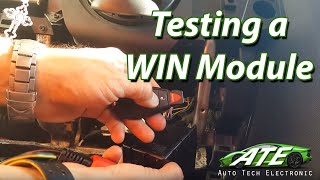
- Faulty Anti-Theft/Immobilizer Module (BCM/WCM) (Very Common) — The module responsible for reading the key and sending the password has failed internally or lost its programming. This is a notorious failure point in Chrysler and GM models. 🎬 Watch: How to repair a Chrysler wireless ignition module
- Wiring, Connection, or Ground Issues (Common) — Damaged wires, loose connectors, or corroded ground straps between the key reader, anti-theft module, and PCM interrupt the security signal. Vibrations, moisture, or rodents often cause this.
- Aftermarket Remote Starter or Alarm Issues (Less Common) — Improperly installed aftermarket remote starters or alarms tap into the Class 2 Serial Data bus wire. A bad installation corrupts the signal, leading to constant no-start conditions.
- Faulty Powertrain Control Module (PCM) (Rare) — The PCM itself is faulty and unable to interpret the security signal. Consider this only after exhaustively testing all wiring and the BCM.
Symptoms

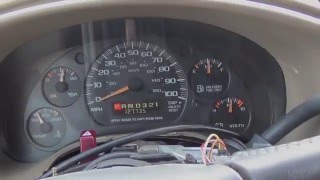
- Engine Cranks But Won't Start — The starter motor turns the engine over, but it will not fire because the PCM has disabled the fuel injectors or fuel pump. This often happens intermittently at first. 🎬 Watch: Diagnosing a GM 4.3 crank no-start with P1626
- Engine Starts and Immediately Stalls — The engine fires and runs for 1-3 seconds on the initial fuel prime before the PCM actively cuts the fuel supply, causing it to die.
- Flashing or Solid Security Light — The dashboard displays a persistent warning light, often an icon of a key, a padlock, or text like "Security". A flashing light indicates an unrecognized key; a solid light indicates a module communication error.
- No Sound from Fuel Pump — When turning the key to the 'On' position, the brief 2-second humming sound of the fuel pump priming is absent because the PCM disabled it.
Diagnostic Flowchart

Tap your situation to follow the diagnostic path that matches what you're seeing on this code.
Common Fixes & Costs
- Replace Key Fob Battery — Parts: $5-$20, Labor: $0, ~0.1 hr book time (DIY)
- Reprogram or Replace Car Key/Fob — Parts: $70-$250, Labor: $50-$150, ~0.8 hr book time (Professional)
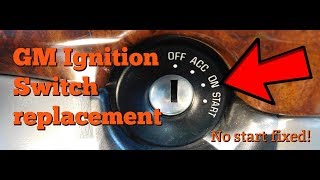
- Replace Ignition Switch / Lock Cylinder
— Parts: $50-$150, Labor: $150-$300, ~1.5 hr book time
(Professional)
GM (e.g., 2005 Silverado): OEM 19418882 (ACDelco) (Alt: Dorman 924-719)
Chrysler/Jeep (e.g., 2005 Grand Cherokee): OEM 4690692AC (Alt: Dorman 924-704) - Replace Anti-Theft/Immobilizer Module (BCM/WCM)
— Parts: $250-$600, Labor: $200-$400, ~2 hr book time
(Professional)
GM (e.g., 2005 Silverado): OEM 19369689 (Alt: Dorman 599-210 (Reman))
Chrysler (e.g., 2006 300): OEM 04692142AE (Alt: Cardone 73-7600R (Reman)) - Repair or Replace Damaged Wiring — Parts: $10-$50, Labor: $200-$600, ~3.5 hr book time (Professional)
Used vs. New Parts: Buying Guide
When a used part is worth it: A used mechanical ignition lock cylinder is cost-effective. However, buying used electronic modules (BCM/WCM) is highly risky.
Donor-vehicle mileage cap: roughly under 60000 miles for the part to have meaningful remaining life.
Donor quality checklist:
- Match part numbers exactly.
- Verify if the electronic module is 'VIN-locked'. Many GM and Chrysler modules cannot be reprogrammed once installed in a donor vehicle.
- Avoid parts from flood-damaged environments.
Decision logic:
- If The part is a BCM, WCM, or programmable module → Buy new or professionally remanufactured to guarantee programmability.
- If The part is a mechanical ignition switch → A used part is acceptable, but a new aftermarket part is inexpensive and reliable.
- If The part is a transponder key → Buy new. Used keys generally cannot be reprogrammed to a different car.
Warranty tradeoff: Used parts have a 30-90 day warranty. New aftermarket parts carry a 1-year to lifetime warranty. New OEM parts have a 1-2 year warranty.
Worst-case if a used part fails: $300-$800 if a used, non-programmable BCM is installed, requiring repeat labor and a new part.
What Happens If You Wait — Timeline
- First Occurrence - 2 Weeks: Intermittent no-start or start-and-stall. The car usually starts on the second or third try. The security light flashes during the event. (MPG impact: 0%% · Added cost: $0)
- 2 Weeks - 2 Months: No-start events increase to several times a week. The manual relearn trick is required to start the car. High risk of being stranded. (MPG impact: N/A (Loss of Use)% · Added cost: $100-$300 for a tow.)
- 2+ Months (Hard Failure): The faulty component fails completely. The car is in a permanent crank-no-start state with a solid security light. (MPG impact: N/A (Total Loss of Use)% · Added cost: $450-$1000 for required repairs plus towing.)
- Contingent on DIY attempts: An incorrect DIY bypass shorts out the BCM or PCM. The original problem is compounded by a new, more expensive failure. (MPG impact: N/A (Total Loss of Use)% · Added cost: $800-$1500+ for a new BCM/PCM and diagnostic time.)
Cost of Not Fixing It
- Immediate: Vehicle will not start or will start and immediately stall, leaving the driver stranded. (Added cost: $100-$300 for a tow to a repair shop.)
- 1-7 Days: Repeatedly trying to start the vehicle drains the battery, requiring replacement. (Added cost: $150-$250 for a new battery.)
- 1+ week: Attempting an incorrect DIY bypass permanently damages the Body Control Module (BCM). (Added cost: $500-$1200 to replace a damaged BCM.)
Diagnosis Steps
- Try Your Spare Key
If a known-good spare key starts the car, the problem is isolated to your primary key's transponder chip or its battery.
Tools: Spare car key (Beginner) - Observe Security Light Behavior
Turn the key to 'On'. A flashing light points to an unrecognized key. A solid light indicates a module communication error. If it lights up briefly and goes out, the security system is functioning normally.
Tools: None (Beginner) - Check the Vehicle Battery and Fuses
Test the battery. A healthy battery reads at least 12.4 volts with the engine off. Charge or replace it if low. Inspect all fuses related to the BCM, PCM, Immobilizer, and Ignition.
Tools: Multimeter, Fuse puller (Beginner) - Scan for B-Body and U-Communication Codes
Use an advanced scan tool to read codes from the Body Control Module (BCM). Codes like B2960 or U-codes (e.g., U1000, U1192) indicate a network communication problem, shifting focus to wiring rather than the key.
Tools: Advanced OBD-II Scan Tool (Advanced) - Perform a Security Relearn Procedure
Many GM vehicles have a manual 30-minute relearn procedure. Turn the key to 'On' (not start) for 10 minutes until the security light goes out, turn off for 10 seconds, and repeat three times.
Tools: Car key, stopwatch/timer (Intermediate) - Inspect Ignition Cylinder and Wiring
Visually inspect the wiring harness around the steering column, ignition switch, BCM, and PCM. Look for chafed wires or loose connectors. Gently wiggle connectors while trying to start the vehicle.
Tools: Flashlight, trim removal tools (Intermediate) - [PRO TIP] Check Class 2 Serial Data Voltage
Probe the Class 2 Serial Data wire (typically Pin 2 on the OBD-II port for GM). With the key on, you should see a fluctuating voltage averaging 3.5-4.5 volts. 0V indicates a short to ground; 7V+ indicates a short to power.
Tools: Multimeter with back-probe pins (Advanced) - [PRO TIP] Measure GM Passlock Sensor Resistance
For GM Passlock systems, cut the yellow wire from the ignition lock cylinder. With the key in 'RUN', measure resistance between the key-side yellow wire and the black wire. Erratic readings confirm a bad sensor.
Tools: Multimeter, wire cutters/strippers (Advanced) - [PRO TIP] Verify Fuel Pressure is Zero
Connect a fuel pressure gauge to the fuel rail. Attempt to prime the system. The pressure should read 0 PSI, confirming the PCM disabled the fuel pump. A normal system shows 55-65 PSI.
Tools: Fuel pressure gauge set (Advanced) - [PRO TIP] Scope the Passlock Sensor Signal (GM)
Use an oscilloscope to back-probe the yellow signal wire from the ignition switch. When turning the key to 'Crank', you should see a specific square wave voltage pattern. A flat-lined signal confirms a faulty Passlock sensor.
Tools: Automotive Oscilloscope, back-probe pins (Expert)
When This Code Triggers (Freeze-Frame Conditions)
- RPM: 0-200 RPM (Engine cranking or attempting to start.)
- Vehicle Speed: 0 mph (Vehicle is stationary during the start attempt.)
- Engine Run Time: 0-3 seconds (The fault logs immediately at key-on or just after the engine fires and stalls.)
- System Voltage: 9.5-12.0V (Voltage drops due to starter draw, or a weak battery contributes to the fault.)
Related Codes
- U1000, U1192 — These Class 2 Serial Data communication codes indicate the root cause is a network problem, not a simple key failure.
- B2960 — This BCM code means the module sees a signal from the key sensor, but the resistance value is incorrect.
- P1631 — Indicates the PCM received a password from the BCM, but it was the wrong one.
- P1632 — Indicates the PCM received an active command from the BCM to disable the engine due to a detected security breach.
Climate & Environmental Factors
- High Humidity / Water Leaks: Water leaking via failed windshield seals or sunroof drains drips directly onto the BCM. This causes corrosion on circuit boards and harness connectors, creating shorts in the communication circuits. GM issued TSB #07-06-04-019 regarding this exact issue.
- Extreme Cold: Cold temperatures reduce battery cranking amperage. A weak battery supplies insufficient voltage to the BCM and PCM during startup, causing a communication handshake failure. Aged plastic connectors also become brittle and crack.
How to Talk to a Mechanic About This Code
Say this: "I have a crank-no-start condition with a P1626 anti-theft code. I've already tried my spare key. I'd like to schedule a diagnostic to check for related BCM or network communication codes, and to test the integrity of the Passlock sensor and wiring before replacing any major modules."
This directs the technician to test the cheaper components (key, wiring, sensor) before quoting an expensive BCM or PCM replacement.
Avoid saying:
- 'My car won't start, the security light is on.'
- 'Just fix the P1626 code.'
- 'I think I need a new computer.'
Questions to ask before authorizing the repair:
- Did you find any body (B-codes) or communication (U-codes) stored along with the P1626?
- Does the quoted BCM/WCM replacement price include programming the new module to my vehicle's VIN and keys?
- Have you tested the wiring and data line voltage between the BCM and PCM?
- What is the warranty on the recommended parts and labor?
Where to Take It: Dealer vs Independent vs Chain
- Dealer:
Necessary if a new, VIN-locked security module is required, as they have exclusive access to the software.
Best for: Vehicles under warranty, Complex module programming and replacement (BCM, WCM, PCM), Newer vehicles (2015+) with encrypted security systems
Downsides: Highest labor rates and parts costs., Defaults to replacing whole module assemblies rather than smaller components. (Typical cost: +50% vs. baseline) - Independent Shop:
Excellent choice for diagnosing and repairing common causes like ignition switches or wiring for less than a dealer.
Best for: Out-of-warranty vehicles, especially common domestic models (GM, Chrysler)., Diagnosing wiring issues, ignition switch failures, and sensor problems.
Downsides: Must have advanced diagnostic tools and ASE-certified electrical technicians., May not be able to program all new security modules. (Typical cost: +0% vs. baseline) - Chain Shop:
AVOID. This code requires advanced electrical knowledge not found at most chain shops.
Best for: Simple maintenance like oil changes or tires.
Downsides: Technicians lack specialized training for complex security system diagnostics., High risk of misdiagnosis. (Typical cost: -10% vs. baseline)
When to Walk Away From the Repair
If the estimated repair cost exceeds 50% of the car's private-party value, seriously consider selling the car as-is.
- Car worth $3500, fix is $1200: Fix it. The repair cost is 34% of the vehicle's value, a reasonable investment to restore full function.
- Car worth $4000, fix is $2200: Walk away. The repair cost is 55% of the car's value. It is not economically sound to proceed.
- Car worth $15000, fix is $1500: Fix it. At 10% of the vehicle's value, this repair is a clear-cut decision.
What Scan Tool You Need for This Code
Minimum: A scanner that reads 'enhanced' codes from all vehicle modules, including the BCM and PCM.
A basic $20 code reader only shows the P1626 code. It cannot see critical body codes (B2960) or communication codes (U1000) essential for diagnosing the true source.
Budget: BlueDriver Pro (~$90) — Reads and clears enhanced codes from all modules (ABS, Airbag, BCM). Provides the full picture of fault codes across the system.
Mid-range: Foxwell NT510 Elite (~$180) — Offers bidirectional controls to actively test components like fuel pumps. Performs system-specific relearn procedures and adaptations.
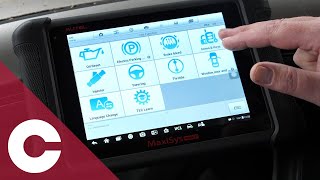
Professional: Autel MaxiCOM MK808 / XTOOL D7 (~$450-700) — Provides IMMO (immobilizer) and key programming functions. Performs security relearns and adds new keys at a near-dealership level.
Rent vs buy: Free loaner scanners from auto parts stores will not read the necessary BCM codes. You must buy at least a budget-pick scanner to diagnose P1626.
How to Clear the Code After You Fix It
- Perform the required repair (e.g., replace ignition switch, program new key).
- Use an OBD-II scan tool to clear the P1626 and related B- or U-codes.
- Perform the vehicle-specific security relearn procedure (e.g., GM 30-minute relearn).
Drive cycle (~30 minutes): The primary reset is the security relearn. For GM, turn the key to 'ON' for 10 minutes until the security light goes out, then 'OFF' for 10 seconds, repeating 3 times. A normal 20-minute drive cycle follows.
Before emissions retest: drive at least 50 miles to fully set monitors.
Watch out for:
- Clearing the code with a scanner does not fix the no-start condition; the security system re-engages on the next start attempt.
- A weak battery causes the 30-minute relearn procedure to fail.
- Failing to program new keys after replacing a BCM locks you out.
Will This Fail Emissions / State Inspection?
Yes — this code typically fails an OBD-II emissions inspection.
- California: A P1626 code causes an automatic failure. The inability to run prevents the OBD-II readiness monitors from completing self-checks.
- New York: A P1626 fault results in a failed OBD-II inspection. An illuminated security light is also cause for failure.
- Texas: The OBD-II scan detects the P1626 code and causes an automatic failure. The vehicle cannot pass until readiness monitors are set.
Most Commonly Affected Vehicles
- Chevrolet Cavalier, Impala, S-10, Silverado, Tahoe (1998-2007) — These GM models use the Passlock I/II system, notorious for failures in the ignition cylinder's hall-effect sensor and the BCM. TSB 04-08-45-004A addresses intermittent no-start conditions.
- Chrysler 300, PT Cruiser, Sebring (2004-2010) — The code is often caused by a failure of the Wireless Control Module (WCM). TSB 08-007-09 REV. A discusses WCM failures and key programming issues.
- Dodge Charger, Magnum, Caliber, Avenger (2005-2012) — These vehicles suffer from P1626 due to faulty Wireless Control Modules (WCM) and key fob communication errors, often manifesting after a battery replacement.
- Jeep Grand Cherokee, Commander, Compass (2005-2010) — Points to a faulty Wireless Control Module (WCM) or a failed transponder key. On 2024+ Wagoneer S models, P1626 indicates a 'Park Pawl Motor Stuck'.
- GMC Yukon, Sierra, Savana (1999-2007) — These trucks share the problematic GM Passlock system with Chevrolet. Failures of the ignition housing sensor or BCM are the primary culprits.
- Nissan Murano, Altima, Sentra (2005-2016) — Triggered by a failing BCM, often induced by water intrusion into the cabin fuse box or improper aftermarket stereo installations shorting the CAN bus.
- Pontiac Grand Am, Sunfire, G6 (1999-2009) — Sharing platforms with Chevrolet, these vehicles suffer from the same unreliable Passlock system. The BCM and ignition switch are the most common failure points.
- Saturn Ion, L-Series, Vue (2003-2007) — These models use a variant of the Passlock system. They set P1626 due to BCM or ignition switch electrical faults.
Manufacturer-Specific Notes
- General Motors (Chevrolet, GMC, Pontiac, etc.): Exceptionally common due to the Passlock system. The failure is most often the sensor in the ignition lock cylinder. A manual 30-minute relearn procedure provides a temporary fix. TSB 04-08-45-004A addresses this.
- Ford: P1626 has a completely different meaning, often related to the A/C system ("B+ Supply To VCRM A/C Circuit Malfunction"). Use a scan tool with Ford-specific definitions.
- Chrysler/Dodge/Jeep: The Wireless Control Module (WCM) acts as the immobilizer. A failing WCM is the primary cause of P1626. TSB 08-007-09 REV. A addresses WCM failures.
- Audi/Volkswagen: P1626 is defined as "CAN-Data Bus: Incorrect Signal from TCM". Diagnosis must focus on the Transmission Control Module, not the anti-theft system.
Real Owner Stories
2003 Chevrolet Silverado 1500 with intermittent no-start
Truck cranked but would not start. The owner cleared other codes, and the problem began immediately after.
Outcome: The 30-minute key relearn procedure successfully resynchronized the modules, and the truck started normally.
Lesson: Do not clear codes as a first step; you erase the 'Fail Enable' mode that allows the car to start. A manual 30-minute relearn is a valid temporary fix for GM trucks.
2003 Chevrolet S-10 with P1626 after parts cannon misdiagnosis
Owner experienced a crank-no-start and a P1626 code.
Outcome: The problem was unresolved after replacing every major component. The final diagnosis pointed to a wiring ground issue between the BCM and PCM.
Lesson: Replacing parts without diagnosing the wiring first is an expensive mistake. If a new BCM and PCM fail to fix the issue, the fault is in the wiring harness.
2007 Dodge Caliber with P1626 and intermittent stalling
Vehicle intermittently stalled while driving or failed to start, displaying a P1626 code.
Outcome: The dealership replaced and programmed the WCM, resolving the P1626 code and stalling condition.
Lesson: For Chrysler/Dodge/Jeep products, P1626 frequently points to a failing WCM. Be prepared for a professional module replacement requiring programming.
How to Prevent This Code From Triggering
- Maintain full battery voltage (Every 3-5 years) — Low voltage during cranking is a primary cause of communication glitches between the BCM and PCM, triggering a false P1626.
- Protect your key fob (Daily habit) — Physical shock damages the delicate transponder chip, and moisture shorts its electronics, preventing it from sending the correct code.
- Replace key fob battery periodically (Every 2-3 years) — A weak battery causes intermittent communication with the immobilizer antenna, leading to a no-start condition.
- Address water leaks immediately (After heavy rain or car wash) — Leaks from windshield seals drip directly onto the BCM, causing corrosion and eventual failure.
Frequently Asked Questions
Can I bypass the P1626 code to start my car?
Yes, for GM's Passlock system, you can use resistors to mimic the correct sensor signal. However, an incorrect bypass permanently damages the BCM. Stop DIY and consult a professional if you cannot accurately measure the required resistance.
Will disconnecting the battery clear the P1626 code?
Disconnecting the battery clears the code from memory, but it returns immediately upon cranking. Crucially, this erases the 'Fail Enable' mode that might be allowing your car to start. Never disconnect the battery as a first diagnostic step for P1626.
Why did this happen right after my battery died or was replaced?
The power surge from a jump-start or battery change corrupts the security 'handshake' between the BCM and PCM. This causes the modules to lose synchronization. A 30-minute security relearn procedure usually resolves this.
Can a locksmith fix a P1626 code?
Yes, a qualified automotive locksmith is the best choice for key-related P1626 issues. They diagnose key failures, cut new transponder keys, and program immobilizer modules. They typically charge 20-40% less than a dealership.
Is the Check Engine Light always on with a P1626 code?
No, P1626 rarely illuminates the main Check Engine Light (MIL). Instead, it triggers the vehicle's specific security or anti-theft warning light on the instrument cluster. You need an advanced scanner to pull the hidden P1626 code.
I replaced the BCM and the car still won't start. What now?
A new BCM requires professional programming to match your vehicle's VIN and keys. If programmed correctly and it still fails, the original diagnosis was wrong. The actual fault is likely the ignition switch, Passlock sensor, or wiring harness.
What does 'Fail Enable' mode mean for a P1626?
On GM vehicles, if security communication fails while the engine is already running, the system enters 'Fail Enable' mode. This allows the car to restart on subsequent trips despite the active fault. Clearing codes or disconnecting the battery erases this grace period, leaving you stranded.
Can a bad alternator cause a P1626 code?
Yes. A failing alternator produces low voltage or excessive AC ripple (electrical noise). This disrupts the sensitive 3.5-7V data communications between the BCM and PCM, triggering false security codes.
Key Takeaways
- Code P1626 means the anti-theft system disabled the fuel injectors, causing a crank-no-start or a start-and-stall within 3 seconds.
- Test your spare key first and verify battery voltage is above 12.4V before replacing expensive modules.
- On 1998-2007 GM vehicles, this code almost always points to a failed Passlock sensor inside the ignition lock cylinder, requiring a $200-$450 replacement.
- Never clear this code or disconnect the battery as a first step; doing so erases the 'Fail Enable' mode and permanently immobilizes the vehicle.
Helpful Videos


The information in this article is provided for general reference and educational purposes only. Vehicle specifications, procedures, and part compatibility can vary by production date, trim level, and region. Always consult your vehicle's factory service manual and verify part numbers before purchasing or performing repairs. Safety-critical components such as airbags, seat belts, and braking systems should be installed by a qualified professional.
- 🎬 Helpful Videos
- What Does P1626 Mean?
- Can I Drive With P1626?
- Common Causes
- Symptoms
- Diagnostic Flowchart
- Common Fixes & Costs
- Used vs. New Parts: Buying Guide
- What Happens If You Wait — Timeline
- Cost of Not Fixing It
- Diagnosis Steps
- When This Code Triggers (Freeze-Frame Conditions)
- Related Codes
- Climate & Environmental Factors
- How to Talk to a Mechanic About This Code
- Where to Take It: Dealer vs Independent vs Chain
- When to Walk Away From the Repair
- What Scan Tool You Need for This Code
- How to Clear the Code After You Fix It
- Will This Fail Emissions / State Inspection?
- Most Commonly Affected Vehicles
- Manufacturer-Specific Notes
- Real Owner Stories
- 2003 Chevrolet Silverado 1500 with intermittent no-start
- 2003 Chevrolet S-10 with P1626 after parts cannon misdiagnosis
- 2007 Dodge Caliber with P1626 and intermittent stalling
- How to Prevent This Code From Triggering
- Frequently Asked Questions
- Can I bypass the P1626 code to start my car?
- Will disconnecting the battery clear the P1626 code?
- Why did this happen right after my battery died or was replaced?
- Can a locksmith fix a P1626 code?
- Is the Check Engine Light always on with a P1626 code?
- I replaced the BCM and the car still won't start. What now?
- What does 'Fail Enable' mode mean for a P1626?
- Can a bad alternator cause a P1626 code?
- Key Takeaways
- 🎟️ Get 5% Off