

P1622 on 2012-2015 Hyundai Veloster: A/C Control Relay Circuit Fixes
This code means the A/C compressor relay circuit has failed. On the 2012-2015 Veloster, the relay is likely integrated into the main engine compartment fuse box (junction block). This is not a simple relay swap; the entire fuse box often needs replacement, which can be costly.
- P1622 on a 2012-2015 Veloster points to a failure in the A/C compressor's electrical control circuit.
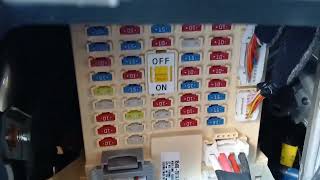
- Before any major repair, check the 10A 'A/C' fuse in the engine bay fuse box.
- The A/C relay is most likely built into the main fuse box (junction block) and cannot be replaced by itself.
- The most probable, though expensive, fix is replacing the entire engine compartment fuse box.
- Professional diagnosis is strongly recommended to confirm the fuse box is the culprit before spending significant money on the part.
What's Unique About the 2012-2015 Hyundai Veloster
The key challenge with code P1622 on the first-generation Veloster is that the A/C compressor relay is typically not a simple, individual plug-in part you can swap in minutes. Evidence suggests the relay is integrated (soldered) onto the main circuit board inside the engine compartment fuse box, also known as the Engine Room Junction Block, Integrated Power Module (IPM), or simply the fuse/relay box. This design choice turns a potentially simple $20 relay fix into a complex and expensive repair requiring the replacement of the entire fuse box assembly. Many owners and even some technicians may waste time looking for a standalone relay that doesn't exist.
Symptoms You May Notice
- Air conditioning does not blow cold air
- A/C compressor clutch does not engage (no 'click' sound when A/C is turned on)
- Check Engine Light is illuminated
- Replacing the A/C Compressor: While a bad compressor clutch can be a problem, P1622 specifically points to the *control circuit*. The compressor should be tested, not replaced, as a first step.
- Recharging the A/C System: Low refrigerant will cause the A/C to not cool but will typically not set the P1622 electrical circuit code.
- Replacing the Blower Motor or Resistor: These components control the cabin fan speed and have their own common failure patterns (especially melted connectors on the Veloster), but they are not part of the P1622 compressor clutch circuit.
Most Likely Causes
- Integrated A/C Relay Failure (Internal to Fuse Box) 🔴 High Probability The A/C compressor relay is soldered onto the main board of the engine compartment fuse box (junction block/IPM), making it non-serviceable individually. Failure of this internal component requires replacing the entire assembly.
How to confirm: After confirming the A/C fuse is good and the compressor clutch itself works (by applying 12V directly), a technician can test for a control signal from the ECM to the fuse box and from the fuse box to the compressor. A lack of output signal from the fuse box with a valid input signal points to an internal failure. This requires a wiring diagram and multimeter or test light.
Typical fix: Replacement of the entire engine compartment fuse box (junction block).
Est. part cost: $400-$700 - Blown 'A/C' Fuse 🟡 Medium Probability
How to confirm: Visually inspect the 10A 'A/C' fuse in the engine compartment fuse box. Use a multimeter to test for continuity.
Typical fix: Replace the blown fuse. If it blows again immediately, there is a short circuit in the system that needs to be diagnosed.
Est. part cost: $1-$5 - Wiring Harness Damage ⚪ Low Probability
How to confirm: Visually inspect the wiring between the fuse box and the A/C compressor for any signs of chafing, melting, or corrosion. Perform a continuity test on the signal wire from the fuse box connector to the compressor connector.
Typical fix: Repair or replace the damaged section of the wiring harness.
Est. part cost: $10-$100
Rare But Worth Checking
- Faulty A/C Compressor Clutch Coil: A failed clutch coil can sometimes create an electrical issue that the ECM interprets as a circuit fault. If the coil's resistance is out of specification, it can trigger P1622.
- Faulty Engine Control Module (ECM): This is extremely rare. The ECM itself could fail to send the proper signal, but all other potential causes must be exhaustively ruled out first.
Diagnosis Steps
- Verify the code P1622 is present using an OBD-II scanner.
- Check the 10A 'A/C' fuse in the engine compartment fuse box. Replace if blown.
- With the engine running, turn the A/C on. Listen for a 'click' from the A/C compressor. If there is no click, the clutch is not engaging.
- Visually inspect the wiring harness leading to the A/C compressor for any obvious damage, corrosion, or loose connections.
- Disconnect the A/C compressor clutch connector. Use a multimeter to check for 12V at the connector when the A/C is commanded on. If there is no voltage, the problem is upstream.
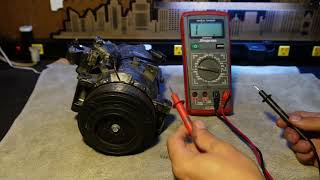
- (Advanced) Manually apply 12V and a ground to the compressor clutch terminals. 🎬 Watch: How to test a non-working AC compressor If the clutch engages with a 'click', the compressor clutch is likely good, and the fault is in the control circuit.
- If all the above steps point to a control-side issue and no separate relay can be found, the engine compartment junction block (fuse box) is the most likely failed component.
- Confirm with a professional mechanic before ordering an expensive junction block.
Parts You'll Likely Need
- Engine Compartment Fuse Box (Junction Block)
(OEM #91950-2Vxxx, 95400-2V044, 91941-2V320. Part number varies by model year, transmission (AT/MT), and options (e.g., push-button start). Verify with VIN.)— This is the most common fix for P1622 on this platform because the A/C compressor relay is integrated into this unit and cannot be replaced separately.
Trusted brands: Hyundai (OEM)
OEM price range: $400-$700
Aftermarket price range: $150-$300 (Used/Salvage) - A/C Fuse — A simple blown fuse can cause this code and is the first and cheapest part to check.
Trusted brands: Bussmann, Littlefuse
OEM price range: $1-$5
Aftermarket price range: $1-$5
Technical Service Bulletins (TSBs) & Recalls
- TSB 12-BE-005-2: While not directly for P1622, this TSB is frequently referenced in other service bulletins for the procedure to erase DTCs in the BlueLink system after performing other repairs or software updates.
Platform-Specific Known Issues
- The first-generation Veloster is known for issues with its HVAC system, particularly melted connectors for the blower motor resistor and fan speed switch, though these are separate from the P1622 code.
- A user on a forum confirmed the integrated relay design on their Veloster, leading to a dealer diagnosis of a failed fuse box and a repair quote of over $900, corroborating the high cost and complexity of this specific failure mode.
Mechanic-Grade Diagnostic Values
- A/C Compressor Clutch Coil Resistance — expected: 3.0 to 5.0 Ohms. Failure: A reading of 0 Ohms indicates a short, while an infinite (O.L.) reading indicates an open circuit. Readings outside the 3-5 Ohm range suggest a failing coil.
- A/C Relay Control Signal from ECM — expected: Near 0V (ground) when A/C is commanded ON; Battery Voltage (12V+) when A/C is OFF.. Failure: If the voltage does not drop to near 0V when the A/C is turned on, the ECM is not sending the activation signal, or there is a break in the wire.
- Voltage at A/C Compressor Clutch Connector — expected: Battery Voltage (12V+) when A/C is commanded ON.. Failure: 0V when the A/C is on indicates a failure in the circuit, likely the integrated relay in the junction block or the wiring from the block to the compressor.
Scan Tool Commands That Help
- Hyundai GDS (Global Diagnostic System): Actuation Test -> A/C System -> A/C Compressor Relay — This is a critical bidirectional test to isolate the fault. A technician can command the A/C relay ON and OFF directly. If the compressor clutch engages during this test, the relay and output wiring are good, and the problem lies with an input to the ECM (e.g., A/C switch, pressure sensor). If it does not engage, it strongly confirms the fault is within the ECM output driver, the junction block (IPM), or the wiring between them.
Wiring & Ground Locations
- ECM Connector C134-2, Pin 80 — At the Engine Control Module (ECM), located in the left rear of the engine compartment.. This is the specific pin where the ECM sends the ground signal to activate the A/C relay inside the junction block. A technician can back-probe this pin to verify if the ECM is commanding the relay on.
- E/R Junction Block Connector IE, Pin 1 — On the Engine Room Junction Block (the main fuse box in the engine bay). 'IE' is one of the large multi-pin connectors, likely on the underside.. This is the output pin from the integrated A/C relay that sends 12V power to the A/C compressor clutch. If there is a valid command signal going into the box but no 12V coming out of this pin, the junction block has failed internally.
- Ground G-04 — Located on the left side fender apron in the engine compartment, near the battery tray.. This is a primary ground point for various components in the engine bay. While not exclusively for the A/C circuit, a poor connection or corrosion at this point can cause numerous, hard-to-diagnose electrical issues, including problems that could indirectly affect the A/C system's operation.
Real Owner Repair Stories
- veloster.org forum user (2013 Hyundai Veloster) — A/C stopped working and threw code P1622.
❌ Tried (didn't work) Checking the A/C fuse (it was good).
✅ What actually fixed it The owner was diagnosed with a failed junction block (IPM). Instead of paying the high dealer price, they purchased a used junction block from a junkyard for approximately $150, ensuring the part number was an exact match. They replaced the unit themselves, which resolved the P1622 code and restored A/C function.
Model Year Variations Within This Range
- 2012-2015: The part number for the Engine Room Junction Block (IPM) is highly specific and varies based on model year, transmission type (Manual vs. DCT Automatic), and whether the vehicle has a Smart Key (push-button start). For example, part number 91950-2V020 may be for a 2012 manual transmission car without a smart key, while 91950-2V121 could be for a 2013 automatic with a smart key. It is absolutely critical to match the part number exactly when ordering a replacement.
Diagnostic Flowchart
Other Known Issues on This Vehicle
Issues unrelated to this code that are worth knowing about as an owner of this generation:
- 1.6L GDI Engine Failure (Rod Bearing) 🔴 High — Widespread issue across multiple Hyundai/Kia models with this engine family, leading to recalls and class-action lawsuits. Often presents as a knocking noise that progresses to seizure. (Ref: NHTSA Campaign Number 21V119000 (Recall 200), Hyundai Service Campaign 966)
- Dual-Clutch Transmission (DCT) Issues 🟠 Medium — Common complaints include hesitation from a stop, shuddering, jerky shifting, and overheating, particularly in stop-and-go traffic. (Ref: TSB 19-AT-013H (TCU Update for Judder))
- Peeling White Paint 🟡 Low — Affects many Hyundai models from this era, especially those with white paint. Large flakes or sheets of paint can peel from the roof, hood, and other panels. (Ref: TSB 22-BD-010H (Warranty extension, but may not cover all affected years/models).)
- Engine Knocking / Piston Slap 🟠 Medium — Separate from the rod bearing issue, some engines develop a knocking or ticking noise due to piston skirt coating defects or connecting rod finishing issues. (Ref: TSB 14-20-002 (for Elantra, but describes a known GDI engine issue))
- Blower Motor Resistor Failure 🟡 Low — A very common failure where the cabin fan only works on the highest setting. Often accompanied by a melted electrical connector, which poses a fire risk.
Used vs. New Parts: Buying Guide for This Vehicle
When a used part is the smart pick: For the Engine Compartment Junction Block (IPM), a used part is a very sensible and common choice. The failure is typically an electronic component (the integrated relay) rather than a wear-and-tear item, and the cost savings are substantial ($150 used vs. $700+ new).
Donor-vehicle mileage cap: roughly under 80000 miles for the part to have meaningful remaining life.
What to inspect on the donor part:
- Verify the part number on the used unit EXACTLY matches your original unit.
- Inspect all connector sockets for green or white corrosion, or any bent pins.
- Check the plastic housing for signs of melting, cracking, or discoloration that might indicate heat or water damage.
- Confirm with the seller that the donor vehicle did not have flood or fire damage.
OEM-only on this vehicle (don't cheap out):
- Engine Compartment Junction Block (IPM) - While a used part is fine, it should be a genuine Hyundai (OEM) part. No aftermarket companies manufacture complete replacements for this module.
Real Owner Stories
Aggregated from forums and TSBs cited above. Mileages and costs reflect what owners reported in those sources.
2012-2015 Hyundai Veloster
Symptoms: A/C failure where the problem was traced back to the fuse box (IPM). Testing confirmed a lack of a swappable relay, pointing to the IPM as the internal failure point.
What fixed it: Replacement of the Intelligent Power Module (IPM) / fuse box.
Source hint: veloster.org Forum: User 'jblackburn' detailed testing procedures and confirmed the lack of a swappable relay, ultimately pointing to the IPM as the failure point.
Hyundai Veloster (First Generation)
Symptoms: A/C relay was integrated into the fuse box, preventing a simple relay swap when the A/C stopped working.
What fixed it: Full replacement of the engine compartment fuse box.
Cost: $900-$1000
Source hint: r/VelosterN on Reddit: A user with a newer Veloster confirmed their A/C relay was integrated into the fuse box, requiring a full replacement for over $900.
Related OBD-II Codes
Frequently Asked Questions
Can I just replace the A/C relay on my 2013 Veloster to fix code P1622?
Does TSB 12-BE-005-2 provide the repair procedure for P1622?
Will a new engine compartment junction block require programming by a dealer?
Is the P1622 code related to the common blower motor resistor failures on the Veloster?
What is the estimated cost to have a professional fix the P1622 issue?
Can I use a fuse box from a same-year Hyundai Elantra to fix this?
Helpful Videos

We Have This Part in Stock



The information in this article is provided for general reference and educational purposes only. Vehicle specifications, procedures, and part compatibility can vary by production date, trim level, and region. Always consult your vehicle's factory service manual and verify part numbers before purchasing or performing repairs. Safety-critical components such as airbags, seat belts, and braking systems should be installed by a qualified professional.
- Hyundai Veloster:
- 🎬 Helpful Videos
- 🛍️ Shop This Part
- What's Unique About the 2012-2015 Hyundai Veloster
- Symptoms You May Notice
- Most Likely Causes
- Rare But Worth Checking
- Diagnosis Steps
- Parts You'll Likely Need
- Technical Service Bulletins (TSBs) & Recalls
- Platform-Specific Known Issues
- Mechanic-Grade Diagnostic Values
- Scan Tool Commands That Help
- Wiring & Ground Locations
- Real Owner Repair Stories
- Model Year Variations Within This Range
- Diagnostic Flowchart
- Other Known Issues on This Vehicle
- Used vs. New Parts: Buying Guide for This Vehicle
- Real Owner Stories
- 2012-2015 Hyundai Veloster
- Hyundai Veloster (First Generation)
- Related OBD-II Codes
- Frequently Asked Questions
- 🎟️ Get 5% Off