

P1622 on 2013-2015 Dodge Challenger: O2 Sensor Reference Voltage High Fixes
On a 2013-2015 Challenger, code P1622 is most often caused by a software glitch in the engine computer. The primary fix is a dealer-performed software update (reflash) as outlined in several Technical Service Bulletins, which typically costs between $175 and $350.
- P1622 on a 2013-2015 Challenger almost always points to a known software issue.
- Before replacing any parts, your first step should be to have a Dodge dealer check for and perform any available ECM software updates.
- This code frequently appears with other codes like P1621, P0606, P0300, and U0140, which reinforces the software-based nature of the problem as outlined in official TSBs.
What's Unique About the 2013-2015 Dodge CHALLENGER

For this specific generation of Dodge Challenger, particularly those with the 5.7L HEMI engine, the P1622 code is very frequently a software issue rather than a hardware failure. Dodge's parent company, FCA (now Stellantis), released multiple Technical Service Bulletins (TSBs) to address this and other related codes with a simple software update for the Powertrain Control Module (PCM). This is a unique situation, as circuit voltage codes on other vehicles more commonly point to a faulty sensor or wiring.
Diagnostic Flowchart
Tap your situation to follow the diagnostic path that matches what you're seeing on this vehicle.
Symptoms You May Notice
- Check Engine Light (MIL) is on
- Reduced fuel economy
- Rough or unstable idle
- Hesitation or bucking at low speeds, sometimes during MDS (Multi-Displacement System) transitions.
- Failed emissions test
- Replacing one or more oxygen sensors before checking for available ECM software updates. This often leads to the code returning because the root cause is software-related, as documented in multiple TSBs.
Most Likely Causes

- Engine Control Module (ECM) Software Requires Update 🔴 High Probability Manufacturer TSBs #18-052-15 REV A, and the superseding #18-084-16, all indicate that a software update is the prescribed fix for a cluster of codes including P1622, specifically on 5.7L models.
How to confirm: A Dodge dealership or a qualified shop with access to FCA's software can check your vehicle's VIN to see if it's eligible for a software update per TSB #18-084-16.
Typical fix: Reprogramming (flashing) the ECM/PCM with the latest software version using a wiTECH scan tool. The process takes approximately 3-4 minutes once connected.
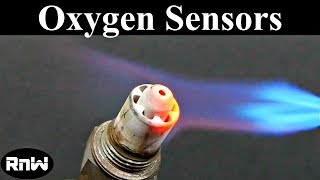
Est. part cost: $0 - Faulty Oxygen (O2) Sensor 🟡 Medium Probability O2 sensors operate in a harsh environment and can fail over time. An internal short or failure within the sensor could cause a voltage irregularity on the reference circuit.
How to confirm: After confirming the ECM software is up to date, a technician can test the O2 sensor's voltage output and resistance. The code often relates to the Bank 1 sensors (driver's side).
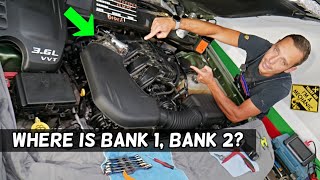
Typical fix: Replace the faulty oxygen sensor. The Challenger has four sensors, so proper diagnosis is key. Bank 1 is the driver's side.
Est. part cost: $40-$120 - Wiring or Connector Issue ⚪ Low Probability Wiring for the O2 sensors runs close to hot exhaust components and can become damaged, melted, or corroded over time, leading to a short circuit. Water intrusion into a connector after driving in heavy rain has also been reported by owners as a cause.
How to confirm: Visually inspect the O2 sensor wiring harness and connectors for damage. A multimeter can be used to check for a short to power in the reference voltage wire. Owners suggest unplugging, cleaning, drying, and applying dielectric grease to the connectors as a first step if moisture is suspected.
Typical fix: Repair or replace the damaged section of the wiring harness or clean/replace the connector.
Est. part cost: $10-$50
Rare But Worth Checking
- Failing Engine Control Module (ECM): This is a last resort. If the software is updated and both the O2 sensors and wiring have been proven to be good, the ECM's internal voltage regulator may be at fault. This is an expensive and uncommon failure.
Diagnosis Steps

- Scan the vehicle for all stored trouble codes. Note if P1622 appears with other codes listed in the TSBs, especially P1621, P0606, and P0300.
- Contact a Dodge dealer or qualified repair shop with your VIN. Ask them to check if TSB #18-084-16 is applicable and open for your vehicle. This TSB specifically addresses P1622 on 5.7L engines.
- If an update is available, have the PCM reflashed. The dealer must use the wiTECH scan tool and ensure the battery voltage is stable between 13.2 and 13.5 volts during the procedure. This is the most likely fix.
- If the code returns after the reflash, or if no flash is available, inspect the O2 sensor connectors and wiring harness for the Bank 1 (driver's side) sensors. Look for melted plastic, chafing, or corrosion. Some owners report water intrusion causing the fault.
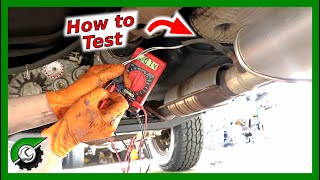
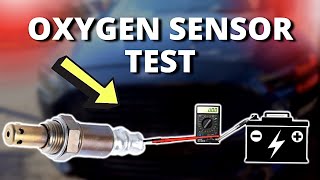
- If wiring appears intact, use a multimeter to test the reference voltage on the O2 sensor connector. Disconnect the sensor and check the voltage on the reference wire from the PCM. 🎬 Watch: How to test O2 sensor wires and reference voltage A reading significantly higher than the specified voltage (often 5V, but confirm with service data) indicates a problem in the harness or PCM.
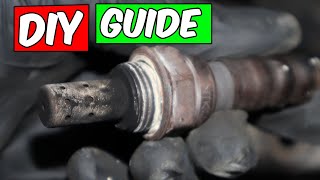
- If wiring and software are confirmed good, consider replacing the corresponding O2 sensor (typically a Bank 1 sensor).
- If all other steps fail, the PCM itself may be faulty and require testing or replacement. This is the least likely cause.
Parts You'll Likely Need

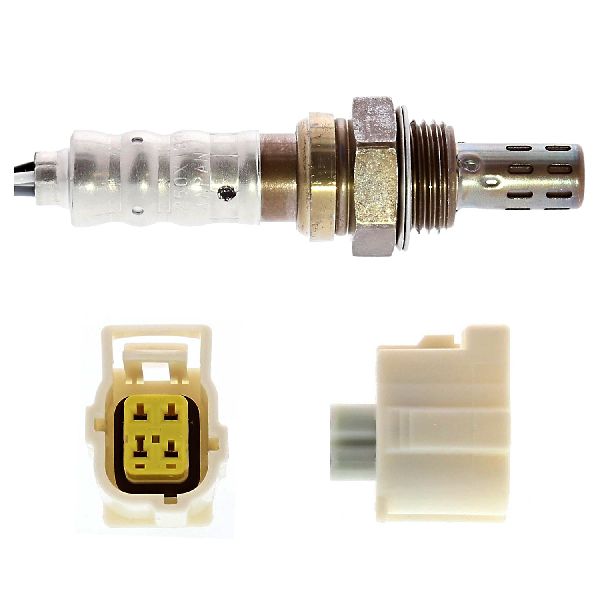
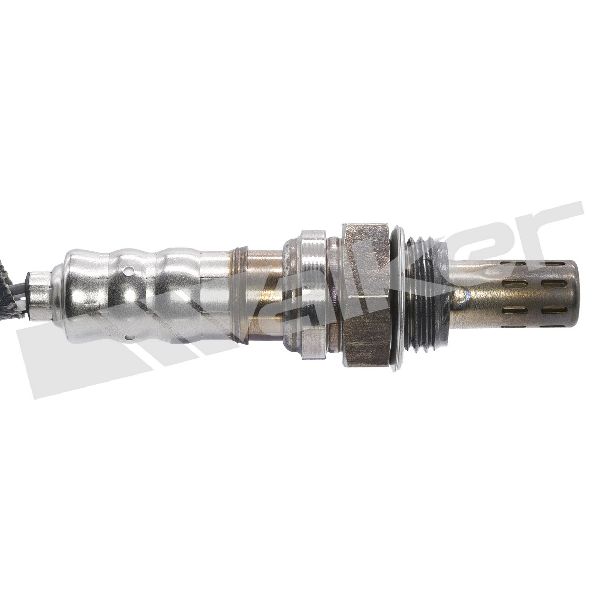
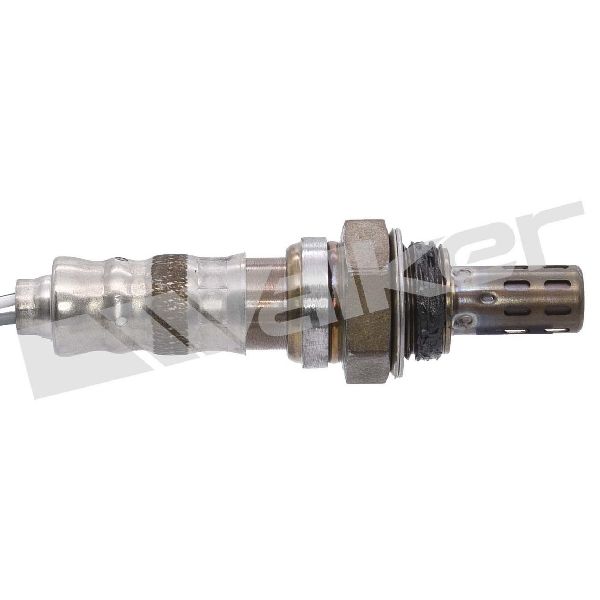
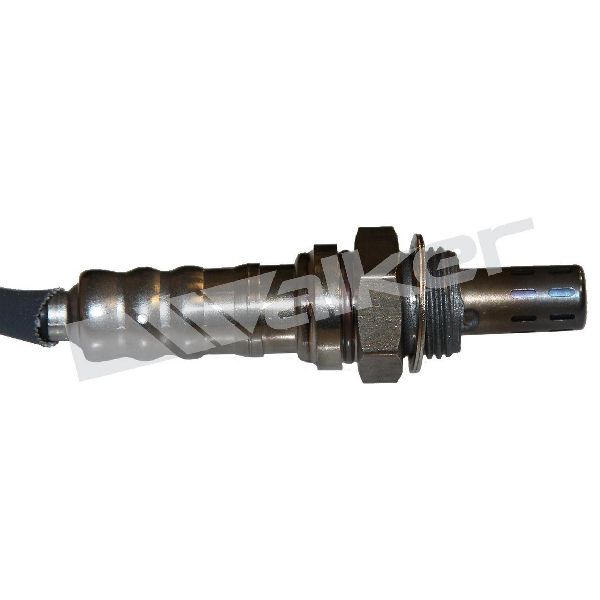
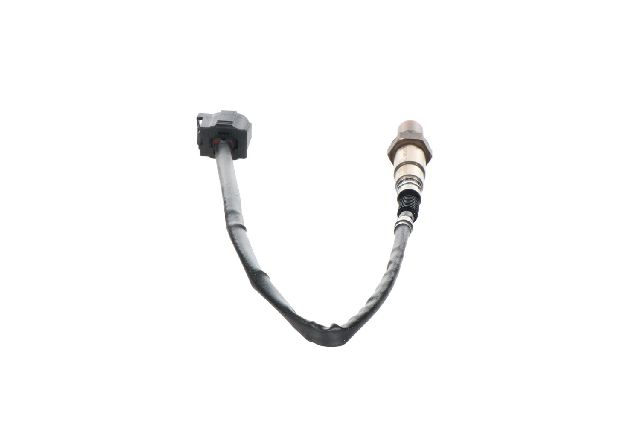
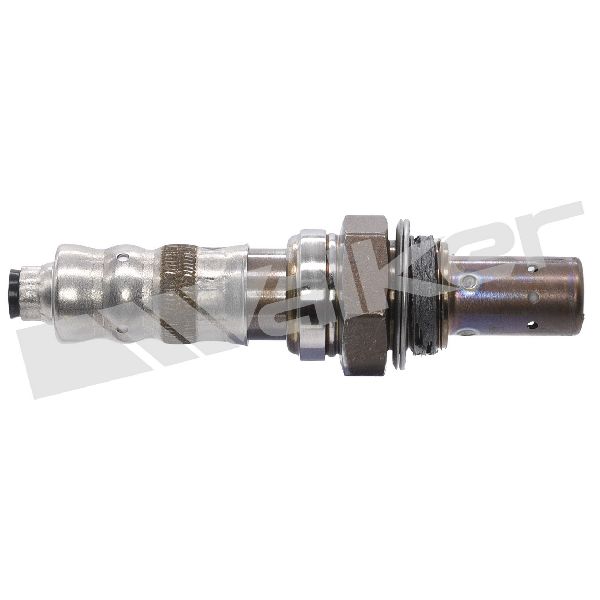
- Oxygen Sensor
(OEM #5149171AB (Upstream/Downstream for 5.7L/6.4L), 68090640AB (Varies by position/engine))— If the issue is not resolved by a software update, a faulty O2 sensor is the next most likely hardware cause.
Trusted brands: Mopar, NGK, Bosch, Denso
OEM price range: $90-$150
Aftermarket price range: $40-$120
Related Codes That Often Appear With This One
- P1621 — This is the code for 'O2 Sensor Reference Voltage Circuit Low' and is often listed in the same TSBs as P1622, indicating a related software logic issue.
- P0606 — 'Internal Control Processor' failure. Its appearance with P1622 strongly points to an internal ECM software or hardware problem, as noted in TSB #18-052-15 and #18-084-16.
- P0300 — 'Multiple Cylinder Misfire.' An incorrect air-fuel ratio caused by the O2 sensor circuit fault can lead to misfires. This is also mentioned in the relevant TSBs.
- P219A — 'Air-Fuel Ratio Cylinder Imbalance Bank 1.' This code is directly related to the fuel mixture problem that a faulty O2 sensor reference voltage would cause and is included in the TSB fix.
- U0140 — 'Lost Communication With Body Control Module.' Its inclusion in the TSBs suggests a broader electronic module communication issue that is resolved by the ECM reflash.
- P2096 — 'Downstream Fuel Trim System 1 Lean.' This code is also listed in TSB #18-084-16 as being resolved by the PCM software update.
Technical Service Bulletins (TSBs) & Recalls
- 18-052-15 REV A: Notes P1622 and other codes can be stored in the ECM and addressed by a software flash for 2013-2014 Challengers with the 5.7L engine.
- 1807320: Lists P1622 as one of several DTCs related to a PCM software issue.
- 18-052-15: The original version of the TSB, also identifying P1622 as a software-related fault for 2013-2014 5.7L models.
- 18-084-16: Supersedes previous bulletins and provides an updated list of DTCs, including P1622, that are resolved by a PCM reflash on 2013-2015 models with the 5.7L engine (Sales Codes EZC or EZH).
Platform-Specific Known Issues
- Multiple Technical Service Bulletins (TSBs), including #18-052-15 REV A and the superseding #18-084-16, were issued for 2013-2015 Challengers for this exact code. The bulletins confirm that P1622, often with a group of other codes, can be caused by a software error on vehicles with the 5.7L engine. The official manufacturer fix is to reprogram (reflash) the Powertrain Control Module (PCM) with updated software, not to replace any parts initially.
Mechanic-Grade Diagnostic Values
- O2 Sensor Reference Voltage Fault Threshold — expected: Below 3.7 Volts. Failure: The PCM sets code P1622 if it detects a voltage above 3.7V for more than 9 seconds.
- Upstream O2 Sensor (Narrowband) Voltage at Operating Temp — expected: Fluctuating rapidly between ~0.1V and ~0.9V. Failure: Stuck high (e.g., >0.8V), stuck low (e.g., <0.2V), or not fluctuating.
- Downstream O2 Sensor (Narrowband) Voltage at Operating Temp — expected: Relatively steady voltage, typically between 0.6V and 0.8V.. Failure: Fluctuating similarly to the upstream sensor (indicates a bad catalytic converter) or stuck at a very low/high voltage.
- O2 Sensor Heater Element Resistance — expected: Typically between 5 and 6 ohms, but varies by manufacturer.. Failure: An open circuit (infinite resistance) or a reading far outside the expected range.
Scan Tool Commands That Help
- wiTECH: PCM Reprogramming/Flash — This is the primary repair step for P1622 on this vehicle, as instructed by TSBs #18-052-15 and #18-084-16. It updates the PCM software to correct the fault logic that triggers the code.
- Professional Scan Tool (e.g., Launch, Autel, wiTECH): View Live Data for O2 Sensors (B1S1, B1S2, B2S1, B2S2) — Used to diagnose the sensor's behavior after confirming the PCM software is up-to-date. This helps determine if a sensor is faulty by observing its voltage readings during idle and under load.
Wiring & Ground Locations

- G12a — Under the driver's seat.. This is a primary ground point listed in the ground distribution diagram for a 2014 Challenger and is associated with multiple interior and powertrain components, including circuits for the O2 sensors.
- G26a (6.4L) / G29a (5.7L) — G26a is at the left rear of the engine; G29a is at the right rear of the engine compartment.. These are engine-block and engine-compartment grounds. The O2 sensors ground through the PCM, which relies on clean engine and chassis grounds. A poor connection at these points can cause floating voltages and sensor reading errors.
- O2 Sensor Connectors — On the exhaust system near each sensor. Bank 1 (driver's side) and Bank 2 (passenger's side), with one upstream (before catalyst) and one downstream (after catalyst) on each bank.. These connectors are a common failure point due to exposure to heat, road debris, and moisture. Water intrusion into the Bank 1 connectors has been reported as a direct cause of P1622.
Real Owner Repair Stories
- RamForum.com user (2016 Ram 1500 (similar 5.7L Hemi powertrain and electronics)) — Check Engine Light with code P1622 appeared after driving through a puddle during heavy rain.
❌ Tried (didn't work) Clearing the code with a scanner (it would return as a 'Permanent Code').
✅ What actually fixed it The issue was suspected to be water intrusion in the O2 sensor connector. The community-recommended fix, which resolved the issue for others, was to unplug the Bank 1 (driver's side) sensor connectors, clean them, allow them to dry completely, apply dielectric grease to the seals, and reconnect. The permanent code cleared itself after a drive cycle.
OEM Part Supersession History
5149171AA→5149171AB— Part revision or manufacturer change. This is a common O2 sensor used across many Chrysler/Dodge/Jeep/Ram vehicles for this era.
Heads up: The parts are interchangeable. 5149171AB replaces the older 5149171AA and 68066160AA.5149180AA→5149180AB— Part revision or manufacturer change for another common sensor variant.
Heads up: The parts are interchangeable. 5149180AB is the direct replacement for 5149180AA.
Model Year Variations Within This Range
- 2015: The 2015 model year marked a significant refresh for the Challenger. It received all-new interior styling (based on the 1971 Challenger), a new 8-speed automatic transmission, and updated exterior styling (new grille, LED halo headlights, LED tail lights). While the 5.7L engine is fundamentally the same, the PCM and other electronic modules are from a newer generation (GPEC2A) compared to earlier models, though they are still susceptible to the software issue described in the TSBs which cover up to 2015.
Helpful Videos
We Have This Part in Stock

The information in this article is provided for general reference and educational purposes only. Vehicle specifications, procedures, and part compatibility can vary by production date, trim level, and region. Always consult your vehicle's factory service manual and verify part numbers before purchasing or performing repairs. Safety-critical components such as airbags, seat belts, and braking systems should be installed by a qualified professional.
- Dodge CHALLENGER:
- 🎬 Helpful Videos
- 🛍️ Shop This Part
- What's Unique About the 2013-2015 Dodge CHALLENGER
- Diagnostic Flowchart
- Symptoms You May Notice
- Most Likely Causes
- Rare But Worth Checking
- Diagnosis Steps
- Parts You'll Likely Need
- Related Codes That Often Appear With This One
- Technical Service Bulletins (TSBs) & Recalls
- Platform-Specific Known Issues
- Mechanic-Grade Diagnostic Values
- Scan Tool Commands That Help
- Wiring & Ground Locations
- Real Owner Repair Stories
- OEM Part Supersession History
- Model Year Variations Within This Range
- 🎟️ Get 5% Off