

P1621 on 2008-2015 GMC Sierra 1500: Control Module Memory Fault Causes and Fixes
This code indicates an internal memory error within a control module, most often the Transmission Control Module (TCM). For trucks with the 6-speed 6L80 transmission, this TCM is located inside the transmission pan. The most common fix is reprogramming or replacing the faulty module, which requires professional service and transmission pan removal.
- P1621 on a 2008-2015 Sierra indicates an internal memory failure in a control module, most commonly the TCM.
- This is not a typical DIY repair. The fix involves either reprogramming or replacing the module, which requires specialized tools.
- For trucks with the popular 6L80 transmission, the TCM is inside the transmission pan, making replacement more labor-intensive.
- Before replacing any parts, ensure the vehicle's battery and charging system are in good health, as low voltage can sometimes trigger this code.
- Always check for available software updates at a dealership or qualified shop, as a simple re-flash can sometimes be the solution, especially if no hardware has been replaced.
- Be cautious with aftermarket tuners, as improper flashing is a known cause of this memory corruption code.
What's Unique About the 2008-2015 Gmc SIERRA 1500
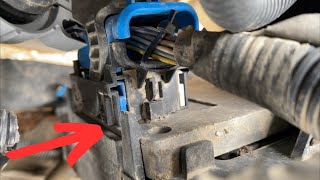
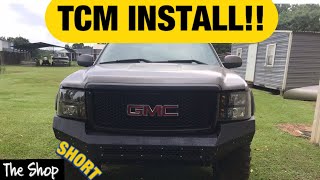
For this generation of GMC Sierra, particularly those equipped with the 6-speed (6L80) automatic transmission, the P1621 code is frequently associated with the Transmission Control Module (TCM). Unlike some earlier models with external modules, the TCM in these trucks is integrated into the Transmission Electro-Hydraulic Control Module (TEHCM), which is located inside the transmission oil pan. 🎬 Watch: Locate the internal TCM on your GMC Sierra. This internal placement makes the module susceptible to heat and vibration, and its replacement is more labor-intensive. 🎬 See how to remove the TCM from a 6L80 transmission. Manufacturer-issued Technical Service Bulletins (TSBs) specifically point to instances where this code, along with others like P0601 and P0604, are found stored in the TCM, indicating a known issue that may require a software update or module replacement.
Diagnostic Flowchart
Tap your situation to follow the diagnostic path that matches what you're seeing on this vehicle.
Generation note: The 2008-2015 year range covers two generations of the GMC Sierra 1500: the GMT900 (2007-2013) and the K2XX (2014-2018). Technical Service Bulletins confirm this issue can affect vehicles in both generations. A key difference is the TCM location: GMT900 trucks with the 4-speed (4L60E) may have an external TCM under the hood, while models with the 6-speed (6L80) have an internal TCM (TEHCM). K2XX generation trucks (2014+) predominantly use the 6L80 with the internal TEHCM.
Symptoms You May Notice
- Check Engine Light (Malfunction Indicator Lamp) is on.
- Vehicle may enter a 'limp mode' with reduced power.
- Erratic or harsh transmission shifting.
- Transmission may not shift gears.
- In rare cases, an intermittent no-start condition.
- Other modules losing memory, such as radio presets and seat positions, if the fault is related to a broader electrical issue or a failing PCM.
- Replacing the Engine Control Module (ECM) when the fault is in the Transmission Control Module (TCM). TSB #PIP4653E specifically directs technicians to verify if the code is stored in the TCM before replacing any parts.
- Replacing the entire transmission when only the internal TEHCM (TCM) has failed. While other internal failures can occur, P1621 specifically points to an electronic memory fault.
Most Likely Causes
- Faulty Transmission Control Module (TCM/TEHCM) 🔴 High Probability As documented in TSBs #PIP4653E and #05-06-04-060A, the TCM is a known point of failure. On 6L80-equipped trucks, the TCM is part of the TEHCM inside the transmission, where it's exposed to heat, which can lead to premature failure of the electronics.
How to confirm: A professional technician will use a scan tool to confirm the P1621 code is stored in the TCM. They will check for software updates. If the software is current and the code returns after being cleared, the module is diagnosed as faulty.
Typical fix: For 6L80 transmissions, the fix involves dropping the transmission pan, replacing the entire TEHCM unit, and then programming the new module to the vehicle's VIN. For external TCMs, the module itself is replaced and programmed.
Est. part cost: $250-$700 - Corrupted Software or Failed Reprogramming Event 🟡 Medium Probability Aftermarket tuning or an incomplete official programming update can corrupt the module's memory, triggering this code. Forum users report this code appearing immediately after using handheld programmers, sometimes because required fuses were not pulled during the flashing process.
How to confirm: Review the vehicle's service history for recent programming. Attempt to re-flash the module back to the stock GM calibration using a J2534 pass-thru device or at a dealership. If returning to stock fails, the module may be permanently damaged.
Typical fix: Successfully reprogram the affected module (TCM or ECM) to the latest factory software. This requires a stable power supply during the procedure to prevent further corruption.
Est. part cost: $0 - Low Battery Voltage or Poor Electrical Connection ⚪ Low Probability Control modules are sensitive to voltage. A weak battery or poor ground connection can cause memory glitches during startup self-tests. GM has noted issues with high resistance in communication circuits under the driver's or passenger's sill plates which can affect various modules. These trucks are also known for corrosion on main engine-to-chassis ground straps.
How to confirm: Test the battery's state of charge and health. Perform a voltage drop test on the main power and ground circuits for the TCM and ECM. Inspect connectors and main grounding points (e.g., G101 on the lower engine block, G103/G104 on cylinder heads) for corrosion or damage.
Typical fix: Replace a weak battery, clean or repair ground connections (especially under sill plates), or repair the wiring harness as needed.
Est. part cost: $10-$250
Diagnosis Steps
- Connect a professional OBD-II scanner and confirm that P1621 is present. Crucially, determine if the code is stored in the ECM or TCM memory.
- Check for other related DTCs, especially P0601, P0603, P0604, P062F, or U0101, as noted in GM TSBs and owner forums.
- Check and record freeze-frame data to understand the conditions when the code was set.
- Perform a comprehensive battery and charging system test. Ensure battery voltage is stable and above 12.4V with the key on, engine off. Low voltage during startup can trigger memory faults.
- Visually inspect the wiring harness and connectors. For external TCMs, check the module connectors under the hood. For all models, inspect main ground points and communication wiring under the driver/passenger sill plates for corrosion or damage.
- Using a dealer-level scan tool (like a Tech 2 or GDS2), check for any available software updates for the TCM and ECM. TSBs #PIP4653E and #05-06-04-060A suggest this is a primary step.
- If an update is available, perform the reprogramming procedure using a stable power supply.
- If the software is up-to-date and the code persists after clearing, the control module (most likely the TCM/TEHCM) is faulty and requires replacement.
Parts You'll Likely Need
- Transmission Control Module (TCM / TEHCM)
(OEM #24256861 (Example for 2014 w/ 6L80, always verify with VIN))— This is the most common point of failure for this code on this platform, as identified by manufacturer service bulletins. For the 6L80 transmission, it is an integrated unit within the transmission called the Transmission Electro-Hydraulic Control Module (TEHCM).
Trusted brands: ACDelco (OEM), Street Smart (Remanufactured)
OEM price range: $400-$700
Aftermarket price range: $250-$500
Related Codes That Often Appear With This One
- P0601 — This code means "Internal Control Module Memory Check Sum Error," which is a very similar internal fault. Both are mentioned together in TSB #05-06-04-060A.
- P0603 — This code indicates a Keep Alive Memory (KAM) error, often related to power supply issues that can also trigger a P1621.
- P0604 — This code means "Internal Control Module Random Access Memory (RAM) Error," another internal module fault that points to a failing computer. It is also cited in TSB #PIP4653E.
- U0101 — This code means "Lost Communication With TCM." It often appears alongside P1621 when the TCM is failing completely, causing both internal memory errors and a total loss of communication on the data bus.
Technical Service Bulletins (TSBs) & Recalls
- 05-06-04-060A: Information on multiple control module DTCs, including P1621, that can be set in various modules.
- PIP4653E: Diagnostic information for Malfunction Indicator Lamp with P1621 and other codes stored specifically in the TCM.
Platform-Specific Known Issues
- Internal TCM (TEHCM) on 6L80 Transmissions: The most significant issue for this platform is the location of the TCM inside the transmission pan for models with the 6L80 6-speed automatic. This TEHCM (Transmission Electro-Hydraulic Control Module) is subject to constant heat cycles and vibration, leading to a higher failure rate. Replacement requires draining the fluid and dropping the pan, increasing labor time compared to an externally-mounted module.
- TSB #PIP4653E: Notes that DTCs P0601, P0603, P0604, P062F or P1621 can be stored in the Transmission Control Module, requiring technicians to confirm the location of the code before proceeding with diagnosis.
- TSB #05-06-04-060A: Communicates that P1621 is one of several codes that can be set across multiple modules due to internal memory faults, reinforcing that this is a known issue to the manufacturer and diagnosis must begin by identifying which module set the code.
Mechanic-Grade Diagnostic Values
- 6L80 TEHCM Shift Solenoid (On/Off) Resistance — expected: 20-40 Ohms. Failure: A reading outside this range indicates a failed solenoid, requiring TEHCM replacement.
- 6L80 TEHCM Pressure Control Solenoid (PWM) Resistance — expected: 3-8 Ohms. Failure: A reading outside this range indicates a failed solenoid, requiring TEHCM replacement.
- 6L80 TEHCM Shift Solenoid (On/Off) Amperage Draw @ 12V — expected: 0.3 - 0.7 Amps. Failure: Incorrect amperage draw confirms a failed solenoid.
- 6L80 TEHCM Pressure Control Solenoid (PWM) Amperage Draw @ 12V — expected: 1.5 - 4.0 Amps. Failure: Incorrect amperage draw confirms a failed solenoid.
- TCM Ground Circuit Voltage Drop — expected: < 0.1 Volts. Failure: A reading higher than 0.1V between the TCM ground pin and the negative battery terminal indicates high resistance in the ground circuit, which can cause memory faults.
- CAN Bus Resistance — expected: ~60 Ohms. Failure: With the battery disconnected, measuring between Pin 6 and Pin 14 of the DLC should yield approximately 60 Ohms. Readings of 120 Ohms or an open circuit indicate a problem with the bus wiring or a terminating resistor.
Scan Tool Commands That Help
- GM GDS2 / Techline Connect: Replace and Reprogram ECU — This function is mandatory when a new TEHCM is installed. It uses the GM Service Programming System (SPS) to download the vehicle-specific calibration and write the VIN to the new module.
- GM GDS2 / Techline Connect: Service Fast Learn / Reset Transmission Adapts — This procedure must be run after a new TEHCM is programmed. It allows the TCM to learn the hydraulic characteristics and clutch apply volumes, which is essential for smooth shifting.
- GM GDS2 / Tech 2: Solenoid Automated Cleaning Process — If solenoid performance DTCs are present alongside P1621, this function can be used to cycle the solenoids to flush out debris. This is a last-ditch effort before condemning the TEHCM.
Wiring & Ground Locations
- G101 — Located at the left front of the engine, on the lower block. It is part of the main negative battery cable harness.. This is a primary ground for both the ECM and TCM. Corrosion or a loose connection here can cause insufficient power and trigger internal memory faults like P1621.
- G103 / G104 — Located on the cylinder heads. G103 is often on the front of the passenger side head, while G104 is on the rear of the driver's side head.. These are critical engine-to-chassis grounds. A poor connection can cause the control modules to seek ground through other paths, leading to unpredictable electrical issues.
- G303 — On the lower left 'B' pillar, behind the trim panel.. This is a key body ground. While not a direct module ground, poor body grounds can cause noise on the data network, contributing to communication errors between modules.
- 16-Way Transmission Connector — The main round electrical connector on the outside of the transmission case (passenger side for 6L80).. This is the single gateway for all power, ground, and CAN bus signals to the internal TEHCM. Corrosion, fluid intrusion, or unseated pins here will cause a total loss of communication (U0101) and can trigger internal faults like P1621.
Real Owner Repair Stories
- Chevrolet Forum user 'treetop' (2002 Chevrolet Silverado (platform mate with similar PCM architecture)) — P1621 code present, clock constantly resetting, seat and radio memory positions lost after startup.
❌ Tried (didn't work) Clearing the code did not resolve the underlying issue.
✅ What actually fixed it The issue began immediately after installing a Bully Dog aftermarket programmer. The recommended fix was to use the programmer to restore the vehicle's stock factory tune, as the P1621 code indicated the programmer had corrupted the control module's memory. - YouTube repair video (Unknown GM vehicle) — Engine kept cutting out, would restart after cycling ignition, code P1621 was set.
❌ Tried (didn't work) Replacing the ECU with a brand new kit made no difference.
✅ What actually fixed it After weeks of the issue worsening, a new code, P0193 (Fuel Rail Pressure Sensor Circuit High), appeared. The scanner showed an impossibly high pressure reading. Replacing the fuel rail pressure sensor fixed all symptoms and both codes disappeared.
"I Checked Everything" — The Actual Cause
- In one documented case, a vehicle presented with P1621 and stalling symptoms. While normal diagnosis would focus on the module and its wiring, the root cause was found to be a faulty fuel rail pressure sensor that was also setting a P0193 code. The erratic data from the sensor likely caused a logical error in the PCM, which was then flagged as an internal memory performance issue. Replacing the sensor resolved all codes, including the P1621.
OEM Part Supersession History
24256861→N/A - Still active but with exceptions— N/A
Heads up: This part number is listed for 2009-2015 models, but with a specific note: 'EXCEPT 2015 1/2 MODEL YEAR BREAK POINT(AVF)'. This indicates a mid-year change in 2015 where this part is no longer compatible, and a different TEHCM is required for later 2015 models.Various→Various— Hardware/Software Updates
Heads up: Even if a TEHCM physically fits, the internal circuitry and programming structure may differ between part numbers. Installing the wrong one can result in communication errors or a no-start condition. Always verify the correct part number via VIN or by matching the ID on the original unit.
Model Year Variations Within This Range
- 2008-2009: Early 6L80 TEHCMs used in this period were known for a higher frequency of pressure switch failures compared to later models.
- 2010-2013: The TEHCM hardware was updated with improved solenoids and a revised pressure manifold gasket for better durability.
- 2015: A mid-year change occurred in 2015 (noted as '2015 1/2 MODEL YEAR BREAK POINT (AVF)'). Vehicles produced after this point may require a different TEHCM part number than the common 24256861 used in earlier years.
Helpful Videos


Used OEM Parts in Stock


New Aftermarket Parts Available





The information in this article is provided for general reference and educational purposes only. Vehicle specifications, procedures, and part compatibility can vary by production date, trim level, and region. Always consult your vehicle's factory service manual and verify part numbers before purchasing or performing repairs. Safety-critical components such as airbags, seat belts, and braking systems should be installed by a qualified professional.
- Gmc SIERRA 1500:
- 🎬 Helpful Videos
- 🛍️ Shop This Part
- What's Unique About the 2008-2015 Gmc SIERRA 1500
- Diagnostic Flowchart
- Symptoms You May Notice
- Most Likely Causes
- Diagnosis Steps
- Parts You'll Likely Need
- Related Codes That Often Appear With This One
- Technical Service Bulletins (TSBs) & Recalls
- Platform-Specific Known Issues
- Mechanic-Grade Diagnostic Values
- Scan Tool Commands That Help
- Wiring & Ground Locations
- Real Owner Repair Stories
- "I Checked Everything" — The Actual Cause
- OEM Part Supersession History
- Model Year Variations Within This Range
- 🎟️ Get 5% Off