

P1621 on 2013-2015 Dodge Charger: O2 Sensor Reference Voltage Low Causes and Fixes
For the 2013-2015 Dodge Charger, code P1621 is most often caused by a software glitch in the Powertrain Control Module (PCM). The most likely fix is a PCM software update from a dealer, as outlined in multiple Technical Service Bulletins (TSBs). Before replacing any parts, have a dealer check your VIN for applicable TSBs like #18-084-16.
- For a 2013-2015 Charger, P1621 is almost always a software issue. Check for PCM updates before replacing any parts.
- This code indicates a problem with the electrical circuit supplying the O2 sensors, not necessarily a bad sensor itself.
- P1621 often appears with a group of other codes (P1622, U0140, P0606), all of which are typically resolved by the same PCM software update.
- If a software update doesn't fix the code, the problem is likely a short-to-ground in the O2 sensor wiring harness.
What's Unique About the 2013-2015 Dodge CHARGER

What makes this code unique on the 2013-2015 Charger (LD platform) and its platform mates like the Dodge Challenger (LC) and Chrysler 300 (LX) is the high probability of it being a software issue. Chrysler (now Stellantis) issued several Technical Service Bulletins confirming that a glitchy PCM calibration can falsely trigger P1621, often along with a cluster of other unrelated codes. On most other vehicles, a circuit low code would more immediately point to a wiring or sensor hardware failure, but on these specific Mopar models, a software update is the primary and most common fix.
Diagnostic Flowchart

Tap your situation to follow the diagnostic path that matches what you're seeing on this vehicle.
Symptoms You May Notice
- Check Engine Light (Malfunction Indicator Lamp) illuminated
- Poor or decreased fuel economy
- Possible rough idle or engine hesitation
- Vehicle may enter a reduced power "limp mode" in some cases
- Engine may buck or have a delayed feeling during low-speed driving or MDS transitions
- Replacing one or more oxygen sensors without first checking for TSBs related to a PCM software update. This is the most common unnecessary repair for this code on this platform.
Most Likely Causes

- Powertrain Control Module (PCM) Software Requires Update 🔴 High Probability Manufacturer TSBs #18-073-20, #18-052-15 REV A, and especially #18-084-16 explicitly state a PCM reflash is the remedy for this code on 5.7L engines. This is a well-documented software logic error.
How to confirm: A Dodge/Chrysler dealer or a well-equipped independent shop can check the vehicle's VIN against the TSBs in the wiTECH system to confirm if the update is applicable and has not already been performed.
Typical fix: Reprogramming (flashing) the PCM with the latest software using a wiTECH scan tool. The process requires a stable battery voltage (13.2-13.5V) and takes about 3-5 minutes for the flash itself.
Est. part cost: $0 - Wiring Harness Short-to-Ground 🟡 Medium Probability Wiring for O2 sensors is routed near hot exhaust components and exposed to road debris, making it susceptible to melted insulation or physical damage over time. A short in the harness can ground out the reference voltage.
How to confirm: Visually inspect the O2 sensor harness for damage, especially near the exhaust manifold and catalytic converters. Use a multimeter to check for continuity to ground on the reference voltage wire with the sensor and PCM disconnected. A technician may also use a scan tool to observe raw voltage data while wiggling the harness to pinpoint a short.
Typical fix: Repairing the damaged section of the wire and securing it away from heat or abrasion points using high-temp wire loom and zip ties.
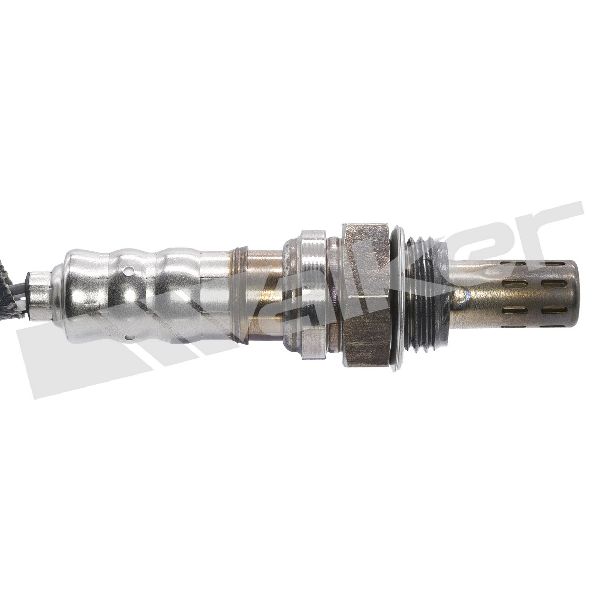
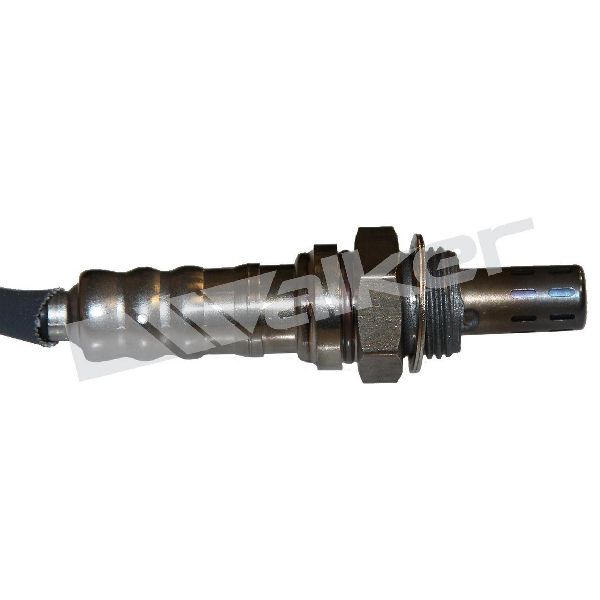
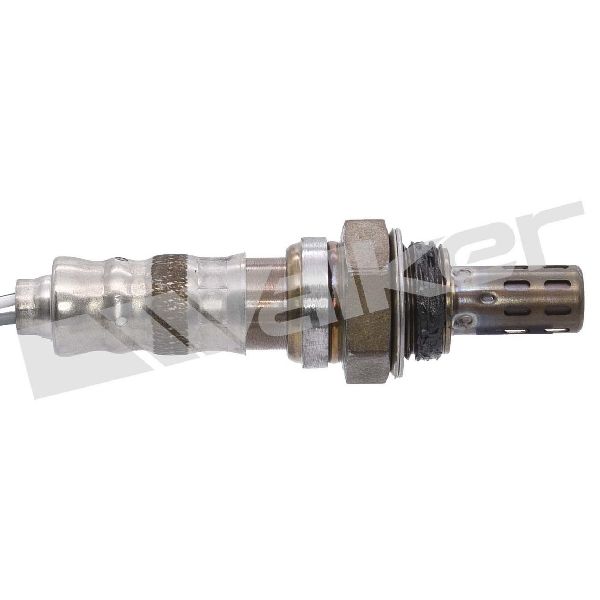
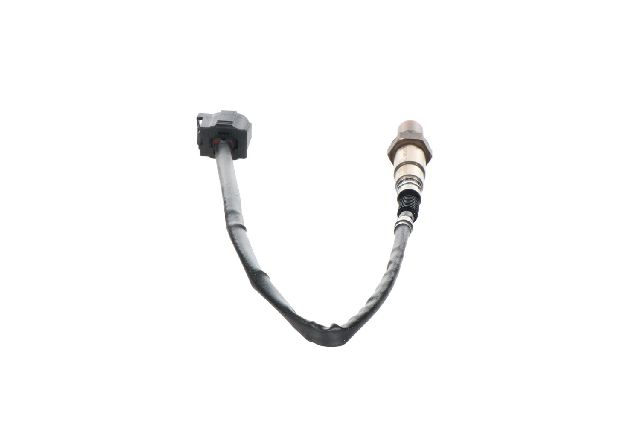
Est. part cost: $5-$25 - Faulty Oxygen (O2) Sensor ⚪ Low Probability While possible, it's less common for this specific code on this platform. An internal short within the sensor's heating element or signal circuit can pull the reference voltage down. Some owners report that these vehicles are sensitive to aftermarket sensors, making OEM/Mopar sensors a safer bet if replacement is necessary.
How to confirm: With the engine running, disconnect the suspect O2 sensor. If the reference voltage on the harness side (measured with a multimeter) returns to the correct ~5V, the sensor is faulty.
Typical fix: Replace the faulty oxygen sensor. It is often recommended to use OEM Mopar sensors to avoid compatibility issues.
Est. part cost: $50-$150
Rare But Worth Checking
- Failing Powertrain Control Module (PCM): This is a last resort after all other possibilities (software, wiring, sensors) have been definitively ruled out. A hardware failure inside the PCM can cause it to output incorrect voltage. This is diagnosed by exclusion.
- Corroded or Wet Connector: Water intrusion into an O2 sensor connector can cause a short. This is worth checking, especially if the issue appeared after driving in heavy rain or after a car wash.
- Poor Ground Connection: All four O2 sensors may share a common ground point on the engine block or chassis. If this ground becomes loose or corroded, it can cause erratic voltage readings across multiple sensor circuits, potentially triggering this code.
Diagnosis Steps
- Contact a Dodge/Chrysler dealer with your VIN and ask them to check if TSB #18-084-16 (or other related bulletins) is open and applicable to your vehicle. This is the most important first step.
- If a TSB applies and the PCM has not been updated, have the PCM reflashed by a dealer or qualified shop. This is the most likely fix and should be performed before any parts are replaced.
- If the code returns or no TSB applies, use a scan tool to view live O2 sensor voltage data.
- Visually inspect the O2 sensor wiring harnesses and connectors for any signs of melting, chafing, or corrosion, paying close attention to areas near the exhaust.
- Using a multimeter, backprobe the O2 sensor connector to check the reference voltage from the PCM. It should be approximately 5 volts with the key on.
- If voltage is low, disconnect all four O2 sensors one by one. If the voltage on the harness side jumps back to 5 volts after disconnecting a specific sensor, that sensor has an internal short and must be replaced.
- If voltage remains low with all sensors disconnected, there is a short to ground in the wiring harness between the PCM and the sensors. The harness must be inspected and repaired. Check common ground points for the O2 sensor circuits.
- If the wiring harness is confirmed to be good and the PCM software is up-to-date, a hardware failure of the PCM itself may be the cause. This is rare.
Parts You'll Likely Need
- Powertrain Control Module (PCM) Software Update — This is not a physical part, but a service. It is the most common fix documented by the manufacturer in multiple TSBs to correct a software glitch. Owners report dealer costs for this service typically range from $175 to $350.
Trusted brands: Mopar (dealer service)
OEM price range: $175-$350 - Oxygen Sensor
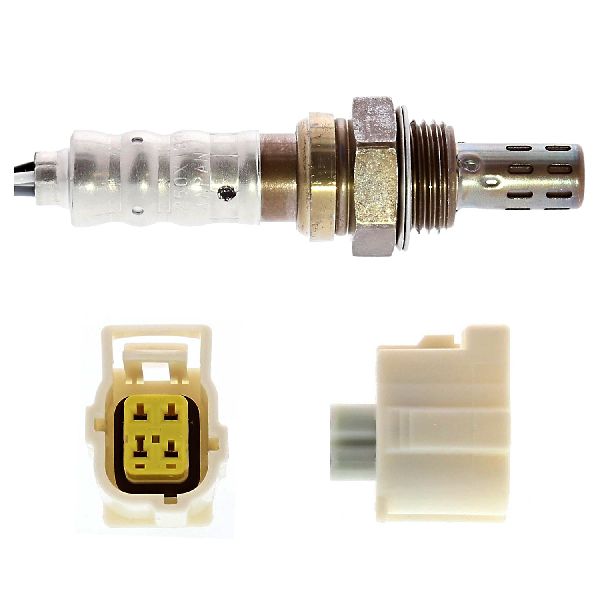
(OEM #Mopar 5149171AB (Upstream/Downstream, fits many 5.7L/6.4L applications) or 68090640AB (Varies by position))— Only needed if the sensor is diagnosed with an internal short that is pulling the reference voltage down. This is a secondary cause after software and wiring are checked.
Trusted brands: Mopar, NTK (NGK), Denso
OEM price range: $80-$180
Aftermarket price range: $50-$120
Related Codes That Often Appear With This One
- P1622 — This is for 'O2 Sensor Reference Voltage Circuit High'. Both P1621 and P1622 are listed together in the TSBs as being resolved by the same PCM software update.
- U0140 — 'Lost Communication With Body Control Module'. This is another code frequently triggered by the same PCM software glitch.
- P0606 — 'Internal Control Processor'. This code points directly to a PCM internal fault, which in this case is typically the software, not the hardware. It is also listed in the TSBs.
- P0300 — 'Multiple Cylinder Misfire'. This can also be falsely triggered by the PCM software issue addressed in the TSBs.
- P219A / P219B — 'Bank 1/2 Air-Fuel Ratio Imbalance'. These codes are also listed in TSB #18-084-16 as being resolved by the PCM reflash, indicating the software glitch can affect fuel trim calculations.
- P2096 / P2097 — 'Downstream Fuel Trim System Lean/Rich'. Also mentioned in TSB #18-084-16, these codes are further evidence of the software issue impacting the entire fuel management system.
Technical Service Bulletins (TSBs) & Recalls
- 18-073-20: Lists P1621 as a code fixed by a PCM software update for 2015 models.
- 18-052-15 REV A: Cites P1621 as a condition addressed by a PCM reflash for 2014 models.
- 18-084-16: The most comprehensive bulletin, covering 2013-2015 Charger/300 and 2013-2014 Challenger with the 5.7L engine. It lists P1621 along with a large group of other potential DTCs all resolved by the same PCM software update.
- 18-052-15: The original version of the bulletin for 2014 models that also includes P1621.
Platform-Specific Known Issues
- A well-documented software issue in the PCM of 2013-2015 models is the primary cause of this code. Dodge released TSBs #18-073-20, #18-052-15, and #18-084-16 to resolve this via a software reflash.
- This issue is shared across the LD (Charger), LX (Chrysler 300), and LC (Challenger) platforms equipped with the 5.7L Hemi engine.
Mechanic-Grade Diagnostic Values
- O2 Sensor Reference Voltage (at sensor connector, key on, sensor unplugged) — expected: ~5.0 Volts. Failure: Voltage significantly lower than 5.0V. If voltage returns to 5.0V only after unplugging a specific sensor, that sensor is internally shorted.
- O2 Sensor Return Circuit (jumpered to signal circuit at connector) — expected: Voltage should drop from 5.0V to ~2.5V.. Failure: Voltage does not drop as expected, indicating a problem in the return wiring or PCM.
- PCM Power Supply Pins (at PCM connector) — expected: ~12.6V (engine off), 13.5-14.5V (engine running).. Failure: Low or unstable voltage points to a power supply issue, not necessarily a bad PCM.
- PCM Ground Pins Resistance (at PCM connector to chassis ground) — expected: < 0.1 Ohms.. Failure: High resistance indicates a poor ground connection, which can cause numerous electrical faults.
- O2 Sensor Heater Circuit Resistance — expected: Varies by manufacturer, but typically 2-16 Ohms.. Failure: An open circuit (no reading) or resistance far outside the specification indicates a failed heater element within the sensor.
Scan Tool Commands That Help
- wiTECH: PCM Replaced — This function is required after reprogramming the PCM on Challenger (LC) models to transfer the vehicle's secret key information from the WCM/WIN module to the new PCM software. It is found under the WCM/WIN module view in the 'Miscellaneous Functions' tab.
- wiTECH: O2 Sensor Heater Test — This bidirectional test commands the O2 sensor heaters on, allowing a technician to monitor the sensor's voltage response on the scan tool to verify heater operation and sensor reaction time.
Wiring & Ground Locations
- O2 Sensor Return Circuit — Wiring harness between all four O2 sensors and the PCM. The upstream returns are tied together, and the downstream returns are tied together, but all four are linked internally in the PCM.. This is the specific circuit monitored by code P1621. A short to ground on any of the four return wires can pull the voltage down for the entire circuit and trigger the code.
- G305 — Right side of the luggage compartment (trunk).. This is a major ground distribution point for various rear-body components. While not directly for the O2 sensors, a poor ground here can introduce electrical noise and instability into the vehicle's overall system, potentially affecting module behavior.
- PCM Location — Engine compartment, typically on the passenger side near the firewall or shock tower.. This is the source of the reference voltage and the module that sets the code. Physical inspection of its connectors for corrosion or damage is a key step if wiring is suspected.
Real Owner Repair Stories
- YouTube channel 'P1621 & P0193 FIXED see how we FIXED it' (Not specified, but demonstrates a non-obvious cause for P1621.) — Engine kept cutting out while driving. Could be restarted but would stall again. P1621 was present.
❌ Tried (didn't work) Replaced the ECU (PCM) with a brand new kit.
✅ What actually fixed it After the code P0193 (Fuel Rail Pressure Sensor Circuit High) also appeared, the fuel rail pressure sensor was replaced. This resolved both codes and the stalling issue.
Model Year Variations Within This Range
- 2015: The 2015 model year was a major refresh. While the 5.7L engine remained, the 8-speed automatic transmission became standard across all trims, replacing the 5-speed that was used in some 2013-2014 R/T models. The exterior and interior were significantly updated, and the rear differential and prop shaft materials were changed to aluminum. TSB #18-073-20 is specific to the 2015 model year, suggesting potential software differences related to the new hardware configuration.
Helpful Videos

Used OEM Parts in Stock


New Aftermarket Parts Available


The information in this article is provided for general reference and educational purposes only. Vehicle specifications, procedures, and part compatibility can vary by production date, trim level, and region. Always consult your vehicle's factory service manual and verify part numbers before purchasing or performing repairs. Safety-critical components such as airbags, seat belts, and braking systems should be installed by a qualified professional.
- Dodge CHARGER:
- 🎬 Helpful Videos
- 🛍️ Shop This Part
- What's Unique About the 2013-2015 Dodge CHARGER
- Diagnostic Flowchart
- Symptoms You May Notice
- Most Likely Causes
- Rare But Worth Checking
- Diagnosis Steps
- Parts You'll Likely Need
- Related Codes That Often Appear With This One
- Technical Service Bulletins (TSBs) & Recalls
- Platform-Specific Known Issues
- Mechanic-Grade Diagnostic Values
- Scan Tool Commands That Help
- Wiring & Ground Locations
- Real Owner Repair Stories
- Model Year Variations Within This Range
- 🎟️ Get 5% Off