

P1621 on 2007-2011 Chevrolet HHR: Control Module Memory Fault Causes and Fixes
This code almost always indicates an internal failure of the Engine Control Module (ECM). The most common fix is to replace the faulty module and have it professionally programmed. Before condemning the ECM, ensure the battery and its connections are in excellent condition, as the HHR's rear-mounted battery makes it susceptible to voltage drop issues.
- P1621 is a serious code that points to a memory failure in the Engine Control Module (ECM).
- Before spending money on an ECM, you must verify the battery is healthy and all main power and ground connections are clean and tight, especially the under-hood fuse box bolts.
- This is not a DIY-friendly fix. A replacement ECM must be professionally programmed to the vehicle's VIN, or the car will not start.
What's Unique About the 2007-2011 Chevrolet HHR
For the Chevrolet HHR and its GM Delta platform mates like the Cobalt and G5, P1621 is a strong indicator of an internal module fault, not just a random glitch. GM issued Technical Service Bulletin #05-06-04-060A that groups P1621 with other severe internal module failure codes (like P0601, P0603, etc.), instructing technicians to diagnose the module itself. This suggests that when P1621 appears, the ECM is the primary suspect and standard procedure is often to replace it if external factors like power and ground are confirmed to be good.
Diagnostic Flowchart
Tap your situation to follow the diagnostic path that matches what you're seeing on this vehicle.
Symptoms You May Notice
- Check Engine Light is on.
- Engine may not start or may require multiple attempts to start.
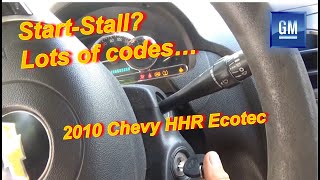
- Engine may stall unexpectedly while driving, sometimes restarting after a key cycle. 🎬 Watch: Troubleshooting a Chevy HHR that stalls and throws multiple codes.
- Rough or irregular idling.
- Reduced engine power and poor acceleration.
- Noticeable decrease in fuel economy.
- Cooling fans running constantly when the engine is on (a sign the ECM is in a default 'fail-safe' mode to prevent overheating).
- A cluster of other seemingly unrelated trouble codes appearing at the same time.
- Replacing oxygen sensors or other engine sensors. While other codes may be present, P1621 specifically points to the control module's brain, not the inputs it's receiving. The presence of many random codes at once often points to a failing ECM or a bad power/ground connection.
Most Likely Causes
- Internal Engine Control Module (ECM) Failure 🔴 High Probability As referenced in TSB 05-06-04-060A, this code is a primary indicator of an internal module fault. Heat, vibration, and age can lead to the breakdown of internal electronic components and memory chips within the ECM, causing checksum errors. Forum discussions frequently cite ECM replacement as the ultimate fix for P1621 after other possibilities are eliminated.
How to confirm: After confirming all power and ground connections to the ECM are stable and correct, the code's persistence points to an internal ECM fault. A professional scan tool may be able to communicate with the module and confirm the internal memory error. If codes like P0601 or P0606 are also present, it's a near-certain confirmation of ECM failure.
Typical fix: Replace the Engine Control Module (ECM) and have the new unit programmed to the vehicle's VIN and specific configuration. This programming is essential for the car to start and run.
Est. part cost: $200-$500 - Poor Battery Voltage or Intermittent Power Supply 🟡 Medium Probability The HHR's battery is located in the rear cargo area under the floor, which requires a long power cable running to the under-hood fuse box and engine. This long run increases the chance of voltage drop. Corrosion at the battery terminals, the under-hood jump-start post, or main ground connections can disrupt the stable voltage the ECM needs, potentially corrupting its memory during startup or shutdown cycles.
How to confirm: Test the battery's state of charge and health with a load tester, not just a voltmeter. A battery can show 12.5V but fail under load. Check battery voltage during cranking (should not drop below 9.6V). Inspect and clean all battery terminals, the main under-hood fuse box connections (four bolts inside), and ECM-related ground straps on the engine and chassis until they are shiny.
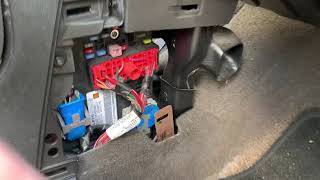
Typical fix: Clean or tighten connections, or replace a weak or failing battery. Ensure the bolts securing the under-hood fuse box halves are tight, as this is a known point of failure. 🎬 See this guide to locating and inspecting the HHR fuse box.
Est. part cost: $0-$250 - Corroded or Damaged ECM Connectors/Wiring ⚪ Low Probability The ECM is located in the engine bay, where it is exposed to heat and moisture. Over time, moisture can enter the connectors, causing corrosion and high resistance on power, ground, or communication pins. On platform mates like the Saturn Ion, chafed wiring for sensors sharing the ECM's 5-volt reference circuit has been known to cause widespread electrical issues.
How to confirm: Disconnect the battery, then unplug the ECM connectors. Carefully inspect the pins and sockets on both the harness and the module for any signs of green or white corrosion, bent pins, or water intrusion. Check wiring harnesses for chafing, especially where they might rub against the engine block or other components.
Typical fix: Clean the connectors with a specialized electronic cleaner. If pins are damaged, the connector or harness section may need to be repaired or replaced. A pigtail repair may be necessary for damaged sensor wiring.
Est. part cost: $10-$150
Rare But Worth Checking
- Failed or Interrupted ECM Reprogramming: If the code appeared immediately after an attempt to update or flash the ECM (e.g., with an aftermarket tuner or even a failed dealer update), the programming event may have corrupted the memory. One owner on a Chevrolet forum reported this code after using a Bully Dog programmer without first removing the specified fuses, which damaged the computer.
- Faulty Sensor Sending Corrupt Data: In some rare cases, a severely malfunctioning sensor can send such erratic data to the ECM that it causes a logical fault flagged as a P1621. One documented case on a GM vehicle showed a P1621 appearing alongside a P0193 (Fuel Rail Pressure Sensor Circuit High). The root cause was the failing sensor; replacing it cleared both codes.
Diagnosis Steps
- Check Battery Health: Use a multimeter to ensure the battery has at least 12.6 volts with the car off. More importantly, perform a load test to check its overall health. Low voltage during cranking is a common source of electronic issues on the HHR.
- Inspect All Power and Ground Connections: Disconnect the battery. Clean the battery terminals in the rear cargo area, the under-hood jump post, chassis grounds, and engine block ground straps until they are shiny. Pay special attention to the bolts securing the two halves of the under-hood fuse box, as looseness here is a known issue causing widespread electrical problems.
- Verify ECM Power and Ground: Using a wiring diagram for the HHR, identify the power and ground pins on the ECM connectors. With the battery reconnected and the key on, carefully check for proper voltage at the power pins and for near-zero resistance to ground on the ground pins.
- Scan for Other Codes: Use a high-quality scanner to check for other codes, especially the P06xx family. The presence of codes like P0601 or P0606 strongly confirms an internal ECM failure.
- Condemn the ECM: If the battery, power, and grounds are all confirmed to be good, and the P1621 code persists (especially if accompanied by other P06xx codes), the Engine Control Module has failed internally and requires replacement.
Parts You'll Likely Need
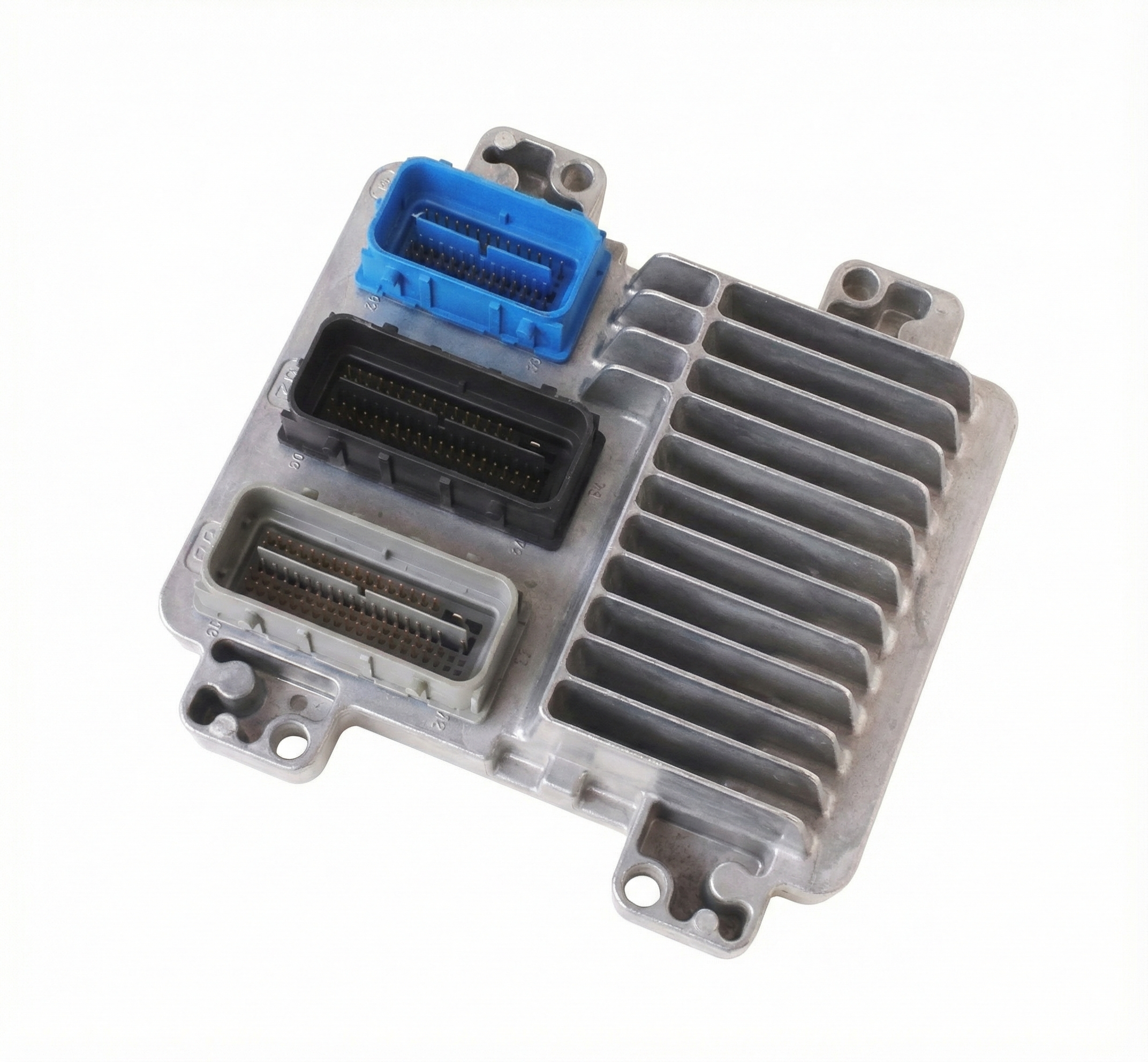
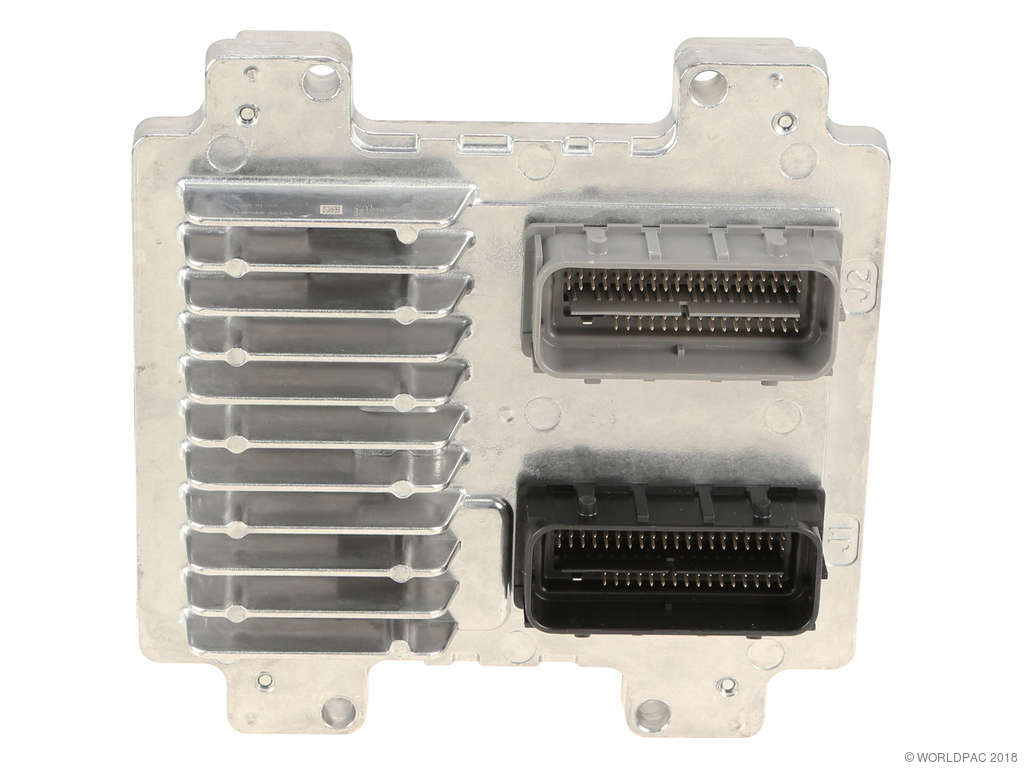
- Engine Control Module (ECM)
(OEM #12612397 (Supersedes older numbers, verify by VIN))— This code is a direct indicator of an internal memory performance issue within a control module, and on the HHR, it is most commonly the ECM.
Trusted brands: ACDelco (OEM/GM Genuine Parts), Cardone (Remanufactured), Bosch
OEM price range: $350-$500
Aftermarket price range: $200-$400
Related Codes That Often Appear With This One
- P0601 — Indicates 'Internal Control Module Memory Check Sum Error'. This code is a direct confirmation of an internal memory problem and is often seen with P1621.
- P0603 — Indicates 'Internal Control Module Keep Alive Memory (KAM) Error'. This points to a problem with the memory that stays on when the car is off.
- P0604 — Indicates 'Internal Control Module Random Access Memory (RAM) Error'. This points to an issue with the module's short-term operational memory.
- P0606 — Indicates 'ECM/PCM Processor Fault'. This is a critical code pointing to a failure of the main processor inside the module.
Technical Service Bulletins (TSBs) & Recalls
- 05-06-04-060A: This bulletin informs technicians that P1621, along with a list of P06xx codes, indicates an internal control module failure and that diagnosis should focus on identifying which module is at fault.
Platform-Specific Known Issues
- Rear-Mounted Battery Complications: The battery's location in the trunk means long cable runs to the front of the vehicle. This makes the electrical system more sensitive to voltage drops from corrosion or loose connections at either the battery itself or the under-hood fuse box/jump posts. These voltage issues can trigger memory-related fault codes like P1621.
- Under-hood Fuse Box Connection: A well-documented issue on chevyhhr.net forums is the main fuse box under the hood. It is a two-piece assembly held together by several bolts. If these bolts become loose, it can create high resistance and a host of bizarre, intermittent electrical problems, including no-start conditions and module communication errors that could be mistaken for a failed ECM.
Mechanic-Grade Diagnostic Values
- CAN Bus High/Low Voltage to Ground at DLC — expected: ~2.5V (Key On, Engine Off). Failure: Voltage significantly different from 2.5V on either Pin 6 (CAN High) or Pin 14 (CAN Low) indicates a bus fault.
- CAN Bus Resistance between DLC Pins 6 and 14 — expected: 60 Ohms (Battery Disconnected). Failure: A reading of 120 Ohms indicates an open circuit on the CAN bus or a failure of one of the two terminating resistors (one is in the ECM).
- ECM Ground Pin Resistance to Chassis Ground — expected: < 1.0 Ohm. Failure: Resistance higher than 1.0 Ohm indicates a poor ground connection, which can cause intermittent module resets and memory faults.
Scan Tool Commands That Help
- GM Tech2 / J2535 Pass-Thru with SPS: Replace and Program ECU — This function is required when installing a new or replacement ECM. It downloads the correct software and VIN from GM's servers and writes it to the new module.
- GM Tech2 / Professional Scan Tool: Crankshaft Position System Variation Learn — After replacing and programming an ECM, this procedure may be required to synchronize the new ECM with the crankshaft position sensor's signal to prevent a P0315 trouble code.
Wiring & Ground Locations
- ECM (Engine Control Module) — Located in the engine compartment on the driver's side, underneath the under-hood fuse box.. This is the module that most commonly sets the P1621 code on this vehicle. Its location makes it susceptible to heat and moisture, and its connectors and grounds must be perfect.
- G107 — A key ground point located on the front left corner of the transmission.. Wiring diagrams show this ground is used by both the Engine Control Module (ECM) and Transmission Control Module (TCM). A poor connection here can cause communication and memory faults in both modules.
- G105 — A ground point located on the left front of the engine block.. This is another primary engine ground point that must be clean and tight for stable module operation.
- Under-hood Fuse Box — Located on the driver's side of the engine compartment, next to the strut tower.. This box is a two-piece assembly. The bolts holding the halves together can loosen, creating high resistance for power feeds to the ECM and other modules, mimicking an ECM failure.
Real Owner Repair Stories
- MHH Auto forum user (2009 Chevrolet HHR) — No start, no spark after a transmission replacement.
❌ Tried (didn't work) Checking all fuses and relays., Checking ground locations., Checking electrical plugs.
✅ What actually fixed it The owner disassembled the wiring harness and found three broken wires inside their insulation, including the 5-volt reference wire to the crankshaft position sensor. Repairing the broken wires restored functionality. - Chevy HHR Network forum user (2011 Chevrolet HHR 2.4L 2LT) — Multiple electrical issues after working on engine mounts: wipers activating with key, no speedometer, power steering error, ABS/ECS/Airbag lights.
❌ Tried (didn't work) Repeatedly disassembling and reassembling the under-hood fuse box.
✅ What actually fixed it The user suspected the under-hood fuse box (junction box) was internally faulty due to a known issue where the two halves separate, causing poor connections. The resolution path was to swap it with a known-good unit from another HHR. - Chevrolet Forum user (2002 Chevrolet Silverado (different vehicle, but same code/cause)) — P1621 code appeared, clock and seat memory would reset on startup.
❌ Tried (didn't work) Resetting the programmer back to the stock vehicle tune.
✅ What actually fixed it The user concluded the ECM was permanently damaged. The problem started immediately after installing a Bully Dog aftermarket programmer without following the instructions to remove specific fuses first, which corrupted the ECM's memory.
"I Checked Everything" — The Actual Cause
- While not a smoke test issue, a common pattern for this code is for all ECM power and ground pin-point tests to pass, leading a technician to condemn the ECM. However, the actual cause can be a high-resistance connection between the two halves of the under-hood fuse block that only manifests under electrical load, a condition not always caught by simple voltage or continuity checks.
When the Usual Fixes Don't Work
- While P1621 is a strong indicator of internal ECM failure, there are documented cases where the root cause was external, despite symptoms pointing directly at the module. A frequently cited example is the two-piece under-hood fuse block becoming loose; tightening the bolts that hold the two halves together has resolved a host of seemingly unrelated electrical issues that could be misdiagnosed as a faulty ECM. Another case involved a no-start condition after a transmission replacement that was traced to broken wires inside the ECM harness, not a failed ECM itself. These instances prove that before condemning the expensive ECM, a thorough inspection of the vehicle's core electrical infrastructure, including grounds and major power junctions, is critical.
OEM Part Supersession History
12594750, 12597125→12612397— Standard part evolution for bug fixes, hardware revisions, or manufacturing changes.
Heads up: While later part numbers are generally backward compatible after programming, always verify the correct part number for your specific VIN with a GM dealer.
Model Year Variations Within This Range
- 2009-2011 (2.2L Engine): For the 2009 model year, the 2.2L L61 engine was significantly updated with Variable Valve Timing (VVT) and a new 32-bit E37 ECM that uses coil-on-plug ignition. Pre-2009 2.2L models used a different ECM and a wasted spark ignition system. This can affect diagnostic procedures and part selection.
Helpful Videos
Used OEM Parts in Stock

New Aftermarket Parts Available

The information in this article is provided for general reference and educational purposes only. Vehicle specifications, procedures, and part compatibility can vary by production date, trim level, and region. Always consult your vehicle's factory service manual and verify part numbers before purchasing or performing repairs. Safety-critical components such as airbags, seat belts, and braking systems should be installed by a qualified professional.
- Chevrolet HHR:
- 🎬 Helpful Videos
- 🛍️ Shop This Part
- What's Unique About the 2007-2011 Chevrolet HHR
- Diagnostic Flowchart
- Symptoms You May Notice
- Most Likely Causes
- Rare But Worth Checking
- Diagnosis Steps
- Parts You'll Likely Need
- Related Codes That Often Appear With This One
- Technical Service Bulletins (TSBs) & Recalls
- Platform-Specific Known Issues
- Mechanic-Grade Diagnostic Values
- Scan Tool Commands That Help
- Wiring & Ground Locations
- Real Owner Repair Stories
- "I Checked Everything" — The Actual Cause
- When the Usual Fixes Don't Work
- OEM Part Supersession History
- Model Year Variations Within This Range
- 🎟️ Get 5% Off