

P1621 on 2011-2015 Chevrolet Caprice: Control Module Memory Failure Guide
P1621 on a 2011-2015 Caprice indicates an internal memory failure in a control module, most often the Transmission Control Module (TCM) or Engine Control Module (ECM). This is a serious fault that typically requires professional diagnosis and replacement of the faulty module, which must be programmed to the vehicle. On this platform, the TCM is the most common culprit.
- P1621 is a serious code indicating an internal memory failure in a control module, not a simple sensor issue.
- The most likely cause is a failed Engine Control Module (ECM) or Transmission Control Module (TCM).
- This is not a DIY repair. The fix requires professional-level tools to diagnose the correct module and program the replacement.
- Before condemning an expensive module, always verify the battery and charging system are healthy and check for clean, tight power and ground connections at the module.
- If the code appeared after using an aftermarket programmer, the module's software may be corrupt.
What's Unique About the 2011-2015 Chevrolet CAPRICE
The 2011-2015 Chevrolet Caprice is a rebadged Holden Caprice from Australia, built on the 'Zeta' platform shared with the Pontiac G8 and Chevrolet SS. While P1621 is a standard GM code, on this specific platform it has a very high correlation with the failure of the T43 Transmission Control Module (TCM), which is located inside the transmission oil pan. This pattern failure is well-documented across all Zeta platform vehicles. TSB #05-06-04-060A confirms the code can be set by multiple modules, but real-world data points heavily towards the TCM, especially when accompanied by transmission symptoms or code P0700.
Diagnostic Flowchart
Tap your situation to follow the diagnostic path that matches what you're seeing on this vehicle.
Symptoms You May Notice
- Check Engine Light is on
- Vehicle may not start or may stall intermittently
- Erratic, harsh, or delayed transmission shifting
- Transmission may get stuck in one gear (limp mode)
- Loss of communication with the affected module (e.g., code U0100 or U0101)
- Other warning lights, like for StabiliTrak or ABS, may illuminate
- Delayed engagement when shifting into Drive or Reverse
- Poor fuel economy due to inefficient shifting
- Replacing sensors when the code points to an internal module fault.
- Replacing the ECM when the fault is actually in the TCM, or vice-versa. This is especially common on this platform where the TCM is the more frequent failure point.
- Replacing the entire transmission when only the electronic control module (TCM) is faulty.
Most Likely Causes
- Internal Transmission Control Module (TCM) Failure 🔴 High Probability The T43 TCM used with the 6L80 transmission is located inside the transmission oil pan, submerged in fluid. Constant exposure to high temperatures and vibration leads to the breakdown of internal solder joints and electronic components, causing memory corruption. This is a well-documented pattern failure on the Caprice and its platform mates, the Pontiac G8 and Chevy SS.
How to confirm: A technician will use a professional scan tool and find P1621 stored in the TCM, often accompanied by code P0700 in the ECM. If a software re-flash doesn't resolve the issue and power/grounds are good, the TCM is condemned.
Typical fix: Replacement of the faulty Transmission Control Module (TCM), which requires draining the transmission fluid and removing the pan. The new module must be programmed to the vehicle.
Est. part cost: $350-$700 - Low or Unstable Battery Voltage 🟡 Medium Probability All control modules require stable voltage (typically >12.4V) to perform self-checks during startup. An aging battery, failing alternator, or poor ground connection can cause a voltage dip during cranking, which can corrupt the memory check process and falsely trigger a P1621 code.
How to confirm: Test the battery's state of charge, load test it, and verify the alternator's output is within spec (typically 13.7-14.7V). Inspect and clean all main battery terminals, chassis grounds, and module-specific grounds.
Typical fix: Replace the weak battery, repair the charging system, or clean/tighten electrical connections.
Est. part cost: $150-$400 - Internal Engine Control Module (ECM) Failure ⚪ Low Probability Like any complex electronic component, the E38 ECM can fail from age, heat, and vibration, though it is far less common than TCM failure for this specific code on this platform.
How to confirm: If a scan tool shows P1621 is stored directly in the ECM and there are no transmission-related codes or symptoms, the ECM is the likely suspect after all wiring and power/grounds have been verified.
Typical fix: Replacement of the faulty Engine Control Module (ECM), followed by programming the new module to the vehicle.
Est. part cost: $300-$800 - Corrupted Software or Failed Re-flash ⚪ Low Probability Improper use of aftermarket tuners or an interruption during a legitimate software update (e.g., with a Tech 2 or MDI) can corrupt the module's memory, causing a P1621 code. A forum user on a similar GM platform reported this exact issue after using a Bully Dog programmer incorrectly.
How to confirm: If the code appeared immediately after using a tuning device, this is the likely cause. A dealer or qualified shop can attempt to re-flash the module with factory software using GM's Service Programming System (SPS).
Typical fix: Attempt to restore the factory tune. If the module is permanently damaged ('bricked'), it will require replacement.
Est. part cost: $100-$200 for a re-flash attempt
Rare But Worth Checking
- Poor Power/Ground Connection to a Module: A corroded or loose ground wire or power feed to the ECM/TCM can cause intermittent voltage drops that mimic an internal module failure. It's crucial to inspect the module's wiring harness and connectors before replacing the expensive computer. On the Caprice, a wiring harness left unclipped and resting on the hot exhaust after service has been reported to cause transmission issues.
Diagnosis Steps
- Verify battery voltage is stable and above 12.4V. Test the charging system to ensure it's between 13.7V and 14.7V.
- Use a professional scan tool to identify which specific control module (ECM, TCM, etc.) has stored the P1621 code.
- Check for any other accompanying trouble codes. If P0700 is present, prioritize diagnosis of the Transmission Control Module (TCM).
- Inspect the main electrical connector and wiring harness at the identified module for any signs of corrosion, damage, or loose pins. Check that the harness is properly secured and not touching hot exhaust components.
- Check all fuses and ground connections related to the faulty module.
- If all wiring, power, and grounds are good, a technician should attempt to re-flash the module with the latest GM calibration using the Service Programming System (SPS).
- If the re-flash is unsuccessful or the code returns immediately, the control module is faulty and must be replaced.
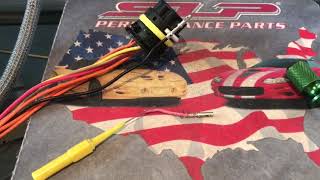
- Install and program the new control module using a factory-approved programming tool. 🎬 Watch: See how a technician programs a new GM TCM.
Parts You'll Likely Need
- Transmission Control Module (TCM)
(OEM #ACDelco 24256861 (example for T43 module, verify with VIN))— This is the most common failure point for P1621 on this platform. It is located inside the transmission pan and requires programming upon replacement.
Trusted brands: ACDelco
OEM price range: $350-$700
Aftermarket price range: $200-$450 - Engine Control Module (ECM)
(OEM #ACDelco 12633238 (example for E38 module, verify with VIN))— If diagnosis points to the ECM, its internal memory has failed, requiring replacement. This is a less common cause than the TCM for this code.
Trusted brands: ACDelco
OEM price range: $400-$800
Aftermarket price range: $250-$500
Related Codes That Often Appear With This One
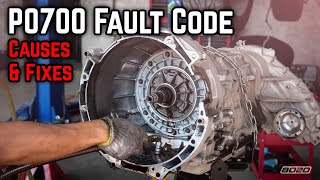
- P0700 — This is a generic code set by the ECM to indicate the TCM has stored a fault. 🎬 Watch: A helpful explanation of the P0700 'messenger' code. If you see P0700 with P1621, the problem is almost certainly in the transmission controls, pointing directly at a faulty TCM.
- P0601 — This code means 'Internal Control Module Memory Check Sum Error' and is a very similar fault, often appearing with P1621 to confirm an internal module failure.
- U0101 — Means 'Lost Communication With TCM'. This often appears when the T43 TCM fails completely and stops communicating on the vehicle's CAN bus network.
- U0100 — Means 'Lost Communication With ECM/PCM'. This can appear if the ECM has failed internally and can no longer communicate on the vehicle's network.
- P0603 — Indicates a 'Keep Alive Memory (KAM)' error, also pointing to an internal memory or power supply issue within the control module.
- P0604 — Indicates a 'RAM Performance' error, another internal module fault.
Technical Service Bulletins (TSBs) & Recalls
- 05-06-04-060A: Communicates Information to technicians on control module Diagnostic Trouble Code(s) (DTC)(s) P0601, P0602, P0603, P0604, P0606, P062F, P06F3, P1621 which can be shared in multiple modules.
Platform-Specific Known Issues
- TSB #05-06-04-060A explicitly mentions that code P1621, along with a family of other internal module fault codes (P0601, P0602, etc.), can be set in multiple different control modules, requiring careful diagnosis to identify the correct one.
- Pattern Failure of T43 TCM: The location of the T43 TCM inside the 6L80 transmission pan causes repeated exposure to heat and vibration, leading to a high rate of failure. Owners on forums for the Caprice, Pontiac G8, and Chevy SS frequently report P1621 accompanied by harsh shifting, which is resolved by replacing the TCM.
- Owner Experience: P0700 and Limp Mode: A user on newcaprice.com with a 2013 Caprice reported multiple warning lights (ABS, Stabilitrak) followed by a persistent Check Engine Light with code P0700. The car was stuck in a high gear (limp mode) and shifting harshly. The confirmed fix was the replacement and programming of the Transmission Control Module (TCM).
Mechanic-Grade Diagnostic Values
- TCM Power Supply Pins (Battery & Ignition) — expected: Approximately 12.6V (full battery voltage) with key-on, engine-off.. Failure: Voltage below 12V or no voltage points to a problem in the power supply wiring or fuses, not necessarily the module itself.
- TCM Ground Pins Resistance — expected: Less than 1.0 ohm of resistance to a clean chassis ground.. Failure: High resistance or an Open Loop (OL) reading indicates a broken, loose, or corroded ground wire.
- CAN Bus Network Resistance — expected: Approximately 60 Ohms when measured between Pin 6 and Pin 14 of the DLC.. Failure: A reading of 120 Ohms suggests an open circuit or a missing terminating resistor. A reading near 0 Ohms indicates a short between the CAN High and CAN Low wires.
- 6L80 Transmission Connector (16-pin) Pinout Voltages — expected: Pin 4 (Battery +): ~12.6V at all times. Pin 12 (Run/Crank Power): ~12.6V in Run and Crank. Pin 5 (Ground): Less than 1.0 ohm to chassis ground.. Failure: Loss of voltage on power pins or high resistance on the ground pin indicates a wiring harness or fuse issue. A poor connection on the run/crank power pin is a known issue.
Scan Tool Commands That Help
- GM GDS2 / Tech2Win with a J2534 device: Service Programming System (SPS): 'Replace and Reprogram ECU' — This is the mandatory procedure required after installing a new, blank TCM or ECM. It downloads the correct VIN and vehicle calibration file from GM's servers into the new module.
- GM GDS2 / Tech2Win: Special Functions: 'Transmission Service Fast Learn' or 'Reset Transmission Adapts' — This should be performed after a new TCM is successfully programmed. It forces the module to quickly learn clutch fill times and pressure offsets, preventing harsh shifting during the initial drive cycles.
Wiring & Ground Locations
- Main Transmission Connector (16-pin) — The large, round connector on the passenger side of the 6L80 transmission case.. This is the single point of connection for all power, ground, and communication to the internal T43 TCM. Backed-out pins or corrosion here can cause loss of communication or power, mimicking a failed TCM. Pin 12 (Run/Crank Power) is a known weak point for poor connections.
- G103 — On the front of the passenger side cylinder head, below the valve cover.. This is a primary ground point for the engine and its control modules. A loose or corroded connection at G103 can cause intermittent and difficult-to-diagnose electrical issues, including module fault codes like P1621.
- E38 ECM Connector X1 — The black 73-pin connector at the Engine Control Module.. When diagnosing a P1621 stored in the ECM, these pins must be checked. Pin 20 is constant battery voltage, and Pins 19 & 47 are ignition voltage. A loss of power on these pins will cause memory faults.
Real Owner Repair Stories
- YouTube video (Unknown GM vehicle) — Engine kept cutting out while driving. Could restart, but the issue would repeat and worsen over time.
❌ Tried (didn't work) Replaced the entire ECU kit, assuming it was a software or module hardware failure.
✅ What actually fixed it The P1621 code was eventually joined by a P0193 (Fuel Rail Pressure Sensor Circuit High Input). Diagnosis with a scanner showed an impossibly high fuel pressure reading. Replacing the fuel rail pressure sensor resolved both codes and the stalling symptom. - Chevrolet Forum user (2002 Silverado (different platform, but same code cause)) — Clock, seat memory, and radio memory resetting on startup. P1621 code present.
❌ Tried (didn't work) Resetting the vehicle to the stock tune after the problem appeared.
✅ What actually fixed it The problem started immediately after installing a Bully Dog aftermarket programmer without following the instructions to remove specific fuses first. The improper flash corrupted the module's memory, causing the P1621. The module was permanently damaged and required replacement.
OEM Part Supersession History
24256861→19435614— Standard part revision by the manufacturer.
Heads up: While many part numbers exist for the T43 TCM, the specific software calibration must match the vehicle. A new module must be programmed with the vehicle's VIN using GM's Service Programming System (SPS).
Model Year Variations Within This Range
- 2011-2013 (Holden WM Series): These early models are based on the Holden WM Caprice. The interior, including the dashboard and infotainment, is based on the older VE Commodore platform. Rear seat entertainment screens were housed in the front headrests.
- 2014-2015 (Holden WN Series): These later models are based on the updated Holden WN Caprice. They received a significant interior upgrade, sharing the all-new dashboard, MyLink infotainment system, and steering wheel with the VF Commodore. The V6 engine option was also changed for the Holden-badged models, though this may not apply to all export PPV models.
Helpful Videos


Used OEM Parts in Stock


New Aftermarket Parts Available




The information in this article is provided for general reference and educational purposes only. Vehicle specifications, procedures, and part compatibility can vary by production date, trim level, and region. Always consult your vehicle's factory service manual and verify part numbers before purchasing or performing repairs. Safety-critical components such as airbags, seat belts, and braking systems should be installed by a qualified professional.
- Chevrolet CAPRICE:
- 🎬 Helpful Videos
- 🛍️ Shop This Part
- What's Unique About the 2011-2015 Chevrolet CAPRICE
- Diagnostic Flowchart
- Symptoms You May Notice
- Most Likely Causes
- Rare But Worth Checking
- Diagnosis Steps
- Parts You'll Likely Need
- Related Codes That Often Appear With This One
- Technical Service Bulletins (TSBs) & Recalls
- Platform-Specific Known Issues
- Mechanic-Grade Diagnostic Values
- Scan Tool Commands That Help
- Wiring & Ground Locations
- Real Owner Repair Stories
- OEM Part Supersession History
- Model Year Variations Within This Range
- 🎟️ Get 5% Off