

P1621 on 2011-2015 Chevrolet Camaro: Control Module Memory Fault Explained
P1621 on a 2011-2015 Camaro indicates an internal memory failure in a control module, most commonly the Transmission Control Module (TCM) or Engine Control Module (ECM). This is a serious fault that requires professional diagnosis, as the fix is typically reprogramming or replacing the faulty module, which for the automatic transmission models, is located inside the transmission oil pan.
- P1621 is a serious code indicating an internal memory failure, most often in the Transmission Control Module (TCM/TEHCM) on automatic 2011-2015 Camaros.
- The TCM is located inside the transmission oil pan, making replacement a labor-intensive job that is not recommended for DIY.
- Symptoms are primarily severe transmission issues like harsh shifting, getting stuck in gear ('limp mode'), and stalling.
- Diagnosis requires a professional scan tool to confirm the code is in the TCM, and the fix involves replacing and programming the module.
- Before condemning the module, always check for and correct any low battery voltage issues and inspect the external transmission wiring connector for damage.
What's Unique About the 2011-2015 Chevrolet CAMARO
For the 5th generation Camaro, which uses the 6L-series automatic transmissions (6L50 for V6, 6L80 for V8), this code is a documented issue. The Transmission Control Module (TCM) is integrated with the valve body and solenoids into a single unit called a TEHCM (Transmission Electro-Hydraulic Control Module). This TEHCM is located inside the transmission, submerged in hot fluid, making it prone to failure from heat and vibration. Manufacturer Technical Service Bulletins (TSBs) specifically mention P1621 in the context of these internal TCM faults, making the TEHCM the primary suspect when this code appears.
Diagnostic Flowchart
Tap your situation to follow the diagnostic path that matches what you're seeing on this vehicle.
Symptoms You May Notice
- Check Engine Light (Malfunction Indicator Lamp) is on
- Erratic, harsh, or delayed transmission shifting.
- Vehicle gets stuck in one gear (limp mode), often 3rd gear.
- A noticeable 'thud' or 'jolt' when shifting from Park to Drive or Reverse.
- Engine may stall, especially when coming to a stop
- Intermittent no-start condition
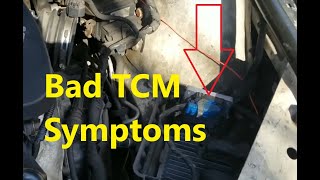
- PRNDL (gear indicator) display may go blank or show incorrect information. 🎬 Watch: Common symptoms of a failing transmission control module.
- Replacing external sensors. This code points to an internal module memory error, not a faulty sensor input.
- Replacing the entire transmission. The problem is almost always electronic (the TEHCM), not mechanical. The transmission hard parts are likely fine.
- Overlooking the external transmission case connector. A corroded or loose pin at the main harness connection can cause communication loss and codes that mimic a failed internal TCM.
Most Likely Causes
- Internal Transmission Control Module (TCM/TEHCM) Failure 🔴 High Probability As cited in GM TSB #PIP4653E, code P1621 is a primary indicator of an internal TCM fault. The TCM in the Camaro's 6L-series automatic transmission is part of the TEHCM (Transmission Electro-Hydraulic Control Module) located inside the transmission pan, bolted to the valve body. This location subjects the electronics to constant, extreme heat cycles and vibration, which degrades solder joints and circuit board components over time, leading to memory corruption.
How to confirm: A professional scan tool is needed to confirm P1621 is stored in the TCM. Before condemning the module, inspect the main external transmission case connector for corrosion or damaged pins, as this can mimic an internal failure. If external wiring and voltages are good, and the code returns after being cleared or after a failed reprogramming attempt, the TEHCM is faulty.
Typical fix: The TEHCM (which includes the TCM, solenoids, and valve body) must be replaced. This requires dropping the transmission pan, draining the fluid, removing the old unit, installing the new one, and programming it to the vehicle's VIN using GM's Service Programming System (SPS).
Est. part cost: $300-$800 - Internal Engine Control Module (ECM) Failure 🟡 Medium Probability While less common than TCM failure for this code, the ECM can also suffer internal memory faults as described in the general information TSB #05-06-04-060A. This is typically a diagnosis of exclusion after the TCM and wiring have been proven to be good.
How to confirm: If diagnostic checks rule out the TCM and all wiring, and the code persists specifically in the ECM, the ECM is the likely culprit. This is often a process of elimination.
Typical fix: Replace the ECM and program it to the vehicle.
Est. part cost: $250-$800 - Low Battery Voltage or Poor Connections ⚪ Low Probability
How to confirm: Test the battery and charging system to ensure voltage is stable and above 12.4V with the engine off. TSB #05-06-04-060A specifically advises repairing any low voltage conditions prior to diagnosing module memory codes. Inspect and clean all power and ground connections to the ECM and TCM, including the main chassis grounds. A low voltage condition can corrupt a module's self-test during startup, falsely setting a P1621.
Typical fix: Charge or replace the battery, or clean/repair the faulty connections.
Est. part cost: $0-$250
Rare But Worth Checking
- Failed Reprogramming Event: If the code appeared immediately after an attempt to tune or update the vehicle's software with an aftermarket device, the programming may have been corrupted. Reverting to the stock tune or having a dealer re-flash the module with the latest factory calibration may resolve the issue.
Diagnosis Steps
- Scan all vehicle modules for DTCs. Note which module(s) have stored P1621. If accompanied by P0700, the fault is almost certainly in the transmission system.
- If P1621 is isolated in the TCM, as suggested by TSB #PIP4653E, the diagnostic path points toward the TEHCM.
- Check battery voltage and the health of the charging system. Ensure voltage is stable and within the 12.4V-14.7V range. Correct any low voltage issues first.
- Inspect the main power and ground connections for the ECM. Inspect the large, round, twist-lock external connector on the transmission case for any signs of corrosion, moisture, or pushed-out pins. Clean and secure it as needed.
- Attempt to clear the codes. If P1621 returns immediately, it indicates a hard internal fault.
- Using a GM-specific scan tool, attempt to reprogram the TCM (TEHCM). TSB #PIP4653E suggests reprogramming as a potential fix, though it often fails if the hardware is damaged.
- If reprogramming fails or the code returns after a successful reprogram, the TEHCM is faulty. The transmission pan must be dropped to replace the module.
- After replacement, the new TEHCM must be programmed to the vehicle's VIN using GM's Service Programming System (SPS).
Parts You'll Likely Need
- Transmission Control Module (TCM/TEHCM)
(OEM #24256797 (Verify with VIN))— This is the most common point of failure for code P1621 on this platform, as documented in GM service bulletins. It is an integrated unit with the valve body and solenoids. The part number 24256797 is a common service number for the 6L80 TEHCM, but it is critical to verify the exact part number with the vehicle's VIN before ordering.
Trusted brands: ACDelco (OEM), Dorman (Remanufactured)
OEM price range: $400-$800
Aftermarket price range: $300-$600 - Engine Control Module (ECM) — If the TCM is ruled out, the ECM is the next most likely cause due to an internal memory fault.
Trusted brands: ACDelco
OEM price range: $400-$800
Aftermarket price range: $250-$600
Related Codes That Often Appear With This One
- P0700 — This code means 'Transmission Control System Malfunction.' The TCM requests the ECM to turn on the check engine light, and P0700 is the code the ECM sets to show the fault originated in the transmission system. It is almost always present when a specific transmission code like P1621 is stored.
- P0601, P0603, P0604 — These are all related internal control module memory error codes (ROM, KAM, RAM). Seeing them with P1621 strongly confirms an internal module failure, as noted in TSB #PIP4653E.
- U0101 — This code means 'Lost Communication with TCM.' An internal memory fault can cause the TCM to stop communicating entirely on the vehicle's data network, making it go offline.
Technical Service Bulletins (TSBs) & Recalls
- 05-06-04-060A: Information on control module DTCs P0601, P0602, P0603, P0604, P0606, P062F, P06F3, P1621 which can be shared in multiple modules.
- PIP4653E: Diagnostic information for when DTCs P0601, P0603, P0604, P062F or P1621 are stored in the Transmission Control Module.
Platform-Specific Known Issues
- TSB #PIP4653E specifically notes that DTC P1621 (along with codes like P0601, P0603, P0604, or P062F) may be found stored in the Transmission Control Module, indicating a need to diagnose and potentially reprogram or replace the TCM.
- TSB #05-06-04-060A is an informational bulletin that groups P1621 with a family of other codes indicating internal control module faults, instructing technicians to identify which module set the code and to rule out low voltage conditions before proceeding with replacement.
- Owner Experience: While direct P1621 threads are rare, discussions on forums like Camaro5.com frequently involve electronic transmission issues with similar symptoms, such as harsh shifting and jolts, which are often traced back to the TCM/TEHCM or its programming.
Mechanic-Grade Diagnostic Values
- TEHCM On/Off Shift Solenoid Resistance — expected: 20 - 40 Ohms. Failure: A reading outside this range indicates a failed solenoid within the TEHCM, requiring module replacement.
- TEHCM Pressure Control Solenoid (PWM) Resistance — expected: 3 - 8 Ohms at 70°F (21°C). Failure: A reading outside this range points to a faulty solenoid, requiring TEHCM replacement.
- ECM/TCM Ground Circuit Voltage Drop — expected: 0.1 Volts or less. Failure: A reading greater than 0.3 Volts indicates a corroded or faulty ground connection that must be repaired.
Scan Tool Commands That Help
- GDS2 / Tech2: Service Fast Learn Adapts — This procedure is mandatory after replacing the TEHCM or performing major transmission service. It allows the TCM to learn the individual clutch characteristics and hydraulic pressures, which is critical for proper shift quality.
- GM SPS (Service Programming System) with J2534 device: Replace and Reprogram ECU — This function is required to flash the new TEHCM with the vehicle's specific VIN and factory calibration files. The vehicle will not operate correctly (or at all) until this is done.
- GDS2 / Tech2: Solenoid Cleaning Process — If shift quality issues are present alongside P1621, this function can be used to cycle the solenoids to dislodge potential debris. It's a diagnostic step to try before condemning the entire TEHCM for a solenoid performance issue.
Wiring & Ground Locations
- G110 (V8) — Attached to the rear of the driver's side cylinder head.. A loose or corroded ground on the back of the cylinder head is known to cause PCM/ECM-related issues like rough idle and flickering lights, which can contribute to module communication and memory errors.
- G101 — A document for a similar GM platform indicates G101 is a primary ground for the ECM and TCM, located on the lower front of the engine block.. This is a critical ground point. A poor connection here directly affects the power stability of both the Engine and Transmission Control Modules, which can easily lead to memory corruption and a P1621 code.
- Passenger-Side Engine Harness Chafe Point — The main engine harness running down the passenger side of the engine is known to rub against the corner of the fuse block mount or aftermarket headers.. Over time, vibration can cause the harness to chafe, exposing wires and leading to shorts. A short in a wire related to the TCM or its power supply can cause erratic behavior and memory codes like P1621.
- Main Chassis Grounds — There are several main grounds, including one on the driver side block to the frame rail, and others on the rear of each cylinder head.. Poor grounding is a known issue on this platform, sometimes causing slow-start conditions when hot due to insufficient voltage at the starter. This same poor ground can affect all vehicle electronics, including the sensitive control modules, making a ground upgrade kit a common fix.
Real Owner Repair Stories
- Camaro5 Forum (2010 Camaro V6 Auto) — Loss of acceleration, car felt like it was in neutral. Had to restart the car to get it to move.
❌ Tried (didn't work) Replaced crankshaft position sensor, Replaced battery
✅ What actually fixed it An engine wire harness had been rubbing against the corner of the fuse block mount, fraying the wires and causing a short. Replacing the damaged section of the harness and protecting it from further rubbing resolved the issue. - Camaro5 Forum (2012 Camaro SS) — Car fell on its face and quit while driving, setting codes P0010 and P080c. No fuel pressure, no-start condition.
❌ Tried (didn't work) Clearing codes
✅ What actually fixed it The main wiring harness on the passenger side had been resting on an exhaust header, melting the insulation and fusing 4-7 wires together. Repairing the damaged wires and securing the harness away from the heat source was the fix.
OEM Part Supersession History
24256861 / 24256863→Various, including 24275873, 19435614— Hardware and software revisions to improve solenoid performance and pressure manifold gasket design.
Heads up: TEHCMs are not interchangeable between year groups. A 2010-2013 module will not work in a 2014+ vehicle, and vice-versa, as the internal calibration and logic are different. Installing the wrong year will cause immediate limp mode or a no-start condition.24256797→24264683, among others.— This part number is associated with the 6T40/6T45 transmission, not the Camaro's 6L50/6L80. While it is a TEHCM, it is for a different application.
Heads up: This highlights the critical importance of verifying the part number with the VIN. Part number 24256797 is for other GM vehicles like the Cruze and Malibu and is physically and electronically incompatible with the Camaro's 6L-series transmission.
Model Year Variations Within This Range
- 2010-2013: These years used TEHCMs with part numbers like 24256861. These modules had improved solenoids over earlier (pre-Camaro) 6L80s.
- 2014-2015: The TEHCM was updated again with part numbers like 24274046. These units have different internal calibrations and are not interchangeable with the 2010-2013 modules.
Helpful Videos
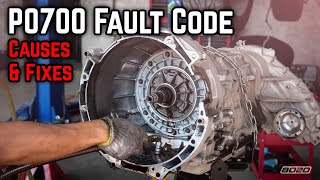
Used OEM Parts in Stock


New Aftermarket Parts Available
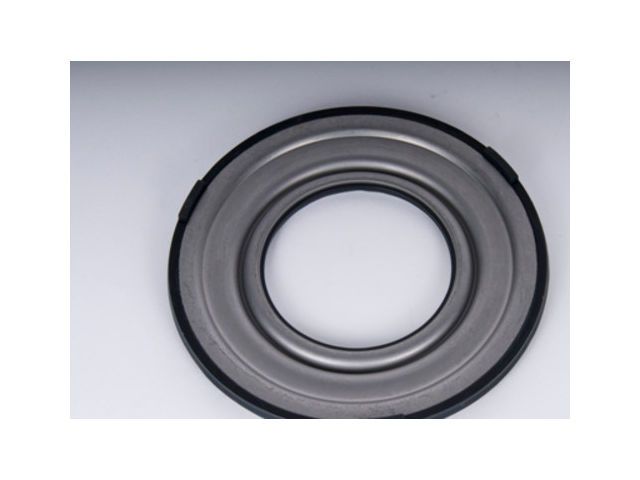
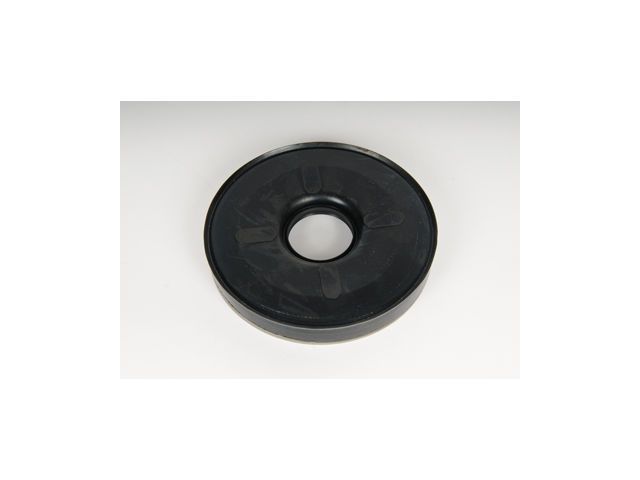




The information in this article is provided for general reference and educational purposes only. Vehicle specifications, procedures, and part compatibility can vary by production date, trim level, and region. Always consult your vehicle's factory service manual and verify part numbers before purchasing or performing repairs. Safety-critical components such as airbags, seat belts, and braking systems should be installed by a qualified professional.
- Chevrolet CAMARO:
- 🎬 Helpful Videos
- 🛍️ Shop This Part
- What's Unique About the 2011-2015 Chevrolet CAMARO
- Diagnostic Flowchart
- Symptoms You May Notice
- Most Likely Causes
- Rare But Worth Checking
- Diagnosis Steps
- Parts You'll Likely Need
- Related Codes That Often Appear With This One
- Technical Service Bulletins (TSBs) & Recalls
- Platform-Specific Known Issues
- Mechanic-Grade Diagnostic Values
- Scan Tool Commands That Help
- Wiring & Ground Locations
- Real Owner Repair Stories
- OEM Part Supersession History
- Model Year Variations Within This Range
- 🎟️ Get 5% Off