

OBD-II Code P1616: Module Communication Error & Manufacturer-Specific Faults
The Ultimate Guide to What P1616 Means, Why It Triggers, and How to Fix It for Good
- P1616 is a manufacturer-specific code; on 1999-2007 GM vehicles, it almost always points to a failing instrument cluster, while on Hyundai models, it indicates a faulty main relay.
- Test your battery and alternator first, as voltage drops below 12.4V during cranking are the leading trigger for module communication errors.
- Never replace the $500+ Engine Control Module (ECM) for a P1616 code without first cleaning the main chassis ground straps and checking for a 7-volt average on the GM Class 2 data line.
- If you experience dead gauges alongside a no-start condition, use a $120+ mid-range bidirectional scanner to check for accompanying 'U' network codes before buying any parts.
What Does P1616 Mean?

P1616 is a manufacturer-specific code. For General Motors (GM) vehicles, it signals a communication failure between critical computers like the Engine Control Module (ECM), Body Control Module (BCM), and Instrument Panel Cluster (IPC). These modules constantly communicate over a network; P1616 means one module sent an invalid or unexpected signal.
Technical definition: On GM vehicles, P1616 is defined as 'Wrong Vehicle ID From Instrument Control Module', indicating the ECM received an invalid identification signal on the data network. For Hyundai/Kia, it means 'Main Relay Malfunction'. On Suzuki, it indicates an immobilizer mismatch ('Unregistered Keyless Start Control Module').
Can I Drive With P1616?
No — Do Not Drive. Do not drive. The vehicle will likely stall, enter a severely reduced power mode, or fail to start, leaving you stranded. A sudden stall in traffic is a major safety hazard. While short-term driving will not destroy engine internals, the financial risk includes a $100-$300 tow and escalating electrical damage.
Common Causes

- Failing Instrument Panel Cluster (IPC) (Very Common) — On 1999-2007 GM trucks and SUVs, the instrument cluster acts as a communication gateway. Internal failure causes it to send bad data, triggering P1616 and killing the gauges. 🎬 Watch: How to diagnose and repair a faulty GM instrument cluster.
- Low or Unstable Battery Voltage (Very Common) — A weak battery or failing alternator drops system voltage. Electronic modules cannot function or communicate correctly below 12 volts, leading to immediate network errors.
- Poor Electrical Grounds (Common) — Corroded, loose, or broken ground straps create high electrical resistance. Computer modules require a solid ground connection to the chassis to transmit data properly.
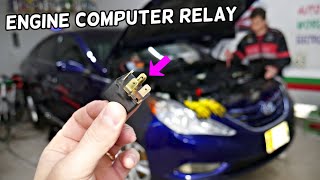
- Faulty Main Relay (Hyundai/Kia) (Common) — On Hyundai and Kia vehicles, P1616 specifically points to a failed main relay circuit. This relay supplies power to the ECM; its failure causes an immediate no-start. 🎬 See this walkthrough for locating and replacing the Hyundai ECU relay.
- Damaged Wiring or Connectors (Less Common) — Corroded connector pins, water intrusion, or rodent damage in the harness for the BCM, ECM, or instrument cluster physically interrupts the communication network.
- Faulty Ignition Switch (Less Common) — A worn ignition switch causes intermittent power loss to key modules like the BCM and IPC during startup, corrupting communication signals.
- Faulty Body Control Module (BCM) (Rare) — An internal hardware failure in the BCM disrupts communication across the entire vehicle network. This usually presents with widespread accessory failures (locks, lights, windows).
- Faulty Engine Control Module (ECM) (Rare) — The main engine computer rarely fails. Rule out all voltage, ground, and cluster issues before condemning the ECM.
Symptoms

- No Start or Stalling — The engine cranks but refuses to start, or stalls unexpectedly while driving.
- Erratic or Dead Gauges — The speedometer, tachometer, and other gauges flutter, stick, or drop to zero entirely.
- Check Engine Light On — The Malfunction Indicator Lamp illuminates immediately upon detecting the communication fault.
- Reduced Engine Power — The vehicle enters 'limp mode' with severely limited acceleration to protect the drivetrain.
- Security Light On / Key Stuck — The immobilizer system locks out the ignition, illuminating the security light and sometimes trapping the key in the cylinder.
- Warning Lights Flashing (also visible on scanner) — Secondary warning lights ('Service 4WD', 'ABS', battery) illuminate or flash intermittently.
Diagnostic Flowchart

Tap your situation to follow the diagnostic path that matches what you're seeing on this code.
Common Fixes & Costs
- Repair or Replace Instrument Cluster — Parts: $150-$300, Labor: $100-$200, ~1.0 hr book time (Intermediate)
- Clean or Replace Ground Straps — Parts: $15-$50, Labor: $75-$150, ~0.8 hr book time (DIY)
- Replace Main Relay (Hyundai/Kia) — Parts: $20-$50, Labor: $50-$100, ~0.5 hr book time (DIY)
- Replace Body Control Module (BCM) — Parts: $200-$600, Labor: $150-$300, ~1.5 hr book time (Professional)
- Reprogram or Replace Engine Control Module (ECM) — Parts: $300-$800, Labor: $150-$250, ~2.0 hr book time (Professional)
Used vs. New Parts: Buying Guide
When a used part is worth it: A remanufactured instrument cluster is the most cost-effective solution for GM failures. New OEM clusters are expensive, and remanufactured units often feature upgraded stepper motors that prevent future failures.
Donor-vehicle mileage cap: roughly under 100000 miles for the part to have meaningful remaining life.
Donor quality checklist:
- Verify the exact OEM part number match.
- Favor remanufactured units over junkyard pulls to ensure upgraded internal components.
- Ensure the supplier programs the cluster with your exact VIN and mileage prior to shipping.
Decision logic:
- If You can handle 3-5 days of vehicle downtime → Use a mail-in repair service to fix your original cluster, avoiding programming fees.
- If You need the vehicle back on the road immediately → Purchase a pre-programmed, remanufactured cluster with a core exchange.
- If The original cluster has severe water or fire damage → Purchase a new OEM part, as the core is unrepairable.
Warranty tradeoff: Junkyard parts carry a 30-day warranty. Reputable remanufacturers offer 1-year or lifetime warranties on instrument clusters.
Worst-case if a used part fails: $300 if a junkyard cluster fails immediately, requiring repeat labor and a second part purchase.
What Happens If You Wait — Timeline
- 0-1 month: Intermittent symptoms appear. Gauges flicker occasionally, or the car has a single unexplained no-start event. The underlying issue (e.g., a corroded ground) is just beginning. (MPG impact: 0%% · Added cost: $0)
- 1-3 months: Symptoms become frequent. The no-start condition happens weekly, or gauges go dead for entire trips. A failing BCM causes a parasitic battery drain. (MPG impact: 0-5%% · Added cost: $100-$200)
- 3-6 months: A component fails permanently. The instrument cluster stops working entirely, or the main relay fails causing a permanent no-start. The weakened battery requires replacement. (MPG impact: N/A% · Added cost: $350-$600)
- 6+ months: Cascading failures occur. Unstable voltage puts stress on other electronic modules, potentially destroying the ECM or BCM. Diagnosis becomes highly complex. (MPG impact: N/A% · Added cost: $1000-$2000)
Cost of Not Fixing It
- Immediate: The vehicle fails to start or stalls in traffic, creating a safety hazard and requiring a tow. (Added cost: $100-$300)
- 1-3 months: Intermittent electrical drains from failing modules destroy the battery, requiring replacement. (Added cost: $150-$250)
- 3+ months: A failing BCM or instrument cluster permanently locks out the immobilizer, resulting in a permanent no-start and complex diagnostic labor. (Added cost: $300-$600)
Diagnosis Steps
- Check the Battery and Charging System
Ensure the battery is fully charged (above 12.4V) and the alternator outputs 13.7-14.7V when running. Low voltage is the primary cause of communication errors.
Tools: Multimeter (Beginner) - Inspect All Main Ground Straps
Visually inspect the ground strap from the battery negative to the chassis, engine block to frame, and the ABS module ground (on GM trucks, under the driver's door). Clean any rust with a wire brush.
Tools: Wrench/socket set, wire brush (Beginner) - Scan for Network 'U' Codes
Use a bidirectional scanner to check all modules. P1616 is often accompanied by 'U' codes (e.g., U1000). Identifying which modules are offline pinpoints the network break.
Tools: OBD-II Scanner (with module-reading capability) (Intermediate) - Inspect Instrument Cluster Connector (GM)
Remove the trim around the cluster and inspect the main electrical plug. Ensure the locking tab is engaged and check for green/white corrosion on the pins.
Tools: Trim removal tools, screwdriver/socket set (Intermediate) - Test Main Relay Functionality (Hyundai/Kia)
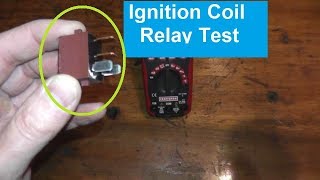
Locate the main relay in the engine fuse box. Apply 12V power to terminals 85 and 86 and listen for a click. Check for continuity (near 0 ohms) between terminals 30 and 87 while powered.
Tools: Multimeter, 12V power source, jumper wires (Advanced) - Perform a 'Wiggle Test' on Key Harnesses
With the key ON, gently wiggle the wiring harnesses going to the BCM, ECM, and instrument cluster. If gauges flicker or relays click, you have located a broken wire or loose pin.
Tools: Hands, flashlight (Intermediate) - Test GM Class 2 Data Bus Voltage
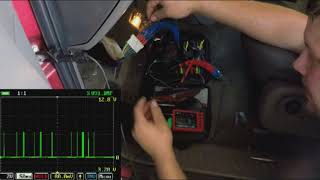
With the key ON, connect a multimeter from OBD-II Pin 2 to a good ground (Pin 4). The voltage must fluctuate around 7V. A steady 0V or 10V+ indicates a shorted data line.
Tools: Multimeter (Advanced) - Test the CAN Bus Network Resistance
With the ignition OFF and battery disconnected, test resistance across OBD-II pins 6 and 14. A reading of 60 ohms is normal. 120 ohms means a module/resistor is offline; OL means broken wires.
Tools: Multimeter (Advanced)
When This Code Triggers (Freeze-Frame Conditions)
- Engine Coolant Temp: Below 122°F / 50°C (During a cold start or initial warm-up phase.)
- RPM: 0 or during crank (The fault is detected during the initial key-on self-test before the engine starts.)
- System Voltage: 9.5-11.5V (During engine cranking, especially with a weak battery, when voltage dips significantly.)
- Vehicle Speed: 0 mph (The communication handshake failure occurs when the vehicle is stationary.)
Related Codes
- U1000 — A generic 'Class 2 Communication Malfunction' code. P1616 implies an invalid ID from a communicating module, while U1000 indicates a complete loss of communication from one or more modules.
- P0601 — Indicates an 'Internal Control Module Memory Check Sum Error'. If present with P1616, the ECM has suffered a fatal internal failure and must be replaced.
- B1001 — An 'Option Configuration Error' stored in the BCM. This points to a software programming issue; correctly programming the module resolves both B1001 and P1616.
- P161B — An immobilizer code meaning 'Password Mismatch'. If seen with P1616, the fault lies entirely within the anti-theft key authentication system.
Climate & Environmental Factors
- High Humidity / Snow Belt Regions: Road salt and moisture accelerate corrosion on ground straps and harness connectors, creating high resistance that disrupts data networks.
- Extreme Cold: Cold temperatures severely reduce battery cranking power. The resulting voltage drop during startup triggers module communication errors.
- Extreme Heat: High under-hood temperatures degrade the solder joints inside instrument clusters and control modules, leading to intermittent data failures.
How to Talk to a Mechanic About This Code
Say this: "I have a [Year/Make/Model] with a P1616 code. I know this is a manufacturer-specific communication code. Please check the battery, charging system, and main ground connections first before diagnosing the control modules."
This directs the technician to start with the cheapest fixes, preventing a rush to replace expensive parts like the ECM.
Avoid saying:
- My check engine light is on, can you just fix it?
- Just do whatever you think is needed.
- I think the main computer is bad.
Questions to ask before authorizing the repair:
- Did you confirm the battery and grounds are good? What were the voltage readings?
- Were there any other 'U' (network) codes stored along with the P1616?
- What specific tests led you to condemn this module?
- Is programming required for the new module, and is that included in the quote?
Where to Take It: Dealer vs Independent vs Chain
- Dealer:
Recommended only for specific immobilizer programming; otherwise, an independent shop is a better value.
Best for: Vehicles under warranty, Complex immobilizer relearns (Suzuki, Opel), Very new vehicles requiring proprietary software
Downsides: Highest labor rates., Will default to replacing entire modules instead of repairing known issues. (Typical cost: +50% vs. baseline) - Independent Shop:
Best fit. A reputable independent shop offers the best balance of electrical expertise and value.
Best for: Out-of-warranty vehicles, Diagnosing bad grounds or wiring issues, Replacing GM instrument clusters or Hyundai main relays
Downsides: Diagnostic skill varies; requires a shop with strong electrical expertise., May lack manufacturer-specific programming tools. (Typical cost: +0% vs. baseline) - Chain Shop:
Not Recommended. P1616 requires specialized diagnostic work, not basic part swapping.
Best for: Battery testing and replacement
Downsides: Technicians lack advanced diagnostic training for communication codes., High pressure to sell unnecessary parts. (Typical cost: -10% vs. baseline)
When to Walk Away From the Repair
If the total estimated repair cost exceeds 40-50% of the car's private-party value, consider selling or trading it in.
- Car worth $3500, fix is $1800: Walk away. The repair cost is over 50% of the car's value.
- Car worth $9000, fix is $750: Fix it. This repair restores full function to a valuable vehicle.
- Car worth $2000, fix is $1200: Walk away. A $1,200 repair on a $2,000 car is a poor investment.
What Scan Tool You Need for This Code
Minimum: A scanner that reads manufacturer-specific codes and accesses all vehicle modules (ECM, BCM, IPC, ABS). A basic engine-only code reader is useless for P1616.
A $20 reader only confirms P1616 exists. It cannot read the 'U' network codes or access the BCM to pinpoint the communication breakdown.
Budget: ANCEL BD310, Veepeak Mini, MUCAR BT200 (~$50) — These Bluetooth dongles read codes from multiple modules, providing the minimum data needed to locate the originating fault.
Mid-range: BlueDriver Pro, Foxwell NT510, Autel MaxiCOM MK808 (~$120) — Offers full system access and bidirectional controls. You can command gauges to sweep to test a cluster and view live data streams from all modules.
Professional: Autel MaxiCOM MK900BT, Launch X431 series (~$500-1200) — Provides ECU coding and network topology mapping. Essential for programming a new BCM or performing an immobilizer relearn.
Rent vs buy: Buy. Rental scanners from parts stores are basic code readers and cannot access the modules required to diagnose P1616.
How to Clear the Code After You Fix It
- Reconnect the battery if disconnected during repair.
- Use an OBD-II scan tool to clear all fault codes from every module (ECM, BCM, IPC).
- Perform a complete drive cycle to reset readiness monitors.
Drive cycle (~20 minutes): From a cold start, idle for 3 minutes with A/C and rear defrost on. Accelerate to 55 mph and hold steady for 3 minutes. Coast down to 20 mph without braking. Accelerate to 60 mph, hold for 5 minutes, and coast down again.
Readiness monitors affected: Catalyst Monitor, Evaporative System Monitor, Oxygen Sensor Monitor, EGR System Monitor
Before emissions retest: drive at least 50 miles to fully set monitors.
Watch out for:
- Disconnecting the battery clears the code but resets all readiness monitors to 'Not Ready', causing an automatic emissions failure.
- The code returns immediately if the root electrical fault is not repaired.
- Failing to complete the specific coast-down phases of the drive cycle leaves monitors incomplete.
Will This Fail Emissions / State Inspection?
Yes — this code typically fails an OBD-II emissions inspection.
- California: An illuminated Check Engine Light is an automatic failure. For 2000+ model years, one non-continuous monitor can be 'Not Ready'.
- New York: Vehicles fail inspection if the Check Engine light is on. For 2001+ models, only one readiness monitor is allowed to be incomplete.
- Texas: An illuminated Check Engine Light is an automatic failure in emissions counties. Texas allows one monitor to be 'Not Ready' for 2001+ vehicles.
Most Commonly Affected Vehicles
- Chevrolet Silverado, Tahoe, Suburban, Avalanche, Trailblazer (1999-2007) — Notorious for instrument cluster failures that disrupt the Class 2 data bus. Also prone to poor ABS module grounds.
- GMC Sierra, Yukon, Envoy (1999-2007) — Shares the exact same platform, instrument cluster, and grounding issues as Chevrolet counterparts.
- Cadillac Escalade, CTS, DeVille (1999-2007) — The Escalade suffers from the same cluster faults as GM trucks. Sedans frequently experience BCM-related communication errors.
- Buick / Pontiac / Saturn LeSabre, Grand Prix, Vue (2000-2009) — Frequently experience P1616 due to failing Body Control Modules (BCM) or worn ignition switches.
- Hyundai Accent, Elantra, Sonata, Tucson (1999-2010) — P1616 strictly indicates a 'Main Relay Malfunction'. In some Elantras, the relay is soldered into the fuse box.
- Ford Various Models (2000-2010) — P1616 is defined as 'No Communication With SDM', pointing to a failure in the airbag control module network.
- Volkswagen Jetta, Golf (TDI) (1999-2006) — On diesel models, P1616 means 'Glow Plug Indicator Circuit Short to B+', pointing to the pre-heating system, not the data network.
- Opel/Vauxhall Corsa, Astra (2004-2009) — Indicates a 'Wrong Vehicle ID' mismatch between the immobilizer, BCM, and instrument cluster after an ECU replacement.
- Suzuki Grand Vitara, SX4 (2004-2012) — Relates to the immobilizer system, indicating an 'Unregistered Keyless Start Control Module' mismatch.
Manufacturer-Specific Notes

- General Motors: The instrument cluster acts as a network gateway. When it fails, it crashes the data bus. Poor grounds on the frame rail under the driver's side are the second most common cause.
- Hyundai / Kia: P1616 means 'Main Relay Malfunction'. This is a physical power supply issue to the engine control system, not a module-to-module data communication failure.
- Volkswagen (Diesel): P1616 is 'Glow Plug / Heater Indicator Circuit Short to B+'. This is an issue with the cold-start glow plug system and is completely unrelated to data networks.
- Suzuki: P1616 indicates 'Unregistered Keyless Start Control Module'. This immobilizer mismatch frequently occurs after a dead battery and requires a software relearn.
Real Owner Stories
2007 Chevy Trailblazer with 150K miles
While driving, all gauges dropped to zero. Multiple warning lights turned on, the A/C stopped working, and the vehicle intermittently failed to start.
What they tried:
- Checked all fuses.
- Verified the battery and alternator were outputting correct voltage.
- Disconnected the battery to reset the computers, which had no effect.
Outcome: The issue was traced to a faulty Instrument Panel Cluster (IPC). The IPC acts as a communication gateway; its internal failure disrupted the Class 2 data bus. Replacing the cluster with a $250 remanufactured unit resolved all issues.
Lesson: On 1999-2007 GM trucks, widespread electrical issues and dead gauges strongly point to a failing instrument cluster, not a bad ECM.
2005 Hyundai Accent 1.5L Diesel
The Check Engine Light illuminated with code P1616. The car started and ran normally with no other symptoms.
What they tried:
- Researched the Hyundai-specific meaning of the code.
- Located the main relay in the under-hood fuse box.
Outcome: For Hyundai, P1616 points specifically to the main relay that powers the ECM. The owner replaced the $30 main relay and cleared the code. The light did not return.
Lesson: Always verify the manufacturer-specific definition. For Hyundai/Kia, P1616 is a simple power supply issue, not a complex data bus failure.
2009 Suzuki Grand Vitara with Keyless Start
After replacing a dead battery, the engine cranked but would not start. A scan revealed code P1616: 'Unregistered Keyless Control Module'.
What they tried:
- Checked all power and CAN bus lines to the keyless module.
- Attempted basic key reprogramming sequences.
Outcome: The severe voltage drop corrupted the synchronization between the immobilizer module and the ECM. A shop used a professional scan tool to perform an 'immobilizer relearn' procedure, re-establishing the security code.
Lesson: On Suzuki vehicles, P1616 is an immobilizer code triggered by dead batteries. The fix requires a software re-synchronization procedure, not new parts.
How to Prevent This Code From Triggering
- Perform an annual battery and charging system test (Once per year, especially before winter) — A weak battery causes low voltage conditions during cranking, which is the primary trigger for module communication errors.
- Clean and protect battery terminals and ground connections (Every oil change or twice a year) — Corrosion creates high resistance, leading to voltage drops. Clean connections with a wire brush and apply dielectric grease.
- Visually inspect main engine and body ground straps (Once per year) — Ground straps fray and break over time. A compromised ground path causes intermittent and difficult-to-diagnose data network failures.
Frequently Asked Questions
Can I just clear the P1616 code?
You can clear the code with a scanner, but it will return immediately if the underlying electrical fault remains. Clearing the code does not solve the root cause. You must fix the communication breakdown first.
What are the most common misdiagnosis mistakes for P1616?
The biggest mistake is immediately replacing the expensive Engine Control Module (ECM). Technicians must always check for bad grounds, low battery voltage, and faulty connectors first. On GM trucks, failing to test the instrument cluster is another frequent error.
Can a bad ignition switch cause a P1616 code?
Yes. The ignition switch provides power to the BCM and instrument cluster. Intermittent power loss during startup corrupts communication signals, triggering P1616 alongside a no-start condition.
Why did my gauges stop working when the P1616 code appeared?
On many GM vehicles, the instrument cluster acts as a central communication hub. When it fails internally, it stops sending and receiving data. This loss of communication kills the gauges and triggers P1616.
How much does it cost to diagnose a P1616 code?
Most repair shops charge a diagnostic fee ranging from $120 to $200. This covers the technician's time to scan all modules and perform initial electrical tests. This fee is often applied to the final repair cost.
Do I need to go to the dealer to fix a P1616 code?
No. Many independent shops possess the advanced scanners required to diagnose communication issues and reprogram modules. However, complex immobilizer relearns on certain imports may require dealer-level software.
What does P1616 mean on a Suzuki?
On Suzuki vehicles, P1616 indicates an immobilizer error, specifically 'Unregistered Keyless Start Control Module'. It means the anti-theft system does not recognize the key or ECM. This often requires a software relearn procedure after a dead battery.
What is the difference between P1616 and P1615 on an Opel/Vauxhall?
P1616 means 'Wrong Vehicle ID from Instrument Cluster', while P1615 means 'Wrong Vehicle ID from Immobilizer'. They often appear together after swapping an ECU. You must use a diagnostic tool to 'marry' the new ECU to the existing modules.
Key Takeaways
- P1616 is a manufacturer-specific code; on 1999-2007 GM vehicles, it almost always points to a failing instrument cluster, while on Hyundai models, it indicates a faulty main relay.
- Test your battery and alternator first, as voltage drops below 12.4V during cranking are the leading trigger for module communication errors.
- Never replace the $500+ Engine Control Module (ECM) for a P1616 code without first cleaning the main chassis ground straps and checking for a 7-volt average on the GM Class 2 data line.
- If you experience dead gauges alongside a no-start condition, use a $120+ mid-range bidirectional scanner to check for accompanying 'U' network codes before buying any parts.
Helpful Videos



The information in this article is provided for general reference and educational purposes only. Vehicle specifications, procedures, and part compatibility can vary by production date, trim level, and region. Always consult your vehicle's factory service manual and verify part numbers before purchasing or performing repairs. Safety-critical components such as airbags, seat belts, and braking systems should be installed by a qualified professional.
- 🎬 Helpful Videos
- What Does P1616 Mean?
- Can I Drive With P1616?
- Common Causes
- Symptoms
- Diagnostic Flowchart
- Common Fixes & Costs
- Used vs. New Parts: Buying Guide
- What Happens If You Wait — Timeline
- Cost of Not Fixing It
- Diagnosis Steps
- When This Code Triggers (Freeze-Frame Conditions)
- Related Codes
- Climate & Environmental Factors
- How to Talk to a Mechanic About This Code
- Where to Take It: Dealer vs Independent vs Chain
- When to Walk Away From the Repair
- What Scan Tool You Need for This Code
- How to Clear the Code After You Fix It
- Will This Fail Emissions / State Inspection?
- Most Commonly Affected Vehicles
- Manufacturer-Specific Notes
- Real Owner Stories
- 2007 Chevy Trailblazer with 150K miles
- 2005 Hyundai Accent 1.5L Diesel
- 2009 Suzuki Grand Vitara with Keyless Start
- How to Prevent This Code From Triggering
- Frequently Asked Questions
- Can I just clear the P1616 code?
- What are the most common misdiagnosis mistakes for P1616?
- Can a bad ignition switch cause a P1616 code?
- Why did my gauges stop working when the P1616 code appeared?
- How much does it cost to diagnose a P1616 code?
- Do I need to go to the dealer to fix a P1616 code?
- What does P1616 mean on a Suzuki?
- What is the difference between P1616 and P1615 on an Opel/Vauxhall?
- Key Takeaways
- 🎟️ Get 5% Off