

P1614 on 2020 Jeep Cherokee: Understanding the ECU Reset-Recovery Code
On a 2020 Jeep Cherokee, code P1614 almost always points to a software glitch in the Powertrain or Transmission Control Module. The official fix is a software update from a Jeep dealer, which is often covered by a Technical Service Bulletin (TSB). A weak main or auxiliary battery is the second most likely cause.
- P1614 on a 2020 Cherokee means the engine's or transmission's computer reset itself.
- The most likely cause is a software glitch that Jeep can fix with an update, as documented in multiple TSBs for different engines.
- Before going to the dealer, have your main and auxiliary batteries professionally load-tested, as a weak battery is the next most common cause.
- Do not replace the PCM; the module itself is almost never the problem. The fix is a software reflash.
- This repair is not DIY-friendly as it requires dealer-level software tools (wiTECH) to perform the update.
What's Unique About the 2020-2020 Jeep CHEROKEE

What's unique about the 2020 Cherokee is that Jeep has issued multiple Technical Service Bulletins (TSBs) for the P1614 code, affecting various engine configurations. This is strong evidence from the manufacturer that the root cause is often a software bug in the control modules, not a failing part. These TSBs instruct dealers to reprogram (flash) the Powertrain Control Module (PCM) and/or the Transmission Control Module (TCM) with updated software to resolve the issue. For example, TSB 21-020-20 REV. A applies to models with the 3.2L V6 engine built on or before February 04, 2020.
Diagnostic Flowchart

Tap your situation to follow the diagnostic path that matches what you're seeing on this vehicle.
Symptoms You May Notice
- Check Engine Light (Malfunction Indicator Lamp, MIL) is on
- An audible clunk when applying the throttle after coasting, especially in 5th or 6th gear between 30-45 mph (per TSB #21-020-20 REV. A)
- A 'Speed Limiter Ready' message may appear on the instrument cluster (per TSB #18-001-21 and #18-006-20 REV. A)
- Engine may not start or may stall intermittently
- Stop/Start system may become unavailable or malfunction
- Replacing the Powertrain Control Module (PCM). The PCM itself is rarely the problem. The issue is almost always the software running on it or the power being supplied to it. Unnecessary PCM replacement is an expensive mistake. The TSBs call for a reflash, not a replacement.
Most Likely Causes

- Control Module Software Glitch 🔴 High Probability Multiple manufacturer TSBs (#18-001-21, #21-020-20 REV. A, #2104220, #18-006-20 REV. A) confirm this is a known issue on the 2020 Cherokee, affecting both PCM and TCM software across different engines.
How to confirm: A Jeep dealer or a shop with access to OEM service information can check if your vehicle's VIN is covered by an applicable TSB and if a software update is available. The TSBs specify build date ranges for applicability.
Typical fix: Reprogramming (flashing) the Powertrain Control Module (PCM) and/or Transmission Control Module (TCM) with the latest software version using the wiTECH diagnostic tool. The flash process takes approximately 6-7 minutes.
Est. part cost: $0 - Weak or Failing Battery 🟡 Medium Probability Modern vehicles like the Cherokee have a high electrical demand, especially models with Engine Stop-Start (ESS) systems which rely on a main and auxiliary battery. A momentary voltage drop during engine operation or an ESS event can be enough to cause a module to reset.
How to confirm: Perform a load test on the battery (or batteries, if equipped with ESS). A simple voltage check is not always sufficient; a healthy, fully charged AGM battery should read around 12.7 volts, but it can still fail under load. Most auto parts stores can do this for free.
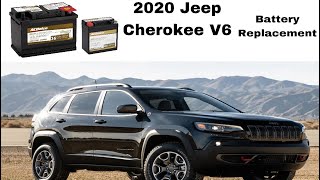
Typical fix: Replace the failing battery. If the vehicle has an auxiliary battery for the ESS system, it should be tested and replaced as well if it's weak. The auxiliary battery is located inside the driver's side front fender well, requiring wheel and liner removal. 🎬 Watch: How to access and replace the auxiliary battery.
Est. part cost: $150-$400 - Loose or Corroded Battery Terminals/Grounds ⚪ Low Probability Vibrations and exposure to the elements can cause critical power and ground connections to loosen or corrode over time, leading to intermittent power interruptions. Key ground points are from the battery to the chassis, and from the engine block to the firewall.
How to confirm: Visually inspect the battery terminals for corrosion (white or blue powder). Check that the main engine and chassis ground straps are clean, tight, and free of rust. On similar Jeep models, important grounds are located on the inner fenders and from the engine block to the firewall.
Typical fix: Clean the battery terminals and cable ends with a wire brush and a baking soda solution. Tighten any loose connections. Replace corroded cable ends or ground straps if necessary.
Est. part cost: $5-$50
Rare But Worth Checking
- Failing Alternator:
Diagnosis Steps
- Scan the vehicle for any other DTCs. Address other codes first, as they may contribute to the P1614 code.
- Check for applicable TSBs. Ask a dealer if TSB #18-001-21, #21-020-20 REV. A, or #18-006-20 REV. A apply to your vehicle's VIN. Note that these TSBs have specific build date and engine requirements.
- Perform a comprehensive battery and charging system test. This includes a load test on the main battery and the auxiliary battery (if equipped). Ensure the alternator is charging correctly (typically 13.5-14.5 volts when running).
- Inspect all power and ground connections. Check the battery terminals for tightness and corrosion. Follow the main negative cable to the chassis and the engine ground strap (often from the firewall to the engine block) to ensure they are secure and clean.
- If all tests pass, the cause is almost certainly software-related. The vehicle needs to be taken to a dealer or qualified repair shop to have the PCM and/or TCM reprogrammed with the latest software updates as per the relevant TSBs. The repair procedure specifies using a battery charger to maintain voltage between 13.2 and 13.5 volts during the flash.
Parts You'll Likely Need
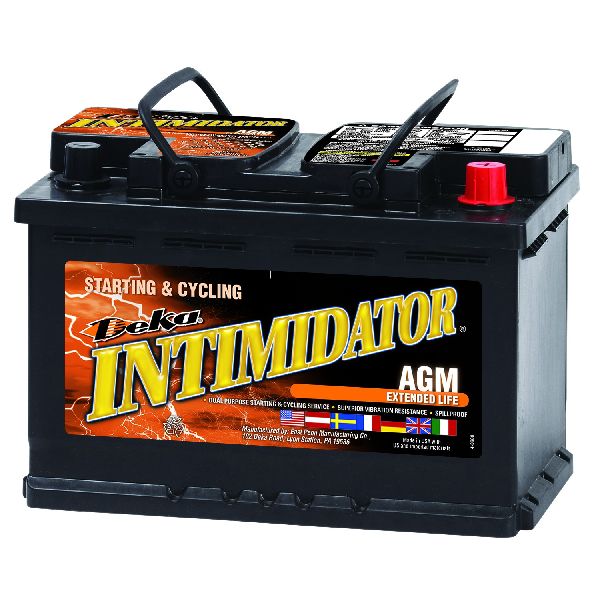
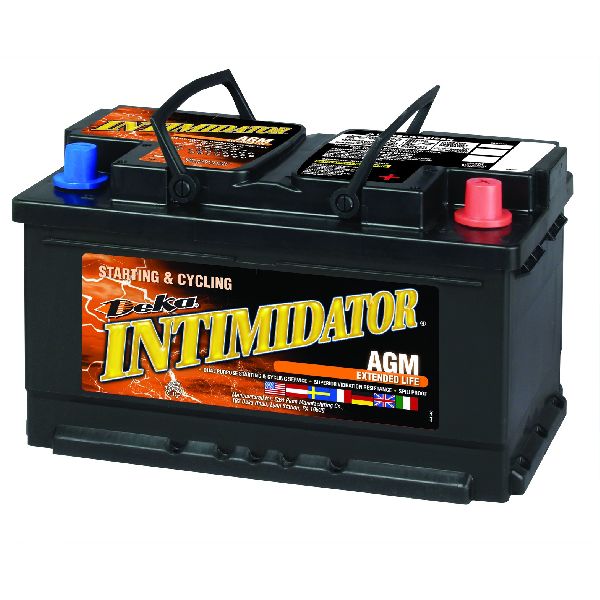
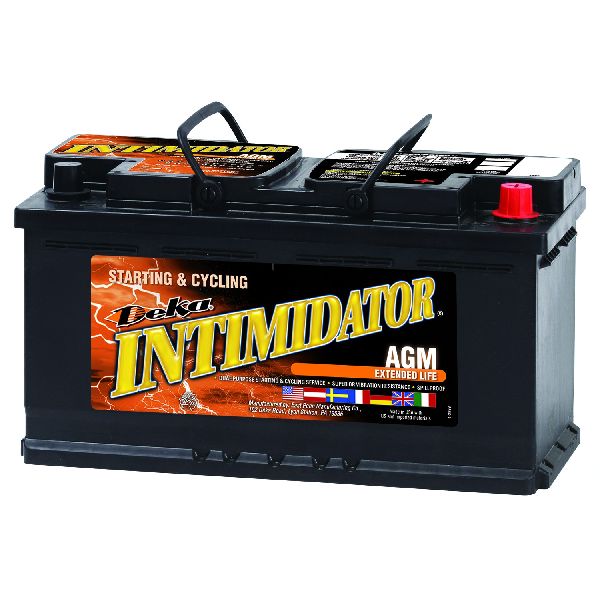
- Vehicle Battery (Main)
(OEM #BB0H7730AB)— A weak main battery is the most common hardware-related cause for a module reset due to voltage drops. The 2020 Cherokee often uses an AGM battery, especially if equipped with an Engine Stop-Start system.
Trusted brands: Mopar, Interstate, DieHard
OEM price range: $250-$400
Aftermarket price range: $180-$300 - Auxiliary Battery (for ESS)
(OEM #56029759AB)— The auxiliary battery supports the vehicle's electronics during an engine stop-start event. If it fails, it can cause voltage instability and trigger module resets.
Trusted brands: Mopar, ACDelco, Dorman
OEM price range: $188-$270
Aftermarket price range: $100-$150
Technical Service Bulletins (TSBs) & Recalls

- 18-001-21: Addresses P1614-00 and a 'Speed Limiter Ready' message with a PCM software update.
- 21-020-20 REV. A: Links P1614 to an audible clunk on 3.2L V6 models and recommends a TCM software update.
- 2104220: Notes P1614-00 and recommends a software update to fix a Malfunction Indicator Lamp (MIL) illumination.
- 18-006-20 REV. A: Addresses P1614-00 on 2.4L engine models with a PCM software update.
Platform-Specific Known Issues
- TSB #18-001-21 and #2104220 address P1614 by recommending a PCM software update. Symptoms can include a 'Speed Limiter Ready' message.
- TSB #21-020-20 REV. A also addresses P1614 with a software update, but for the Transmission Control Module (TCM) on 3.2L V6 models. This TSB is linked to a symptom of an audible clunk from the drivetrain when accelerating after coasting between 30-45 mph.
- TSB #18-006-20 REV. A targets the P1614 code on models with the 2.4L engine, also related to the 'Speed Limiter Ready' message and requiring a PCM flash.
Mechanic-Grade Diagnostic Values
- Battery Voltage During Module Flashing — expected: Maintain between 13.2 and 13.5 volts. Failure: Voltage dropping below 13.2V or climbing above 13.5V can cause the flash to fail or corrupt the module.
- PCM Fused B(+) Power Supply — expected: Battery Voltage (approx. 12.6V with key on, engine off). Failure: Voltage significantly lower than battery voltage or intermittent/no voltage indicates a wiring or fuse issue.
- PCM Ground Circuit Resistance — expected: Less than 1.0 ohm between the PCM connector ground pin and the negative battery terminal.. Failure: High resistance indicates a poor ground connection, which can cause intermittent resets.
Scan Tool Commands That Help
- wiTECH 2.0: Reprogram the TCM/PCM with the latest software — This is the primary repair step outlined in TSBs #21-020-20 and #18-006-20 to fix the software bug causing P1614.
- wiTECH 2.0: Clear any DTCs — This is performed after a successful module flash to clear P1614 and any other codes set during the reprogramming event.
- wiTECH 2.0: Hard reset on the PCM — TSB #18-006-20 REV. A specifically calls for this step after reprogramming the PCM for the 2.4L engine.
- wiTECH 2.0: Restore Vehicle configuration — This function may be required after flashing a module to finalize the process and ensure all vehicle options are correctly configured in the new software.
Wiring & Ground Locations
- PCM Power and Ground Pins — At the connectors of the Powertrain Control Module, located in the engine bay.. A P1614 code is a direct result of the PCM losing power. Verifying constant power and a solid ground at the PCM's own connectors is a critical diagnostic step. For example, on similar models, Fused B(+) is often on pin 96 of the C2 connector.
- Main Engine Ground — Typically a strap from the engine block to the firewall or chassis. On similar Jeep models, a key ground is located on a stud behind the engine oil dipstick.. The PCM and its sensors rely on the engine block being properly grounded to the chassis. A loose or corroded main engine ground can cause intermittent voltage drops and module resets.
- Main Battery Ground (G101) — The main negative battery cable connection to the vehicle's chassis, often on the inner fender near the battery.. This is the primary ground point for the entire vehicle's electrical system. Corrosion or looseness here can cause widespread issues, including PCM resets.
- Body/Fender Grounds (G106, G107, G108) — Located on the inner fenders in the engine bay, often near the airbox or power distribution center.. These points ground various vehicle systems, including the Body Control Module (BCM) and Transmission Control Module (TCM) on some models. A poor connection at G108, for example, can affect the TCM, potentially contributing to a P1614 code.
Real Owner Repair Stories
- YouTube video comment (2020 Jeep Grand Cherokee (similar platform with ESS)) — Check engine light on, code related to battery/power issue.
❌ Tried (didn't work) Initial diagnosis pointed to a general power issue.
✅ What actually fixed it Replacing the auxiliary battery resolved the check engine light. The mechanic noted that as soon as the new auxiliary battery was installed, the code cleared immediately.
OEM Part Supersession History
56029759AA→56029759AB— Part revision or manufacturer change for the auxiliary battery.
Model Year Variations Within This Range
- 2020 (built on or before Feb 04, 2020): Vehicles with the 3.2L V6 engine built by this date are subject to TSB #21-020-20 REV. A, which calls for a TCM software update to fix P1614 and an audible clunk.
- 2020 (built on or before July 09, 2020): Vehicles with the 2.4L I4 engine built by this date are subject to TSB #18-006-20 REV. A, which requires a PCM software update to fix P1614 and a 'Speed Limiter Ready' message issue.
Helpful Videos
We Have This Part in Stock


The information in this article is provided for general reference and educational purposes only. Vehicle specifications, procedures, and part compatibility can vary by production date, trim level, and region. Always consult your vehicle's factory service manual and verify part numbers before purchasing or performing repairs. Safety-critical components such as airbags, seat belts, and braking systems should be installed by a qualified professional.
- Jeep CHEROKEE:
- 🎬 Helpful Videos
- 🛍️ Shop This Part
- What's Unique About the 2020-2020 Jeep CHEROKEE
- Diagnostic Flowchart
- Symptoms You May Notice
- Most Likely Causes
- Rare But Worth Checking
- Diagnosis Steps
- Parts You'll Likely Need
- Technical Service Bulletins (TSBs) & Recalls
- Platform-Specific Known Issues
- Mechanic-Grade Diagnostic Values
- Scan Tool Commands That Help
- Wiring & Ground Locations
- Real Owner Repair Stories
- OEM Part Supersession History
- Model Year Variations Within This Range
- 🎟️ Get 5% Off