

P1614 on 2005-2018 Ford Fiesta: Immobilizer Fault Causes and Fixes
This code means your Fiesta's anti-theft system (PATS) has a communication problem, usually causing a crank-no-start condition. The most likely cause is a faulty key transponder, a weak car battery, or a blown fuse. A common hidden cause is a failing instrument cluster with bad solder joints. Trying your spare key and checking the battery are the first steps.
- P1614 on a Ford Fiesta means the anti-theft system has failed, which will prevent the car from starting.
- Before calling a mechanic, always try your spare key first, as a faulty key is the most common cause.
- Check the simple things next: ensure the main car battery is fully charged and its terminals are clean and tight, and check fuses related to the engine and dashboard.
- This problem is not safe to ignore. If the fault is intermittent, the engine could shut down while driving.
- If simple fixes don't work, professional service is required for key programming or diagnosing the complex communication network between modules.
What's Unique About the 2005-2018 Ford Fiesta

For this generation of Ford Fiesta, the Passive Anti-Theft System (PATS) is often integrated with the instrument cluster, which acts as a central communication point. A communication breakdown between the instrument cluster and the Powertrain Control Module (PCM) is a known issue that can trigger P1614. This is different from vehicles where the immobilizer is a completely separate, standalone module. Therefore, diagnosing this code can sometimes lead to troubleshooting the instrument cluster itself for issues like failed solder joints on the main connector, a problem famously associated with the Ford Focus of the same era but also seen on the Fiesta.
Generation note: The 2005-2018 range covers the Fiesta Mk5, Mk6, and the beginning of the Mk7. The PATS architecture and its common failure points (key, antenna, module communication) are fundamentally similar across these generations, though specific module locations and wiring may differ slightly. The most common US models fall into the Mk6 generation (2011-2019). The instrument cluster communication issue is a well-documented problem, particularly in the Mk6/Mk7 (2008-2017) models.
Symptoms You May Notice

- Engine cranks but will not start
- Engine will not crank at all (less common)
- Rapidly flashing red anti-theft or immobilizer light on the dashboard. After about a minute, it may flash a specific code, like 1-6 (code 16).
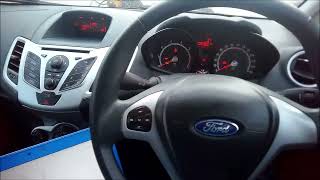
- Odometer display may show dashes '-------' instead of mileage. 🎬 Watch: Diagnosing a flashing immobilizer light and missing odometer data.
- Inability to establish communication with the ECU/PCM using a standard OBD-II scanner when the fault is active.
- Multiple, seemingly unrelated warning lights may illuminate on the dash simultaneously.
- Replacing the starter motor when the engine doesn't crank. The PATS system can disable the starter relay, so the root cause is electronic, not the starter itself.
- Replacing the fuel pump. The PATS system disables the fuel injectors and/or fuel pump, but the pump is rarely the cause of the problem.
Most Likely Causes

- Faulty or Unprogrammed Ignition Key 🔴 High Probability The transponder chip inside the key can be damaged from drops or wear and tear. Using a non-programmed copy will also trigger this fault.
How to confirm: The simplest test is to try starting the vehicle with a known-good spare key. If the spare key works, the original key is faulty. Some owners have reported success after simply replacing the key fob battery, though this is less common for transponder issues.
Typical fix: Replace the faulty key and have the new one professionally programmed to the vehicle. 🎬 Watch: How to program a new key yourself using FORScan. Sometimes just reprogramming the existing key can work.
Est. part cost: $50-$250 for a new key and programming - Weak or Dead Vehicle Battery 🟡 Medium Probability Low system voltage can cause unpredictable electronic glitches in various modules, including the PATS system, preventing proper communication. Loose or corroded battery terminals can also cause this.
How to confirm: Test the vehicle's battery with a multimeter; a healthy battery should read approximately 12.6 volts with the engine off. Check for loose or corroded battery terminals.
Typical fix: Recharge or replace the vehicle battery. Clean and tighten the battery terminals. In some cases, simply disconnecting the battery for several minutes to reset the modules can temporarily resolve the issue.
Est. part cost: $150-$250 for a new battery - Blown Fuse 🟡 Medium Probability
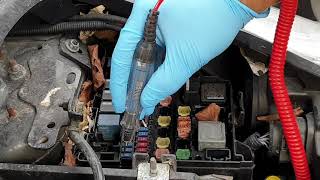
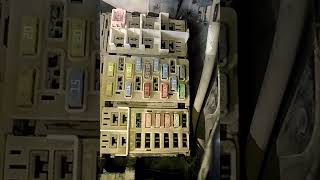
How to confirm: Inspect the fuses in both the engine bay and interior fuse panels (often behind the glove box). Specifically check fuses related to the engine control module (ECM/PCM), instrument panel, and PATS. A visual inspection or a multimeter can be used to check for a blown fuse.
Typical fix: Replace the blown fuse with one of the same amperage rating. If the fuse blows again immediately, it indicates a short circuit that needs further diagnosis.
Est. part cost: $1-$5 - Faulty PATS Transceiver Antenna ⚪ Low Probability
How to confirm: The transceiver is a ring around the ignition lock cylinder. Diagnosis involves checking for power and ground at its connector with the ignition on, and checking for continuity on the signal wires between the transceiver and the instrument cluster. Visual inspection for damage to the ring or its wiring is a first step.
Typical fix: Replace the PATS transceiver antenna ring. This part often does not require reprogramming. OEM Part Number for 2011-2019 Fiesta is 8A6Z-15607-A.
Est. part cost: $50-$150 - Wiring or Connector Issue ⚪ Low Probability Corrosion can build up in connectors, particularly those for the PCM and instrument cluster, interrupting CAN bus communication signals. Wires can also chafe or break within the harness.
How to confirm: Visually inspect wiring harnesses for damage, chafing, or pinching. Disconnect and inspect key connectors (PCM, Instrument Cluster) for corrosion or bent pins. A multimeter can be used to check the CAN bus resistance between pins 6 and 14 at the OBD-II port; a healthy reading is approximately 60 Ohms.
Typical fix: Clean corroded connectors with an electrical contact cleaner. Repair or replace damaged sections of the wiring harness. This can be a complex task requiring wiring diagrams.
Est. part cost: $10-$500 depending on the extent of the damage
Rare But Worth Checking
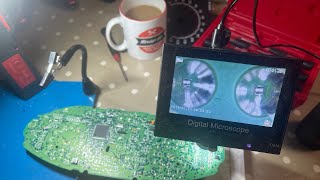
- Instrument Cluster Failure: On these Fiestas, the instrument cluster is an active module in the PATS security system. A communication failure between the cluster and the PCM (often indicated by PATS flash code 16) can cause this issue. The root cause is often cracked or failing solder joints on the main connector of the cluster's circuit board. Tapping on the dash may temporarily restore function. This requires sending the cluster to a specialist for repair or attempting a micro-soldering repair. 🎬 See how to repair faulty instrument cluster solder joints.
- Powertrain Control Module (PCM) Failure: While rare, the PCM itself can fail internally, preventing it from communicating with the rest of the PATS system. This is typically the last item to suspect after all other possibilities have been exhausted. A replacement PCM will require programming to the vehicle by a dealer or specialist.
- Wiring Harness Fretting/Corrosion: On the related Ford Focus platform, a known issue involves fretting or corrosion at plug connections in the wiring harness near the right-hand A-pillar, which can interrupt communication and cause identical symptoms. While not a specific Fiesta TSB, the architectural similarity makes this a plausible, though rare, cause.
Diagnosis Steps

- Verify the symptom: Check for a crank-no-start condition and a rapidly flashing anti-theft light on the dashboard. Note if the light flashes a code (e.g., 1 flash, pause, 6 flashes for code 16).
- Try all available keys. If a spare key works, the primary key is the issue.
- Check the main vehicle battery. Ensure it is fully charged (12.6V+) and the terminals are clean and tight.
- Perform a system reset. Disconnect the negative battery terminal for 10-15 minutes to reset all modules. This can sometimes clear temporary glitches.
- Inspect relevant fuses. Check fuses for the PCM, instrument cluster, and any labeled for PATS or security systems in both interior and engine bay fuse boxes.
- Scan for other codes. Use an OBD-II scanner to see if any communication (U-codes) are present. Note that if the cluster has failed, you may not be able to connect to the PCM at all.
- Check CAN Bus Integrity. With the battery disconnected, measure the resistance between Pin 6 (CAN High) and Pin 14 (CAN Low) on the OBD-II port. It should be approximately 60 Ohms. If it's 120 Ohms or open, there's a break in the wiring or a faulty terminating resistor/module.
- If the instrument cluster is suspected, try gently tapping the top of the dashboard while turning the key. If this temporarily allows the car to start, it strongly suggests bad solder joints inside the cluster.
Parts You'll Likely Need
- Transponder Key — The transponder chip in the key is a common failure point in the PATS system, either through damage or de-programming.
Trusted brands: Motorcraft
OEM price range: $100-$200
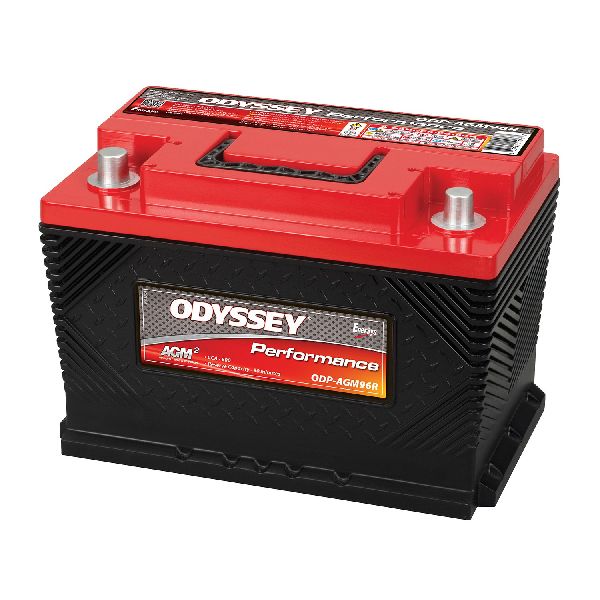
Aftermarket price range: $40-$90 - Vehicle Battery — Low system voltage is a frequent cause of various electronic faults, including PATS communication errors.
Trusted brands: Motorcraft, Interstate, DieHard
OEM price range: $180-$250
Aftermarket price range: $150-$220 - PATS Transceiver Antenna
(OEM #8A6Z-15607-A (Fits 2011-2019 Fiesta))— This ring around the ignition reads the key chip. It can fail, preventing the key signal from being received.
Trusted brands: Motorcraft
OEM price range: $60-$100
Aftermarket price range: $40-$70 - Instrument Cluster Repair Service — If the cause is bad solder joints, sending the original cluster for repair is often more cost-effective than replacement, as it avoids the need for reprogramming.
Trusted brands: ACTRONICS, Total Tronics, ECU Testing
OEM price range: N/A (Repair Service)
Aftermarket price range: $150-$350
Related Codes That Often Appear With This One
- U0100 — Lost Communication With ECM/PCM. This code often appears alongside P1614 when the root cause is a wiring or module failure (like the instrument cluster) that interrupts the CAN bus.
- U0155 — Lost Communication With Instrument Panel Cluster (IPC) Control Module. This strongly points towards a problem with the instrument cluster itself or the network wiring connecting it to the PCM, a classic cause of P1614 on this platform.
- U1900 — CAN Communication Bus Fault. This is a general network error code that frequently accompanies the instrument cluster failure scenario on both the Fiesta and its platform-mate, the Focus.
- B2477 — Module Configuration Failure. This code can indicate that a module (like a replacement PCM or instrument cluster) has not been correctly programmed to the vehicle, causing a PATS mismatch.
Technical Service Bulletins (TSBs) & Recalls
- While no TSB directly links P1614 to a specific repair for the Fiesta, related bulletins highlight the platform's electrical sensitivities. TSB 20-2017 for 2014-2018 Fiestas addresses wiring harness issues behind the dash causing other electrical problems, showing the potential for wiring faults in this area. TSBs for the platform-mate Focus often address the instrument cluster and communication issues that are known to cause P1614-like symptoms on the Fiesta.
Platform-Specific Known Issues
- Instrument Cluster Solder Joint Failure: A well-documented issue, especially on Mk6/Mk7 models, where the solder joints for the main connector on the instrument cluster's PCB crack over time. This breaks the CAN bus communication link between the cluster and the PCM, triggering PATS code 16 and a no-start condition. Owners on forums like FordFiestaClub.com describe a complete inability to communicate with the PCM via OBD-II when this fault is active, and how sending the cluster for repair resolved the issue after other causes were ruled out.
- Owner Experience: Chasing PATS Code 16: A thread on FordFiestaClub.com details an owner's troubleshooting journey for PATS code 16 on a Mk7 Fiesta. The owner checked the battery, fuses, relays, and spare key with no success. An auto electrician found that communication with the OBD port was restored only after removing the instrument cluster. The cluster was sent for repair, where critical points were re-soldered, which is the common fix for this specific failure mode.
- Reddit User Experience with Intermittent Cluster: On the r/FordFiesta subreddit, a user with a 2013 Fiesta described intermittent cluster issues (shaking needles, incorrect fuel level) that would sometimes reset after a few starts. Another user with a 2014 model noted the problem seemed to occur in very cold weather, suspecting the circuit board, and that a dealer firmware update only temporarily fixed it, likely because removing/refitting the cluster moved the bad connection.
Mechanic-Grade Diagnostic Values
- CAN Bus Resistance — expected: Approximately 60 Ohms. Failure: A reading of 120 Ohms indicates an open circuit or a faulty terminating module. A reading near 0 Ohms indicates a short between the CAN High and CAN Low wires.
- PATS Transceiver Module Power Supply — expected: Battery voltage (approx. 12V) on terminal 1, Ground on terminal 2. Failure: No voltage or lack of a solid ground indicates a wiring or power supply fault to the transceiver.
Scan Tool Commands That Help
- Ford IDS (Integrated Diagnostic System): Parameter Reset — This function is required when replacing the Instrument Panel Cluster (IPC) or the Powertrain Control Module (PCM). It synchronizes the security information between the modules, allowing new keys to be programmed.
- Ford IDS (Integrated Diagnostic System): Ignition Key Code Erase — Used to erase all previously programmed keys from the vehicle's memory before programming a new set of keys. A minimum of two keys must be programmed for the vehicle to start.
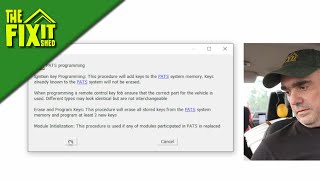
- FORScan: PATS Programming (Erase and Program Keys) — A powerful aftermarket tool that can perform key erasing and programming functions, often avoiding a trip to the dealer. It requires an extended license (a free trial is available) and a specific type of OBD2 adapter.
- Ford IDS or FORScan: Module Initialization / As-Built Data Programming — When installing a new or used instrument cluster, the vehicle's 'As-Built' data (which contains specific configuration information) must be loaded into the replacement module.
Wiring & Ground Locations
- PCM Connector C175B — On the Powertrain Control Module (PCM), located in the engine bay.. This connector contains the High-Speed CAN bus communication wires. Specifically, Pin 19 (WH) is CAN Low and Pin 20 (WH-BU) is CAN High. A fault in these circuits between the PCM and the instrument cluster will cause P1614.
- Ground G111 — On the lower left rear of the engine (for 1.6L Turbo models).. This is a major engine-area ground point. A loose or corroded connection here can cause a variety of electrical issues, including communication faults between modules.
- Ground G200 — Located in the passenger compartment, often behind a kick panel or under the dash.. This is a primary ground for interior electronics, including potentially the instrument cluster. A poor connection can lead to intermittent cluster operation and communication codes.
- Grounds GD187 — Located on the left shock tower bracket in the engine bay.. These are main chassis grounds for the PCM. Pins 47 and 48 of connector C175B connect to these grounds. A fault here directly impacts the PCM's ability to function and communicate.
Real Owner Repair Stories
- YouTube video from 'Pine Hollow Auto Diagnostics' (2006 Nissan 350Z (demonstrates a similar NATS system logic)) — Crank no-start, P1610 and P1614 codes stored.
❌ Tried (didn't work) The dealer recommended replacing the Body Control Module (BCM).
✅ What actually fixed it The actual fault was found in the wiring to the NATS antenna amplifier (transceiver ring) at the ignition switch. The power supply wire was corroded and broken inside the insulation, causing a loss of communication with the key. Repairing the wire resolved the issue without replacing the BCM. - YouTube video from 'Starting problem of nissan micra petrol' (Nissan Micra (demonstrates a similar immobilizer issue)) — Crank no-start, flashing immobilizer light, codes P1610 and P1614.
❌ Tried (didn't work) Checking fuses and spark.
✅ What actually fixed it The immobilizer module had water intrusion and corrosion on the circuit board. Cleaning the corrosion from the board and connector with petrol restored function and allowed the car to start.
OEM Part Supersession History
BE8Z-10849-CA, CE8Z-10849-CA, BE8Z-10849-LB→DE8Z-10849-CA— Part revision and update for 2013 model year instrument clusters.
Heads up: Clusters are often specific to transmission type (manual vs. auto) and trim level ('High' vs 'Low' series). The wrong cluster will not function correctly and will prevent the car from starting due to PATS mismatch.4S6F-10849-xx (multiple suffixes like EA, AB, EC)→Later revisions with different suffix letters (e.g., JA, GA, LC)— Rolling updates and revisions for the Mk5/Mk6 (2002-2008) instrument clusters.
Heads up: These earlier clusters are also not directly interchangeable. A replacement must be reprogrammed or the original EEPROM data must be cloned to the donor unit.
Model Year Variations Within This Range
- 2007-onward: Ford introduced 'Coded PATS' around 2007. This system requires a security access procedure with a timed delay (often 10 minutes) before scan tools can perform functions like key programming or parameter resets. Earlier systems were less complex.
- 2011-2017: On these Mk6/Mk7 models, the instrument cluster is definitively the PATS control module. Replacing it is not plug-and-play and requires a 'Parameter Reset' to sync with the PCM and subsequent key programming.
Diagnostic Flowchart
Used vs. New Parts: Buying Guide for This Vehicle
When a used part is the smart pick: A used instrument cluster is a cost-effective option ONLY if you have access to a specialist who can either clone the data from your original cluster to the used one, or a technician with a high-level scan tool (like Ford IDS or a capable FORScan setup) to perform the necessary parameter reset and key programming.
Donor-vehicle mileage cap: roughly under 150000 miles for the part to have meaningful remaining life.
What to inspect on the donor part:
- Verify the part number EXACTLY matches your original, or is a known compatible replacement. Pay attention to details for 'High' vs 'Low' series and transmission type.
- Inspect the main electrical connector on the donor cluster for any signs of corrosion, bent pins, or physical damage.
- Ask the seller if the donor vehicle had any electrical issues or warning lights on the dash.
- Ensure the clear plastic lens is not cracked or deeply scratched.
OEM-only on this vehicle (don't cheap out):
- Powertrain Control Module (PCM): While used PCMs are available, they require specialized programming to the vehicle's VIN and security system. The complexity and potential for incompatibility make a new or professionally remanufactured and programmed OEM unit a much safer bet.
- Ignition Keys: Avoid used keys. The transponder chips are one-time-programmable to a vehicle. Always buy new key blanks and have them cut and programmed professionally.
Aftermarket brands forum-validated for this vehicle:
- FORScan (Software): Widely regarded in the DIY community as a near-dealership-level tool for diagnostics and programming on Ford vehicles when paired with a quality OBD2 adapter.
Brands owners have reported issues with on this vehicle:
- Cheap, generic ELM327 OBD2 adapters: For PATS programming with FORScan, a generic $10 adapter is unreliable and may fail during the procedure. A quality adapter with an automatic HS/MS-CAN switch is recommended.
Real Owner Stories
Aggregated from forums and TSBs cited above. Mileages and costs reflect what owners reported in those sources.
Ford Fiesta Mk7
Symptoms: The car would crank but not start and was flashing PATS code 16. The battery, fuses, relays, and spare key were all checked and confirmed to be good. An OBD-II scanner was unable to establish communication with the vehicle's computer.
What fixed it: The instrument cluster was removed from the vehicle and sent to a specialist for repair. The repair involved re-soldering critical solder joints on the cluster's main connector, which restored communication and resolved the no-start issue.
Source hint: Ford Fiesta Club - Mk7 - Mega Problem Immobiliser - PATS 16 Error
2013 Ford Fiesta
Symptoms: Experienced intermittent instrument cluster issues, such as shaking needles and an incorrect fuel level display. The problems would sometimes go away on their own after a few start cycles.
What fixed it: A dealer firmware update only provided a temporary fix to the problem.
Source hint: Reddit r/FordFiesta
2014 Ford Fiesta
Symptoms: The owner noted that the instrument cluster problems seemed to occur specifically during very cold weather.
What fixed it: No permanent fix was reported, but the owner suspected a bad connection on the circuit board. A firmware update was only a temporary solution, likely because the act of removing and reinstalling the cluster for the update temporarily re-established the faulty connection.
Source hint: Reddit r/FordFiesta
Related OBD-II Codes
Frequently Asked Questions
My Fiesta's anti-theft light is flashing a 1-6 pattern. What does this mean?
How can I tell if the common instrument cluster failure is the cause of my P1614 code?
I tried my spare key and the car still won't start. What should I check next?
My OBD-II scanner won't connect to my Fiesta, and I have a flashing theft light. Are these problems related?
Is there an official Ford TSB for this specific P1614 no-start problem?
If I need to replace the PATS antenna on my 2013 Fiesta, what is the part number?
Helpful Videos
We Have This Part in Stock

The information in this article is provided for general reference and educational purposes only. Vehicle specifications, procedures, and part compatibility can vary by production date, trim level, and region. Always consult your vehicle's factory service manual and verify part numbers before purchasing or performing repairs. Safety-critical components such as airbags, seat belts, and braking systems should be installed by a qualified professional.
- Ford Fiesta:
- 🎬 Helpful Videos
- 🛍️ Shop This Part
- What's Unique About the 2005-2018 Ford Fiesta
- Symptoms You May Notice
- Most Likely Causes
- Rare But Worth Checking
- Diagnosis Steps
- Parts You'll Likely Need
- Related Codes That Often Appear With This One
- Technical Service Bulletins (TSBs) & Recalls
- Platform-Specific Known Issues
- Mechanic-Grade Diagnostic Values
- Scan Tool Commands That Help
- Wiring & Ground Locations
- Real Owner Repair Stories
- OEM Part Supersession History
- Model Year Variations Within This Range
- Diagnostic Flowchart
- Used vs. New Parts: Buying Guide for This Vehicle
- Real Owner Stories
- Ford Fiesta Mk7
- 2013 Ford Fiesta
- 2014 Ford Fiesta
- Related OBD-II Codes
- Frequently Asked Questions
- 🎟️ Get 5% Off