

P1614 on 2012-2020 Chevrolet Sonic: Immobilizer Failure Causes and Fixes
P1614 on a Chevy Sonic almost always means there's a problem with the anti-theft system, causing a no-start condition. The most common fixes are replacing a dead key fob battery, using a spare key, or addressing a weak main car battery before suspecting more complex component failures like the BCM or immobilizer antenna.
- P1614 on a Sonic means your car's anti-theft system has been triggered, preventing it from starting.
- Always start with the simplest fixes: try your spare key and replace the battery in your primary key fob.
- Do not overlook the main car battery; low voltage is a known cause of communication errors with the BCM.
- This is not typically a DIY-friendly repair beyond the key and battery checks, as it often requires dealer-level scan tools for diagnosis and programming.
- Do not replace expensive parts like the starter or fuel pump until the immobilizer issue is properly diagnosed and ruled out.
What's Unique About the 2012-2020 Chevrolet Sonic
The Chevrolet Sonic, like many modern GM vehicles, integrates the immobilizer function heavily into the Body Control Module (BCM). This module acts as a central hub for numerous vehicle functions, not just anti-theft. Consequently, issues that seem unrelated, like low vehicle voltage or software glitches, can disrupt the BCM and trigger a P1614 code. The system is sensitive to communication errors on the serial data bus, specifically the LIN (Local Interconnect Network) bus between the immobilizer antenna and the BCM, making a proper diagnostic sequence crucial to avoid replacing the wrong parts.
Symptoms You May Notice
- Engine cranks but does not start
- Engine starts and immediately stalls
- Security indicator light (car with a lock symbol) is flashing or solidly illuminated on the dashboard
- Remote key fob functions (lock/unlock) may not work
- No response when turning the key or pressing the start button (just a click or complete silence)
- Message on Driver Information Center (DIC) such as 'Service Theft Deterrent System'
- Replacing the starter motor when the engine cranks but won't start.
- Replacing the fuel pump without verifying that the immobilizer system is what's disabling it.
- Replacing the ECM when the BCM or key is the actual point of failure.
Most Likely Causes
- Weak or Dead Key Fob Battery 🔴 High Probability The transponder chip inside the key requires power to transmit its code. A weak fob battery is the most common and simplest point of failure.
How to confirm: Try using the spare key. If the car starts with the spare, the issue is with the primary key. You can also try the emergency start procedure (placing the fob in a specific location like the cupholder or a pocket in the center console for push-to-start models, as described in the owner's manual). If the key fob battery is weak, the car may display a 'No Remote Detected' message.
Typical fix: Replace the battery in the key fob (typically a CR2032 coin cell).
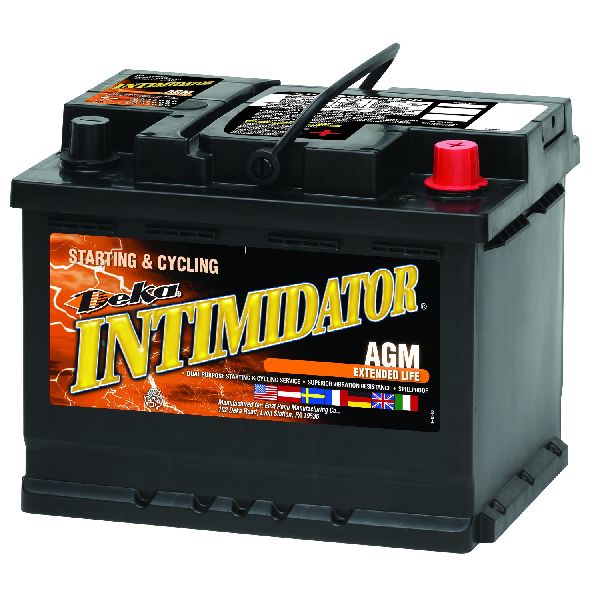
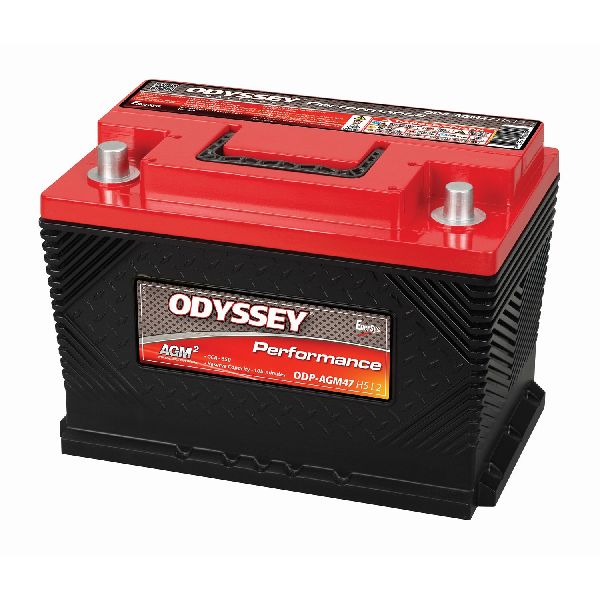
Est. part cost: $1-$5 - Weak or Faulty Main Vehicle Battery 🟡 Medium Probability Low system voltage can cause unpredictable behavior in various electronic modules, including the BCM. The immobilizer system is sensitive to voltage drops during cranking, which can corrupt the communication handshake.
How to confirm: Test the battery voltage with a multimeter. A healthy battery should read approximately 12.6V at rest and should not drop below 10V while cranking. If the car starts with a jump-start but fails again later, the battery or charging system is a likely culprit.
Typical fix: Recharge or replace the 12V vehicle battery.
Est. part cost: $150-$250 - Damaged or De-synchronized Key Transponder 🟡 Medium Probability Keys can be damaged by being dropped or exposed to water, corrupting the internal transponder chip. They can also lose synchronization with the vehicle, especially after battery-related issues.
How to confirm: If a new key fob battery doesn't solve the issue and the spare key works, the original key's transponder is likely faulty. A locksmith or dealer can test the key's signal. If no keys work, a re-learning procedure may be needed.
Typical fix: The key needs to be replaced and programmed to the vehicle using specialized equipment. Sometimes, a simple 10-minute key relearn procedure (turning the key to 'ON' for 10 minutes, off, and then on again) can work.
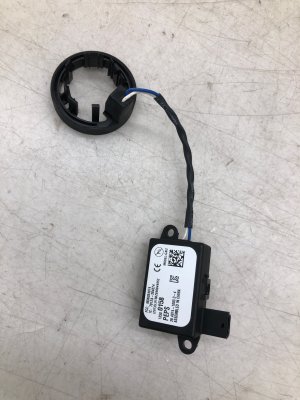
Est. part cost: $75-$250 - Faulty Immobilizer Antenna/Reader ⚪ Low Probability This component is the ring around the ignition cylinder (or a sensor in the center console) that reads the key chip. It can fail electronically over time, creating an open circuit or weak signal.
How to confirm: This requires professional diagnosis with a scan tool to see if the BCM is receiving any signal from the reader when the key is present. The part itself is often called an 'Immobilizer Transceiver Antenna' or 'Theft Deterrent Module'.
Typical fix: Replace the immobilizer antenna module. This part is located on the steering column, around the ignition lock cylinder. The OEM part number is 13523300.
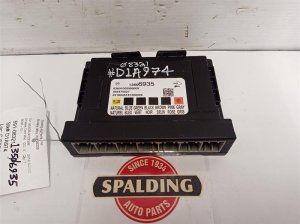
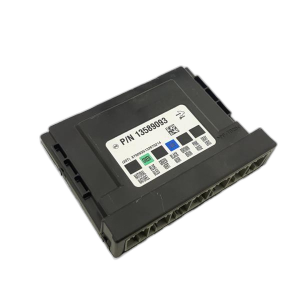
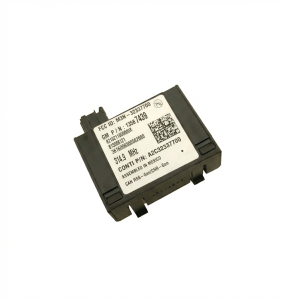
Est. part cost: $40-$100 - Faulty Body Control Module (BCM) ⚪ Low Probability The BCM is the brain of the system and can fail due to internal faults, software corruption, or water damage. On the Sonic, the BCM is located under the dashboard on the driver's side, near the fuse panel.
How to confirm: A diagnostic scan tool will show a lack of communication with the BCM or specific internal BCM fault codes. This is a last resort after ruling out other causes. A user on a Reddit forum noted that a dealer replaced their BCM for an unrelated issue, highlighting that it's a complex and expensive repair that requires programming.
Typical fix: The BCM may need to be reprogrammed by a dealer. In most cases, it must be replaced with a new unit (used ones are often VIN-locked) and programmed with the vehicle's specific information and key data.
Est. part cost: $200-$500
Rare But Worth Checking
- Chafed Wiring Harness: GM issued Technical Service Bulletin (TSB) #16-NA-118 for some Sonics regarding an engine harness that could chafe on an ECM stud, potentially causing a no-start condition. While not directly citing P1614, this type of wiring fault could interrupt the serial data communication between the BCM and ECM, triggering the code.
- Faulty Engine Control Module (ECM): While possible, an ECM failure is much less common than issues with the key, battery, or BCM. This should only be considered after all other components in the immobilizer chain have been thoroughly tested.
Diagnosis Steps
- Check the dashboard for a flashing or solid security light (car with a lock symbol). This is a primary indicator of an immobilizer fault.
- Try to start the car with your spare key. If it works, the problem is isolated to your primary key (battery or transponder).
- Replace the battery in the non-working key fob (usually a CR2032).
- If neither key works, inspect and test the main vehicle battery. Ensure it has at least 12.4 volts and clean any corrosion from the terminals. Attempt a jump start.
- Visually inspect the fuses related to the BCM and ignition system in the interior and under-hood fuse boxes.
- If the vehicle has a traditional ignition, inspect the wiring around the steering column for any visible damage or loose connectors near the immobilizer antenna ring.
- Connect a professional-grade OBD-II scanner capable of communicating with the Body Control Module (BCM).
- Check for communication with the BCM and ECM. Note any other 'U' (network) codes, especially U0140 (Lost Comms with BCM).
- Use the scanner to monitor the immobilizer data PIDs. Check the key status to see if it changes from 'Not Recognized' to 'Recognized' when the key is inserted/present. If it doesn't, the issue is likely the key or the immobilizer antenna.
- If the key is recognized but the code persists, the issue may be the BCM itself or the serial data wiring between the BCM and ECM. A wiring diagram and multimeter would be needed to check for continuity and shorts on the communication bus.
Parts You'll Likely Need
- Key Fob Battery
(OEM #CR2032)— This is the most frequent and simplest cause of the key's transponder failing to communicate.
Trusted brands: Energizer, Duracell
OEM price range: $5-$10
Aftermarket price range: $1-$5 - Body Control Module (BCM)
(OEM #13506936, 13587704, 13594692)— The BCM is the central computer for the immobilizer system. If it fails, the security handshake cannot be completed. Replacement requires professional programming with dealer tools.
Trusted brands: ACDelco (OEM)
OEM price range: $250-$400
Aftermarket price range: $150-$300 (Remanufactured) - Immobilizer Antenna / Transponder Reader
(OEM #13523300)— This coil reads the transponder chip in the key. A failure in the coil or its wiring to the BCM will prevent the key from being recognized.
Trusted brands: ACDelco (OEM)
OEM price range: $40-$100
Aftermarket price range: $30-$70
Related Codes That Often Appear With This One
- U0100 — Lost Communication With ECM/PCM. This code often appears with P1614 as it indicates a broader network communication problem, which is the root cause of the immobilizer failure.
- U0140 — Lost Communication With Body Control Module. This code points directly at a BCM communication failure, which is central to the P1614 fault.
- P1610 / P1612 — These are also immobilizer-related codes found on GM and other vehicles, often pointing to a 'Lock Mode' or incorrect key signal being received, reinforcing a problem within the anti-theft system.
Technical Service Bulletins (TSBs) & Recalls
- TSB #16-NA-118: Addresses a potential for the engine wiring harness to chafe on an ECM mounting stud, which could cause various electrical issues including a no-start. While not specific to P1614, it's a relevant wiring concern.
- TSB #PIP5197: Relates to the diagnosis of PCV issues on the 1.4L turbo engine, a common platform problem.
Mechanic-Grade Diagnostic Values
- LIN Bus Voltage (Immobilizer Antenna to BCM) — expected: When communicating, the voltage should toggle between a minimum of ~1V and a maximum of ~11-12V (or 1V below battery system voltage). At rest, it should be a steady 11-12V.. Failure: A steady voltage that is not near 12V, or a lack of toggling when the key is cycled, indicates a communication breakdown on the wire or a fault in the BCM or antenna module.
- LIN Bus Circuit End-to-End Resistance — expected: Less than 2.0 Ohms.. Failure: A reading of 2.0 Ohms or greater indicates high resistance or an open in the circuit that must be repaired.
- LIN Bus Circuit Resistance to Ground — expected: Infinite resistance (OL on most multimeters).. Failure: Any reading less than infinite resistance indicates a short to ground in the LIN bus wiring.
Scan Tool Commands That Help
- GDS2 (GM Dealer Tool): Immobilizer Data Display — To monitor the live status of the key, such as 'Key in Ignition', 'Transponder State', and 'Key Status' (e.g., Recognized, Not Recognized). This helps determine if the BCM is seeing the key at all.
- GDS2 / SPS (Service Programming System): Immobilizer Learn / BCM Programming — This is required after replacing the BCM, immobilizer antenna, or keys. The 'Immobilizer Learn' function within the BCM setup menu guides the technician through programming new keys to the vehicle.
Wiring & Ground Locations
- Immobilizer LIN Bus Wire — Green/Purple wire at the BCM, located in the green 25-pin plug (X5), pin 2.. This is the specific serial data wire that carries the key's transponder information from the immobilizer antenna to the BCM. A fault on this single wire will cause a P1614.
- G103 — At the left rear of the engine compartment on the cowl, above the brake booster.. This is a primary ground location for the Body Control Module (BCM). A poor connection here can cause a host of BCM-related issues, including immobilizer faults.
- G307 — Located in the left kick panel area inside the cabin.. This is an interior ground point. Verifying all cabin grounds are clean and tight is crucial, as the BCM and related components are located inside.
- BCM Connectors — The BCM is under the driver's side dash and has multiple large connectors (often color-coded white, green, blue, pink).. All immobilizer-related circuits (power, ground, and LIN bus) terminate at these connectors. Checking for pushed-out pins or corrosion here is a key diagnostic step.
OEM Part Supersession History
13506936→13587704— Standard part revision by the manufacturer.
Heads up: These BCMs are VIN-locked. A used module, regardless of part number, cannot be reprogrammed by a dealer's GDS2/SPS tools. The EEPROM chip must be physically swapped from the original BCM to the replacement, or the chip's data must be cloned using specialized tools.13500157→13523300— Standard part revision by the manufacturer.
Model Year Variations Within This Range
- 2017-2020 (Facelift models with Push-Button Start): While the primary immobilizer antenna for starting the vehicle is in the emergency slot (often in the center console or cupholder area), these models have additional antennas for the keyless entry system. A fault with one of these antennas (e.g., behind a bumper) could cause issues with remote functions but typically sets other codes. The P1614 remains focused on the communication between the BCM and the specific antenna used for vehicle start authorization.
Diagnostic Flowchart
Other Known Issues on This Vehicle
Issues unrelated to this code that are worth knowing about as an owner of this generation:
- PCV System Failure (1.4L Turbo) 🔴 High — Very common. A failed PCV check valve in the intake manifold or a ruptured diaphragm in the valve cover can cause oil consumption, rough idle, and lean codes (P0171). (Ref: GM TSB PIP5197 outlines diagnostic procedures for this issue.)
- Coolant Leaks from Plastic Housings 🟠 Medium — Common failure point. The plastic thermostat housing and water outlet are prone to cracking and leaking over time.
- Water Pump Leaks 🟠 Medium — Frequently reported, especially on earlier 2012-2013 models with the 1.4L engine. An extended coverage TSB was issued for this. (Ref: A TSB was issued extending coverage for water pump replacement up to 150,000 miles for some vehicles.)
- Oil Leaks (Valve Cover, Oil Cooler) 🟡 Low — Valve cover gaskets and oil cooler seals are common sources of oil leaks.
- Timing Belt Replacement (1.8L Engine) 🔴 High — This is a required maintenance item, not a failure. The belt must be replaced at the recommended interval (around 97,500 miles) to prevent catastrophic engine failure.
Used vs. New Parts: Buying Guide for This Vehicle
When a used part is the smart pick: A used immobilizer antenna (Theft Deterrent Module P/N 13523300) is a good option as it is a simple coil and does not require programming. A used key can sometimes be reprogrammed to the vehicle by a locksmith or dealer, but success is not guaranteed. A used BCM is only a viable option for advanced DIYers or specialty shops.
Donor-vehicle mileage cap: roughly under 80000 miles for the part to have meaningful remaining life.
What to inspect on the donor part:
- For a BCM, verify the part number is an exact match.
- Inspect all connector pins on the BCM for any signs of corrosion or damage.
- For an immobilizer antenna, ensure the wiring pigtail is intact with no cuts or frays.
OEM-only on this vehicle (don't cheap out):
- Body Control Module (BCM): While a used OEM module can be made to work via EEPROM cloning, aftermarket BCMs are not available or recommended. New OEM is the only reliable, programmable option for most shops.
Brands owners have reported issues with on this vehicle:
- Generic unbranded key fobs from online marketplaces may have weak transponder chips that fail to program or lose synchronization quickly.
Real Owner Stories
Aggregated from forums and TSBs cited above. Mileages and costs reflect what owners reported in those sources.
2016 Chevrolet Sonic 1.8L Automatic
Symptoms: The dealer stated the BCM needed replacement for an issue, highlighting the complexity of the repair.
What fixed it: Replacement and programming of the Body Control Module (BCM).
Source hint: Reddit r/ChevySonic thread '16 sonic 1.8 auto dealer states bcm needs'
Related OBD-II Codes
Frequently Asked Questions
Where is the Body Control Module (BCM) located on my Chevrolet Sonic if I need to inspect it for P1614?
Can a weak key fob battery really cause a P1614 no-start on my Sonic?
Is there a specific TSB for wiring issues that might cause electrical faults on my Sonic?
What is the 'emergency start procedure' for a Sonic with a weak key fob battery?
If I need to replace the immobilizer antenna, what is the part number for the Sonic?
Can I use a used BCM from another Sonic to fix this code?
Used OEM Parts in Stock


New Aftermarket Parts Available


The information in this article is provided for general reference and educational purposes only. Vehicle specifications, procedures, and part compatibility can vary by production date, trim level, and region. Always consult your vehicle's factory service manual and verify part numbers before purchasing or performing repairs. Safety-critical components such as airbags, seat belts, and braking systems should be installed by a qualified professional.
- Chevrolet Sonic:
- 🛍️ Shop This Part
- What's Unique About the 2012-2020 Chevrolet Sonic
- Symptoms You May Notice
- Most Likely Causes
- Rare But Worth Checking
- Diagnosis Steps
- Parts You'll Likely Need
- Related Codes That Often Appear With This One
- Technical Service Bulletins (TSBs) & Recalls
- Mechanic-Grade Diagnostic Values
- Scan Tool Commands That Help
- Wiring & Ground Locations
- OEM Part Supersession History
- Model Year Variations Within This Range
- Diagnostic Flowchart
- Other Known Issues on This Vehicle
- Used vs. New Parts: Buying Guide for This Vehicle
- Real Owner Stories
- 2016 Chevrolet Sonic 1.8L Automatic
- Related OBD-II Codes
- Frequently Asked Questions
- 🎟️ Get 5% Off