

P1614 on 1999-2014 Chevrolet Silverado: Immobilizer Failure Causes and Fixes
P1614 on a Silverado means the truck's anti-theft system doesn't recognize the key, causing a no-start or start-and-stall condition. The most common cause is a worn-out ignition lock cylinder with its internal Passlock sensor, especially on 1999-2007 models. Replacing the cylinder and performing a 30-minute key relearn procedure often fixes it. For later models, a faulty key transponder can also be the cause.
- P1614 on your Silverado is an anti-theft system error, not a mechanical engine problem.
- The most common symptom is the engine starting and immediately dying, accompanied by a flashing 'Security' light.
- For 1999-2007 trucks, the problem is almost always the ignition lock cylinder's internal Passlock sensor or the wiring to it.
- Always try the 30-minute relearn procedure before and after replacing parts.
- A weak battery can cause this code and prevent the relearn procedure from working correctly.
What's Unique About the 1999-2014 Chevrolet Silverado
Unlike many other vehicles that use a transponder chip in the key for security, many Silverados in this era (especially the 1999-2007 GMT800 models) use the GM Passlock I or II system. This system relies on a sensor with a magnet within the ignition lock cylinder itself to read the rotation of the key, not a chip in the key. This design makes the ignition lock cylinder and its internal wiring a very common point of failure, leading to this code. Later GMT900 models (2007.5-2014) are more likely to use the Passkey III (PK3) system, which does incorporate a transponder chip in the key.
Generation note: This range covers two main generations: the GMT800 (1999-2007) and the GMT900 (2007-2014). The GMT800 trucks primarily use the Passlock I and II systems, where the sensor is in the ignition lock cylinder. The GMT900 trucks are more likely to use the Passkey III (PK3) system, which uses a transponder chip in the key itself. While the symptoms are the same, the diagnosis for a GMT900 may also include a faulty key, whereas for a GMT800, the focus is almost always on the ignition cylinder and its associated wiring.
Symptoms You May Notice
- Engine cranks but will not start
- Engine starts and then immediately shuts off
- Flashing or constantly illuminated 'Security' light on the dashboard
- No-crank condition in some cases (after multiple failed start attempts)
- Check Engine Light is on
- Replacing the fuel pump: A start-and-stall symptom is often mistaken for a failing fuel pump, but the Passlock system is designed to cut fuel, mimicking this symptom.
- Replacing the starter: If the vehicle doesn't crank, the starter might be blamed, but some versions of the theft system can also disable the starter relay after repeated failed attempts.
- Replacing the ECM: The Engine Control Module is rarely the cause of this specific code. The fault almost always lies between the key/cylinder and the Body Control Module (BCM).
Most Likely Causes
- Worn or Faulty Ignition Lock Cylinder (Passlock Sensor) 🔴 High Probability The Passlock sensor is integrated into the ignition lock cylinder. After thousands of key cycles, the internal contacts and magnets wear out, leading to an incorrect resistance reading being sent to the BCM. This is the most cited failure point in owner forums for GMT800 trucks.
How to confirm: Observe the security light. If it flashes when the key is turned, it indicates a security system fault. Diagnosis involves measuring the resistance value from the yellow signal wire of the Passlock sensor harness. The value should be stable when the key is turned to 'ON'. A fluctuating or open reading indicates a bad sensor.
Typical fix: Replace the entire ignition lock cylinder. After replacement, a '30-Minute Security Relearn Procedure' must be performed to sync the new sensor with the vehicle's BCM. Some owners opt to bypass the system entirely by measuring the resistance of the old sensor (when it works) and soldering a fixed resistor of the same value into the circuit. 🎬 Watch: How to bypass the Passlock 2 system
Est. part cost: $40-$150 - Damaged Wiring in Steering Column 🟡 Medium Probability The three thin wires (typically yellow, orange/black, and red/white) leading from the ignition lock cylinder down the steering column are susceptible to breaking or chafing over time due to the tilting and turning of the steering wheel.
How to confirm: A visual inspection of the wiring harness under the steering column covers may reveal damage. A continuity test with a multimeter from the ignition switch connector to the BCM connector can confirm a broken wire. Wiggling the wires while monitoring the security light or a multimeter reading can also pinpoint an intermittent break.
Typical fix: Repair the specific broken wire(s) or replace the ignition switch pigtail connector.
Est. part cost: $15-$50 - Faulty or Damaged Key (Later Models) ⚪ Low Probability On later GMT900 models with the Passkey III (PK3) system, the transponder chip embedded in the key head can be damaged from being dropped, getting wet, or from electronic failure.
How to confirm: Try starting the vehicle with a spare key. If the spare key works reliably, the original key is the problem. This is a primary diagnostic step for any immobilizer issue.
Typical fix: A new key must be cut and programmed to the vehicle by a locksmith or dealership with the appropriate tools.
Est. part cost: $70-$200
Rare But Worth Checking
- Failing Body Control Module (BCM): While less common, the BCM is the brain of the Passlock system. Internal faults can prevent it from correctly interpreting the signal from the key or ignition cylinder. This is usually diagnosed after all other components have been verified as working. Water intrusion into the cab can sometimes damage the BCM.
- Low Battery Voltage: A weak or failing battery can cause various electronic modules, including the BCM and ECM, to behave erratically and may prevent the security relearn procedure from completing successfully. Always ensure the battery has a full charge (above 12.4V) before diagnosing immobilizer issues.
Diagnosis Steps
- Check the 'Security' light on the dashboard. Note if it's off, on solid, or flashing when you try to start the truck. A flashing light is the key indicator of a Passlock fault.
- If you have a spare key, try it. This is most relevant for 2007+ models with chipped keys (Passkey III).
- Check the battery voltage. Ensure it is fully charged (above 12.4V) before proceeding with diagnostics.
- Attempt the 30-Minute Security Relearn Procedure. This can sometimes resolve temporary glitches without replacing parts. The procedure is: 1. Turn key to ON (not start). 2. Wait for the Security light to turn off (approx. 10 minutes). 3. Turn key to OFF for 5 seconds. 4. Repeat steps 1-3 two more times for a total of three 10-minute cycles. 5. The vehicle should start on the next attempt.
- Inspect the wiring harness coming from the ignition lock cylinder for any visible damage, chafing, or breaks, particularly where it flexes with the tilt steering column.
- Using a multimeter, check for correct voltages at the Passlock sensor connector. You should have a 12V reference, a ground, and a 5V signal wire that changes when the key is turned.
- If the relearn procedure fails and wiring looks good, the most likely culprit is the ignition lock cylinder/Passlock sensor itself.
- If a new ignition cylinder does not solve the problem, further diagnostics on the BCM and its wiring connections are necessary.
Parts You'll Likely Need
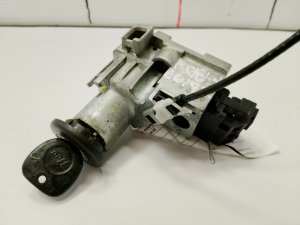
- Ignition Lock Cylinder with Passlock Sensor
(OEM #ACDelco D1462G (cross-references to GM 15795321))— This is the most common failure point for the Passlock system used in these trucks, as the sensor wears out over time.
Trusted brands: ACDelco, Standard Motor Products, Dorman
OEM price range: $80-$150
Aftermarket price range: $40-$90
Related Codes That Often Appear With This One
- B2960 — This is another common GM-specific code that points directly to an issue with the Passlock sensor data being incorrect or invalid.
- P1626 — This code indicates the Theft Deterrent Fuel Enable Signal was not received by the PCM from the BCM, which is a direct result of the P1614 fault.
Platform-Specific Known Issues
- The GM Passlock system is known for being sensitive and a common source of no-start issues on this platform. Many owners experience this failure as the truck ages.
- A DIY-friendly 30-minute relearn procedure can often reset the system after a part replacement, avoiding a trip to the dealer. The procedure involves turning the key to 'ON' for 10 minutes, then 'OFF', and repeating this two more times for a total of three cycles.
- Some owners become so frustrated with recurring Passlock issues that they opt for a permanent bypass, either by soldering in a resistor that matches the sensor's value or by using a dedicated aftermarket bypass module.
Mechanic-Grade Diagnostic Values
- Passlock Sensor Signal Wire Voltage (Yellow Wire) — expected: 4.7-5.0V with key in IGN 0 (Off/ACC), dropping to a specific, stable voltage between 0.5V and 4.5V when the key is turned to IGN 1 (RUN) or CRANK.. Failure: Voltage does not drop, drops to 0V, or fluctuates wildly when the key is turned. This indicates a failed sensor or bad wiring.
- Passlock Sensor Power Supply Voltage (Red/White or White wire to Black wire) — expected: 9.0V or higher with key in ON or CRANK position.. Failure: Voltage below 9.0V indicates a power supply issue from the BCM or a bad ground connection.
- Passlock Sensor Resistance (for bypass) — expected: A fixed value between 392 Ohms and 11.8 K Ohms. There are 10-15 possible values. The correct value must be measured from a working sensor before it fails completely.. Failure: An open circuit (infinite resistance) or a fluctuating resistance reading from the sensor indicates failure.
Scan Tool Commands That Help
- Tech 2 / GDS2: BCM Special Functions > VTD Relearn / Security Relearn — While the 30-minute manual relearn is standard, a factory scan tool can initiate and monitor the security relearn process. This is particularly useful to confirm that the BCM is communicating and entering learn mode, which can help differentiate a component failure from a procedural error during the manual relearn.
Wiring & Ground Locations
- Body Control Module (BCM) - GMT800 (1999-2007 Classic) — Located under the driver's side of the dashboard, often near or integrated with the interior fuse panel.. The BCM is the control center for the Passlock system. It receives the signal from the ignition cylinder sensor and sends the fuel enable signal to the ECM. Poor connections, corrosion, or internal failure at the BCM can cause P1614.
- Body Control Module (BCM) - GMT900 (2007.5-2014) — Behind the driver-side lower dashboard panel, to the left of the steering column, often integrated with the fuse block area. It is physically larger than the GMT800 BCM.. Similar to the GMT800, the BCM manages the security system (Passkey III in this case). All wiring from the key's transponder reader routes to the BCM.
- Passlock Sensor Wiring Harness — A small 3-wire connector on the ignition lock cylinder housing inside the steering column.. This is the primary point for electrical testing. The typical wire colors are Yellow (Signal), Orange/Black or Black (Ground), and Red/White or White (Power). These wires are thin and can break from repeated use of a tilt steering wheel.
Real Owner Repair Stories
- YouTube Commenter on '99-07 Chevy Silverado No start Passlock 3 bypass' (2003 GMC (platform equivalent)) — Start and stall, no communication with any modules via diagnostic tool, dome lights, power locks/windows, and gauges were not working.
❌ Tried (didn't work) Connecting a diagnostic tool (failed to communicate)
✅ What actually fixed it The truck had an aftermarket radio with an interface module. Unplugging the radio interface module immediately restored all functions and allowed the truck to start. The faulty interface was interfering with the vehicle's data bus. - Edmunds Forums user (Chevrolet Silverado (year not specified, likely GMT800)) — Intermittent no-start, dead electronics. After a battery replacement, the truck was completely dead.
❌ Tried (didn't work) Replacing the battery, Checking all fuses and grounds
✅ What actually fixed it A mechanic traced the problem to the BCM. After a battery disconnect, the BCM would lose its programming and prevent starting. A temporary fix was to perform a BCM restart procedure (similar to the 30-min relearn). The final diagnosis was a faulty BCM that needed replacement.
OEM Part Supersession History
15795321→ACDelco D1462G— This is the standard GM/ACDelco part number progression for the ignition lock cylinder assembly that fits many of these Silverado models.
Model Year Variations Within This Range
- 1999-2002: These earlier GMT800 models often used the Passlock I system, where the security signal was sent to the Instrument Panel Cluster (IPC) first, which then relayed the fuel-enable message to the PCM.
- 2003-2007 (Classic): These later GMT800 models primarily use the Passlock II system. The signal from the ignition cylinder is sent directly to the Body Control Module (BCM), which then communicates with the PCM. This makes the BCM a more central component in the diagnosis.
- 2007.5-2014: These GMT900 trucks use the Passkey III (PK3) system, which is a true transponder-based system. The fault is more likely to be the transponder chip in the key itself or the transponder reader coil around the ignition switch, rather than the mechanical lock cylinder.
Diagnostic Flowchart
Other Known Issues on This Vehicle
Issues unrelated to this code that are worth knowing about as an owner of this generation:
- Instrument Cluster Stepper Motor Failure 🟠 Medium — Extremely common on 2003-2006 GMT800 models. Gauges (speedometer, tach, fuel, etc.) become erratic, get stuck, or stop working entirely. (Ref: GM offered a special coverage adjustment, but it has long since expired for most vehicles.)
- Rusted/Corroded Brake Lines 🔴 High — Very common on GMT800 trucks (1999-2007) used in rust belt states, leading to potential brake fluid leaks and loss of braking. (Ref: NHTSA investigated (EA11001) but did not issue a recall, classifying it as a maintenance issue exacerbated by road salt.)
- Active Fuel Management (AFM) Lifter Failure 🔴 High — Common on 2007+ GMT900 models with 5.3L and 6.2L V8s. Collapsed or stuck lifters cause misfires (P0300), ticking noises, and can lead to camshaft damage. (Ref: Multiple TSBs have been issued, such as 15-06-01-002K, outlining diagnosis and repair. Class action lawsuits have also been filed.)
- Cracked Dashboard (GMT900) 🟡 Low — Very common on 2007-2013 models. The upper dash panel develops cracks, typically around the passenger airbag and corners, due to sun exposure and material issues.
- Fuel Level Sensor Failure (GMT900) 🟠 Medium — Common on 2007-2014 models, typically after 100,000 miles. The fuel gauge becomes erratic or reads empty, caused by a faulty sensor on the fuel pump module.
- Intermediate Steering Shaft Noise 🟡 Low — Prevalent across both generations. A clunking or popping noise is felt and heard through the steering wheel, especially at low speeds. Caused by a lack of lubrication in the slip joint of the intermediate shaft. (Ref: TSBs exist suggesting lubrication or replacement with an updated part.)
Used vs. New Parts: Buying Guide for This Vehicle
When a used part is the smart pick: A used Body Control Module (BCM) can be a cost-effective option if the original is diagnosed as faulty. However, it MUST be from a donor vehicle with the exact same features and options (RPO codes) and will require programming by a dealer or a qualified shop with a Tech 2/GDS2 scanner.
Donor-vehicle mileage cap: roughly under 150000 miles for the part to have meaningful remaining life.
What to inspect on the donor part:
- Ensure the donor vehicle was not in a flood or fire.
- Check for any signs of water intrusion or corrosion on the BCM case and connectors.
- Obtain the VIN of the donor vehicle to help with programming and to verify RPO code compatibility.
OEM-only on this vehicle (don't cheap out):
- Ignition Lock Cylinder with Passlock Sensor: This is a high-wear item. A used part has an unknown lifespan and is very likely to fail again soon. Given the low cost of new aftermarket parts and the labor involved, installing a used one is not recommended.
Aftermarket brands forum-validated for this vehicle:
- ACDelco (OEM)
- Standard Motor Products (SMP)
- Dorman
Brands owners have reported issues with on this vehicle:
- No-name, unbranded ignition lock cylinders from online marketplaces have a higher reported failure rate according to forum discussions.
Real Owner Stories
Aggregated from forums and TSBs cited above. Mileages and costs reflect what owners reported in those sources.
Chevrolet Silverado (GMT800)
Symptoms: The owner experienced a P1614 and B2960 code. After troubleshooting, they found the truck would not start consistently.
What fixed it: The issue was resolved by identifying and repairing a broken wire located within the steering column.
Source hint: SilveradoSierra.com - 'Passlock P1614 and B2960'
Chevrolet Silverado
Symptoms: Multiple owners reported a 'start-and-stall' symptom where the engine would fire up and then immediately shut off while the Security light remained active.
What fixed it: Replacing the ignition lock cylinder followed by the 30-minute relearn procedure.
Source hint: ChevroletForum.com - 'Security Light/No Start Issue'
2008 Chevrolet Silverado 5.3L — ~110000 miles
Symptoms: The fuel gauge became erratic and eventually read empty even with a full tank.
What fixed it: Replacement of the fuel level sensor on the fuel pump module.
Source hint: known_issues - 'Fuel Level Sensor Failure (GMT900)'
Related OBD-II Codes
Frequently Asked Questions
My 2005 Silverado starts for a second and then dies while the 'Security' light flashes. Is this a common issue?
How do I perform the 30-minute relearn procedure on my Chevrolet Silverado to clear the P1614 code?
Can I just replace the key on my 2004 Silverado to fix the P1614 security fault?
Is there a way to bypass the Passlock sensor instead of paying $40-$150 for a new cylinder?
Could the tilt steering on my GMC Sierra be causing the P1614 code?
Does the P1614 code mean I need to replace my Powertrain Control Module?
Helpful Videos

We Have This Part in Stock


The information in this article is provided for general reference and educational purposes only. Vehicle specifications, procedures, and part compatibility can vary by production date, trim level, and region. Always consult your vehicle's factory service manual and verify part numbers before purchasing or performing repairs. Safety-critical components such as airbags, seat belts, and braking systems should be installed by a qualified professional.
- Chevrolet Silverado:
- 🎬 Helpful Videos
- 🛍️ Shop This Part
- What's Unique About the 1999-2014 Chevrolet Silverado
- Symptoms You May Notice
- Most Likely Causes
- Rare But Worth Checking
- Diagnosis Steps
- Parts You'll Likely Need
- Related Codes That Often Appear With This One
- Platform-Specific Known Issues
- Mechanic-Grade Diagnostic Values
- Scan Tool Commands That Help
- Wiring & Ground Locations
- Real Owner Repair Stories
- OEM Part Supersession History
- Model Year Variations Within This Range
- Diagnostic Flowchart
- Other Known Issues on This Vehicle
- Used vs. New Parts: Buying Guide for This Vehicle
- Real Owner Stories
- Chevrolet Silverado (GMT800)
- Chevrolet Silverado
- 2008 Chevrolet Silverado 5.3L — ~110000 miles
- Related OBD-II Codes
- Frequently Asked Questions
- 🎟️ Get 5% Off