

OBD-II Code P1614: Immobilizer Communication Failure
What P1614 means, why it triggers, and how to fix it
- Code P1614 means the engine control module cannot verify your key's transponder signal, preventing the car from starting.
- Always test your spare key first, as a damaged transponder chip is the most common cause of this code.
- Do not drive the vehicle if it starts intermittently; a sudden stall causes an immediate loss of power steering and brakes.
- Fixing P1614 typically requires a professional automotive locksmith or dealer with specialized key programming equipment costing $350 or more.
- On Nissan and Infiniti models, 5 failed start attempts trigger a P1610 'Lock Mode' that requires a professional scan tool to reset.
What Does P1614 Mean?

P1614 means the Engine Control Module (ECM) cannot verify your key's transponder signal. Your car uses an immobilizer system to prevent theft. When communication breaks down between the key, the immobilizer antenna, and the ECM, the system disables the fuel or ignition, preventing the engine from starting.
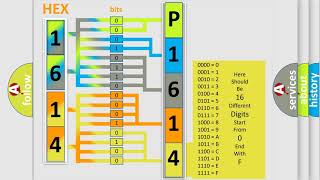
Technical definition: P1614 indicates a loss of communication or an invalid signal between the immobilizer control module, the transponder key, and the Engine Control Module (ECM). On Nissan and Infiniti vehicles, it is defined as 'Chain of IMMU-KEY,' meaning the immobilizer cannot read the key's ID. 🎬 Watch: A quick breakdown of Nissan's P1614 code On GM models, it indicates a 'Wrong Security Code Received.' Note: On some Hyundai and Kia models, P1614 indicates a 'Malfunction Indicator Lamp Request Signal High,' which is an unrelated electrical fault.
Can I Drive With P1614?
No — Do Not Drive. The vehicle will not start. If the engine starts intermittently, it can shut off unexpectedly while driving, causing an immediate loss of power steering and brakes. This creates a severe safety hazard. Do not drive until the issue is resolved.
Common Causes

- Defective or Unprogrammed Ignition Key (Very Common) — The transponder chip inside the key is damaged, or a new key lacks programming to the vehicle's immobilizer system.
- Faulty Immobilizer Antenna Ring (Common) — The antenna coil around the ignition cylinder fails to read the key's chip and send the signal to the security module.
- Low Vehicle Battery Voltage (Common) — A weak battery dropping below 12.4V causes communication errors between security modules, triggering a false code.
- Wiring and Connection Issues (Common) — Corroded wires, loose connectors, or poor ground connections between the antenna, BCM, and ECM interrupt the security signal.
- Aftermarket Accessories or RF Interference (Less Common) — Remote starters, alarms, or RFID tags on the keychain block the key's radio frequency signal.
- Faulty Body Control Module (BCM) or ECM (Rare) — The module managing the security handshake fails internally or suffers a software corruption, preventing communication.
Symptoms

- Engine Cranks but Will Not Start — The starter turns the engine over, but it never fires up because the fuel system is disabled by the immobilizer.
- Flashing Security Indicator Light — The dashboard security light flashes continuously during a start attempt, indicating a key recognition failure.
- No Crank, No Start — After multiple failed attempts, the immobilizer locks the starter out entirely. Turning the key produces no sound.
- Engine Stalls Intermittently — The engine starts but shuts off unexpectedly while driving due to a momentary loss of communication.
- Check Engine Light is On — The ECM illuminates the Check Engine Light to indicate a stored diagnostic trouble code.
Diagnostic Flowchart

Tap your situation to follow the diagnostic path that matches what you're seeing on this code.
Common Fixes & Costs
- Reprogram Existing Key or Program a New Key — Parts: $50-$150, Labor: $100-$250, ~0.8 hr book time (Professional)
- Replace Immobilizer Antenna Ring — Parts: $50-$200, Labor: $100-$200, ~0.8 hr book time (Intermediate)
- Replace Vehicle Battery — Parts: $150-$250, Labor: $0-$50, ~0.5 hr book time (DIY)
- Replace Body Control Module (BCM) — Parts: $200-$700, Labor: $150-$300, ~2.0 hr book time (Professional)
- Repair Wiring Harness — Parts: $10-$50, Labor: $150-$500, ~2.5 hr book time (Professional)
Used vs. New Parts: Buying Guide
When a used part is worth it: A used Immobilizer Antenna Ring from a salvage yard saves money, as it is a simple, non-wear item. Never buy a used Body Control Module (BCM) unless using a specialized cloning service, as BCMs are VIN-locked to the donor vehicle.
Donor-vehicle mileage cap: roughly under 100000 miles for the part to have meaningful remaining life.
Donor quality checklist:
- Match the part number exactly for any electronic module.
- For a BCM, ensure the donor vehicle has the exact same options and trim level.
- Visually inspect connectors for corrosion or bent pins.
Decision logic:
- If The part is an Immobilizer Antenna and the new OEM part exceeds $150 → Purchase a used OEM part from a reputable salvage yard.
- If The part is a Body Control Module (BCM) → Buy a new OEM part or a professionally remanufactured unit pre-programmed to your VIN. Avoid standard junkyard BCMs.
Warranty tradeoff: Used salvage parts offer 30-90 day warranties. New aftermarket parts offer 1-year or limited lifetime warranties. New OEM parts carry a 1-year warranty.
Worst-case if a used part fails: $200-400 in duplicate labor costs if a faulty used module is installed.
What Happens If You Wait — Timeline
- Immediate: The vehicle cranks but does not start. The security indicator light flashes. The car is immobile. (Added cost: $75 - $250 for a tow.)
- 1-5 Days: If intermittent, the car stalls unexpectedly while driving, causing a loss of power steering and brakes. (Added cost: Thousands in potential accident damages.)
- 1-2 Weeks: Repeated start attempts trigger 'Lock Mode' (P1610) on Nissan/Infiniti systems. Continuous cranking drains and destroys the battery. (Added cost: $150 - $400 for a new battery and professional reset.)
Cost of Not Fixing It
- Immediate: The vehicle will not start, requiring a tow. Intermittent faults cause sudden engine stalling while driving. (Added cost: $75 - $250 for a tow.)
- 1-4 Weeks: Repeated start attempts trigger 'Lock Mode' (P1610) on Nissan/Infiniti vehicles, requiring a professional reset. Excessive cranking destroys the starter and battery. (Added cost: $150 - $400 for a new battery and professional system reset.)
- Long-Term: Unexpected engine stalling at highway speeds causes severe accidents. (Added cost: Thousands in accident-related damages.)
Diagnosis Steps
- Check the Key and Remove Interference
Try your spare key. If the car starts, the first key is faulty. Remove other transponder keys or RFID tags from your keychain to rule out radio frequency interference.
Tools: Spare key (Beginner) - Inspect Vehicle Battery Voltage
Check the battery voltage with the engine off. It must be above 12.4 volts. A weak battery causes unpredictable electronic communication failures.
Tools: Multimeter (Beginner) - Perform a Hard Reset
Disconnect the negative battery terminal for 15 minutes to reset the electronic modules. Note: This will not clear a 'Lock Mode' (P1610) on Nissan/Infiniti systems.
Tools: Wrench (Beginner) - Check Immobilizer Fuses
Locate the fuses related to the immobilizer, anti-theft system, BCM, and ECU in your owner's manual. Inspect and replace any blown fuses.
Tools: Owner's manual, fuse puller, multimeter (Intermediate) - Perform a 'Wiggle Test' on Connectors
With the key in the 'ON' position, gently wiggle the wiring harness at the BCM and the immobilizer antenna. If the security light flickers, you have a loose connection.
Tools: Hands, flashlight (Intermediate) - Inspect and Test Immobilizer Antenna Ring
Remove the steering column covers. Disconnect the antenna ring and check for continuity across its terminals using a multimeter. An open circuit (OL) indicates a failed antenna. For many Nissans, resistance should be 10-13 Ohms.
Tools: Screwdriver set, trim removal tools, multimeter (Intermediate) - Scan for All Module Codes
Use an advanced scan tool to check the BCM and Immobilizer Module for codes. Look for 'U' codes (e.g., U0100), which indicate a network-wide communication failure rather than a single bad part.
Tools: Advanced OBD-II Scanner (Advanced) - Check Fuel System Pressure
Connect a fuel pressure gauge to the fuel rail. With the Key On, Engine Off (KOEO), pressure should build. If it reads 0 PSI, the immobilizer is actively cutting power to the fuel pump.
Tools: Fuel pressure gauge (Advanced) - Analyze Communication Signals
Backprobe the communication wires between the antenna and the BCM. Using an oscilloscope, verify the presence of a digital square wave when the key is turned on. A flat line indicates a dead antenna amplifier or BCM.
Tools: Oscilloscope, wiring diagram (Advanced)
When This Code Triggers (Freeze-Frame Conditions)
- Engine RPM: 0 - 250 RPM (Engine is off (key on) or cranking but not starting.)
- Vehicle Speed: 0 mph (The vehicle is stationary when the start attempt fails.)
- Battery Voltage: 11.5V - 12.5V (Reflects battery voltage during key-on or cranking; voltage below 12.4V causes communication errors.)
- Engine Load: 0% (The engine is not running, placing zero load on the system.)
Related Codes
- P1610 — Triggers after 5 failed start attempts on Nissan/Infiniti vehicles. P1614 is the root cause; P1610 is the resulting 'Lock Mode'. The car will not start until P1610 is cleared professionally.
- P1615 — Means 'Difference in Key ID.' P1614 means the signal wasn't read; P1615 means the signal was read, but the ID doesn't match the car's memory.
- P1612 — Indicates a communication error between the BCM and the ECM. P1614 is the key-to-BCM link; P1612 is the BCM-to-ECM link.
- P1570 — A generic code meaning 'Engine Start Blocked by Immobilizer.' P1614 provides the specific reason why it is blocked.
Climate & Environmental Factors
- High Humidity / Moisture: Moisture penetrates the key fob, causing corrosion on the internal circuit board and transponder chip, leading to intermittent signal failure.
- Extreme Cold: A weak main vehicle battery in cold weather drops voltage below the threshold needed for security modules to communicate, triggering P1614.
- Physical Damage: Dropping the key repeatedly damages the delicate transponder chip or its solder joints, causing an internal open circuit.
How to Talk to a Mechanic About This Code
Say this: "My car has a P1614 code, a flashing security light, and won't start. I've already tried my spare key. I need to schedule a diagnostic appointment to test the immobilizer antenna ring and its wiring."
This signals you've done basic troubleshooting and points the technician toward the immobilizer system, avoiding a broad, expensive 'no-start' diagnosis.
Avoid saying:
- 'My car won't start, can you fix it?'
- 'The check engine light is on, I think it's the immobilizer.'
- 'Just replace the key.'
Questions to ask before authorizing the repair:
- Did you test the transponder signal from my original key?
- What was the resistance measurement of the immobilizer antenna ring?
- Before replacing the BCM, can you confirm it has good power and ground?
- Is programming included in this estimate?
Where to Take It: Dealer vs Independent vs Chain
- Dealer:
Best for: Vehicles under warranty, Complex BCM/ECM replacements requiring proprietary software
Downsides: Highest labor rates and part costs, Favors complete module replacement over simple repairs. (Typical cost: +50% vs. baseline) - Independent Shop:
Good option, but call first to verify they have the equipment to program keys for your specific vehicle.
Best for: Out-of-warranty vehicles where you have a trusted relationship., Diagnosing related wiring or electrical faults.
Downsides: Must be vetted to ensure they have modern scan tools with immobilizer programming functions. (Typical cost: +0% vs. baseline) - Chain Shop:
AVOID. Complex electrical and security repairs are outside their area of expertise.
Best for: Checking and replacing the car battery.
Downsides: Technicians lack specialized training for security system diagnostics., High risk of misdiagnosis, leading to unnecessary starter replacements. (Typical cost: -10% vs. baseline)
When to Walk Away From the Repair
If the estimated repair cost for the P1614 issue exceeds 40-50% of your car's private-party value, evaluate your options.
- Car worth $5000, fix is $350: Fix it. This is a routine cost for a key or antenna repair and is well below the threshold.
- Car worth $3000, fix is $1100: Borderline. This likely involves a BCM replacement. Get a second opinion from a locksmith before proceeding.
- Car worth $2000, fix is $1100: Walk away. The repair cost is over 50% of the car's value. It is not a sound financial decision.
What Scan Tool You Need for This Code
Minimum: A scanner that reads codes from the Body Control Module (BCM) and Immobilizer (IMMO) system, not just the Engine Control Module (ECM).
A basic $20 code reader only talks to the ECM. It cannot access the BCM to view related codes or program keys.
Budget: BlueDriver Pro / Ancel BD310 (~$120) — Reads codes from the BCM and other modules, confirming if the issue is isolated or part of a network problem. It CANNOT program keys.
Mid-range: Launch CRP919 series / XTOOL D7 (~$350) — Offers bidirectional control to test components and has basic key programming functions for a limited set of vehicles.
Professional: Autel MaxiIM IM508 / XTOOL D8S (~$500-900) — Specialized immobilizer tools that perform 'all keys lost' procedures, BCM module coding, and read/write transponder data.
Rent vs buy: Rent: Free rental scanners from auto parts stores are basic readers and insufficient for P1614. Buy: Do not buy a scanner to fix this one code. Hiring a mobile locksmith is cheaper than buying a $350+ key programming tool.
How to Clear the Code After You Fix It
- Repair the mechanical or electrical fault (e.g., program a new key, replace the antenna ring).
- Use an OBD-II scan tool to erase the stored codes.
- For Nissan/Infiniti vehicles with a secondary P1610 code, use a bidirectional scan tool to exit 'Lock Mode' before attempting to start the engine.
Drive cycle (~30 minutes): A drive cycle is not needed to verify the P1614 fix (the car either starts or it doesn't), but is required to set emissions monitors for an inspection. Perform a cold start, idle for 5 minutes, drive 15 minutes in mixed traffic, then drive 10 minutes at a steady 55-60 mph.
Readiness monitors affected: Catalyst Monitor, EVAP System Monitor, O2 Sensor Monitor, O2 Sensor Heater Monitor, EGR System Monitor
Before emissions retest: drive at least 100 miles to fully set monitors.
Watch out for:
- Clearing the code without fixing the root cause will not allow the car to start.
- Disconnecting the battery will not clear a Nissan/Infiniti P1610 'Lock Mode'.
- Failing to complete a full drive cycle after repair results in an automatic emissions test failure.
Will This Fail Emissions / State Inspection?
Yes — this code typically fails an OBD-II emissions inspection.
- California: An active P1614 code causes an automatic smog check failure. After repair, readiness monitors must be 'Ready' to pass the re-test.
- New York: The presence of a Check Engine Light and code P1614 is an automatic failure during the OBD-II check.
- Texas: In emissions-testing counties, an active P1614 trouble code results in a failed inspection.
Most Commonly Affected Vehicles
- Nissan Altima, Sentra, Pathfinder, Maxima, Frontier, Rogue (2000-2020) — Very common on models with the Nissan Anti-Theft System (NATS). Often caused by a failing key or antenna ring.
- Infiniti G35, G37, FX35, QX70, M35 (2002-2017) — Shares the NATS immobilizer system with Nissan. Traced to a bad key, antenna amplifier, or BCM.
- Chevrolet / GM Silverado, Avalanche, Corsa (2001-2014) — Indicates a 'Wrong Signal Received' due to a lost key transponder chip or faulty Passlock sensor.
- Subaru Impreza, Forester, Legacy, Outback (2010-2021) — Appears due to communication issues between the key, body integrated unit (BIU), and ECM.
- Ford / Mazda Focus, Fiesta, Mazda3, CX-5 (2005-2019) — Points to a problem in the communication chain of the Passive Anti-Theft System (PATS).
- Hyundai / Kia Sportage, Terracan, various models (2001-2022) — Can indicate a standard immobilizer issue or an unrelated 'MIL Request Circuit High Voltage' electrical fault.
Manufacturer-Specific Notes
- Nissan/Infiniti: Using an unregistered key 5 times triggers a P1610 'Lock Mode' alongside P1614, requiring a professional tool to reset. 2013-2017 Rogue BCMs are prone to failure during key programming.
- General Motors (GM): Related to the Passlock sensor in the ignition cylinder. The system looks for a specific resistance value, not an RF signal. A 30-minute manual relearn procedure is often possible.
- Hyundai/Kia: The definition is inconsistent. It can mean an immobilizer fault or a high voltage in the check engine light request circuit. Verify the definition for your specific year.
- Can-Am (BRP): On vehicles like the Spyder, P1614 relates to a 'Throttle idle position failure,' not the immobilizer.
Real Owner Stories
2006 Infiniti G35 with Crank-No-Start
Car cranked but would not start, showing codes P1610 and P1614. The issue traced back to water damage in the IPDM due to a poorly sealed firewall after a turbo installation.
Outcome: Water damage affected the security system's communication lines. Persistent codes suggested a deeper wiring issue the dealer struggled to diagnose.
Lesson: Aftermarket modifications involving the firewall cause severe water leaks and hard-to-diagnose electrical issues. Always seal new wiring properly.
2007 Nissan Sentra with 137K miles
A Sentra cranked but would not start, with P1610 and P1614 active. The previous owner replaced the battery and steering column to no avail.
Outcome: The inability of a professional tool to communicate with the ECM pointed away from a key issue and towards a failure in the BCM, ECM, or communication bus.
Lesson: When professional scan tools cannot communicate with a module, the problem is the module itself or the wiring network, not the key.
2002 Vauxhall/Opel Corsa Junkyard Swap
The owner replaced a broken ignition lock cylinder with a scrapyard part. The car wouldn't start, showing P1614.
Outcome: The correct procedure is to physically swap the transponder chip from the original key into the new key. The immobilizer pairs with the chip, not the metal blade.
Lesson: When replacing an ignition lock cylinder, you must transfer the transponder chip from your original key to the replacement key.
2006 Nissan Altima Misdiagnosis
A customer brought in an Altima with a no-start condition and codes P1610 and P1614, believing the key needed reprogramming.
Outcome: The antenna ring was dead and not producing a signal to energize the key. Replacing the NATS Antenna Amplifier solved the issue.
Lesson: Don't assume a key is bad. A faulty immobilizer antenna is a common failure point that mimics a bad key.
How to Prevent This Code From Triggering
- Protect Your Key Fob (Daily Habit) — Avoid dropping keys on hard surfaces and protect them from moisture, which corrodes internal circuitry and causes signal failure.
- Maintain a Healthy Car Battery (Every 3-6 months) — Clean battery terminals and ensure voltage is above 12.4V. A weak battery triggers false immobilizer codes.
- Isolate Keys on Keychain (Daily Habit) — Avoid keeping multiple transponder keys on the same ring to prevent radio-frequency signal clash at the ignition.
- Use a Signal-Blocking Pouch for Spares (When storing spare keys) — Store spare keys inside the vehicle in an RFID-blocking pouch to prevent the car from detecting two keys at once.
Frequently Asked Questions
Can I fix code P1614 myself?
You can perform basic checks like trying a spare key, testing the battery, and inspecting fuses. However, most fixes require specialized key programming equipment. Stop DIYing and call a locksmith if your spare key fails and the battery is fully charged.
What are the most common mistakes when diagnosing P1614?
The most common mistake is replacing the starter motor because the engine won't crank. If the security light is flashing, the immobilizer is blocking the start, not the starter. Always check for a dead vehicle battery or keychain interference first.
Will disconnecting the battery clear the P1614 code?
Disconnecting the battery clears temporary glitches but will not fix a failed key or antenna. The code returns immediately upon the next start attempt. On Nissan/Infiniti vehicles, a battery disconnect will not clear a P1610 'Lock Mode'.
How much does it cost to fix P1614?
Costs range from $150 to $250 for a locksmith to program a new key. Replacing an immobilizer antenna costs $150 to $400 including parts and labor. Replacing and programming a Body Control Module (BCM) costs $350 to $1000.
Why won't my car start but the lights and radio work?
The battery has enough power for accessories, but the immobilizer system is actively disabling the engine. Code P1614 confirms the car's computer cannot verify your key's security chip.
Is it worth calling a locksmith instead of going to the dealer?
Yes. An automotive locksmith specializes in immobilizer systems and is typically cheaper and faster than a dealership. They also offer mobile service, saving you the cost of a tow.
My security light is on solid, not flashing. Is that still P1614?
A flashing light usually indicates a key recognition failure (P1614). A solid light after a failed start attempt often means the system has entered a tamper-proof 'Lock Mode' (like Nissan's P1610). Check your owner's manual for your specific vehicle's indicator meanings.
What happens if key programming fails?
Failed programming attempts can corrupt the Body Control Module (BCM) on certain vehicles, like the Nissan Rogue. This results in a vehicle that will not start with any key. You will then need to replace and reprogram the entire BCM.
Key Takeaways
- Code P1614 means the engine control module cannot verify your key's transponder signal, preventing the car from starting.
- Always test your spare key first, as a damaged transponder chip is the most common cause of this code.
- Do not drive the vehicle if it starts intermittently; a sudden stall causes an immediate loss of power steering and brakes.
- Fixing P1614 typically requires a professional automotive locksmith or dealer with specialized key programming equipment costing $350 or more.
- On Nissan and Infiniti models, 5 failed start attempts trigger a P1610 'Lock Mode' that requires a professional scan tool to reset.
Helpful Videos

The information in this article is provided for general reference and educational purposes only. Vehicle specifications, procedures, and part compatibility can vary by production date, trim level, and region. Always consult your vehicle's factory service manual and verify part numbers before purchasing or performing repairs. Safety-critical components such as airbags, seat belts, and braking systems should be installed by a qualified professional.
- 🎬 Helpful Videos
- What Does P1614 Mean?
- Can I Drive With P1614?
- Common Causes
- Symptoms
- Diagnostic Flowchart
- Common Fixes & Costs
- Used vs. New Parts: Buying Guide
- What Happens If You Wait — Timeline
- Cost of Not Fixing It
- Diagnosis Steps
- When This Code Triggers (Freeze-Frame Conditions)
- Related Codes
- Climate & Environmental Factors
- How to Talk to a Mechanic About This Code
- Where to Take It: Dealer vs Independent vs Chain
- When to Walk Away From the Repair
- What Scan Tool You Need for This Code
- How to Clear the Code After You Fix It
- Will This Fail Emissions / State Inspection?
- Most Commonly Affected Vehicles
- Manufacturer-Specific Notes
- Real Owner Stories
- 2006 Infiniti G35 with Crank-No-Start
- 2007 Nissan Sentra with 137K miles
- 2002 Vauxhall/Opel Corsa Junkyard Swap
- 2006 Nissan Altima Misdiagnosis
- How to Prevent This Code From Triggering
- Frequently Asked Questions
- Can I fix code P1614 myself?
- What are the most common mistakes when diagnosing P1614?
- Will disconnecting the battery clear the P1614 code?
- How much does it cost to fix P1614?
- Why won't my car start but the lights and radio work?
- Is it worth calling a locksmith instead of going to the dealer?
- My security light is on solid, not flashing. Is that still P1614?
- What happens if key programming fails?
- Key Takeaways
- 🎟️ Get 5% Off