

P1613 on 2015 Dodge Charger: Boost/MAF Sensor Correlation Causes and Fixes
On a 2015 Dodge Charger, especially with the 6.2L supercharged Hellcat engine, code P1613 is most often caused by outdated Powertrain Control Module (PCM) software. The primary fix is a dealer-installed software update detailed in TSB #18-061-17. If the software is current, the next most likely causes are a faulty boost pressure sensor or an air leak in the intake system.
- For a 2015 Dodge Charger, P1613 is most likely a software glitch, not a failed part.
- Before replacing any sensors, verify with a dealer if your vehicle's PCM has the latest software update per TSB #18-061-17. This is the cheapest and most probable fix.
- If the software is up-to-date, the most probable hardware causes are an intake air leak (check with a smoke test) or a faulty MAP/Boost Pressure sensor.
- Do not confuse this definition with P1613 on other vehicle makes like Toyota or GM, where it can mean something completely different such as an immobilizer or air injection system fault.
What's Unique About the 2015-2015 Dodge CHARGER
For the 2015 Dodge Charger (and its platform-mate, the Challenger Hellcat), particularly those with the 6.2L supercharged engine, this code is very frequently a software problem, not a hardware failure. Dodge released several Technical Service Bulletins (TSBs), with #18-061-17 being the most current, to address this specific correlation fault by reprogramming the PCM with updated logic. This means the first diagnostic step should always be to check if the vehicle's software is up to date before considering any parts replacement, a fact frequently echoed by owners in forums.
Diagnostic Flowchart
Tap your situation to follow the diagnostic path that matches what you're seeing on this vehicle.
Symptoms You May Notice
- Check Engine Light (MIL) illuminated
- Reduced engine power or performance
- Vehicle enters 'limp mode'
- Hesitation or stumbling during acceleration
- Slight spark knock during aggressive driving (mentioned in TSB)
- Sudden loss of power during hard acceleration
- Rough or unstable idle
- Replacing the MAP or MAF sensor before verifying that the PCM software is up to date. The TSBs strongly indicate a software update is the first and most likely fix.
- Forum users report that dealers sometimes replace sensors unnecessarily, only for the code to return, proving the software update was the required fix all along.
Most Likely Causes
- Outdated Powertrain Control Module (PCM) Software 🔴 High Probability Dodge issued multiple TSBs (e.g., #18-061-17, #18-047-16) to resolve this specific code with a software update, indicating it was a known calibration issue from the factory for the 6.2L engine. TSB 18-061-17 is the most recent and supersedes previous versions.
How to confirm: A Dodge dealer or a shop with a wiTECH scan tool can check the current software calibration ID on the PCM and verify if a newer version is available. This is the only way to definitively confirm.
Typical fix: Reprogramming (flashing) the PCM with the updated software provided by the manufacturer. The TSB notes this is a 0.2-0.3 hour labor operation. Both the PCM and TCM (Transmission Control Module) may need to be updated for the changes to be effective.
Est. part cost: $0 - Faulty Boost Pressure (MAP) Sensor 🟡 Medium Probability The 6.2L Hellcat engine actually uses multiple MAP sensors. They are exposed to extreme heat cycles on the supercharger lid and can fail or provide inaccurate readings over time. This is the most common hardware failure after a software issue has been ruled out.
How to confirm: With the engine off, use a scan tool to compare the MAP sensor reading to the Barometric Pressure (BARO) sensor reading; they should be nearly identical. Monitor live data for erratic or stuck readings under load. One sensor is located at the driver's side rear of the supercharger, and another is at the passenger side front.
Typical fix: Replace the faulty MAP sensor. On the 6.2L engine, they are located on the supercharger and are relatively easy to access.
Est. part cost: $40-$100 - Intake System Air Leak 🟡 Medium Probability The high pressures created by a supercharger can stress intake hoses, gaskets, and intercooler connections, leading to leaks that cause sensor readings to conflict. A small, hard-to-see crack in a vacuum line can be enough to trigger the code.
How to confirm: Perform a smoke test on the intake system. Smoke will be forced into the intake tract, and any leaks will be visible as smoke escapes from loose clamps, cracked hoses, or bad gaskets. Pay close attention to all connections between the MAF sensor and the supercharger, as well as vacuum lines.
Typical fix: Tighten loose clamps or replace the cracked hose or faulty gasket that is causing the leak.
Est. part cost: $10-$150
Rare But Worth Checking
- Faulty Mass Air Flow (MAF) Sensor: While less common to fail than the MAP sensor on this platform, a dirty or failing MAF sensor can provide inaccurate airflow readings to the PCM, triggering the code. It is located on the air filter housing.
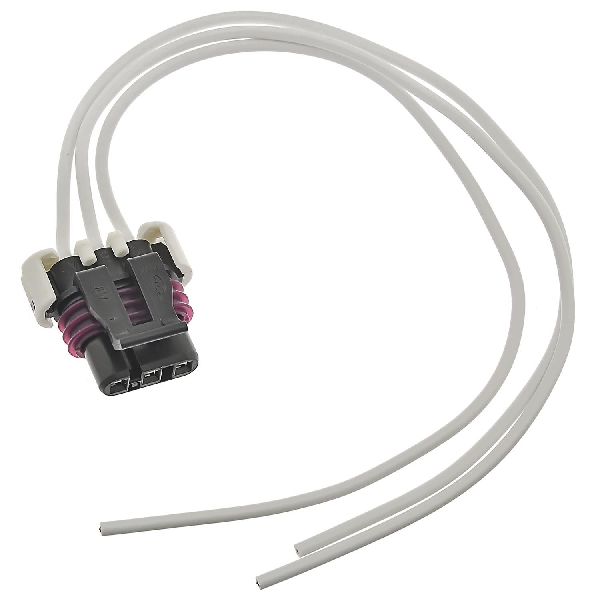
- Wiring or Connector Issue: Damaged, corroded, or loose wiring at either the MAP sensors or MAF sensor can cause intermittent signal loss and trigger a correlation fault. A wiggle test on the harness while monitoring live data can sometimes identify a bad connection.
Diagnosis Steps
- Connect a scan tool and verify that P1613 is the primary code. Note any other codes present, especially those listed in the TSBs like P0513, P0300, and P2227.
- Crucial First Step: Check for applicable TSBs. Contact a Dodge dealership with your VIN to determine if the PCM software update from TSB #18-061-17 or #18-047-16 has been performed. If not, this is the most likely solution.
- If the software is up to date, use a scan tool to monitor live data from the MAF sensor (g/s) and the MAP sensors (voltage or pressure).
- With the Key On, Engine Off, compare the MAP sensor readings to the Barometric Pressure (BARO) reading. They should be almost identical.
- Start the engine and observe the sensor readings at idle and while snapping the throttle. The MAF and MAP readings should increase smoothly and proportionally with engine RPM.
- If sensor readings appear incorrect or erratic, perform a thorough visual inspection of the intake system between the MAF sensor and the engine for any obvious air leaks, cracked hoses, or loose clamps.
- If no visual leaks are found, perform a smoke test on the entire intake tract to find hidden leaks. This is the most effective method.
- Inspect the wiring and connectors for both MAP sensors and the MAF sensor. Look for any signs of damage, corrosion, or loose pins. Perform a wiggle test on the harness while observing live data.
- If no leaks or wiring issues are found, and one of the sensors is providing implausible data, it is likely faulty and should be replaced. The MAP sensors are more likely to fail than the MAF sensor on this platform.
Parts You'll Likely Need
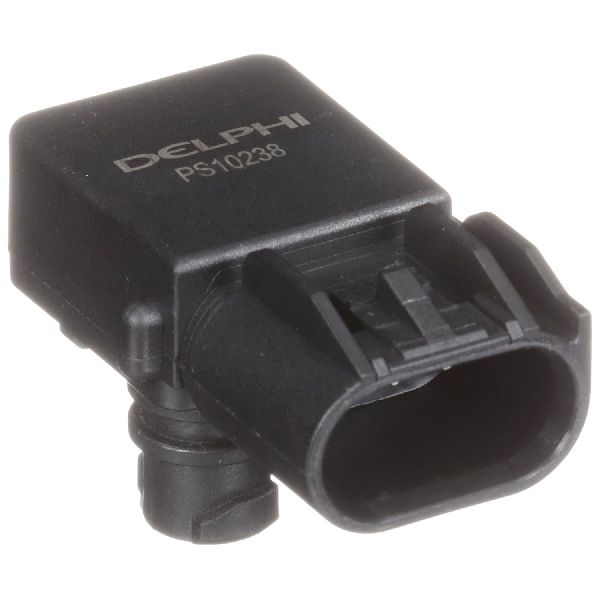
- Boost Pressure Sensor (MAP Sensor)
(OEM #68207074AA)— If the PCM software is current and an intake leak is not present, this sensor is the next most likely component to fail and cause the correlation error. Note: The 6.2L engine uses multiple MAP sensors.
Trusted brands: Mopar, Bosch, NTK
OEM price range: $70-$130
Aftermarket price range: $40-$80
Related Codes That Often Appear With This One
- P0513 — Invalid Skim Key. Listed in the same TSBs (#18-061-17, #18-047-16), indicating it can be triggered by related software logic issues.
- P0300 — Multiple Cylinder Misfire. Also listed in TSB #18-047-16 as a potential accompanying code that can be resolved by the same PCM flash.
- P2227 — Barometric Pressure Circuit Performance code, which is related to the MAP sensor's function and is also mentioned in TSBs #18-061-17 and #18-047-16.
- P1611 — Supercharger Bypass Valve Position Sensor 1 Circuit High. This code is also listed in TSB #18-061-17 as being resolved by the same software update.
Technical Service Bulletins (TSBs) & Recalls
- 18-061-17: Flash: 6.2L Powertrain Diagnostic And System Enhancements
- 18-047-16: Flash: 6.2L Powertrain Diagnostic And System Enhancements
Platform-Specific Known Issues
- A known software calibration issue on 2015 models causes the PCM to incorrectly flag a correlation error between the MAP and MAF sensors. This is documented in TSBs #18-061-17 and #18-047-16, with the prescribed fix being a PCM reflash.
- The 6.2L Supercharged engine has two MAP sensors, one on the driver's side rear of the supercharger and another on the passenger's side front near the inlet. A failure of either can contribute to this code.
Mechanic-Grade Diagnostic Values
- MAP Sensor 5V Reference Voltage — expected: Approximately 5.0V DC. Failure: Voltage is 0V or significantly below 5.0V, indicating a wiring or PCM fault.
- MAP Sensor Signal Voltage (Key On, Engine Off) — expected: ~4.5V DC at sea level. Failure: Voltage is significantly different from the expected value for the current altitude, or does not match the BARO sensor reading on a scan tool.
- MAP Sensor Signal Voltage (Engine Idling) — expected: 1.0V - 2.0V DC. Failure: Voltage is stuck high (near 4.5V) or does not drop from the KOEO reading, indicating the sensor is not reading engine vacuum.
- MAP Sensor Ground Circuit Voltage — expected: Less than 100mV (0.10V). Failure: A higher voltage indicates a poor ground connection, which can skew sensor readings.
Scan Tool Commands That Help
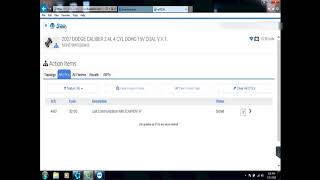
- wiTECH 2.0: Flash PCM/ECU — This is the primary function needed to resolve P1613 if it is caused by outdated software, as specified in TSBs #18-061-17 and #18-047-16. The tool connects to FCA's servers to download and install the correct calibration file.
- wiTECH 2.0 or advanced aftermarket scanner: View Live Data / Graphing — To compare the MAP sensor, Barometric Pressure (BARO) sensor, and MAF sensor readings in real-time. With the key on and engine off, MAP and BARO should be nearly identical. While running, graphing the sensors can reveal intermittent dropouts or lazy responses that a simple numeric display might miss.
Wiring & Ground Locations
- MAP Sensor Fuses — In the main engine bay fuse box (Power Distribution Center), located on the driver's side of the engine bay.. The MAP sensor circuit is powered by engine management fuses. A video guide for Dodge Chargers suggests checking fuses F31, F34, F35, and F37 in the front fuse box, as well as the ASD (Auto Shutdown) relay at position 63, as these are related to the engine management system that controls the sensor.
- Trunk Fuse Box Relays — In the trunk, behind the carpet liner near the battery.. For some engine control functions, relays in the rear fuse box are also critical. A diagnostic video mentions checking relay 29 and potentially relay 14 in this location.
- Engine Harness Chafe Points — General areas to inspect include where the harness routes near the supercharger, around the shock towers, and near brackets for accessories like the generator.. Engine movement can cause the wiring harness to rub against metal brackets or bolts, eventually chafing through the insulation and causing a short or open circuit for a sensor wire. While not specific to P1613, general GM bulletins on harness chafing highlight common problem areas like control arm brackets and accessory brackets that are relevant to all modern engine bays.
OEM Part Supersession History
68207074AA→68207074AB— Part revision or manufacturer change. This is a common practice for addressing minor issues or switching suppliers.
Heads up: None noted. The new part number 68207074AB is a direct replacement for the original 68207074AA and fits the specified 2015-2017 Dodge Charger and Challenger with the 6.2L engine.
Helpful Videos
We Have This Part in Stock


The information in this article is provided for general reference and educational purposes only. Vehicle specifications, procedures, and part compatibility can vary by production date, trim level, and region. Always consult your vehicle's factory service manual and verify part numbers before purchasing or performing repairs. Safety-critical components such as airbags, seat belts, and braking systems should be installed by a qualified professional.
- Dodge CHARGER:
- 🎬 Helpful Videos
- 🛍️ Shop This Part
- What's Unique About the 2015-2015 Dodge CHARGER
- Diagnostic Flowchart
- Symptoms You May Notice
- Most Likely Causes
- Rare But Worth Checking
- Diagnosis Steps
- Parts You'll Likely Need
- Related Codes That Often Appear With This One
- Technical Service Bulletins (TSBs) & Recalls
- Platform-Specific Known Issues
- Mechanic-Grade Diagnostic Values
- Scan Tool Commands That Help
- Wiring & Ground Locations
- OEM Part Supersession History
- 🎟️ Get 5% Off