

P1607 on 2014-2016 Jeep Cherokee: PCM Timer Fault Causes and Fixes
On a 2014-2016 Jeep Cherokee, code P1607 is almost always caused by a software glitch in the Powertrain Control Module (PCM). The fix is a software update from a Jeep dealer, which typically costs $100-$250 if out of warranty. This is a known issue covered by multiple Technical Service Bulletins (TSBs) that also apply to other Chrysler vehicles with the 2.4L engine.
- P1607 on a 2014-2016 Cherokee is a known software bug, not a hardware failure.
- The correct fix is to have a Jeep dealer update the Powertrain Control Module (PCM) software, as specified in multiple TSBs (18-014-16, 18-004-16, 18-014-17).
- The Transmission Control Module (TCM) must also be updated at the same time for the repair to be complete per the TSBs.
- Do not replace the PCM unless the software update has been performed and fails to resolve the issue.
- This code is almost always accompanied by P2610; both are fixed by the same software update.
- Expect to pay between $100 and $250 for the software update service if your vehicle is out of warranty.
- The same issue affects other FCA vehicles with the 2.4L engine, including the Chrysler 200, Dodge Dart, and Ram ProMaster City.
What's Unique About the 2014-2016 Jeep CHEROKEE
For the 2014-2016 Jeep Cherokee (KL generation), this code is exceptionally well-documented by the manufacturer. Unlike on other vehicles where P1607 might point to a failing computer, on this specific Cherokee, it's a known software bug. Jeep has issued multiple Technical Service Bulletins (TSBs) advising technicians to resolve this code by reprogramming the PCM with updated software, not by replacing hardware. These TSBs often require the Transmission Control Module (TCM) to be updated at the same time.
Diagnostic Flowchart
Tap your situation to follow the diagnostic path that matches what you're seeing on this vehicle.
Symptoms You May Notice
- Check Engine Light (Malfunction Indicator Lamp) is on
- Intermittent rough idle
- RPM flare on a cold start
- Harsh or unusual transmission shifting
- Code P2610 ('PCM Internal Engine Off Timer Performance') is almost always present as well
- Replacing the PCM without first updating the software. This is an expensive and unnecessary repair, as a new PCM will likely require the same software update to fix the problem.
- Replacing the Engine Coolant Temperature (ECT) sensor without checking for applicable TSBs first.
Most Likely Causes
- Outdated Powertrain Control Module (PCM) Software 🔴 High Probability This is a well-documented issue for this platform, addressed by multiple manufacturer TSBs (e.g., 18-014-16, 18-004-16, 18-014-17). The original software had logic flaws related to the internal timers that cross-check engine-off time with coolant temperature drop.
How to confirm: A Jeep dealership or a properly equipped independent shop can check the current software calibration ID in the PCM and compare it against the latest version available from the manufacturer using a wiTECH scan tool. 🎬 Watch: See how a technician performs a TCM software reflash.
Typical fix: Reprogramming (flashing) the PCM and TCM with the latest software versions using a wiTECH scan tool.
Est. part cost: $0
Rare But Worth Checking
- Weak or Failing Battery: Low system voltage during startup or shutdown can cause various electronic modules, including the PCM, to behave erratically and set rationality codes. Before assuming a complex PCM issue, always ensure the battery and charging system are healthy. Some owners on forums have reported that replacing an old battery resolved various electronic gremlins, though the software flash is the definitive fix for this specific code.
- Faulty Engine Coolant Temperature (ECT) Sensor: The PCM uses the ECT reading to calculate the expected engine cooldown rate. If the sensor provides incorrect data (e.g., it's stuck on a certain temperature), the PCM's calculation will be off, potentially triggering the P1607 code. This is less common than the software issue but a possible hardware cause. The correct OEM part number for the 2.4L engine is 5149077AB. 🎬 See this walkthrough on locating and replacing the ECT sensor.
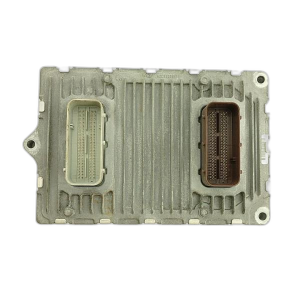
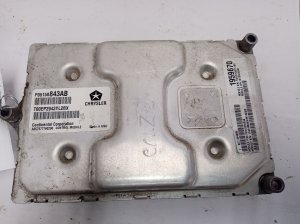
- Failing Powertrain Control Module (PCM): While the code indicates an internal PCM fault, actual hardware failure is rare for this specific issue on this vehicle. It should only be considered after the software has been updated and all other potential causes (like battery and sensors) have been ruled out. A replacement PCM can cost over $500 plus labor and programming.
Diagnosis Steps
- Verify the battery and charging system are in good health. Ensure battery voltage is above 12.4V with the engine off and between 13.2V and 14.8V with the engine running. Many auto parts stores offer free battery testing. 🎬 Watch: Step-by-step guide to replacing the battery on your Cherokee.
- Scan for all diagnostic trouble codes. Note if P1607 is accompanied by P2610 or other codes mentioned in the TSBs, which is highly likely.
- Contact a Jeep dealership or qualified repair shop with access to OEM data. Provide them with your VIN and the trouble codes.
- Inquire if Technical Service Bulletins #18-014-16 REV. A (for 2016 models), #18-004-16 REV. A, or #18-014-17 (for 2014-2015 models) apply to your vehicle.
- If a TSB is applicable, have the PCM reprogrammed (flashed) to the latest software version. Crucially, ensure the Transmission Control Module (TCM) is also updated at the same time, as specified in the TSB repair procedures.
- After the reflash, clear all DTCs and perform a drive cycle to ensure the code does not return.
- If the code returns after the software update, further diagnosis of the ECT sensor circuit and PCM power/ground connections may be necessary.
Parts You'll Likely Need
- Powertrain Control Module (PCM) Software Update — This is not a physical part, but a service. It is the manufacturer-specified fix for the software glitch that causes code P1607 on this vehicle.
OEM price range: $100-$250
Aftermarket price range: N/A - Engine Coolant Temperature (ECT) Sensor
(OEM #5149077AB)— A rare but possible cause if the PCM software update does not fix the issue. The PCM relies on this sensor's data for the rationality check that triggers P1607. The previous part number 68253514AA cited in earlier research is incorrect for the 2.4L engine and applies to the 3.0L EcoDiesel.
Trusted brands: Mopar
OEM price range: $25-$50
Aftermarket price range: $15-$30
Related Codes That Often Appear With This One
- P2610 — Defined as 'PCM Internal Engine Off Timer Performance', this code is functionally very similar to P1607 and is almost always set at the same time due to the same PCM software glitch. The TSBs list both codes together as being resolved by the reflash.
- U0402 — 'Implausible Data Received From TCM'. The faulty PCM software can also affect communication with the Transmission Control Module (TCM), leading to this code and potential shifting issues. The TSBs for the P1607 fix also correct this code.
- P0335 — 'Crankshaft Position Sensor Circuit'. The TSBs for the PCM reflash also list this as a code that can be resolved by the software update, indicating the original software had trouble interpreting sensor data.
- P0456 — 'EVAP System Small Leak'. This is another code mentioned in the TSBs that can be falsely set by the PCM software glitch.
Technical Service Bulletins (TSBs) & Recalls
- 18-014-16 REV. A: Flash: 2.4L Powertrain Diagnostic And System Improvements (for 2016 KL Cherokee)
- 18-004-16 REV. A: Flash: 2.4L Powertrain Diagnostic And System Improvements (for 2014-2015 KL Cherokee)
- 18-014-17: Flash: 2.4L Powertrain Diagnostic And System Improvements (Supersedes 18-004-16 for 2014-2015 KL Cherokee)
Platform-Specific Known Issues
- The 2.4L engine in the 2014-2016 Cherokee is subject to several TSBs (18-014-16, 18-004-16, 18-014-17) that involve a PCM reflash to correct a wide range of falsely-set diagnostic trouble codes, including P1607.
- A common owner experience shared on forums like jeepcherokeeclub.com involves the dealer performing the PCM and TCM software updates as prescribed by the TSBs, which permanently resolves the check engine light and often improves transmission shift quality.
Mechanic-Grade Diagnostic Values
- Engine Coolant Temperature (ECT) Sensor Resistance — expected: Approximately 2000-3000 Ω at 20°C (68°F) and 200-300 Ω at 90°C (194°F).. Failure: Readings significantly outside the expected range for a given temperature, or an open/short circuit.
- Engine Coolant Temperature (ECT) Sensor Signal Voltage — expected: Approximately 2.0V - 3.0V on a cold engine, dropping to around 0.5V when the engine is fully warmed up.. Failure: Voltage that is stuck, or does not correspond to the engine's actual temperature (e.g., 1.5V on a cold engine).
Scan Tool Commands That Help
- wiTECH: Reprogram PCM / Flash PCM — This is the primary repair procedure specified by manufacturer TSBs to fix the P1607 software glitch.
- wiTECH: Restore Vehicle Configuration — Used after installing a new or blank PCM to write the vehicle's original VIN and other configuration data to the module.
- wiTECH: Check PCM VIN / Check PCM Odometer — These are miscellaneous functions used during a new PCM installation to write the VIN and calibrate the odometer reading between the cluster and the new module.
- wiTECH: Learn ETC (Electronic Throttle Control) — A relearn procedure required after programming a new PCM to calibrate the throttle body.
- wiTECH: Maintain Stable Battery Voltage — Not a command, but a critical procedure. A battery charger must be connected during the entire flash process to keep voltage between 13.2 and 13.5 volts to prevent flash failure or module damage.
Wiring & Ground Locations
- PCM Fuses — In the main engine fuse box (Power Distribution Center) on the driver's side of the engine bay.. The PCM relies on several fuses for power. For the 2014+ Cherokee, these include F08, F13, F16, and F83. A blown fuse will cause PCM issues, potentially setting internal error codes.
- PCM Relays — In the main engine fuse box (Power Distribution Center).. The PCM is controlled by relays (such as K9, K10, K11). A corroded or failed relay can interrupt power to the PCM, causing shutdown timer faults and other electronic issues.
- PCM Grounds — Various points on the engine block and chassis. Specific diagrams for the 2014 Cherokee Trailhawk are available.. Poor ground connections are a common source of intermittent and difficult-to-diagnose electronic problems, including PCM rationality faults. Verifying PCM ground circuits with a test light is a key diagnostic step if a software flash doesn't resolve the issue.
- PCM Harness Connectors — Connected directly to the PCM, located in the engine compartment.. Technicians are cautioned not to probe the harness connectors directly, as this can damage the terminals and cause poor connections, leading to future issues. A special tool, PCM Pinout Box (8815A), is recommended for diagnosis.
Real Owner Repair Stories
- YouTube video 'How to Fix Code P1607 Step-by-Step Guide!' (2010 Dodge Journey 2.4L (related FCA platform)) — P1607 'PCM error shutdown timer'
✅ What actually fixed it The user diagnosed the issue but the final fix is not shown. The key finding was that the PCM relay (K5 in the video) was visibly corroded on its terminals. This pointed to a hardware-based power supply issue as the cause of the PCM timer fault, rather than a software glitch.
OEM Part Supersession History
TSB 18-004-16 REV. A→TSB 18-014-17— Updated software with fixes for additional DTCs.
Heads up: Applies to 2014-2015 model year Cherokees. The newer TSB should always be used.TSB 18-014-16 REV. A→TSB 18-018-17— Updated software with fixes for additional DTCs and software improvements.
Heads up: Applies to 2016 model year Cherokees. The newer TSB should always be used.5149096AB→5149077AB— Part number update for the Engine Coolant Temperature sensor.
Heads up: Both parts should be compatible, but 5149077AB is the current Mopar part number for the 2.4L engine.
Model Year Variations Within This Range
- 2014-2015: These model years are covered by TSB #18-004-16 REV. A, which was later superseded by #18-014-17. This flash addresses P1607, P2610, and a specific list of other codes like P0116 and P050D.
- 2016: This model year is covered by a separate bulletin, TSB #18-014-16 REV. A (later superseded by #18-018-17). While it also fixes P1607 and P2610, the list of other resolved DTCs is slightly different, initially including codes like P0101 and P0335.
Helpful Videos

We Have This Part in Stock



The information in this article is provided for general reference and educational purposes only. Vehicle specifications, procedures, and part compatibility can vary by production date, trim level, and region. Always consult your vehicle's factory service manual and verify part numbers before purchasing or performing repairs. Safety-critical components such as airbags, seat belts, and braking systems should be installed by a qualified professional.
- Jeep CHEROKEE:
- 🎬 Helpful Videos
- 🛍️ Shop This Part
- What's Unique About the 2014-2016 Jeep CHEROKEE
- Diagnostic Flowchart
- Symptoms You May Notice
- Most Likely Causes
- Rare But Worth Checking
- Diagnosis Steps
- Parts You'll Likely Need
- Related Codes That Often Appear With This One
- Technical Service Bulletins (TSBs) & Recalls
- Platform-Specific Known Issues
- Mechanic-Grade Diagnostic Values
- Scan Tool Commands That Help
- Wiring & Ground Locations
- Real Owner Repair Stories
- OEM Part Supersession History
- Model Year Variations Within This Range
- 🎟️ Get 5% Off