

P1607 on 2002-2011 Chevrolet Aveo: ECM Malfunction Causes and Fixes
P1607 on a 2002-2011 Chevy Aveo typically indicates an internal failure of the Engine Control Module (ECM). Before replacing the expensive ECM, first check for a weak battery, bad grounds, and faulty ECM power fuses or relays, as these are common and cheaper causes that can mimic ECM failure.
- P1607 on your Aveo means the engine's main computer (ECM) has likely failed internally.
- Before spending hundreds on a new ECM, always check the simple things first: battery health, fuses, the ECM power relay, and all ground connections.
- Do not continue to drive the vehicle. The engine can shut down without warning, which is a serious safety hazard.
- Replacing the ECM is not a simple plug-and-play repair. The new module must be professionally programmed to your car's VIN.
- This is a known issue on 2002-2011 Aveos, so if you've confirmed your wiring is good, a failed ECM is a very likely diagnosis.
What's Unique About the 2002-2011 Chevrolet Aveo
The first-generation Chevrolet Aveo (T200/T250) and its rebadged siblings are known for sensitive electronics and specific failure points. Forum discussions among owners reveal a pattern of ECM failures, with some vehicles requiring multiple replacements. One owner on AveoForum.com reported a complete ECM failure at just 32,600 miles on their 2009 Aveo, which manifested as the car dying while driving and refusing to restart. Unlike on some other vehicles where this code might be triggered by a secondary module, on the Aveo, P1607 is a strong indicator that the ECM itself, or its direct power and ground circuits, are the root of the problem.
Generation note: This issue affects both the T200 (2002-2007) and the facelifted T250 (2007-2011) generations of the Chevrolet Aveo, as well as their platform mates. The diagnostic process and common causes are similar for both.
Symptoms You May Notice
- Engine will not start or has a no-crank condition
- Engine stalls unexpectedly while driving
- Check Engine Light is on
- Rough idling or misfiring
- Poor engine performance and lack of acceleration
- Inconsistent or erratic automatic transmission shifting
- Increased fuel consumption
- Vehicle enters 'fail-safe' or 'limp' mode
- Replacing various engine sensors. A failing ECM can misinterpret data from perfectly good sensors, leading to other codes. If you have P1607 along with multiple sensor codes, P1607 is the primary fault to investigate.
- Confusing the code with a vacuum system fault. On the original Daewoo platform, P1607 could refer to a stuck vacuum solenoid. While less likely on a Chevrolet Aveo, a technician seeing this definition might misdiagnose the issue if they are not using Chevy-specific code lists.
Most Likely Causes
- Internal Engine Control Module (ECM) Failure 🔴 High Probability Owner forums report a higher-than-average rate of ECM failure on this platform, with some owners replacing the unit multiple times. One owner of a 2009 Aveo reported a failure at only 32k miles.
How to confirm: After confirming all power, ground, and communication network wires to the ECM are intact and have correct voltage, the ECM is condemned. This is typically a process of elimination after ruling out all external factors.
Typical fix: Replace the Engine Control Module and have it programmed by a dealer or qualified shop with access to GM's Service Programming System (SPS).
Est. part cost: $200-$500 - Poor Power or Ground to the ECM 🟡 Medium Probability Corrosion on battery terminals, main chassis grounds, or the ECM's own ground straps can cause voltage drops that trigger internal fault codes. Owners report that loose or corroded negative battery terminals are a common source of electrical issues on the Aveo.
How to confirm: Use a multimeter to perform a voltage drop test on the ECM's main power and ground wires. Check the battery terminals and main ground straps for looseness or corrosion. A wiring diagram is needed to identify the specific power and ground pins on the ECM connector.
Typical fix: Clean or replace corroded battery terminals, clean the chassis ground points (often found on the engine block and inner fender) with a wire brush until they are shiny, and tighten all connections securely.
Est. part cost: $5-$25 - Faulty ECM Power Relay or Fuse 🟡 Medium Probability Relays are mechanical switches that can wear out over time, leading to an intermittent or total loss of power to the ECM. Corrosion can also affect the relay's pins and socket.
How to confirm: Locate the ECM power relay and relevant fuses (often labeled 'ECU', 'ECM', or similar) in the under-hood fuse box. 🎬 Watch this overview of the Chevy Aveo fuse box layout. You can swap the ECM relay with an identical relay from a non-critical system (like the horn) to see if the problem resolves. Visually inspect fuses and test for continuity. A video for a different vehicle with P1607 showed a corroded relay was the sole cause.
Typical fix: Replace the faulty relay or blown fuse. It is a cheap and highly recommended first step.
Est. part cost: $10-$30 - Low Battery Voltage or Failing Alternator ⚪ Low Probability Like any vehicle, insufficient system voltage can cause control modules to behave erratically and set internal fault codes. A weak battery is a known trigger for this code.
How to confirm: Test the battery voltage with the engine off (should be ~12.4V or higher). Then, test the alternator output with the engine running (should be ~13.7-14.7V). Many auto parts stores will test your battery and alternator for free.
Typical fix: Replace the weak battery or failing alternator.
Est. part cost: $150-$400
Diagnosis Steps
- Check Battery and Charging System: First, ensure the battery has at least 12.4 volts with the engine off and that the alternator is charging between 13.7 and 14.7 volts with the engine running. A weak battery or failing alternator is a known cause.
- Inspect ECM Fuses and Relays: In the under-hood fuse box, locate any fuses labeled 'ECM', 'ECU', or 'PCM'. Visually inspect them and test for continuity. Locate the ECM power relay (check the fuse box lid diagram) and swap it with an identical relay (e.g., from the horn) as a quick test.
- Inspect ECM Connectors and Grounds: Disconnect the battery. Unplug the large electrical connectors from the ECM. Look for any signs of corrosion, moisture, or bent pins. Follow the wiring harness from the ECM to find its ground points on the chassis or engine block. Remove, clean with a wire brush, and securely re-tighten these ground connections.
- Check for Power and Ground at the ECM Connector: Using a wiring diagram for your specific year (a 2009 pinout is available online), use a multimeter to verify that the ECM is receiving proper battery voltage and has a solid ground connection at the specified connector pins. For example, on a 2009 Aveo, pins 1 and 17 on connector X1 are Battery Positive Voltage.
- Scan for Other Codes: Check for any other stored trouble codes. While P1607 is the primary concern, other codes might offer clues, though they are often symptoms of the ECM failure.
- ECM Replacement: If all power, ground, and network connections are confirmed to be good, the ECM itself has an internal fault and must be replaced. A new or remanufactured ECM will need to be programmed to your car's VIN and security system.
Parts You'll Likely Need
- Engine Control Module (ECM)
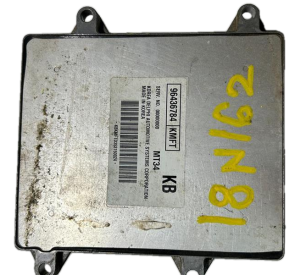
(OEM #Varies by year/engine. Examples include 96940278, 96940279, 96943036, 96943037. Always verify with VIN.)— This is the most common cause of P1607 after external electrical issues have been ruled out. The internal circuitry of the module fails.
Trusted brands: ACDelco (GM Genuine), Cardone (remanufactured), Autocomp Technologies
OEM price range: $350-$550
Aftermarket price range: $200-$400 - ECM Power Relay — A faulty relay can cut power to the ECM, mimicking an internal failure. It's a cheap and easy part to replace during diagnosis and a common point of failure.
Trusted brands: ACDelco, Standard Motor Products, Duralast
OEM price range: $20-$40
Aftermarket price range: $10-$25
Related Codes That Often Appear With This One
- P0601, P0605, P0606 — These are also codes for ECM/PCM internal errors (Memory Check Sum Error, ROM Error, Processor Fault) and point directly to a failed computer.
- U-codes (e.g., U0100) — If the ECM is failing, it may lose communication with other modules on the vehicle's network, such as the Transmission Control Module (TCM) or Body Control Module (BCM).
Platform-Specific Known Issues
- There are multiple anecdotal reports from owners on forums like ChevroletForum.com and AveoForum.com about premature ECM failure in this generation of Aveo, sometimes requiring more than one replacement over the vehicle's life.
- A specific owner story on AveoForum.com details a 2009 Aveo stalling while driving at 32,600 miles, with OnStar confirming an ECM failure code. The car would restart after 30 minutes but the Check Engine Light remained, pointing to an intermittent but critical fault. URL: https://www.aveoforum.com/forum/f108/ecm-failure-2-years-10515/
Mechanic-Grade Diagnostic Values
- ECM Battery Voltage Supply at Connector — expected: Should be equal to battery voltage (~12.4V with engine off, ~13.7-14.7V with engine running).. Failure: Voltage significantly lower than battery voltage indicates a problem in the wiring, fuse, or relay supplying power to the ECM.
Scan Tool Commands That Help
- N/A (Manual Procedure): Security/Immobilizer Relearn Procedure (30-Minute Relearn) — This procedure is required after replacing the ECM to allow the new module to learn the vehicle's anti-theft key data. Without this, the vehicle will not start. The procedure involves cycling the ignition key in a specific 3x10 minute sequence.
- GM Tech 2: Active Tests / Bidirectional Controls — The dealer-level Tech 2 scanner can command actuators like the fuel pump relay or cooling fan relays to function, helping to verify the ECM's output circuits and rule out wiring or component issues before condemning the ECM.
Wiring & Ground Locations
- G103 — On the starter mounting bolt.. This is a primary engine ground. A loose or corroded connection here can cause a host of electrical problems, including erratic behavior from the ECM that could potentially trigger a P1607 code.
- G104 — Behind the right headlamp, located under the air cleaner assembly.. This is a major front-end ground point for multiple components. Poor contact at this location can introduce electrical noise and voltage irregularities that can affect sensitive modules like the ECM.
- G101 — Under the ECM.. This ground is in the immediate vicinity of the ECM. Verifying it is clean and tight is a critical step when diagnosing any ECM-related fault code.
Real Owner Repair Stories
- YouTube video on a 2010 Dodge Journey (different vehicle, same code) (2010 Dodge Journey SE) — No-start condition, multiple trouble codes including P1607 (PCM Shutdown Timer).
❌ Tried (didn't work) Initial diagnosis pointed towards a failed PCM (ECM).
✅ What actually fixed it The actual cause was a heavily corroded PCM power relay in the under-hood fuse box. Replacing the cheap relay resolved the P1607 code and the no-start condition, proving the PCM was not faulty.
OEM Part Supersession History
Varies by year. Example: 96983177 for a 2010 model.→Varies by year. Example: 12642927 for 2009-2011 models.— Model year updates and hardware revisions.
Heads up: ECMs for the T200 (pre-2008) and T250 (2008+) platforms are generally not interchangeable due to wiring and system differences. Always verify the part number with the vehicle's VIN.
Model Year Variations Within This Range
- 2002-2008 (T200/early T250) vs 2009-2011 (late T250): The ECM hardware and part numbers changed around the 2009 model year. For example, part number 12642927 is specified for 2009-2011 models. Earlier models use different part numbers. This means a donor ECM must be sourced from a vehicle in the correct year range.
Diagnostic Flowchart
Other Known Issues on This Vehicle
Issues unrelated to this code that are worth knowing about as an owner of this generation:
- Premature Timing Belt Failure 🔴 High — Very common. Recommended replacement interval is 60,000 miles, but many failures are reported even before this mileage. The E-TEC II is an interference engine, so belt failure causes catastrophic valve and piston damage. (Ref: No official recall, but GM issued TSBs to dealers acknowledging the issue and advising adherence to the 60k mile replacement interval.)
- Cracked Plastic Thermostat Housing 🟠 Medium — Common failure item. The original plastic housing becomes brittle from heat cycles and cracks, causing coolant leaks that can lead to overheating and engine damage if not addressed. (Ref: No TSB, but a well-known issue with a common fix being an upgraded cast aluminum housing.)
- Automatic Transmission Faults 🟠 Medium — Frequently reported, especially on the T250 generation. Symptoms include harsh/erratic shifting, delayed engagement from Park, and a flashing 'HOLD' light on the dash.
- Faulty Turn Signal / Multifunction Switch 🟡 Low — A common electrical issue where turn signals fail to blink or stay on continuously. Usually requires replacement of the switch in the steering column.
- Delayed Acceleration / Throttle Lag 🟡 Low — Some owners report a noticeable delay between pressing the accelerator pedal and the engine responding, which is attributed to the electronic throttle control system's tuning.
Used vs. New Parts: Buying Guide for This Vehicle
When a used part is the smart pick: A used or remanufactured ECM is a very common and cost-effective repair for the Aveo. It makes the most sense when purchased from a reputable online vendor that provides a warranty and pre-programs the module with your vehicle's VIN. This 'Plug & Play' service allows for DIY installation without needing expensive dealer tools.
What to inspect on the donor part:
- Inspect the connectors on the used part for any signs of corrosion, moisture, or bent/damaged pins.
- Purchase from a seller that offers at least a 1-year warranty.
- Confirm the seller will flash the module with the latest GM software and program it to your specific VIN before shipping.
- Ensure the seller provides instructions for the security relearn procedure, as it will likely be required.
Aftermarket brands forum-validated for this vehicle:
- ACDelco (GM Genuine): The OEM option, typically the most expensive.
- Cardone: A major supplier of remanufactured ECMs. Owner reviews are mixed; some have success, while others report receiving multiple faulty units before getting a good one. The quality may depend more on the vendor's testing process than the brand itself.
Brands owners have reported issues with on this vehicle:
- No specific brands are universally cited to avoid, but be cautious of sellers on platforms like eBay or Amazon offering non-warrantied, non-programmed units. The cost of getting a non-programmed unit flashed by a third party can negate any initial savings.
Real Owner Stories
Aggregated from forums and TSBs cited above. Mileages and costs reflect what owners reported in those sources.
2009 Chevrolet Aveo — 32600 miles
Symptoms: The vehicle stalled unexpectedly while driving. It would restart after approximately 30 minutes, but the Check Engine Light stayed on. OnStar confirmed an ECM failure code.
What fixed it: Replacement of the Engine Control Module (ECM).
Source hint: AveoForum.com thread titled 'ECM failure @ 2 years' (URL: https://www.aveoforum.com/forum/f108/ecm-failure-2-years-10515/)
Related OBD-II Codes
Frequently Asked Questions
I have a 2009 Chevrolet Aveo that stalled at low mileage; is this a known issue for this year?
Can I just swap a relay to see if it fixes the P1607 code on my Aveo?
Are there specific ground points I should check on my Aveo to resolve electrical codes?
Does the P1607 code affect other similar cars like the Pontiac G3 or Suzuki Swift+?
If I need to replace the ECM on my Aveo, can I do it myself?
Is there a TSB for the timing belt failure mentioned in the common issues?
Helpful Videos
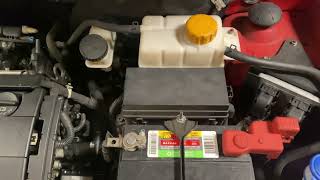

We Have This Part in Stock




The information in this article is provided for general reference and educational purposes only. Vehicle specifications, procedures, and part compatibility can vary by production date, trim level, and region. Always consult your vehicle's factory service manual and verify part numbers before purchasing or performing repairs. Safety-critical components such as airbags, seat belts, and braking systems should be installed by a qualified professional.
- Chevrolet Aveo:
- 🎬 Helpful Videos
- 🛍️ Shop This Part
- What's Unique About the 2002-2011 Chevrolet Aveo
- Symptoms You May Notice
- Most Likely Causes
- Diagnosis Steps
- Parts You'll Likely Need
- Related Codes That Often Appear With This One
- Platform-Specific Known Issues
- Mechanic-Grade Diagnostic Values
- Scan Tool Commands That Help
- Wiring & Ground Locations
- Real Owner Repair Stories
- OEM Part Supersession History
- Model Year Variations Within This Range
- Diagnostic Flowchart
- Other Known Issues on This Vehicle
- Used vs. New Parts: Buying Guide for This Vehicle
- Real Owner Stories
- 2009 Chevrolet Aveo — 32600 miles
- Related OBD-II Codes
- Frequently Asked Questions
- 🎟️ Get 5% Off