

P1605 on 2014-2018 Toyota Highlander: Rough Idle Causes and Fixes
On a 2014-2018 Toyota Highlander, code P1605 is most often caused by water intrusion and corrosion in the A43 ECM connector. This is a known issue, frequently originating from a poorly sealed aftermarket windshield deicer harness that wicks water to the ECM. The fix involves inspecting, cleaning, and sealing the connector. If damage is severe, the Engine Control Module (ECM) may need replacement.
- P1605 on a 2014-2018 Highlander means the engine idle is unstable and dropping too low.
- Before replacing any parts, your first step should be to inspect the A43 ECM connector for water damage or corrosion, as this is a known issue documented by Toyota.
- Cleaning the ECM connector and sealing it with dielectric grease is the most common and inexpensive fix.
- This code is often accompanied by other codes like P1603, P1604, P0171, and U0100, which all point toward the same ECM connector issue.
What's Unique About the 2014-2018 Toyota HIGHLANDER

For this generation of Toyota Highlander, the P1605 code is strongly associated with a specific, documented vulnerability. Toyota issued Technical Service Tip T-TT-0462-17 and TSB T-SB-0072-19 indicating that water can get into the A43 ECM connector, causing corrosion. The source is often a poorly sealed or damaged aftermarket windshield deicer harness; water enters the harness and is wicked through the engine's main wiring harness, eventually collecting in the ECM connector. There is even a safety recall (NHTSA 18E107000) for certain aftermarket windshields that cause this exact leak and can destroy the ECM. This single electrical issue can trigger a variety of seemingly unrelated codes, including P1605, making it a critical first point of inspection.
Diagnostic Flowchart

Tap your situation to follow the diagnostic path that matches what you're seeing on this vehicle.
Symptoms You May Notice

- Rough, shaky, or unstable engine idle.
- Engine RPMs dropping too low when stopped. 🎬 Watch: Common causes and fixes for the P1605 rough idle code.
- Engine may stall, especially at low speeds or shortly after startup.
- General drivability concerns.
- Check Engine Light is on.
- In some cases, the code may be stored as a 'pending' or 'historic' code without an active Check Engine Light.
- Replacing fuel injectors or fuel pump before checking for the known ECM connector issue.
- Replacing spark plugs or ignition coils when no misfire codes (e.g., P030x) are present.
- Replacing the ECM without first addressing the source of the water leak (e.g., aftermarket windshield deicer harness). The new ECM will likely fail again.
Most Likely Causes

- Water Intrusion and Corrosion at ECM Connector 🔴 High Probability As documented in Toyota TSBs T-TT-0462-17 and T-SB-0072-19, the A43 ECM connector is highly susceptible to water intrusion. The water source is often an aftermarket windshield with a poorly sealed deicer harness, which allows water to travel down the wiring into the connector. A recall for certain aftermarket windshields (NHTSA 18E107000) confirms this failure mode.
How to confirm: Visually inspect the A43 ECM connector for any signs of moisture, green or white corrosion, or pin damage. The ECM is located in the engine bay. Per TSB T-TT-0462-17, you should also check for a non-genuine Toyota windshield and inspect the A33 deicer harness connector for corrosion as the source.
Typical fix: Disconnect the battery. Unplug the connector, clean the pins and terminals carefully with an electrical contact cleaner and a small brush. Ensure the connector is completely dry. Apply dielectric grease to the connector seal before reconnecting to prevent future moisture intrusion. If the source is a leaking aftermarket windshield harness, that must be sealed or the windshield replaced with a genuine Toyota part to prevent recurrence.
Est. part cost: $10-$25 for cleaner and grease - Vacuum Leak 🟡 Medium Probability Cracked or disconnected vacuum hoses can introduce unmetered air into the intake system, disrupting the air-fuel ratio and causing a rough idle. This is a common cause for rough idle on many vehicles, including the Highlander.
How to confirm: Visually inspect all vacuum lines for cracks or loose connections, especially those coming off the airbox. A smoke test is the most effective method to pinpoint the location of a leak by introducing smoke into the intake and watching where it escapes.
Typical fix: Replace the cracked or broken vacuum hose.
Est. part cost: $15-$50 - Dirty or Faulty Throttle Body ⚪ Low Probability
How to confirm: Inspect the throttle body bore and plate for carbon buildup. A significant amount of grime can restrict airflow at idle and interfere with the idle air control mechanism.
Typical fix: Clean the throttle body plate and bore with a dedicated throttle body cleaner and a soft cloth. Do not spray directly into the electronics. After cleaning, an idle relearn procedure may be necessary.
Est. part cost: $10-$20 for cleaner - Failing Engine Control Module (ECM) ⚪ Low Probability This is usually a direct result of the primary cause (water intrusion). If the corrosion at the connector is severe or prolonged, it can damage the internal circuits of the ECM itself, requiring replacement.
How to confirm: This is a last resort after all other causes, especially the corroded connector, have been ruled out. Diagnosis requires professional-level tools to test the ECM's functions. The presence of code U0100 alongside P1605 strongly points to an ECM or communication issue.
Typical fix: Replace the Engine Control Module. This MUST be programmed to the vehicle's immobilizer system by a dealer or qualified shop before the engine will start. The part number on the replacement ECM must exactly match the original.
Est. part cost: $800-$1500+
Rare But Worth Checking
- Bad Batch of Fuel:
Diagnosis Steps
- Read all fault codes from the ECM. Pay close attention to any other codes that appear with P1605, as they provide critical clues.
- Begin with the most likely cause: Check if the vehicle has an aftermarket windshield. Toyota genuine windshields are marked 'Toyota' on the glass.
- Locate the Engine Control Module (ECM) in the engine bay. Disconnect the negative battery terminal for safety.
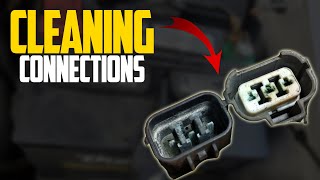
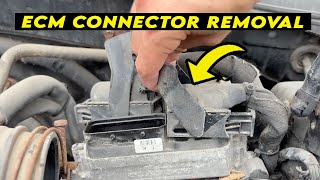
- Carefully unplug the A43 ECM connector. This may require pressing a tab and pulling a lever, or lifting locking tabs. 🎬 See how to safely disconnect and unplug your ECM connectors. Thoroughly inspect both the harness side and the ECM side for any signs of water, green/white powder (corrosion), or bent/damaged pins. This is the issue identified in TSB T-TT-0462-17.
- If corrosion is found at the A43 connector, also inspect the A33 windshield deicer harness connector as the likely source of the water.
- If corrosion is found, clean it using electrical contact cleaner and a small, soft brush. 🎬 Watch this easy DIY guide for cleaning corroded electrical connectors. Ensure all pins are clean and dry.
- Apply a thin layer of dielectric grease to the connector's weather seal to prevent future moisture intrusion.
- Address the source of the leak. If an aftermarket windshield deicer harness is leaking, it must be sealed or replaced.
- If no issue is found at the ECM connector, proceed to check for vacuum leaks. Visually inspect all hoses connected to the intake manifold. Perform a smoke test for a more definitive diagnosis.
- Inspect the throttle body for heavy carbon buildup that could impede idle control.
- If all else fails, the issue may be with the ECM itself, which requires professional diagnosis and replacement.
Parts You'll Likely Need
- Electrical Contact Cleaner — Required for safely cleaning corrosion from the ECM connector pins without leaving a residue.
Trusted brands: CRC, WD-40 Specialist
Aftermarket price range: $10-$15 - Dielectric Grease — Used to seal the ECM connector from moisture after cleaning, preventing the problem from recurring.
Trusted brands: Permatex, Loctite
Aftermarket price range: $5-$10 - Engine Control Module (ECM)
(OEM #e.g., 89661-0E520, 89661-0E531, 89661-48692 (Part number varies by year, engine, and drivetrain. Must verify by VIN and match original part exactly).)— Only needed if the ECM is internally damaged by severe water intrusion and corrosion, and cleaning the connector does not resolve the issue.
Related Codes That Often Appear With This One
- P1603 — Stall Malfunction. Both codes are cited together in TSBs T-SB-0072-19 and T-TT-0462-17 as resulting from the same root causes, like ECM connector corrosion.
- P1604 — Startability Malfunction. This code is also listed in the same TSBs and often appears with P1605 due to the shared electrical or fuel system faults.
- P0171 — System Too Lean. An air leak or fuel delivery issue causing the rough idle can also lead to a lean condition. This code is mentioned alongside P1605 in TSB T-TT-0462-17.
- P0300 — Random/Multiple Misfire Detected. A severe rough idle can be interpreted by the ECM as a misfire. This is listed as a possible companion code in TSB T-SB-0072-19.
- U0100 — Lost Communication With ECM/PCM. This code directly points to a problem with the ECM or its connections, which aligns perfectly with the known issue of a corroded ECM connector mentioned in TSB T-TT-0462-17. Forum users have reported seeing P1605 and U0100 together.
Technical Service Bulletins (TSBs) & Recalls
- T-TT-0462-17: Notes that various drivability concerns and DTCs, including P1605, can be caused by corrosion and water in the A43 ECM connector. It specifically identifies the water source as wicking from a poorly sealed aftermarket windshield deicer harness.
- T-SB-0072-19: Lists P1605 as a potential DTC that may be present with various drivability concerns. It also attributes the cause to corrosion in the A43 ECM connector due to faulty aftermarket windshield deicer harnesses.
Platform-Specific Known Issues
- A known issue of water and corrosion in the A43 ECM connector can cause P1605 and other drivability DTCs, as noted in Toyota Technical Service Tip #T-TT-0462-17.
- TSB #T-SB-0072-19 also lists P1605 among a group of DTCs that can appear due to various drivability concerns, and explicitly links the cause to corrosion from poorly sealed aftermarket windshield deicer harnesses.
- A recall for aftermarket replacement windshields, NHTSA campaign 18E107000, warns that the attached wire harness can leak water directly onto the ECM, causing short circuits and engine stalling.
Mechanic-Grade Diagnostic Values
- Engine Speed (RPM) Threshold — expected: Above 400 RPM within 5 seconds of starting. Failure: Engine speed drops to 400 RPM or less, triggering the code.
- ECM Terminal VPA - E2 (Accelerator Pedal Position Sensor) — expected: 0.5 - 1.1 V with ignition ON, pedal released. 2.6 - 4.5 V with ignition ON, pedal fully depressed.. Failure: Voltage outside of these ranges indicates a sensor or wiring issue.
- ECM Terminal VTA1 - E2 (Throttle Position Sensor) — expected: 0.5 - 1.1 V with ignition ON, throttle fully closed. 3.2 - 4.8 V with ignition ON, throttle fully open.. Failure: Voltage outside of these ranges indicates a sensor or wiring issue.
- ECM Terminal THW - E2 (Engine Coolant Temp. Sensor) — expected: 0.2 - 1.0 V when engine is hot (80°C / 176°F).. Failure: Significantly different voltage at operating temperature can indicate a faulty sensor, affecting idle calculations.
Hidden / Shadow Codes Worth Checking
- Freeze Frame Data: P1605 is a code where analyzing the snapshot of engine conditions at the time of the fault is critical. This data includes RPM, engine load, coolant temp, vehicle speed, and more, which helps determine the context of the rough idle. (see via A professional scan tool like Toyota Techstream is required to view the full, detailed freeze frame data. Standard OBD-II readers may only provide limited information.)
Scan Tool Commands That Help
- Toyota Techstream: Data List — To monitor live data from multiple sensors simultaneously (e.g., RPM, MAF sensor readings, throttle position, coolant temp) to see what parameter is behaving erratically when the rough idle occurs.
- Toyota Techstream: Active Test — To manually command components like the purge valve or other solenoids to operate. This helps verify if a component is functional, separate from the ECM's automatic control, helping to isolate the fault.
- Toyota Techstream: Health Check — To perform a comprehensive scan of all vehicle control modules. This is useful for identifying codes in other systems (like ABS or Body ECU) that may be related to the P1605 fault.
Wiring & Ground Locations
- A43 — The main connector at the Engine Control Module (ECM), located in the engine bay, typically on the left side.. This is the specific connector identified in Toyota TSBs as being highly prone to water intrusion and corrosion, which is the most common cause of P1605 on this vehicle.
- A33 — The connector for the windshield deicer harness, part of the engine room main wire harness.. This is often the source of the water leak. A poor seal, especially on aftermarket windshields, allows water to enter this connector and wick down the harness to the A43 ECM connector.
- Engine/Body Grounds — Key ground points are typically located on the fender aprons in the engine bay and behind the kick panels in the cabin.. A poor or corroded ground connection for the ECM or related sensors can cause erratic behavior and trigger rough idle conditions. While not the primary documented cause, checking major ground points is a fundamental step in diagnosing electrical issues.
"I Checked Everything" — The Actual Cause
- A very common misdiagnosis pattern for P1605 on this Highlander is performing a smoke test to find a vacuum leak, finding nothing, and then continuing to chase other potential causes like fuel delivery or ignition components. The actual root cause documented by Toyota, corrosion in the A43 ECM connector from a water leak, is an electrical fault that will not be detected by a smoke test. Technicians must prioritize the visual inspection of the A43 and A33 connectors over standard rough-idle diagnostic procedures.
OEM Part Supersession History
89661-0E520→89661-0E521, then 89661-0E522— Standard part revision and improvement by the manufacturer.
Heads up: The latest part number (89661-0E522) is the correct service replacement for the previous versions on applicable 2014-2016 FWD 3.5L models. Always verify the part number against the vehicle's VIN.
Model Year Variations Within This Range
- 2014-2016: These model years are equipped with the 3.5L 2GR-FE V6 engine.
- 2017-2018: As part of a mid-cycle refresh, these model years received the updated 3.5L 2GR-FKS V6 engine, which features D-4S direct and port fuel injection. While the fundamental water intrusion issue at the ECM connector still applies according to TSB T-SB-0072-19, some diagnostic parameters and fuel system components will differ from the earlier 2GR-FE engine.
Helpful Videos


We Have This Part in Stock



The information in this article is provided for general reference and educational purposes only. Vehicle specifications, procedures, and part compatibility can vary by production date, trim level, and region. Always consult your vehicle's factory service manual and verify part numbers before purchasing or performing repairs. Safety-critical components such as airbags, seat belts, and braking systems should be installed by a qualified professional.
- Toyota HIGHLANDER:
- 🎬 Helpful Videos
- 🛍️ Shop This Part
- What's Unique About the 2014-2018 Toyota HIGHLANDER
- Diagnostic Flowchart
- Symptoms You May Notice
- Most Likely Causes
- Rare But Worth Checking
- Diagnosis Steps
- Parts You'll Likely Need
- Related Codes That Often Appear With This One
- Technical Service Bulletins (TSBs) & Recalls
- Platform-Specific Known Issues
- Mechanic-Grade Diagnostic Values
- Hidden / Shadow Codes Worth Checking
- Scan Tool Commands That Help
- Wiring & Ground Locations
- "I Checked Everything" — The Actual Cause
- OEM Part Supersession History
- Model Year Variations Within This Range
- 🎟️ Get 5% Off