

OBD-II Code P1605: A Comprehensive Guide to Internal Control Module and Rough Idle Faults
What P1605 means, why it triggers, and how to fix it like a pro
- P1605 carries two distinct manufacturer definitions: a Keep Alive Memory (KAM) failure on Ford vehicles or a severe rough idle condition on Toyota and Subaru models.
- Test the battery and charging system before replacing any parts, as a voltage drop below 10.5V during startup is the number one cause of P1605 KAM errors.
- Stop driving immediately to prevent catalytic converter damage; a persistent rough idle sends unburnt fuel into the exhaust, causing a $1,500+ repair within weeks.
- Diagnose accompanying codes like P0171 (System Too Lean) or U0100 (Lost Communication) first, as P1605 is almost always a secondary symptom of these primary faults.
What Does P1605 Mean?

P1605 is a manufacturer-specific diagnostic trouble code (DTC) signaling a critical problem detected by the Powertrain Control Module (PCM). Its meaning varies significantly by brand. For Ford, it indicates the PCM failed a self-check of its 'Keep Alive Memory' (KAM). For Toyota, it signifies a severe 'Rough Idle' condition where engine speed drops to a near-stall state. In either case, it points to a foundational power, electrical, or engine performance issue the PCM cannot correct.
Technical definition: The official SAE/OBD-II definition for P1605 is set by the vehicle manufacturer. For Ford vehicles, it is 'Keep Alive Memory (KAM) Test Failure,' indicating the PCM's volatile memory was lost or corrupted due to a power interruption. For Toyota, it is 'Rough Idling,' setting when the engine speed falls below a critical threshold (e.g., 400 RPM) for several seconds. Other definitions include 'Knock Control CPU Malfunction' (Toyota/Lexus), 'Loss of HVAC Serial Data' (GM), and 'Rough Road Acceleration Sensor Electrical Malfunction' (Volkswagen).
Can I Drive With P1605?

No — Do Not Drive. Driving is strongly discouraged. The code indicates a critical fault in the engine's control system, which causes sudden stalling, entering a low-power 'limp mode' without warning, or unpredictable engine behavior. Continuing to drive with a rough idle or misfire sends unburnt fuel into the exhaust, causing expensive damage to the catalytic converter (an additional $1,000-$2,500 repair). Get the vehicle inspected immediately.
Common Causes

- Weak Battery or Poor Electrical Connections (Very Common) — An unstable voltage supply from a failing battery, corroded terminals, or a loose ground strap erases or corrupts the PCM's memory. This causes the computer to fail its internal self-test, triggering the 'KAM Test Failure' version of this code on Ford and Mazda vehicles.
- Vacuum Leak (Common) — Cracked or disconnected vacuum hoses (e.g., PCV hose, intake boot) allow unmetered air into the engine. This disrupts the air-fuel ratio, causing a severe rough idle that triggers the P1605 code on Toyota and Subaru models.
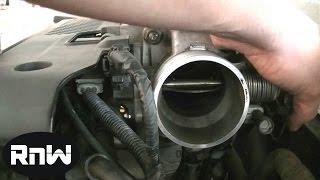
- Dirty Throttle Body or MAF Sensor (Common) — Heavy carbon buildup on the throttle plate restricts airflow at idle, while a dirty Mass Airflow (MAF) sensor inaccurately measures incoming air. 🎬 See how to clean your throttle body and MAF sensor. Both conditions prevent the PCM from maintaining a stable RPM, leading to stalling or a rough idle.
- Failing Ignition Coils or Spark Plugs (Common) — A weak ignition coil or worn-out spark plugs cause a persistent misfire. This creates significant engine vibration and an RPM drop, which the PCM interprets as a 'Rough Idle' fault.
- Faulty or Clogged Fuel Injectors (Less Common) — A clogged fuel injector prevents a cylinder from receiving the proper amount of fuel, leading to a misfire and rough idle. On diesel models, this is a frequent cause identified by analyzing injector balance rates.
- Low Fuel Pressure (Rare) — A failing fuel pump or a severely clogged fuel filter starves the engine of fuel. This results in lean running conditions, stalling, and rough performance that triggers P1605.
- PCM Software Glitch or Internal Failure (Rare) — The code sometimes triggers erroneously due to a software bug requiring a dealership update. Alternatively, an internal short or processor failure within the PCM requires complete module replacement. On Lexus and Hyundai models, P1605 specifically points to an internal 'Knock Control CPU' or ROM error.
Symptoms

- Check Engine Light is on — The Malfunction Indicator Lamp (MIL) illuminates immediately. The code sometimes stores as a pending or history code without an active light if the fault is intermittent.
- Engine stalls or is hard to start — The engine starts and immediately dies, or cranks for an extended period before starting. In severe cases, it does not start at all.
- Rough or unstable idle — The engine shakes, vibrates, and the RPM needle bounces erratically when the vehicle is stopped. This is the primary symptom for the Toyota variant. 🎬 Watch: Diagnosing and fixing Toyota P1605 rough idle causes.
- Reduced engine power and acceleration — The vehicle feels sluggish and unresponsive as the PCM enters 'limp mode' to prevent further engine damage.
- Poor fuel economy — When the PCM loses its learned adaptive memory (KAM) or operates in a fault state, it defaults to rich, inefficient fuel maps, causing a 10-20% drop in MPG.
- Increased Engine Misfires (also visible on scanner) — You feel a stumble or shudder during acceleration. Advanced scan tools detect these misfires in live data even if a specific misfire code (like P030x) is absent.
Diagnostic Flowchart
Tap your situation to follow the diagnostic path that matches what you're seeing on this code.
Common Fixes & Costs
- Replace the battery
— Parts: $150-$350, Labor: $50-$100, ~0.5 hr book time
(DIY)
: OEM - Repair a vacuum leak (e.g., replace PCV hose) — Parts: $10-$60, Labor: $100-$250, ~1.5 hr book time (DIY)
- Clean the throttle body and MAF sensor — Parts: $15-$25, Labor: $100-$250, ~0.8 hr book time (DIY)
- Replace an ignition coil and/or spark plugs
— Parts: $50-$120 per coil, $10-$30 per spark plug, Labor: $75-$200, ~1.2 hr book time
(DIY)
: OEM - Update or reflash PCM software — Parts: $0, Labor: $150-$300, ~1.5 hr book time (Professional)
- Replace the Powertrain Control Module (PCM)
— Parts: $800-$2,000+, Labor: $200-$400, ~2.5 hr book time
(Professional)
: OEM
: OEM
: OEM
Used vs. New Parts: Buying Guide
When a used part is worth it: A used PCM is a budget-conscious option for older, high-mileage vehicles where the cost of a new OEM module is a significant portion of the car's value. Source it from a reputable seller who offers a warranty and guarantees it is not locked to another vehicle's VIN.
Donor-vehicle mileage cap: roughly under 100000 miles for the part to have meaningful remaining life.
Donor quality checklist:
- Verify the part number matches EXACTLY, including any suffix letters.
- Purchase from a specialized auto recycler that tests and offers a warranty (30-90 days minimum).
- Visually inspect the pins for any corrosion, bending, or signs of water damage. A burning smell is a major red flag.
- Ensure the seller confirms the unit is 'unlocked' or provides the VIN of the donor vehicle for programming purposes.
Decision logic:
- If Vehicle is under 8 years old or has fewer than 100,000 miles → Buy a new or remanufactured PCM. The risk of premature failure of a used part is not worth the savings on a newer vehicle.
- If The vehicle is over 15 years old and the new part is over $1,000 → A warrantied used PCM from a reputable source is an acceptable risk to keep the vehicle running.
- If The specific P1605 code on your vehicle points directly to an internal ROM/CPU failure (common on Hyundai/Lexus) → Favor a remanufactured unit from a specialist over a used one, as they address known board-level failures.
Warranty tradeoff: Used parts typically have a 30-90 day warranty covering the part only. A new aftermarket or remanufactured part carries a 1-year to lifetime warranty. An OEM part installed by a dealer has a 1-2 year warranty on parts and labor.
Worst-case if a used part fails: $400-$800 if the used PCM is faulty or incompatible. This includes the non-refundable cost of programming attempts and the labor to diagnose and replace the module a second time.
What Happens If You Wait — Timeline
- 0-1 month: Check Engine Light appears. For the 'Rough Idle' variant, a slight, intermittent stumble is felt when stopped. For the 'KAM Error' variant, there are no drivability symptoms. (MPG impact: 0-5%% · Added cost: $0-$50 in wasted fuel.)
- 1-4 months: Rough idle becomes consistent, causing engine vibration. The vehicle is occasionally hard to start or stalls when coming to a stop. Fuel economy suffers as the PCM operates in a default, less efficient mode. (MPG impact: 5-15%% · Added cost: $50-$200 in wasted fuel.)
- 4-8 months: A persistent rough idle or misfire damages other components. Unburnt fuel overheats the catalytic converter, reducing its efficiency. Engine mounts are stressed from constant vibration. (MPG impact: 10-20%% · Added cost: $1,200-$2,800. The catalytic converter is damaged and requires replacement, even if the original fault is fixed.)
- 8+ months: The catalytic converter substrate melts down, causing a significant exhaust blockage. The engine has severely reduced power and cannot accelerate above a certain speed. O2 sensors are destroyed by excessive heat. (MPG impact: 20-40%+% · Added cost: $1,500-$3,500+. This includes catalytic converter and O2 sensor replacement. Chronic vibration destroys engine mounts, adding $400-$800 to the repair bill.)
Cost of Not Fixing It
- Immediate (0-1 month): Reduced fuel economy (5-15% drop), poor engine performance (hesitation, stalling), and a significant safety risk due to stalling in traffic. (Added cost: $50-$150 in wasted fuel per month.)
- Short-Term (1-6 months): A continuous rough idle or misfire sends unburnt fuel into the exhaust, which overheats and destroys the catalytic converter. This also damages oxygen sensors. (Added cost: $1200-$2800 for catalytic converter replacement, plus $150-$400 per oxygen sensor.)
- Long-Term (6+ months): Chronic engine vibration from a rough idle causes premature wear on engine mounts, exhaust components, and other sensors. Running rich leads to cylinder wall washing, causing internal engine damage. (Added cost: $400-$800 for engine mount replacement. Internal engine damage exceeds the value of the vehicle.)
Diagnosis Steps

- Check for Other Trouble Codes
Scan the vehicle for any other DTCs. P1605 is often a 'symptom' code triggered by another underlying issue. Codes like P0171 (Lean), P0603 (KAM Error), P1604 (Startability), or U0100 (Communication Loss) are critical clues. Always diagnose and fix other codes first.
Tools: OBD-II Scanner (Beginner) - Test Battery, Charging System, and Grounds
Visually inspect battery terminals and ground straps for corrosion and ensure they are tight. Use a multimeter to check battery voltage (>12.4V engine off, ~13.7-14.7V engine running). Have the battery and alternator professionally load-tested, as a weak battery failing under load is a primary cause.
Tools: Wrench set, terminal brush, multimeter (Beginner) - Check for Vacuum Leaks
With the engine running, listen for hissing sounds. Visually inspect all vacuum hoses and the air intake boot for cracks or disconnections. For hard-to-find leaks, use a smoke machine to feed smoke into the intake system; smoke exits from any leak point.
Tools: Flashlight, smoke machine (recommended) (Intermediate) - Inspect and Clean the Throttle Body and MAF Sensor
Remove the air intake hose. Inspect the throttle body bore and plate for black carbon buildup and clean with dedicated throttle body cleaner and a rag. Carefully remove the MAF sensor and spray the sensing wires with MAF sensor cleaner. Do not touch the wires.
Tools: Screwdriver/socket set, throttle body cleaner, MAF sensor cleaner, rags (Intermediate) - Test the Keep Alive Power (KAPWR) Circuit (Ford/Mazda)
Using a vehicle-specific wiring diagram, locate the KAPWR pin at the PCM connector. With the key off and PCM unplugged, use a multimeter to verify this wire has constant battery voltage (>12.4V). If not, trace the circuit back to its fuse and check for breaks in the wire.
Tools: Multimeter, vehicle-specific wiring diagram (Advanced) - [PRO TIP] Analyze Freeze Frame and Live Data
Use an advanced scan tool to analyze freeze frame data (sensor readings when the code set) and live MAF data. A healthy MAF reads ~1 g/s per liter of engine displacement at idle. Low MAF readings combined with high positive fuel trims (+10% or more) strongly indicate a vacuum leak.
Tools: Advanced OBD-II Scanner (Advanced) - [PRO TIP] Analyze Injector Balance Rates (Diesel Engines)
For diesel engines, P1605 points to a specific cylinder issue. View live data for PIDs like 'Injection Feedback Val #1-4'. A value above +3.0 mm³/st or below -3.0 mm³/st indicates a faulty injector or compression issue in that specific cylinder.
Tools: Advanced OBD-II Scanner with live data (Advanced) - [PRO TIP] Test Engine Coolant Temperature (ECT) Sensor
A faulty ECT sensor providing incorrect readings causes rough idle issues. Disconnect the sensor and measure the resistance between its two pins with a multimeter. Compare the reading to a temperature-resistance chart. A reading far outside the expected range indicates a faulty sensor.
Tools: Multimeter, vehicle-specific repair manual or resistance chart (Advanced) - [PRO TIP] Perform a Voltage Drop Test on Ground Circuits
A poor ground causes intermittent PCM power loss. Set a multimeter to a low DC Voltage scale (2V). With the engine running, connect the positive lead to the negative battery terminal and the negative lead to a clean metal point on the engine block. A reading above 0.2V indicates a poor engine ground requiring repair.
Tools: Multimeter with Min/Max function (Advanced) - [PRO TIP] Check Fuel Pressure
Low fuel pressure causes a lean condition and rough idle. Connect a fuel pressure gauge to the fuel rail's service port. With the key on and engine off (KOEO), the pressure must meet the manufacturer's specification (typically 40-60 PSI). If below spec, investigate the fuel pump and filter.
Tools: Fuel pressure gauge with appropriate adapters (Advanced) - Check for PCM Software Updates
Contact a dealership or use a professional-grade scan tool to check for available Technical Service Bulletins (TSBs) or PCM software updates. Manufacturers release updates to fix bugs that cause this code to set incorrectly.
Tools: Phone, dealership access, or J2534 passthrough device (Professional)
When This Code Triggers (Freeze-Frame Conditions)
- DTC Variant: Toyota 'Rough Idle' (The following conditions are typical for the rough idle variant of P1605.)
- Engine RPM: 400-800 RPM (Code sets at idle or just after returning to idle. The RPMs are unstable and drop below the target idle speed, triggering the fault.)
- Engine Load: 15-30% (Occurs under low engine load when the engine is most sensitive to air/fuel mixture disruptions.)
- Engine Coolant Temp: Any (Occurs when the engine is cold or fully warmed up (180-210°F). If it occurs only when cold, it points to a sensor issue; if only when warm, it suggests a vacuum leak that worsens as parts expand.)
- DTC Variant: Ford 'KAM Error' (Freeze frame for this variant is less about driving style and more about an electrical event. The key data points relate to voltage.)
- Voltage (as seen by PCM): < 10.0V (The critical event is a voltage drop during engine start or a power interruption while the key is off. This is the root cause but is rarely captured in the freeze frame, which records the state *after* the event.)
Related Codes
- P0603 — This code is 'Internal Control Module Keep Alive Memory (KAM) Error' and is the generic equivalent of the Ford-specific P1605. If you have a Ford with P1605, the diagnostic approach is identical to P0603, focusing on the battery and the KAPWR circuit.
- P0171 / P0174 — These codes for 'System Too Lean' are a direct CAUSE, while P1605 (on Toyota/Subaru) is the EFFECT. A vacuum leak or bad MAF sensor causes the lean condition (P0171/P0174), which in turn causes a severe rough idle, triggering P1605. Fix the lean condition first.
- P1604 — This is another manufacturer-specific code, meaning 'Startability Malfunction' (Toyota). P1604 sets when the engine cranks but fails to start and run properly. P1605 sets when the engine successfully starts but then idles so poorly that it drops below the target RPM.
- U0100 — This code means 'Lost Communication With ECM/PCM'. If U0100 appears with P1605, it strongly suggests an electrical problem is the root cause. This is a bad ground connection, a wiring harness issue, or a failing PCM losing power.
Climate & Environmental Factors
- Extreme Cold: Significantly increases the likelihood of a P1605 code, especially the 'Keep Alive Memory' variant on Ford vehicles. Cold temperatures reduce a battery's effective cranking amperage by 30-50%, making voltage drops during startup more severe. This voltage sag erases or corrupts the PCM's volatile memory.
- High Humidity: Promotes corrosion on electrical components, including PCM connectors, ground points, and sensor pins. Over time, this moisture ingress leads to intermittent electrical connections and voltage drops, causing unpredictable faults like P1605.
- High Altitude: Exacerbates existing rough idle conditions. The lower air density at altitude means the engine naturally produces less power. A pre-existing issue like a slightly dirty throttle body or a minor vacuum leak becomes severe enough at altitude to cause the engine RPM to drop below the P1605 threshold.
How to Talk to a Mechanic About This Code
Say this: "I have a P1605 code and I'd like to schedule a diagnostic. On my car [mention make, e.g., Ford/Toyota], this code means different things. Before we assume it's the main computer, please start by testing the electrical system (battery load test, grounds) for a KAM error, or check for vacuum leaks and clean the throttle body for a rough idle issue."
This signals you've done your research and guides the mechanic toward a logical, cost-effective diagnostic path, starting with the most common and cheapest fixes. It prevents them from jumping to the most expensive conclusion, which is replacing the PCM.
Avoid saying:
- 'Just fix whatever's wrong'
- 'My check engine light is on, can you look at it?' (too vague — invites upsell)
- 'Whatever you recommend'
Questions to ask before authorizing the repair:
- Did you perform a smoke test to check for vacuum leaks? (For Rough Idle)
- What were the long-term and short-term fuel trim values at idle? (For Rough Idle)
- Did you perform a battery load test and a voltage drop test on the ground circuits? (For KAM Error)
- Can you confirm the Keep Alive Power (KAPWR) circuit has constant voltage at the PCM? (For KAM Error)
- Will you provide a printout of the freeze-frame data stored with the code?
- What is your warranty on this specific repair, covering both parts and labor?
Where to Take It: Dealer vs Independent vs Chain
- Dealer:
Best for: Vehicles still under powertrain or emissions warranty., Complex electrical diagnostics or when a PCM software update/replacement is confirmed as necessary., Recalls and manufacturer-specific TSBs (Technical Service Bulletins).
Downsides: Highest labor rates, often 1.5-2x more than an independent shop., Defaults to replacing entire assemblies instead of smaller components. (Typical cost: +50% vs. baseline) - Independent Shop:
Best overall fit. A reputable independent shop with strong diagnostic skills solves 90% of P1605 issues for less money than a dealer. They are well-suited for both the mechanical ('Rough Idle') and electrical ('KAM Error') variants.
Best for: Out-of-warranty vehicles where cost is a major factor., Diagnosing and fixing the most common P1605 causes (battery issues, vacuum leaks, dirty sensors, ignition faults)., Building a long-term relationship with a trusted mechanic.
Downsides: Quality varies. Vet shops based on reviews and ASE certifications., Lacks access to the very latest manufacturer software for reflashing a PCM. (Typical cost: +0% vs. baseline) - Chain Shop:
Avoid for initial diagnosis. Their business model is not suited for a nuanced, manufacturer-specific code. They correctly identify a simple cause like a bad battery but misdiagnose a vacuum leak or ground fault.
Best for: Simple, confirmed fixes like a battery replacement (once diagnosed elsewhere)., Oil changes and tire rotations.
Downsides: Technician skill varies dramatically; not ideal for complex diagnostics like P1605., High pressure to upsell common but unnecessary services (e.g., fluid flushes)., Replaces parts based on the code alone without proper diagnosis. (Typical cost: -10% vs. baseline)
When to Walk Away From the Repair
If the estimated repair cost exceeds 50% of the car's private-party value (e.g., from Kelley Blue Book), seriously consider selling or trading in the vehicle instead of repairing it.
- Car worth $4000, fix is $2000: Borderline. The repair cost is 50% of the car's value. Get a second opinion before authorizing, as a cheaper root cause might be found.
- Car worth $12000, fix is $1800: Fix it. The repair cost is only 15% of the vehicle's value, which is well below the threshold.
- Car worth $2500, fix is $1500: Walk away. The repair cost is 60% of the car's value. It is not economically sensible to proceed.
What Scan Tool You Need for This Code
Minimum: A scanner that reads and clears codes, displays live sensor data, and shows freeze frame data.
A basic $20 code reader only gives you 'P1605,' which is useless without knowing the manufacturer's definition and the live data behind it. You need to see fuel trims, MAF readings, and RPMs to diagnose a 'Rough Idle' or check for other electrical codes related to a 'KAM Error.'
Budget: BlueDriver Pro or Ancel BD310 (~$90) — Connects to your smartphone via Bluetooth. The app allows you to read manufacturer-specific code definitions, view and graph live data (RPM, fuel trims, MAF g/s), and look at the freeze frame data to see what the engine conditions were when the code was set.
Mid-range: Foxwell NT510 Elite or Autel MaxiCOM MK808S (~$150) — Provides all the functions of the budget pick but on a dedicated handheld device. Includes bidirectional controls to test specific components and accesses more manufacturer-specific systems (like ABS, Airbag, Transmission) which is helpful if other codes are present.
Professional: Autel MaxiSys MS906Pro or LAUNCH X431 series (~$900-1500) — Offers full bidirectional control to command tests, component actuations, and access to advanced coding and programming functions. This is professional-grade equipment necessary for tasks like PCM replacement and programming.
Rent vs buy: If this is a one-time diagnosis, auto parts stores (like AutoZone) scan your codes for free. For DIY diagnosis, buying a budget pick for under $100 is the best investment you can make, paying for itself by avoiding a single diagnostic fee at a shop.
How to Clear the Code After You Fix It
- Ensure the underlying fault is fixed.
- Reconnect the battery if it was disconnected for the repair.
- Use a quality OBD-II scan tool to erase the trouble codes.
Drive cycle (~30 minutes): Start the vehicle from a cold start (sitting over 8 hours). Idle for 2-3 minutes. Drive for 15-20 minutes in a mix of city (stop-and-go) and highway (steady speed of 55 mph for 5-10 minutes) conditions. Allow the vehicle to cool down completely and repeat if necessary.
Readiness monitors affected: Catalyst (CAT), Evaporative System (EVAP), Oxygen (O2) Sensor, Oxygen Sensor Heater
Before emissions retest: drive at least 50 miles to fully set monitors.
Watch out for:
- Disconnecting the battery clears the code but erases all readiness monitors, guaranteeing an emissions test failure until a full drive cycle is completed.
- The code immediately returns if the root cause (e.g., vacuum leak, weak battery) is not properly repaired.
- Some vehicles require a specific, manufacturer-defined drive cycle which differs from the generic procedure.
Will This Fail Emissions / State Inspection?
Yes — this code typically fails an OBD-II emissions inspection.
- California: An active Check Engine Light is an automatic failure. After repair, a full drive cycle must be completed to set all OBD-II readiness monitors before the vehicle can be re-tested by a STAR certified station.
- New York: The NYS Vehicle Inspection Program includes an OBD-II scan. A P1605 code results in an immediate inspection failure. The fault must be repaired and the code cleared before re-inspection.
- Texas: In the 17 counties requiring emissions testing, an illuminated MIL (Check Engine Light) for any DTC causes the vehicle to fail the test. Readiness monitors must also be in a 'Ready' state to pass.
Most Commonly Affected Vehicles
- Toyota Corolla, Camry, RAV4, Tacoma, Hilux (2005-2018) — Most commonly triggers the 'Rough Idling' version of P1605. The cause is almost always mechanical (vacuum leak, dirty throttle body, ignition coil) rather than the PCM itself. TSB EG014-05 exists for 2003-2005 models to recalibrate the ECM.
- Ford Focus, F-150, Fusion, Transit (2005-2015) — Prone to the 'Keep Alive Memory (KAM) Test Failure' version. This is very often caused by a weak battery, alternator issue, or poor ground connection. 2012-2014 Focus models had known faulty ground connections covered by TSB 14-0096.
- Lexus LS, RX, IS (1998-2012) — Frequently defines P1605 as 'Knock Control CPU Malfunction,' which points towards a failure of a sub-processor within the main PCM.
- Hyundai Elantra, Sonata, Tucson (2005-2016) — Defines P1605 as 'Internal Control Read Only Memory (ROM) Error,' which directly points to a failed PCM requiring replacement.
- Subaru Outback, Forester, Impreza (2008-2017) — Similar to Toyota, P1605 relates to rough idling. Diagnosis relies heavily on analyzing freeze-frame data to understand the conditions when the code was set.
- Volkswagen Golf, Passat, Jetta (2010-2018) — On many VW models, P1605 is 'Rough Road Acceleration Sensor Electrical Malfunction.' This is a different issue related to the G-sensor circuit, not typically causing engine performance problems.
- Nissan Maxima, Altima, Sentra (2004-2012) — Associated with a 'TCM to ECM Communication Error,' especially when it appears with U-series codes like U0100. This suggests a wiring or power supply issue affecting the CAN bus network.
- GM (Chevrolet/GMC) Various models (2000-2010) — On some GM vehicles, P1605 is defined as 'Loss of HVAC Serial Data,' indicating a communication problem between the climate control module and the PCM.
- BMW 3 Series, 5 Series, X3, X5 (2008-2016) — Indicates an internal PCM fault or a significant voltage supply problem to the control unit. Diagnosis requires manufacturer-specific diagnostic tools to test the DME (PCM).
Manufacturer-Specific Notes
- Ford: The code means 'Keep Alive Memory (KAM) Test Failure.' It triggers simply by disconnecting the battery. If the code appears after a battery change, clear it and perform a drive cycle. For 2012-2014 Focus models, check TSB 14-0096 regarding a poor body ground connection.
- Toyota/Lexus: The code is a 'reaction' to a physical problem like a vacuum leak, dirty MAF/throttle body, or failing ignition coil. The PCM is rarely the cause. For the 'Knock Control CPU Malfunction' variant, the PCM is more likely at fault, but exhaust all other possibilities first.
- GM: On many GM models, this code points to a 'Loss of HVAC Serial Data.' This means the engine computer isn't receiving signals from the climate control module, causing bizarre electrical issues or a no-start condition.
- Subaru: Similar to Toyota, it relates to rough idling. The diagnostic procedure focuses heavily on checking freeze-frame data to understand the engine conditions (load, temperature, RPM) when the code was set.
- Diesel Engines (General): On diesel vehicles, P1605 points to a combustion issue in a single cylinder. Before inspecting system-wide problems, use a scan tool to check injector balance rates or perform a power balance test to isolate the problematic cylinder.
Real Owner Stories
2011 Toyota Tundra 4.7L V8 with P1605 & P1603
Check engine light came on, but the truck appeared to have no obvious issues, getting 15+ MPG in city driving. The P1605 code indicated a rough idle.
What they tried:
- Owner planned to clean the MAF sensor and throttle body and check for intake air leaks.
- Forum members suggested checking for bad wires/connections at the transmission for the P1603 code and verifying battery/alternator voltage.
Outcome: The owner cleared the codes and they did not immediately return. They proceeded to clean the MAF and throttle body as a preventive measure and found the throttle body was dirty. The battery had been replaced a year prior, leading to a theory that the codes were old and had not been cleared.
Lesson: Always start with the simplest fixes. Cleaning the MAF sensor and throttle body is a low-cost, high-impact first step for a 'Rough Idle' P1605 code on a Toyota. Verify if codes are old from a previous repair before diving into complex diagnostics.
2007 Ford Fusion with P1605 KAM Error
The Check Engine Light was on with a P1605 'Keep Alive Memory test failure' code. There were no major symptoms, but the owner was concerned about potential idle issues and poor gas mileage.
What they tried:
- Inspected all battery terminals and wire ends for corrosion or damage.
- Tested the battery voltage to ensure it was >10.5V at the KAPWR circuit pin on the PCM.
Outcome: The guide explains that if a battery was recently disconnected, the code triggers on the first run. If not, the cause is a real-time power supply issue. The fix involves finding and repairing the source of the power interruption, most often a bad battery or corroded connection.
Lesson: On Ford vehicles, P1605 is almost always an electrical issue. Before suspecting the PCM, thoroughly test the battery, clean all terminals, and check ground connections.
Toyota Corolla with P1605 and P0171 (System Too Lean)
A vehicle arrived at a second repair shop after the first shop replaced the MAF sensor and air filter, but the P1605 and P0171 codes returned.
What they tried:
- The first shop replaced the MAF sensor and air filter.
- The second shop performed a smoke test and replaced a leaking vacuum hose, but the codes returned.
- A third diagnostic approach focused on the P0171 lean code as the cause of the P1605 rough idle, prompting a fuel pressure test.
Outcome: The fuel pressure test revealed the pressure was only 29 PSI, far below specification. The low fuel pressure caused the lean condition (P0171), which in turn caused the rough idle (P1605). The root cause was a failing fuel pump.
Lesson: When P1605 appears with other codes like P0171/P0174 (Lean), diagnose the other codes first. P1605 is the symptom (rough idle) caused by the underlying problem (lean condition).
How to Prevent This Code From Triggering
- Periodically test battery and clean terminals (Every 6 months or during oil change) — Prevents the most common cause of KAM-related P1605 codes by ensuring a stable voltage supply and preventing corrosion that creates resistance. A multimeter test should show >12.4V with the engine off.
- Clean the throttle body (Every 75,000-100,000 miles) — Removes carbon buildup that restricts airflow at idle. This prevents the engine RPM from dropping low enough to trigger a 'Rough Idle' P1605 code on Toyota and Subaru models.
- Inspect vacuum hoses (Annually) — Rubber hoses degrade with heat and time, leading to cracks and splits that cause vacuum leaks. Visual inspections catch leaks before they become severe enough to cause a rough idle.
- Avoid frequent short trips (Daily habit) — Short drives prevent the alternator from fully recharging the battery after starting. This gradually weakens the battery, increasing the risk of voltage drops that cause KAM errors.
- Ensure battery is securely mounted (Every oil change) — A loose battery vibrates excessively, leading to internal damage and a shorter lifespan. This causes sudden failure and triggers electrical codes like P1605.
Frequently Asked Questions
Can a bad battery cause a P1605 code?
Yes, absolutely. A weak, failing, or recently disconnected battery is the most common cause of the 'Keep Alive Memory' version of P1605 on Ford vehicles.
What is the first thing to check for a P1605 code?
The very first step is to use an OBD-II scanner to check for any other codes. The second step is to thoroughly test the battery and charging system, as a simple voltage issue is a frequent cause.
What are common misdiagnosis mistakes with P1605?
The most common mistake is immediately assuming the PCM is bad and replacing it. Technicians overlook simpler causes because the definition reads 'Internal Computer Failure.' Always rule out battery issues, bad grounds, vacuum leaks, and dirty sensors before condemning an expensive PCM.
Can a bad ground wire cause a P1605 code?
Yes. A corroded, loose, or broken ground strap causes intermittent power interruptions to the PCM. This corrupts the Keep Alive Memory (KAM) and triggers a P1605 code.
What does 'Knock Control CPU Malfunction' mean?
This is a specific definition for P1605 used by Toyota and Lexus. It means a dedicated sub-processor inside the main engine computer (PCM) responsible for detecting engine knock failed its internal self-test. While it points to a PCM fault, external wiring must be checked before replacement.
Is it safe to drive my car with a P1605 code?
No. The code signifies a high-severity fault that causes the engine to stall in traffic, lose power unexpectedly, or behave erratically, creating a significant safety risk.
How much does it cost to fix a P1605 code?
Costs range from $150 for a new battery to $350 for a vacuum leak repair. Cleaning a throttle body averages $150 at a shop. Replacing a faulty PCM is the most expensive scenario, costing between $1,200 and $2,500 including programming.
Will clearing the code fix the problem?
Clearing the code only turns off the check engine light temporarily. The code returns on the next drive cycle if the underlying mechanical or electrical fault is not repaired.
Key Takeaways
- P1605 carries two distinct manufacturer definitions: a Keep Alive Memory (KAM) failure on Ford vehicles or a severe rough idle condition on Toyota and Subaru models.
- Test the battery and charging system before replacing any parts, as a voltage drop below 10.5V during startup is the number one cause of P1605 KAM errors.
- Stop driving immediately to prevent catalytic converter damage; a persistent rough idle sends unburnt fuel into the exhaust, causing a $1,500+ repair within weeks.
- Diagnose accompanying codes like P0171 (System Too Lean) or U0100 (Lost Communication) first, as P1605 is almost always a secondary symptom of these primary faults.
Helpful Videos


The information in this article is provided for general reference and educational purposes only. Vehicle specifications, procedures, and part compatibility can vary by production date, trim level, and region. Always consult your vehicle's factory service manual and verify part numbers before purchasing or performing repairs. Safety-critical components such as airbags, seat belts, and braking systems should be installed by a qualified professional.
- 🎬 Helpful Videos
- What Does P1605 Mean?
- Can I Drive With P1605?
- Common Causes
- Symptoms
- Diagnostic Flowchart
- Common Fixes & Costs
- Used vs. New Parts: Buying Guide
- What Happens If You Wait — Timeline
- Cost of Not Fixing It
- Diagnosis Steps
- When This Code Triggers (Freeze-Frame Conditions)
- Related Codes
- Climate & Environmental Factors
- How to Talk to a Mechanic About This Code
- Where to Take It: Dealer vs Independent vs Chain
- When to Walk Away From the Repair
- What Scan Tool You Need for This Code
- How to Clear the Code After You Fix It
- Will This Fail Emissions / State Inspection?
- Most Commonly Affected Vehicles
- Manufacturer-Specific Notes
- Real Owner Stories
- 2011 Toyota Tundra 4.7L V8 with P1605 & P1603
- 2007 Ford Fusion with P1605 KAM Error
- Toyota Corolla with P1605 and P0171 (System Too Lean)
- How to Prevent This Code From Triggering
- Frequently Asked Questions
- Can a bad battery cause a P1605 code?
- What is the first thing to check for a P1605 code?
- What are common misdiagnosis mistakes with P1605?
- Can a bad ground wire cause a P1605 code?
- What does 'Knock Control CPU Malfunction' mean?
- Is it safe to drive my car with a P1605 code?
- How much does it cost to fix a P1605 code?
- Will clearing the code fix the problem?
- Key Takeaways
- 🎟️ Get 5% Off