

P1604 on 2017-2018 Toyota Sequoia: Startability Malfunction Causes and Fixes
On a 2017-2018 Sequoia, P1604 usually indicates a "Startability Malfunction." The most common cause, especially if seen with fuel trim codes, is an issue with the flex-fuel system's alcohol density calculation, addressed by Toyota TSB T-SB-0166-19_Rev. This fix involves replacing the fuel pump and reprogramming the ECM, and is often covered under Toyota's 96-month/80,000-mile Federal Emission Warranty.
- P1604 on a 2017-2018 Sequoia means 'Startability Malfunction' and is often related to a Flex Fuel system issue.
- Before starting repairs, check for TSB T-SB-0166-19_Rev by looking at live data for alcohol density and fuel trims with a scan tool.
- The most probable fix for a P1604 accompanied by fuel trim codes is a new fuel pump and an ECM software update, as per the TSB.
- Simpler issues like a weak battery or failing fuel pump (unrelated to the TSB) are also possible causes and should be diagnosed early.
- Do not assume the starter is bad if the engine is cranking over.
What's Unique About the 2017-2018 Toyota SEQUOIA
For the 2017-2018 Sequoia with the 5.7L Flex Fuel (3UR-FBE) engine, P1604 is often not a simple battery or starter problem. Toyota issued Technical Service Bulletin T-SB-0166-19_Rev because the ECM can incorrectly estimate the alcohol content in the fuel, even when using standard E0-E10 gasoline. This miscalculation, which can be triggered by events like a battery change or running the tank low, leads to improper fuel mixtures during startup. This causes extended cranking, rough starts, and the P1604 code, often accompanied by lean (P0171/P0174) or rich (P0172/P0175) codes. A scan tool will often show a high alcohol density percentage (e.g., over 80%) and highly negative fuel trims (e.g., -20% or more) as confirmation.
Diagnostic Flowchart
Tap your situation to follow the diagnostic path that matches what you're seeing on this vehicle.
Symptoms You May Notice
- Engine cranks for an extended period before starting (long crank)
- Engine starts and then immediately stalls
- Check Engine Light is on
- Vehicle may have a rough idle immediately after starting 🎬 Watch: Understanding the P1604 startability malfunction and common fixes
- Intermittent no-start condition, may start normally after sitting for a few hours
- Smell of rich fuel mixture after a difficult start
- Replacing the starter motor when the engine is cranking normally but not starting.
- Replacing fuel injectors when the problem is low fuel pressure from the pump or an incorrect ECM calculation.
- Assuming the vehicle was run on E85 fuel when the high alcohol reading is actually an ECM error.
Most Likely Causes
- Incorrect Fuel Alcohol Density Calculation 🔴 High Probability A known issue on 5.7L Flex Fuel engines, documented in Toyota TSB T-SB-0166-19_Rev. The ECM's logic for estimating ethanol content can become skewed, leading to incorrect air/fuel ratios for starting. This is the most prevalent cause for P1604 on FFV models.
How to confirm: Use a scan tool like Toyota Techstream to check live data. Look for high negative fuel trims (e.g., -10% to -25% or more) and an alcohol density estimate that is much higher than the actual fuel content (e.g., showing 15% to 83% when using E10 gasoline). A YouTube video demonstrates this process clearly, showing 🎬 See how a PCM update fixes long crank times fuel trims at -23% and alcohol concentration at 83% on a vehicle with this issue.
Typical fix: The official fix involves replacing the fuel pump assembly with an updated part and reprogramming the Engine Control Module (ECM) with the latest calibration per TSB T-SB-0166-19_Rev. This repair is covered under the Toyota Federal Emission Warranty, which is in effect for 96 months or 80,000 miles, whichever comes first.
Est. part cost: $350-$550 - Weak or Failing Battery 🟡 Medium Probability
How to confirm: Test the battery voltage with a multimeter (should be ~12.6V with the engine off). Perform a load test to check its ability to deliver cranking amps. Many auto parts stores offer free battery testing. Low voltage can cause various electronic modules, including the ECM, to behave erratically during startup.
Typical fix: Replace the battery.
Est. part cost: $150-$300 - Failing Fuel Pump 🟡 Medium Probability Aside from the TSB, the fuel pump itself can fail, leading to low fuel pressure. Some owners report a crank-no-start condition that is temporarily resolved by banging on the fuel tank, a classic sign of a failing pump motor. A failing pump can cause a slow pressure build-up, extending crank time and triggering P1604 before the pump fails completely.
How to confirm: Connect a fuel pressure gauge to the fuel system and verify the pressure is within the manufacturer's specification during cranking. For the 5.7L (3UR-FBE) engine, the standard fuel pressure should be between 370 to 430 kPa (53.7 to 62.4 psi). Listen for the pump to prime (a faint hum from the rear of the vehicle) when the key is turned to the 'ON' position.
Typical fix: Replace the fuel pump assembly. Note that this is also part of the TSB fix, so diagnosis is key to avoid replacing it unnecessarily if the issue is only the ECM calibration.
Est. part cost: $350-$550 - Dirty Throttle Body ⚪ Low Probability
How to confirm: Visually inspect the throttle body and throttle plate for carbon buildup, which can restrict airflow at idle and during startup, making it difficult for the engine to 'catch' and stabilize.
Typical fix: Clean the throttle body using a dedicated throttle body cleaner and a soft cloth.
Est. part cost: $5-$15
Rare But Worth Checking
- Faulty Crankshaft or Camshaft Position Sensor: These sensors are critical for engine timing. If their signal is weak or absent during cranking, the ECM won't know when to fire the spark plugs and fuel injectors. This can sometimes cause a P1604 without other specific sensor codes.
- Secondary Air Injection System Failure: While this system typically throws codes like P2440 or P2445, a failure can sometimes contribute to starting issues or cause the vehicle to enter a 'limp mode' which might be confused with a startability problem. However, it's less commonly a direct cause of an isolated P1604.
- Winter Blend Fuel: Some owners on forums report that the alcohol density learning issue is exacerbated when gas stations switch to winter blend fuels, suggesting the different formulation can further confuse the ECM's calculations.
Diagnosis Steps
- Scan for all DTCs. Pay close attention to any accompanying fuel trim (P0171/P0174/P0172/P0175) or immobilizer codes.
- Check the battery. Ensure it is fully charged and passes a load test. A weak battery is a simple but common cause of starting issues.
- If the vehicle is a Flex Fuel model, use a scan tool to view live data for 'Alcohol Density Estimate' and short/long-term fuel trims. If alcohol density is ≥ 15% while using standard gasoline AND/OR fuel trims are ≤ -10%, the issue is the one described in TSB T-SB-0166-19_Rev.
- Check fuel pressure. Connect a gauge to verify the fuel pump is delivering adequate pressure during crank. This helps differentiate a standalone pump failure from the TSB issue. The target pressure is 53.7 to 62.4 psi.
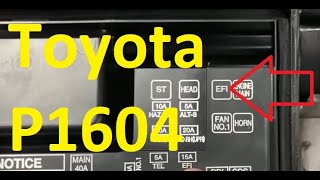
- Listen for the fuel pump priming when the ignition is turned on. If it's silent, check the fuel pump relay and fuses (often labeled 'EFI'). The EFI NO.1 fuse and F/PMP relay are located in the engine compartment fuse box.
- Inspect the air intake system for obstructions and the throttle body for heavy carbon buildup.
- If the TSB condition is confirmed, contact a Toyota dealer. Reference TSB T-SB-0166-19_Rev and inquire about coverage under the 96-month/80,000-mile Federal Emission Warranty.
- If all else fails, investigate the ignition system (spark plugs, coils) and starting circuit (starter, relays).
Parts You'll Likely Need
- Fuel Pump Assembly
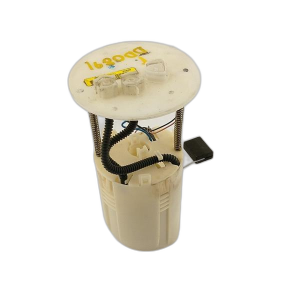
(OEM #77020-0C170)— This is the primary part replaced to fix the alcohol density calculation issue as per TSB T-SB-0166-19_Rev. It's also the fix for a standard fuel pump failure. 🎬 Watch: Step-by-step fuel pump replacement for Toyota 5.7L engines This specific part number is often associated with the 38-gallon fuel tank option.
Trusted brands: Toyota Genuine Part, Denso, Aisin
OEM price range: $450-$780
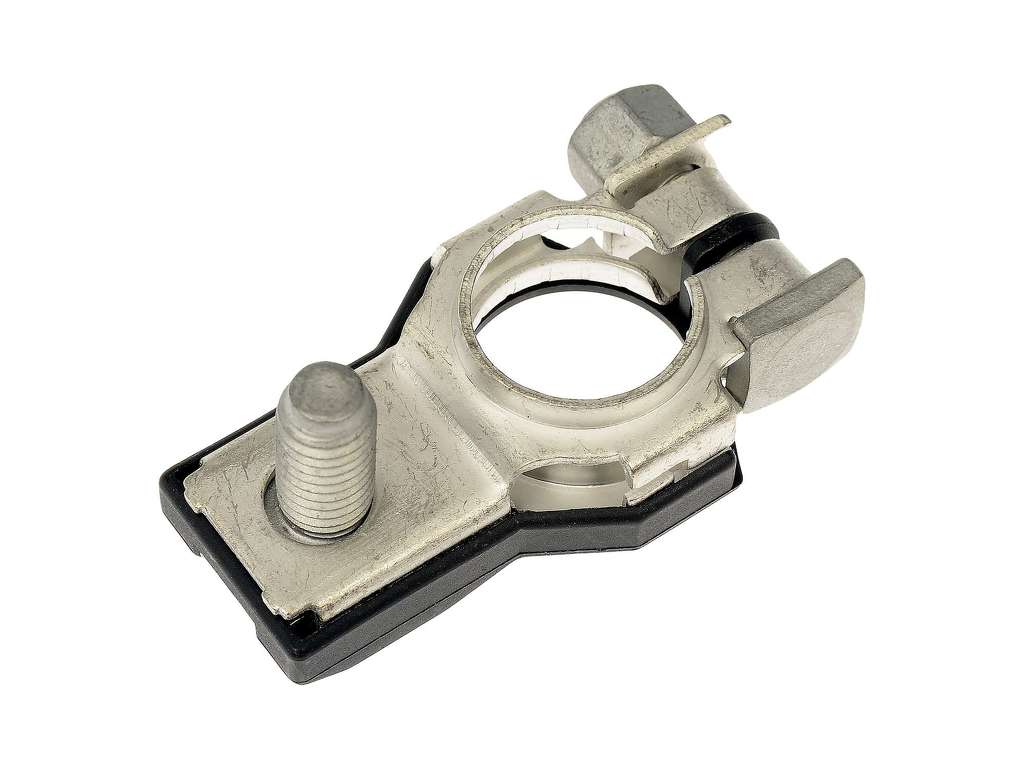
Aftermarket price range: $200-$400 - Battery — A weak battery is a common cause for all types of starting issues and should be one of the first components checked.
Trusted brands: Interstate, DieHard, Duralast
OEM price range: $200-$300
Aftermarket price range: $150-$250
Related Codes That Often Appear With This One
- P0171 / P0174 — System Too Lean. These codes are frequently seen with P1604 on Flex Fuel models when the ECM incorrectly calculates a high alcohol density, causing it to command a fuel mixture that is too lean for the actual gasoline being used.
- P0172 / P0175 — System Too Rich. These can also appear alongside P1604 for the same reason as the lean codes, as the ECM struggles to adapt to the perceived vs. actual fuel composition.
- B2799 — Engine Immobiliser Malfunction. In some cases, a problem with the key's transponder chip or the immobilizer system can prevent the engine from starting and may log P1604 as a related symptom.
Technical Service Bulletins (TSBs) & Recalls
- T-SB-0166-19_Rev: 'Extended Crank and/or MIL ON With DTC P0171, P0174, P0172, P0175, P1604 (Flex-Fuel)'. This is the primary document for diagnosing and fixing the most common cause of P1604 on these vehicles. It supersedes all previous versions.
Platform-Specific Known Issues
- The most significant issue for this vehicle and code is the Flex Fuel alcohol density miscalculation, which is covered by Toyota TSB T-SB-0166-19_Rev. This bulletin applies to 2009-2018 Sequoias and 2009-2019 Tundras, outlining a fix that includes a new fuel pump and an ECM reflash.
- Owners report dealer quotes for the TSB repair (fuel pump and ECM flash) to be around $1400-$1700 if not covered by warranty. Some owners have successfully negotiated with Toyota Corporate for partial coverage even when outside the mileage limit but within the time limit of the emissions warranty.
Mechanic-Grade Diagnostic Values
- Fuel Pressure (at fuel rail) — expected: 370 to 430 kPa (53.7 to 62.4 psi). Failure: Pressure significantly below this range during cranking or with key-on-engine-off indicates a weak fuel pump or leak.
- Alcohol Density Estimate (Live Data) — expected: <10% when using standard E10 gasoline.. Failure: A reading of 15% or higher confirms the ECM has incorrectly learned the fuel composition, as described in TSB T-SB-0166-19_Rev.
- Long Term Fuel Trim (Live Data) — expected: Typically within +/- 10%. Failure: Highly negative values, such as -20% to -25%, indicate the ECM is trying to compensate for a perceived high alcohol content by reducing fuel delivery.
- Freeze Frame Data - Engine Speed — expected: Should rise above 500 RPM quickly during a normal start.. Failure: If all 5 sets of freeze frame data show 0 rpm, it points to a starter signal, crankshaft position sensor, or dead battery issue. If data shows 100-500 rpm, it indicates the engine cranked but failed to combust, pointing towards a fuel or ignition problem.
- Battery Voltage for 'Fuel Density Learning Value Reset' — expected: 9V or higher. Failure: The reset utility in Techstream may fail to execute if the battery voltage is below 9V.
Scan Tool Commands That Help
- Toyota Techstream (or capable bidirectional scanner like Autel, Launch): Fuel Density Learning Value Reset — This is the specific software function used to fix the incorrect alcohol density issue. It resets the learned value to zero, forcing the ECM to relearn the actual fuel composition. The path is typically: Powertrain / Engine and ECT / Utility / Fuel Density Learning Value Reset.
- Toyota Techstream: Active Test: Fuel Pump / Speed — This allows a technician to command the fuel pump to turn on without cranking the engine. It is used to verify the pump is operational and to make it easier to perform a fuel pressure test.
- Toyota Techstream: Active Test: Control the Injection Volume for All Cylinders — Can be used to test the response of the fuel injection system during diagnosis.
Wiring & Ground Locations
- F/PMP Relay (Fuel Pump Relay) — In the engine compartment fuse/relay box.. A faulty fuel pump relay will prevent the fuel pump from receiving power, leading to a no-fuel, no-start condition that will set P1604.
- EFI NO.1 Fuse — In the engine compartment fuse/relay box, typically a 25A fuse.. This fuse protects the main circuit for the multiport fuel injection system. A blown fuse will cut power to critical fuel system components, causing a no-start.
- ST Relay (Starter Relay) — In the engine compartment fuse/relay box.. If the starter relay fails, the starter motor will not engage, leading to a no-crank condition which can also be associated with P1604 if the ECM sees a start request without a corresponding engine speed signal.
- ECM Ground Points — The ECM relies on multiple ground points. Key engine grounds are located on the engine block and cylinder heads. Body grounds are located behind kick panels and under the dash. For example, ground points A1 and A2 are behind the left headlight, and H3 is in the right kick panel.. A poor or corroded ground connection for the ECM or its sensors can cause erratic behavior, incorrect sensor readings, and startability issues, leading to a P1604 code.
Real Owner Repair Stories
- YouTube channel 'Alex's Automotive' (2015 Toyota Sequoia) — Long crank in the morning, takes 10-15 seconds to start, sometimes requires a second key cycle to start.
❌ Tried (didn't work) The owner had not yet attempted repairs.
✅ What actually fixed it The technician diagnosed the issue using a scan tool, confirming the TSB conditions. Live data showed long-term fuel trims at -23% and -25%, and the alcohol concentration at 83%. The confirmed fix was to perform the TSB repair: replace the fuel pump and reprogram the PCM with the latest calibration. - obd2-scanner.com user report (2013 Toyota Tundra 5.7L Flex Fuel (67,500 miles)) — Hard starting, poor gas mileage, rough running.
❌ Tried (didn't work) Initial diagnosis pointed towards expensive dealer repair.
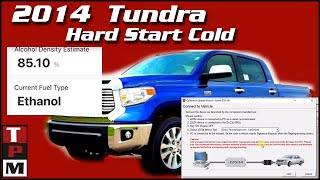
✅ What actually fixed it The owner purchased a Launch CRP919E bidirectional scan tool. They confirmed the 'Alcohol Fuel Density Level' was at 85%. Using the scanner's special function 'Fuel Density Learning Value Reset', they reset the value to zero. This immediately resolved the hard starting and improved fuel economy and engine smoothness. This avoided the full TSB procedure of replacing the fuel pump.
OEM Part Supersession History
23280-38040→23280-38041— Updated part for the Fuel Injection Pressure Regulator Assembly.T-SB-0058-13→T-SB-0166-19— The TSB for the startability issue was updated with new parts and procedures.
Heads up: Previous versions of the TSB are considered obsolete and should be discarded.
Helpful Videos

Used OEM Parts in Stock

New Aftermarket Parts Available


The information in this article is provided for general reference and educational purposes only. Vehicle specifications, procedures, and part compatibility can vary by production date, trim level, and region. Always consult your vehicle's factory service manual and verify part numbers before purchasing or performing repairs. Safety-critical components such as airbags, seat belts, and braking systems should be installed by a qualified professional.
- Toyota SEQUOIA:
- 🎬 Helpful Videos
- 🛍️ Shop This Part
- What's Unique About the 2017-2018 Toyota SEQUOIA
- Diagnostic Flowchart
- Symptoms You May Notice
- Most Likely Causes
- Rare But Worth Checking
- Diagnosis Steps
- Parts You'll Likely Need
- Related Codes That Often Appear With This One
- Technical Service Bulletins (TSBs) & Recalls
- Platform-Specific Known Issues
- Mechanic-Grade Diagnostic Values
- Scan Tool Commands That Help
- Wiring & Ground Locations
- Real Owner Repair Stories
- OEM Part Supersession History
- 🎟️ Get 5% Off