

P1604 on 2009-2016 Toyota Sequoia: Startability Malfunction Causes and Fixes
On a 2009-2016 Toyota Sequoia, especially Flex Fuel (3UR-FBE) models, P1604 almost always points to the engine computer incorrectly learning a high alcohol content in the fuel. This causes hard starting, extended cranking, and is often fixed by a specific ECU reset procedure or software update, not by replacing parts. This issue is also common on the Toyota Tundra with the same engine.
- P1604 on a 2009-2016 Sequoia is most likely caused by an incorrect 'Alcohol Density' value stored in the engine computer, not a failed mechanical part.
- Before replacing any parts, check the alcohol density value with a bidirectional scan tool. If it's high, the primary fix is a 'Fuel Density Learning Value Reset'.
- This issue is most common on the 5.7L Flex Fuel (FFV) models but can occur on others.
- If the alcohol density is normal, the next most likely cause is a weak battery.
- This problem is well-documented by Toyota in multiple Technical Service Bulletins.
What's Unique About the 2009-2016 Toyota SEQUOIA

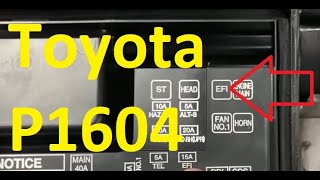
The 2009-2016 Sequoia, particularly models with the 5.7L 3UR-FBE Flex Fuel (FFV) engine, has a known sensitivity with its fuel composition sensor logic. The ECM can mistakenly learn a high percentage of ethanol in the fuel, even when running on standard gasoline, a condition often triggered after a battery disconnect or running the fuel tank very low. This incorrect 'Alcohol Density Estimate' causes the computer to inject the wrong amount of fuel for starting, leading to extended cranking and the P1604 code. 🎬 Watch: A breakdown of P1604 causes and common fixes. This issue is so specific that Toyota issued Technical Service Bulletins (TSBs) outlining an ECM reprogramming and reset procedure as the fix.
Diagnostic Flowchart

Tap your situation to follow the diagnostic path that matches what you're seeing on this vehicle.
Symptoms You May Notice
- Engine cranks for a long time before starting (extended crank)
- Engine starts and then immediately stalls
- Rough idle immediately after starting
- Check Engine Light is on
- Vehicle requires multiple key cycles to finally start.
- Replacing the fuel pump or fuel injectors when the root cause is the learned alcohol density value in the ECM.
- Replacing the starter when the issue is fuel-related, caused by the extended cranking time.
- Assuming the ECM itself has failed, when it only requires a software update or reset. The TSBs explicitly state not to replace the ECM for this condition.
Most Likely Causes

- Incorrect Fuel Alcohol Density Learning 🔴 High Probability As documented in Toyota TSBs T-SB-0058-13 and T-SB-0166-19, the ECM logic on 3UR-FBE models can incorrectly calculate a high ethanol percentage, especially after a battery disconnect, running the tank low, or a period of storage. This causes the ECM to command an overly rich or lean mixture for starting.
How to confirm: Use a capable bidirectional scan tool (like Toyota's Techstream) to view the 'Alcohol Density Estimate' data pid. If the value is high (e.g., over 15% as specified in TSBs) but you have only used standard E10 gasoline, this is the confirmed cause.
Typical fix: Perform a 'Fuel Density Learning Value Reset' using a bidirectional scan tool. In some cases, the ECM may need a software update (reflash) from a Toyota dealership as per the TSBs, which is covered under the Federal Emission Warranty (96 months/80,000 miles). This is a procedural fix, not a parts replacement.
Est. part cost: $0 - Weak or Failing Battery 🟡 Medium Probability A low voltage condition during cranking can corrupt the ECM's volatile memory, triggering the incorrect alcohol learning issue. These large V8 engines require a strong battery, typically a Group 27F, to start reliably.
How to confirm: Test the battery voltage with a multimeter. A healthy battery should read approximately 12.6 volts with the engine off and 13.7-14.7 volts when running. A load test is the most definitive way to confirm battery health, and many auto parts stores will perform this for free.
Typical fix: Replace the vehicle's 12V battery. The common size is a Group 27F battery.
Est. part cost: $150-$350 - Failing Fuel Pump ⚪ Low Probability
How to confirm: Listen for the pump to prime (a brief hum from the rear of the vehicle) when the key is turned to the 'ON' position. A definitive test requires checking the fuel pressure with a gauge to ensure it meets factory specifications. Low pressure can cause a startability issue that the ECM flags as P1604.
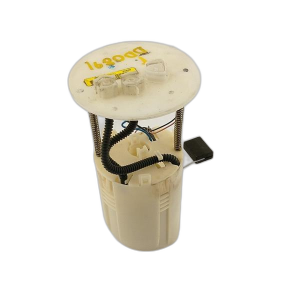
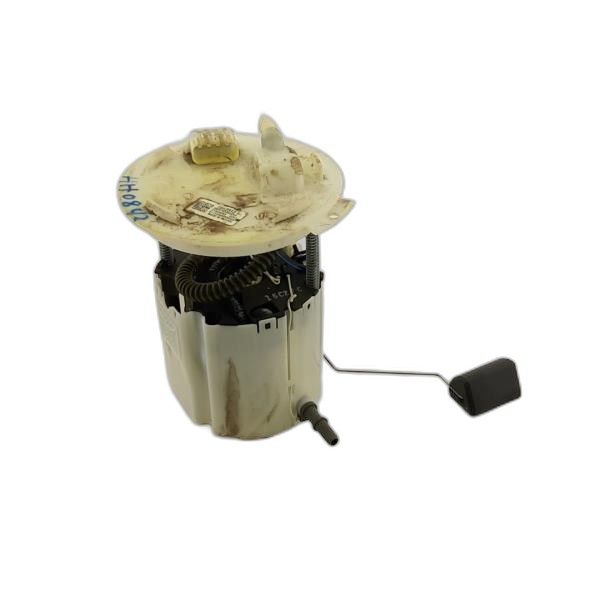
Typical fix: Replace the fuel pump assembly. The OEM part number for the pump assembly on Flex Fuel models is often 77020-0C120.
Est. part cost: $200-$500
Rare But Worth Checking
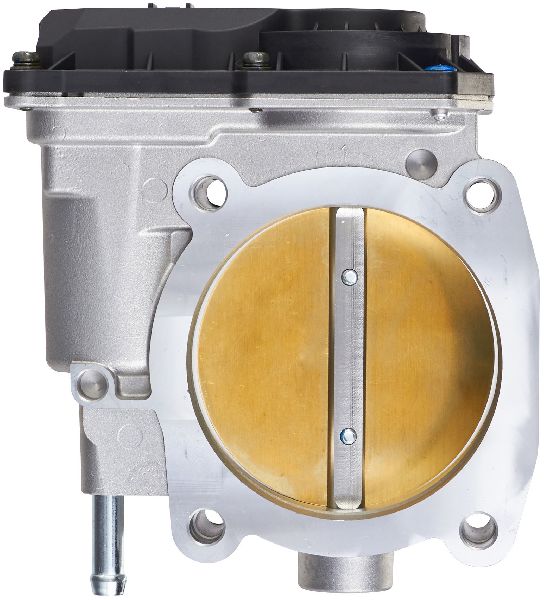
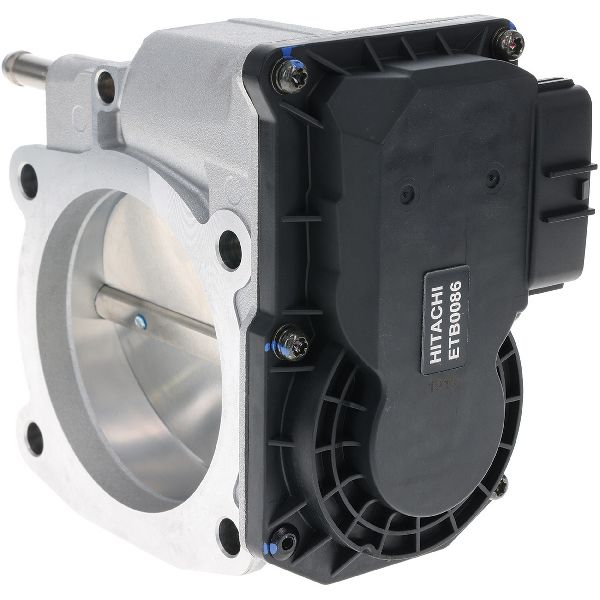
- Dirty throttle body
- Faulty MAF sensor
- Clogged fuel filter
- Ignition system issues (spark plugs, coils)
Diagnosis Steps
- Scan for all DTCs. Note if any fuel trim codes (P0171/P0172/P0174/P0175) or P1605 are present with P1604, as this strongly points to the known TSB issue.
- Using a bidirectional scan tool (like Toyota Techstream, Autel, or Launch), access the live data and find the 'Alcohol Density Estimate' or similar parameter.
- If the alcohol density is elevated (above 15%) and you have not used E85 fuel, this is your primary issue. Proceed to the 'Fuel Density Learning Value Reset' function in your scan tool. This is often found under ECM > Special Functions > 'Reset Memory' or a similar name.
- If an ECM software update is required per TSB T-SB-0166-19, this must be done at a dealership. The TSB procedure involves reprogramming the ECM, disconnecting the battery for 10 minutes, performing the Fuel Density Learning Value Reset, and adding 3 gallons of fuel.
- If the alcohol density is normal, test the battery and charging system. Ensure voltage is stable during cranking and the alternator is charging correctly when running. A weak battery (common size is Group 27F) is a known trigger.
- If the battery is healthy, check the fuel system. Listen for the fuel pump priming. If possible, perform a fuel pressure test to rule out a weak pump.
- Inspect the starting and ignition systems for obvious issues like corroded wires or worn spark plugs, though these are less common causes for this specific code on this vehicle.
- After any repair, clear the codes and perform several start cycles to ensure the problem is resolved.
Parts You'll Likely Need
- No parts needed; procedural fix — The most common fix is not a part, but an ECU reset procedure using a bidirectional scan tool to correct the learned fuel alcohol content. An ECU reflash may be needed at a dealer.
OEM price range: $0
Aftermarket price range: $0 - 12V Battery — A weak battery can cause slow cranking, which the ECM interprets as a startability fault. It can also cause the ECM to lose learned values, contributing to the alcohol density issue. The common size is a Group 27F battery.
Trusted brands: Toyota TrueStart, Interstate, DieHard, Duracell, Optima
OEM price range: $200-$400
Aftermarket price range: $150-$350 - Fuel Pump Assembly (Flex Fuel)
(OEM #77020-0C120)— In less common cases where the fuel pump is actually failing and causing low pressure, it will need to be replaced.
Trusted brands: Genuine Toyota
OEM price range: $500-$775
Aftermarket price range: $200-$450
Related Codes That Often Appear With This One
- P0171 — System Too Lean (Bank 1). The ECM may trigger this if it's injecting too little fuel based on an incorrect alcohol reading. This is explicitly mentioned in TSBs T-SB-0058-13 and T-SB-0166-19.
- P0174 — System Too Lean (Bank 2). The ECM may trigger this if it's injecting too little fuel based on an incorrect alcohol reading. This is explicitly mentioned in TSBs T-SB-0058-13 and T-SB-0166-19.
- P0172 — System Too Rich (Bank 1). The ECM may trigger this if it's injecting too much fuel based on an incorrect alcohol reading. This is also mentioned in the TSBs.
- P0175 — System Too Rich (Bank 2). The ECM may trigger this if it's injecting too much fuel based on an incorrect alcohol reading. This is also mentioned in the TSBs.
- P1605 — Rough Idling. This code often accompanies P1604 because the incorrect fuel mixture that causes the hard start also leads to an unstable idle.
- B2799 — Engine Immobiliser System Malfunction. In some cases, a starting issue can be related to the immobilizer system, and this code may appear alongside P1604, though the alcohol density issue is more common for the hard start symptom.
Technical Service Bulletins (TSBs) & Recalls

- T-SB-0166-19 Rev1: (Jan 23, 2020) Supersedes the older TSB. Expands the model year range and details the procedure to check for elevated alcohol density (>=15%) and negative fuel trims, prescribing an ECM reflash and reset.
Platform-Specific Known Issues
- Toyota issued Technical Service Bulletin T-SB-0166-19, which supersedes T-SB-0058-13. It covers 2009-2018 Sequoia and 2009-2019 Tundra models with the 3UR-FBE Flex Fuel engine. It states that the vehicle may exhibit a hard start and/or MIL 'ON' with code P1604 and others due to an elevated 'Alcohol Density Estimate' value. The fix is to reprogram the ECM with updated logic and perform a reset.
- The TSB specifies the diagnostic criteria: check for P1604 (and/or other fuel trim codes), and then check if the 'Alcohol Density Estimate' is 15% or greater while using standard E0-E10 fuel.
- The repair is covered under the Toyota Federal Emission Warranty, which is in effect for 96 months or 80,000 miles, whichever occurs first from the vehicle's in-service date.
Mechanic-Grade Diagnostic Values
- Fuel Pressure (5.7L 3UR-FBE Engine) — expected: 370 to 430 kPa (53.7 to 62.4 psi). Failure: Pressure significantly below this range can cause hard starting.
- Alcohol Density Estimate (Live Data) — expected: Should be close to the actual ethanol content of the fuel (e.g., <10% for standard gasoline).. Failure: A value of 15% or greater when using E0-E10 fuel confirms the TSB condition.
- Battery Voltage for Reset Procedure — expected: 9V or higher.. Failure: The 'Fuel Density Learning Value Reset' may not execute if battery voltage is too low.
- Freeze Frame Data Analysis — expected: Normal operating parameters at the time the code was set.. Failure: Low engine RPM after start, or extended crank time before start signal. This data helps differentiate between a no-start and a stall-after-start scenario.
Scan Tool Commands That Help
- Toyota Techstream: Fuel Density Learning Value Reset — This is the primary fix for the common cause of P1604 on FFV models. Use this command after confirming an incorrectly high 'Alcohol Density Estimate' value. The path is: Powertrain / Engine and ECT / Utility / Fuel Density Learning Value Reset.
- Toyota Techstream: Activate the Fuel Pressure Switching Valve — This active test can be used to check the fuel pressure regulator and switching valve function if a mechanical fuel delivery issue is suspected instead of the alcohol learning fault.
- Toyota Techstream: Control the Fuel Pump / Speed — This command directly activates the fuel pump, allowing a technician to confirm pump operation and check for fuel flow without cranking the engine. It is useful for isolating a failed fuel pump.
Wiring & Ground Locations
- ECM (Engine Control Module) — Located on the right side of the dash, accessible from the passenger side footwell area.. The ECM is the module that stores the faulty alcohol density value and sets the P1604 code. Access is needed for reprogramming or replacement, and to check its connections.
- Main Body ECU / Dash Fusebox — Located under the driver's side dash. The Body ECU is attached to the fuse box.. This area contains critical power and ground distribution points. A poor connection or ground here could cause voltage fluctuations that trigger the ECM's memory corruption.
- Data Link Connector (DLC3) — Located on the left side of the dash, under the steering column.. This is the port where a scan tool like Techstream connects to the vehicle to read codes, view live data (like alcohol density), and perform the necessary reset procedures.
Real Owner Repair Stories
- Reddit user in r/ToyotaTundra (2013 Toyota Tundra 5.7L Flex Fuel, 67,500 miles) — Extended crank, hard starting.
❌ Tried (didn't work) Initial diagnosis pointed to a potential expensive repair at the dealership.
✅ What actually fixed it The owner used a bidirectional scan tool (Autel) to check the 'Alcohol Fuel Density' and found it was at 85%. He then used the 'Fuel Density Learning Value Reset' function, which took only a few seconds. The truck started perfectly afterward, ran smoother, and got better gas mileage. - TundraTalk forum user (2014 Toyota Tundra 5.7L Flex Fuel) — Rough cold starts, extended cranking.
❌ Tried (didn't work) Filling up with 91 octane fuel made the problem worse.
✅ What actually fixed it The owner brought the truck to the dealer and referenced TSB T-SB-0166-19. The dealer performed the TSB fix, which includes reflashing the ECM and replacing the fuel pump. The issue was covered under the 96-month/80,000-mile federal emissions warranty.
"I Checked Everything" — The Actual Cause
- For code P1604 on the Sequoia, the equivalent of a 'smoke test clean' scenario is when all basic mechanical and electrical checks pass. For example, a technician may confirm the battery is strong, the starter is working, and fuel pressure is within spec, yet the engine still has a long crank or won't start. The actual cause in this situation is almost always the incorrectly learned high alcohol density value in the ECM, which can only be seen with a scan tool and is fixed with a software reset or reflash per the TSB.
OEM Part Supersession History
89661-0CA00→89661-0CA01— Part revision and update by the manufacturer.
Heads up: These parts are for the 4.7L (2UZ-FE) engine and are not compatible with the 5.7L (3UR-FE/3UR-FBE) engines that are the primary subject of the P1604 TSB. This highlights the importance of matching the part number to the specific engine in the vehicle.T-SB-0058-13→T-SB-0166-19— The new TSB expands the model year coverage and updates the repair procedure.
Heads up: T-SB-0058-13 is considered obsolete and should be discarded. All diagnosis and repairs should follow T-SB-0166-19.
Model Year Variations Within This Range
- 2009-2016: The P1604 'Startability Malfunction' code, when related to incorrect alcohol learning, is almost exclusively an issue for models equipped with the 5.7L Flex Fuel (3UR-FBE) engine. Sequoias from this period with the standard 5.7L (3UR-FE) or the 4.6L (1UR-FE) are far less likely to experience this specific TSB-related cause. For non-FFV engines, P1604 would point towards more traditional causes like a weak battery, failing fuel pump, or starter issues.
- 2012-2013: A separate TSB (not for P1604) was issued for 2012-2013 models with 3UR-FE and 3UR-FBE engines for codes P0418/P2445 related to the air injection system. This indicates that ECM software updates were ongoing during this period for various issues, and a vehicle may have multiple updates available.
Helpful Videos

Used OEM Parts in Stock

New Aftermarket Parts Available


The information in this article is provided for general reference and educational purposes only. Vehicle specifications, procedures, and part compatibility can vary by production date, trim level, and region. Always consult your vehicle's factory service manual and verify part numbers before purchasing or performing repairs. Safety-critical components such as airbags, seat belts, and braking systems should be installed by a qualified professional.
- Toyota SEQUOIA:
- 🎬 Helpful Videos
- 🛍️ Shop This Part
- What's Unique About the 2009-2016 Toyota SEQUOIA
- Diagnostic Flowchart
- Symptoms You May Notice
- Most Likely Causes
- Rare But Worth Checking
- Diagnosis Steps
- Parts You'll Likely Need
- Related Codes That Often Appear With This One
- Technical Service Bulletins (TSBs) & Recalls
- Platform-Specific Known Issues
- Mechanic-Grade Diagnostic Values
- Scan Tool Commands That Help
- Wiring & Ground Locations
- Real Owner Repair Stories
- "I Checked Everything" — The Actual Cause
- OEM Part Supersession History
- Model Year Variations Within This Range
- 🎟️ Get 5% Off