

P1604 on 2007-2008 Cadillac Escalade: Decoding a Mysterious No-Start Code
P1604 on a 2007-2008 Escalade is an ambiguous code that indicates a starting problem. Unlike on other brands where it means 'Startability Malfunction,' on GM vehicles it often points to a deeper communication error between modules like the ECM. Diagnosis is critical, as the cause could range from a bad wire to a failing control module.
- P1604 on a 2007-2008 Escalade is not a straightforward code. Do not assume it means the same as it does on a Toyota.
- The most likely cause is an electrical or communication fault related to the Engine Control Module (ECM), not a simple fuel or ignition part failure.
- Always check for other codes first. The presence of U-codes (network codes) is a major clue that points towards a communication problem.
- Due to the complexity of diagnosing network vs. mechanical starting issues, seeking professional help is highly recommended for this code.
- Do not replace parts like the fuel pump or sensors without performing diagnostic tests to confirm they are faulty.
What's Unique About the 2007-2008 Cadillac Escalade
This code is a classic trap for technicians and DIYers. While the symptom is a no-start or long crank, the cause on a GM platform is often not a simple fuel or spark issue. The Escalade's GMT900 chassis uses a complex CAN bus network where modules constantly communicate. A source suggests that on modern GM vehicles, P1604 is used to flag CAN bus communication errors. Therefore, the no-start condition is the *result* of a critical module (like the ECM) not being able to properly command the engine to run due to an internal or network fault. This is fundamentally different from the Toyota interpretation, where the code simply flags a mechanical or fuel-related slow start.
Symptoms You May Notice
- Engine cranks but does not start
- Engine starts and immediately stalls
- Extended cranking time before the engine starts
- Check Engine Light is on
- Intermittent no-start condition
- In some cases, the instrument panel may be dead or act erratically (a carry-over symptom from the older definition)
- Reduced engine power message may appear on the driver information center (DIC)
- Replacing the fuel pump or fuel filter without confirming low fuel pressure. Because a P1604 on a GM is often electrical, throwing fuel parts at it without diagnosis can be a waste of money.
- Replacing the starter. If the engine is cranking, the starter is working. The problem lies in why the engine isn't firing or continuing to run.
Most Likely Causes
- Engine Control Module (ECM) Fault 🔴 High Probability The E38 ECM used in this generation of Escalade can suffer from internal failures due to age, heat, and vibration. This can lead to processing errors or communication breakdowns on the CAN bus, triggering a P1604.
How to confirm: Requires a professional-grade scan tool to check for internal ECM faults (like P0606) and to monitor communication between the ECM and other key modules (BCM, TCM). Diagnosis often involves ruling out all other possibilities first, including wiring and power supply issues.
Typical fix: Replacement of the ECM. The replacement unit, typically an ACDelco remanufactured part, must be programmed to the vehicle's VIN and security system by a dealer or qualified shop.
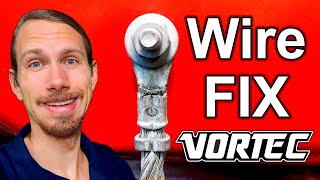
Est. part cost: $300-$800 - Wiring Harness or Connector Issues 🟡 Medium Probability The large engine bay and exposure to elements can lead to corrosion or physical damage to the main engine harness, particularly at the ECM connectors or main grounding points. On GMT900 trucks, specific grounds like the one on the frame under the driver's side door and the engine ground strap (G104) at the rear of the left cylinder head are known weak points. 🎬 See this guide to fixing every engine and frame ground wire.
How to confirm: Visually inspect the wiring harness for chafing, breaks, or corrosion. Perform a 'wiggle test' on the harness and connectors while monitoring for changes. Check for continuity and resistance on key power, ground, and data lines to the ECM. Pay close attention to the main ECM connectors and chassis grounds.
Typical fix: Repairing the damaged section of the wiring harness or cleaning/replacing corroded connectors and ground straps.
Est. part cost: $20-$200 - Weak or Failing Battery 🟡 Medium Probability Modern vehicles are highly sensitive to voltage. If the battery voltage drops too low during cranking (below ~9.6V), it can cause control modules to reset or behave erratically, potentially logging a communication or processor fault like P1604. Forum users have reported that a failing battery was the root cause, with the code disappearing after replacement.
How to confirm: Test the battery with a digital multimeter or a dedicated battery tester. A healthy battery should show ~12.6V at rest and not drop below 10V while cranking. Also, inspect terminals for looseness or corrosion, which can prevent proper charging and power delivery.
Typical fix: Replace the vehicle's battery and clean the terminals.
Est. part cost: $150-$300 - Faulty Crankshaft Position Sensor ⚪ Low Probability While less likely to be the direct cause of a P1604, a failing crankshaft position sensor can create a no-start or start-and-stall condition that the ECM might interpret as a 'startability' issue, potentially triggering this code alongside others.
How to confirm: Use a scan tool to monitor engine RPM while cranking. If the RPM reads 0, the crankshaft position sensor or its circuit is the primary suspect.
Typical fix: Replace the crankshaft position sensor.
Est. part cost: $40-$100
Rare But Worth Checking
- Faulty Fuel Pump or Fuel Pump Driver Module (FPDM): If the code is being interpreted by the ECM in the generic 'Startability Malfunction' sense, a lack of fuel pressure from a weak pump or a failing FPDM could be the root cause of the long crank/no-start. This is a more common cause on Toyota vehicles but is still possible here.
- Corrupted ECM Software: In rare cases, the software within the ECM can become corrupted, requiring a reflash with the latest calibration from the manufacturer. This must be done by a dealer or a properly equipped independent shop with a subscription to GM's service information.
Diagnosis Steps
- Scan for all DTCs in all modules. Pay close attention to any U-codes (Network) or other P-codes that are present, as P1604 rarely appears alone.
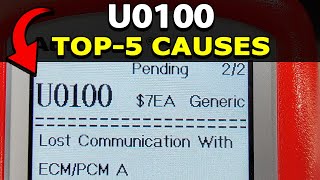
- If U-codes are present, begin diagnosing the CAN bus network integrity. This is a professional-level task involving checking for proper resistance (60 ohms) across the data bus 🎬 Watch: Top causes for lost communication with the ECM. and checking for shorts or open circuits.
- If no other codes are present, analyze the P1604 freeze frame data. This shows the engine conditions at the moment the code was set and can provide critical clues.
- Check the battery and charging system thoroughly. Ensure voltage is stable and above 12.4V at rest and does not drop excessively during cranking. A weak battery is a common and simple-to-fix cause.
- Inspect all power and ground connections to the ECM and the main engine-to-chassis ground straps. Ensure they are clean, tight, and free of corrosion. Specifically check the GMT900 ground points on the frame rail and the back of the cylinder head.
- Visually inspect the engine wiring harness for any signs of damage, chafing, or melting, especially near the ECM connectors and exhaust manifolds.
- Perform a 'wiggle test' on the ECM connectors and nearby harness sections while attempting to start the vehicle to see if the fault is intermittent.
- If all wiring, grounds, and power sources are good, the suspicion falls heavily on an internal ECM failure. Confirming this typically requires substitution with a known-good unit or sending the original for testing.
Parts You'll Likely Need
- Engine Control Module (ECM)
(OEM #12612384)— Given the likely definition for GM, an internal module fault is a primary suspect for an isolated P1604. The ECM is the brain of the operation, and a failure here directly impacts starting. This is the E38 ECM.
Trusted brands: ACDelco (Remanufactured)
OEM price range: $400-$800
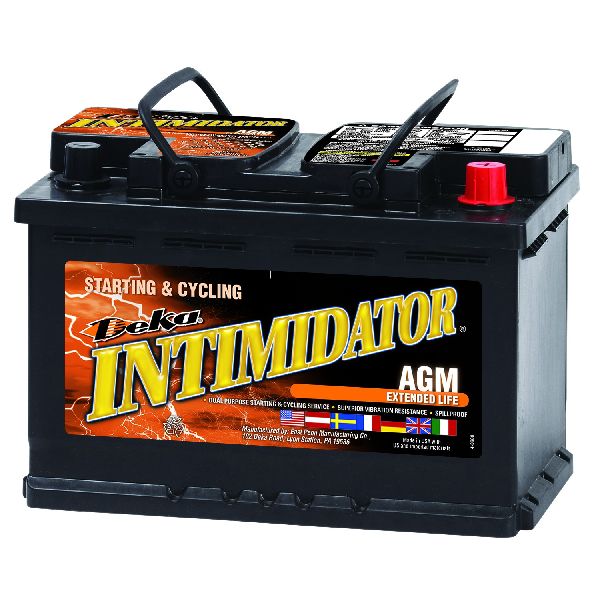
Aftermarket price range: $250-$500 - Battery — Low voltage during cranking can cause unpredictable electronic faults in various modules, leading to a starting issue that could be flagged by this code. It's a common cause and the easiest to check first.
Trusted brands: ACDelco, Interstate, DieHard, Optima, Duralast
OEM price range: $200-$300
Aftermarket price range: $150-$250
Related Codes That Often Appear With This One
- U0100 — Lost Communication With ECM/PCM. If this code is present, it strongly points to the P1604 being a network or module communication issue, not a simple starting problem.
- P0606 — ECM/PCM Processor Fault. This code indicates an internal failure within the engine control module, which is a very likely root cause for a P1604 on this vehicle.
- P0604 — Internal Control Module Random Access Memory (RAM) Error. Similar to P0606, this indicates an internal memory self-test has failed. On this platform, it can point to either the ECM or the Transmission Control Module (TCM).
Technical Service Bulletins (TSBs) & Recalls
- While no TSBs directly name P1604, several address related symptoms. TSB #PIT5184A discusses issues like instrument panel backlighting flickering and TSB #21-NA-149 details common engine wiring harness chafe points on 2019-2021 models that can also be relevant to older GMT900s.
Mechanic-Grade Diagnostic Values
- High-Speed GMLAN Bus Resistance — expected: 60 Ohms (± 5 Ohms). Failure: A reading of ~120 Ohms indicates an open in the bus or a module disconnected. A reading significantly less than 60 Ohms indicates the CAN High and CAN Low wires are shorted together.
- CAN High Voltage (Key On, Engine Off) — expected: ~2.6 Volts DC (measured from DLC Pin 6 to ground). Failure: Significant deviation from 2.6V can indicate a short or module issue.
- CAN Low Voltage (Key On, Engine Off) — expected: ~2.4 Volts DC (measured from DLC Pin 14 to ground). Failure: Significant deviation from 2.4V can indicate a short or module issue.
- Battery Voltage During Cranking — expected: Should not drop below 10.0V.. Failure: Voltage dropping below 9.6V can cause modules to reset or malfunction, potentially logging communication codes like P1604.
- ECM Ignition 1 Voltage (Pin 19 on X1 Connector) — expected: 12V+ with key in ON/RUN position.. Failure: No voltage indicates a problem with the ignition switch, fuse, or wiring, preventing the ECM from powering on correctly.
- ECM Battery Positive Voltage (Pin 20 on X1 Connector) — expected: 12V+ at all times.. Failure: No voltage indicates a blown fuse or a break in the main power wire to the ECM.
Scan Tool Commands That Help
- GM Tech2 / GDS2: Module Status / Communication Check — This is the first step when U-codes are present or suspected. The tool will poll all modules on the high-speed GMLAN. Any module that doesn't respond is a primary suspect. This helps isolate whether the ECM is offline or if another module is bringing down the network.
- GM Tech2 / GDS2: VIN Relearn / Immobilizer Relearn — This is mandatory after replacing the ECM. The new ECM must be programmed with the vehicle's VIN to communicate with the BCM and other modules for the anti-theft system. Without this procedure, the vehicle will not start.
- GM Tech2 / GDS2: Crankshaft Position Variation Learn — After replacing the crankshaft position sensor or the ECM, this procedure must be performed to calibrate the new components and ensure accurate misfire detection and timing, although it is not directly related to the P1604 no-start condition itself.
Wiring & Ground Locations
- G101 — Located at the front of the engine, lower block. On some diagrams, this is the primary ground for the ECM and TCM.. A poor connection at this primary ground point can cause a host of communication issues, including a no-start and codes like P1604 and U0100.
- G103 — Located on the cowl in the left rear of the engine compartment, above the brake booster.. This ground serves the Body Control Module (BCM), Instrument Panel Cluster (IPC), and Data Link Connector (DLC). A fault here can disrupt communication between the BCM and ECM, affecting startup and setting network codes.
- G104 — On some GMT900s, located on the top right (passenger) side of the cylinder head, near the center. On others, it's at the rear of the left cylinder head as noted in Pass 2.. This is a critical engine ground. Corrosion or looseness here can cause intermittent no-start conditions and erratic module behavior.
- Engine Harness Chafe Point — The main wiring harness running along the frame rail near the transfer case and front driveshaft.. There are owner reports of this harness getting caught on the front driveshaft, ripping wires apart and causing intermittent starting problems, fuel level gauge failure, and other electrical faults that could trigger a P1604.
- DLC (OBD-II Port) — Under the driver's side dashboard.. Pins 6 (CAN High) and 14 (CAN Low) are the direct access points for testing the high-speed GMLAN network's resistance and voltage.
Real Owner Repair Stories
- GM-Trucks.com forum user (2007 Cadillac Escalade) — Intermittent starting problems, no fuel level reading.
❌ Tried (didn't work) Initial diagnosis was unclear due to multiple symptoms.
✅ What actually fixed it The wiring harness that runs near the transfer case had gotten caught around the driveshaft, ripping several wires. Repairing the damaged wires by splicing them back together resolved the issues.
OEM Part Supersession History
12612384→This part number is one of several service numbers for the E38 ECM. Other compatible service numbers for this era include 12597121, 12625455, and 12633238.— Part numbers are updated for different vehicle applications and software calibrations.
Heads up: An ECM with part number 12612384, typically from a 2007-2008 vehicle, cannot be used in a 2010+ vehicle (like a Camaro) because it has an older hardware/bootloader that cannot be updated to the newer operating systems. The replacement ECM must be compatible with the vehicle's specific model year and platform.
Model Year Variations Within This Range
- 2007-2008: The L92 6.2L V8 in the 2007-2008 Escalade did NOT have Active Fuel Management (AFM/DOD). This makes them mechanically simpler and less prone to the lifter failures that affected later models. In 2009, the engine was updated to the L9H (FlexFuel capable), and in 2010 the L94 was introduced which included AFM.
Diagnostic Flowchart
Other Known Issues on This Vehicle
Issues unrelated to this code that are worth knowing about as an owner of this generation:
- Cracked Dashboard 🟠 Medium — Extremely common on GMT900 vehicles, often appearing after 3-5 years regardless of mileage. Cracks typically form near the passenger airbag and over the instrument cluster. (Ref: No official recall, but a class-action lawsuit was filed for 2009-2014 models. GM often handled repairs on a case-by-case basis, sometimes out of warranty.)
- Broken Exterior and Interior Door Handles 🟠 Medium — Very common. The plastic components of both the exterior and interior door handles are prone to breaking, making it impossible to open the door from one side. (Ref: No recall, but it is a widely acknowledged problem. Some dealers replaced them out of warranty due to the high failure rate.)
- Active Fuel Management (AFM) Lifter Failure 🔴 High — A significant issue on the L92 and other GM V8s of this era. A collapsed or stuck AFM lifter can cause a misfire (P0300), ticking noise, and eventually lead to camshaft damage requiring extensive engine repair. (Ref: Multiple TSBs exist, including #15-06-01-002L, which provides diagnostic and repair procedures for this specific failure.)
- Reduced Engine Power / Throttle Body Issues 🟠 Medium — The vehicle may suddenly enter 'Reduced Engine Power' mode, limiting speed. This is often caused by a failing throttle position sensor within the throttle body assembly, setting codes like P2135.
- Service Suspension System Light 🟠 Medium — Commonly caused by failure of the air ride compressor or position sensors in the electronic suspension system. The compressor may wear out and fail to lift the rear of the vehicle.
Used vs. New Parts: Buying Guide for This Vehicle
When a used part is the smart pick: A used E38 ECM from a reputable recycler can be a cost-effective option, but ONLY if it comes from an identical vehicle (year, model, engine) and you have access to a GM Tech2/GDS2 for VIN and security programming. Many online vendors sell pre-programmed or 'cloned' used ECMs that can be plug-and-play.
Donor-vehicle mileage cap: roughly under 120000 miles for the part to have meaningful remaining life.
What to inspect on the donor part:
- Verify the part number (e.g., 12612384) on the donor ECM's label matches a compatible service number.
- Inspect the connectors for any bent pins, corrosion, or signs of heat damage.
- Ensure the donor vehicle was not involved in a flood or fire.
- Ask the seller if they offer a warranty and if the VIN has been cleared or if they can program your VIN for you.
OEM-only on this vehicle (don't cheap out):
- Engine Control Module (ECM) - While used OEM units are viable, avoid new, unbranded aftermarket ECMs. Stick with genuine ACDelco (new or remanufactured) or a properly programmed used OEM unit.
Aftermarket brands forum-validated for this vehicle:
- Battery: Optima, Odyssey, DieHard, Duralast Platinum AGM
- ECM Repair/Programming Services: PCM of NC
Brands owners have reported issues with on this vehicle:
- No-name, unbranded ECMs from online marketplaces without a clear warranty or programming support.
Real Owner Stories
Aggregated from forums and TSBs cited above. Mileages and costs reflect what owners reported in those sources.
2007-2013 GMT900 Platform (V8)
Symptoms: The code appeared even though there were no noticeable starting issues at first.
What fixed it: Replacing the battery, which failed shortly after the code appeared.
Source hint: A Reddit thread in r/rav4club discusses a user with a P1604 code
Related OBD-II Codes
Frequently Asked Questions
Could my 2007-2008 Escalade's P1604 code be related to the flickering instrument panel lights mentioned in TSB #PIT5184A?
Is there a specific ground point on the L92 engine I should check for this no-start condition?
Will replacing my battery fix a P1604 code on my Escalade?
Does the E38 ECM in the 2007-2008 Escalade require special handling if it needs replacement?
Can a faulty crankshaft position sensor cause a P1604 on the 6.2L V8?
Are there common wiring areas on the Escalade I should inspect for damage?
Helpful Videos


Used OEM Parts in Stock


New Aftermarket Parts Available


The information in this article is provided for general reference and educational purposes only. Vehicle specifications, procedures, and part compatibility can vary by production date, trim level, and region. Always consult your vehicle's factory service manual and verify part numbers before purchasing or performing repairs. Safety-critical components such as airbags, seat belts, and braking systems should be installed by a qualified professional.
- Cadillac Escalade:
- 🎬 Helpful Videos
- 🛍️ Shop This Part
- What's Unique About the 2007-2008 Cadillac Escalade
- Symptoms You May Notice
- Most Likely Causes
- Rare But Worth Checking
- Diagnosis Steps
- Parts You'll Likely Need
- Related Codes That Often Appear With This One
- Technical Service Bulletins (TSBs) & Recalls
- Mechanic-Grade Diagnostic Values
- Scan Tool Commands That Help
- Wiring & Ground Locations
- Real Owner Repair Stories
- OEM Part Supersession History
- Model Year Variations Within This Range
- Diagnostic Flowchart
- Other Known Issues on This Vehicle
- Used vs. New Parts: Buying Guide for This Vehicle
- Real Owner Stories
- 2007-2013 GMT900 Platform (V8)
- Related OBD-II Codes
- Frequently Asked Questions
- 🎟️ Get 5% Off