

OBD-II Code P1601: Control Module Communication and Memory Fault Guide
The Ultimate Guide to P1601: What it means, why it triggers, and how to fix it for good.
- P1601 definitions vary by manufacturer: it means an injector coding error on Toyotas, a software bug on Fords, and a power relay failure on VWs.
- Test your 12V battery and clean all ground connections first, as voltage drops below 12.4V cause 80% of module communication errors.
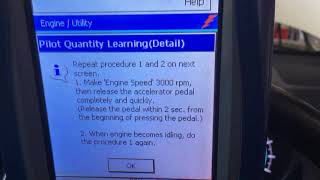
- Clear P1601 on Toyota diesels by programming the 30-digit injector compensation codes and completing the mandatory 'Pilot Quantity Learning' procedure.
- Fix P1601 on 2020-2021 Ford Mustangs by requesting the TSB 22-2280 PCM software update at a dealer, avoiding unnecessary transmission repairs.
- Never replace the $800+ ECM/PCM without first verifying the presence of U-codes, which point to a repairable wiring or network failure.
What Does P1601 Mean?

P1601 is a manufacturer-specific diagnostic trouble code (DTC) indicating a fault with the Engine Control Module (ECM) or Powertrain Control Module (PCM). The issue stems from an internal memory error, a software glitch, or a failure to communicate with other modules over the vehicle's Controller Area Network (CAN bus).
Technical definition: Because P1601 is manufacturer-specific, definitions vary widely. Common interpretations include 'ECM/TCM Serial Communication Error' (Ford, Nissan), 'Injector Correction Circuit Malfunction' (Toyota), or 'PCM Serial Communication Malfunction' (Chevrolet). The code sets when the primary control module detects an internal data processing anomaly or fails to exchange critical data with other network modules.
Can I Drive With P1601?
Yes, But With Caution. You can drive, but we strongly advise against it. Communication errors cause sudden engine stalling, reduced power ('limp mode'), or erratic transmission behavior, creating significant safety risks in traffic. Ignoring the code long-term damages the catalytic converter from an incorrect air-fuel mixture, adding $800-$2500 to your repair bill.
Common Causes

- Weak or Failing 12V Battery (Very Common) — Low voltage from a weak battery is the leading cause of communication errors. Sensitive vehicle electronics require a steady power supply to function and communicate over the CAN bus.
- Corroded Battery Terminals or Grounds (Common) — Poor electrical connections at the battery or main chassis ground straps cause intermittent voltage drops and electrical noise, triggering communication faults.
- ECU/PCM Software Glitch (Common) — The control module's software contains a bug that sets the code under specific conditions. This is a documented issue on 2020-2021 Ford Mustangs, resolved via a dealer software update (TSB 22-2280).
- Faulty CAN Bus Wiring or Connectors (Common) — Physical damage to the twisted pair of CAN bus wires or corrosion in a module's connector interrupts the data stream.
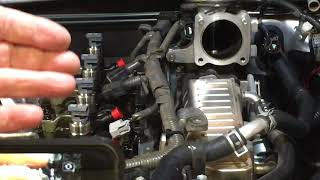
- Incorrect Injector Coding (Toyota Diesels) (Less Common) — On Toyota diesel engines, this code appears if new fuel injectors are installed without programming their unique 30-digit compensation codes into the ECM. 🎬 Watch: How to program injector codes and perform pilot learning.
- Aftermarket Performance Devices (Less Common) — Improperly installed aftermarket tuners, alarms, or remote starters tap into data lines and create data conflicts. Restoring the factory setup is a mandatory diagnostic step.
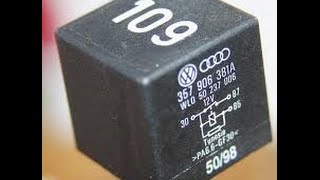
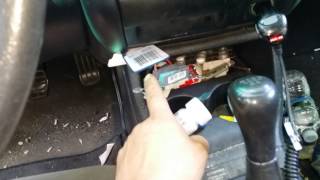
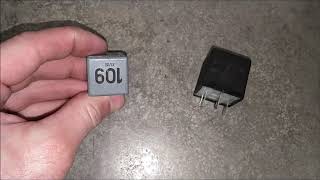
- Faulty ECM Power Relay (Rare) — A failing main power supply relay causes intermittent power loss to the ECM. On Volkswagen models, P1601 specifically points to a battery supply voltage relay issue.
- Failed CAN Bus Termination Resistor (Rare) — The CAN bus network relies on two 120-ohm termination resistors. If one fails, communication signals corrupt, leading to widespread network errors.
- Failing Engine Control Module (ECM/PCM) (Rare) — An internal hardware failure within the ECM/PCM is possible but only considered after ruling out power, ground, wiring, and software issues.
Symptoms

- Check Engine Light is On — The Malfunction Indicator Lamp (MIL) illuminates on the dashboard. Other warning lights like a wrench, ABS, or traction control frequently accompany it.
- Engine Stalling or No-Start — The engine is hard to start, fails to start, or stalls unexpectedly while driving due to lost sensor data.
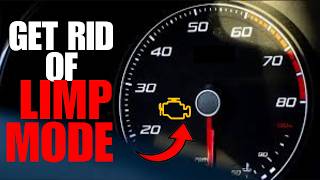
- Reduced Engine Power ('Limp Mode') — The vehicle enters a fail-safe mode with significantly limited power and speed to protect the powertrain. 🎬 Watch: Understanding limp mode symptoms and how to fix it.
- Erratic Transmission Shifting — Harsh, delayed, or unpredictable shifting occurs when communication between the engine and transmission modules drops.
- Instrument Cluster Malfunction — Dashboard gauges behave erratically, freeze, or drop to zero while driving.
- Scan Tool Cannot Communicate (scan-tool only — no driver-felt sign) — Diagnostic scanners fail to connect with the ECM, indicating a major power, ground, or network failure.
Diagnostic Flowchart
Tap your situation to follow the diagnostic path that matches what you're seeing on this code.
Common Fixes & Costs
- Replace 12V Battery — Parts: $150-$300, Labor: $50-$100, ~0.5 hr book time (DIY)
- Clean or Repair Ground Connections — Parts: $5-$30, Labor: $50-$150, ~1 hr book time (DIY)
- Update/Reprogram PCM Software — Parts: $0, Labor: $150-$250, ~1 hr book time (Professional)
- Repair Damaged Wiring Harness — Parts: $20-$100, Labor: $200-$600, ~4 hr book time (Intermediate)
- Replace ECM/PCM — Parts: $500-$1500, Labor: $200-$400, ~2 hr book time (Professional)
Used vs. New Parts: Buying Guide
When a used part is worth it: A used ECM from a reputable salvage yard is a cost-effective option for older, high-mileage vehicles where the cost of a new module is prohibitive. It makes sense when the part number matches exactly and the donor vehicle's history is known.
Donor-vehicle mileage cap: roughly under 100000 miles for the part to have meaningful remaining life.
Donor quality checklist:
- Verify the part number on the used ECM is an exact match to the original.
- Source from a vehicle of the same year, make, model, and engine/transmission configuration.
- Prefer sellers who offer a short-term warranty (30-90 days) for testing.
- Avoid modules from flood-damaged or fire-damaged vehicles.
Decision logic:
- If The vehicle is under warranty or less than 8 years old → Buy a new or remanufactured OEM part to ensure reliability and compatibility.
- If The vehicle is over 10 years old and budget is the primary concern → A used part is an acceptable risk, provided it is programmed correctly to the VIN.
- If The fix is a known software issue covered by a TSB → Do not buy any part; pay for the dealer software update.
- If A remanufactured unit with a 1-year+ warranty is available → This is the best balance of cost and reliability over a used part with no warranty.
Warranty tradeoff: Used parts typically have a 30-90 day warranty or are sold 'as-is'. Remanufactured units often come with a 1-year warranty. New OEM parts carry the longest warranty, especially when installed by a dealer.
Worst-case if a used part fails: $300-800 if a used part is faulty or incompatible, covering repeat labor for installation and programming, plus the cost of another replacement module.
What Happens If You Wait — Timeline
- 0-2 weeks: Code appears, MIL is on. Symptoms are intermittent, like a single hard start or brief hesitation. (MPG impact: 0-2%% · Added cost: $0)
- 2 weeks - 3 months: Engine stalls at idle, transmission shifts harshly, and dashboard lights flicker. The car is unreliable. (MPG impact: 3-8%% · Added cost: $50-150)
- 3-8 months: Catalytic converter suffers permanent damage from overheating due to poor fuel management. (MPG impact: 5-15%% · Added cost: $800 - $2,500)
- 8+ months: Complete failure. Catalytic converter clogs, transmission locks in limp mode, or the vehicle refuses to start. (MPG impact: 15-25%+% · Added cost: $2,000 - $4,000+)
Cost of Not Fixing It
- 0-1 month: Intermittent starting issues, unexpected stalling, and reduced fuel economy. Drivability is unpredictable, posing a severe safety risk. (Added cost: $0)
- 1-6 months: Incorrect air-fuel mixtures damage the catalytic converter. The converter overheats from unburnt fuel, destroying the internal honeycomb. (Added cost: $900 - $3,400)
- 6+ months: Complete catalytic converter failure. Continued erratic communication stresses the transmission, causing mechanical damage. (Added cost: $2,000 - $4,000+)
Diagnosis Steps

- Read All Module Codes
Scan all modules (TCM, ABS, BCM) with an OBD-II scanner. P1601 is often a secondary code. U-codes (e.g., U0100) confirm a network-wide communication problem and dictate your diagnostic path.
Tools: OBD-II Scanner (Beginner) - Check Battery and Charging System
Test the battery. A healthy battery reads at least 12.4V with the engine off and 13.7-14.7V running. Readings outside this range require immediate battery replacement.
Tools: Multimeter (Beginner) - Inspect Power and Ground Connections
Clean corrosion from battery posts. Follow the negative cable to the chassis and engine block. Ensure grounds are tight and bare-metal clean.
Tools: Wire brush, socket set (Beginner) - Check Technical Service Bulletins (TSBs)
Search for TSBs related to P1601 for your specific VIN. Manufacturers frequently release software updates to fix this exact code.
Tools: Smartphone or Computer (Intermediate) - Inspect Fuses and ECM Relays
Test all fuses and relays powering the ECM. A single blown fuse or sticking relay cuts power to the module, causing complete communication loss.
Tools: Multimeter, fuse puller (Intermediate) - Visually Inspect CAN Bus Wiring
Examine harnesses connected to the ECM. Look for chafing, melting, rodent damage, or green corrosion in the connectors.
Tools: Flashlight, inspection mirror (Intermediate) - [PRO TIP] Perform ECM Voltage Drop Test
Test the ECM ground circuit by measuring voltage between the ECM ground pin and negative battery post with the key on. Readings over 0.1V indicate a bad ground. Test the power side similarly; readings must be under 0.5V.
Tools: Multimeter, back-probe kit (Advanced) - [PRO TIP] Check CAN Bus Termination Resistance
With the battery disconnected, measure resistance between OBD-II Pins 6 and 14. A healthy network reads 60 Ohms. 120 Ohms means a termination resistor is missing or open.
Tools: Multimeter (Advanced) - [PRO TIP] Analyze CAN Signal
Connect an oscilloscope to Pins 6 and 14. Look for clean, mirror-image square waves. Distorted waveforms indicate wiring shorts or a faulty module corrupting the bus.
Tools: Oscilloscope, back-probe kit (Advanced)
When This Code Triggers (Freeze-Frame Conditions)
- Vehicle Speed: 0 mph (at startup) or 45-60 mph (cruise) (Triggers immediately at key-on due to a module self-check failure, or during steady-state driving when communication drops.)
- Engine RPM: 0 (key-on) or 1500-2500 RPM (Occurs at the initial power-up sequence or during light-load cruising.)
- System Voltage: < 11.8V or fluctuating (Low or unstable system voltage during engine cranking disrupts module communication.)
- Engine Load: 20-50% (Frequently observed under light to moderate load where modules actively communicate.)
Related Codes
- P0601 — Means 'Internal Control Module Memory Check Sum Error,' a specific internal ROM/RAM fault within the ECM.
- P0602 — Means 'Control Module Programming Error.' Indicates the ECM lacks programming or has software corruption.
- U-Codes (e.g., U0100, U0101) — Network communication codes. U0100 means 'Lost Communication With ECM/PCM'.
- P061A — Means 'Internal Control Module Torque Performance'. Appears alongside P1601 on 2020-2021 Mustangs due to a software bug.
Climate & Environmental Factors
- High Humidity / Moisture: Accelerates corrosion on electrical connectors, module pins, and ground points, causing short circuits or increased resistance in wiring.
- Extreme Cold: Reduces battery cranking power. A weak battery provides unstable voltage during startup, triggering communication faults between modules.
- Road Salt: Splashes into the engine bay and undercarriage, severely corroding wiring harnesses, ground straps, and module casings.
How to Talk to a Mechanic About This Code
Say this: "I have code P1601. I confirmed the battery is healthy and terminals are clean. Please perform a full network scan for U-codes, check for relevant TSBs, and test ECM power/grounds before recommending a module replacement."
Directs the technician toward a logical diagnostic path (software, wiring) instead of jumping to an expensive ECM replacement.
Avoid saying:
- 'My check engine light is on, can you just fix it?'
- 'The internet said it's the computer, give me a price.'
- 'Just do whatever you think is necessary.'
Questions to ask before authorizing the repair:
- Did you check for any Technical Service Bulletins (TSBs) related to P1601 for this vehicle?
- If you're recommending a wiring repair, can you show me the damaged section?
- If you're recommending an ECM/PCM replacement, what specific tests condemned the module itself?
- What is the warranty on this repair, for both the parts and the labor?
Where to Take It: Dealer vs Independent vs Chain
- Dealer:
The right choice for in-warranty repairs or known software TSBs. For out-of-warranty diagnosis, consider a specialist first.
Best for: Vehicles under warranty (powertrain or emissions)., Known software issues covered by a Technical Service Bulletin (TSB), like on 2020-2021 Ford Mustangs., Complex, manufacturer-specific programming that independent shops cannot perform.
Downsides: Typically the highest labor rates., Defaults to replacing an entire module or assembly rather than performing a detailed wiring repair. (Typical cost: +50% vs. baseline) - Independent Shop:
Excellent fit, especially a shop specializing in diagnostics. For most P1601 causes (battery, grounds, wiring), they offer the best balance of expertise and value.
Best for: Out-of-warranty vehicles where cost is a factor., Diagnosing complex electrical and communication issues, especially intermittent ones., Tracing wiring faults, power/ground issues, and CAN bus problems.
Downsides: Shop quality and diagnostic skill vary widely. Must be vetted for electrical expertise., May not have access to the very latest manufacturer software updates. (Typical cost: +0% vs. baseline) - Chain Shop:
AVOID for diagnosing P1601. While they can replace a battery, they are not equipped for the electrical and network diagnosis this code requires.
Best for: Simple jobs like battery replacement, oil changes, or tires.
Downsides: Technicians lack the specialized training for complex diagnostic codes like P1601., Business model encourages upselling unnecessary services rather than in-depth diagnosis. (Typical cost: -10% vs. baseline)
When to Walk Away From the Repair
If the estimated repair cost exceeds 50% of the car's current private-party value, seriously consider not doing the repair.
- Car worth $4000, fix is $2200: Walk Away. The repair cost is over 50% of the car's value. That money is better used as a down payment on a more reliable vehicle.
- Car worth $12000, fix is $1800: Fix It. The repair cost is only 15% of the vehicle's value and is a worthwhile investment to keep a more valuable car on the road.
- Car worth $3000, fix is $800: Borderline, but likely worth fixing. At 27% of the car's value, the repair is significant but still much cheaper than replacing the car. Proceed if the car is otherwise reliable.
What Scan Tool You Need for This Code

Minimum: A scanner that reads manufacturer-specific DTCs from ALL modules (ECM, TCM, ABS, BCM, etc.) and displays live data.
Generic $20 readers only pull engine 'P' codes and cannot see U-codes or access other modules, making a true diagnosis impossible.
Budget: BlueDriver Pro Scan Tool (~$99) — Reads manufacturer-specific codes from all systems, provides freeze-frame data, and allows graphing of live data to spot voltage irregularities.
Mid-range: Foxwell NT510 Elite (~$179) — Offers make-specific, OE-level diagnostics. Includes bidirectional controls and performs special functions like Toyota injector coding.
Professional: Autel MaxiCOM MK808S (~$499) — A professional-level tablet scanner with full bidirectional control, extensive service functions, and the ability to perform module programming and setup.
Rent vs buy: If this is a one-time repair, many auto parts stores have a tool loaner program where you can borrow a capable scanner for free. If you perform your own maintenance regularly, buying a mid-range tool is a worthwhile investment.
How to Clear the Code After You Fix It
- Reconnect battery if disconnected for repair.
- Use an OBD-II scan tool to clear all Diagnostic Trouble Codes (DTCs).
- Perform a complete OBD-II drive cycle to allow all readiness monitors to run.
Drive cycle (~30 minutes): A generic drive cycle starts with a cold start (engine off for 8+ hours). Idle for 2-3 minutes. Drive a mix of city (stop-and-go) and highway speeds. Include a period of steady-state cruising at 55-60 mph for at least 5 minutes, and a period of coast-down deceleration without using the brakes.
Readiness monitors affected: Comprehensive Component Monitor, Misfire Monitor, Catalyst Monitor, Oxygen Sensor Monitor
Before emissions retest: drive at least 100 miles to fully set monitors.
Watch out for:
- Simply clearing the code with a scanner does not fix the underlying problem; the code returns immediately if the fault persists.
- Disconnecting the battery clears codes but resets all readiness monitors to 'Not Ready', causing an automatic emissions failure.
- Complete a full drive cycle (50-100 miles of varied driving) to set readiness monitors to 'Ready' before an emissions test.
Will This Fail Emissions / State Inspection?
Yes — this code typically fails an OBD-II emissions inspection.
- California: An illuminated Check Engine Light is an automatic failure. You must complete a full drive cycle to set all readiness monitors to 'Ready' after repairs.
- New York: NYS inspections include an OBD-II scan. An active P1601 code or incomplete readiness monitors cause an automatic failure.
- Texas: An illuminated Check Engine Light is an automatic fail. For 2001+ vehicles, only one readiness monitor is allowed to be incomplete.
Most Commonly Affected Vehicles
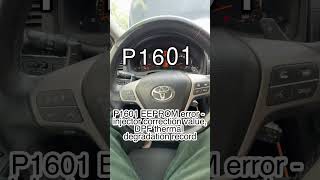
- Toyota Hilux, Prado, Innova, Verso (Diesel) (2005-2016) — Code P1601 means 'Injector Correction Circuit Malfunction'. It appears after replacing fuel injectors. Requires programming 30-digit injector codes and performing a 'Pilot Quantity Learning' procedure.
- Ford Mustang (incl. GT500) (2020-2021) — A known software bug causes P1601 with P061A, leading to hesitation and harsh shifting. Fixed via dealer software update TSB 22-2280.
- Ford Focus, Fiesta, Mondeo (1996-2010) — Indicates a 'Serial Communication Error' between the ECM and TCM. Inspecting the wiring harness between these two modules is the primary diagnostic step.
- Honda Civic, Accord, Insight (Hybrid) (1998-2015) — On hybrid models, P1601 is a generic pointer code for 'IMA System Malfunction'. The specific IMA code must be diagnosed to find the root cause.
- Chevrolet Cruze, Aveo, Cavalier, Lacetti (1997-2016) — Indicates a 'PCM Serial Communication Malfunction'. Corroded grounds under the battery tray are a frequent cause.
- Volkswagen Golf, Jetta, Passat, Polo (2005-2015) — Defined as 'Engine Control Module Supply Voltage'. Points directly to a problem with the ECM's main power supply relay (Relay J271 or 109).
- Nissan Altima, Sentra, Maxima (1999-2012) — Indicates a communication error between the ECM and TCM.
- Mazda Miata, Mazda3, Mazda6 (1996-2013) — Indicates a serial communication error between the PCM and TCM.
Manufacturer-Specific Notes
- Toyota: Code relates to fuel injectors. Requires programming 30-digit compensation codes and performing a 'Pilot Quantity Learning' procedure to clear.
- Ford: On 2020-2021 Mustangs, P1601 is a known software bug fixed by TSB 22-2280.
- Honda: Acts as a pointer code on hybrids, directing technicians to the IMA system menu for the real fault.
- Volkswagen: Indicates a power supply issue, often traced to a faulty main power relay (Relay 109).
- GM / Chevrolet: Indicates serial communication failure. Check chassis grounds under the battery tray.
Real Owner Stories
2020 Ford Mustang GT with 10R80 Transmission
Owner experienced sudden harsh shifting and a wrench light. Codes P1601 and P061A were stored.
What they tried:
- Initially worried it was a major transmission failure.
- Researched online forums and found Ford TSB 22-2280.
- Took the vehicle to a Ford dealer and referenced the TSB.
Outcome: The dealer performed TSB 22-2280 to update the PCM software, resolving the issue completely under warranty.
Lesson: Always search for TSBs before attempting repairs. A software bug mimics major hardware failures.
2010 Toyota Hilux 2.2L D-CAT Diesel
After replacing fuel injectors, P1601 remained. The owner entered the 30-digit codes but failed to run the 'Pilot Quantity Learning' process.
What they tried:
- Correctly entered the 30-digit compensation codes for the new injectors.
- Attempted to initiate the 'Pilot Quantity Learning' multiple times without success.
- Revved the engine to 3000 RPM repeatedly, but the learning process would not start.
Outcome: The 'Pilot Quantity Learning' is a mandatory final step that must be successfully completed before the P1601 code clears. It requires specific conditions and a capable scan tool.
Lesson: On Toyota diesels, P1601 requires successfully running the 'Pilot Quantity Learning' procedure with a scan tool to clear.
2008 VW Jetta
Car intermittently failed to start with P1601 stored as 'ECM Supply Voltage'. A mechanic misdiagnosed it as a faulty ECM.
What they tried:
- Owner first suspected a failing battery, but it tested good.
- Checked battery terminals and main grounds, which were clean and tight.
- A mechanic misdiagnosed the issue as a faulty ECM and quoted over $1000 for replacement.
Outcome: The owner replaced the $15 ECM power supply relay (Relay 109), fixing the issue permanently.
Lesson: Manufacturer-specific definitions matter. P1601 on a VW points to a simple power relay, not a complex data fault.
How to Prevent This Code From Triggering
- Clean Battery Terminals (Every 6 months) — Prevents voltage drops that disrupt module communication.
- Inspect Ground Straps (Every 12 months) — Ensures a stable return path for the electrical system.
- Use Battery Maintainer (Storage > 2 weeks) — Prevents battery discharge below 12.4V.
- Apply Dielectric Grease (When servicing connectors) — Prevents moisture intrusion and pin corrosion in module connectors.
- Avoid Powering Accessories Engine Off (Daily) — Prevents battery drain and low-voltage startups.
Frequently Asked Questions
Can a weak battery cause code P1601?
Yes. Low or fluctuating voltage disrupts digital communication between computers, triggering the fault.
What is the most common misdiagnosis for P1601?
Replacing the ECM/PCM without a full diagnosis. Always rule out a weak battery, corroded grounds, or a software update first.
I replaced Toyota diesel injectors and got this code. What do I do?
Program the unique 30-digit code from each new injector into the ECM. Then, perform the 'Pilot Quantity Learning' procedure with a scan tool to clear the code.
What is 'Pilot Quantity Learning' on a Toyota?
It is a forced learning procedure where the ECU tests new injectors by making small fuel injections during deceleration. It is mandatory to clear P1601 after injector replacement on Toyotas.
Will clearing the code fix the problem?
No. Clearing the code only turns off the light temporarily. The code returns immediately if the underlying wiring or software fault persists.
Is P1601 a serious problem?
Yes. It causes the engine to stall in traffic or behave unpredictably, creating a severe safety risk. Diagnose it immediately.
Do I need to go to a dealer to fix a P1601 code?
Often, yes. Manufacturer-specific software updates or immobilizer programming require dealer-level tools.
Can an aftermarket remote starter or alarm cause P1601?
Yes. Devices improperly tapped into the CAN bus data lines interfere with module communication and trigger faults.
Key Takeaways
- P1601 definitions vary by manufacturer: it means an injector coding error on Toyotas, a software bug on Fords, and a power relay failure on VWs.
- Test your 12V battery and clean all ground connections first, as voltage drops below 12.4V cause 80% of module communication errors.
- Clear P1601 on Toyota diesels by programming the 30-digit injector compensation codes and completing the mandatory 'Pilot Quantity Learning' procedure.
- Fix P1601 on 2020-2021 Ford Mustangs by requesting the TSB 22-2280 PCM software update at a dealer, avoiding unnecessary transmission repairs.
- Never replace the $800+ ECM/PCM without first verifying the presence of U-codes, which point to a repairable wiring or network failure.
Helpful Videos


The information in this article is provided for general reference and educational purposes only. Vehicle specifications, procedures, and part compatibility can vary by production date, trim level, and region. Always consult your vehicle's factory service manual and verify part numbers before purchasing or performing repairs. Safety-critical components such as airbags, seat belts, and braking systems should be installed by a qualified professional.
- 🎬 Helpful Videos
- What Does P1601 Mean?
- Can I Drive With P1601?
- Common Causes
- Symptoms
- Diagnostic Flowchart
- Common Fixes & Costs
- Used vs. New Parts: Buying Guide
- What Happens If You Wait — Timeline
- Cost of Not Fixing It
- Diagnosis Steps
- When This Code Triggers (Freeze-Frame Conditions)
- Related Codes
- Climate & Environmental Factors
- How to Talk to a Mechanic About This Code
- Where to Take It: Dealer vs Independent vs Chain
- When to Walk Away From the Repair
- What Scan Tool You Need for This Code
- How to Clear the Code After You Fix It
- Will This Fail Emissions / State Inspection?
- Most Commonly Affected Vehicles
- Manufacturer-Specific Notes
- Real Owner Stories
- 2020 Ford Mustang GT with 10R80 Transmission
- 2010 Toyota Hilux 2.2L D-CAT Diesel
- 2008 VW Jetta
- How to Prevent This Code From Triggering
- Frequently Asked Questions
- Can a weak battery cause code P1601?
- What is the most common misdiagnosis for P1601?
- I replaced Toyota diesel injectors and got this code. What do I do?
- What is 'Pilot Quantity Learning' on a Toyota?
- Will clearing the code fix the problem?
- Is P1601 a serious problem?
- Do I need to go to a dealer to fix a P1601 code?
- Can an aftermarket remote starter or alarm cause P1601?
- Key Takeaways
- 🎟️ Get 5% Off