

OBD-II Code P1599: Engine Stall or Near Stall Detected
The Ultimate Guide to What P1599 Means, Why It Triggers, and How to Fix It for Good
- P1599 is a manufacturer-specific code that means 'Engine Stall Detected' on GM vehicles, but indicates an A/C system fault on Chrysler, Dodge, and Jeep models.
- P1599 acts as a diagnostic snapshot, logging critical freeze-frame data like engine RPM and coolant temperature at the exact moment the engine stalls.
- A failing Crankshaft Position (CKP) sensor causes over 50% of heat-related P1599 stalls, followed closely by weak fuel pumps and faulty Ignition Control Modules.
- Never clear code P1599 before analyzing its freeze-frame data; doing so erases the only evidence of the stall and risks $1,500+ in catalytic converter damage from repeated misfires.
What Does P1599 Mean?

P1599 is a manufacturer-specific code, meaning its definition changes depending on your car's brand. For General Motors vehicles (Chevrolet, Cadillac, Saturn), it signifies the engine's computer (ECU) detected an engine stall or near-stall event. This code is primarily informational, capturing a data snapshot of the stall without turning on the Check Engine Light. For Chrysler, Dodge, or Jeep, this code points to an A/C system problem, such as low pressure sensor voltage. This guide focuses exclusively on the GM 'Engine Stall' definition.
Technical definition: For General Motors (GM) vehicles, the official definition is 'Engine Stall or Near Stall Detected'. The Powertrain Control Module (PCM) sets this code when it detects an unexpected, critical drop in engine RPM (e.g., below 152 RPM) or a complete loss of crankshaft position sensor signals while the ignition is on. It captures a 'snapshot' of all sensor data at the exact moment of the stall to aid in diagnosing intermittent faults.
Can I Drive With P1599?
Yes, But With Caution. You can drive, but the engine stalls unexpectedly, creating a significant safety risk in traffic or at high speeds. Continued driving with the underlying issue causes expensive catalytic converter damage, a repair costing between $800 and $2,500. Diagnose the issue promptly to avoid being stranded or incurring further damage.
Common Causes


- Failing Crankshaft Position (CKP) Sensor (Very Common) — The CKP sensor acts as the master clock for the engine. On older GM models, these sensors fail under high heat, sending erratic signals that force the computer to cut spark and fuel immediately. This is the primary suspect for any intermittent, heat-related stalling issue.
- Weak or Failing Fuel Pump (Common) — A weak fuel pump supplies enough pressure to start the car but starves the engine under load. Listen for an inconsistent buzzing sound when turning the key, which indicates a failing pump, a bad fuel pump relay, or corroded wiring.
- Faulty Ignition Control Module (ICM) (Common) — The ignition module controls spark plug firing and fails intermittently when overheated. This causes a sudden loss of spark and stalling, though the engine usually restarts after cooling down for 15 to 30 minutes.
- Dirty or Clogged Throttle Body (Common) — Carbon buildup around the throttle plate restricts the minimal airflow required for idling. This suffocates the engine, causing it to stumble and stall when coming to a stop or taking your foot off the gas.
- Faulty Ground Wire or Electrical Connection (Less Common) — A loose or corroded main engine ground wire cuts power to critical components like the fuel pump or ignition system. These heat- and vibration-sensitive faults cause unpredictable, intermittent stalls that are difficult to diagnose.
- Large Vacuum Leak (Less Common) — A cracked vacuum hose or bad intake manifold gasket allows unmetered air into the engine. This leans out the air-fuel mixture beyond the computer's compensation limits, resulting in a rough idle and eventual stall.
- Clogged Fuel Filter (Less Common) — A severely clogged fuel filter restricts fuel flow enough to starve the engine during high demand, such as accelerating or climbing hills, leading to hesitation and stalling.
- Faulty Body Control Module (BCM) or Anti-Theft System (Rare) — A malfunctioning immobilizer system fails to recognize the key's transponder chip, shutting down the engine 1 to 3 seconds after startup. This typically logs communication codes (U-codes) alongside P1599.
- Sticking Exhaust Gas Recirculation (EGR) Valve (Rare) — A stuck-open EGR valve floods the cylinders with exhaust gases at idle. This disrupts combustion, suffocating the engine and causing a rough stall.
Symptoms
- Engine Stalls Unexpectedly While Driving (also visible on scanner) — The engine shuts off without warning while driving at speed or coming to a stop, feeling exactly as if the key was suddenly turned off.
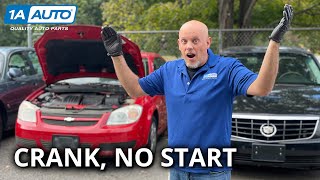
- Engine Cranks but Won't Start (Especially When Hot) 🎬 Watch: Troubleshooting steps when your engine cranks but won't start. (also visible on scanner) — After stalling, the engine turns over but refuses to start. This confirms a heat-related failure of the crankshaft position sensor or ignition control module. The engine restarts after cooling for 15 to 30 minutes.
- Engine Starts and Then Dies Immediately (also visible on scanner) — The engine fires up and runs for 1 to 3 seconds, then immediately shuts down. This is caused by a loss of fuel pressure right after startup or an anti-theft system intervention.
- Rough Idle or Stumbling Before Stall (also visible on scanner) — The engine idles erratically, shakes, or hesitates just before it stalls. This points to a fuel delivery, vacuum, or throttle body issue.
- Security Light Flashing on Dashboard (also visible on scanner) — A stall accompanied by a flashing security light confirms the issue is with the vehicle's immobilizer system failing to recognize the key.
Diagnostic Flowchart
Tap your situation to follow the diagnostic path that matches what you're seeing on this code.
Common Fixes & Costs
- Replace Crankshaft Position Sensor — Parts: $50-$150, Labor: $150-$300, ~1.5 hr book time (Intermediate)
- Clean Throttle Body and IAC Passages — Parts: $10-$20, Labor: $75-$150, ~1 hr book time (DIY)
- Replace Fuel Pump Assembly — Parts: $200-$400, Labor: $400-$900, ~3.5 hr book time (Professional)
- Replace Ignition Control Module — Parts: $70-$250, Labor: $70-$150, ~0.8 hr book time (Intermediate)
- Repair Engine Ground Wire/Strap — Parts: $10-$40, Labor: $100-$200, ~1.2 hr book time (DIY)
Used vs. New Parts: Buying Guide
When a used part is worth it: For a critical electronic part like a Crankshaft Position Sensor, buying used is never recommended. The failure stems from age and heat cycles, meaning a used part has a high likelihood of failing immediately. The small cost savings do not justify the risk of repeat labor or being stranded.
Donor-vehicle mileage cap: roughly under 20000 miles for the part to have meaningful remaining life.
Donor quality checklist:
- Avoid sensors from high-mileage vehicles or those from regions with extreme heat.
- Match the part number exactly; visually identical parts have different internal calibrations.
- Prefer OEM parts over aftermarket for critical sensors, as some vehicles are sensitive to aftermarket electronics.
Decision logic:
- If The part is a Crankshaft Position Sensor, Ignition Control Module, or Fuel Pump → Always buy new. These are high-failure items where reliability is paramount.
- If The cost of a new OEM part is prohibitive → Consider a new aftermarket part from a reputable brand (Delphi, Bosch, ACDelco) over a used OEM part.
- If The vehicle is very old and the budget is extremely tight → A used part is a last resort, but understand it carries a high risk of premature failure.
Warranty tradeoff: Used parts typically have a 30-90 day warranty covering only the part itself. New aftermarket parts offer a 1-year to limited lifetime warranty. New OEM parts offer the best guarantee of compatibility and quality.
Worst-case if a used part fails: $200-$600 if a used sensor fails after installation, requiring repeat diagnosis and labor charges.
What Happens If You Wait — Timeline
- 0-1 month: An intermittent stall occurs once or twice. P1599 is logged but the Check Engine Light is not on. The car restarts immediately. No other symptoms are perceived. (MPG impact: 0-2%% · Added cost: $0)
- 1-3 months: Stalling becomes more frequent, especially when the engine is hot or at idle. The engine becomes hard to start after a stall. A slight drop in fuel economy or rough idle is noticed. (MPG impact: 3-8%% · Added cost: $20-$75 in wasted fuel.)
- 3-6 months: The root cause causes frequent misfires, dumping unburned fuel into the exhaust. The catalytic converter begins to overheat, and its internal substrate starts to crack or sinter. (MPG impact: 10-20%% · Added cost: $800 - $2,500 (Catalytic converter is now likely damaged and requires replacement).)
- 6+ months: The catalytic converter becomes fully clogged from meltdown. Extreme exhaust backpressure builds up. The car has very low power, stalls constantly, and risks burnt exhaust valves. (MPG impact: 25-50%% · Added cost: $2,500+ (Original repair + catalytic converter + potential engine damage and starter replacement).)
Cost of Not Fixing It
- Immediate: Significant safety risk. The engine stalls unexpectedly in heavy traffic or at highway speeds, causing an immediate loss of power steering and brakes. (Added cost: N/A)
- 1-3 months: Damage to the catalytic converter. Intermittent stalling dumps unburned fuel into the exhaust, which ignites inside the catalytic converter and melts its internal structure. (Added cost: $950 - $2,500)
- 3-6+ months: Secondary engine damage. A clogged catalytic converter creates extreme exhaust backpressure, leading to overheating, burnt exhaust valves, and destroyed starter motors from repeated cranking. (Added cost: $2,500+)
Diagnosis Steps

- Analyze Freeze Frame Data
Use a quality OBD-II scanner to access the 'Freeze Frame' data. This snapshot of all sensor values at the exact moment the stall occurred provides critical clues. A stall at high temperatures points to a failing CKP sensor, while abnormal fuel trim values indicate a vacuum leak.
Tools: OBD-II Scanner with Freeze Frame capability (Beginner) - Check for Other Trouble Codes
Scan for all other codes in the PCM. Codes for the crankshaft sensor (P0335), misfires (P0300), or fuel system lean (P0171) reveal the root problem. Diagnose these primary codes first, as P1599 is merely the result.
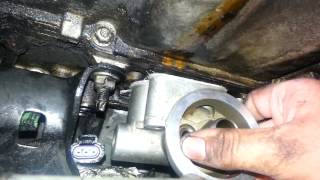
Tools: OBD-II Scanner (Beginner) - Test the Crankshaft Position (CKP) Sensor 🎬 Watch: How to replace crankshaft sensors on a Cadillac Northstar.
Use a scan tool to monitor the engine RPM signal while cranking. An RPM reading of 0 or erratic jumping during a no-start condition confirms a bad sensor. For intermittent issues, measure the sensor's resistance with a multimeter when cold, then again when hot. A significant change confirms failure.
Tools: OBD-II Scan Tool with Live Data, Multimeter, Service Manual (Intermediate) - Test Fuel Pressure and Perform Leak-Down Test
Connect a fuel pressure gauge to the fuel rail. Check the pressure with the key on, engine off (KOEO); it should hit the specified pressure (e.g., 50-60 PSI for GM). Start the engine and verify pressure holds at idle. Turn the engine off; pressure must not drop more than 5 PSI over 10 minutes. A rapid drop indicates a leaking injector or faulty fuel pump check valve.
Tools: Fuel Pressure Gauge Kit (Intermediate) - Perform a Thorough Visual Inspection
Inspect for cracked or disconnected vacuum hoses around the intake manifold and brake booster. Check for loose or corroded battery terminals and main engine ground straps. Look for damaged wiring harnesses near hot exhaust components.
Tools: Flashlight, Inspection Mirror (Beginner) - Check for Vacuum Leaks with a Smoke Machine
Feed smoke into a main vacuum line, such as the brake booster hose. Smoke pours out of any cracked hoses, bad gaskets, or leaking seals, instantly revealing unmetered air leaks.
Tools: Smoke Machine (Advanced) - PRO TIP: Perform a Ground Circuit Voltage Drop Test
Set a multimeter to a low DC voltage scale (2V). Connect the black lead to the negative battery terminal and the red lead to a clean metal spot on the engine block. Crank the engine. A reading exceeding 0.5 volts indicates excessive resistance in the main ground strap, which starves the ECU and causes stalls.
Tools: Multimeter (Advanced) - PRO TIP: Scope Test the Ignition Control Module Signal
Use an automotive oscilloscope to monitor the command signal from the PCM to the Ignition Control Module (ICM) and the output signal from the ICM to the coils. If the command signal is present but the output signal disappears during a stall, the ICM is faulty.
Tools: Automotive Oscilloscope (Lab Scope) (Advanced) - ADVANCED: Analyze Fuel Pump Live Data
Monitor fuel pump duty cycle or fuel pressure directly on an advanced scan tool. If commanded fuel pressure is 55 PSI but actual pressure drops to 30 PSI under load, it confirms a delivery problem. A duty cycle consistently above 85% at idle indicates a weak pump or clogged filter.
Tools: Advanced OBD-II Scan Tool with Live Data (Advanced)
When This Code Triggers (Freeze-Frame Conditions)
- Engine Coolant Temp: 185-210°F (Stall occurs when fully warmed up, pointing to heat-sensitive components like the CKP sensor or ICM.)
- Engine RPM: < 152 RPM (The value that actually triggers the code, showing a critical drop from a normal running speed.)
- Vehicle Speed: 0 mph (Stall occurs when coming to a stop, suggesting issues with idle control (dirty throttle body, IAC valve) or a failing torque converter.)
- Fuel System Status: Open Loop (If the stall happens immediately after a cold start, the system is in 'Open Loop'. A stall here indicates a bad coolant temp sensor giving false readings.)
Related Codes
- P0335 — Crankshaft Position Sensor 'A' Circuit Malfunction. This is a hard fault for the CKP sensor. If you have this code with P1599, the CKP sensor is the confirmed cause of the stall.
- P0300 — Random/Multiple Cylinder Misfire Detected. A severe misfire from a bad ignition module, vacuum leak, or fuel issue causes the engine to run so poorly that it stalls, logging P1599.
- P0171 — System Too Lean (Bank 1). This code indicates the engine is getting too much air or not enough fuel. It is a precursor to a stall caused by a large vacuum leak or a weak fuel pump.
- U2107 — Lost Communication with Body Control Module. Seen on Saturn models, this code alongside P1599 points to a deeper electrical problem. A failing BCM or bad ground causes multiple systems to lose communication and stall.
Climate & Environmental Factors
- High Heat / Hot Climates: High heat causes the fine internal windings of electronic components like the Crankshaft Position Sensor and Ignition Control Module to expand, creating open circuits and causing immediate failure. The engine stalls and will not restart until the component cools down. High ambient temperatures also lead to fuel vapor lock, starving the engine.
- Cold Weather / Cold Starts: A cold engine requires a richer fuel-to-air mixture to run properly. A weak fuel pump or clogged filter fails to deliver this extra fuel, causing a start-and-stall condition. Cold weather also thickens engine oil and reduces battery cranking power, amplifying existing stalling issues.
How to Talk to a Mechanic About This Code
Say this: "I have a P1599 'Engine Stall Detected' code and need a diagnostic. The car stalls intermittently, specifically when hot. Please save and print the freeze-frame data before clearing any codes, and focus the diagnosis on the crank sensor, fuel pressure, and ignition system."
This signals you are informed and prevents a shop from simply clearing the code. Asking for the freeze-frame data is critical for intermittent issues and shows you understand the diagnostic process.
Avoid saying:
- 'My car is stalling, can you fix it?' (too vague, invites a wide range of unnecessary suggestions)
- 'Just do whatever it takes to fix it.' (gives the shop a blank check)
- 'I think it's the spark plugs.' (Don't guess; let them diagnose. Guessing leads them down the wrong path, wasting time and money.)
Questions to ask before authorizing the repair:
- What did the freeze-frame data show about the engine's condition when it stalled?
- What specific tests did you perform to confirm this part has failed?
- Can you show me the old part once it's replaced?
- What is the warranty on the parts and labor for this specific repair?
Where to Take It: Dealer vs Independent vs Chain
- Dealer:
Best for: Vehicles still under powertrain warranty, Complex electrical issues involving the BCM or anti-theft system, When a known Technical Service Bulletin (TSB) or recall exists for the stalling issue
Downsides: Highest labor rates, typically 50% to 100% more than an independent shop, May recommend replacing entire assemblies instead of smaller, failed components (Typical cost: +50% vs. baseline) - Independent Shop:
Best fit for most scenarios. An experienced independent technician effectively diagnoses and repairs the common causes of P1599 without the high cost of a dealership. Vet the shop by checking for ASE certifications.
Best for: Out-of-warranty vehicles where cost is a major factor, Diagnosing common P1599 causes like crank sensors, fuel pumps, and vacuum leaks, Building a long-term relationship with a trusted mechanic
Downsides: Diagnostic capabilities vary greatly; ensure they have modern scan tools and experience with intermittent electrical issues. (Typical cost: +0% vs. baseline) - Chain Shop:
Use with caution. Acceptable for a straightforward part replacement if the diagnosis is certain, but AVOID for the initial diagnosis of an intermittent stalling problem.
Best for: Simple, clear-cut repairs AFTER a definitive diagnosis has been made elsewhere.
Downsides: Technician skill varies dramatically., High pressure to upsell services like fluid flushes that are unlikely to fix a stalling problem., Often lack the advanced diagnostic tools and experience for tricky intermittent electrical faults. (Typical cost: -10% vs. baseline)
When to Walk Away From the Repair
If the estimated repair cost exceeds 50% of the car's private-party value, seriously consider selling or scrapping the vehicle.
- Car worth $4500, fix is $2300: Borderline. The repair cost is right at the 50% threshold. Get a second opinion before proceeding.
- Car worth $8000, fix is $1200: Fix it. The repair cost is well below the threshold and makes economic sense.
- Car worth $2000, fix is $1500: Walk away. The repair cost is 75% of the car's value. It is not a sound investment.
What Scan Tool You Need for This Code
Minimum: A scanner that reads and displays both generic OBD-II codes and Freeze Frame data.
A sub-$20 code reader only provides the code number, which is useless for P1599 since it requires Freeze Frame data to diagnose the intermittent root cause. You absolutely need to see engine temperature, RPM, and fuel trims at the moment of the stall.
Budget: BlueDriver Pro (~$100) — Connects to your smartphone via Bluetooth. It reads freeze frame data, graphs live sensor data (like RPM from the crank sensor), and reads manufacturer-specific codes from other modules. This is often enough to spot a failing sensor.
Mid-range: Innova 5610 (~$350) — A powerful handheld unit that offers live data graphing, reads codes from all vehicle systems, and includes bidirectional controls for testing components. This helps you actively test circuits and sensors related to the stall.
Professional: Autel MaxiCOM MK808 (~$500) — Provides full system diagnostics, advanced service functions, and bidirectional control. For a complex P1599 issue involving the Body Control Module (BCM) or anti-theft system, a tool with this level of functionality is required to perform necessary tests and resets.
Rent vs buy: For a one-time diagnosis, auto parts stores read codes for free, but they may not provide the critical freeze-frame data. If you plan to do any serious DIY diagnostics, buying a scanner like the BlueDriver Pro pays for itself by avoiding just one diagnostic fee at a shop.
How to Clear the Code After You Fix It
- Use an OBD-II scan tool to clear the P1599 and any related codes.
- Disconnecting the battery is not recommended as it clears adaptive memory and fails to reset all monitors.
- Perform a complete GM drive cycle to allow the onboard diagnostics to re-run their self-tests.
Drive cycle (~20 minutes): Cold start (coolant temp below 122°F). Idle for 2-3 minutes with electrical loads on (A/C, defroster). Accelerate to 55 mph and hold steady speed for 3-5 minutes. Coast down to 20 mph without braking. Accelerate to 55-60 mph and hold steady for 5 minutes. Decelerate. This process allows monitors like Catalyst, O2 Sensor, and EVAP to run.
Readiness monitors affected: Catalyst Monitor, EVAP System Monitor, Oxygen (O2) Sensor Monitor
Before emissions retest: drive at least 100 miles to fully set monitors.
Watch out for:
- Clearing codes erases the freeze frame data, which is vital for diagnosis. Analyze first, then clear.
- Not completing a full drive cycle leaves readiness monitors 'Not Ready', causing an automatic emissions test failure.
- If the root cause is not fixed, the code returns after the next stall event.
Will This Fail Emissions / State Inspection?
Yes — this code typically fails an OBD-II emissions inspection.
- California: While P1599 itself does not illuminate the Check Engine Light, the underlying cause usually does, resulting in an automatic smog check failure. After repairs, you must complete a drive cycle to set readiness monitors.
- New York: The NYS inspection includes an OBD-II scan. Any stored code that turns on the Check Engine Light causes an automatic failure. If the light is off but readiness monitors are not set, the vehicle fails.
- Texas: In the 17 counties requiring emissions testing, an illuminated Check Engine Light is an automatic failure. If the light is off, the vehicle passes with one 'Not Ready' monitor for model years 2001 and newer.
Most Commonly Affected Vehicles

- Cadillac DeVille (1997-2001) — Extremely common on Northstar engines. Stalling when hot is frequently caused by the two crankshaft position sensors failing. Bad engine grounds and fuel pump issues are also common culprits.
- Saturn S-Series (SL, SW, SC) (1997-2002) — Often cited for P1599 with stalling. Causes are diverse, including crank sensors, fuel pumps, and burnt wiring near the ignition switch or under-dash ground blocks.
- Saturn L-Series & Vue (2000-2004) — These models log P1599 as an informational code during a stall. On the Vue, it is sometimes seen with a U2107 'Lost Communication with BCM' code, pointing towards an electrical or module issue.
- Chevrolet Cobalt & Malibu (2005-2010) — P1599 is triggered by failing fuel pumps, dirty throttle bodies, or issues within the ignition system. These models were part of a major ignition switch recall that caused stalling.
- Cadillac Seville (1998-2001) — Shares the Northstar engine with the DeVille and suffers from the same common failures of crankshaft position sensors and intermittent electrical faults causing stalls.
- Oldsmobile Aurora (1997-2003) — Equipped with a Northstar-derived V8, these cars are susceptible to the same heat-induced CKP sensor failures and ground issues that trigger a P1599.
- Jeep Grand Cherokee (1999-2004) — IMPORTANT: On these vehicles, P1599 means 'A/C Pressure Sensor Voltage Too Low'. It is related to the air conditioning system and has nothing to do with the engine stalling.
- Dodge Ram, Stratus (1999-2004) — IMPORTANT: Like Jeep/Chrysler, P1599 on these Dodge models indicates a fault in the A/C pressure sensor circuit, not an engine stall.
Manufacturer-Specific Notes
- General Motors (Cadillac, Chevrolet, Saturn): This code is informational (Type D) and will not turn on the Check Engine Light. It is specifically designed to capture freeze-frame data at the moment of the stall to help a technician diagnose an intermittent root cause.
- General Motors (Cadillac, Chevrolet, Saturn): RECALL: A massive recall was issued for faulty ignition switches on models including the Chevrolet Cobalt (2005-2010) and Saturn Ion (2003-2007). The switch moves into the 'accessory' position while driving, causing a complete loss of engine power and disabling airbags. Owners must check their VIN on the NHTSA website.
- Chrysler/Dodge/Jeep: On these vehicles, P1599 means 'A/C Pressure Sensor Voltage Too Low' or a similar A/C circuit fault. It is completely unrelated to engine stalling and must be diagnosed as an A/C system problem.
- Volkswagen/Audi: For VW and Audi, P1599 is 'Idle control - lean running speed above specification'. This points to an idle control issue like a vacuum leak or faulty IAC valve, not a stall detection code.
- Hyundai/Kia/Nissan/Subaru: P1599 is not a standard, defined code on most models from these brands. If it appears, it often relates to the A/C pressure sensor circuit, similar to Chrysler.
Real Owner Stories
1999 Saturn SL2 stalls when hot, won't restart until cool.
Car starts fine when cold. After warming up, it hesitates and stalls when starting from a stop. It cranks but will not restart until cooled down. The P1599 code was present.
What they tried:
- Owner noticed the coolant temperature gauge was not reading correctly, staying on cold even when the engine was hot.
Outcome: The root cause was a faulty Engine Coolant Temperature (ECT) sensor. Replacing the ECT sensor resolved both the incorrect gauge reading and the hot-stall condition.
Lesson: Don't ignore other symptoms. A faulty sensor provides incorrect data to the ECU, leading to improper fuel mixture and stalling as the engine warms up.
2001 Saturn SW2 with 110k miles experiencing intermittent stalling.
Car bucks and stalls after driving for 45 minutes, feeling like an ignition cut-off. The only code stored was P1599.
What they tried:
- A mechanic initially suspected and replaced the Crankshaft Position Sensor, but the problem persisted intermittently.
Outcome: The issue was traced to a failing Ignition Control Module (ICM). The ICM failed due to heat soak after extended driving, causing a loss of spark. Replacing the ICM fixed the issue.
Lesson: For heat-related stalls, both the CKP sensor and the ICM are primary suspects. If replacing one doesn't solve the issue, test the other thoroughly.
1998 Cadillac DeVille with random stalling and a P1599 code.
The vehicle stalls without warning at idle and on the highway.
What they tried:
- Initial checks of major components did not reveal the issue. The technician began tracing wiring harnesses.
- A burnt ground wire near the ignition switch, leading to an under-dash grounding block, was discovered.
Outcome: Repairing the faulty ground wire provided a stable electrical connection for the ignition and fuel systems, resolving the random stalling.
Lesson: Intermittent electrical problems are often caused by bad grounds. A visual inspection of main ground straps and wiring harnesses reveals hidden issues that won't be pinpointed by a sensor-specific code.
2003 Saturn Vue won't start, alarm goes off, with P1599 and U2107 codes.
The vehicle intermittently fails to start, and the security system alarm triggers. It logged P1599 and U2107 (Lost Communication with BCM).
What they tried:
- Technician checked all power and ground wires to the Body Control Module (BCM) and found them to be intact.
Outcome: The issue was diagnosed as a failed Body Control Module (BCM). The BCM caused a communication breakdown between vehicle systems, leading to a no-start condition. Replacing and reprogramming the BCM resolved the problem.
Lesson: When P1599 is paired with a 'U' code, the problem is electrical and module-related. The BCM or a major wiring issue is the primary suspect.
How to Prevent This Code From Triggering
- Keep the fuel tank at least 1/4 full. (Always) — The electric fuel pump is located inside the fuel tank and is cooled and lubricated by the gasoline surrounding it. Running the tank low causes the pump to run hot, significantly shortening its life.
- Replace the fuel filter at recommended intervals. (Every 2-3 years or 30,000 miles) — A clogged fuel filter forces the fuel pump to work harder to supply the required pressure. This extra strain burns out the pump over time. Regular replacement prevents a $1,000 fuel pump job.
- Clean main engine and battery ground connections. (Every 2-3 years or during battery replacement) — Corrosion on ground points creates electrical resistance, leading to intermittent voltage drops that starve the ECU, ignition module, or fuel pump, causing stalls.
- Use high-quality fuel and consider a fuel system cleaner annually. (Every fill-up / Annually) — Top-tier fuels contain detergents that prevent carbon buildup on intake valves and in the throttle body. An annual treatment removes deposits that restrict idle airflow and cause stalling.
- Check and clean wiring harnesses near hot components. (During oil changes) — Heat from the engine and exhaust makes plastic wiring insulation brittle and causes it to crack, leading to shorts. This is a common failure mode for Crankshaft Position Sensor wiring.
Frequently Asked Questions
What is freeze frame data and why is it so important for P1599?
Freeze frame data is a snapshot of your vehicle's sensor readings captured at the exact moment the P1599 code triggered. For an intermittent stall, this data provides the single most important clue. It reveals the exact conditions of the failure, allowing a technician to identify the illogical sensor reading that caused the stall.
Will clearing the P1599 code fix my car?
No, clearing the code only erases the record of the stall and the critical freeze-frame data needed for diagnosis. The underlying issue remains, and the engine will stall again. Always diagnose the root cause before clearing P1599.
Why didn't my Check Engine Light turn on with this code?
On GM vehicles, P1599 is a Type D informational code that does not illuminate the Check Engine Light. It reports a specific event (a stall) rather than a continuous sensor or system failure. You must actively scan for it if you experience unexplained stalling.
My mechanic says they can't find anything wrong. What should I do?
Provide your mechanic with exact conditions like engine temperature, speed, and weather when the stall happens. Insist they analyze the 'freeze frame' data stored with the P1599 code. If they cannot access this data, find a technician with an advanced scan tool to ensure a correct diagnosis.
Can a bad battery or alternator cause a P1599 code?
Yes, a failing alternator causes system voltage to drop while driving. If voltage drops below 9-10 volts, the ECU, fuel pump, and ignition system shut down, causing a stall that logs P1599. This is usually accompanied by code P0562 for System Voltage Low.
Why did P1599 appear after a repair like a new battery or engine swap?
The vehicle's anti-theft system often requires a relearn procedure after a power loss, shutting the engine down if skipped. Alternatively, a critical ground wire left loose during the repair causes an intermittent electrical fault. Finally, accidentally stalling the engine during the first post-repair startup attempts logs the code.
Is it expensive to fix a P1599 code?
The cost depends entirely on the root cause. A fix ranges from a $15 throttle body cleaning to a $1,200 in-tank fuel pump replacement. Diagnosing the exact cause using freeze-frame data prevents wasting money on unnecessary parts.
Key Takeaways
- P1599 is a manufacturer-specific code that means 'Engine Stall Detected' on GM vehicles, but indicates an A/C system fault on Chrysler, Dodge, and Jeep models.
- P1599 acts as a diagnostic snapshot, logging critical freeze-frame data like engine RPM and coolant temperature at the exact moment the engine stalls.
- A failing Crankshaft Position (CKP) sensor causes over 50% of heat-related P1599 stalls, followed closely by weak fuel pumps and faulty Ignition Control Modules.
- Never clear code P1599 before analyzing its freeze-frame data; doing so erases the only evidence of the stall and risks $1,500+ in catalytic converter damage from repeated misfires.
Helpful Videos

The information in this article is provided for general reference and educational purposes only. Vehicle specifications, procedures, and part compatibility can vary by production date, trim level, and region. Always consult your vehicle's factory service manual and verify part numbers before purchasing or performing repairs. Safety-critical components such as airbags, seat belts, and braking systems should be installed by a qualified professional.
- 🎬 Helpful Videos
- What Does P1599 Mean?
- Can I Drive With P1599?
- Common Causes
- Symptoms
- Diagnostic Flowchart
- Common Fixes & Costs
- Used vs. New Parts: Buying Guide
- What Happens If You Wait — Timeline
- Cost of Not Fixing It
- Diagnosis Steps
- When This Code Triggers (Freeze-Frame Conditions)
- Related Codes
- Climate & Environmental Factors
- How to Talk to a Mechanic About This Code
- Where to Take It: Dealer vs Independent vs Chain
- When to Walk Away From the Repair
- What Scan Tool You Need for This Code
- How to Clear the Code After You Fix It
- Will This Fail Emissions / State Inspection?
- Most Commonly Affected Vehicles
- Manufacturer-Specific Notes
- Real Owner Stories
- 1999 Saturn SL2 stalls when hot, won't restart until cool.
- 2001 Saturn SW2 with 110k miles experiencing intermittent stalling.
- 1998 Cadillac DeVille with random stalling and a P1599 code.
- 2003 Saturn Vue won't start, alarm goes off, with P1599 and U2107 codes.
- How to Prevent This Code From Triggering
- Frequently Asked Questions
- What is freeze frame data and why is it so important for P1599?
- Will clearing the P1599 code fix my car?
- Why didn't my Check Engine Light turn on with this code?
- My mechanic says they can't find anything wrong. What should I do?
- Can a bad battery or alternator cause a P1599 code?
- Why did P1599 appear after a repair like a new battery or engine swap?
- Is it expensive to fix a P1599 code?
- Key Takeaways
- 🎟️ Get 5% Off