

P1594 on 2016-2018 Ford Transit Connect: Remote Start Failure and Fixes
On a 2016-2018 Transit Connect, P1594 means the engine was shut down by the computer during a remote start attempt. This is most often caused by a known software glitch in the Body Control Module (BCM) that requires a dealer update, as specified in Ford TSB SSM 47519. The second most common cause is a weak or aging 12V battery that fails the system's pre-start voltage check. A BMS reset is critical after battery replacement.
- P1594 on your Transit Connect is a remote start failure, not a critical engine problem. You can still drive the van normally using the key.
- The most probable cause is a software glitch in the Body Control Module (BCM) that Ford has issued TSB SSM 47519 for. The fix is a software update from a dealer.
- Before going to the dealer, have your 12V battery professionally load-tested. A weak battery is the second most likely cause, as the remote start system is very sensitive to battery state-of-charge.
- If you replace the battery yourself, a Battery Management System (BMS) reset is required. This can often be done without tools by flashing the high beams 5 times and pressing the brake 3 times. This ensures the charging system works correctly with the new battery.
What's Unique About the 2016-2018 Ford TRANSIT CONNECT
This issue is particularly well-documented for this generation of Ford vehicles, including the Transit Connect, Escape, and Focus, which share a similar electrical architecture. The problem is so common that Ford issued multiple Technical Service Bulletins (TSBs), including SSM 47519 and SSM 47397. The root cause is often not a failed hardware part, but a calibration issue within the BCM software that is overly sensitive to minor voltage fluctuations or sensor readings during the remote start sequence. This means that unlike many trouble codes, the most common fix is a software update from a Ford dealer, not replacing a physical component.
Diagnostic Flowchart
Tap your situation to follow the diagnostic path that matches what you're seeing on this vehicle.
Symptoms You May Notice
- Engine starts via remote start (key fob or FordPass app) and then immediately shuts down.
- FordPass app may incorrectly report that the vehicle started successfully, when in fact it has stalled.
- The Check Engine Light (MIL) is usually not illuminated, as this is a Body Control Module (BCM) code. However, in some cases, the MIL may illuminate.
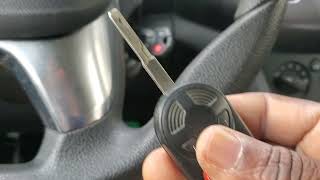
- Remote start function is completely disabled and will not attempt to start. 🎬 Watch: Troubleshooting the 3 most common Ford remote start issues.
- Replacing the alternator when the battery is the actual cause.
- Replacing the battery without performing a BMS reset, leading to the same code returning because the system still thinks the old, weak battery is installed.
- Replacing the BCM when only a software update is required.
Most Likely Causes
- Outdated Body Control Module (BCM) Software 🔴 High Probability Ford acknowledged this issue in TSBs SSM 47187 and SSM 47519, indicating a calibration problem in the original software that incorrectly detects a fault during remote start.
How to confirm: A Ford dealer or a qualified shop with Ford's diagnostic software (IDS/FDRS) can check the current BCM calibration against the latest available version. The presence of the code and symptom is strong evidence.
Typical fix: Reprogram the BCM to the latest software calibration using Ford's IDS scan tool. This must be done by a dealer or a shop with the appropriate J2534 pass-thru tools and software subscription. The cost is typically equivalent to one hour of shop labor.
Est. part cost: $0 - Weak or Failing 12V Battery 🟡 Medium Probability The remote start system's logic checks the battery's State of Charge (SoC) before allowing the engine to run. If the SoC is below a certain threshold, it will trigger P1594 and shut down to conserve power, even if the battery can still start the van with the key. Owners on forums report this issue frequently, especially in cold weather or after the vehicle sits for a couple of days.
How to confirm: Perform a load test on the battery with a professional digital battery tester. A simple voltage check with a multimeter may not be sufficient to identify a weak battery that fails under the initial load of the remote start sequence.
Typical fix: Replace the 12V battery. It is critical to perform a Battery Management System (BMS) reset after replacement to ensure the system recognizes the new battery's state of charge and adjusts its charging strategy accordingly. 🎬 Watch: How to perform a BMS reset after battery replacement. Failure to do so can lead to the same code returning and improper charging of the new battery.
Est. part cost: $150-$300 - Poor Battery Connections or Grounding ⚪ Low Probability Corroded terminals or a loose ground strap can cause sufficient voltage drops during the remote start's high-current draw phase, which the BCM might interpret as a charging system fault.
How to confirm: Visually inspect the battery terminals for corrosion (white or blue powder). Check that both the positive and negative cable clamps are tight. Trace the negative cable to the chassis and ensure the ground connection is clean and secure.
Typical fix: Clean the battery terminals and cable ends with a wire brush and a terminal cleaning tool. Apply dielectric grease or petroleum jelly to prevent future corrosion. Securely tighten all connections.
Est. part cost: $5-$50
Rare But Worth Checking
- Failing Alternator: While the code definition points to a charging system fault, it's more likely to be the battery or software. However, if the battery is good, the alternator's health should be verified. A failing alternator can cause low voltage across the entire system, which the BMS will detect, potentially disabling remote start.
- Faulty Hood Ajar Switch: As a safety measure, the remote start system will not operate if it detects that the hood is open. A faulty or misaligned switch can incorrectly signal that the hood is open, preventing the remote start from completing its sequence and potentially logging P1594. The switch is part of the hood latch assembly.
Diagnosis Steps
- Verify the code P1594 is present in the Body Control Module (BCM) using a scan tool capable of reading manufacturer-specific codes (like FORScan or a professional-grade tool).
- Check for Ford Technical Service Bulletins (TSBs) related to P1594 for your vehicle's VIN. TSBs SSM 47187, SSM 47519, and SSM 47397 are highly relevant.
- Thoroughly test the 12V battery. This must include a load test and checking its State of Charge (SoC). Do not rely on voltage alone. A healthy battery should read above 12.4V at rest.
- Inspect the battery terminals and the main chassis ground for looseness or corrosion. Clean and tighten as necessary.
- If the battery and connections are confirmed good, the next step is to have a Ford dealer or qualified independent shop update the BCM software to the latest calibration as per the TSBs. This is the most common resolution.
- If the software is up to date and the battery is good, test the alternator's output with the engine running (started via key). Voltage should typically be between 13.5V and 14.5V.
- Check the status of the hood ajar switch using your scan tool's live data function to ensure it is functioning correctly. Verify the latch is closing properly.
Parts You'll Likely Need
- 12V Battery
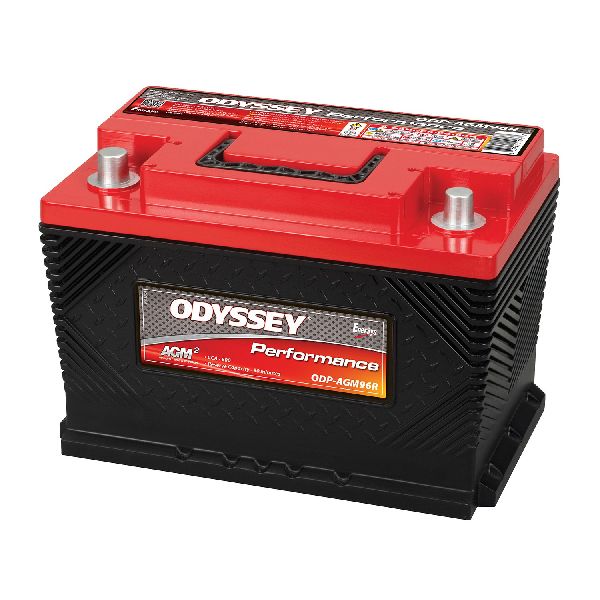
(OEM #BAGM-94RH7-800 (Motorcraft AGM))— A weak battery is the most common hardware failure to trigger this code, as the remote start system requires a healthy State of Charge to operate. The original equipment is often an AGM (Absorbed Glass Mat) battery.
Trusted brands: Motorcraft, Interstate, Duralast
OEM price range: $250-$400
Aftermarket price range: $180-$300 - Hood Latch Assembly (with switch)
(OEM #DT1Z-16700-B)— A rare but possible cause is a faulty hood ajar switch integrated into the latch, which prevents remote start as a safety feature.
Trusted brands: Ford (OEM)
OEM price range: $50-$75
Aftermarket price range: $30-$50
Technical Service Bulletins (TSBs) & Recalls
- SSM 47187: Addresses engine shut off after remote start with DTC P1594 on 2017 models.
- SSM 47519: Supersedes earlier bulletins, covering 2016-2018 models. It explicitly states that an immediate engine shutoff can occur with or without P1594 and recommends reprogramming the BCM to the latest calibration.
- SSM 47397: Another related bulletin for the same issue on 2016-2018 models, also recommending a BCM reprogram using scan tool software release 110.02 or higher.
Platform-Specific Known Issues
- Per TSB #SSM 47519, 2016-2018 Transit Connect vehicles equipped with remote start may exhibit an immediate engine shut off with or without DTC P1594 after a remote start attempt. The official fix is to reprogram the BCM.
- The FordPass app may give a false positive, indicating the vehicle started successfully when it has actually stalled.
- Owners on forums like the Ford Transit Connect Forum and Reddit frequently discuss battery issues causing electrical gremlins, including no-start conditions that are resolved with a new battery and BMS reset.
Mechanic-Grade Diagnostic Values
- BCM Ground Circuit Resistance — expected: < 5 ohms. Failure: Resistance greater than 5 ohms indicates a poor ground connection which can cause intermittent module behavior.
- Hood Ajar Switch Ground Circuit Resistance — expected: < 10 ohms. Failure: Resistance greater than 10 ohms between the ground circuit terminal on the switch connector and chassis ground points to a wiring issue.
- HS-CAN Bus Termination Resistance — expected: 54 - 66 ohms. Failure: Readings outside this range when measuring between pins 6 and 14 of the OBD-II port (with the battery disconnected) indicate a problem with the CAN network wiring or a faulty terminating resistor in a module like the BCM or PCM.
Scan Tool Commands That Help
- Ford IDS / FDRS: BCM Reprogramming/Module Configuration — This is the primary fix identified in TSBs SSM 47187 and SSM 47519. It updates the BCM with a new calibration file that is less sensitive to the conditions that falsely trigger P1594.
- Ford IDS / FDRS, FORScan: BMS Reset (Battery Management System) — This function is critical to perform after replacing the 12V battery. It tells the BCM that a new battery is installed and resets the learned state of charge, ensuring proper charging strategy and preventing the system from falsely disabling remote start due to perceived low battery health.
- Ford IDS / FDRS: Parameter Reset — This is a mandatory procedure required after installing a new or used BCM. It synchronizes the replacement BCM with the other modules on the vehicle, including the PCM and the Passive Anti-Theft System (PATS), to allow the vehicle to start.
Wiring & Ground Locations
- BCM (Body Control Module) — Located in the passenger compartment, typically integrated with the interior fuse panel, often behind the glove box or on the passenger side kick panel area.. The BCM is the module that sets code P1594 and commands the remote start shutdown. All related wiring for battery sensing, hood switch, and remote start logic terminates here.
- G200 — Under the passenger's scuff plate.. This is a primary ground point for components in the passenger compartment. A wiring diagram for the 2014 model year lists this as a key ground, and a poor connection here could cause erratic BCM behavior.
- C2280B, C2280D, C2280F — These are the names of the large electrical connectors that plug into the BCM.. Technicians must disconnect these specific connectors to perform pinpoint resistance and voltage tests on the BCM's power, ground, and communication circuits. Water intrusion is often found at these connectors.
Real Owner Repair Stories
- Reddit user, summarized from TSB-related discussions for the Ford Escape (platform mate) (2017 Ford Escape (shares electrical architecture with Transit Connect)) — Remote start would engage, the engine would start for a second, and then immediately shut down. The P1594 code was stored in the BCM.
❌ Tried (didn't work) Checking battery health (battery was good)., Verifying hood latch was closed securely.
✅ What actually fixed it The owner took the vehicle to a Ford dealer who performed a software update on the Body Control Module (BCM) as prescribed by a Technical Service Bulletin. The problem was resolved permanently after the reflash.
OEM Part Supersession History
DT1Z-16A770-A→DT1Z-16A770-B— This is the part number for the secondary hood safety catch, not the main latch with the sensor. The part was likely revised for improved durability or material.
Helpful Videos
We Have This Part in Stock


The information in this article is provided for general reference and educational purposes only. Vehicle specifications, procedures, and part compatibility can vary by production date, trim level, and region. Always consult your vehicle's factory service manual and verify part numbers before purchasing or performing repairs. Safety-critical components such as airbags, seat belts, and braking systems should be installed by a qualified professional.
- Ford TRANSIT CONNECT:
- 🎬 Helpful Videos
- 🛍️ Shop This Part
- What's Unique About the 2016-2018 Ford TRANSIT CONNECT
- Diagnostic Flowchart
- Symptoms You May Notice
- Most Likely Causes
- Rare But Worth Checking
- Diagnosis Steps
- Parts You'll Likely Need
- Technical Service Bulletins (TSBs) & Recalls
- Platform-Specific Known Issues
- Mechanic-Grade Diagnostic Values
- Scan Tool Commands That Help
- Wiring & Ground Locations
- Real Owner Repair Stories
- OEM Part Supersession History
- 🎟️ Get 5% Off