

OBD-II Code P1586: Throttle Control Malfunction
What P1586 means, why it triggers, and how to fix it
- P1586 is a manufacturer-specific code that indicates a throttle failure on Fords, a $25 brake switch failure on GM trucks, or an engine mount issue on VWs.
- Always verify the exact code definition for your specific vehicle year and make before buying parts to avoid a $300+ misdiagnosis.
- For Ford, Mazda, and Volvo vehicles, cleaning the throttle body with a $10 dedicated spray resolves the code 40% of the time.
- Do not drive with an active P1586 throttle code; the vehicle enters a reduced-power 'limp mode' or stalls in traffic, creating an immediate crash risk.
- On Peugeot and Citroën 1.6 HDi engines, unplugging the EGR valve is the fastest way to diagnose a shared 5-volt circuit short triggering this code.
What Does P1586 Mean?

Code P1586 indicates the Powertrain Control Module (PCM) detects a malfunction in the electronic throttle control system or a manufacturer-specific auxiliary circuit. On throttle-related vehicles, it means the throttle position, control circuit, or internal motor has failed, directly disabling the engine's ability to regulate airflow.
Technical definition: The generic definition is 'Throttle Control Unit Throttle Position Malfunction', but P1586 is manufacturer-specific. It points to the throttle body on Ford/Mazda/Volvo, the cruise control brake switch on GM trucks, engine mounts on VW/Audi, and the hybrid inverter on Hondas.
Can I Drive With P1586?

No — Do Not Drive. Driving is not recommended. The vehicle enters a reduced-power 'limp mode', accelerates unpredictably, or stalls in traffic, creating a severe crash risk. Continuing to drive causes an improper air-fuel mixture that overheats and destroys the catalytic converter, adding $1,200 to $2,800 in repair costs.
Common Causes

- Dirty or Clogged Throttle Body (Very Common) — Carbon and oil sludge from the PCV system physically obstruct the throttle plate, preventing it from moving freely. This is the most frequent cause on Ford, Mazda, and Volvo vehicles.
- Defective Electronic Throttle Body Assembly (Common) — The internal electric motor or integrated Throttle Position Sensor (TPS) fails. These components form a single unit and require full assembly replacement.
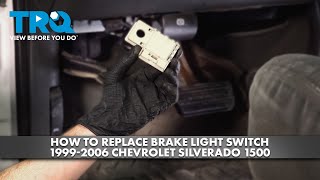
- Faulty Brake Light Switch (GM Specific) (Common) — On 2007-2014 GM trucks, the brake light switch fails internally, disrupting the cruise control circuit and triggering this specific code.
- Damaged or Corroded Wiring (Common) — Frayed wires, short circuits, or corroded connector pins interrupt the signal between the throttle body and the PCM.
- Shared Sensor Power Supply Fault (Less Common) — On Peugeot/Citroën 1.6 HDi engines, the throttle body shares a 5-volt circuit with the EGR valve. A shorted EGR valve pulls down the entire circuit voltage, triggering P1586.
- Faulty Accelerator Pedal Position (APP) Sensor (Less Common) — The gas pedal sensor fails and sends erratic signals to the PCM, mimicking a throttle body malfunction.
- Software or PCM Programming Glitches (Uncommon) — A software anomaly within the PCM triggers false codes, requiring a manufacturer technical service bulletin (TSB) reflash.
Symptoms
- Reduced Engine Power or 'Limp Mode' — The PCM limits engine power to prevent damage, making the vehicle feel extremely sluggish and unable to accelerate.
- Irregular, Rough, or High Idle — Engine speed fluctuates, surges, or idles abnormally high when stationary.
- Engine Stalling or Hard Starting — The engine cuts out unexpectedly at low speeds or refuses to start.
- Cruise Control Inoperative — The cruise control system disables automatically. On GM vehicles, this is often the only noticeable symptom.
- Check Engine Light is On — The malfunction indicator lamp (MIL) illuminates immediately upon detecting the fault.
Diagnostic Flowchart

Tap your situation to follow the diagnostic path that matches what you're seeing on this code.
Common Fixes & Costs
- Clean the Electronic Throttle Body — Parts: $10-$20, Labor: $100-$150, ~1.0 hr book time (DIY)
- Replace Brake Light Switch (GM Specific) — Parts: $15-$40, Labor: $75-$120, ~0.6 hr book time (DIY)
- Replace the Electronic Throttle Body Assembly — Parts: $150-$400, Labor: $150-$300, ~1.2 hr book time (Intermediate)
- Replace the Accelerator Pedal Position Sensor — Parts: $70-$200, Labor: $100-$250, ~1.0 hr book time (DIY)
- Repair or Replace Damaged Wiring — Parts: $20-$50, Labor: $200-$600, ~2.5 hr book time (Professional)
- Replace the Powertrain Control Module (PCM) — Parts: $500-$1200, Labor: $200-$400, ~1.5 hr book time (Professional)
Used vs. New Parts: Buying Guide
When a used part is worth it: For older, high-mileage vehicles where the cost of a new OEM throttle body is prohibitive. A used OEM part from a low-mileage, accident-damaged vehicle is a cost-effective alternative to a new aftermarket part of questionable quality.
Donor-vehicle mileage cap: roughly under 80000 miles for the part to have meaningful remaining life.
Donor quality checklist:
- Verify the donor vehicle was not scrapped due to engine or electrical failure.
- Match the part number exactly; electronic components are year/model specific.
- Inspect the connector for any signs of corrosion or damaged pins.
Decision logic:
- If Vehicle is less than 8 years old or has under 80,000 miles → Buy a new OEM or high-quality aftermarket part for longevity and warranty.
- If Vehicle is over 10 years old and budget is the primary concern → A used OEM part is a reasonable choice, but accept the risk of a shorter lifespan.
- If The part is for a GM vehicle and the code is for the brake switch → Always buy new; the part is inexpensive and a used one offers no real savings.
Warranty tradeoff: Used parts from salvage yards typically offer a 30-90 day functional warranty. New aftermarket parts often come with a 1-year to limited lifetime warranty. New OEM parts carry a 1-2 year warranty.
Worst-case if a used part fails: $200-500 if a used part fails after the warranty period, requiring repeat labor costs plus the cost of another replacement part.
What Happens If You Wait — Timeline
- 0-1 month: Code P1586 appears. Symptoms are intermittent and include a slightly rough idle or a momentary hesitation when accelerating. The Check Engine Light turns on and off. (MPG impact: 3-8%% · Added cost: $20-50 in wasted fuel.)
- 1-3 months: Symptoms become more consistent. The engine frequently idles erratically, stalls at stops, and throttle response is noticeably delayed. The PCM triggers 'limp mode' more often, severely limiting power. (MPG impact: 10-20%% · Added cost: $50-150 in wasted fuel. The catalytic converter begins to suffer from thermal stress due to an incorrect air/fuel mixture.)
- 3-6 months: Unburnt fuel consistently enters the exhaust, where it ignites inside the catalytic converter. The substrate overheats past its melting point (around 1400°C), causing it to crack or melt internally. Code P0420 (Catalyst System Efficiency Below Threshold) appears. (MPG impact: 15-25%% · Added cost: $1200-2800 for catalytic converter replacement, plus the original throttle body repair.)
- 6+ months: The catalytic converter substrate completely melts, creating a severe blockage in the exhaust. Exhaust backpressure skyrockets, causing extreme power loss, engine overheating, and potential for burnt exhaust valves or damaged piston rings. The car becomes undrivable. (MPG impact: 25-50%+% · Added cost: $3000-5000+ for catalytic converter and potential internal engine repairs, on top of the initial fault.)
Cost of Not Fixing It
- 0-1 month: Unpredictable stalling and 'limp mode' create a significant safety hazard. Fuel economy drops by 5-15% due to inefficient air/fuel mixture. (Added cost: Negligible, besides increased fuel cost.)
- 1-6 months: An incorrect air-fuel ratio causes the catalytic converter to overheat. This melts the internal substrate, leading to a blockage and complete failure. (Added cost: $1200-2800)
- 6+ months: A severely clogged catalytic converter increases exhaust backpressure, leading to burnt exhaust valves or other internal engine damage over time. (Added cost: $3000-5000+)
Diagnosis Steps
- Read Codes & Research Definition
Use an OBD-II scanner to confirm P1586. Crucially, research the exact definition for your vehicle's make and year. Note all other codes, as they provide critical clues (e.g., P0698 points to a shared power issue).
Tools: OBD-II Scanner, Online Repair Database (Beginner) - Check for Technical Service Bulletins (TSBs)
Search for TSBs related to P1586 for your specific VIN. Manufacturers frequently release software updates to resolve erroneous fault codes caused by programming glitches.
Tools: Online Repair Database (Beginner) - Inspect Throttle Body Wiring
Visually inspect the wiring harness and connector at the throttle body. Look for chafed wires, loose pins, or oil contamination. Gently wiggle the harness with the engine idling to check for RPM changes.
Tools: Flashlight (Beginner) - Clean the Throttle Body
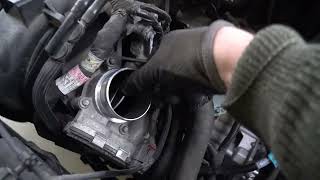
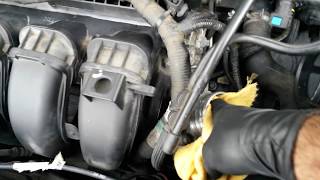
Remove the air intake hose and inspect for carbon buildup. Clean it thoroughly with dedicated throttle body cleaner and a soft cloth. Never force the throttle plate open on an electronic unit.
Tools: Socket set, throttle body cleaner, microfiber towels (Intermediate) - Test Sensor Voltages
With the key on and engine off, back-probe the Throttle Position Sensor (TPS) connector. Verify the 5V reference and ground. The signal wire must sweep smoothly from ~0.5V to ~4.5V as the pedal is pressed. Jumpy readings confirm a failed sensor.
Tools: Multimeter, T-pins, Wiring Diagram (Advanced) - Analyze Live Data
Use a bidirectional scan tool to view live data for the APP and TPS sensors. Monitor 'Commanded Throttle Position' versus 'Actual Throttle Position'; they must match closely without dropouts.
Tools: Advanced OBD-II Scanner (Advanced) - Isolate Shared Circuit Faults
If code P0698 is present, use a wiring diagram to identify all sensors on the shared 5V reference circuit. Unplug sensors (like the EGR valve) one by one until the 5V reference returns to normal at the throttle connector.
Tools: Multimeter, Wiring Diagram (Advanced) - Perform a System Reset
Disconnect the battery for 30 minutes to perform a hard reset. This clears erroneous communication glitches between modules. Note this erases learned idle values and radio presets.
Tools: Wrench set (Intermediate) - Check the PCM
If all wiring, sensors, and power circuits test perfectly, the PCM itself is faulty. Take the vehicle to a diagnostic technician with an oscilloscope to verify PCM driver circuit failure before replacing it.
Tools: Oscilloscope, Advanced Diagnostic Scanner (Professional)
When This Code Triggers (Freeze-Frame Conditions)
- Engine Coolant Temp: 180-205°F (Fully warmed up)
- RPM: 1200-2800 (Cruise or steady throttle application)
- Engine Load: 25-60% (During light to moderate acceleration or maintaining speed)
- Vehicle Speed: 30-60 mph (City or highway driving)
Related Codes
- P2135 — Indicates a 'Throttle/Pedal Position Sensor/Switch A/B Voltage Correlation' error. The PCM uses two sensors for redundancy. If their signals don't match, this code is set. P1586 is a more general code triggered by this specific correlation fault.
- P0122 — Means 'Throttle Position Sensor Circuit Low Input.' If P0122 appears with P1586, it strongly suggests an electrical fault where the sensor signal is lower than expected.
- P0698 — Stands for 'Sensor Reference Voltage C Circuit Low.' On vehicles like the Peugeot/Citroën 1.6 HDi, the EGR valve and throttle sensor share the same 5-volt reference circuit. A short in the EGR valve drags the voltage down, triggering P1586 as a symptom.
- P0573 — Means 'Brake Switch 'A' Circuit High'. On GM vehicles where P1586 points to the cruise control system, P0573 appears alongside it, definitively proving the brake light switch has failed.
Climate & Environmental Factors
- High Humidity / Moisture: Accelerates the failure of electronic throttle bodies, particularly on Ford models where poor seals allow moisture intrusion, leading to corrosion and electrical shorts.
- Cold Weather: Causes materials to contract, worsening intermittent electrical connection issues at connectors. It also thickens carbon and oil buildup inside the throttle body, increasing the chance of the throttle plate sticking.
- Urban Driving / Short Trips: Frequent short trips prevent the engine from reaching full operating temperature, accelerating carbon and oil sludge buildup in the intake system and throttle body.
How to Talk to a Mechanic About This Code
Say this: "I have a P1586 code on my [Make, Model]. I know this is a manufacturer-specific code, so I'd like to book a diagnostic appointment. Can you please start by verifying the exact definition for my vehicle before testing any components?"
This signals that you've done your research and understand the complexity of P1586. It prevents a shop from immediately and incorrectly assuming it's a throttle body issue on a car where it means something else (like a GM or VW), saving diagnostic time and money.
Avoid saying:
- 'Just fix whatever's wrong'
- 'My check engine light is on, can you look at it?' (too vague — invites upsell)
- 'Whatever you recommend'
Questions to ask before authorizing the repair:
- What is the specific definition of P1586 for my car?
- If you're recommending a throttle body replacement, did you verify the 5V reference and ground at the connector and check the live data from the pedal and throttle sensors first?
- If this is a GM truck, did you confirm the cruise control is not working and test the brake light switch?
- If other codes like P0698 are present, did you test the shared sensor circuit for shorts?
- Will a throttle relearn procedure be required after the repair, and is that included in the quote?
- What is the warranty on this specific repair, covering both parts and labor?
Where to Take It: Dealer vs Independent vs Chain
- Dealer:
Recommended for the less common, non-throttle body definitions of P1586 where specialized knowledge is critical.
Best for: Vehicles still under powertrain or emissions warranty., Complex manufacturer-specific quirks (e.g., VW engine mounts, Honda hybrid systems, Hyundai/Kia ECM issues)., Repairs that require proprietary software updates (PCM reflash).
Downsides: Significantly higher labor rates (1.5-2x) versus independent shops., May default to replacing an entire assembly when a smaller component or wiring fix would suffice. (Typical cost: +50% vs. baseline) - Independent Shop:
Best overall fit for the most common versions of this code (Ford, GM). Vet the shop by asking if they are equipped to diagnose manufacturer-specific codes.
Best for: Out-of-warranty vehicles where cost is a major factor., Common, well-documented P1586 faults like Ford/Mazda throttle bodies or GM brake switches.
Downsides: Diagnostic capability varies; ensure they have access to manufacturer-specific data from services like Alldata or Mitchell., May not have the specific tools for required software programming. (Typical cost: +0% vs. baseline) - Chain Shop:
AVOID for P1586 diagnosis. The high probability of misdiagnosis and being sold the wrong repair makes it a poor choice for this specific code.
Best for: Simple, routine maintenance like oil changes or brake pad replacement.
Downsides: High pressure to upsell unnecessary services., Technicians are less likely to have the specialized knowledge for a complex, manufacturer-specific code like P1586., High risk of misdiagnosis, such as recommending a throttle body cleaning on a VW where the code means something else entirely. (Typical cost: -10% vs. baseline)
When to Walk Away From the Repair
If the estimated repair cost exceeds 40-50% of the car's private-party value (from a source like Kelley Blue Book), you should seriously consider selling or trading in the vehicle instead of repairing it.
- Car worth $5000, fix is $450: Fix it. The repair cost for a common throttle body replacement is well below the 50% threshold.
- Car worth $4000, fix is $1400: Walk away. The repair cost for a PCM replacement exceeds 50% of the car's value. It's not a sound investment.
- Car worth $7000, fix is $100: Fix it. A GM brake switch repair is extremely cheap relative to the vehicle's value.
What Scan Tool You Need for This Code
Minimum: A scanner that can read manufacturer-specific trouble codes and display live sensor data.
A basic $20 code reader only shows 'P1586', which is useless without the manufacturer's specific definition. To diagnose properly, you need to see the live voltage from the accelerator pedal (APP) and throttle position (TPS) sensors to know if they are failing.
Budget: BlueDriver Pro or FOXWELL NT301 (~$70) — Connects to your phone via Bluetooth (BlueDriver) or works as a standalone unit (NT301). Both read manufacturer-specific codes and graph live data from sensors, which is essential for diagnosing throttle-related faults.
Mid-range: Innova 5610 or Foxwell NT510 Elite (~$350) — Adds bidirectional controls, allowing you to command the throttle motor to open and close to test its function directly. The Foxwell can be loaded with manufacturer-specific software for deeper diagnostic capabilities, including performing the throttle relearn procedure.
Professional: Autel MaxiCOM MK808S / MK900BT (~$500-800) — Provides full bidirectional control, advanced service functions like PCM/ECM replacement programming, and access to OEM-level diagnostic trees and information, making it suitable for handling any variant of P1586.
Rent vs buy: If this is a one-time fix, many auto parts stores like AutoZone read your code for free. However, their free scan won't show live data. For a single, proper diagnosis, renting a tool might be an option. If you plan to do any future DIY repairs, buying a budget or midrange scanner is a worthwhile investment that quickly pays for itself by avoiding diagnostic fees.
How to Clear the Code After You Fix It
- Reconnect battery if disconnected for repair
- Use an OBD-II scan tool to clear the P1586 code from the PCM
- Perform a throttle body relearn procedure if applicable
- Complete a full drive cycle to allow readiness monitors to set.
Drive cycle (~30 minutes): Start with a cold engine (sit for 8+ hours). Idle for 2-3 minutes with electrical loads on (A/C, defroster). Drive for 15 minutes with mixed stop-and-go city conditions. Drive for 10 minutes at a steady highway speed (55-60 mph). Allow the vehicle to cool down completely.
Readiness monitors affected: Catalyst (CAT) monitor, Evaporative System (EVAP) monitor, Oxygen (O2) Sensor monitor
Before emissions retest: drive at least 100 miles to fully set monitors.
Watch out for:
- Clearing the code with a scan tool resets all readiness monitors to 'Not Ready', which causes an immediate emissions test failure.
- The code returns immediately if the underlying mechanical or electrical fault has not been properly fixed.
- Some vehicles have very specific drive cycle requirements that differ from the generic procedure.
Will This Fail Emissions / State Inspection?
Yes — this code typically fails an OBD-II emissions inspection.
- California: An active P1586 code causes an automatic smog check failure. After repair, a complete drive cycle must be performed to set all readiness monitors before a re-test is possible.
- New York: The NYS DMV inspection includes an OBD-II scan. An illuminated Check Engine Light and a stored P1586 code result in an automatic failure.
- Texas: In the 17 counties requiring emissions testing, an active P1586 code is an automatic failure. Even after clearing the code, the vehicle cannot be tested until the OBD-II readiness monitors are set to 'Ready'.
Most Commonly Affected Vehicles
- Ford Focus, Fiesta, Mondeo, Edge, Escape (2008-2018) — Extremely common for throttle body failure. Aftermarket suppliers have developed improved throttle bodies with better seals (e.g., Dorman 977-102) to prevent moisture intrusion.
- Mazda Mazda3, Mazda6, CX-5, CX-7 (2009-2016) — Shares platforms with Ford, leading to similar throttle body failure patterns.
- Volvo S40, V50, C30, S60, V70 (2007-2015) — Utilizes Ford-derived engine and electronic components, making them susceptible to the same electronic throttle body failures.
- Chevrolet / GMC Silverado, Sierra, Tahoe, Suburban (2007-2014) — On these GM vehicles, P1586 is typically defined as 'Cruise Control Brake Switch 2 Circuit'. The cause is almost always a faulty brake light switch (Part No. D1586H), which is an inexpensive repair.
- Honda Civic IMA, Insight (Hybrids) (2006-2014) — On Honda hybrid (IMA) models, P1586 means 'Motor Power Inverter (MPI) Module Current Signal/Battery Current Signal Circuit Problem'. It is completely unrelated to the throttle.
- Toyota Corolla, RAV4 (with CVT) (2010-2018) — In certain Toyota models with a CVT, P1586 means 'Acceleration Sensor Malfunction'. It triggers when the ECM detects a fault signal from the yaw rate and acceleration sensor.
- Hyundai/Kia Santa Fe, various models (2006-2015) — For these brands, P1586 often means 'MT/AT Encoding Signal Error.' This indicates the Engine Control Module (ECM) cannot determine if the vehicle has a manual or automatic transmission.
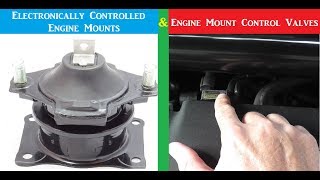
- Volkswagen/Audi Various models (2005-2012) — P1586 is defined as 'Engine Mounting Control Solenoid - Short to Positive.' This code relates to the electronically controlled engine mounts designed to dampen vibration and has nothing to do with the throttle.
- Peugeot/Citroën 207, 308, C4 (1.6 HDi Engine) (2006-2017) — On these diesel models, P1586 ('Supply voltage too low') is frequently caused by an internal short in the EGR valve, which shares a power supply with the throttle and other sensors.
Manufacturer-Specific Notes
- Ford/Mazda/Volvo: The electronic throttle body is a known high-failure item. Ford issued Customer Satisfaction Program 16B32 for certain 2016 models and an earlier recall (10V-659) for 2011 models due to internal contamination causing failure.
- Honda: On hybrid (IMA) models, P1586 is a red herring for throttle issues. It means 'Motor Power Inverter (MPI) Module Current Signal/Battery Current Signal Circuit Problem' and requires diagnosis of the hybrid electrical system.
- Hyundai/Kia: P1586 often means 'MT/AT Encoding Signal Error.' This is an internal logic error where the Engine Control Module (ECM) can't identify the transmission type, usually caused by a faulty ECM.
- Volkswagen/Audi: P1586 is defined as 'Engine Mounting Control Solenoid - Short to Positive.' This code points to the active engine mounts used to reduce vibration, a system completely separate from the engine's air intake.
- Peugeot/Citroën: A shorted EGR valve is a very common cause of P1586 on 1.6 HDi engines. The EGR valve shares a 5V power supply with the throttle system. Unplugging the EGR electrical connector is a quick and effective diagnostic test.
- General Motors (Chevrolet/GMC): For many trucks and SUVs from 2007-2014, P1586 means 'Cruise Control Brake Switch 2 Circuit'. This is almost always fixed by replacing the inexpensive brake light switch located on the brake pedal arm.
Real Owner Stories
2009 Chevrolet Silverado, 115K miles - The Easy Fix
Check Engine Light came on, and the cruise control stopped working. The truck otherwise drove normally. Scanned code P1586.
What they tried:
- Initially ignored the light since the truck ran fine. After getting annoyed with the lack of cruise control, a quick online search for 'Chevy P1586' pointed to the brake light switch.
Outcome: Replaced the brake light switch (ACDelco D1586H) located on the brake pedal arm. The part cost about $25 and the replacement took 15 minutes with basic tools. Cleared the code, and both the Check Engine Light and cruise control functionality were restored.
Lesson: For GM trucks, P1586 is almost never a throttle issue. A non-functional cruise control is the biggest clue, pointing to an inexpensive and simple brake switch replacement.
2013 Ford Focus, 85K miles - The Common Failure
Car suddenly went into 'limp mode' with a wrench light on the dash. Experienced very poor acceleration and a rough, surging idle. Code P1586 was stored.
What they tried:
- First, cleaned the throttle body with dedicated cleaner. This improved the idle for about a week, but the limp mode and code returned intermittently.
- Tested the throttle position sensor voltage with a multimeter and found it was jumpy and not smooth when the pedal was pressed, confirming an internal electronic failure.
Outcome: Replaced the entire electronic throttle body assembly with a new unit for around $250. After replacement, performed a manual 'relearn' procedure by disconnecting the battery for 30 minutes and then letting the car idle for 10 minutes. The car has run perfectly for over a year since.
Lesson: On Fords, a dirty throttle body causes P1586, but cleaning is often a temporary fix. If the problem returns, it indicates the internal electronics have failed, and the entire unit needs to be replaced.
2008 Peugeot 307 1.6 HDi, 120K miles - The Misdiagnosis
Engine stalled while driving and then would not restart, or would start and immediately die. The dash displayed an 'anti-pollution fault' and codes P1586 and P0698 were present.
What they tried:
- A mechanic diagnosed a faulty throttle body based on the P1586 code and recommended a costly replacement.
- Owner researched the codes together and found forum posts indicating P0698 ('Sensor Reference Voltage C Circuit Low') on these engines is often caused by a shorted EGR valve.
Outcome: As a test, the owner unplugged the electrical connector from the EGR valve. The engine immediately started and ran, though the engine light remained on with EGR-specific codes. Replacing the faulty EGR valve (~$150 part) and clearing the codes resolved all issues permanently.
Lesson: The presence of other codes is a critical clue. On many Peugeot/Citroën diesel engines, P1586 is a symptom, not the cause. A low voltage code like P0698 points to a short in a component on a shared circuit, with the EGR valve being the most common culprit.
How to Prevent This Code From Triggering
- Clean the Throttle Body (Every 30,000 to 50,000 miles, or when the air filter is replaced.) — Removes the buildup of carbon and oil sludge that causes the throttle plate to stick or move slowly. This directly prevents the most common cause of throttle-related P1586 codes.
- Service the Positive Crankcase Ventilation (PCV) System (Inspect every 20,000-50,000 miles; replace the valve if it's clogged or stuck.) — A malfunctioning PCV system increases pressure in the crankcase, forcing oil vapor into the air intake. This oil contaminates the throttle body and its sensitive electronic sensors, leading to premature failure.
- Use Top Tier Certified Detergent Gasoline (Every fill-up, if possible.) — Higher levels of detergents help prevent carbon deposits from forming throughout the fuel and intake system. Cleaner intake valves and injectors lead to more complete combustion, reducing the soot and grime that fouls the throttle body.
- Address Engine Oil Leaks Promptly (As needed.) — Leaking valve cover gaskets or turbo seals introduce oil into the intake tract, which eventually coats the throttle body. Fixing the source of the oil leak is crucial to preventing repeat throttle body contamination.
Frequently Asked Questions
What is the number one misdiagnosis for P1586?
The biggest mistake is assuming P1586 always means a bad throttle body. Technicians waste time and money replacing throttle bodies on VWs, Hondas, and GM trucks when the code actually points to engine mounts, the hybrid system, or a brake switch. Always verify the manufacturer-specific definition first.
Can I just clean the throttle body to fix P1586?
Yes, if carbon buildup restricts the throttle plate, a thorough cleaning is an effective and inexpensive first step. If the code returns immediately, the internal electronics have failed and require full replacement.
Is it safe to drive with code P1586?
No, driving is highly dangerous. The vehicle suddenly loses power or stalls in traffic. Continued driving also dumps unburnt fuel into the exhaust, destroying the catalytic converter.
Does my car need a 'relearn' procedure after the repair?
Yes, most modern vehicles require a throttle body relearn procedure after cleaning or replacement to calibrate the base idle. Without this step, the engine idles erratically or surges. While some cars relearn automatically via a specific key-cycle sequence, many require a professional bidirectional scan tool.
How long does it take to repair P1586?
A simple throttle body cleaning takes 1-2 hours, while replacing the assembly takes 2-4 hours. A GM brake switch replacement takes just 30 minutes. Diagnosing complex wiring or shared-circuit issues requires 2-5 hours of professional labor.
What tools are needed to diagnose P1586?
You need an OBD-II scanner to read the code and a digital multimeter to test circuit voltages. An advanced scan tool capable of reading live data is highly recommended. A vehicle-specific wiring diagram is also essential for tracing electrical faults.
Why does the P1586 definition change so much between car brands?
OBD-II codes are split into generic (P0xxx) and manufacturer-specific (P1xxx) categories. P1xxx codes allow carmakers to designate faults for their unique proprietary systems. This is why P1586 means a throttle issue on a Ford but an engine mount issue on a VW.
What's the difference between a mechanical and an electronic throttle body?
A mechanical throttle body uses a physical steel cable to connect the gas pedal to the throttle plate. An electronic throttle body (Drive-by-Wire) uses a pedal sensor to send an electronic signal to the PCM. The PCM then commands an electric motor to open and close the throttle plate.
Key Takeaways
- P1586 is a manufacturer-specific code that indicates a throttle failure on Fords, a $25 brake switch failure on GM trucks, or an engine mount issue on VWs.
- Always verify the exact code definition for your specific vehicle year and make before buying parts to avoid a $300+ misdiagnosis.
- For Ford, Mazda, and Volvo vehicles, cleaning the throttle body with a $10 dedicated spray resolves the code 40% of the time.
- Do not drive with an active P1586 throttle code; the vehicle enters a reduced-power 'limp mode' or stalls in traffic, creating an immediate crash risk.
- On Peugeot and Citroën 1.6 HDi engines, unplugging the EGR valve is the fastest way to diagnose a shared 5-volt circuit short triggering this code.
Helpful Videos



The information in this article is provided for general reference and educational purposes only. Vehicle specifications, procedures, and part compatibility can vary by production date, trim level, and region. Always consult your vehicle's factory service manual and verify part numbers before purchasing or performing repairs. Safety-critical components such as airbags, seat belts, and braking systems should be installed by a qualified professional.
- 🎬 Helpful Videos
- What Does P1586 Mean?
- Can I Drive With P1586?
- Common Causes
- Symptoms
- Diagnostic Flowchart
- Common Fixes & Costs
- Used vs. New Parts: Buying Guide
- What Happens If You Wait — Timeline
- Cost of Not Fixing It
- Diagnosis Steps
- When This Code Triggers (Freeze-Frame Conditions)
- Related Codes
- Climate & Environmental Factors
- How to Talk to a Mechanic About This Code
- Where to Take It: Dealer vs Independent vs Chain
- When to Walk Away From the Repair
- What Scan Tool You Need for This Code
- How to Clear the Code After You Fix It
- Will This Fail Emissions / State Inspection?
- Most Commonly Affected Vehicles
- Manufacturer-Specific Notes
- Real Owner Stories
- 2009 Chevrolet Silverado, 115K miles - The Easy Fix
- 2013 Ford Focus, 85K miles - The Common Failure
- 2008 Peugeot 307 1.6 HDi, 120K miles - The Misdiagnosis
- How to Prevent This Code From Triggering
- Frequently Asked Questions
- What is the number one misdiagnosis for P1586?
- Can I just clean the throttle body to fix P1586?
- Is it safe to drive with code P1586?
- Does my car need a 'relearn' procedure after the repair?
- How long does it take to repair P1586?
- What tools are needed to diagnose P1586?
- Why does the P1586 definition change so much between car brands?
- What's the difference between a mechanical and an electronic throttle body?
- Key Takeaways
- 🎟️ Get 5% Off