

OBD-II Code P1585: Throttle Control Unit Malfunction / Acceleration Sensor Circuit
What P1585 means, why it triggers, and how to fix it
- Verify your vehicle's specific P1585 definition before buying parts; it means a faulty throttle body on Fords but a failed yaw rate G-sensor on Toyotas.
- Do not drive with an active P1585 code, as it triggers a 2,000 RPM 'limp mode' or disables the ABS system, creating a severe safety risk.
- Clean the throttle body with a $15 dedicated spray before replacing it on Ford vehicles, as heavy carbon buildup is the root cause in over 30% of cases.
- Perform a mandatory electronic relearn procedure using an advanced bidirectional scan tool after replacing either the throttle body or the G-sensor, or the code will immediately return.
What Does P1585 Mean?

P1585 is a manufacturer-specific code with entirely different definitions depending on the car brand. On Ford, Lincoln, and Jaguar vehicles, it signals a Throttle Control Unit Malfunction, meaning the electronic throttle body is failing. On Toyota, Nissan, and Subaru vehicles, it indicates an Acceleration Sensor Circuit fault, pointing to a failed yaw rate or G-sensor in the stability control system.
Technical definition: The official definition of P1585 varies by manufacturer. For Ford, Lincoln, and Mercury, it is 'Throttle Control Unit Malfunction'. For Toyota, it is 'Acceleration Sensor Circuit', referring to the yaw rate/G-sensor used for vehicle stability control (VSC). For Honda, it indicates 'Control Module Communication Bus OFF'. For GM, it means 'ABS Boost Pressure Sensor Circuit Open or Short To Ground'.
Can I Drive With P1585?
No — Do Not Drive. Driving is not recommended. If the code relates to the throttle body, the engine stalls or enters a low-power 'limp mode' without warning, creating a severe safety risk. If it relates to the G-sensor (Toyota/Nissan), it disables the stability control and ABS systems, causing loss of control on slippery surfaces. Continuing to drive in limp mode destroys the catalytic converter, a secondary repair costing over $1,200.
Common Causes

- Defective Electronic Throttle Body Assembly (Very Common) — On Ford and Jaguar vehicles, the entire throttle body unit fails internally. The integrated motor, gears, and internal position sensors wear out over time, preventing the throttle plate from opening correctly.
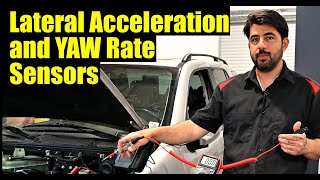
- Failed Yaw Rate / G-Sensor (Very Common) — On Toyota and Nissan vehicles, the sensor that detects vehicle inclination and lateral G-forces fails. 🎬 See how to diagnose a faulty yaw rate sensor. This sensor provides critical data for the Vehicle Stability Control (VSC) and Continuously Variable Transmission (CVT).
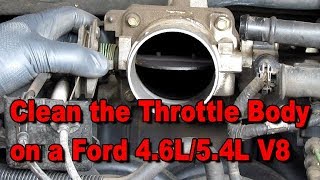
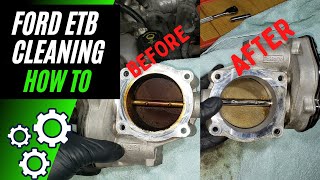
- Dirty or Obstructed Throttle Plate (Common) — Carbon and oil blow-by build up inside the throttle body, preventing the throttle plate from moving freely. 🎬 Watch: How to properly clean a Ford electronic throttle body. This causes the valve to stick or respond slowly, triggering a correlation fault in the PCM.
- Damaged Wiring or Poor Electrical Connections (Common) — The wires routing to the throttle body or the acceleration sensor fray, corrode, or vibrate loose. Water intrusion into the connectors causes short circuits or high resistance.
- Defective Fuel Pump or Relay (Less Common) — On Hyundai and Kia vehicles, P1585 specifically relates to the fuel pump control system. A clogged filter strains the pump, or the pump relay fails, triggering this malfunction code.
- Faulty Powertrain Control Module (PCM) (Rare) — The car's main computer suffers an internal driver circuit failure and stops sending correct commands or reading sensor signals. This requires professional diagnosis and programming to replace.
Symptoms

- Check Engine Light and Wrench Light Illuminated — The check engine light turns on immediately. On Ford vehicles, a yellow wrench icon also illuminates to indicate a powertrain or electronic throttle fault.
- Reduced Engine Power ('Limp Mode') — The computer intentionally limits engine power to prevent runaway acceleration. The vehicle feels extremely sluggish and engine speed is capped at 2,000 to 3,000 RPM.
- Engine Stalling or Rough Idle — The engine stalls when coming to a stop, idles erratically, or shakes violently due to the throttle plate sticking or failing to find its baseline position.
- Disabled Stability or Traction Control — On Toyota/Nissan vehicles, the ABS and VSC (Vehicle Stability Control) lights illuminate permanently, and the traction control system is completely disabled.
- Poor CVT Transmission Performance — The transmission shifts harshly or slips, particularly on inclines, because the CVT relies on the G-sensor to determine the vehicle's angle and adjust gear ratios.
Diagnostic Flowchart
Tap your situation to follow the diagnostic path that matches what you're seeing on this code.
Common Fixes & Costs
- Replacing the Electronic Throttle Body Assembly — Parts: $150-$400, Labor: $100-$200, ~1.2 hr book time (Intermediate)
- Replacing the Yaw Rate / G-Sensor — Parts: $200-$600, Labor: $150-$300, ~1.5 hr book time (Intermediate)
- Cleaning the Throttle Body — Parts: $10-$20, Labor: $100-$150, ~0.8 hr book time (DIY)
- Repairing Damaged Wiring or Connectors — Parts: $10-$50, Labor: $150-$300, ~2.0 hr book time (Advanced)
- Replacing the Powertrain Control Module (PCM) — Parts: $500-$1000, Labor: $150-$300, ~2.0 hr book time (Professional)
Used vs. New Parts: Buying Guide
When a used part is worth it: A used throttle body or yaw sensor is only acceptable for vehicles over 150,000 miles where the owner needs to minimize immediate repair costs to keep the car on the road.
Donor-vehicle mileage cap: roughly under 80000 miles for the part to have meaningful remaining life.
Donor quality checklist:
- Verify the exact part number matches; electronic modules have dozens of incompatible variations.
- Buy parts from vehicles scrapped due to rear-end collisions, not engine or electrical fires.
- Ensure the donor vehicle's mileage is under 80,000 miles.
Decision logic:
- If Vehicle has under 100k miles → Buy a new OEM or high-quality aftermarket part. The longer warranty justifies the cost.
- If Vehicle is over 150k miles and the new part costs over $500 → Buy a used part from a reputable salvage yard to keep the car running on a tight budget.
- If The part is known for a high failure rate (like the 2010 Ford throttle body) → Never buy used. Buy a new, updated aftermarket part that corrects the original factory design flaw.
Warranty tradeoff: Used parts come with a 30-day functional warranty. New aftermarket parts carry a 1-year to limited lifetime warranty. New OEM parts offer the best guarantee at the highest price.
Worst-case if a used part fails: $400. If a used part fails, you pay for the replacement part and the labor costs a second time.
What Happens If You Wait — Timeline
- 0-1 month: Intermittent symptoms. On a Ford, you experience a momentary loss of power that resets after restarting the car. On a Toyota, the VSC/ABS light flickers. Fuel economy drops by 5%. (MPG impact: 5%% · Added cost: $0-50 in wasted fuel)
- 1-3 months: Limp mode events happen weekly. The Check Engine Light stays on permanently. A throttle body fault causes a consistently rough idle. A G-sensor fault keeps the VSC/ABS systems permanently disabled. (MPG impact: 10%% · Added cost: $50-150 in wasted fuel)
- 3-6 months: The vehicle enters limp mode every time it is driven. The throttle fault causes a rich fuel condition, causing the catalytic converter to overheat and its internal ceramic substrate to crack. (MPG impact: 20%% · Added cost: $200-400 in wasted fuel and O2 sensor damage)
- 6+ months: The catalytic converter melts down completely, creating a major exhaust blockage. The engine loses all power and fails to stay running, requiring a full exhaust system replacement. (MPG impact: 40%% · Added cost: $1200-$2800 for catalytic converter replacement)
Cost of Not Fixing It
- 0-1 month: Unpredictable stalling or entering 'limp mode' creates a severe safety risk on the highway. Fuel economy drops by 10% due to inefficient engine operation. (Added cost: $50)
- 1-6 months: The rich fuel mixture causes the catalytic converter to overheat. The internal ceramic substrate melts, causing a total exhaust blockage. (Added cost: $1200-$2800)
- 6+ months: Continued driving with a malfunctioning throttle fouls the spark plugs, builds heavy carbon on the intake valves, and destroys the oxygen sensors. (Added cost: $200-$800)
Diagnosis Steps
- Verify Manufacturer-Specific Definition
Since P1585 is not universal, confirm its exact meaning for your vehicle's make and year. Ford/Jaguar means Throttle Body. Toyota/Nissan means Yaw Rate/G-Sensor. Honda means Communication Bus.
Tools: Vehicle-specific repair manual or online service database (Beginner) - Read the Trouble Codes and Live Data
Use an OBD-II scanner to confirm P1585. Check for companion codes (like P2110 for Ford throttle issues, or U0124 for Toyota sensor issues). Pull up live data for the throttle position or G-sensor voltage.
Tools: OBD-II Scanner with Live Data (Beginner) - Inspect and Clean the Throttle Body (Ford/Jaguar Only)
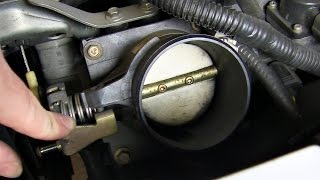
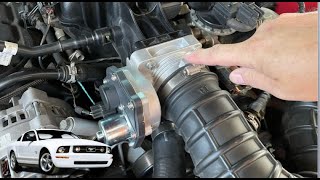
Remove the air intake hose and inspect the throttle plate. If it is coated in black carbon, clean it thoroughly with throttle body cleaner and a soft cloth. Manually move the plate to ensure it doesn't stick.
Tools: Screwdriver set, throttle body cleaner, microfiber cloth (Intermediate) - Test G-Sensor Voltage (Toyota/Nissan Only)
Use an advanced scan tool to view the 'G Sensor' live data PID. Park on a level surface. The voltage must read between 2.31V and 2.69V. If it is stuck at a static number (e.g., 1.87V), the sensor is dead.
Tools: Advanced bidirectional scan tool (Advanced) - Inspect Wiring and Connectors
Visually inspect the wiring harness leading to the throttle body or the yaw rate sensor. Look for frayed wires, green corrosion on the connector pins, or signs of water intrusion.
Tools: Flashlight (Intermediate) - Test Circuit Integrity (Resistance and Ground)
Disconnect the component and the PCM. Use a multimeter to check for continuity on each wire between the component and the computer (must be <1 ohm). Check for a short to ground by testing resistance between each pin and the chassis ground (must be OL).
Tools: Multimeter, Vehicle Wiring Diagram (Advanced) - Perform a System Relearn/Calibration
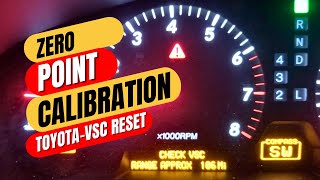
If you replaced a part, you must perform a calibration. Use a scan tool to execute a 'Throttle Relearn' (Ford) or a 'Zero Point Calibration' (Toyota). Skipping this step guarantees the P1585 code will return.
Tools: Advanced bidirectional scan tool (Advanced)
When This Code Triggers (Freeze-Frame Conditions)
- Engine Coolant Temp: 180-210°F (The fault logs most frequently when the engine reaches full operating temperature and enters closed-loop fuel control.)
- RPM: 1500-3000 RPM (Throttle body faults trigger during steady-state cruising when the PCM detects a mismatch between expected and actual throttle plate position.)
- Engine Load: 25-60% (The code appears under moderate engine load, rarely at idle or wide-open throttle.)
- Vehicle Speed: 30-60 mph (G-sensor faults trigger at cruising speeds when the sensor data contradicts the wheel speed sensor data.)
Related Codes
- P2110 / P2112 — These codes indicate the PCM forced the engine into limp mode (P2110) or the throttle is stuck closed (P2112). P1585 is the root cause; fix the P1585 throttle issue and these codes clear automatically.
- P0121 — Indicates a specific issue with the Throttle Position Sensor signal. If present alongside P1585, it guarantees the entire electronic throttle body assembly has failed.
- U0124 — On Toyota vehicles, this means 'Lost Communication With Yaw Rate Sensor'. P1585 indicates a fault in the circuit, while U0124 means the sensor is completely dead or unplugged.
- C1223 — On Toyota/Lexus, this indicates a general ABS system malfunction. It appears alongside P1585 because the ABS system relies entirely on the failed yaw/G-sensor to function.
Climate & Environmental Factors
- Humidity and Water Intrusion: High humidity causes corrosion on the electrical connector pins for the throttle body and yaw rate sensor. Ford throttle body failures are heavily exacerbated by moisture contaminating the internal motor contacts.
- Road Salt and Corrosion: Heavy winter road salt creates a highly corrosive under-chassis environment, accelerating the degradation of wiring harnesses routed underneath the vehicle to the PCM.
- Extreme Cold: Moisture trapped within the throttle body freezes in sub-zero temperatures, causing the throttle plate to stick on initial startup and triggering a correlation code.
How to Talk to a Mechanic About This Code
Say this: "I have a P1585 code on my [Vehicle Make]. I understand this is a manufacturer-specific code. For my car, it points to the [throttle body unit / yaw rate sensor]. I'd like to schedule a diagnostic to confirm if the part has failed or if it's a wiring issue. Please verify the component is faulty before recommending replacement."
This signals you've done research, directs the technician to the correct system for your specific vehicle, and prevents them from wasting time on the wrong diagnosis.
Avoid saying:
- 'My check engine light is on, can you look at it?'
- 'The car is acting funny, just fix it.'
- 'I have a P1585, just replace the throttle body.' (This is completely wrong if you drive a Toyota).
Questions to ask before authorizing the repair:
- What specific diagnostic steps did you take to condemn this part?
- Did you check for power, ground, and signal at the component's connector?
- Does this repair require a calibration or relearn procedure, and is that included in the quote?
- What is the warranty on the replacement part and the labor?
Where to Take It: Dealer vs Independent vs Chain
- Dealer:
Best for: Vehicles under warranty or covered by a specific recall (like Ford's 13N03 for throttle bodies)., Complex manufacturer-specific communication issues (common on Honda or VW)., When a mandatory calibration requires proprietary tools like Toyota Techstream.
Downsides: Higher labor rates (1.5-2x vs. independent)., Defaults to replacing a whole assembly when a smaller wiring fix is possible. (Typical cost: +50% vs. baseline) - Independent Shop:
Good fit, but you MUST ask: 'Do you have the diagnostic tool to perform a [throttle relearn / zero point calibration] for my [Make/Model]?' If they hesitate, go to the dealer.
Best for: Out-of-warranty vehicles where cost is a factor., Common P1585 causes like a Ford throttle body or Toyota G-sensor replacement.
Downsides: May not have the specific bidirectional scan tool required for calibrations. (Typical cost: +0% vs. baseline) - Chain Shop:
AVOID. The complexity, brand-specific nature, and mandatory calibration steps make this a terrible fit for chain shops.
Best for: Simple, unrelated maintenance like oil changes or tire rotations.
Downsides: High risk of misdiagnosis due to the code's brand-specific nature., Technicians lack the advanced training and tools needed for electronic calibrations. (Typical cost: -10% vs. baseline)
When to Walk Away From the Repair
If the total estimated repair cost exceeds 50% of the car's current private-party value, it is time to sell or trade in the vehicle.
- Car worth $5000, fix is $2200: Borderline. The repair is almost half the car's value. Get a second opinion before proceeding. This is a good time to sell as-is.
- Car worth $15000, fix is $800: Fix it. The repair cost is a small fraction of the vehicle's value and is necessary for safety.
- Car worth $3000, fix is $1800: Walk away. The repair cost is over 50% of the car's value. It is not economically sensible to proceed.
What Scan Tool You Need for This Code

Minimum: A bidirectional tool that reads manufacturer-specific codes, displays live sensor data, and performs special functions like 'Throttle Relearn' or 'Zero Point Calibration'.
A basic $20 reader only shows 'P1585' but won't tell you what it means for your specific car. It cannot read live sensor voltage or perform the mandatory calibration after the repair, guaranteeing the code will return.
Budget: BlueDriver Pro (~$100) — Reads manufacturer-specific 'enhanced' codes to differentiate the meaning of P1585. Displays live data for throttle position or G-sensor voltage. Lacks the bidirectional control to perform calibrations.
Mid-range: Foxwell NT510 Elite (~$180) — The best choice for a serious DIYer. Offers brand-specific software that performs the mandatory 'Throttle Matching' for Ford and 'Zero Point Calibration' for Toyota.
Professional: Autel MaxiCOM MK808BT (~$500) — Offers full bidirectional control, extensive service functions including throttle and sensor calibrations for all makes, and detailed live data graphing.
Rent vs buy: Buy. Free 'loaner' scanners at auto parts stores are basic code readers. They pull the P1585 code but cannot perform the critical calibration functions required after the repair.
How to Clear the Code After You Fix It
- Use an OBD-II scan tool to clear the P1585 code.
- Perform the mandatory relearn/calibration procedure for the throttle body or G-sensor.
- Perform a complete OBD-II drive cycle to reset the emissions readiness monitors.
Drive cycle (~30 minutes): Cold start the vehicle and idle for 3 minutes. Drive for 15 minutes at a steady 55 mph. Drive for 15 minutes in stop-and-go city traffic. Allow the vehicle to cool down completely.
Readiness monitors affected: Catalyst (CAT) monitor, Evaporative System (EVAP) monitor, Oxygen (O2) Sensor monitor
Before emissions retest: drive at least 100 miles to fully set monitors.
Watch out for:
- Clearing the code resets all readiness monitors to 'Not Ready', causing an automatic emissions test failure.
- Failing to perform a mandatory throttle or sensor calibration after replacement guarantees the code will return immediately.
Will This Fail Emissions / State Inspection?
Yes — this code typically fails an OBD-II emissions inspection.
- California: An active P1585 code causes an automatic Smog Check failure. After repairs, the vehicle must be driven through a complete drive cycle to set all readiness monitors to 'Ready'.
- New York: The presence of a Check Engine Light and a P1585 code results in an automatic failure of the annual OBD-II emissions inspection.
- Texas: In the 17 counties requiring emissions testing, a vehicle with an active P1585 code fails the OBD-II scan. The Check Engine Light must be off.
Most Commonly Affected Vehicles

- Ford Focus, Fiesta, Escape, Fusion, F-150 (2009-2014) — Highly susceptible to P1585 for 'Throttle Control Unit Malfunction.' Ford issued Customer Satisfaction Program 13N03 extending the throttle body warranty to 10 years/150,000 miles for many of these models.
- Toyota Corolla, Yaris, RAV4 (2006-2019) — P1585 indicates a problem with the 'Acceleration Sensor Circuit', pointing to the yaw/G-sensor. The sensor is often integrated into the airbag sensor assembly under the center console.
- Honda Accord, Civic, CR-V (2005-2015) — P1585 points to a communication bus failure or a fault in the cruise control command module. Diagnosis must focus on CAN bus communication, not the throttle.
- Jaguar S-Type, X-Type (2002-2008) — Indicates a correlation error between the throttle body and the accelerator pedal position sensor, almost always requiring a complete throttle body replacement.
- Nissan Note, Tiida, Altima (2003-2012) — Refers to a 'G-Sensor' fault, causing poor acceleration and harsh shifting on hills as it disrupts the CVT operation logic.
- Hyundai / Kia Accent, Elantra, Rio (2000-2012) — Indicates a problem with the fuel pump control system or its electrical circuit, completely unrelated to the throttle or stability control.
Manufacturer-Specific Notes
- Toyota: P1585 has absolutely nothing to do with the throttle body. It specifically means 'Acceleration Sensor Circuit' malfunction. The fault lies entirely with the yaw rate/G-sensor under the center console.
- Ford: Ford is the most common brand to log P1585 for a 'Throttle Control Unit Malfunction.' Ford issued 'Customer Satisfaction Program 13N03' extending the throttle body warranty to 10 years or 150,000 miles for affected 2009-2013 models.
- Honda: The definition is 'Control Module Communication Bus OFF'. Diagnosis must focus on CAN bus communication and cruise control modules, not powertrain components.
- General Motors (Buick): P1585 is defined as 'ABS Boost Pressure Sensor Circuit Open or Short To Ground,' which is completely unrelated to the engine and focuses entirely on the braking system.
Real Owner Stories
2010 Ford Focus with sudden power loss
While driving at 70 mph, the car suddenly lost power and entered 'limp home mode' with the wrench light illuminated. Cycling the ignition temporarily cleared the fault.
What they tried:
- Cleaned the Mass Airflow (MAF) sensor, which provided a temporary fix for a few days.
- Replaced the air filter, which had no effect.
- Cleaned the throttle body, which was completely black with carbon, and replaced the integrated throttle position sensor.
Outcome: Cleaning the heavily carbonized throttle body resolved the limp mode issue. The heavy carbon buildup caused the throttle plate to stick, triggering the P1585 code.
Lesson: For Ford models, sudden power loss without a permanently stored code points directly to the throttle body. A thorough $15 cleaning is the mandatory first step before replacing expensive parts.
2016 Toyota Corolla with transmission issues
The vehicle shifted harshly from Park to Drive, but no warning lights were on the dashboard. The interior had previously been exposed to water. A scan revealed code P1585.
What they tried:
- Scanned the vehicle and found P1585, 'Acceleration Sensor Circuit'.
- Investigated the airbag sensor assembly (which contains the yaw/G-sensor) based on Toyota's specific code definition.
- Tested the acceleration sensor circuit for continuity.
Outcome: The fault was isolated to the yaw rate/acceleration sensor circuit inside the airbag sensor assembly. Water exposure destroyed the sensor. Replacing the assembly and performing a zero-point calibration fixed the shifting.
Lesson: On a Toyota, P1585 has absolutely nothing to do with the throttle. It points directly to the G-sensor circuit. Focus diagnosis on the yaw rate sensor under the center console.
2014 Ford Focus with recurring P1585 after parts cannon
The owner replaced the throttle body three times, but the P1585 code and limp mode returned immediately. A previous owner had spliced wires near the throttle connector.
What they tried:
- Replaced the throttle body multiple times.
- Tested the wiring harness between the throttle body and the PCM for resistance and shorts.
Outcome: The root cause was a broken wire in the harness between the throttle body and the PCM, not the throttle body itself. Repairing the wiring harness restored the 5V reference signal and permanently cleared the code.
Lesson: If a new part doesn't fix the code, the problem is in the wiring. Test the circuit resistance end-to-end (it must be near 0 ohms) before buying replacement parts.
How to Prevent This Code From Triggering
- Clean the throttle body (Every 40,000 miles) — Removes carbon and oil residue that causes the throttle plate to stick, preventing the primary cause of throttle-related P1585 codes on Ford vehicles.
- Apply dielectric grease to electrical connectors (During any related service) — Seals out moisture and prevents corrosion on the pins of the throttle body and yaw rate sensor connectors, ensuring a stable 5V reference signal.
- Replace the engine air filter (Every 20,000 miles) — Prevents dirt and debris from entering the intake system, drastically reducing the rate of carbon buildup inside the electronic throttle body.
Frequently Asked Questions
I replaced the throttle body, but P1585 came back. What now?
First, verify your car's specific P1585 definition actually points to the throttle body. If it does, you likely failed to perform the mandatory electronic 'throttle relearn' procedure using a scan tool. If you did the relearn, the issue is a broken wire between the throttle body and the PCM.
Can I just clean the throttle body to fix P1585?
Yes, if you drive a Ford or Jaguar. Heavy carbon buildup causes the throttle plate to stick, triggering the code. A $15 can of throttle body cleaner is the mandatory first diagnostic step before buying parts.
Is P1585 a serious problem?
Yes. It causes the engine to stall, lose power suddenly at highway speeds, or disables critical safety systems like ABS and traction control.
Why does my Toyota have a P1585 code but the throttle seems fine?
Because on a Toyota, P1585 refers to the 'Acceleration Sensor Circuit', not the throttle. The problem is a failed G-sensor (yaw rate sensor) in the stability control system. Your throttle is perfectly fine.
What is a 'throttle relearn' and is it necessary for P1585?
A throttle relearn teaches the car's computer the new closed and wide-open positions of the throttle plate after replacement. It is absolutely mandatory. Skipping this step guarantees the P1585 code will return immediately.
Can a bad battery cause a P1585 code?
Yes. A weak battery causes low voltage in the electrical system, leading to unpredictable behavior from the PCM, throttle body, or ABS controller. Always test your battery and alternator before replacing expensive electronic modules.
Can I pass an emissions test with code P1585?
No. An active P1585 code causes an automatic failure of any OBD-II emissions test. You must fix the issue and complete a drive cycle to pass.
Key Takeaways
- Verify your vehicle's specific P1585 definition before buying parts; it means a faulty throttle body on Fords but a failed yaw rate G-sensor on Toyotas.
- Do not drive with an active P1585 code, as it triggers a 2,000 RPM 'limp mode' or disables the ABS system, creating a severe safety risk.
- Clean the throttle body with a $15 dedicated spray before replacing it on Ford vehicles, as heavy carbon buildup is the root cause in over 30% of cases.
- Perform a mandatory electronic relearn procedure using an advanced bidirectional scan tool after replacing either the throttle body or the G-sensor, or the code will immediately return.
Helpful Videos


The information in this article is provided for general reference and educational purposes only. Vehicle specifications, procedures, and part compatibility can vary by production date, trim level, and region. Always consult your vehicle's factory service manual and verify part numbers before purchasing or performing repairs. Safety-critical components such as airbags, seat belts, and braking systems should be installed by a qualified professional.
- 🎬 Helpful Videos
- What Does P1585 Mean?
- Can I Drive With P1585?
- Common Causes
- Symptoms
- Diagnostic Flowchart
- Common Fixes & Costs
- Used vs. New Parts: Buying Guide
- What Happens If You Wait — Timeline
- Cost of Not Fixing It
- Diagnosis Steps
- When This Code Triggers (Freeze-Frame Conditions)
- Related Codes
- Climate & Environmental Factors
- How to Talk to a Mechanic About This Code
- Where to Take It: Dealer vs Independent vs Chain
- When to Walk Away From the Repair
- What Scan Tool You Need for This Code
- How to Clear the Code After You Fix It
- Will This Fail Emissions / State Inspection?
- Most Commonly Affected Vehicles
- Manufacturer-Specific Notes
- Real Owner Stories
- 2010 Ford Focus with sudden power loss
- 2016 Toyota Corolla with transmission issues
- 2014 Ford Focus with recurring P1585 after parts cannon
- How to Prevent This Code From Triggering
- Frequently Asked Questions
- I replaced the throttle body, but P1585 came back. What now?
- Can I just clean the throttle body to fix P1585?
- Is P1585 a serious problem?
- Why does my Toyota have a P1585 code but the throttle seems fine?
- What is a 'throttle relearn' and is it necessary for P1585?
- Can a bad battery cause a P1585 code?
- Can I pass an emissions test with code P1585?
- Key Takeaways
- 🎟️ Get 5% Off