

OBD-II Code P1576: Accelerator Pedal Position Not Available
What P1576 means, why it triggers, and how to fix it
- Verify your vehicle's specific P1576 definition before buying parts, as it means 'Pedal Position Not Available' on Fords but 'Engine Mount Short to Ground' on VW/Audi models.
- For Ford and Jaguar vehicles, replace the entire accelerator pedal assembly (costing $50 to $200 in parts) because the internal position sensors cannot be serviced individually.
- Do not replace throttle components on a Nissan or Saab with this code; inspect the $20-$60 brake pedal switch, which frequently fails and disables push-to-start or cruise control systems.
- Test your battery voltage before diagnosing sensor correlation errors, as a weak battery dropping below 12.4 volts routinely causes modules to generate false P1576 codes.
What Does P1576 Mean?
P1576 is a manufacturer-specific code with different definitions based on the car brand. For Ford, Jaguar, and Lincoln, the engine computer (ECU) cannot detect the accelerator pedal position (APP) sensor signal. For Volkswagen and Audi, it indicates a short circuit in the electronic engine mounts. For Nissan and Saab, it points to a brake pedal switch circuit fault.
Technical definition: The official SAE definition varies by manufacturer. Common definitions include 'Pedal Position Not Available' (Ford/Jaguar) and 'Engine Mounting Control Solenoid, Bank 1 - Short to Ground' (Audi/VW). Other definitions include 'Brake Pedal Speed Regulator Switch Fault' (Nissan) and 'Motor Drive Module Voltage Signal Circuit Low Input' (Honda).
Can I Drive With P1576?
No — Do Not Drive. Driving is possible, but your car often enters a reduced-power 'limp mode' with unpredictable acceleration, creating a significant safety risk. Do not continue driving, as the vehicle can lose all throttle response suddenly (e.g., while merging into traffic). Diagnose it promptly to avoid dangerous situations, though it rarely causes immediate catastrophic engine damage.
Common Causes
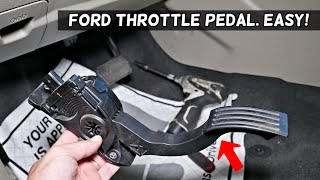
- Failed Accelerator Pedal Position (APP) Sensor (Very Common) — This is the most frequent cause for Ford and Jaguar. The sensor, integrated into the gas pedal assembly, wears out internally and stops sending the correct voltage signal to the engine computer.
- Failed Active Engine Mount Solenoid (VW/Audi) (Common) — On specific VW and Audi models, this code indicates a short circuit in the solenoid that controls the stiffness of the fluid-filled engine mount, leading to increased cabin vibration.
- Faulty Brake Pedal Switch (Nissan/Saab) (Common) — For Nissan and Saab, this code relates to the brake switch rather than the accelerator. A faulty switch disables cruise control and prevents push-to-start models from starting.
- Wiring or Connector Issues (Common) — Wires routing to the APP sensor, active engine mounts, or brake switch often become frayed, corroded, or loose. This interrupts the signal and triggers the code.
- Poor Ground Connection (Less Common) — A corroded or loose ground wire for the Powertrain Control Module (PCM) or electronic throttle body causes erratic sensor readings, leading to a P1576 code.
- Dirty or Faulty Throttle Body (Less Common) — A throttle body with heavy carbon buildup or a failing actuator motor causes performance issues that the ECU misinterprets as a pedal sensor fault.
- Failing Powertrain Control Module (PCM) (Rare) — The engine computer (PCM) or Intelligent Power Distribution Module (IPDM) occasionally fails internally, losing the ability to process incoming sensor signals.
Symptoms
- Check Engine Light is On — An illuminated Check Engine Light appears on the dashboard. A flashing glow plug light also appears on Ford diesel models.
- Limp Mode and Poor Acceleration — The vehicle limits engine power (often under 3,000 RPM), feels sluggish, hesitates, or completely ignores gas pedal inputs.
- Increased Engine Vibration (VW/Audi) — Excessive shaking from the engine transfers into the cabin, especially at idle, during acceleration, or on cold starts.
- Cruise Control Inoperative — The cruise control system fails to engage, a primary symptom when the code stems from a faulty brake switch.
- Inconsistent Engine RPM — The engine idle speed surges up and down erratically without any input on the gas pedal.
Diagnostic Flowchart
Tap your situation to follow the diagnostic path that matches what you're seeing on this code.
Common Fixes & Costs
- Replace the Accelerator Pedal Assembly — Parts: $50-$200, Labor: $80-$150, ~0.8 hr book time (DIY)
- Replace the Active Engine Mount — Parts: $100-$300, Labor: $150-$400, ~2.5 hr book time (Intermediate)
- Replace Brake Pedal Switch — Parts: $20-$60, Labor: $50-$100, ~0.5 hr book time (DIY)
- Repair or Replace Damaged Wiring — Parts: $10-$50, Labor: $100-$300, ~2.0 hr book time (Professional)
- Clean or Replace the Throttle Body — Parts: $10-$300, Labor: $80-$150, ~1.2 hr book time (Intermediate)
DIY vs Professional
- Replace Accelerator Pedal Assembly — Beginner:
Tools: Socket set (10mm or 13mm), flashlight. - Replace Active Engine Mount — Beginner:
Tools: Engine support bar, extensive socket set with swivels, triple square sockets, torque wrench. - Replace Brake Pedal Switch — Beginner:
Tools: Pliers, screwdriver.
Used vs. New Parts: Buying Guide
When a used part is worth it: For an accelerator pedal assembly, a used OEM part from a low-mileage vehicle (under 80k miles) is a cost-effective option for older vehicles where a new part is prohibitively expensive.
Donor-vehicle mileage cap: roughly under 80000 miles for the part to have meaningful remaining life.
Donor quality checklist:
- Verify the donor vehicle was not scrapped for a flood-damage issue.
- Visually inspect the connector pins for green corrosion.
- Ensure the part number matches exactly to avoid incompatibility.
- Buy from a seller offering at least a 30-day warranty.
Decision logic:
- If The vehicle is newer or has low mileage (<80k miles) → Buy a new OEM or high-quality aftermarket part for maximum reliability.
- If The vehicle is older (>150k miles) and budget is a primary concern → A used part from a reputable salvage yard is an acceptable risk.
- If The part is a simple electronic switch (like a brake switch) → Buy new. The cost savings for used are minimal and the failure rate is higher.
Warranty tradeoff: Used parts typically include a 30-90 day part-only warranty. New aftermarket parts offer 1-year to lifetime warranties. New OEM parts carry a 1-2 year warranty that covers labor if installed by a dealer.
Worst-case if a used part fails: $200-$500 if a used electronic part fails shortly after installation, requiring repeat labor costs.
What Happens If You Wait — Timeline
- 0-1 month: For APP Sensor: Intermittent hesitation or a slight 'dead spot' when pressing the gas pedal. For Engine Mount: A faint vibration felt in the steering wheel at idle. (MPG impact: 0-2%% · Added cost: $0)
- 1-4 months: For APP Sensor: Vehicle occasionally enters limp mode, requiring an engine restart. For Engine Mount: Vibration is noticeable during light acceleration, and a clunk is heard when shifting into Drive. (MPG impact: 2-5%% · Added cost: $0-$50 in wasted fuel)
- 4-9 months: For APP Sensor: Limp mode becomes a daily occurrence, making the car unsafe to drive. For Engine Mount: Constant vibration causes the opposing engine mount to wear out prematurely. (MPG impact: 5-10%% · Added cost: $200-$600 (cost to replace the second mount))
- 9+ months: For APP Sensor: Total failure with zero throttle response. For Engine Mount: Severe engine movement tears radiator hoses, cracks exhaust flex-pipes, and damages wiring harnesses. (MPG impact: 10-15%% · Added cost: $700-$2000 (collateral damage repair))
Cost of Not Fixing It
- Immediate: Unpredictable acceleration and potential for the vehicle to enter limp mode at any time, creating a significant safety hazard. (Added cost: 0)
- 1-3 months: Increased stress on remaining engine and transmission mounts (VW/Audi), causing them to fail prematurely. (Added cost: $200-$800)
- 6+ months: Severe engine mount failure damages radiator hoses, wiring harnesses, and exhaust pipes due to excessive engine movement. (Added cost: $500-$2000)
Diagnosis Steps
- Verify the Code and Definition
Use an OBD-II scanner to confirm P1576 is active. Research the exact definition for your vehicle's make (e.g., Ford vs. VW) to ensure you diagnose the correct system.
Tools: OBD-II Scan Tool (Beginner) - Perform a Visual Inspection
Inspect the wiring harness connected to the implicated component (accelerator pedal, engine mounts, or brake switch). Look for frayed wires, corrosion, loose connectors, or damaged ground straps.
Tools: Flashlight (Beginner) - Analyze Live Data from the APP Sensor
Monitor the 'APP Sensor 1' and 'APP Sensor 2' percentages on a scan tool. Slowly press and release the gas pedal. The values must change smoothly. If a value jumps, drops to zero, or flatlines, the sensor is bad.
Tools: Advanced OBD-II Scan Tool (Intermediate) - Test APP Sensor Voltage
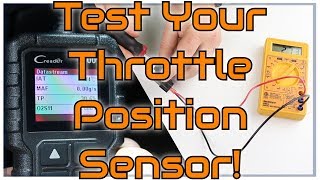
Disconnect the APP sensor. With the key on, test the reference voltage pin for a steady 5 volts and the ground pin for continuity (<0.1 ohms). Reconnect and back-probe the signal wires to verify smooth voltage sweeps (e.g., 0.9V to 4.5V) as the pedal moves.
Tools: Multimeter, Back-probe kit, Wiring diagram (Advanced) - Test the Active Engine Mount (VW/Audi)
Check for a short to ground at the engine mount solenoid connector. The resistance between the two solenoid pins must measure between 5 and 15 ohms. A reading of 0 ohms or infinite resistance confirms a failed solenoid.
Tools: Multimeter, Wiring diagram (Intermediate) - Inspect the Brake Pedal Switch (Nissan)
Ensure the brake pedal switch is properly adjusted and the plastic stopper pad on the pedal arm is intact. Test the switch for continuity; it must show continuity when pressed and an open circuit when released.
Tools: Multimeter (Beginner) - Inspect the Throttle Body
Remove the air intake hose and inspect the throttle plate for heavy carbon buildup. A sticking throttle plate causes erratic responses that trigger related throttle codes.
Tools: Screwdriver/socket set (Beginner)
When This Code Triggers (Freeze-Frame Conditions)
- Engine Coolant Temp: 170-210°F (Fully warmed up)
- RPM: 1500-2500 (Cruise or steady throttle application)
- Engine Load: 25-50% (Light to moderate load during steady driving)
- Vehicle Speed: 40-65 mph (Highway or constant-speed driving)
Related Codes
- P0121 — Indicates the primary pedal sensor's voltage is outside its expected range. P1576 means the signal is completely missing, while P0121 means it is present but erratic.
- P0221 — Identical to P0121 but applies to the secondary 'B' circuit sensor inside the pedal assembly.
- P2135 — Sets when the signals from the two internal pedal sensors disagree with each other (correlation error), often caused by a failing sensor or low battery voltage.
- P1575 — On VW/Audi vehicles, this is the companion code for the 'Right Engine Mount Solenoid Valve', whereas P1576 typically designates the left mount.
Climate & Environmental Factors
- Humidity and Water Intrusion: Water leaking into the cabin from a bad cowl seal causes corrosion on the accelerator pedal's electrical connector, leading to intermittent signal loss.
- Extreme Cold: Grease inside the APP sensor potentiometers thickens in freezing temperatures, causing moving parts to stick and generate erratic signals on startup.
- Road Salt and Grime: Heavy winter road salt accelerates corrosion on engine bay ground straps. A faulty ground connection for the PCM is a known cause of this code.
How to Talk to a Mechanic About This Code
Say this: "I have a P1576 code on my vehicle. My research indicates this is a manufacturer-specific code that likely points to a faulty [accelerator pedal assembly / electronic engine mount / brake pedal switch]. I'd like to schedule a diagnostic to confirm this specific part is the issue before replacing anything."
This signals you are an informed consumer. It directs the technician to the most probable cause, saving diagnostic time and preventing a costly, unfocused search for the problem.
Avoid saying:
- 'My check engine light is on, can you fix it?' (Too vague and invites upselling).
- 'I think my gas pedal is broken.' (Describe the symptom, do not diagnose the part).
- 'Just do whatever you think is best.' (Gives up all control over the repair process and cost).
Questions to ask before authorizing the repair:
- For a Ford/Jaguar: 'Can you show me the live data from the APP sensors to confirm the signal loss?'
- For a VW/Audi: 'What was the resistance reading on the engine mount solenoid, and did you see fluid leaks?'
- For a Nissan: 'Did you test the brake switch for continuity and check if the stopper pad is intact?'
- What is the total out-the-door price, including all parts, labor, and taxes?
- What is the warranty on the parts and the labor for this specific repair?
- Can I have the old parts back?
Where to Take It: Dealer vs Independent vs Chain
- Dealer:
Best for: Vehicles still under warranty., Complex German makes (Audi/VW) where specialized tools (VCDS) and knowledge of engine mounts are critical., Rare definitions of the code (Honda/GM) where an independent shop lacks experience.
Downsides: Highest labor rates, often 1.5-2x more than an independent shop., Routinely recommends replacing entire assemblies when a smaller wiring fix is possible. (Typical cost: +50% vs. baseline) - Independent Shop:
Best overall fit for common versions of this code (Ford, Nissan). For VW/Audi, a brand-specialist independent shop is ideal. A dealer is a safer but more expensive bet for German makes.
Best for: Common, well-documented issues like a Ford accelerator pedal or Nissan brake switch., Out-of-warranty vehicles where cost is a major factor., Brand-specialist shops (e.g., a European auto specialist) providing dealer-level expertise at a lower cost.
Downsides: Quality varies widely; you must vet the shop through reviews and ASE certifications., A general shop lacks the specific diagnostic tools for the VW/Audi engine mount issue. (Typical cost: +0% vs. baseline) - Chain Shop:
AVOID for diagnosis. Acceptable only if you have already confirmed a simple part failure (e.g., a Nissan brake switch) and just need it installed.
Best for: Simple, bolt-on part replacements where the diagnosis is already 100% certain.
Downsides: Technician skill varies dramatically., High pressure to upsell unnecessary services., Highly likely to misdiagnose a nuanced, manufacturer-specific code like P1576. (Typical cost: -10% vs. baseline)
When to Walk Away From the Repair
If the total estimated repair cost exceeds 40-50% of your car's current private-party market value, seriously consider not fixing it.
- Car worth $4000, fix is $250: Fix it. The repair cost for a common accelerator pedal replacement is a small fraction of the car's value.
- Car worth $6000, fix is $1500: Borderline, but likely worth fixing. An Audi engine mount replacement is expensive, but at 25% of the vehicle's value, it is a reasonable investment.
- Car worth $3000, fix is $1800: Walk away. The repair cost is 60% of the car's value. It is not economical to proceed.
What Scan Tool You Need for This Code
Minimum: A scanner that reads and graphs live data PIDs. Simply reading the code number is not enough for diagnosis.
A basic $20 code reader cannot show live voltage signals from the accelerator pedal sensors to spot dropouts, nor can it perform active tests to command VW/Audi engine mount solenoids.
Budget: BlueDriver Pro or Ancel BD310 (~$90) — Connects to a smartphone app to read codes, view freeze frame data, and graph live data from the accelerator pedal sensors (APP1, APP2).
Mid-range: Innova 5610 or Foxwell NT510 Elite (~$350) — Offers manufacturer-specific code definitions, live data, and bidirectional controls to run active tests (e.g., commanding engine mount solenoids on/off).
Professional: Autel MaxiCOM MK808BT Pro or XTOOL D8S (~$450-700) — Provides full bidirectional control, topology mapping, and dealer-level capabilities ideal for diagnosing complex wiring issues or ruling out a faulty PCM.
Rent vs buy: For a one-time diagnosis, auto parts stores offer loaner tool programs. Ensure the loaner tool is capable of reading live data, not just pulling codes.
How to Clear the Code After You Fix It
- Use an OBD-II scan tool to clear diagnostic trouble codes.
- Disconnect the negative battery terminal for 15 minutes to clear the PCM's memory.
- Perform a throttle body relearn procedure if the battery was disconnected or the throttle body was cleaned.
- Complete a full OBD-II drive cycle to allow readiness monitors to run.
Drive cycle (~30 minutes): Cold start (sit for 8+ hours). Idle for 3 minutes with A/C and defroster on. Drive 15 minutes in mixed stop-and-go traffic. Drive 10 minutes at a steady 55-60 mph. Allow the vehicle to cool down completely.
Readiness monitors affected: Comprehensive Component Monitor, Catalyst (CAT) Monitor, Oxygen (O2) Sensor Monitor
Before emissions retest: drive at least 50 miles to fully set monitors.
Watch out for:
- Clearing codes with a scanner does not reset the readiness monitors; a drive cycle is mandatory.
- The code returns immediately if the underlying mechanical or electrical fault is not fixed.
- Forgetting to perform a throttle relearn procedure causes high idle or erratic shifting after the repair.
Will This Fail Emissions / State Inspection?
Yes — this code typically fails an OBD-II emissions inspection.
- California: An active Check Engine Light is an automatic failure. After repair, a drive cycle must be completed to set all readiness monitors before a retest. A permanent DTC requires driving up to 200 miles and 15 warm-up cycles to clear.
- New York: The NYS DMV emissions inspection includes an OBD-II scan. Any active diagnostic trouble code results in an automatic failure.
- Texas: In the 17 counties requiring emissions testing, an illuminated Check Engine Light causes the vehicle to fail the OBD portion of the inspection.
Most Commonly Affected Vehicles
- Ford Transit (2000-2010) — Extremely prone to APP sensor failure, often appearing with codes P1342, P1343, and P1344 on TDDi and TDCi models.
- Ford Explorer (2002-2005) — The APP sensor is a common failure item, leading to limp mode and requiring replacement of the entire pedal assembly.
- Jaguar S-Type (1999-2007) — Frequently points to a failing APP sensor, though it is sometimes triggered by low battery voltage or throttle body connector issues.
- Audi A6, A8 (2004-2011) — Uses electronic, fluid-filled engine mounts that short out and trigger P1576, causing excessive cabin vibration.
- Volkswagen Passat, Touareg (2002-2010) — Sets P1576 due to a fault in the active engine mount control solenoid. Worn mounts also cause jerking on acceleration.
- Chevrolet / GMC Silverado, Sierra (2003-2007) — Refers to the Brake Booster Vacuum (BBV) sensor or electronic throttle control system, often appearing with code P2135.
- Nissan Navara, Frontier (2005-2015) — Indicates a fault with the brake pedal switch that interacts with the cruise control and push-to-start systems.
- Honda Insight (2000-2006) — Triggered by the Integrated Motor Assist (IMA) system, pointing to an issue with the Motor Drive Module (MDM) voltage sensor circuit.
Manufacturer-Specific Notes
- Ford / Jaguar: The code almost always means 'Pedal Position Not Available' and points directly to a failing accelerator pedal assembly. On Transits, it frequently appears alongside codes P1342, P1343, and P1344.
- Audi / Volkswagen: The code means 'Engine Mounting Control Solenoid Short to Ground.' The primary symptom is excessive cabin vibration, not poor acceleration. The Ross-Tech VCDS tool is highly recommended for diagnosis.
- Nissan: This code relates to the cruise control brake switch, not the accelerator. A faulty switch also causes a no-start condition on push-button start vehicles.
Real Owner Stories
2004 Ford Transit with ~140K miles
Vehicle suddenly entered limp mode with a flashing glow plug light and no throttle response at a junction. Codes P1576, P1342, and P1343 were present.
Outcome: For the first owner, a new pedal fixed the issue. For the second, the problem was a corroded wiring harness connector between the pedal and the ECU.
Lesson: While the pedal assembly is the most likely culprit on a Ford, if a new pedal fails to resolve the code, immediately inspect the wiring harness and connector for corrosion.
2001 Jaguar S-Type 3.0L V6
Car went into limp mode, flashing multiple warnings. Codes P1576 (Pedal position not available) and P1577 (Pedal position sensor disagreement) were stored.
Outcome: The underlying cause was a weak battery sending erratic power to the modules. Replacing the battery and clearing the codes permanently resolved the issue.
Lesson: Always verify the battery is fully charged (at least 12.4V) before diagnosing electronic fault codes. A weak battery forces modules to generate false sensor errors.
2017 Nissan Juke with push-button start
Vehicle intermittently failed to start. The owner pressed the brake and pushed the start button, but the engine did not crank.
Outcome: Replacing the $30 brake switch restored the starting function and cleared the P1576 code.
Lesson: For a P1576 code on a Nissan with a no-start or cruise control issue, the brake pedal switch is the primary suspect. Check the switch and its plastic stopper pad first.
How to Prevent This Code From Triggering
- Apply Dielectric Grease to Connectors (Every 2-3 years or during related service) — Applying non-conductive dielectric grease to the seals of electrical connectors prevents moisture and road salt from causing corrosion on the metal pins.
- Perform Regular Ground Strap Maintenance (Inspect annually, clean as needed) — Engine-to-chassis ground straps corrode and fray, creating resistance that causes erratic sensor behavior. Cleaning the contact points prevents difficult-to-diagnose electronic gremlins.
- Maintain a Healthy Battery (Test annually after 3 years of age) — A weak battery provides inconsistent voltage to control modules, causing them to misinterpret sensor data and generate false codes like P1576.
- Keep Cabin and Cowl Drains Clear (Annually, especially in the fall) — Clogged cowl drains cause rainwater to overflow onto engine bay electronics or cabin floorboards, leading directly to APP sensor connector corrosion.
Frequently Asked Questions
Can I just replace the sensor on the pedal, or do I need a whole new pedal assembly?
For most modern cars, the accelerator pedal position sensor is integrated into the gas pedal assembly and is not sold separately. You must replace the entire pedal unit. This is a plug-and-play repair on most vehicles.
What are common misdiagnosis mistakes for P1576?
A frequent mistake is replacing the accelerator pedal without checking the wiring first. Technicians often find the true cause is a corroded ground wire, a loose connector, or a bunched-up floor mat. Always verify the specific code definition for your car's make before buying parts.
Can I use a cheaper aftermarket pedal sensor?
Using non-OEM parts for the electronic throttle control system is risky. Cheap aftermarket sensors often output imprecise voltages, causing the computer to reject the signal and trigger new correlation codes like P2135. If you cannot buy OEM, choose a highly reputable brand like Dorman or Bosch.
Is it safe to drive with code P1576?
No, driving with P1576 is dangerous. Your car can suddenly lose power or fail to accelerate while merging into traffic. Tow the vehicle or drive it only short distances to a repair shop.
Will clearing the code fix the problem?
No, clearing the code only turns off the check engine light temporarily. The code returns as soon as the computer detects the fault again, usually within minutes of driving. You must fix the underlying hardware issue.
What is an 'active engine mount' and why does it have a sensor?
Active engine mounts are fluid-filled and electronically controlled to absorb engine vibrations at different speeds. The P1576 code on VW/Audi models indicates a short circuit in the solenoid controlling this function. When it fails, you feel excessive engine vibration in the cabin.
How much does it cost to fix P1576?
Costs depend entirely on your vehicle's make and the specific failure. A DIY accelerator pedal replacement on a Ford costs $50 to $200 for parts. Replacing an Audi active engine mount at a shop ranges from $250 to $700 per mount.
Why does my glow plug light flash with code P1576 on my Ford Transit?
On Ford diesels, a flashing glow plug light acts as a secondary Check Engine Light for powertrain faults. It indicates the vehicle has entered limp mode due to a throttle or fuel system error. This almost always accompanies an accelerator pedal failure with code P1576.
Key Takeaways
- Verify your vehicle's specific P1576 definition before buying parts, as it means 'Pedal Position Not Available' on Fords but 'Engine Mount Short to Ground' on VW/Audi models.
- For Ford and Jaguar vehicles, replace the entire accelerator pedal assembly (costing $50 to $200 in parts) because the internal position sensors cannot be serviced individually.
- Do not replace throttle components on a Nissan or Saab with this code; inspect the $20-$60 brake pedal switch, which frequently fails and disables push-to-start or cruise control systems.
- Test your battery voltage before diagnosing sensor correlation errors, as a weak battery dropping below 12.4 volts routinely causes modules to generate false P1576 codes.
Helpful Videos

The information in this article is provided for general reference and educational purposes only. Vehicle specifications, procedures, and part compatibility can vary by production date, trim level, and region. Always consult your vehicle's factory service manual and verify part numbers before purchasing or performing repairs. Safety-critical components such as airbags, seat belts, and braking systems should be installed by a qualified professional.
- 🎬 Helpful Videos
- What Does P1576 Mean?
- Can I Drive With P1576?
- Common Causes
- Symptoms
- Diagnostic Flowchart
- Common Fixes & Costs
- DIY vs Professional
- Used vs. New Parts: Buying Guide
- What Happens If You Wait — Timeline
- Cost of Not Fixing It
- Diagnosis Steps
- When This Code Triggers (Freeze-Frame Conditions)
- Related Codes
- Climate & Environmental Factors
- How to Talk to a Mechanic About This Code
- Where to Take It: Dealer vs Independent vs Chain
- When to Walk Away From the Repair
- What Scan Tool You Need for This Code
- How to Clear the Code After You Fix It
- Will This Fail Emissions / State Inspection?
- Most Commonly Affected Vehicles
- Manufacturer-Specific Notes
- Real Owner Stories
- 2004 Ford Transit with ~140K miles
- 2001 Jaguar S-Type 3.0L V6
- 2017 Nissan Juke with push-button start
- How to Prevent This Code From Triggering
- Frequently Asked Questions
- Can I just replace the sensor on the pedal, or do I need a whole new pedal assembly?
- What are common misdiagnosis mistakes for P1576?
- Can I use a cheaper aftermarket pedal sensor?
- Is it safe to drive with code P1576?
- Will clearing the code fix the problem?
- What is an 'active engine mount' and why does it have a sensor?
- How much does it cost to fix P1576?
- Why does my glow plug light flash with code P1576 on my Ford Transit?
- Key Takeaways
- 🎟️ Get 5% Off