

OBD-II Code P1574: Comprehensive Guide to Vehicle Speed & Throttle Control System Faults
What P1574 means, why it triggers, and how to fix it on your specific vehicle
- Identify your vehicle's specific P1574 definition first, as it means a speed sensor mismatch on Nissans, a brake switch failure on GM vehicles, and an immobilizer fault on Subarus.
- Diagnose and resolve any accompanying U-codes (network communication) or C-codes (ABS/chassis) before spending money on P1574 parts, as this code is almost always a secondary symptom.
- Expect to pay between $140 and $270 at a repair shop to replace a faulty ABS wheel speed sensor, which is the most common cause for Nissan and Infiniti models.
- Limit driving to under 50 miles with an active P1574 code on a Nissan or Ford, as the resulting erratic shifting or limp mode causes severe internal transmission damage over time.
What Does P1574 Mean?

P1574 is a manufacturer-specific code, meaning its definition changes based on your car brand. For Nissan and Infiniti, the engine computer (ECM) sees a disagreement between two vehicle speed signals. For GM vehicles, it points to a brake light switch circuit failure. For Ford, it indicates a fault in the electronic throttle system. For Subaru, it means a key communication failure with the immobilizer system.
Technical definition: Since P1574 is a manufacturer-controlled code (P1xxx), there is no single universal SAE/ISO definition. Common definitions include: * **Nissan/Infiniti:** ASCD (Cruise Control) Vehicle Speed Sensor - ECM detects a difference between two vehicle speed signals (one from the transmission, one from the ABS module) that is out of the specified range. * **GM:** Stoplamp Switch Circuit Conditions - The PCM detected a condition with the brake light switch circuit, such as a signal transition without a corresponding change in vehicle speed. * **Ford:** Throttle Position Sensor Detects Different Readings Between Its Sensors. * **Subaru:** Key Communication Failure - Failure of the immobilizer control module to verify the key's transponder ID code. * **Volkswagen:** Engine Mount Solenoid Valve Circuit - An electrical fault is detected in the circuit for an active engine mount. * **Mazda:** TP sensor output incongruent - The PCM compares TP sensor No.1 and No.2 and detects a significant difference.
Can I Drive With P1574?

Yes, But With Caution. You can usually drive, but limit it to 50 miles. Depending on the manufacturer, you will experience sudden stalling, poor acceleration, erratic shifting, or a non-working speedometer and cruise control. On a Subaru, it prevents the car from starting entirely. Driving with a speed signal fault is unsafe and causes the transmission to enter 'limp mode,' potentially leaving you stranded. Diagnose the issue immediately to prevent severe transmission damage.
Common Causes

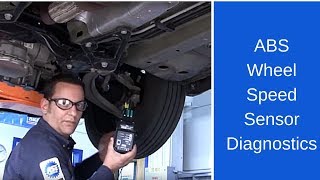
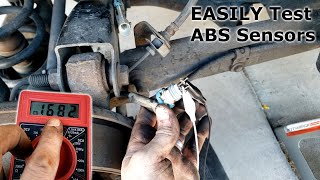
- Faulty ABS Wheel Speed Sensor (Nissan/Infiniti) (Very Common) — The computer compares speed signals from the transmission and the wheels. If one ABS sensor fails or provides an erratic signal, it sets the code. A related C-code (like C1145) pinpoints the exact sensor. 🎬 Learn how to test ABS wheel speed sensors for resistance
- Faulty Brake Light Switch (GM) (Very Common) — A malfunctioning or improperly adjusted brake light switch is the primary cause on GM vehicles. The computer expects a brake signal during rapid deceleration; missing this signal flags the code and causes stalling.
- Failing Throttle Body Assembly (Ford/Mazda) (Common) — The entire electronic throttle body fails due to an internal motor issue or a disagreement between the dual throttle position sensors housed within it. 🎬 See this walkthrough for replacing a Ford electronic throttle body
- Faulty Vehicle Speed Sensor (VSS) (Common) — The transmission's output speed sensor fails, causing a mismatch with the ABS wheel speed readings and triggering P1574, often alongside P0720.
- Immobilizer System Failure (Subaru) (Common) — The immobilizer antenna ring or the Body Integrated Unit (BIU) fails to read the transponder chip inside the key, resulting in a crank-no-start condition.
- Damaged Wiring or Poor Ground Connections (Common) — Corroded, loose, or broken wiring and ground straps for the TCM, PCM, or speed sensors interrupt signals. This triggers U-codes (like U1000) alongside P1574 and is often induced by vibration or hard cornering.
- Incorrect Tire Size or Differential Ratio (Less Common) — Installing tires with a diameter over 3% different from stock, or changing the final drive ratio, causes the transmission and wheel speeds to disagree permanently.
- Faulty Instrument Cluster (Rare) — In older vehicles (like early 2000s Nissans), the instrument cluster processes speed signals. A failure in the cluster's internal circuitry corrupts the signal.
- Internal Transmission Failure (Very Rare) — Code P1574 appears alongside P0720 when there is a major internal mechanical failure, such as a broken CVT chain or belt, accompanied by significant noise and drivability issues.
Symptoms
- Cruise Control Does Not Work — The cruise control system relies on accurate speed and brake signals. A fault disables the system, and the 'SET' light flashes when you try to engage it.
- Check Engine Light is On or Flashing — The Malfunction Indicator Lamp (MIL) illuminates. On some models, this code stores as a pending code first before turning on the light.
- Erratic Speedometer or Transmission Shifting — The speedometer reads incorrectly or drops to zero. The automatic transmission shifts harshly, gets stuck in one gear (limp mode), or slips.
- Engine Stalling or Rough Idle — On GM vehicles where the code relates to the brake switch, the engine stalls when coming to a stop or idles erratically.
- ABS and/or Traction Control Light is On — Because the code involves wheel speed sensors, the ABS, VDC, or SLIP warning lights frequently appear alongside the Check Engine Light.
- Reduced Engine Power ('Limp Mode') — On Ford and Mazda models with electronic throttle issues, the vehicle enters a reduced power mode to prevent unintended acceleration.
- Car Will Not Start (Subaru) — The engine cranks but fails to start because the immobilizer system does not recognize the key.
Diagnostic Flowchart
Tap your situation to follow the diagnostic path that matches what you're seeing on this code.
Common Fixes & Costs
- Replace ABS Wheel Speed Sensor — Parts: $40-$120, Labor: $100-$150, ~1.0 hr book time (Intermediate)
- Replace Brake Light Switch — Parts: $15-$40, Labor: $50-$100, ~0.5 hr book time (DIY)
- Replace Throttle Body Assembly — Parts: $250-$600, Labor: $125-$180, ~1.1 hr book time (Professional)
- Replace Vehicle Speed Sensor (VSS) — Parts: $30-$100, Labor: $100-$200, ~1.2 hr book time (Intermediate)
- Repair or Clean Ground Connections — Parts: $1-$10, Labor: $50-$150, ~0.8 hr book time (DIY)
- Replace Instrument Cluster — Parts: $150-$800, Labor: $150-$300, ~1.5 hr book time (Professional)
Used vs. New Parts: Buying Guide
When a used part is worth it: Buying used electronic parts like ABS sensors and throttle bodies is risky. A used part makes sense only for high-cost items from a low-mileage donor vehicle if the budget is tight. A used brake light switch is never worth the minimal savings.
Donor-vehicle mileage cap: roughly under 60000 miles for the part to have meaningful remaining life.
Donor quality checklist:
- Verify the donor vehicle's VIN to check for accident or flood history.
- For electronic throttle bodies, match the part number exactly.
- Avoid parts from rust-belt donors due to corrosion.
Decision logic:
- If The part is an ABS wheel speed sensor or electronic throttle body → Buy a new OEM or high-quality aftermarket part. The failure rate of used electronics is high.
- If The vehicle is over 15 years old and the new part is over $400 → A used part from a reputable salvage yard with a warranty is a reasonable gamble.
- If The part is a simple mechanical switch (like a brake switch) → Always buy new. The cost difference is minimal.
Warranty tradeoff: Used parts typically have a 30-90 day warranty covering only the part. New aftermarket parts carry a 1-year to lifetime warranty. New OEM parts offer the best fitment guarantee.
Worst-case if a used part fails: $300-$600, representing repeated labor to diagnose and replace the faulty used part.
What Happens If You Wait — Timeline
- 0-1 month: Code P1574 is stored. Cruise control is disabled and the 'SET' light flashes. No other drivability issues are apparent. (MPG impact: 0%% · Added cost: $0)
- 1-4 months: The underlying fault becomes consistent. ABS lights illuminate. The transmission shifts harshly or hesitates occasionally. (MPG impact: 0-5%% · Added cost: $0-$100 in wasted fuel and increased stress on transmission solenoids.)
- 4-12 months: The transmission enters 'limp mode,' getting stuck in one gear. GM vehicles stall at stops. Fords enter a permanent reduced power mode. (MPG impact: 10-30%% · Added cost: $500-$2000 for potential damage to the transmission valve body.)
- 12+ months: Continuously operating a vehicle with severe shifting problems leads to catastrophic transmission failure, requiring a full replacement. (MPG impact: N/A (Vehicle may be undrivable)% · Added cost: $3000-$6000 for a rebuilt or new transmission.)
Cost of Not Fixing It
- Short-Term (0-3 months): Loss of cruise control, incorrect speedometer readings, and warning lights. GM vehicles stall. Fords get stuck in limp mode. Nissans experience harsh shifting. (Added cost: Negligible, unless stalling or limp mode requires a tow.)
- Medium-Term (3-12 months): Continued harsh or erratic shifting causes premature wear on transmission clutches and solenoids, putting extreme stress on the drivetrain. (Added cost: $500-$2000 for transmission solenoid or valve body repairs.)
- Long-Term (1+ year): Ignoring a persistent speed sensor fault leads to catastrophic internal transmission damage due to improper hydraulic pressure and shift timing. (Added cost: $2500-$5000 for a complete transmission replacement or rebuild.)
Diagnosis Steps

- Scan for All Codes & Identify the Definition
Use an OBD-II scanner to confirm P1574. Check for any other codes. U-codes (U1000) or C-codes (C1145) MUST be diagnosed first. Identify your vehicle manufacturer's specific definition for P1574 to guide the diagnosis.
Tools: OBD-II Scanner (Beginner) - Analyze Live Data for Speed Sensors (Nissan/Infiniti)
Use a scanner with live data capabilities. Graph the VSS (Transmission) and all four ABS wheel speed sensors while driving. Look for a sensor that reads differently, drops to zero, or is erratic.
Tools: Advanced Scan Tool (Intermediate) - Inspect the Brake Light System (GM)
Have a helper confirm your brake lights work correctly when you press the pedal. Check the brake light switch located above the brake pedal for damage, loose connections, or hardened grease on the shaft.
Tools: Basic Hand Tools (Beginner) - Visually Inspect Wiring and Grounds
Inspect the wiring harnesses and connectors going to the vehicle speed sensor, ABS sensors, throttle body, and brake switch. Check module ground straps on the engine block and chassis for corrosion.
Tools: Flashlight, Mirror (Intermediate) - Test Throttle Position Sensor Voltage (Ford/Mazda)
Back-probe the TPS signal wire at the throttle body connector. With the key on, engine off, closed-throttle voltage is 0.6V-1.0V. Slowly open the throttle; voltage must rise smoothly to 4.5V. Dropouts indicate a faulty TPS.
Tools: Digital Multimeter with Back-probe Pins (Advanced) - Test Suspect Sensor with a Multimeter
For a 2-wire passive ABS sensor, disconnect it and measure resistance (typically 1,000-2,500 Ω). An open circuit (OL) or short (0 Ω) indicates a bad sensor. For active sensors, back-probe the signal wire and spin the wheel to verify toggling voltage.
Tools: Digital Multimeter, Vehicle Repair Manual (Advanced) - Diagnose CAN Bus Communication Issues
If U-codes are present, turn the ignition off and disconnect the battery. Check resistance between Pin 6 and Pin 14 on the OBD-II port. A healthy network reads 60 Ω. A reading of 120 Ω means a module is offline.
Tools: Digital Multimeter, Vehicle Wiring Diagram (Advanced) - Analyze Sensor Waveform with an Oscilloscope
For intermittent issues, back-probe the signal wire of the suspect speed sensor. Look for dropouts, noise, or a distorted pattern, indicating a failing sensor, bad wiring, or a damaged tone ring.
Tools: Oscilloscope, Back-probe Pins (Professional)
When This Code Triggers (Freeze-Frame Conditions)
- Vehicle Speed: 25-55 mph (Steady highway or city driving. The code sets when the vehicle moves at a constant speed above a certain threshold.)
- Engine RPM: 1500-2500 RPM (Corresponds to steady cruising speed. The RPM is stable when the fault is detected.)
- Engine Load: 20-50% (Light to moderate engine load, consistent with maintaining speed on a flat road.)
- Coolant Temperature: 180-210°F (The engine is at full operating temperature, as diagnostic monitors run only after warmup.)
Related Codes
- P0500 — P0500 is a generic fault for the Vehicle Speed Sensor 'A' circuit. If present with P1574, diagnose P0500 first, as the faulty VSS is the root cause of the signal disagreement.
- P0720 — P0720 points to a malfunction in the transmission's Output Speed Sensor circuit. If you have both, P0720 strongly suggests the output speed sensor is causing the comparison failure.
- U1000 / U1001 — These indicate a CAN Communication Bus Malfunction. If you see U-codes with P1574, you MUST diagnose the communication problem first, as P1574 is merely a symptom of the network failure.
- C1145 — This is an ABS code for a specific wheel speed sensor circuit failure. The C-code tells you exactly which wheel sensor to investigate, making it the root cause of the P1574 mismatch.
Climate & Environmental Factors
- High Humidity / Road Salt (Rust Belt): Increases the failure rate of ABS wheel speed sensors and connectors due to corrosion. Salt causes sensors to seize in the wheel hub, making replacement difficult.
- Cold Weather: Exacerbates issues with old wiring. Plastic connectors become brittle and crack, causing intermittent open circuits for speed sensors when flexed.
How to Talk to a Mechanic About This Code
Say this: "I have a [Your Car's Year, Make, Model] with a P1574 code. I know this code is manufacturer-specific. For my car, it means [mention your car's specific definition]. I'd like to schedule a diagnostic appointment to confirm the cause."
This signals that you understand the code's complexity, prevents the shop from using a generic definition, and guides them toward the correct diagnostic path.
Avoid saying:
- 'My check engine light is on.'
- 'Just fix the P1574 code.'
- 'My cruise control isn't working, can you fix it?'
Questions to ask before authorizing the repair:
- For Nissan/Infiniti: 'Did you graph the live data from all four wheel speed sensors while driving?'
- For GM: 'Did you test the brake light switch and its circuit?'
- For Ford: 'Did you check the voltage sweep on the throttle position sensor?'
- For Subaru: 'What specific tests confirmed the immobilizer antenna or module is the point of failure?'
- For any repair: 'If this doesn't fix the code, what is the next step, and is the diagnostic fee applied to the repair cost?'
Where to Take It: Dealer vs Independent vs Chain
- Dealer:
Recommended for Subaru, VW, or if U-codes are present. Otherwise, an independent shop is more cost-effective.
Best for: Vehicles under warranty., Subaru (for immobilizer key programming) and VW (for unique electrical issues)., Complex diagnoses involving CAN bus communication errors (U-codes).
Downsides: Highest labor rates, typically $150 to $250 per hour., May recommend replacing a whole assembly when a smaller component is the issue. (Typical cost: +50% vs. baseline) - Independent Shop:
Best overall fit for most common P1574 scenarios, provided the shop is ASE certified.
Best for: Out-of-warranty vehicles., Common P1574 causes, like Nissan speed sensor failures or GM brake switch issues.
Downsides: Diagnostic capabilities vary. Must be vetted for experience with modern electrical systems. (Typical cost: +0% vs. baseline) - Chain Shop:
AVOID for diagnosis. Acceptable only for a simple part replacement if you are certain of the cause.
Best for: Simple, clear-cut repairs where the diagnosis is already 100% certain.
Downsides: Technician skill varies dramatically., Often lack the advanced diagnostic tools for a manufacturer-dependent code like P1574. (Typical cost: -10% vs. baseline)
When to Walk Away From the Repair
If the estimated repair cost exceeds 50% of the car's private-party value, seriously consider selling or trading in the vehicle.
- Car worth $4500, fix is $400: Fix it. The repair cost is well below the threshold.
- Car worth $3000, fix is $1400: Borderline. This repair is nearly 50% of the car's value. Get a second opinion.
- Car worth $2000, fix is $3500: Walk away. The repair cost far exceeds the car's value.
What Scan Tool You Need for This Code
Minimum: A scanner that reads manufacturer-specific codes from the Engine, ABS, and Transmission modules, and graphs live sensor data.
A basic $20 reader only pulls the P-code from the engine computer and gives a generic definition. It cannot see the required ABS wheel speed data needed to find the fault.
Budget: BlueDriver Pro Scan Tool (~$100) — Connects to your smartphone via Bluetooth. It reads codes from all modules and graphs live data, essential for diagnosing speed sensor disagreements.
Mid-range: Foxwell NT510 Elite (~$180) — A handheld unit offering dealer-level diagnostics, including reading specific codes and live data from all modules, and performing bidirectional tests.
Professional: Autel MaxiCOM MK808S (~$450) — A full-featured diagnostic tablet providing all-system scanning, extensive live data graphing, and full bidirectional control to actively test components.
Rent vs buy: AutoZone's free rental scanners typically cannot read ABS or manufacturer-specific codes, making them insufficient for diagnosing P1574. You must buy a capable scanner.
How to Clear the Code After You Fix It
- Use an OBD-II scan tool to erase the DTCs from all modules (Engine, ABS, Transmission).
- Perform the specific drive cycle required by the manufacturer to confirm the repair and allow readiness monitors to run.
Drive cycle (~20 minutes): For Nissan/Infiniti: Drive at a steady speed above 25 MPH for 5 minutes. For GM: Drive with several start/stop cycles, using the brakes normally. For Ford: Perform an idle relearn procedure by letting the car idle for several minutes after a cold start.
Readiness monitors affected: Comprehensive Component Monitor, Catalyst (CAT) Monitor, Evaporative System (EVAP) Monitor
Before emissions retest: drive at least 50 miles to fully set monitors.
Watch out for:
- Clearing the code without fixing the underlying issue results in the code returning immediately.
- Forgetting to check for codes in the ABS or TCM modules leads to misdiagnosis.
- Failing to perform the required idle relearn calibration after replacing a throttle body.
Will This Fail Emissions / State Inspection?
Yes — this code typically fails an OBD-II emissions inspection.
- California: An active P1574 code causes an automatic failure. All readiness monitors must be 'Ready', requiring 50-100 miles of driving after the repair.
- New York: An illuminated Check Engine Light and a stored P1574 code is a guaranteed failure during the OBD-II scan.
- Texas: In emissions-testing counties, a P1574 code results in a failed inspection. The Check Engine Light must be off and monitors set.
Most Commonly Affected Vehicles
- Nissan Armada / Titan (2005-2015) — Prone to P1574 due to discrepancies between ABS and transmission speed signals. Often caused by a failing ABS wheel speed sensor or the internal VSS.
- Nissan Maxima / Altima (2002-2008) — Experiences this code due to a failing transmission revolution sensor or issues with the instrument cluster's circuitry acting as a gateway for speed signals.
- Nissan Rogue (2008-2013) — P1574 presents with transmission codes (P0720, P1715) indicating a severe internal CVT failure requiring professional diagnosis.
- Infiniti G35 (2003-2007) — Commonly triggered by a faulty wheel speed sensor or a poor ground connection for the TCM/ECM during hard cornering. Inspect ground straps if U1000 is present.
- Ford Escape (2005-2012) — Typically caused by a faulty electronic throttle body or a failing accelerator pedal position sensor. Early models had a recall for the throttle body.
- Chevrolet Tahoe / Camaro (2002-2009) — Caused by a faulty brake light switch circuit, which disables cruise control and causes stalling when coming to a stop.
- Subaru Forester / Impreza / Legacy / Outback (2005-2014) — P1574 means 'Key Communication Failure' indicating an immobilizer system fault. This causes a crank-no-start condition.
- Volkswagen Jetta / Golf (2005-2010) — Indicates an electrical fault in the circuit for the active engine mount solenoid valve, designed to dampen engine vibrations.
Manufacturer-Specific Notes

- Nissan / Infiniti: The code means 'ASCD Vehicle Speed Sensor' and points to a mismatch between the transmission and ABS wheel speed sensors. The fault is usually a single bad wheel speed sensor.
- General Motors (Chevrolet, GMC): The definition is 'Stoplamp Switch Circuit Conditions.' A bad brake switch causes this code, disables cruise control, and causes idle issues or stalling.
- Ford: Defined as 'Throttle Position Sensor Disagreement.' If the dual sensors inside the electronic throttle body disagree, it sets this code and puts the vehicle into limp mode.
- Mazda: Defined as 'TP sensor output incongruent,' indicating a disagreement between the two throttle position sensors inside the electronic throttle body.
- Subaru: P1574 means 'Key Communication Failure.' It is an immobilizer code resulting in a crank-no-start condition, completely unrelated to speed or throttle.
- Volkswagen: Points to an 'electrical fault in the circuit of the left engine mount solenoid valve,' a system used to dampen engine vibrations at idle.
Real Owner Stories
2005 Infiniti G35 with 152k miles, codes P1574, U1000, U1001
During hard cornering, the transmission locked in a single gear. Restarting the car temporarily fixed it.
What they tried:
- Installed an aftermarket grounding kit, which improved shift feel but didn't solve the code.
- Scanned codes, revealing P1574 and CAN communication codes U1000/U1001.
Outcome: The root cause was a poor ground connection for the transmission. The owner removed the main transmission ground bolts, wire-brushed the lugs and engine block, and re-secured them. The codes did not return.
Lesson: If P1574 appears with U-codes during specific maneuvers, the problem is electrical. Clean and tighten all major engine and transmission ground straps before replacing parts.
2005 Chevy Tahoe, P1574 and cruise control not working
Cruise control stopped working and brake lights were stuck on. A scan revealed P1574.
What they tried:
- Replaced the brake light switch with an aftermarket part, then a genuine GM switch, but the problem persisted.
Outcome: The metal shaft the switch floats on was sticky with hardened grease, preventing the new switch from moving freely. Cleaning the shaft with solvent and applying fresh grease restored proper function.
Lesson: On GM trucks, inspect the mechanical action of the brake pedal assembly. Cleaning and re-lubricating the shaft is a crucial step when replacing the switch.
2003 Nissan Maxima with 122k miles, codes P1574 and P0720
At highway speeds, the transmission slipped into neutral and would only engage 1st gear. The issue became frequent.
What they tried:
- Scanned codes and found P1574 and P0720.
Outcome: Because both P1574 and P0720 were present, the owner correctly identified the transmission's output speed sensor as the culprit. Replacing the VSS resolved the shifting problems.
Lesson: On a Nissan, if you have P1574 along with P0720, the P0720 is the primary fault. Replace the transmission output speed sensor first.
2008 Subaru Forester, crank no-start and code P1574
The vehicle cranked strongly but would not start. The security light behaved erratically. A scan showed P1574.
What they tried:
- Tried a spare key and verified battery health.
Outcome: A dealer diagnosed a failed immobilizer antenna coil. Replacing the coil and reprogramming the keys resolved the no-start condition.
Lesson: For Subaru owners, P1574 is a critical immobilizer fault. Do not waste time on sensors; the issue is with the key, antenna ring, or BIU module.
How to Prevent This Code From Triggering
- Clean Engine and Chassis Ground Straps (Every 30,000 miles or every 2 years, especially in the Rust Belt.) — Corroded ground straps cause intermittent electrical issues and communication codes (U-codes) that trigger P1574. Wire brushing the contact points ensures stable voltage.
- Apply Dielectric Grease to Sensor Connectors (Whenever a sensor is replaced or disconnected.) — Dielectric grease seals out moisture and prevents corrosion on connector pins, preventing signal dropouts.
- Regularly Inspect ABS Sensor Tone Rings (During any brake job or tire rotation.) — Tone rings get clogged with brake dust or crack over time. Cleaning them prevents erratic signals.
- Protect Transponder Keys (Subaru) (Daily habit.) — Dropping the key damages the internal transponder chip, causing a P1574 immobilizer fault and a no-start situation.
Frequently Asked Questions
Can I fix a P1574 code by myself?
It depends on the vehicle and cause. Replacing a GM brake light switch or cleaning a ground connection are simple DIY jobs. Replacing a throttle body or diagnosing complex electrical faults requires professional tools and experience.
I replaced the speed sensor, but P1574 came back. What's next?
If replacing the obvious sensor failed, the problem is likely a wiring fault, a bad ground, or a failing module. Use a scanner with live data to meticulously trace the signal path. Diagnosing intermittent electrical issues often requires an oscilloscope and professional expertise.
What are the most common misdiagnosis mistakes for P1574?
The most common mistake is replacing a speed sensor without checking for wiring damage or bad grounds first. Another major error is ignoring U-codes (communication) or C-codes (chassis/ABS). Always diagnose and fix U-codes and C-codes before addressing the P1574.
Will clearing the code fix the problem?
No. Clearing the code only erases the error from the computer's memory temporarily. The code and symptoms will return on the next drive cycle as soon as the computer detects the fault again.
Why didn't my Check Engine Light turn on?
Some manufacturers, like Nissan, do not consider a cruise control speed signal mismatch critical enough to illuminate the Check Engine Light immediately. It stores as a pending code and disables cruise control first. It will eventually trigger the light if the fault persists.
My scanner says 'Throttle Control Actuator Malfunction,' but I have a Nissan. Is it wrong?
Your scanner is using a generic, incorrect definition. P1574 is a manufacturer-specific code, meaning its definition changes based on the car brand. On a Nissan, it always indicates a speed sensor disagreement, not a throttle issue.
How much does it cost to diagnose a P1574 code?
Most repair shops charge a diagnostic fee ranging from $100 to $200, covering one hour of labor. This fee is often applied to the total repair cost if you authorize the shop to perform the work.
Can a bad battery cause a P1574 code?
A weak battery causes low voltage conditions that trigger various communication errors between modules. This generates U-codes and secondary faults like P1574. Always test and confirm your battery and alternator are healthy before replacing sensors.
Key Takeaways
- Identify your vehicle's specific P1574 definition first, as it means a speed sensor mismatch on Nissans, a brake switch failure on GM vehicles, and an immobilizer fault on Subarus.
- Diagnose and resolve any accompanying U-codes (network communication) or C-codes (ABS/chassis) before spending money on P1574 parts, as this code is almost always a secondary symptom.
- Expect to pay between $140 and $270 at a repair shop to replace a faulty ABS wheel speed sensor, which is the most common cause for Nissan and Infiniti models.
- Limit driving to under 50 miles with an active P1574 code on a Nissan or Ford, as the resulting erratic shifting or limp mode causes severe internal transmission damage over time.
Helpful Videos



The information in this article is provided for general reference and educational purposes only. Vehicle specifications, procedures, and part compatibility can vary by production date, trim level, and region. Always consult your vehicle's factory service manual and verify part numbers before purchasing or performing repairs. Safety-critical components such as airbags, seat belts, and braking systems should be installed by a qualified professional.
- 🎬 Helpful Videos
- What Does P1574 Mean?
- Can I Drive With P1574?
- Common Causes
- Symptoms
- Diagnostic Flowchart
- Common Fixes & Costs
- Used vs. New Parts: Buying Guide
- What Happens If You Wait — Timeline
- Cost of Not Fixing It
- Diagnosis Steps
- When This Code Triggers (Freeze-Frame Conditions)
- Related Codes
- Climate & Environmental Factors
- How to Talk to a Mechanic About This Code
- Where to Take It: Dealer vs Independent vs Chain
- When to Walk Away From the Repair
- What Scan Tool You Need for This Code
- How to Clear the Code After You Fix It
- Will This Fail Emissions / State Inspection?
- Most Commonly Affected Vehicles
- Manufacturer-Specific Notes
- Real Owner Stories
- 2005 Infiniti G35 with 152k miles, codes P1574, U1000, U1001
- 2005 Chevy Tahoe, P1574 and cruise control not working
- 2003 Nissan Maxima with 122k miles, codes P1574 and P0720
- 2008 Subaru Forester, crank no-start and code P1574
- How to Prevent This Code From Triggering
- Frequently Asked Questions
- Can I fix a P1574 code by myself?
- I replaced the speed sensor, but P1574 came back. What's next?
- What are the most common misdiagnosis mistakes for P1574?
- Will clearing the code fix the problem?
- Why didn't my Check Engine Light turn on?
- My scanner says 'Throttle Control Actuator Malfunction,' but I have a Nissan. Is it wrong?
- How much does it cost to diagnose a P1574 code?
- Can a bad battery cause a P1574 code?
- Key Takeaways
- 🎟️ Get 5% Off