

Ultimate Guide to OBD-II Code P1572: Brake Switch Circuit Malfunction
The Most Comprehensive P1572 Resource: Definitions, Pro-Level Diagnosis, and Fixes for All Major Brands
- Replace the $15-$80 brake light switch on the pedal arm to resolve P1572 on 80% of affected vehicles.
- Check your brake lights immediately; if they fail to illuminate or stay stuck on, you risk a rear-end collision or a dead battery within 24 hours.
- Stop diagnosing the brakes if you drive a Subaru or VW; P1572 means a crank-no-start immobilizer failure on Subarus and a faulty engine mount solenoid on VWs.
- Replace both the primary stop lamp switch and the secondary cruise control switch simultaneously on Nissan and Infiniti models to prevent immediate code recurrence.
What Does P1572 Mean?

P1572 is a manufacturer-specific Diagnostic Trouble Code (DTC) that signals a malfunction within the brake light switch circuit for most brands. The Powertrain Control Module (PCM) detects an illogical signal from the brake pedal, such as receiving an 'applied' signal when the pedal is released, or seeing a conflict between two separate pedal switches. This discrepancy disables critical safety systems like brake lights, cruise control, and ABS.
Technical definition: P1572 translates to 'Brake Pedal Switch Circuit Malfunction' for most manufacturers. The computer logs this code upon detecting an illogical signal from the brake pedal position sensor or a conflict between the primary brake switch and a secondary sensor (like the cruise control deactivation switch). Exception: On Subaru, VW, and Toyota, this code indicates completely different, non-brake-related failures.
Can I Drive With P1572?
no_recommended. Driving with code P1572 poses a significant safety risk. Inoperative brake lights make you invisible to drivers behind you, easily leading to a rear-end collision. You also risk being stranded if the brake-shift interlock prevents shifting out of Park. Address this immediately.
Common Causes

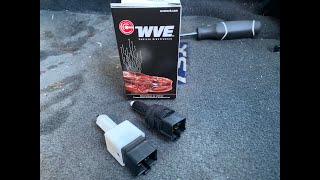
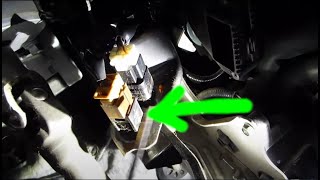
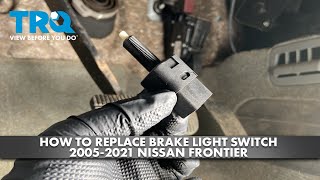
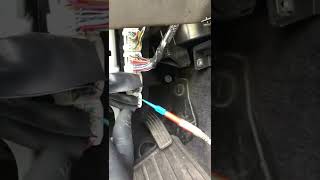
- Faulty Brake Light Switch (Very Common) — The number one culprit. 🎬 Watch: Step-by-step guide to replacing a faulty brake pedal switch. This small sensor on the brake pedal arm fails mechanically or electrically due to daily wear. Internal contacts degrade, plungers stick, or return springs break.
- Misadjusted Brake Light Switch (Common) — If recently replaced or disturbed, the switch sits improperly against the pedal. The plunger must fully depress when the pedal releases. Incorrect adjustment sends a constant 'on' or delayed signal.
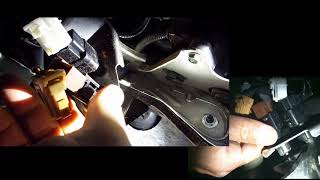
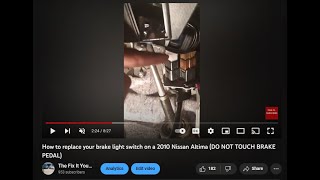
- Loss of Synchronization Between Dual Switches (Common) — Nissan, Infiniti, and Ford vehicles 🎬 See how to replace both Nissan brake and cruise control switches. use two pedal switches: one for brake lights, one for cruise control (ASCD). Uneven wear throws them out of sync, causing the ECM to detect a conflict and set P1572.
- Wiring or Connector Issues (Common) — The wiring harness leading to the switch chafes and shorts to ground. Connectors become corroded, loose, or contaminated with moisture, creating an open or shorted circuit.
- Blown Fuse (Less Common) — A blown fuse in the stop lamp, ABS, or ECU circuit interrupts the power supply to the brake switch, instantly triggering the code.
- Low System Voltage (Less Common) — A weak battery drops overall system voltage below required thresholds (e.g., 10.4V on Dodge/Ram). Control modules interpret this low voltage on the brake circuit as a hard fault.
- Faulty Control Module (PCM/BCM/IPC) (Very Rare) — The Powertrain Control Module (PCM) or Body Control Module (BCM) fails internally. Consider this only after exhaustively ruling out the switch, wiring, and fuses.
Symptoms

- Brake lights are inoperative or stuck on — The most severe safety symptom. Brake lights fail to illuminate when braking, or remain on constantly, draining the battery and confusing trailing drivers.
- Unable to shift out of Park — The brake-shift interlock requires a valid brake switch signal before releasing the shifter from Park. A failed switch locks the vehicle in place.
- Cruise control cannot be engaged — The PCM disables cruise control immediately when it cannot trust the brake signal, preventing unintended acceleration.
- Check Engine Light (MIL) is on — The Malfunction Indicator Lamp illuminates to warn of the powertrain-related fault.
- ABS, Traction Control (TCS), or Stability Control (ESC) lights are on — These systems rely on the brake switch signal. A fault causes them to disable themselves as a precaution, illuminating their warning lights.
- Engine cranks but will not start (Subaru Only) — CRITICAL: On Subaru vehicles, P1572 indicates an immobilizer system failure. The engine turns over but refuses to start because it rejects the key.
- Push-button start is intermittent or fails — Keyless ignition requires a valid brake pedal signal to authorize engine start. An intermittent switch causes frustrating no-start situations.
Diagnostic Flowchart
Tap your situation to follow the diagnostic path that matches what you're seeing on this code.
Common Fixes & Costs
- Replace Brake Light Switch — Parts: $15-$80, Labor: $80-$150, ~0.8 hr book time (DIY)
- Adjust Brake Light Switch — Parts: $0, Labor: $50-$100, ~0.5 hr book time (DIY)
- Replace Blown Fuse — Parts: $1-$5, Labor: $0-$50, ~0.2 hr book time (DIY)
- Repair Wiring or Replace Connector Pigtail — Parts: $10-$60, Labor: $125-$300, ~2.0 hr book time (Intermediate)
- Replace and Program Control Module (PCM/BCM) — Parts: $300-$800, Labor: $150-$300, ~1.5 hr book time (Professional)
Used vs. New Parts: Buying Guide
When a used part is worth it: Buying a used brake light switch never makes sense. It is a cheap wear item. A used switch carries a high risk of immediate failure.
Donor-vehicle mileage cap: roughly under 20000 miles for the part to have meaningful remaining life.
Donor quality checklist:
- Not applicable; new is strongly recommended.
- If forced to use a salvage part, match the part number exactly.
Decision logic:
- If The part is a brake light switch. → Always buy new. A new aftermarket or OEM part ($15-$80) eliminates the risk of premature failure.
- If The required part is a control module (PCM/BCM). → A used module from a reputable salvage yard saves hundreds, but MUST be professionally reprogrammed for your VIN.
Warranty tradeoff: Used parts carry a 30-90 day warranty. New aftermarket parts offer 1-year to limited lifetime warranties.
Worst-case if a used part fails: $100-$250 if a used brake light switch fails shortly after installation, requiring repeat labor costs.
What Happens If You Wait — Timeline
- Immediate: Check Engine Light illuminates. Brake lights fail or stick on. Cruise control disables. Vehicle refuses to shift out of Park. This is an immediate, critical safety failure. (MPG impact: 0%% · Added cost: $0 - $250+ (Traffic ticket for inoperative brake lights, or rear-end accident deductible).)
- 0-7 Days: Stuck brake lights drain the battery completely overnight, leaving you stranded and requiring a jump-start. Repeated deep discharges destroy the battery. (MPG impact: 0%% · Added cost: $50 - $250 (Roadside assistance call or replacement battery cost).)
- 1-3 Months: The primary consequence remains the ongoing safety hazard. The root cause (e.g., a wiring short) worsens, potentially melting connector housings. (MPG impact: 0%% · Added cost: $100 - $500+ (Cumulative costs of repeated jump-starts and traffic tickets).)
- 6+ Months: The vehicle fails state emissions and safety inspections automatically. The risk of causing an accident remains constant until repaired. (MPG impact: 0%% · Added cost: $250 - $1500+ (Original repair cost plus compounding costs from failed inspections and potential wiring harness damage).)
Cost of Not Fixing It
- Immediate: Safety hazard due to inoperative brake lights, leading to a high risk of a rear-end collision. You may also be unable to shift out of Park. (Added cost: $150-$1000+ (Traffic ticket to accident deductible))
- 0-1 Month: Stuck brake lights drain the battery completely, requiring a jump-start or destroying the battery entirely. (Added cost: $150-$350)
- 1-6 Months: Unresolved brake circuit faults disable ABS or stability control modules, compromising vehicle safety in adverse conditions. (Added cost: $500-$1500+)
Diagnosis Steps

- Verify Brake Light Function
Have a helper observe the brake lights as you press and release the pedal. Note if they are off, always on, delayed, or flickering. This provides an immediate clue to the nature of the failure.
Tools: A helper or a reflective surface (Beginner) - Scan and Document All Codes
Use an OBD-II scanner to read P1572 and any secondary codes in the ABS or BCM modules. Document the freeze-frame data to capture sensor values at the exact moment the fault occurred.
Tools: OBD-II Scanner (Beginner) - Visually Inspect the Brake Switch and Wiring
Look under the dashboard at the top of the brake pedal arm. Inspect the brake switch for physical damage, broken plastic stopper pads on the pedal, or loose mounting. Ensure the electrical connector is fully seated and free of green corrosion.
Tools: Flashlight (Intermediate) - Check All Related Fuses
Consult the owner's manual to locate fuses for the brake lights, cruise control, ABS, and PCM. Visually inspect each and use a multimeter to test for continuity, as hairline cracks are invisible to the naked eye.
Tools: Owner's manual, fuse puller, multimeter (Beginner) - Pro Tip: Test Switch with Live Data
View the live data stream for the brake switch PID(s) (e.g., 'BOO1', 'Brake Signal 1') on your scanner. The status must change instantly from 'Off' to 'On' the moment you touch the pedal. Any delay or flicker confirms a faulty or misadjusted switch.
Tools: Advanced OBD-II Scanner (Intermediate) - Pro Tip: Quantitative Switch Continuity Test
Disconnect the switch and set a multimeter to Ohms. Connect probes to the switch terminals. With the plunger released (simulating pedal pressed), the meter must read near 0 Ω. With the plunger fully depressed, it must read 'OL' (infinite resistance). Inconsistent readings indicate a dead switch.
Tools: Multimeter (Advanced) - Pro Tip: Quantitative Voltage Test (Chrysler/Dodge)
Chrysler/Dodge PCMs monitor two signals. With ignition on and pedal released, 'Brake Signal 1' reads ~0V and 'Brake Signal 2' reads ~12V. Pressing the pedal flips them: Signal 1 jumps to ~12V, Signal 2 drops to ~0V. Back-probe the connector to verify these exact voltages.
Tools: Multimeter, back-probe kit, wiring diagram (Advanced) - Pro Tip: Scope Pattern Analysis
For intermittent issues, use an oscilloscope to graph the brake switch signal wire. A healthy switch produces a clean square wave, instantly transitioning from 0V to 12V. A failing switch shows a noisy signal or a slow, rounded transition.
Tools: Oscilloscope, back-probe connectors (Advanced) - Check for Technical Service Bulletins (TSBs)
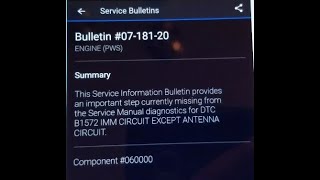
Search online TSB databases for your specific year/make/model. Manufacturers frequently release software updates or redesigned switch parts to permanently resolve persistent P1572 codes.
Tools: Smartphone or Computer (Intermediate)
When This Code Triggers (Freeze-Frame Conditions)
- Vehicle Speed: 0 mph (The fault is often detected during a self-test at startup, before the vehicle moves.)
- RPM: 0 or Idle (~750 RPM) (The code frequently sets with the key on, engine off, or immediately after starting.)
- Brake Switch Status: Off / On (Freeze frame shows a logical conflict, such as the brake pedal reading 'Off' when the PCM expects 'On' to shift from Park.)
- System Voltage: 11.5-12.5V (The fault logs during the initial power-up sequence of the vehicle's modules.)
Related Codes
- P0571 — The generic OBD-II code for 'Brake Switch A Circuit Malfunction.' If both are present, P1572 provides a more precise manufacturer-specific clue (e.g., 'Stuck On').
- P0504 — Indicates a 'Brake Switch 'A'/'B' Correlation' error. Set when the PCM sees a direct logical conflict between two separate brake pedal switches. Common on Nissan and Ford.
- P0572 / P0573 — Generic codes for 'Brake Switch A Circuit Low' and 'High'. They point to a specific electrical short, whereas P1572 covers a wider range of logical or mechanical faults.
- U0121 — Means 'Lost Communication With ABS Control Module.' If the PCM cannot communicate with the ABS module, it logs P1572 as a secondary fault because it distrusts the braking data.
Climate & Environmental Factors
- High Humidity: High ambient humidity increases the risk of P1572. Moisture penetrates electrical connectors for the brake switch, causing corrosion on the terminals. This increases electrical resistance, leading to weak signals that trigger a fault code even if the switch is mechanically sound.
How to Talk to a Mechanic About This Code
Say this: "I have a P1572 code and my car is a [Your Make]. I know this is usually a brake switch issue, but on my vehicle, it indicates [the immobilizer/engine mount]. I'd like a diagnostic that starts by confirming the code's specific meaning for my VIN and checking the live data from the brake pedal sensors before replacing parts."
This signals you know P1572 is not a one-size-fits-all code. It directs the mechanic to perform an efficient diagnosis (checking live data) rather than blindly swapping parts, preventing wasted time on a misdiagnosis.
Avoid saying:
- 'My check engine light is on, can you fix it?'
- 'The internet said to replace the brake switch.'
- 'Just do whatever it takes to get the light off.'
Questions to ask before authorizing the repair:
- Did you confirm the code's definition for my specific VIN?
- Can you show me the live data from the scan tool for the brake switches when the pedal is pressed?
- If the switch is the problem, what is the warranty on the new part and the labor?
- If you recommend a wiring or module repair, what specific tests led you to that conclusion?
Where to Take It: Dealer vs Independent vs Chain
- Dealer:
Best for: Vehicles still under warranty., Diagnosing manufacturer-specific quirks, especially Subaru (immobilizer) and VW/Audi (engine mount solenoid) where specialized tools are required., Complex electrical issues requiring module programming.
Downsides: Highest labor rates, typically 1.5-2x more than independent shops., May recommend expensive module replacement when a simpler fix exists. (Typical cost: +50% vs. baseline) - Independent Shop:
Best fit for the majority of vehicles where P1572 is a standard brake switch issue. For Subaru or VW, a brand-specialist independent shop is a good alternative to a dealer.
Best for: Out-of-warranty vehicles with the common 'brake switch circuit' definition (e.g., Nissan, Ford, Dodge)., Owners looking for the best balance of cost and quality for a straightforward repair.
Downsides: Diagnostic capabilities vary widely; ensure the shop has modern scan tools., May lack the specific tools to reprogram a Subaru immobilizer. (Typical cost: +0% vs. baseline) - Chain Shop:
Use with caution. Acceptable for a simple brake switch replacement if you confirmed the diagnosis yourself. AVOID for any diagnostic work, especially on Subaru or VW.
Best for: Simple, unambiguous fixes like replacing a fuse or a single, easily accessible brake light switch.
Downsides: Technician skill varies dramatically., High pressure to upsell services; lacks the advanced diagnostic tools to properly diagnose circuit faults. (Typical cost: -10% vs. baseline)
When to Walk Away From the Repair
If the estimated repair cost exceeds 40-50% of your car's private-party value, consider selling or trading it in.
- Car worth $4000, fix is $200: Fix it. This is a low-cost repair well under the threshold that restores critical safety functions.
- Car worth $3000, fix is $1800: Walk away. This repair cost is over 50% of the car's value. This scenario involves a rare control module failure or a high dealer quote for a Subaru immobilizer repair.
- Car worth $8000, fix is $500: Fix it. The repair cost is a small fraction of the vehicle's value and is necessary for safety.
What Scan Tool You Need for This Code
Minimum: A scanner that reads manufacturer-specific codes and displays live sensor data. A basic code reader that only pulls generic 'P' codes misses the true meaning of P1572 on brands like Subaru or VW.
A $20 reader only tells you a code exists. It won't show the live 'on/off' status of the brake switches as you press the pedal, which is the fastest way to confirm a switch failure. It also won't read immobilizer codes.
Budget: BlueDriver Pro (~$100) — Connects to your phone via Bluetooth. It reads enhanced codes (ABS, SRS) and displays live data to watch the brake switch status change in real-time.
Mid-range: Foxwell NT510 Elite (~$180) — A powerful handheld tool offering OE-level diagnostics for a specific car brand, including reading immobilizer codes on a Subaru. Its bi-directional control performs active tests.
Professional: Autel MaxiCOM MK808S (~$380) — A tablet-style scanner providing full system diagnostics, live data graphing, and bi-directional controls for nearly all makes. Essential for diagnosing complex P1572 variants, such as programming keys for an immobilizer fault.
Rent vs buy: For a one-time brake switch issue, a free scan at an auto parts store confirms the code. However, given the brand-specific nature of P1572, buying a budget pick like the BlueDriver Pro allows you to view the live data needed for an accurate diagnosis at home.
How to Clear the Code After You Fix It
- Use an OBD-II scan tool to clear the P1572 code from the module's memory.
- Perform a specific drive cycle to allow the vehicle's readiness monitors to run their self-tests.
- Reconnect the battery (only if required by the repair procedure, as this resets all monitors).
Drive cycle (~30 minutes): A generic drive cycle includes: a cold start (vehicle sits for 8+ hours), 2-3 minutes of idling, 15 minutes of mixed city driving, followed by 10-15 minutes of steady highway driving at 55-60 mph.
Readiness monitors affected: Catalyst (CAT) Monitor, Evaporative System (EVAP) Monitor, Oxygen (O2) Sensor Monitor
Before emissions retest: drive at least 100 miles to fully set monitors.
Watch out for:
- Clearing the code with a scanner resets all readiness monitors to 'Not Ready', causing an automatic emissions test failure.
- Disconnecting the battery clears the code but resets all learned values, requiring a full drive cycle.
- The code returns immediately if the underlying electrical fault remains unresolved.
Will This Fail Emissions / State Inspection?
Yes — this code typically fails an OBD-II emissions inspection.
- California: An illuminated Check Engine Light is an automatic failure. A full drive cycle must be completed to set all readiness monitors before re-testing.
- New York: Vehicles fail the OBD-II inspection if the Malfunction Indicator Light is on for any emissions-related fault code like P1572.
- Texas: An active Check Engine Light results in an automatic failure. After clearing the code, the vehicle must be driven to reset readiness monitors.
Most Commonly Affected Vehicles
- Nissan / Infiniti Altima, Maxima, Frontier, Juke, Xterra (2005-2019) — Sets the code when the ECM detects a conflict between the stop lamp switch and the ASCD (cruise control) switch. Replace both switches simultaneously. For 2011+ Jukes, a failing switch causes intermittent push-button start failure.
- Dodge / Chrysler / Jeep Magnum, 300, Grand Cherokee, Dart, Ram (2005-2018) — Definition is often 'Brake Pedal Stuck On'. Diagnosis requires monitoring 'Brake Signal 1' and 'Brake Signal 2' PIDs on a scan tool to identify the failing circuit.
- Ford / Lincoln Fiesta, F-150, Fusion, MKC, LS (2002-2019) — Logged as P1572:01 when the Instrument Panel Cluster (IPC) detects a circuit self-test failure. On 2004-2008 F-150s, this directly indicates a failed switch.
- Subaru Legacy, Impreza, Forester, Outback (2005-2012) — CRITICAL: P1572 means 'IMM Circuit Failure' (Immobilizer). It is NOT a brake issue. The primary symptom is a crank-no-start condition due to lost communication between the key and ECU.
- Volkswagen / Audi Jetta, Golf, Passat, A4 (2004-2015) — CRITICAL: P1572 means 'Left Engine Mount Solenoid Valve Short to Ground.' This is completely unrelated to the brake system.
- Toyota / Lexus Sienna, and models with ADAS (2006-2018) — On vehicles with Dynamic Radar Cruise Control, it indicates 'Improper Aiming Of Radar Sensor Beam Axis' and requires recalibration. On older models, it points to an exhaust solenoid fault.
- Jaguar S-Type, X-Type (2000-2008) — Commonly cited for issues with dual brake pedal switches. For the S-Type, the correct replacement switch part number depends on the chassis number.
- Chevrolet / GM Silverado, various models (2010-2019) — Definition is often 'ASR Active Circuit Low Too Long'. Brake system warnings are sometimes caused by software errors in the Electronic Brake Control Module (EBCM) covered by a TSB.
- Hyundai Elantra, Tucson, Sonata (2011-2020) — Triggered by secondary issues like a corroded electronic parking brake switch causing erroneous signals in the overall brake monitoring system.
Manufacturer-Specific Notes

- Subaru: P1572 is an immobilizer (anti-theft) system failure. The car cranks but will not start. Do not waste time diagnosing the brake circuit.
- Volkswagen: P1572 points to a 'Left Engine Mount Solenoid Valve Short to Ground.' It is an engine component code, completely unrelated to the braking system.
- Nissan: The system logic relies on correlation between the stop lamp switch and the ASCD (cruise control) switch. Replacing both simultaneously is the standard professional repair.
- Dodge / Chrysler / Jeep: The definition is 'Brake Pedal Stuck On'. Diagnosis focuses on identifying which of the two brake signal circuits is reporting the incorrect state via live scan tool data.
- Ford: The Instrument Panel Cluster (IPC) initiates a self-test of the brake circuit. A failure logs code P1572:01, pointing directly to an open in the circuit.
- Toyota: On modern Toyotas with ADAS, it indicates 'Improper Aiming Of Radar Sensor Beam Axis,' requiring a recalibration procedure, not parts replacement.
Real Owner Stories
2005 Nissan Xterra - Easy Fix
The owner's cruise control stopped working. Scanning for codes revealed P1572, indicating a brake switch issue, even though the brake lights worked perfectly.
What they tried:
- The owner replaced both brake pedal switches (main brake switch and ASCD cruise control switch) a year prior with OEM parts.
- Diagnosis pointed back to a conflict between the two switches despite their age.
Outcome: Replacing the ASCD (cruise control) brake switch again resolved the issue. Even relatively new parts fail or fall out of adjustment.
Lesson: On Nissans, P1572 almost always points to a conflict between the two brake pedal switches. Replace both simultaneously and ensure perfect adjustment.
2008 Subaru Legacy - Misdiagnosis Story
The car would not start. All electronics turned on, but the engine refused to crank. A P1572 code was present alongside a red flashing security dashboard light.
What they tried:
- The owner suspected a battery or starter issue due to the no-start condition.
- Generic online searches for 'P1572' led to brake switch resources, causing a complete misdiagnosis.
Outcome: On Subarus, P1572 indicates an immobilizer circuit failure. The key, immobilizer control unit, and ECU lost communication. The fix requires a Subaru-specific scan tool to re-pair the components.
Lesson: Always verify the code definition for your specific make and model. For Subaru, P1572 is a 'crank-no-start' anti-theft system issue, not a brake problem.
2001 Dodge Ram 3500 - Unusual Root Cause
The brake pedal failed to fully return to its resting position after being pressed. This caused the brake lights to stay on and triggered the P1572 code.
What they tried:
- The owner replaced the hydroboost unit and the master cylinder, but the problem persisted.
- They checked for clogs in the power steering lines, suspecting a hydraulic issue.
Outcome: The problem traced back to a clogged filter screen in the power steering pump, restricting flow to the hydroboost unit and preventing the pedal from returning properly.
Lesson: A 'lazy' or slow-returning brake pedal triggers P1572. In these cases, the root cause is mechanical or hydraulic (brake booster or pedal assembly), not the electrical switch.
How to Prevent This Code From Triggering
- Periodically Clean Electrical Connectors (Every 3-5 years or when working nearby) — Moisture and road salt cause corrosion on brake switch connector terminals, increasing resistance and triggering faulty signals. Spraying with electronics contact cleaner and applying dielectric grease prevents this.
- Maintain Battery and Charging System Health (Annually) — Low voltage from a failing battery causes control modules to log erroneous fault codes. Clean, tight terminals prevent voltage-related glitches in sensitive brake switch monitor circuits.
- Inspect Pedal Area for Debris and Moisture (Seasonally) — Spilled drinks or snow melt from shoes seeps into footwell switches, causing corrosion or short circuits. Keeping the area dry protects low-mounted electrical components.
Frequently Asked Questions
Can I replace the brake light switch myself?
Yes, this is a beginner-friendly DIY repair. The switch is inexpensive and located on the brake pedal arm. The main challenge is awkward physical access in the driver's footwell.
Is it safe to drive with a P1572 code?
No. Inoperative brake lights are a serious safety hazard that causes rear-end collisions. You also risk being stranded if the car refuses to shift out of Park.
How much does it cost to fix a P1572 code?
A brake light switch replacement costs between $100 and $230 at a repair shop for parts and labor. A DIY repair costs $15-$80 for the part alone.
My car won't start and I have a P1572 code. What's wrong?
If you drive a Subaru, this code points to a failure in the immobilizer (anti-theft) system, not the brakes. The car rejects your key and prevents the engine from starting.
I replaced the brake light switch, but the code came back. What now?
Ensure the new switch is correctly adjusted with zero gap against the pedal arm. If your vehicle has two switches (Nissan, Ford), replace the second one to restore synchronization. If it persists, take the vehicle to a shop to trace a wiring short.
Why did my ABS and traction control lights come on with P1572?
ABS and stability control systems depend on an accurate brake switch signal. If the signal is unreliable, these systems disable themselves as a precaution and illuminate their warning lights.
What is the biggest mistake when diagnosing P1572?
Assuming P1572 always means 'brake switch circuit.' On a Subaru or VW, this leads to hours of wasted diagnostic time. Always verify the manufacturer-specific definition for your exact vehicle.
When I press the brake, I hear a 'click' from the shifter area. Is this related to P1572?
That click is the brake-shift interlock solenoid disengaging, which is normal operation. A P1572 code causes this mechanism to fail to disengage, but the clicking sound itself confirms the solenoid is receiving the signal.
Key Takeaways
- Replace the $15-$80 brake light switch on the pedal arm to resolve P1572 on 80% of affected vehicles.
- Check your brake lights immediately; if they fail to illuminate or stay stuck on, you risk a rear-end collision or a dead battery within 24 hours.
- Stop diagnosing the brakes if you drive a Subaru or VW; P1572 means a crank-no-start immobilizer failure on Subarus and a faulty engine mount solenoid on VWs.
- Replace both the primary stop lamp switch and the secondary cruise control switch simultaneously on Nissan and Infiniti models to prevent immediate code recurrence.
Helpful Videos

![OBD2 Scanner Live Data Explained: [Top 3] Data PIDs](https://img.youtube.com/vi/9YLHaavMDVw/mqdefault.jpg)

The information in this article is provided for general reference and educational purposes only. Vehicle specifications, procedures, and part compatibility can vary by production date, trim level, and region. Always consult your vehicle's factory service manual and verify part numbers before purchasing or performing repairs. Safety-critical components such as airbags, seat belts, and braking systems should be installed by a qualified professional.
- 🎬 Helpful Videos
- What Does P1572 Mean?
- Can I Drive With P1572?
- Common Causes
- Symptoms
- Diagnostic Flowchart
- Common Fixes & Costs
- Used vs. New Parts: Buying Guide
- What Happens If You Wait — Timeline
- Cost of Not Fixing It
- Diagnosis Steps
- When This Code Triggers (Freeze-Frame Conditions)
- Related Codes
- Climate & Environmental Factors
- How to Talk to a Mechanic About This Code
- Where to Take It: Dealer vs Independent vs Chain
- When to Walk Away From the Repair
- What Scan Tool You Need for This Code
- How to Clear the Code After You Fix It
- Will This Fail Emissions / State Inspection?
- Most Commonly Affected Vehicles
- Manufacturer-Specific Notes
- Real Owner Stories
- 2005 Nissan Xterra - Easy Fix
- 2008 Subaru Legacy - Misdiagnosis Story
- 2001 Dodge Ram 3500 - Unusual Root Cause
- How to Prevent This Code From Triggering
- Frequently Asked Questions
- Can I replace the brake light switch myself?
- Is it safe to drive with a P1572 code?
- How much does it cost to fix a P1572 code?
- My car won't start and I have a P1572 code. What's wrong?
- I replaced the brake light switch, but the code came back. What now?
- Why did my ABS and traction control lights come on with P1572?
- What is the biggest mistake when diagnosing P1572?
- When I press the brake, I hear a 'click' from the shifter area. Is this related to P1572?
- Key Takeaways
- 🎟️ Get 5% Off