

OBD-II Code P1570: Manufacturer-Specific Fault
What P1570 means, why it triggers, and how to fix it
- P1570 is a manufacturer-specific code: on VW/Audi it indicates an active immobilizer blocking the engine, on GM it flags disabled cruise control due to StabiliTrak, and on Ford it points to a faulty Intake Manifold Runner Control (IMRC).
- For VW and Audi vehicles, the engine starts and stalls after 1 to 2 seconds; always test your spare key first to rule out a dead transponder before buying parts.
- Verify your main 12V vehicle battery reads at least 12.4 volts, as low voltage frequently causes the communication dropouts that trigger false P1570 immobilizer codes.
- Never replace a VW/Audi Engine Control Unit (ECU) or Instrument Cluster to fix P1570 unless you have specialized tools like VCDS to perform the required 7-byte Component Security adaptation.
What Does P1570 Mean?

P1570 is a manufacturer-specific code, meaning its definition changes depending on your car brand. For Volkswagen and Audi, it means the engine start is blocked by the immobilizer (the anti-theft system). For General Motors, it points to an active traction control system that disables cruise control as a safety measure. For Ford vehicles, it indicates a fault with the Intake Manifold Runner Control (IMRC) system. For Honda hybrids, it flags a failing high-voltage battery module.
Technical definition: The Society of Automotive Engineers (SAE) designates P1xxx codes as manufacturer-controlled. The meaning is assigned by the vehicle manufacturer to indicate a fault in a non-standard powertrain system. It most commonly flags a communication failure between the Engine Control Module (ECU) and the anti-theft system (immobilizer), but manufacturers also use it for traction control, intake manifold control, and hybrid battery systems.
Can I Drive With P1570?
No — Do Not Drive. For the most common applications (VW, Audi), this code indicates an active anti-theft system that prevents the engine from starting or stalls it immediately, making driving impossible. For GM or Ford, driving is possible but unsafe or damaging. Driving with a GM StabiliTrak issue reduces vehicle control in hazardous conditions. Driving a Ford with a faulty IMRC causes poor performance and destroys the catalytic converter over time.
Common Causes

- Faulty Key Fob or Dead Key Fob Battery (VW/Audi) (Very Common) — The most frequent cause is a problem with the key itself. The battery inside the key fob is dead, the internal transponder chip is damaged, or an improperly coded aftermarket copy is no longer recognized by the vehicle.
- Low Main Vehicle Battery Voltage (All Brands) (Common) — A weak 12V vehicle battery provides insufficient power to control modules during startup. This creates communication errors between the ECU, instrument cluster, and immobilizer module, falsely triggering a P1570 code even when all anti-theft components are functional.
- Defective Immobilizer Antenna/Reader Coil (VW/Audi) (Common) — The ring-shaped antenna around the ignition switch reads the transponder chip in the key. If this coil fails or its connection loosens, it cannot read the key's signal and commands the engine computer to shut the engine down.
- Traction Control System Fault (GM) (Common On Gm) — On GM vehicles, this code sets when the traction control system (StabiliTrak) activates. This stems from a fault in the ABS system, such as a bad wheel speed sensor or steering angle sensor, which disables cruise control as a safety measure.
- Intake Manifold Runner Control (IMRC) Fault (Ford) (Common On Ford) — On Ford models, P1570 indicates a fault in the IMRC system, which uses butterfly valves to alter intake manifold runner length. A faulty actuator, failed sensor, or heavy carbon buildup jamming the flaps triggers the code.
- Faulty Instrument Cluster (VW/Audi) (Less Common) — On many VW and Audi models from the early 2000s, the immobilizer logic is built directly into the instrument cluster. Internal failures, such as cracked solder joints or microprocessor faults, cause a P1570 code and a no-start condition.
- Wiring or Connector Issues (All Brands) (Less Common) — Corroded, loose, or damaged wiring between the key reader, immobilizer module, instrument cluster, and the ECU interrupts the security signal. On VW models, water ingress in the CAN gateway module located in the scuttle panel is a frequent culprit.
- Key/Module Mismatch After Component Replacement (VW/Audi) (Less Common) — This occurs if the ECU, instrument cluster, or immobilizer module is replaced without being properly programmed ('adapted') to recognize the existing keys. The security components are no longer cryptographically matched.
- Aftermarket Remote Starter or Alarm Interference (All Brands) (Less Common) — Poorly installed aftermarket remote start systems or alarms interfere with the factory immobilizer's communication. These systems use a 'bypass' module that fails or suffers wiring issues, leading to an intermittent P1570.
- Faulty Engine Control Unit (ECU) or Immobilizer Module (VW/Audi) (Rare) — The immobilizer control module or the ECU itself fails internally, preventing the car from starting even with a good key and wiring. This is a last-resort diagnosis after exhausting all other possibilities.
Symptoms
- Engine starts and stalls after 1-2 seconds (VW/Audi) — The classic immobilizer symptom. The engine fires up normally, runs for a moment, and abruptly shuts off as the immobilizer cuts fuel and spark.
- Flashing immobilizer warning light on dashboard — A light shaped like a car with a key inside it flashes on the instrument panel, confirming an active anti-theft system fault.
- 'SAFE' displayed on instrument cluster (VW/Audi) — The word 'SAFE' appears on the multi-function display, indicating the immobilizer is active and has locked out the engine control module.
- Engine cranks but will not start — On some systems, the immobilizer prevents the engine from firing at all. The engine turns over continuously without catching.
- Cruise control does not work (GM) — Cruise control refuses to activate. This is accompanied by the 'Service StabiliTrak' or traction control warning light.
- Reduced engine power and rough idle (Ford) — If related to a Ford IMRC fault, the vehicle experiences sluggish acceleration, a rough idle, and decreased fuel economy.
Diagnostic Flowchart
Tap your situation to follow the diagnostic path that matches what you're seeing on this code.
Common Fixes & Costs
- Replace Key Fob Battery — Parts: $5-$15, Labor: $0, ~0.1 hr book time (DIY)
- Purchase and Program a New Key — Parts: $70-$150, Labor: $100-$200, ~1 hr book time (Professional)
- Replace Immobilizer Reader Coil (Antenna) — Parts: $50-$150, Labor: $100-$250, ~1.5 hr book time (Intermediate)
- Replace Wheel Speed or Steering Angle Sensor (GM) — Parts: $50-$250, Labor: $150-$400, ~1.2 hr book time (Intermediate)
- Replace IMRC Actuator or Clean Intake (Ford) — Parts: $100-$300, Labor: $200-$500, ~2.5 hr book time (Intermediate)
- Repair or Replace Instrument Cluster — Parts: $0-$400, Labor: $250-$800, ~2.5 hr book time (Professional)
- Repair or Replace Faulty Wiring/Gateway Module — Parts: $20-$200, Labor: $200-$600, ~4 hr book time (Professional)
- Replace and Program ECU — Parts: $400-$1200, Labor: $200-$500, ~2.5 hr book time (Professional)
Used vs. New Parts: Buying Guide
When a used part is worth it: Used parts make sense for non-security, mechanical components like a GM wheel speed sensor or a VW immobilizer reader coil, especially on older vehicles where cost savings are significant.
Donor-vehicle mileage cap: roughly under 100000 miles for the part to have meaningful remaining life.
Donor quality checklist:
- Verify the part number matches exactly.
- For electronic parts, ensure the donor vehicle did not have electrical or water damage.
- Avoid parts with visible corrosion, cracks, or frayed wiring.
Decision logic:
- If The part is a security module (ECU, Instrument Cluster, Immobilizer Box) → Buy new or from a specialist offering programming services. A used module from a junkyard will not start the car without expensive, specialized programming.
- If The part is a known wear item (e.g., Ford IMRC actuator) → Favor a new part, as a used one has limited remaining life.
- If The part is a simple sensor (e.g., GM wheel speed sensor) and the vehicle is over 10 years old → A used part from a reputable recycler is a reasonable, budget-friendly option.
Warranty tradeoff: Used parts from salvage yards typically offer a 30-90 day warranty. New aftermarket parts offer a 1-year to limited lifetime warranty. New OEM parts carry a 1-2 year warranty.
Worst-case if a used part fails: $500-$1500 if a used security module fails to program correctly, requiring repeat labor and the purchase of another part.
What Happens If You Wait — Timeline
- Immediate (VW/Audi Immobilizer): The engine is disabled by the immobilizer and will not run for more than 2 seconds. The vehicle is undrivable. The immobilizer warning light flashes. (MPG impact: N/A% · Added cost: $75-$300 (Immediate towing and transportation costs).)
- 0-3 Months (Ford IMRC Fault): Check engine light illuminates. The owner notices a 10-15% decrease in fuel economy and sluggish performance, especially at lower RPMs. (MPG impact: 10-15%% · Added cost: $50-$200 (in wasted fuel over this period).)
- 3-9 Months (Ford IMRC Fault): Engine performance degrades further. The imbalanced air/fuel mixture from the stuck IMRC causes the engine to run rich, leading to carbon fouling of spark plugs and placing thermal stress on the catalytic converter. (MPG impact: 15-20%% · Added cost: $200-$500 (Wasted fuel plus potential need for new spark plugs).)
- 9+ Months (Ford IMRC Fault): Sustained high temperatures from unburnt fuel entering the exhaust damage the precious metals in the catalytic converter, causing it to melt down or clog. The vehicle fails an emissions test. (MPG impact: 20-30%% · Added cost: $1200-$2800 (Cost of catalytic converter replacement).)
Cost of Not Fixing It
- Immediate: For VW/Audi, the vehicle will not run, making it undrivable. This incurs immediate costs for towing and alternative transportation. (Added cost: $75-$300 (Towing and transport))
- 0-3 Months (Ford IMRC): Ignoring a Ford IMRC fault leads to a persistent check engine light, a 10-15% drop in fuel economy, and poor engine performance at low RPMs. (Added cost: $50-$200 (in wasted fuel))
- 6+ Months (Ford IMRC): Continued driving with a faulty IMRC causes excessive carbon buildup and inefficient combustion, which overheats and destroys the catalytic converter. (Added cost: $1200-$2800 (Catalytic converter replacement))
- Immediate (GM StabiliTrak): The StabiliTrak and cruise control systems are disabled. This significantly reduces the vehicle's safety margin in emergency maneuvers or slippery conditions. (Added cost: N/A (Safety risk, not direct financial cost))
Diagnosis Steps

- Try a Spare Key
Test starting the car with a different, known-good key. If the car starts and runs with the spare key, the primary key's transponder chip or battery is faulty.
Tools: Spare car key (Beginner) - Check and Charge the Main Vehicle Battery
Low system voltage is a primary cause of communication errors triggering P1570. Ensure the 12V vehicle battery is fully charged (above 12.4V) and healthy. A weak battery causes this fault even if all immobilizer components are perfect.
Tools: Multimeter or battery tester (Beginner) - Perform a 'Cold Boot' Reset
Disconnect both battery terminals. Touch the positive and negative cable ends together for 60 seconds (away from the battery itself). This drains residual power from modules, forcing them to re-establish communication on startup. Reconnect the battery and attempt to start the car.
Tools: Wrench for battery terminals (Beginner) - Scan All Modules for Other Fault Codes
Scan the Engine, Immobilizer, and Instrument Cluster modules using an advanced OBD-II scanner. Codes like 01176 (Key Signal Low), 17978 (Engine Start Blocked), P0513 (Incorrect Immobilizer Key), or U0155 (Lost Communication with Instrument Cluster) pinpoint the exact failure point.
Tools: Advanced OBD-II Scanner (e.g., VCDS) (Intermediate) - Inspect Immobilizer Antenna and Wiring
Inspect the plastic ring around the ignition cylinder (the immobilizer antenna) for damage or loose connections. Trace the wiring from the antenna to the instrument cluster or immobilizer module, checking for chafed or broken wires.
Tools: Flashlight, trim removal tools (Intermediate) - Test Immobilizer Reader Coil Resistance
Disconnect the reader coil connector and measure resistance between the two pins using a multimeter set to Ohms (Ω). For many VW/Audi models, a healthy coil reads approximately 18-24 Ohms. Infinite resistance (open circuit) or near-zero resistance (short) confirms a failed coil.
Tools: Multimeter, vehicle-specific wiring diagram (Advanced) - Check Immobilizer Measuring Blocks (VW/Audi)
Navigate to the Instrument Cluster (17) or Immobilizer (25) module using VCDS and view live data in measuring block Group 022. Check the values for 'Key status', 'Immobilizer status', and 'Engine start permitted'. A value of 'No' or '0' in 'Engine start permitted' confirms the immobilizer is actively blocking the start.
Tools: VCDS or equivalent diagnostic tool (Advanced) - Test Ford IMRC Actuator and Solenoid
Command the IMRC system on and off using a bidirectional scan tool. Monitor the IMRC position sensor PID; voltage must change (e.g., from ~1.2V to ~3.3V). If it fails to move, check for vacuum at the actuator. If vacuum is present but the actuator remains stationary, the actuator is faulty.
Tools: Bidirectional scan tool, vacuum gauge, multimeter (Advanced) - Verify CAN Bus Communication
Probe the CAN-High and CAN-Low wires at the OBD-II port using an oscilloscope. You must see square wave signals switching between approximately 1.5V (low) and 3.5V (high). A flat line or distorted signal indicates a wiring short, a failed module pulling down the network, or a faulty gateway.
Tools: Oscilloscope, wiring diagram (Expert)
When This Code Triggers (Freeze-Frame Conditions)
- Vehicle Speed: 0 MPH (For VW/Audi immobilizer faults, the code sets during the failed start attempt when the vehicle is stationary.)
- Engine RPM: 0-800 RPM, then 0 RPM (For VW/Audi, the ECU logs the fault as the engine fires, briefly runs, and is shut down by the immobilizer.)
- Engine Load: 25-70% (For Ford IMRC faults, the code sets under moderate load during steady-state driving when the ECU commands a change in the runners.)
- Coolant Temperature: Varies (often 10-95°C / 50-203°F) (The fault logs at any engine temperature, from a cold start to fully warmed up, depending on the specific failure.)
Related Codes
- 17978 — This is the VAG-specific fault code number that directly corresponds to P1570, meaning 'Engine Start Blocked by Immobilizer.' They are functionally identical.
- 01176 — 'Key: Signal too Low.' This code frequently appears with P1570 and points to the reason: the signal from the key's transponder is weak or undetected. Seeing both strongly suggests the problem is the key or the reader coil.
- P0513 — 'Incorrect Immobilizer Key.' This generic SAE code confirms the ECU is actively blocking the engine start because it does not recognize the key.
- U0155 — 'Lost Communication With Instrument Panel Cluster.' If the ECU cannot communicate with the cluster, it triggers P1570 because it cannot get security authorization. Seeing both points towards a cluster failure or CAN bus wiring problem.
- P2004 — On Ford vehicles, P2004 'Intake Manifold Runner Control Stuck Open' is often seen alongside P1570, confirming the issue is with engine airflow control, not vehicle security.
Climate & Environmental Factors
- Low Temperatures: Cold weather significantly reduces a 12V battery's effective cranking amps and stable voltage. A battery that seems fine in warm weather drops below the necessary voltage threshold (e.g., 12.4V) when cold, causing communication modules to fail to initialize properly and falsely triggering a P1570 code.
- High Humidity / Water Ingress: In humid climates or areas with heavy rain, water leaks into the vehicle cabin. For many VW/Audi models, the CAN gateway module is located in the scuttle panel area, which is prone to clogged drains. Water enters the module, corroding connections and causing a loss of communication on the CAN bus.
How to Talk to a Mechanic About This Code
Say this: "My [MANUFACTURER] [MODEL] has a P1570 code. For VW/Audi: 'The engine starts and stalls, and the immobilizer light is flashing. I've already tried a spare key and checked the main battery. Please perform a diagnosis of the immobilizer system, checking for codes in the instrument and immobilizer modules.' For GM: 'The 'Service StabiliTrak' light is on and cruise control is disabled. I need a diagnosis of the ABS/Traction Control system to find the root cause, likely a wheel speed sensor or wiring.' For Ford: 'The car has a check engine light and poor acceleration. I need the Intake Manifold Runner Control (IMRC) system diagnosed to see if the actuator is faulty or the runners are stuck.'"
This language shows you've done research and directs the technician to the correct system for your specific vehicle. It prevents them from wasting time on incorrect diagnostic paths (like checking the fuel pump on a VW with an immobilizer issue) and protects you from shotgun diagnostics.
Avoid saying:
- 'Just fix whatever's wrong'
- 'My check engine light is on, can you look at it?' (too vague — invites upsell)
- 'Whatever you recommend'
Questions to ask before authorizing the repair:
- For VW/Audi: If a module (ECU/cluster) needs replacement, does your quote include the security adaptation and programming? Will you be using a new or a refurbished part?
- For GM: What specific fault code did you find in the ABS module? Is the recommended repair to replace the sensor or repair the wiring harness?
- For Ford: Did you command the IMRC actuator with a scan tool to confirm it failed? Did you visually inspect the linkage for damage?
- Can you provide me with a detailed, itemized estimate in writing before you begin the work?
Where to Take It: Dealer vs Independent vs Chain
- Dealer:
Best for: Vehicles under warranty., Complex security-related repairs on VW/Audi, like replacing an ECU or instrument cluster, which require proprietary tools and information.
Downsides: Highest labor rates, often 1.5-2x more than an independent shop., May recommend replacing an entire assembly when only a small component has failed. (Typical cost: +50% vs. baseline) - Independent Shop:
Best overall fit. A European car specialist is ideal for VW/Audi immobilizer issues. A reputable general independent shop easily handles the GM wheel speed sensor or Ford IMRC faults.
Best for: Out-of-warranty vehicles where cost is a major factor., Finding a specialist (e.g., a European auto repair shop for VW/Audi) who has deep experience with these specific, quirky systems.
Downsides: Capabilities vary widely; ensure they have the specific diagnostic tools (like VCDS for VW) and experience for your car's issue., May not be able to program brand new security modules on the latest models. (Typical cost: +0% vs. baseline) - Chain Shop:
AVOID for initial diagnosis. Their generic scanners may not read the necessary modules. They are not equipped for the complex electrical and security diagnosis P1570 often requires.
Best for: Simple, non-diagnostic jobs like tire changes or oil services.
Downsides: Technician skill and diagnostic equipment are highly variable., Often lack the specialized tools and training for complex, manufacturer-specific codes like P1570, leading to misdiagnosis and unnecessary parts replacement. (Typical cost: -10% vs. baseline)
When to Walk Away From the Repair
If the estimated repair cost for a P1570 fault exceeds 50% of your car's private-party value, you should seriously consider selling or trading in the vehicle rather than repairing it.
- Car worth $2700, fix is $1100: Borderline. A $1,100 instrument cluster replacement on a 2005 VW Jetta worth $2,700 is a tough call. Get a second opinion or consider an immobilizer delete service as a cheaper alternative.
- Car worth $15000, fix is $700: Fix it. An IMRC actuator replacement for $700 on a Ford F-150 worth $15,000 is well below the threshold and restores vehicle performance.
- Car worth $4000, fix is $3500: Walk away. Replacing the high-voltage battery on an older Honda Civic Hybrid for $3,500 when the car is only worth $4,000 is not economically viable.
What Scan Tool You Need for This Code
Minimum: A scan tool that reads manufacturer-specific codes from ALL relevant vehicle modules (Engine, ABS, Instruments, Immobilizer).
A basic $20 code reader only shows 'P1570' from the engine computer. It cannot see the critical secondary codes in the immobilizer module (like '01176 - Key Signal Low' on a VW) or the ABS module (like a wheel speed sensor fault on a GM) that actually identify the root cause.
Budget: OBDeleven NextGen (~$99) — For VW/Audi, this is the best budget tool. It uses your smartphone to read codes from all modules, view live data, and perform adaptations essential for immobilizer diagnostics.
Mid-range: Foxwell NT510 Elite / NT710 (with VAG software) (~$180) — A powerful handheld scanner offering deep, dealer-level diagnostics for VW/Audi, including reading manufacturer codes, live data, and bidirectional controls to test components like the Ford IMRC actuator.
Professional: Autel MaxiCOM MK808 / Ross-Tech VCDS (~$500-800) — Professional-level tools. The Autel MK808 offers full bidirectional control and all-module scanning for most makes. Ross-Tech's VCDS is the gold standard for VW/Audi, providing full access for diagnostics, coding, and security adaptations.
Rent vs buy: For a one-time diagnosis, paying a specialist shop for one hour of diagnostic labor is often more cost-effective. Auto parts store loaner tools are typically basic code readers and are NOT sufficient for a complex code like P1570.
How to Clear the Code After You Fix It
- Fix the underlying mechanical or electrical fault.
- Use an OBD-II scan tool to erase the P1570 code from the ECU.
- For VW/Audi immobilizer issues, perform the key/module adaptation procedure if components were replaced.
- Perform a complete drive cycle to allow readiness monitors to run.
Drive cycle (~25 minutes): A general drive cycle includes: 1) Cold start and idle for 2-3 minutes. 2) Drive at a steady speed of 45-55 mph for 5-7 minutes. 3) Accelerate to 60-65 mph and hold steady for 5 minutes. 4) Safely decelerate and come to a stop, then idle for 2 minutes.
Readiness monitors affected: Catalyst Monitor, O2 Sensor Monitor, EVAP System Monitor, Secondary Air System
Before emissions retest: drive at least 100 miles to fully set monitors.
Watch out for:
- Clearing the code without fixing the root cause results in the code returning immediately.
- Failing to perform a full drive cycle leaves readiness monitors as 'Not Ready,' causing an automatic emissions test failure.
Will This Fail Emissions / State Inspection?
Yes — this code typically fails an OBD-II emissions inspection.
- California: An active P1570 code causes an automatic failure of the smog check's OBD-II inspection. All readiness monitors must be complete before a retest.
- New York: NYS vehicle inspections include an OBD-II scan. Any fault that illuminates the check engine light, including P1570, is grounds for failure.
- Texas: In counties requiring emissions testing, a vehicle with an illuminated check engine light automatically fails the inspection.
Most Commonly Affected Vehicles
- Volkswagen Jetta, Golf, Passat, Beetle, Polo (1999-2015) — Extremely common immobilizer issue. Early models use Immo 2, while later models use the complex Immo 3/4 systems requiring advanced tools for module adaptation.
- Audi A4, A3, TT, A6 (1999-2015) — Shares the same immobilizer systems as Volkswagen and is equally prone to P1570 due to key, reader coil, or instrument cluster failures.
- Chevrolet / GMC Tahoe, Suburban, Malibu, Silverado, Sierra (2000-2016) — P1570 is an informational code indicating the traction control system (StabiliTrak) is active, deactivating cruise control. The root cause is usually a faulty wheel speed sensor.
- Ford Focus, Mustang, Explorer, F-150 (2005-2014) — P1570 indicates a problem with the Intake Manifold Runner Control (IMRC) system. Symptoms include poor performance and a check engine light.
- Skoda / SEAT Octavia, Fabia, Leon, Ibiza (2000-2015) — Uses the same immobilizer technology as VW/Audi and suffers from identical P1570 faults, including CAN gateway module failures from water ingress.
- Nissan Altima, Maxima, Sentra (2002-2012) — Points to a fault in the ASCD (Auto Speed Control Device) steering switch, affecting cruise control operation. Not a no-start issue.
- Hyundai Elantra, Sonata (2001-2010) — Related to a communication error on the CAN bus line between the transmission control module (TCM) and other modules.
- Honda Civic Hybrid (2003-2011) — Indicates a 'Battery Module Individual Voltage Problem,' pointing to a critical fault within the high-voltage IMA battery pack.
Manufacturer-Specific Notes

- Volkswagen / Audi: The immobilizer system generation (Immo 2, 3, 4) dictates the repair procedure. Immo 3+ requires a 7-byte Component Security code for adapting new modules. Water ingress into the CAN gateway module under the windshield wipers is a frequent, overlooked cause of P1570.
- General Motors: P1570 is purely an informational code logging that cruise control was disabled because the traction control system activated. The actual fault is stored in the ABS module. GM issued special coverage adjustments (like campaign #14329) for faulty wheel speed sensor wiring harnesses causing this.
- Ford: P1570 is completely unrelated to the anti-theft system. It points to a fault in the Intake Manifold Runner Control (IMRC) circuit. The cause is often carbon buildup physically jamming the runner flaps.
- Subaru: P1570 means 'Faulty Antenna' or 'No Cluster Bus Message,' indicating a communication failure between the instrument cluster and the ECU.
- Honda: On hybrids, it is a serious battery code indicating an individual voltage problem in a battery module. On standard models, it means 'Loss of HUD Communications,' a minor issue related to the heads-up display.
Real Owner Stories
2002 VW Jetta - The 'Easy Fix'
Owner's car battery light came on. After parking, the car started and immediately stalled, with the immobilizer light flashing. The car had to be towed home.
What they tried:
- Connected a VCDS scanner, which showed P1570 'Engine Start Blocked by Immobilizer'.
- Attempted to clear the code, but it returned immediately.
- Performed a 'cold boot' by disconnecting the battery terminals and touching them together for 60 seconds to reset the modules.
Outcome: After charging the main vehicle battery for 10 minutes and performing the cold boot reset, the car started and ran normally. The P1570 code was caused by low system voltage from a failing alternator, which created a communication glitch.
Lesson: Always confirm the main 12V battery is fully charged (above 12.4V) before assuming a component has failed. A simple reset procedure often resolves communication-based faults like P1570.
2013 VW CC R-Line - A Misleading Short
Owner experienced a recurring 'Immobilizer Active' message draining the battery. The message disappeared if a small storage tray near the driver's side was wiggled or left slightly ajar.
What they tried:
- Tried multiple keys, including replacing the battery in one of the key fobs, with no success.
- Posted on a forum assuming a wiring short in the dashboard was the cause due to the strange behavior with the storage tray.
Outcome: The community diagnosed that the immobilizer, instrument cluster, and ECU are cryptographically linked. While a wiring short was possible, the ultimate fix required tracing the entire harness or replacing and reprogramming all security components for over $1000. The user opted for a permanent 'immo defeat' service as a cost-effective solution.
Lesson: Bizarre symptoms (like wiggling a panel to fix a problem) point to intermittent wiring or connection issues. On VW/Audi, this signals a failing instrument cluster or a chafed wire in the harness, which are complex repairs.
2006 Honda Civic Hybrid - A Different Meaning
Car presented with Check Engine, IMA, and 12V battery lights on. The car ran until the 12V battery died. Scanned codes showed P1570 and P0A7F.
What they tried:
- Hooked up a Honda factory scan tool to analyze the high-voltage battery cells.
- Tested the conventional 12V battery and found it was not being charged (voltage was only 11.6V).
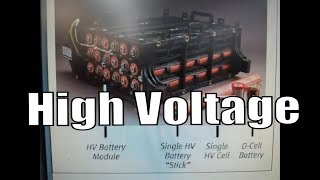
Outcome: The P1570 code on this Honda meant 'Battery Module Individual Voltage Problem,' pointing to a failure in the main high-voltage (HV) hybrid battery pack. This failure caused the DC-to-DC converter to stop charging the 12V battery. The fix required replacing the entire HV battery pack.
Lesson: The definition of P1570 is highly manufacturer-specific. For a Honda hybrid, it is a serious high-voltage battery fault, completely unrelated to immobilizer issues. Always verify the code's meaning for your exact make and model.
How to Prevent This Code From Triggering
- Regularly Clean Scuttle Panel / Plenum Drains (VW/Audi) (Once per year (especially before rainy season)) — The drains under the windshield wipers clog with leaves, causing water to overflow onto sensitive electronics, particularly the CAN gateway module. Keeping these drains clear prevents water ingress that triggers P1570.
- Use a Quality Battery Maintainer (If the vehicle is stored for more than 2 weeks) — Maintains the 12V battery at a full charge, preventing the voltage from dropping to a level that causes communication glitches between the ECU and immobilizer modules on startup.
- Use Fuel System Cleaner with PEA (Ford IMRC) (Every 5,000-7,500 miles) — Using a fuel additive with Polyetheramine (PEA) detergents cleans carbon deposits from the intake manifold. This reduces the chance of carbon buildup physically jamming the IMRC butterfly flaps.
- Protect Key Fobs from Drops and Water (Daily habit) — The transponder chip inside the key fob is a small glass capsule damaged by impact or water. Protecting the key prevents damage that stops it from communicating with the car.
- Inspect and Clean ABS Wheel Speed Sensor Wiring (GM) (During tire rotations or brake service) — On GM trucks, the exposed wiring for the front wheel speed sensors gets caked with mud or ice. This chafes the insulation and causes a short, triggering a StabiliTrak fault and the informational P1570 code.
Frequently Asked Questions
Can I bypass the immobilizer to fix P1570?
Yes, 'immo off' services reprogram your ECU to permanently disable the anti-theft function. This solves recurring immobilizer issues on older vehicles but makes your car easier to steal. It also impacts your insurance coverage.
Will a dead car battery cause a P1570 code?
Yes, low voltage is a primary cause of P1570. It triggers communication errors between modules, resulting in a false immobilizer fault. Always verify your 12V battery reads above 12.4V before replacing parts.
I replaced my ECU and now I have a P1570 code. Why?
The ECU, instrument cluster, and keys are cryptographically linked. A replacement ECU remains programmed to its donor car and blocks the engine start. You must hire a specialist to perform a Component Security adaptation to match the new ECU to your vehicle.
Why does my car start and then die immediately?
This is the designed function of the VW/Audi immobilizer. It allows the engine to fire briefly, but cuts fuel and spark after 1-2 seconds if it fails to authenticate the key's transponder chip.
What is a common misdiagnosis for P1570 on a VW/Audi?
Mechanics frequently misdiagnose P1570 as a failed ECU or fuel pump. The actual root cause is usually a weak 12V battery, a damaged key fob, or a failing instrument cluster.
Can a locksmith fix a P1570 code?
Yes, an automotive locksmith equipped with advanced programming tools easily diagnoses key-related issues. They cut and program new transponder keys and adapt replacement modules, often for less than dealership prices.
How do I reset my immobilizer?
Disconnect both battery terminals and touch the cable ends together for 60 seconds to drain residual power and force a module reset. If a hard fault like a broken key transponder exists, this reset will not work.
What does 'SAFE' on my VW dashboard mean?
The 'SAFE' message indicates the immobilizer is active and has locked the engine control module. It confirms a failure to authenticate the key or a communication breakdown between security components.
Key Takeaways
- P1570 is a manufacturer-specific code: on VW/Audi it indicates an active immobilizer blocking the engine, on GM it flags disabled cruise control due to StabiliTrak, and on Ford it points to a faulty Intake Manifold Runner Control (IMRC).
- For VW and Audi vehicles, the engine starts and stalls after 1 to 2 seconds; always test your spare key first to rule out a dead transponder before buying parts.
- Verify your main 12V vehicle battery reads at least 12.4 volts, as low voltage frequently causes the communication dropouts that trigger false P1570 immobilizer codes.
- Never replace a VW/Audi Engine Control Unit (ECU) or Instrument Cluster to fix P1570 unless you have specialized tools like VCDS to perform the required 7-byte Component Security adaptation.
Helpful Videos

The information in this article is provided for general reference and educational purposes only. Vehicle specifications, procedures, and part compatibility can vary by production date, trim level, and region. Always consult your vehicle's factory service manual and verify part numbers before purchasing or performing repairs. Safety-critical components such as airbags, seat belts, and braking systems should be installed by a qualified professional.
- 🎬 Helpful Videos
- What Does P1570 Mean?
- Can I Drive With P1570?
- Common Causes
- Symptoms
- Diagnostic Flowchart
- Common Fixes & Costs
- Used vs. New Parts: Buying Guide
- What Happens If You Wait — Timeline
- Cost of Not Fixing It
- Diagnosis Steps
- When This Code Triggers (Freeze-Frame Conditions)
- Related Codes
- Climate & Environmental Factors
- How to Talk to a Mechanic About This Code
- Where to Take It: Dealer vs Independent vs Chain
- When to Walk Away From the Repair
- What Scan Tool You Need for This Code
- How to Clear the Code After You Fix It
- Will This Fail Emissions / State Inspection?
- Most Commonly Affected Vehicles
- Manufacturer-Specific Notes
- Real Owner Stories
- 2002 VW Jetta - The 'Easy Fix'
- 2013 VW CC R-Line - A Misleading Short
- 2006 Honda Civic Hybrid - A Different Meaning
- How to Prevent This Code From Triggering
- Frequently Asked Questions
- Can I bypass the immobilizer to fix P1570?
- Will a dead car battery cause a P1570 code?
- I replaced my ECU and now I have a P1570 code. Why?
- Why does my car start and then die immediately?
- What is a common misdiagnosis for P1570 on a VW/Audi?
- Can a locksmith fix a P1570 code?
- How do I reset my immobilizer?
- What does 'SAFE' on my VW dashboard mean?
- Key Takeaways
- 🎟️ Get 5% Off