

Ultimate Guide to OBD-II Code P1558: A Manufacturer-Specific Deep Dive
The definitive guide to understanding, diagnosing, and fixing P1558 on Volkswagen, Ford, GM, BMW, and more.
- P1558 is a manufacturer-specific code that indicates a throttle body failure on VW/Audi/BMW, a fuel injector fault on Ford 6.7L diesels, or a cruise control issue on GM vehicles.
- For VW and Audi models, immediately perform a manual push-test on the throttle plate; if it fails to snap shut instantly, the internal spring is broken and the entire throttle body requires replacement.
- Ford 6.7L Powerstroke owners must test injector return flow; a volume exceeding 3ml in 15 seconds confirms a mechanically failed injector that requires replacement and PCM reprogramming.
- Never drive a VW, Audi, or BMW with an active P1558 code, as the vehicle will enter a 40-mph limp mode and can lose all throttle response in traffic, requiring an immediate tow.
What Does P1558 Mean?

P1558 is a manufacturer-specific diagnostic trouble code (DTC), meaning its definition changes entirely based on your vehicle's make. For Volkswagen, Audi, and BMW, it signifies an electrical malfunction in the throttle actuator, almost always caused by a broken internal mechanical spring. For Ford's 6.7L Powerstroke diesels, it signals a circuit performance failure in a specific fuel injector. For General Motors (GM), it points to a disabled cruise control servo. On Pontiacs, it indicates a shorted turn signal circuit.
Technical definition: The Society of Automotive Engineers (SAE) reserves P1xxx codes for manufacturer-specific use. The Engine Control Module (ECU) or Body Control Module (BCM) sets P1558 when a monitored value in a specific, proprietary circuit—such as throttle plate position, piezo injector resistance, or cruise control servo feedback—falls outside its programmed operational range for a predetermined period.
Can I Drive With P1558?
no_for_throttle_issues. For vehicles where P1558 indicates a throttle problem (VW, Audi, BMW), the engine enters 'limp mode,' limiting speed to 40 mph and causing a complete loss of throttle response. This is extremely dangerous in traffic or while merging. Towing is mandatory. For faults like a GM cruise control or Pontiac turn signal, the vehicle is safe to drive, but the underlying issue requires prompt repair.
Common Causes

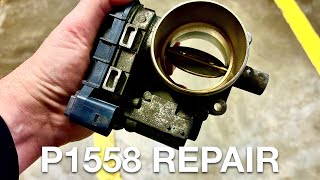
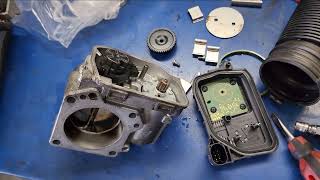
- Broken Internal Return Spring in Throttle Body (VW/Audi) (Very Common) — On VW Group 1.0L and 1.4L engines, the throttle body's internal return spring fatigues and breaks, preventing the plate from snapping shut. 🎬 Watch: How to diagnose and repair this VW throttle code. The ECU detects this mechanical failure as an electrical fault.
- Faulty Piezo Stack in Fuel Injector (Ford Powerstroke) (Common) — On Ford 6.7L Powerstroke engines, the piezo crystal stack inside the fuel injector fails electronically, leading to performance and circuit codes for that specific cylinder.
- Faulty Throttle Body Motor or Sensors (VW/Audi/BMW) (Common) — The internal electric motor, position sensors (TPS), or plastic gears within the throttle body strip or short out, requiring full assembly replacement.
- Faulty Cruise Control Servo (GM) (Less Common) — On GM vehicles, the cruise control servo indicates low power or incorrect position, disabling the cruise control system entirely.
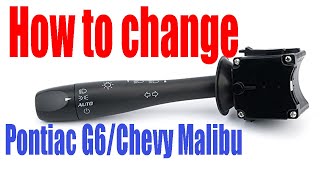
- Faulty Turn Signal Switch (Pontiac) (Less Common) — On affected Pontiac models, the multi-function turn signal switch wears out, 🎬 Watch: How to replace the turn signal switch on a Pontiac. causing a short to ground in the right turn signal circuit.
- Excessive Carbon Buildup in Throttle Body (All Makes) (Less Common) — Heavy carbon deposits physically restrict the throttle plate's movement, preventing it from closing to the correct idle position.
- Damaged Wiring Harness or Connectors (All Makes) (Rare) — A frayed wire, loose pin, or corroded connector interrupts the signal between the component (injector, throttle body, or servo) and the control module.
Symptoms

- Sudden Loss of Acceleration (Limp Mode) — The gas pedal becomes completely unresponsive, and the engine will not rev above 1500 RPM. This happens without warning while driving on VW, Audi, and BMW models.
- Rough Idle, Engine Shaking, or Stalling — If related to a Ford fuel injector, the engine runs poorly, shakes violently, misfires, or stalls. A faulty throttle body also causes a surging or unstable idle.
- Check Engine Light and EPC Light Illuminated — The Electronic Power Control (EPC) light is a hallmark of throttle issues on VW/Audi vehicles. A standard Check Engine Light illuminates for all P1558 variations.
- Cruise Control Inoperative — The primary symptom for the GM-specific fault. The driver cannot set or maintain speed using the cruise control.
- Turn Signal Malfunction (Pontiac) — The right turn signal fails to operate, or the dashboard indicator flashes rapidly (hyperflash), indicating a circuit short.
Diagnostic Flowchart
Tap your situation to follow the diagnostic path that matches what you're seeing on this code.
Common Fixes & Costs
- Replace Throttle Body Assembly (VW/Audi/BMW) — Parts: $250-$450, Labor: $150-$250, ~1.5 hr book time (Intermediate)
- Replace Fuel Injector (Ford 6.7L Powerstroke) — Parts: $300-$450, Labor: $450-$600, ~3.5 hr book time (Professional)
- Replace Cruise Control Servo/Module (GM) — Parts: $70-$150, Labor: $100-$150, ~1.0 hr book time (Beginner)
- Replace Turn Signal Switch (Pontiac) — Parts: $60-$120, Labor: $100-$160, ~1.0 hr book time (Intermediate)
- Repair Damaged Wiring Harness — Parts: $20-$100, Labor: $200-$600, ~2.5 hr book time (Professional)
DIY vs Professional
- Replace Throttle Body Assembly (VW/Audi/BMW) — Beginner: No
Tools: Basic socket set, screwdrivers, bidirectional OBD-II scan tool with adaptation function (e.g., VCDS, OBDeleven Pro). - Replace Fuel Injector (Ford 6.7L Powerstroke) — Beginner: No
Tools: Deep sockets, torque wrench, specialized injector puller, fuel line disconnect tools, and an advanced scan tool for injector coding. - Replace Cruise Control Servo/Module (GM) — Beginner: Yes
Tools: Basic socket set and screwdrivers. - Replace Turn Signal Switch (Pontiac) — Beginner: No (but an intermediate DIYer can).
Tools: 7mm socket, small flathead or trim removal tool.
Used vs. New Parts: Buying Guide
When a used part is worth it: Buying used is highly discouraged for the most common P1558 fixes (VW throttle body, Ford injector). These failure modes are driven by wear and tear; a used part has an unknown remaining lifespan. A used part only makes sense for a low-cost, non-critical component like a GM cruise servo on a high-mileage vehicle.
Donor-vehicle mileage cap: roughly under 50000 miles for the part to have meaningful remaining life.
Donor quality checklist:
- Verify the exact OEM part number; electronic components have non-interchangeable revisions.
- For throttle bodies, inspect for physical damage or previous disassembly.
- Avoid used diesel injectors entirely unless professionally remanufactured and flow-tested.
Decision logic:
- If The part is an electronic throttle body or fuel injector → Buy new OEM, new high-quality aftermarket (Bosch, VDO), or a professionally remanufactured unit with a warranty.
- If Vehicle is high mileage (>150k) and the part is for a non-critical system (GM cruise control) → A used part from a low-mileage donor is an acceptable budget option.
Warranty tradeoff: Salvage yard parts offer a 30-day warranty covering only the part, not the labor. New aftermarket parts offer 1-year to limited-lifetime warranties. New OEM parts offer a 1-2 year warranty.
Worst-case if a used part fails: $500-$1500 if a used electronic part fails shortly after installation, requiring a second purchase and repeat labor costs.
What Happens If You Wait — Timeline
- Immediate (VW/Audi Throttle Failure): The internal return spring breaks. The vehicle immediately enters 'limp mode' with no throttle response. (MPG impact: N/A% · Added cost: $100-$300 (Towing required))
- 0-1 month (Ford Injector Failure): Code P1558 sets. A subtle rough idle is present on cold starts. Fuel economy begins to decrease. (MPG impact: 5-10%% · Added cost: $50-$100 in wasted fuel)
- 1-3 months (Ford Injector Failure): Rough idle and engine shaking become pronounced. Black smoke is visible. Fuel economy drops significantly as the injector leaks. (MPG impact: 15-30%% · Added cost: $300-$500 in wasted fuel)
- 3-6 months (Ford Injector Failure): Raw fuel overwhelms the Diesel Particulate Filter (DPF). The DPF clogs with soot and cracks from extreme temperatures. (MPG impact: 30-50%% · Added cost: $2,000-$5,000 (DPF replacement))
- 6+ months (Ford Injector Failure): Constant fuel washing destroys cylinder wall lubrication. The injector tip breaks off, destroying the piston and valves. (MPG impact: N/A% · Added cost: $8,000-$20,000 (Engine replacement))
Cost of Not Fixing It
- Immediate: For VW/Audi/BMW throttle faults: Sudden, unpredictable loss of acceleration ('limp mode'), creating a severe safety hazard. The vehicle is disabled and requires towing. (Added cost: $100-$300 (Towing service))
- 1-3 months: For Ford injector faults: A continuously over-fueling injector washes oil from cylinder walls, causing accelerated wear. It sends raw fuel into the exhaust, destroying the Diesel Particulate Filter (DPF) by overheating it during regeneration. (Added cost: $2,000-$5,000 (DPF and catalyst replacement))
- 3+ months: For Ford injector faults: Catastrophic engine damage. An injector tip breaks off and falls into the cylinder, destroying the piston, valves, and cylinder head. (Added cost: $8,000-$20,000 (Engine replacement))
Diagnosis Steps

- Verify the Code's Meaning for Your Specific Vehicle
Use a professional-grade OBD-II scanner to confirm what P1558 means for your exact make, model, year, and engine. Do not assume the generic definition applies.
Tools: OBD-II Scanner with manufacturer-specific definitions (Beginner) - Perform a Thorough Visual Inspection
Inspect the relevant area based on your vehicle's definition. Check the VW throttle body wiring, the Ford injector harness (often cylinder #8), or the GM cruise control servo for obvious damage, corrosion, or loose connections.
Tools: Flashlight (Beginner) - Check Throttle Plate Return (VW/Audi Specific)
With the engine OFF, remove the air intake hose. Push the throttle plate open with your finger and release it. It must snap back shut instantly. If it moves slowly or sticks, the internal spring is broken and the throttle body must be replaced.
Tools: Screwdriver or socket set (Intermediate) - Test Injector Return Flow Volume (Ford Powerstroke)
[PRO TIP] Disconnect the return line from the suspect injector and direct it into a graduated container. Crank the engine for exactly 15 seconds. A return volume exceeding 3 ml confirms the injector is internally failed and requires replacement.
Tools: Graduated cylinder (ml), hose plug, stopwatch (Advanced) - Test Injector Circuit Resistance (Ford Powerstroke)
Disconnect the harness from the suspect injector. Measure the resistance across the two pins on the injector. A healthy piezo injector reads 170,000 to 200,000 Ohms (170-200 kΩ). Readings outside this range indicate a failed injector.
Tools: Digital Multimeter (Advanced) - Perform TPS Correlation Test (VW/Audi/BMW)
Use a scan tool to view live data for throttle position sensors TPS1 and TPS2. At idle, their percentages must be inverse and add up to ~100%. As you manually open the plate, values must sweep smoothly. Erratic values confirm a failed sensor assembly.
Tools: Advanced bidirectional scan tool (Advanced) - Test Turn Signal Circuit for Short (Pontiac)
Disconnect the battery and BCM connector. Check for continuity between the right turn signal circuit wire and a chassis ground. A reading near 0 Ω confirms a short to ground exists in the wiring or the turn signal switch.
Tools: Digital Multimeter, vehicle-specific wiring diagram (Advanced)
When This Code Triggers (Freeze-Frame Conditions)
- Engine Coolant Temp: 165-205°F (75-95°C) (The fault is detected when the engine is fully warmed up, as the ECU runs continuous monitor tests.)
- RPM: 700-2500 RPM (For VW/Audi, the code triggers at idle if the plate fails to return to its stop, or during steady-state cruise when the ECU detects a discrepancy between the two internal position sensors.)
- Engine Load: 20-60% (The fault logs under light-to-moderate load during highway driving or immediately after startup during the system self-test.)
- Vehicle Speed: 0 mph or 40-65 mph (Triggers occur immediately upon startup (0 mph) or during a long, steady drive where vibrations cause a fatigued throttle spring to finally snap.)
Related Codes
- P1545 — Frequently appears with P1558 on VW/Audi. P1545 is 'Throttle Valve Controller Malfunction'. These codes are redundant and point to the exact same faulty throttle body assembly.
- P0638 — Often seen with P1558 on VW/Audi. P0638 means 'Throttle Actuator Control Range/Performance'. A broken spring triggers both codes.
- P0299 — A consequential code for 'Turbocharger Underboost' on VW/Audi models. The faulty throttle starves the engine of air, preventing boost. Fixing the throttle resolves the P0299.
- P1579 — Means 'Throttle Control Unit Adaptation Not Started' on VW/Audi. Appears if the ECU fails to adapt, or if a new throttle body is installed without performing the mandatory scan tool adaptation.
Climate & Environmental Factors
- Cold Weather: Significantly impacts Ford Powerstroke engines. Cold, thick engine oil exacerbates 'stiction' in the injectors, preventing spool valves from moving freely and triggering P1558 on cold starts.
- High Humidity / Corrosion: Accelerates fretting corrosion in body wiring connectors on vehicles like the Pontiac G6, leading to the short-circuit that triggers the turn signal variant of P1558.
How to Talk to a Mechanic About This Code
Say this: "State your vehicle and the specific code. For VW/Audi: 'I have a P1558 code and the car is in limp mode. Please perform the mechanical throttle plate return spring test before doing extensive electrical diagnostics.' For Ford Powerstroke: 'I have a P1558. I need a cylinder contribution or injector return flow test to confirm which specific injector is faulty.'"
This language guides the technician toward the most efficient diagnostic path. For VW, it prevents wasted labor on electrical diagnosis. For Ford, it requests the specific tests needed to isolate a single bad injector.
Avoid saying:
- 'My check engine light is on.' (Too vague, invites an expensive diagnostic process).
- 'Just fix whatever is wrong.' (Gives the shop a blank check).
- 'A guy online said it's the throttle.' (Present your knowledge as a request for a specific test instead).
Questions to ask before authorizing the repair:
- For VW/Audi: Did the throttle plate snap back firmly, or was it stuck? (Confirms mechanical failure).
- For Ford: Can you show me the return flow test results identifying the specific bad injector?
- Does the estimate include the mandatory Throttle Body Adaptation (VW) or Injector Coding (Ford)?
Where to Take It: Dealer vs Independent vs Chain
- Dealer:
Recommended for VW/Audi/BMW and Ford Powerstroke versions due to mandatory adaptation/coding procedures. Unnecessary for GM/Pontiac faults.
Best for: Vehicles under warranty., Complex VW/Audi throttle or Ford injector replacements requiring proprietary coding software.
Downsides: Highest labor rates, typically 1.5-2x more than independent shops., Defaults to replacing entire assemblies rather than repairing wiring. (Typical cost: +75% vs. baseline) - Independent Shop:
Best fit for GM/Pontiac. For VW or Ford, ensure the independent shop specializes in German cars or diesel trucks and possesses the correct scan tools.
Best for: Out-of-warranty vehicles., Simpler P1558 variants like the GM cruise control servo or Pontiac turn signal switch.
Downsides: General shops lack the specific bidirectional scan tools for VW throttle adaptation or Ford injector coding. (Typical cost: +0% vs. baseline) - Chain Shop:
AVOID for all variants of P1558. The risk of misdiagnosis and incorrect repair is extremely high.
Best for: Tires and basic fluid changes.
Downsides: Technicians lack diagnostic expertise for manufacturer-specific codes., Do not possess the required tools for adaptation or injector coding. (Typical cost: -10% vs. baseline)
What Scan Tool You Need for This Code
Minimum: A scan tool with manufacturer-specific definitions to correctly identify the meaning of P1558.
A generic $20 code reader only shows 'P1558' without context. For VW and Ford, a full repair requires a bidirectional scan tool to perform mandatory post-repair procedures like 'Throttle Body Adaptation' or 'Injector Coding'.
Budget: BlueDriver Pro (~$119) — Provides manufacturer-specific code definitions and reads BCM codes for the Pontiac fault. Lacks bidirectional control for adaptation.
Mid-range: Foxwell NT510 Elite (~$180) — The best choice for a serious DIYer. It is a bidirectional tool that performs the critical 'Throttle Body Adaptation' for VW/Audi.
Professional: Autel MaxiCOM MK808BT (~$550) — Performs Throttle Body Adaptation for VW/Audi, Injector Quantity Adjustment (IQA) coding for Ford Powerstroke, and all OE-level diagnostic functions.
Rent vs buy: For GM and Pontiac faults, a basic scan is sufficient. For VW and Ford, a full DIY repair requires buying a bidirectional tool.
How to Clear the Code After You Fix It
- Use an OBD-II scan tool to clear P1558 and any related fault codes.
- For VW/Audi/BMW, perform the mandatory 'Throttle Body Adaptation' using a bidirectional scan tool.
- For Ford Powerstroke, program the new injector's 9-digit IQA code into the PCM.
- Perform a complete OBD-II drive cycle to allow all readiness monitors to set.
Drive cycle (~30 minutes): Cold start, idle for 3 minutes. Drive at mixed city speeds (25-45 mph) with stops for 15 minutes. Drive at a steady highway speed (55-60 mph) for 10 minutes. Allow the vehicle to cool down completely.
Readiness monitors affected: Comprehensive Component Monitor, Misfire Monitor, Catalyst Monitor, Oxygen Sensor Monitor
Before emissions retest: drive at least 100 miles to fully set monitors.
Watch out for:
- Clearing the code without fixing the root mechanical cause (e.g., broken throttle spring) guarantees the code returns immediately.
- Failing to perform the throttle body adaptation on German cars causes a rough idle and triggers code P1579.
- Failing to program a new Ford injector's IQA code leads to rough running, misfires, and cylinder imbalance.
Will This Fail Emissions / State Inspection?
Yes — this code typically fails an OBD-II emissions inspection.
- California: An active P1558 code and illuminated Check Engine/EPC Light is an automatic failure. CARB regulations require readiness monitors to be 'Ready', necessitating a full drive cycle post-repair.
- New York: The NYS DMV inspection includes an OBD-II scan. An illuminated Malfunction Indicator Lamp (MIL) for any powertrain code results in an automatic failure.
- Texas: In emissions-testing counties, the OBD test fails due to the active DTC. The vehicle cannot pass inspection until repaired and cleared.
Most Commonly Affected Vehicles

- Volkswagen Jetta / Golf (2015-2019) — The 1.0L and 1.4L EA211 turbo engines are notorious for throttle body failures due to the internal broken return spring.
- Audi Q3 (2015-2018) — Equipped with the 1.4L engine that experiences the identical throttle body mechanical failure.
- Ford F-250 / F-350 Super Duty (2011-2019) — The 6.7L Powerstroke engine logs P1558 for a failing fuel injector circuit, commonly on cylinder #8 but possible on any cylinder.
- BMW 3-Series (E46, E90) (2001-2013) — P1558 translates to 'Throttle valve actuator - circuit malfunction', pointing to a failure in the electronic throttle body.
- Chevrolet Silverado (2000-2007) — P1558 means 'Cruise Control Servo Indicates Low', disabling the cruise control function.
- Pontiac G6 (2007-2010) — This code is for a 'Right Turn Signal Circuit Short to Ground', a body electrical issue located in the steering column.
Manufacturer-Specific Notes
- Volkswagen / Audi / BMW: P1558 means 'Throttle Actuator Electrical Malfunction'. It is almost always caused by a purely mechanical failure (a broken internal spring) that the ECU misinterprets as an electrical fault. Cleaning the throttle body will not fix this.
- Ford: On 6.7L Powerstroke engines, P1558 is 'Cylinder X Injector Circuit Range/Performance'. It is highly specific to one fuel injector and requires diesel-specific diagnostic procedures.
- General Motors (Chevrolet, GMC): P1558 means 'Cruise Control Servo Indicates Low'. This is a non-critical fault isolated to the cruise control system and does not affect engine performance.
- Pontiac: On the G6, P1558 is a body electrical code for 'Right Turn Signal Circuit Short to Ground', completely unrelated to the engine or powertrain.
Real Owner Stories
2016 VW Jetta 1.4T at 45K miles
Car went into limp mode (EPC light on, no throttle response) during a highway trip and had to be towed.
What they tried:
- Initial scan showed P1558, 'Throttle Actuator Electrical Malfunction'.
- A mechanic performed the 'Throttle Plate Return' test and found the plate was loose and did not snap back, indicating a broken internal spring.
Outcome: Replaced the entire throttle body assembly and performed a 'Throttle Body Adaptation' with a scan tool, restoring normal function.
Lesson: For VW/Audi P1558, always perform the mechanical spring check first. The code says 'electrical malfunction,' but the cause is almost always a mechanical spring failure.
2012 Ford F-350 6.7L Powerstroke
Truck developed a rough idle, excessive black smoke, and a drop in fuel economy. The check engine light came on with code P1558.
What they tried:
- A diesel shop ran a cylinder contribution test, identifying cylinder #8 as the problem.
- The technician performed an injector return flow test on cylinder #8, which showed excessive fuel return, confirming an internal failure.
Outcome: The single faulty injector on cylinder #8 was replaced, and the new IQA code was programmed into the PCM. The truck's idle smoothed out and smoke cleared.
Lesson: On a Powerstroke, P1558 is injector-specific. A proper diagnosis using a return flow test is necessary to identify the exact failed injector, saving money on unnecessary parts.
2008 Pontiac G6
The right turn signal stopped working, and the dash indicator hyperflashed. A scan revealed code P1558.
What they tried:
- The owner replaced the turn signal bulb, which did not fix the problem.
- A forum search revealed the code means 'Right Turn Signal Circuit Short to Ground', commonly caused by a faulty multi-function switch.
Outcome: The owner replaced the turn signal switch assembly for $80, immediately fixing the hyperflash and restoring turn signal function.
Lesson: Verify the meaning of P1558 for your specific vehicle. On a Pontiac G6, it has nothing to do with the engine.
How to Prevent This Code From Triggering
- Perform periodic throttle body cleaning (Every 40,000 miles) — Removes carbon deposits that restrict throttle plate movement, preventing performance issues and related fault codes.
- Use high-quality diesel fuel and a DPF-safe fuel additive (Every fill-up) — For Ford Powerstroke, quality fuel with good lubricity prevents wear and deposits inside the high-pressure piezo injectors.
- Ensure regular, complete DPF regeneration cycles (Weekly) — For Ford Powerstroke, frequent short trips clog the DPF. Ensure the truck gets 30 minutes of continuous highway driving to allow passive regeneration.
Frequently Asked Questions
Why does P1558 have so many different meanings?
The OBD-II standard reserves codes starting with 'P1' for manufacturer use. This allows carmakers to create specific codes for their unique systems, which is why P1558 points to a throttle on VW, an injector on Ford, and a turn signal on Pontiac.
What is the EPC light and why is it on with P1558?
The EPC (Electronic Power Control) light on a VW or Audi indicates a critical problem with the throttle system. When P1558 triggers, the EPC light illuminates and forces the car into a hazardous 40-mph 'limp mode'.
Is it safe to drive my car with a P1558 code?
If it is a VW, Audi, or BMW, it is NOT safe. The car loses acceleration capability without warning, requiring an immediate tow. If it is a GM with a cruise control issue or a Pontiac with a turn signal fault, it is safe to drive but requires prompt repair.
Can cleaning the throttle body fix a P1558 code on my VW or Audi?
Almost never. P1558 on these cars is overwhelmingly caused by a broken internal return spring. Because the spring is not replaceable, you must replace the entire throttle body assembly.
My VW has P1558. Is it a wiring problem or a bad throttle body?
Wiring issues are extremely rare for this code on VWs. Perform the 'Throttle Plate Return' test by pushing the plate open manually. If it doesn't snap shut instantly, the throttle body is mechanically broken and requires replacement.
What is a 'throttle body adaptation' and is it really required?
A throttle body adaptation is a scan tool procedure that teaches the ECU the precise positions of the new throttle plate. It is absolutely mandatory on VW, Audi, and BMW. Skipping it causes an unstable idle and forces the P1558 code to return immediately.
Why did my P1558 code appear after a long highway drive?
Constant small adjustments and vibrations during a long drive provide the final stress that snaps an already fatigued internal throttle return spring, triggering the code and limp mode.
Can I replace just one bad fuel injector on my Ford Powerstroke?
Yes. The P1558 code points to a specific injector circuit, so you only need to replace the single faulty unit. However, the new injector's 9-digit IQA code must be programmed into the PCM with a scan tool for proper engine performance.
How do I know for sure what P1558 means for MY car?
You must use a quality OBD-II scanner that provides manufacturer-specific code definitions. Alternatively, search online for 'P1558' alongside your car's exact make, model, and year.
Key Takeaways
- P1558 is a manufacturer-specific code that indicates a throttle body failure on VW/Audi/BMW, a fuel injector fault on Ford 6.7L diesels, or a cruise control issue on GM vehicles.
- For VW and Audi models, immediately perform a manual push-test on the throttle plate; if it fails to snap shut instantly, the internal spring is broken and the entire throttle body requires replacement.
- Ford 6.7L Powerstroke owners must test injector return flow; a volume exceeding 3ml in 15 seconds confirms a mechanically failed injector that requires replacement and PCM reprogramming.
- Never drive a VW, Audi, or BMW with an active P1558 code, as the vehicle will enter a 40-mph limp mode and can lose all throttle response in traffic, requiring an immediate tow.
Helpful Videos

The information in this article is provided for general reference and educational purposes only. Vehicle specifications, procedures, and part compatibility can vary by production date, trim level, and region. Always consult your vehicle's factory service manual and verify part numbers before purchasing or performing repairs. Safety-critical components such as airbags, seat belts, and braking systems should be installed by a qualified professional.
- 🎬 Helpful Videos
- What Does P1558 Mean?
- Can I Drive With P1558?
- Common Causes
- Symptoms
- Diagnostic Flowchart
- Common Fixes & Costs
- DIY vs Professional
- Used vs. New Parts: Buying Guide
- What Happens If You Wait — Timeline
- Cost of Not Fixing It
- Diagnosis Steps
- When This Code Triggers (Freeze-Frame Conditions)
- Related Codes
- Climate & Environmental Factors
- How to Talk to a Mechanic About This Code
- Where to Take It: Dealer vs Independent vs Chain
- What Scan Tool You Need for This Code
- How to Clear the Code After You Fix It
- Will This Fail Emissions / State Inspection?
- Most Commonly Affected Vehicles
- Manufacturer-Specific Notes
- Real Owner Stories
- 2016 VW Jetta 1.4T at 45K miles
- 2012 Ford F-350 6.7L Powerstroke
- 2008 Pontiac G6
- How to Prevent This Code From Triggering
- Frequently Asked Questions
- Why does P1558 have so many different meanings?
- What is the EPC light and why is it on with P1558?
- Is it safe to drive my car with a P1558 code?
- Can cleaning the throttle body fix a P1558 code on my VW or Audi?
- My VW has P1558. Is it a wiring problem or a bad throttle body?
- What is a 'throttle body adaptation' and is it really required?
- Why did my P1558 code appear after a long highway drive?
- Can I replace just one bad fuel injector on my Ford Powerstroke?
- How do I know for sure what P1558 means for MY car?
- Key Takeaways
- 🎟️ Get 5% Off