

OBD-II Code P1556: Turbocharger Underboost (Charge Pressure Control: Negative Deviation)
The Ultimate Guide to What P1556 Means, Why It Triggers, and How to Fix It for Good
- P1556 on VW/Audi vehicles indicates a turbo underboost condition, immediately triggering limp mode and capping engine RPMs to prevent damage.
- Inspect and replace cracked vacuum hoses and test the N75 boost control solenoid (should read 25-35 Ohms) before assuming the turbocharger has failed.
- On 2015+ VW/Audi 1.8T and 2.0T engines, a seized wastegate pivot arm is the primary cause, often covered by an 8.5-year/85,000-mile warranty extension.
- Driving with P1556 for more than 100 miles forces an incorrect air-fuel ratio that destroys the catalytic converter, adding a $1,200 to $2,800 repair bill.
What Does P1556 Mean?

P1556 means the engine computer (ECU) commanded the turbocharger to produce a specific boost pressure, but the MAP sensor measured a significantly lower pressure for a sustained period. This 'negative deviation' starves the engine of forced air, causing an immediate loss of performance.
Technical definition: On Volkswagen and Audi vehicles, P1556 is defined as 'Charge Pressure Control: Negative Deviation', the manufacturer-specific equivalent of generic code P0299. On General Motors and Ford, it means 'Throttle Actuator Control Circuit High Voltage'. On Ford Power Stroke diesels, it indicates a 'Cylinder Injector Circuit Range/Performance' fault. On BMWs, it points to a VANOS system fault ('Camshaft Position Actuator Control Open Circuit Bank 1'). This guide focuses on the primary VW/Audi turbo definition.
Can I Drive With P1556?
Yes, But With Caution. You can drive, but your vehicle operates with significantly reduced power, making highway merging unsafe. The engine enters a protective 'limp mode' that limits speed and RPMs. Driving over 100 miles with this code forces an incorrect air-fuel ratio, destroying the catalytic converter and adding a $1,200 to $2,800 repair bill.
Common Causes

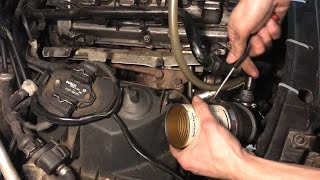
- Cracked, disconnected, or leaking vacuum/boost hoses (Very Common) — The turbo's boost control system relies on a network of small rubber and plastic hoses. Engine heat makes these hoses brittle, leading to cracks, splits, or loose connections. This is the most frequent and least expensive cause of P1556.
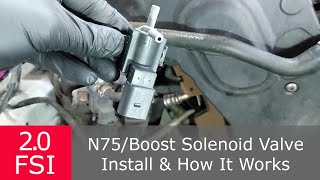
- Faulty Boost Pressure Control Solenoid (N75 Valve) (Common) — This electronic valve directs vacuum or pressure to the turbo's wastegate actuator, acting as the brain for boost control. 🎬 Watch: How to test and install the N75 valve. It fails electrically or becomes mechanically stuck, preventing it from commanding the turbo to build boost.
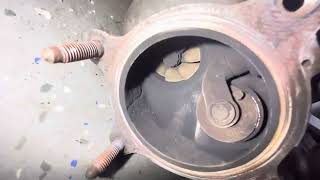
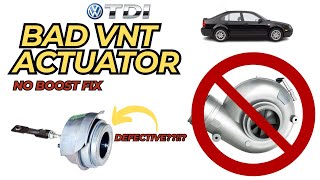
- Sticking or Seized Turbocharger Wastegate or VNT Mechanism (Common) — The wastegate controls turbo speed. On VW/Audi EA888 engines (2015+), the wastegate pivot arm notoriously seizes from corrosion, preventing it from closing. On TDI engines, the Variable Nozzle Turbine (VNT) mechanism sticks due to carbon buildup.
- Leaking or Failed Diverter/Blow-Off Valve (Less Common) — This valve releases excess boost pressure when the throttle closes. If its internal diaphragm tears (common on older 1.8T/2.0T engines) or it sticks open, it creates a constant boost leak.
- Failed Turbocharger Wastegate Actuator (Less Common) — The actuator moves the wastegate arm. The diaphragm in vacuum-operated units tears, creating a vacuum leak. Electronic actuators on newer models fail internally, losing their ability to move the arm or report position.
- Faulty Manifold Absolute Pressure (MAP) Sensor (Uncommon) — The MAP sensor measures actual boost pressure. If faulty or clogged with soot, it reports an artificially low pressure reading, tricking the ECU into reporting an underboost condition that does not mechanically exist.
- Clogged Catalytic Converter or Diesel Particulate Filter (DPF) (Uncommon) — A severe exhaust restriction downstream of the turbo prevents it from spooling up effectively. This creates backpressure that chokes the engine.
- Faulty Coolant Temperature Sensor (TDI engines) (Uncommon) — On older VW TDI engines, a faulty engine coolant temperature sensor sends incorrect data to the ECU, mistakenly triggering limp mode and an underboost code even if the boost system is mechanically sound.
Symptoms

- Significant loss of engine power — The vehicle feels sluggish, unresponsive, and much slower than usual during acceleration.
- Vehicle enters 'Limp Mode' — The ECU intentionally limits speed and engine RPM to protect the engine and turbo from damage.
- Check Engine Light or EPC Light is on — The ECU detects the fault and illuminates the Malfunction Indicator Lamp (MIL) or Electronic Power Control (EPC) light.
- Audible whooshing or hissing sound — A large leak in a boost pipe or vacuum hose sounds like rushing air from the engine bay under acceleration. 🎬 See how to perform a DIY turbo boost leak test.
- Poor fuel economy — The engine runs inefficiently without the correct air-fuel mixture, consuming 5-15% more fuel.
Diagnostic Flowchart
Tap your situation to follow the diagnostic path that matches what you're seeing on this code.
Common Fixes & Costs
- Replace cracked or broken vacuum hoses
— Parts: $10-$50, Labor: $100-$200, ~1.0 hr book time
(DIY)
: OEM - Replace Boost Pressure Control Solenoid (N75 Valve)
— Parts: $40-$150, Labor: $100-$150, ~0.8 hr book time
(DIY)
VW 1.9L TDI (ALH): OEM
VW/Audi 2.0T: OEM - Replace Diverter/Blow-Off Valve
— Parts: $60-$160, Labor: $100-$200, ~1.0 hr book time
(DIY)
VW/Audi 2.0T: OEM - Replace Turbocharger Wastegate Actuator
— Parts: $150-$350, Labor: $200-$400, ~2.0 hr book time
(Intermediate)
VW/Audi 2.0T (EA888 Gen3): OEM - Free Seized Wastegate Arm — Parts: $50-$200, Labor: $400-$800, ~4.0 hr book time (Professional)
- Replace Complete Turbocharger Assembly
— Parts: $1000-$2500, Labor: $800-$1500, ~8.0 hr book time
(Professional)
VW/Audi 2.0T (EA888 Gen3): OEM
DIY vs Professional
- Replace vacuum hoses — Beginner:
Tools: Pliers, hose cutters, flashlight. - Replace N75 Valve — Beginner:
Tools: Pliers, screwdrivers, Torx sockets. - Replace Diverter Valve — Beginner:
Tools: Allen keys, sockets, flashlight. - Free Seized Wastegate Arm — Beginner:
Tools: Penetrating oil, pry bar, wrenches. - Replace Turbocharger Assembly — Beginner:
Tools: Full mechanic's tool set, specialized line wrenches, torque wrench.
Used vs. New Parts: Buying Guide
When a used part is worth it: A used OEM turbocharger from a reputable dismantler is cost-effective for high-mileage vehicles. Never buy used wear items like hoses, diverter valves, or N75 solenoids.
Donor-vehicle mileage cap: roughly under 80000 miles for the part to have meaningful remaining life.
Donor quality checklist:
- Verify the donor vehicle was not scrapped due to engine failure.
- Check for excessive in-and-out or side-to-side shaft play on the turbine wheels.
- Inspect for cracked housings or damaged compressor fins.
Decision logic:
- If The part is electronic or a wear item (N75, Diverter Valve, hoses) → Buy new. The risk of premature failure on a used part is high.
- If The part is a complete turbocharger for a vehicle over 100K miles on a tight budget → A used OEM or professionally remanufactured unit is an acceptable compromise.
- If The vehicle is low-mileage or performance-tuned → Buy a new OEM or high-quality aftermarket turbocharger.
Warranty tradeoff: Salvage yard parts offer a 30-90 day warranty on the part only. Remanufactured turbos offer 1-2 years. New OEM parts carry a 1-2 year warranty covering labor if dealer-installed.
Worst-case if a used part fails: $800-$1500 in repeat labor costs if a used turbo fails after installation.
What Happens If You Wait — Timeline
- 0-1 month: Check Engine Light illuminates. Vehicle enters 'limp mode' during acceleration. Power is reduced, but the car is drivable for short trips. (MPG impact: 5-10%% · Added cost: $20-$80 in wasted fuel.)
- 1-3 months: Persistent limp mode makes merging unsafe. The inefficient air-fuel ratio begins to foul spark plugs and oxygen sensors. (MPG impact: 10-15%% · Added cost: $150-$400 for sensor replacement.)
- 3-6 months: The constant rich or lean condition causes the catalytic converter to overheat. The internal substrate degrades, creating an exhaust restriction. (MPG impact: 15-20%% · Added cost: $1200-$2800 for catalytic converter replacement.)
- 6+ months: Complete catalytic converter failure chokes the engine. If caused by oil starvation, catastrophic turbo failure sends metal fragments into the engine. (MPG impact: 20-30%+% · Added cost: $4000-$10000 for turbo and engine repairs.)
Cost of Not Fixing It
- 0-1 month: Persistent 'limp mode' with significant power loss and a 5-15% drop in fuel economy. Merging becomes hazardous. (Added cost: $50-$150 in extra fuel costs.)
- 1-6 months: An incorrect air-fuel ratio from a boost leak causes the catalytic converter to overheat and degrade. (Added cost: $1200-$2800 for catalytic converter replacement.)
- 6+ months: Complete catalytic converter failure. If the root cause is oil starvation, catastrophic turbo failure sends metal fragments into the engine. (Added cost: $4000-$10000 for turbo and engine replacement.)
Diagnosis Steps

- Visual Inspection of Hoses
Inspect all small vacuum lines and larger boost pipes connected to the turbocharger, intake manifold, and N75 valve. Look for cracks, splits, collapsed sections, or disconnected fittings. Pay close attention to brittle rubber elbows and plastic T-fittings.
Tools: Flashlight, Inspection Mirror (Beginner) - Test the N75 Boost Control Solenoid Electrically
Disconnect the N75 valve's electrical connector. Measure the resistance between the two pins on the valve. A healthy N75 valve reads between 25 and 35 Ohms. A reading of 0 indicates a short circuit; an infinite reading (OL) indicates an open circuit. Replace the valve if it fails this test.
Tools: Multimeter (Beginner) - Log Specified vs. Actual Boost Pressure
Graph the 'Charge Pressure Specified Value' and 'Charge Pressure Actual Value' in the engine measuring blocks. Perform a full-throttle acceleration in 3rd gear. A consistent gap where 'Actual' pressure fails to meet 'Specified' pressure confirms a mechanical underboost condition.
Tools: Advanced OBD-II Scan Tool (e.g., VCDS, OBDeleven) (Intermediate) - Check Wastegate/VNT Arm Mechanical Movement
With the engine off and cool, disconnect the turbocharger's wastegate or VNT actuator arm. Move it by hand through its full range of motion. It must move smoothly without binding. If seized, the internal mechanism is the problem (highly common on EA888 engines due to rust).
Tools: Pliers, Wrench (Intermediate) - Test Vacuum Supply and Actuator Integrity
Disconnect the vacuum hose from the wastegate actuator. Connect a handheld vacuum pump. The actuator rod must begin moving at 3-5 inHg and fully seat at 15-18 inHg. If the vacuum drops, the actuator diaphragm is torn and requires replacement.
Tools: Handheld vacuum pump with gauge (Intermediate) - Perform a Boost Leak / Smoke Test
Seal the intake system and force low-pressure, high-density smoke into it. Smoke visibly pours out of cracked hoses, leaking intercooler connections, or bad gaskets that are invisible during a visual inspection.
Tools: Automotive smoke machine (Professional) - Test the N75 Solenoid Functionally
Run an output diagnostic test on the N75 valve via a scan tool, causing it to click rapidly. Alternatively, briefly apply a 12V power source to the terminals. No click means the internal solenoid is seized.
Tools: Advanced OBD-II Scan Tool or 12V Power Source (Intermediate) - Check MAP Sensor Voltage
Back-probe the MAP sensor's signal wire with the ignition on, engine off. At sea level, it reads 4.5-4.9V (14.7 PSI). Start the engine; at idle, vacuum causes the voltage to drop to 1.0V-1.7V. If the voltage is stuck, the sensor is faulty.
Tools: Multimeter, Wiring Diagram (Professional) - Advanced: Check N75 Resistance When Hot
If underboost only occurs when the engine is hot, remove the N75 valve and heat it with a heat gun. Re-test the resistance. A reading that climbs significantly above 35 Ohms when hot indicates internal failure under heat soak.
Tools: Multimeter, Heat Gun (Advanced) - Advanced: Electronically Calibrate Wastegate Actuator
For modern engines with electronic wastegate actuators, run the 'Turbocharger Learn' basic setting. The closed-position voltage must be 3.3V-3.9V; open position 0.7V-1.0V. Values outside this range indicate a seized arm or faulty actuator.
Tools: Advanced Scan Tool (VCDS, OBDeleven) (Advanced)
When This Code Triggers (Freeze-Frame Conditions)
- Engine Load: 40-80% (Indicates the driver is demanding significant power, such as going uphill or merging.)
- RPM: 2000-4000 RPM (Triggers during moderate to heavy acceleration when the ECU requests maximum boost.)
- Engine Coolant Temp: 180-210°F (82-99°C) (The fault sets when the engine is fully warmed up and operating in closed-loop.)
- Vehicle Speed: 30-70 mph (50-110 km/h) (Logged during city or highway driving under load, rarely at idle.)
Related Codes
- P0299 — The generic SAE code for 'Turbocharger Underboost'. P1556 is the manufacturer-specific version for VW/Audi. The diagnostic procedure is identical.
- P1557 — Means 'Charge Pressure Control: Positive Deviation' (overboost). P1556 and P1557 are opposites caused by the same components failing in opposite ways.
- P1548 — Indicates 'Boost Pressure Control Valve (N75): Open Circuit'. If present alongside P1556, it directly pinpoints an electrical failure in the N75 valve or its wiring.
- P2563 — Means 'Turbocharger Boost Control Position Sensor Circuit Range/Performance'. Often accompanies P1556 on newer vehicles, indicating a seized wastegate arm or faulty electronic actuator.
Climate & Environmental Factors
- High Humidity / Road Salt (Rust Belt): Significantly increases the likelihood of the EA888 Gen3 engine's wastegate pivot arm seizing due to rust. This is a primary cause of P1556 on 2015+ VW/Audi models.
- High Ambient Heat: Accelerates the degradation of rubber and plastic components, leading to brittle vacuum hoses and cracked electrical connectors.
- High Altitude: Lowers atmospheric pressure, causing the MAP sensor's Key-On-Engine-Off voltage to read lower than at sea level. Technicians must account for this to avoid misdiagnosing the sensor.
How to Talk to a Mechanic About This Code
Say this: "I need a diagnostic for a P1556 underboost code on my VW/Audi. Please start by testing the common causes: perform a smoke test for vacuum leaks and test the N75 valve's resistance before quoting a turbo replacement."
This directs the technician to follow a logical, cost-effective diagnostic path and prevents an immediate, expensive recommendation to replace the entire turbocharger.
Avoid saying:
- 'My car feels slow and the check engine light is on.'
- 'Just fix whatever is wrong, I need it back ASAP.'
- 'My friend said it's probably the turbo, can you replace it?'
Questions to ask before authorizing the repair:
- Did the smoke test reveal any leaks? Can you show me where?
- What was the Ohm reading for the N75 valve? Was it tested when hot?
- Did you test the wastegate actuator with a vacuum pump?
- Did you confirm that the wastegate arm moves freely without seizing?
Where to Take It: Dealer vs Independent vs Chain
- Dealer:
Recommended only if the vehicle is under warranty or covered by a TSB. Otherwise, a specialist is a better value.
Best for: Vehicles under warranty or covered by the wastegate class-action settlement., Complex electrical issues requiring factory diagnostic tools (ODIS).
Downsides: Highest labor rates., More likely to recommend replacing a full turbo assembly rather than repairing a seized wastegate arm. (Typical cost: +50% vs. baseline) - Independent Shop:
Best fit. A reputable VW/Audi specialist offers expert knowledge at a lower cost than a dealer.
Best for: Out-of-warranty VW/Audi vehicles., Diagnosing and repairing common failures (N75, vacuum leaks, seized wastegate).
Downsides: Quality varies. You must find a shop that specializes in VW/Audi or German vehicles. (Typical cost: +0% vs. baseline) - Chain Shop:
AVOID. Chain shops are not equipped for the diagnostic complexity of this manufacturer-specific code.
Best for: Simple maintenance like oil changes, tires, and brakes.
Downsides: Technicians lack specialized training and tools for VW/Audi turbo systems., Very high risk of misdiagnosis and unnecessary turbo replacement. (Typical cost: -10% vs. baseline)
When to Walk Away From the Repair
If the total estimated repair cost for the P1556 fault exceeds 40-50% of your car's current private-party market value, consider walking away.
- Car worth $4000, fix is $1800: Borderline. The repair is 45% of the car's value. Get a second opinion to confirm the diagnosis before authorizing.
- Car worth $15000, fix is $1500: Fix it. The repair is 10% of the car's value and restores performance.
- Car worth $3000, fix is $3500: Walk away. The quoted repair costs more than the car is worth.
What Scan Tool You Need for This Code
Minimum: A scanner that reads VW/Audi-specific codes and graphs live data for 'Requested Boost Pressure' vs. 'Actual Boost Pressure'.
A basic $20 code reader cannot log the live data needed to confirm a real underboost condition, nor can it perform output tests to diagnose faulty valves.
Budget: OBDeleven NextGen (~$99) — Plugs into the OBD-II port and connects to a smartphone. Reads manufacturer-specific codes, graphs live data to compare specified vs. actual boost, and clears faults.
Mid-range: Foxwell NT510 Elite (with VW software) (~$180) — Offers bidirectional control to run output tests on the N75 valve and performs advanced functions like wastegate actuator calibration.
Professional: Ross-Tech VCDS (VAG-COM) (~$199-449) — The gold standard for VW/Audi diagnostics. Provides dealer-level capabilities, detailed live data, and comprehensive coding functions.
Rent vs buy: Buy. For any VW/Audi owner, a tool like OBDeleven or VCDS pays for itself by avoiding diagnostic fees and incorrect part swaps.
How to Clear the Code After You Fix It
- Clear the P1556 fault code using an OBD-II scan tool.
- Perform a complete drive cycle to run readiness monitors.
- Re-scan to confirm the code has not returned.
Drive cycle (~20 minutes): From a cold start, idle for 3 minutes with A/C on. Accelerate to 55 mph and hold steady for 5 minutes. Decelerate to 20 mph without braking. Accelerate to 60 mph and hold steady for 7 minutes. Cool down.
Readiness monitors affected: Catalyst (CAT), Oxygen Sensor (O2S), Evaporative System (EVAP), EGR System
Before emissions retest: drive at least 50 miles to fully set monitors.
Watch out for:
- Clearing the code resets all readiness monitors, causing an immediate emissions test failure.
- The code returns immediately under heavy acceleration if the mechanical fault is not repaired.
Will This Fail Emissions / State Inspection?
Yes — this code typically fails an OBD-II emissions inspection.
- California: An active P1556 Check Engine Light is an automatic failure. A full drive cycle must be completed to set readiness monitors before a re-test.
- New York: Automatically fails NYS inspection if the Check Engine Light is on. Clearing the code just before the test results in failure due to unset monitors.
- Texas: In emissions-testing counties, an illuminated Check Engine Light is an automatic failure. The test cannot be passed until OBD-II readiness monitors are set.
Most Commonly Affected Vehicles
- Volkswagen Jetta, Golf, Beetle (1.9L TDI) (1999-2006) — Highly susceptible due to vacuum leaks, failing N75 valves, and sticking VNT mechanisms from carbon buildup.
- Volkswagen / Audi Passat, A4, GTI, TT (1.8T) (1998-2005) — Frequently suffer from brittle vacuum lines, torn diverter valve diaphragms, and failing N75 valves.
- Volkswagen / Audi Golf, GTI, Jetta, A3, A4 (1.8T/2.0T EA888 Gen3) (2015-2020) — Suffer from a well-documented defect where the wastegate pivot arm seizes from corrosion, requiring specialized repair or turbo replacement.
- Ford F-250 / F-350 Super Duty (6.7L Power Stroke) (2011-2019) — P1556 is defined as 'Injector Circuit Performance' for a specific cylinder. This is an electrical fault with an injector, not a turbo problem.
- BMW 3-Series, 5-Series, X3, X5 (N52/N54/N55) (2005-2014) — P1556 means 'A Camshaft Position Actuator Control Open Circuit Bank 1', a VANOS system fault unrelated to the turbocharger.
- Toyota Various Models (2000-2015) — Indicates 'Lost Communication With Electronic Brake Control Module (EBCM)', a network error unrelated to engine performance.
- Peugeot / Citroën Various Models (HDi/THP) (2005-2015) — Indicates a fault in the turbocharger boost control circuit, similar to the VW/Audi definition.
- Seat / Skoda Leon, Octavia (TDI) (2000-2015) — Share the same P1556 causes as VW/Audi, primarily related to vacuum leaks, N75 valves, and sticking VNT mechanisms.
Manufacturer-Specific Notes
- Volkswagen / Audi: On EA888 1.8T/2.0T engines (2015+), the wastegate pivot arm seizes due to rust, causing a constant boost leak. Dealerships quote $3,500+ for a turbo replacement, but specialty shops perform a robust repair with stainless-steel parts for around $1,500.
- Volkswagen / Audi: A U.S. class-action settlement provides an extended warranty for the EA888 seized wastegate issue. It covers 50% of the repair cost at an authorized dealer for 8.5 years or 85,000 miles from the in-service date.
- Volkswagen (TDI): On ALH TDI engines, a faulty vacuum pump or a leak in the brake booster line starves the turbo's VNT actuator of vacuum, leading to underboost even if turbo components are healthy.
- Audi (V8 TFSI): Per TSB 2074303/6, a leaking switchable coolant pump contaminates the vacuum system with coolant. This prevents the turbo wastegates from functioning, presenting as a turbo fault but requiring a cooling system repair.
- General Motors / Ford: P1556 typically means 'Throttle Actuator Control (TAC) Circuit High Voltage', pointing to the electronic throttle body. On Ford Power Stroke engines, it refers to an injector circuit fault.
- BMW: P1556 is a VANOS variable valve timing system fault ('Camshaft Position Actuator Control Open Circuit Bank 1'). The fix is replacing the VANOS solenoid, completely unrelated to the turbocharger.
Real Owner Stories
2002 VW Jetta 1.9L TDI (ALH) with ~150K miles
Car entered limp mode with P1556. Owner replaced vacuum tubing, MAF sensor, and swapped the N75 solenoid with the EGR solenoid, but the code remained.
What they tried:
- Replaced vacuum tubing.
- Replaced MAF sensor.
- Swapped N75 solenoid with EGR solenoid.
Outcome: The swapped EGR solenoid was of unknown condition. The owner needed to test the vacuum on the turbo side of the N75 and manually cycle the valve with a MityVac to confirm actuator function.
Lesson: Never assume a swapped used part is good. Systematically test each component with a vacuum pump to isolate the failure.
VW Golf 1.9L TDI with 250,000 km
Persistent P1556 despite shops replacing the N75 valve, MAP sensor, vacuum tubes, and cleaning the EGR valve.
What they tried:
- Replaced N75 and MAP sensors.
- Replaced vacuum tubes.
- Cleaned EGR valve.
Outcome: The actual cause was a faulty engine coolant temperature sensor sending incorrect data to the ECU, triggering limp mode. Replacing the sensor fixed the issue.
Lesson: If all boost-related components check out, test the coolant temperature sensor. It is an inexpensive part that causes false underboost codes on older TDIs.
2019 Audi RS5 (B9) with P0299/P1556
Check engine light on. Audi replaced the water pump and vacuum lines under a TSB, then claimed the turbos were also bad.
What they tried:
- Dealer replaced water pump and vacuum lines.
- Dealer recommended full turbo replacement.
Outcome: The owner declined the turbo replacement. The root cause was the failing water pump leaking coolant into the vacuum system. Residual contamination caused the misdiagnosis of turbo failure.
Lesson: On modern Audi V8s, coolant pump failures contaminate the vacuum system. Ensure all lines are thoroughly cleaned before authorizing a turbo replacement.
VW Golf TDI 1.9 with P1556
Car had no power and failed emissions. Owner replaced the EGR valve and the entire turbocharger for $700, but the code remained.
What they tried:
- Replaced EGR valve.
- Replaced entire turbocharger.
Outcome: Replacing the N75 valve for under $100 solved the problem. The turbo began working, the code cleared, and the car passed emissions.
Lesson: Never replace the expensive turbocharger before testing and replacing the cheap N75 valve. This misdiagnosis costs owners thousands of dollars.
How to Prevent This Code From Triggering
- Periodically 'exercise' the turbo (Once a month) — Performing full-throttle accelerations moves the wastegate/VNT mechanism through its full range, preventing carbon or corrosion buildup that causes seizing.
- Use high-quality synthetic oil and change it on schedule (Every 5,000-10,000 miles) — Clean oil lubricates and cools the turbocharger's bearings. Oil starvation or breakdown is a primary cause of catastrophic turbo failure.
- Replace air filter regularly (Every 15,000-30,000 miles) — A clogged air filter restricts airflow, forcing the turbo to work harder to make boost and accelerating wear.
- Allow for proper cool-down (After every hard drive) — Idling for 30-60 seconds allows the turbo to cool down safely, preventing oil from burning onto the bearings.
Frequently Asked Questions
Does P1556 always mean I need a new turbo?
No. Complete turbo failure is one of the least likely causes. Always diagnose the cheapest problems first: vacuum leaks, the N75 boost control solenoid, and the diverter valve. A full turbo replacement is the absolute last resort.
Can a bad MAP sensor cause P1556?
Yes, but it is uncommon. If the MAP sensor incorrectly reads pressure as lower than reality, it triggers P1556. Log its voltage readings; at sea level with the key on and engine off, it should read around 4.5V, dropping to 1.0-1.7V at idle.
What is a common misdiagnosis for P1556?
The most common and costly mistake is immediately replacing the turbocharger. Technicians frequently discover the actual cause was a $5 vacuum hose, a faulty N75 valve, or a seized wastegate arm. Always test the control components before replacing the turbo.
What is an N75 valve and why does it fail?
The N75 valve is an electronic solenoid that controls the turbocharger's wastegate to manage boost pressure. They fail from internal wear, electrical faults, or contamination over time. A healthy N75 valve tests between 25 and 35 Ohms of resistance.
Can I fix a P1556 code myself?
Yes, replacing cracked vacuum hoses, the N75 valve, or the diverter valve are beginner-friendly DIY jobs. However, diagnosing a seized wastegate or replacing the entire turbocharger requires advanced tools and experience. Take the vehicle to a VW/Audi specialist for complex mechanical failures.
Why does my car go into 'limp mode' with this code?
Limp mode is a self-preservation feature programmed into the ECU. When it detects the turbo isn't building commanded pressure, it reduces engine power and limits RPMs. This protects the engine and turbocharger from catastrophic damage.
My car is a Ford Diesel and has a P1556, is it the turbo?
No. On Ford Power Stroke engines, P1556 is an injector circuit performance code for a specific cylinder. The issue lies with a fuel injector, its wiring harness, or the control module, not the turbocharger.
How can I prevent the wastegate from seizing on my VW/Audi?
Perform full-throttle acceleration periodically to move the wastegate arm through its full range of motion, delaying corrosion buildup. If repairing a seized arm, use an updated actuator rod design or a stainless steel aftermarket kit for a permanent fix.
Key Takeaways
- P1556 on VW/Audi vehicles indicates a turbo underboost condition, immediately triggering limp mode and capping engine RPMs to prevent damage.
- Inspect and replace cracked vacuum hoses and test the N75 boost control solenoid (should read 25-35 Ohms) before assuming the turbocharger has failed.
- On 2015+ VW/Audi 1.8T and 2.0T engines, a seized wastegate pivot arm is the primary cause, often covered by an 8.5-year/85,000-mile warranty extension.
- Driving with P1556 for more than 100 miles forces an incorrect air-fuel ratio that destroys the catalytic converter, adding a $1,200 to $2,800 repair bill.
Helpful Videos

The information in this article is provided for general reference and educational purposes only. Vehicle specifications, procedures, and part compatibility can vary by production date, trim level, and region. Always consult your vehicle's factory service manual and verify part numbers before purchasing or performing repairs. Safety-critical components such as airbags, seat belts, and braking systems should be installed by a qualified professional.
- 🎬 Helpful Videos
- What Does P1556 Mean?
- Can I Drive With P1556?
- Common Causes
- Symptoms
- Diagnostic Flowchart
- Common Fixes & Costs
- DIY vs Professional
- Used vs. New Parts: Buying Guide
- What Happens If You Wait — Timeline
- Cost of Not Fixing It
- Diagnosis Steps
- When This Code Triggers (Freeze-Frame Conditions)
- Related Codes
- Climate & Environmental Factors
- How to Talk to a Mechanic About This Code
- Where to Take It: Dealer vs Independent vs Chain
- When to Walk Away From the Repair
- What Scan Tool You Need for This Code
- How to Clear the Code After You Fix It
- Will This Fail Emissions / State Inspection?
- Most Commonly Affected Vehicles
- Manufacturer-Specific Notes
- Real Owner Stories
- 2002 VW Jetta 1.9L TDI (ALH) with ~150K miles
- VW Golf 1.9L TDI with 250,000 km
- 2019 Audi RS5 (B9) with P0299/P1556
- VW Golf TDI 1.9 with P1556
- How to Prevent This Code From Triggering
- Frequently Asked Questions
- Does P1556 always mean I need a new turbo?
- Can a bad MAP sensor cause P1556?
- What is a common misdiagnosis for P1556?
- What is an N75 valve and why does it fail?
- Can I fix a P1556 code myself?
- Why does my car go into 'limp mode' with this code?
- My car is a Ford Diesel and has a P1556, is it the turbo?
- How can I prevent the wastegate from seizing on my VW/Audi?
- Key Takeaways
- 🎟️ Get 5% Off