

OBD-II Code P1525: Comprehensive Master Guide
What P1525 means, why it triggers, and how to fix it for good
- P1525 is a manufacturer-specific code with at least 4 completely different definitions; always verify your specific make's definition before buying parts.
- On Ford, GM, and Mazda vehicles, P1525 usually indicates a stuck electronic throttle body, which you can fix with a $15 can of cleaner.
- For BMW, VW, and Subaru models, this code points to a VVT solenoid electrical fault, often triggered by skipping 5,000-mile oil changes.
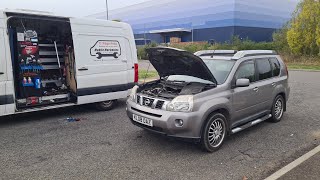
- If you drive a Nissan, P1525 is a secondary 'ghost' code disabling cruise control; look for a missing dashboard gear indicator to diagnose a faulty $250 transmission range sensor.
What Does P1525 Mean?

P1525 is a manufacturer-specific code; its definition changes based on your car's make. In Ford, Mazda, and GM vehicles, it indicates a problem with the electronic throttle control system. For BMW, Volkswagen, or Subaru, it points to an electrical issue with the camshaft timing (VVT) system. On Nissan models, it is a secondary code indicating the cruise control (ASCD) is disabled due to a primary fault, usually the transmission range sensor.
Technical definition: The SAE/OBD-II definition for P1525 varies by manufacturer. Common definitions include 'Air Bypass Valve System' (Ford, Jaguar), 'A Camshaft Position Actuator Control Open Circuit Bank 1' (BMW), 'Intake Camshaft Control Circuit Electrical Malfunction' (VW/Audi), 'Throttle Body Service Required' (GM), and 'ASCD Function' (Nissan).
Can I Drive With P1525?
Yes, But With Caution. You can drive, but your vehicle will likely enter 'limp mode,' severely limiting speed and RPMs. Get this checked immediately. Driving with a VVT fault (common in BMW/VW) causes severe engine damage costing over $2,000. Ignoring a throttle fault causes unexpected stalling in traffic. Related misfires destroy catalytic converters, a repair costing $1,000 to $3,500.
Common Causes

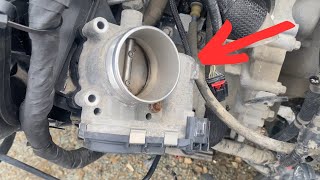
- Dirty or Jammed Throttle Body (Very Common) — Carbon and grime build up inside the throttle body, preventing the throttle plate from moving freely. This is the most frequent cause for Ford, GM, and Mazda vehicles.
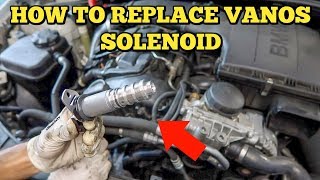
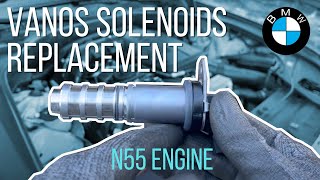
- Failed Intake Camshaft Timing Control Solenoid (VVT Solenoid) (Common) — On BMW, VW, or Subaru vehicles, this solenoid sticks due to oil sludge or fails electrically, disrupting engine timing.
- Faulty Transmission Range Sensor (Neutral Safety Switch) (Common) — On Nissan vehicles, a bad transmission range sensor fails to tell the ECU which gear the car is in. This disables the cruise control (ASCD) system, logging P1525 as a secondary code.
- Low or Contaminated Engine Oil (Common) — VVT systems rely on clean oil with correct pressure. Low, old, or sludgy oil causes VVT solenoids or phasers to stick, triggering electrical fault codes like P1525 on German and Japanese makes.
- Faulty Throttle Position Sensor (TPS) or Accelerator Pedal Position Sensor (APP) (Common) — These sensors report pedal position and throttle opening to the ECU. If they fail or their signals mismatch, the computer triggers this code and initiates limp mode.
- Wiring or Connector Issues (Less Common) — Damaged, corroded, or loose wires in the throttle body, pedal sensor, or camshaft solenoid circuits interrupt the signal. Harness issues near the intake manifold are frequent culprits.
- Vacuum Leak or Faulty Air Bypass Solenoid (Less Common) — For Mazda vehicles defining the code as 'ABV Vacuum Solenoid Circuit Malfunction', a cracked vacuum line or failed solenoid disrupts the idle air mixture.
- Faulty Engine Control Module (ECM/PCM) (Rare) — The main computer fails occasionally, but thoroughly test all sensors and wiring before authorizing this $1,000+ repair.
Symptoms

- Check Engine Light is on — The Malfunction Indicator Lamp (MIL) illuminates. Traction control or cruise control lights often flash simultaneously.
- Reduced Engine Power ('Limp Mode') — The vehicle feels sluggish and refuses to accelerate past a certain speed as the computer limits power to prevent engine damage.
- Rough or Irregular Idle — The engine runs unevenly, shakes, or stalls completely when stopped at a light.
- Poor, Delayed, or Jerky Throttle Response — Pressing the gas pedal results in a noticeable delay before the engine responds, or the car jerks violently during acceleration.
- Gear Position Indicator Missing (Nissan) — The P/R/N/D gear selection indicator disappears from the dashboard, pointing directly to a faulty transmission range sensor.
- Cruise Control Inoperative — The cruise control system refuses to engage, a primary symptom on Nissan models.
- Starting Problems — The vehicle cranks longer than usual or refuses to start entirely.
Diagnostic Flowchart
Tap your situation to follow the diagnostic path that matches what you're seeing on this code.
Common Fixes & Costs
- Cleaning the Throttle Body — Parts: $10-$20, Labor: $80-$150, ~0.8 hr book time (DIY)
- Replacing the VVT Control Solenoid
— Parts: $50-$150, Labor: $100-$200, ~1.2 hr book time
(Intermediate)
: OEM 11367585425 (Alt: {"brand": "Pierburg", "part_number": "7.06117.01.0", "price_comparison": "OEM Supplier, slightly cheaper than Genuine BM, {"brand": "Dorman", "part_number": "916-880", "price_comparison": "Budget-friendly alternative."})
: OEM 10921AA020 (Alt: {"brand": "Dorman", "part_number": "917-246", "price_comparison": "Widely available aftermarket option."}) - Replacing the Transmission Range Sensor
— Parts: $50-$150, Labor: $150-$250, ~1.5 hr book time
(Intermediate)
: OEM 31918-1XF00 (Alt: {"brand": "NGK", "part_number": "AU0203", "price_comparison": "Reputable brand, mid-range price."}, {"brand": "Delphi", "part_number": "SS11423", "price_comparison": "OEM-quality alternative."}) - Replacing the Throttle Body Assembly
— Parts: $150-$400, Labor: $100-$250, ~1.1 hr book time
(Intermediate)
: OEM DS7E-9F991-BB (Alt: {"brand": "Bosch", "part_number": "0280750576", "price_comparison": "OEM quality, identical to stock."}) - Replacing the Accelerator Pedal Position Sensor — Parts: $100-$200, Labor: $100-$200, ~0.8 hr book time (DIY)
- Replacing the Engine Control Module (ECM) — Parts: $500-$1000, Labor: $150-$300, ~1.5 hr book time (Professional)
Used vs. New Parts: Buying Guide
When a used part is worth it: Buying used makes sense for expensive electronic throttle bodies on older vehicles (10+ years) if the budget is tight. Never buy used VVT solenoids or sensors, as they are wear items.
Donor-vehicle mileage cap: roughly under 80000 miles for the part to have meaningful remaining life.
Donor quality checklist:
- Verify the donor vehicle was not scrapped for engine failure.
- Match the part number exactly; electronic components have non-interchangeable revisions.
- Inspect electrical connectors for corrosion and mechanical parts for sludge.
Decision logic:
- If The part is a VVT solenoid, TPS sensor, or Transmission Range Sensor. → Buy new OEM or premium aftermarket. Used sensors fail too quickly to justify the labor.
- If The vehicle is less than 8 years old or has under 100,000 miles. → Buy a new OEM throttle body. The reliability and warranty justify the cost.
- If The vehicle is over 10 years old and a new throttle body costs $400+. → A used throttle body from a low-mileage donor is an acceptable risk.
Warranty tradeoff: Used parts offer 30-90 day warranties. New aftermarket parts offer 1-year to lifetime warranties. New OEM parts guarantee fitment but cost the most.
Worst-case if a used part fails: 400-800 if a used part fails, requiring you to pay for a second replacement part and duplicate labor.
What Happens If You Wait — Timeline
- 0-1 month: Check Engine Light appears. VVT issues cause a brief cold-start rattle. Throttle issues cause a slightly sticky pedal or minor hesitation. (MPG impact: 0-5%% · Added cost: $0-$50 in wasted fuel)
- 1-3 months: Symptoms become consistent. The vehicle enters 'limp mode' frequently. Rough idle is constant, and stalling at stops becomes a daily risk. (MPG impact: 5-15%% · Added cost: $50-$150 in wasted fuel)
- 3-6 months: Downstream damage begins. Prolonged incorrect timing scores camshafts or stretches the timing chain. Chronic rich/lean conditions foul spark plugs. (MPG impact: 10-20%% · Added cost: $400-$1500 (spark plug replacement, early catalytic converter damage, timing component wear))
- 6+ months: Catastrophic failure. A stretched timing chain causes piston-to-valve contact, destroying the engine. The catalytic converter melts internally from incorrect air/fuel mixtures. (MPG impact: 15-25%+% · Added cost: $1500-$4000+ (catalytic converter replacement or major engine rebuild))
Cost of Not Fixing It
- 0-1 month: Annoying drivability issues like rough idle, hesitation, and being stuck in 'limp mode'. Fuel economy drops by up to 15%. (Added cost: 50-100)
- 1-6 months: Unburnt fuel from severe misfires enters the exhaust, overheating and permanently destroying the catalytic converter. (Added cost: 1200-3500)
- 6+ months: Driving with low oil or failing VVT components causes premature wear on timing chains and camshaft phasers, requiring major engine surgery. (Added cost: 1500-4000+)
Diagnosis Steps
- Read Codes & Identify the Definition
Confirm P1525 is present and check for related codes. Note the specific definition provided by the scanner for your vehicle's make (e.g., 'Air Bypass' vs. 'Camshaft Circuit'). A primary code often reveals the true cause.
Tools: OBD-II Scanner (Beginner) - Check Engine Oil Level & Condition
For vehicles where P1525 points to a camshaft issue (BMW, VW, Subaru), check your oil immediately. Low or dirty engine oil is the leading cause of VVT system malfunctions.
Tools: Dipstick, Rag (Beginner) - Verify Nissan Instrument Cluster Data
If diagnosing a Nissan, turn the key to 'On' and shift through the gears. If the P/R/N/D indicator on the dashboard does NOT change, the transmission range sensor is the culprit. This bypasses hours of cruise control diagnosis.
Tools: None (Beginner) - Clean the Throttle Body
For Ford, GM, and Mazda, a dirty throttle body is the top cause. Disconnect the intake boot and use dedicated throttle body cleaner and a soft brush to remove carbon buildup. Do not force the throttle plate open by hand.
Tools: Throttle body cleaner, socket set, rag, soft brush (Intermediate) - Test VVT Solenoid Resistance
For camshaft-related codes, measure the resistance of the VVT control solenoid. A BMW N52 VANOS solenoid reads 6-15 ohms; a Subaru AVCS solenoid reads 12.3 ohms. An infinite reading means an open circuit; near zero means a short.
Tools: Multimeter, Service Manual (Intermediate) - Test Throttle/Pedal Sensor Voltages
For throttle codes, back-probe the TPS signal wire with the key on, engine off. A healthy sensor shows a smooth voltage sweep from ~0.5V at closed throttle to ~4.5V at wide-open throttle. Gaps or spikes indicate a faulty sensor.
Tools: Multimeter, Back-probe kit, Service Manual (Advanced) - Advanced: Analyze Scan Tool Live Data PIDs
For VVT issues, monitor 'Camshaft Position Actual' vs. 'Camshaft Position Target'. Values should match closely. For throttle issues, watch 'Absolute Throttle Position' and 'APP Sensor 1/2' voltages for smooth, correlated movement.
Tools: Advanced OBD-II Scan Tool (Advanced) - Advanced: VVT Solenoid Scope Check
Back-probe the VVT connector with the engine running. Verify battery voltage on the power wire. Use an oscilloscope on the control wire to verify a Pulse Width Modulated (PWM) square wave signal from the ECM. No signal points to a wiring/ECM issue.
Tools: Oscilloscope, Multimeter, Back-probe kit (Professional)
When This Code Triggers (Freeze-Frame Conditions)
- Engine Coolant Temp: 180-210°F (The fault appears once the engine is fully warmed up and enters closed-loop operation.)
- RPM: 1500-3000 RPM (Triggers during steady-state cruising or light acceleration, rarely at idle or full throttle.)
- Engine Load: 20-50% (Occurs under moderate engine load, consistent with normal city or highway driving.)
- Vehicle Speed: 40-65 mph (Sets at constant highway speeds where VVT or electronic throttle systems actively make fine adjustments.)
Related Codes
- P2135 — P2135 indicates a specific voltage mismatch between the Throttle Position Sensor and Accelerator Pedal Sensor. If you have both, P2135 points directly to a sensor/wiring problem, whereas P1525 alone often means a dirty throttle body.
- P0011 — P1525 points to an electrical circuit problem with the VVT solenoid. P0011 indicates a mechanical timing problem (camshaft over-advanced) caused by low oil or a faulty phaser. If you have P1525, test the wiring; if P0011, check the oil.
- P0705 — On Nissans, P0705 (Transmission Range Sensor Circuit) is the primary fault that triggers the secondary P1525 code. Fixing the P0705 issue automatically resolves P1525.
- P0193 — On Hyundais, P1525 indicates a 5V reference circuit problem. Because this circuit is shared, you often see P0193 (Fuel Rail Pressure Sensor High). The fault is in the shared wiring or ECM, not the individual sensors.
Climate & Environmental Factors
- Cold Weather: Extreme cold freezes condensation inside a dirty throttle body, jamming the plate. It also shifts the internal resistance of failing VVT solenoids outside expected ranges.
- High Heat: Sustained high temperatures accelerate oil breakdown, creating sludge that clogs VVT screens. Heat also degrades plastic solenoid housings and internal sensor windings.
- Humidity: High humidity promotes corrosion on electrical connectors, causing high resistance in throttle body or VVT circuits.
How to Talk to a Mechanic About This Code
Say this: "I have a P1525 code on my [Your Car's Make]. I know this is a manufacturer-specific code. For my vehicle, it points towards the [Throttle Body / VVT System / Transmission Range Sensor]. Can you start the diagnosis there?"
This signals you've done your research, acknowledges the code's complexity, and directs the technician to the most probable cause, saving diagnostic time.
Avoid saying:
- 'My check engine light is on, can you just fix it?'
- 'I'm not sure what the code is, but the car is acting weird.'
- 'A guy online said it was the...' (Instead, state what you know about your specific vehicle)
Questions to ask before authorizing the repair:
- Can you provide a written estimate with a breakdown of parts and labor costs before starting the work?
- Based on the diagnosis, what is your confidence level that this repair solves the problem?
- What is the warranty on the parts and the labor for this specific repair?
- Are there any Technical Service Bulletins (TSBs) or warranty extensions for this issue on my vehicle?
Where to Take It: Dealer vs Independent vs Chain
- Dealer:
Recommended for in-warranty vehicles or complex VVT/electrical faults on German or Korean makes requiring specialized tools.
Best for: Vehicles under warranty, as the repair is likely covered., Complex manufacturer-specific quirks, especially on German brands (BMW, VW, Audi) or Hyundai electrical issues., Accessing secret warranties or special coverage adjustments.
Downsides: Significantly higher labor rates, often 40% more than independent shops., Tendency to replace entire assemblies (e.g., throttle body) rather than attempting a simpler fix (cleaning). (Typical cost: +40% vs. baseline) - Independent Shop:
Best overall fit. Most P1525 faults are well within the capabilities of a competent independent shop.
Best for: Out-of-warranty vehicles where cost is a major factor., Common, well-documented P1525 causes like Ford/GM throttle body issues or Nissan transmission range sensor replacement.
Downsides: Quality varies greatly; look for ASE certifications., May lack the latest manufacturer-specific diagnostic equipment for very new models. (Typical cost: +0% vs. baseline) - Chain Shop:
AVOID for diagnosing P1525. They lack the specific tools and knowledge for complex VVT or electrical diagnosis.
Best for: Basic maintenance like oil changes and tire rotations.
Downsides: Technician skill varies dramatically., High pressure to upsell unnecessary services., Likely to misdiagnose nuanced P1525 causes (e.g., blaming cruise control on a Nissan). (Typical cost: -10% vs. baseline)
When to Walk Away From the Repair
If the estimated repair cost exceeds 40-50% of the car's private-party value, consider selling or trading it in.
- Car worth $4500, fix is $350: Fix it. A throttle body or VVT solenoid replacement is well below the threshold and restores full function.
- Car worth $3000, fix is $1500: Borderline. If P1525 is caused by a failed ECM, the repair cost is 50% of the car's value. Get a second opinion.
- Car worth $2000, fix is $1500: Walk away. Spending 75% of the car's value on a single repair is not financially sound.
What Scan Tool You Need for This Code
Minimum: A scanner that reads manufacturer-specific code definitions and displays live data PIDs.
A basic $20 reader shows 'P1525' but gives the wrong definition (e.g., Ford's definition for a BMW). You need the specific meaning for your make. Live data is critical for diagnosing VVT or throttle issues.
Budget: BlueDriver Pro (~$100) — Connects to your phone and provides manufacturer-specific code definitions, freeze-frame data, and live data graphing.
Mid-range: Foxwell NT510 Elite (~$180) — A handheld unit with strong manufacturer-specific coverage. It accesses deeper systems and offers bi-directional controls to test VVT solenoids directly.
Professional: Autel MaxiCOM MK808 series (~$500-800) — Provides near dealer-level diagnostics. Offers full bi-directional control, extensive live data, and special service functions like throttle relearn procedures.
Rent vs buy: If this is a one-time fix, use a 'Loan-A-Tool' program at an auto parts store. Buy a scanner only if you plan to do your own diagnostics regularly.
How to Clear the Code After You Fix It
- Use an OBD-II scan tool to clear the P1525 code.
- Perform a throttle relearn procedure if you replaced the throttle body or pedal sensor.
- Complete a full drive cycle to allow onboard diagnostics to run and verify the repair.
Drive cycle (~20 minutes): Start the engine cold (below 122°F). Idle for 3 minutes. Drive 10 minutes in stop-and-go city traffic (25-45 mph). Finish with 5 minutes of steady highway cruising (55-60 mph).
Readiness monitors affected: Catalyst Monitor, EVAP System Monitor, O2 Sensor Monitor
Before emissions retest: drive at least 50 miles to fully set monitors.
Watch out for:
- Clearing the code without performing a drive cycle results in an automatic emissions test failure due to 'Not Ready' monitors.
- Disconnecting the battery to clear the code resets all monitors and radio presets, and often fails to clear permanent codes.
- The EVAP monitor requires the fuel tank to be between 15% and 85% full to run.
Will This Fail Emissions / State Inspection?
Yes — this code typically fails an OBD-II emissions inspection.
- California: An illuminated Check Engine Light is an automatic failure. All readiness monitors must be 'Ready' before a re-test.
- New York: Fails NYVIP3 OBD-II inspection if the Check Engine Light is on. 2001+ vehicles are allowed only one 'Not Ready' monitor.
- Texas: Automatic failure with an illuminated MIL. You are allowed one 'Not Ready' monitor (two for 1996-2000 models) to pass.
Most Commonly Affected Vehicles
- Ford Focus, Fiesta, Mondeo (2008-2018) — Highly prone to electronic throttle body failures, the primary cause of P1525 on these models.
- Nissan Qashqai, X-Trail, Rogue (2009-2020) — P1525 is a secondary code for disabled cruise control, triggered by a bad transmission range sensor.
- BMW Various with N52/N54/N55 engines (2006-2015) — Indicates an open circuit in the VANOS (camshaft position actuator) solenoid circuit.
- Chevrolet Cruze, Sonic, Aveo (2009-2016) — Code means 'Throttle Body Service Required', pointing directly to a dirty or failed electronic throttle body.
- Volkswagen/Audi Various with TFSI/TSI engines (2008-2018) — Points to an electrical malfunction in the intake camshaft control circuit (VVT system).
- Hyundai Accent, Elantra (2003-2011) — Indicates 'Sensor Supply Voltage 2 - High Input', an electrical issue in the 5V reference circuit shared by the accelerator and rail pressure sensors.
- Mazda 3, 6, CX-5 (2009-2016) — Relates to electronic throttle control systems or the 'ABV Vacuum Solenoid Circuit'.
- Subaru Forester, Impreza, Outback (2005-2018) — Points to an electrical fault in the AVCS (Active Valve Control System) oil control solenoid circuit.
- Toyota Yaris, Prius (2004-2015) — Indicates a 'Resolver Circuit Malfunction' related to the hybrid motor position sensor, or an airbag controller communication error.
Manufacturer-Specific Notes

- Nissan: P1525 is a 'ghost' code indicating cruise control is disabled. It is triggered by an unrelated primary problem, like a bad transmission range sensor, which puts the car in limp mode. Diagnosing the cruise control system is a waste of time.
- BMW/VW/Audi: P1525 points to an electrical malfunction in the intake camshaft control solenoid circuit. BMW issued a warranty extension (10 years/unlimited miles) for VANOS adjustment unit failures on some 6-cylinder engines (Bulletin B01 10 14).
- Ford/Mazda/GM: The code relates to electronic throttle control, usually caused by a dirty throttle body. GM issued Special Coverage Adjustment #14582, extending the throttle body warranty to 10 years/120,000 miles for many 2008-2012 models.
- Hyundai: The code points to a 'Sensor Supply Voltage 2 - High Input' problem. This is a fault with the ECM's 5V power supply circuit that feeds multiple sensors, causing the ECU to lock engine speed at 1200 RPM.
- Subaru: P1525 points to an electrical issue with the AVCS oil control solenoid or its wiring. Low or dirty oil is a frequent contributing factor. A healthy Subaru solenoid measures exactly 12.3 ohms.
Real Owner Stories
2015 Nissan Rogue at 110K miles
Check Engine Light illuminated, cruise control stopped working, and the 'D' gear indicator on the dash disappeared. The car drove fine but felt sluggish.
What they tried:
- Initially suspected a cruise control or transmission computer problem.
Outcome: A forum search revealed the Transmission Range Sensor was the root cause. The owner replaced the sensor (Part #31918-1XF00). The gear indicator returned, cruise control worked, and P1525 cleared.
Lesson: On Nissans, P1525 is a secondary code. If the gear position indicator is missing, replace the Transmission Range Sensor, not the cruise control components.
2011 BMW 328i (N52 engine) at 85K miles
Car exhibited a rough idle when cold and hesitated during acceleration. Check Engine Light showed code P1525.
What they tried:
- Cleaned the VANOS solenoids with brake cleaner and swapped intake/exhaust positions. The code returned.
- Performed an oil change, but the issue persisted.
Outcome: Replaced both VANOS solenoids with new OEM parts (BMW Part #11367585425). The 30-minute replacement permanently resolved the rough idle and cleared the code.
Lesson: For BMWs, P1525 points to the VANOS system. Cleaning solenoids is a temporary band-aid; replacement is the permanent fix.
2014 Ford Focus 2.0L at 75K miles
Vehicle entered limp mode with an 'Engine Malfunction' message, zero acceleration, and a rough idle. Scanner showed P1525.
What they tried:
- Replaced the throttle body assembly three times with aftermarket parts over 18 months, but the problem kept returning.
Outcome: Investigation revealed a previous owner poorly repaired two wires in the throttle body harness. Properly repairing the damaged wires restored throttle function permanently.
Lesson: If replacing a part multiple times fails, the issue is in the wiring harness or connector. Ford Focus models are notorious for throttle body grounding issues.
2013 Chevy Cruze 1.4T at 199K miles
Vehicle entered limp mode with a flashing Check Engine Light and 'Service Stabilitrak' message. The car shook violently.
What they tried:
- Replaced the O2 sensor, coil pack, and turbo for unrelated issues prior to this event.
Outcome: Replaced the throttle body assembly. GM has a Special Coverage Adjustment (#14582) for this exact issue on 2008-2012 models, though this car was outside the mileage limit.
Lesson: Always check for manufacturer TSBs or warranty extensions. GM throttle body faults are a known defect with specific repair programs.
How to Prevent This Code From Triggering
- Perform regular oil changes with high-quality, manufacturer-spec oil (Every 5,000 miles) — Clean oil of the correct viscosity prevents sludge from clogging the fine mesh screens on VVT solenoids, avoiding timing faults.
- Clean the electronic throttle body (Every 30,000-50,000 miles) — Removes carbon and oil vapor buildup from the PCV system, preventing the throttle plate from sticking and triggering limp mode.
- Inspect and clean electrical connectors (During other maintenance) — Prevents high resistance or open circuits caused by corrosion. Applying dielectric grease blocks moisture intrusion in VVT and throttle body harnesses.
Frequently Asked Questions
Can I just clear the P1525 code and keep driving?
You can clear the code, but it returns immediately if the underlying problem remains. Ignoring it causes stalling, unpredictable acceleration, or limp mode. Continued driving risks expensive downstream engine or catalytic converter damage.
What is the most common misdiagnosis for P1525?
On Nissan vehicles, the most common mistake is replacing the cruise control (ASCD) system. P1525 is almost always a secondary code caused by a primary fault like a bad transmission range sensor. Fixing the primary fault automatically restores cruise control.
How much does it cost to fix a P1525 code?
Costs range from $15 for DIY throttle body cleaner to $350 for shop-replaced VVT solenoids. A Nissan transmission range sensor replacement averages $250. Replacing a failed engine control unit exceeds $1,200.
Can cold weather trigger a P1525 code?
Yes, extreme cold freezes condensation inside a dirty throttle body, causing the plate to stick. It also shifts the internal resistance of failing VVT solenoids outside their expected range. Both scenarios trigger the P1525 fault.
My scanner says P1525 is an 'Air Bypass Valve', but my car is a BMW. What's wrong?
Your scanner is displaying the generic Ford definition instead of the BMW-specific one. On a BMW, P1525 indicates an open circuit in the VANOS (camshaft) solenoid. Always use a scanner capable of reading manufacturer-specific codes.
What does P1525 F3 mean on a Nissan scanner?
The 'F3' suffix is proprietary scanner data indicating the specific sub-fault type. The core P1525 code remains the same, pointing to the ASCD (cruise control) function being disabled. Focus your diagnosis on finding the primary fault, like a bad transmission range sensor.
Why did P1525 appear after I replaced a different part?
Replacing a throttle body or sensor requires a specific 'throttle relearn' procedure. If you skip this step, the ECU rejects the new part's parameters and sets a code. Disconnecting the battery for 15 minutes often forces the relearn.
Could a bad catalytic converter cause P1525?
No, a bad catalytic converter does not trigger a P1525 code. However, severe engine misfires caused by P1525 timing issues dump unburnt fuel into the exhaust, destroying the converter over time. A severely clogged converter also mimics limp mode symptoms.
Key Takeaways
- P1525 is a manufacturer-specific code with at least 4 completely different definitions; always verify your specific make's definition before buying parts.
- On Ford, GM, and Mazda vehicles, P1525 usually indicates a stuck electronic throttle body, which you can fix with a $15 can of cleaner.
- For BMW, VW, and Subaru models, this code points to a VVT solenoid electrical fault, often triggered by skipping 5,000-mile oil changes.
- If you drive a Nissan, P1525 is a secondary 'ghost' code disabling cruise control; look for a missing dashboard gear indicator to diagnose a faulty $250 transmission range sensor.
Helpful Videos

The information in this article is provided for general reference and educational purposes only. Vehicle specifications, procedures, and part compatibility can vary by production date, trim level, and region. Always consult your vehicle's factory service manual and verify part numbers before purchasing or performing repairs. Safety-critical components such as airbags, seat belts, and braking systems should be installed by a qualified professional.
- 🎬 Helpful Videos
- What Does P1525 Mean?
- Can I Drive With P1525?
- Common Causes
- Symptoms
- Diagnostic Flowchart
- Common Fixes & Costs
- Used vs. New Parts: Buying Guide
- What Happens If You Wait — Timeline
- Cost of Not Fixing It
- Diagnosis Steps
- When This Code Triggers (Freeze-Frame Conditions)
- Related Codes
- Climate & Environmental Factors
- How to Talk to a Mechanic About This Code
- Where to Take It: Dealer vs Independent vs Chain
- When to Walk Away From the Repair
- What Scan Tool You Need for This Code
- How to Clear the Code After You Fix It
- Will This Fail Emissions / State Inspection?
- Most Commonly Affected Vehicles
- Manufacturer-Specific Notes
- Real Owner Stories
- 2015 Nissan Rogue at 110K miles
- 2011 BMW 328i (N52 engine) at 85K miles
- 2014 Ford Focus 2.0L at 75K miles
- 2013 Chevy Cruze 1.4T at 199K miles
- How to Prevent This Code From Triggering
- Frequently Asked Questions
- Can I just clear the P1525 code and keep driving?
- What is the most common misdiagnosis for P1525?
- How much does it cost to fix a P1525 code?
- Can cold weather trigger a P1525 code?
- My scanner says P1525 is an 'Air Bypass Valve', but my car is a BMW. What's wrong?
- What does P1525 F3 mean on a Nissan scanner?
- Why did P1525 appear after I replaced a different part?
- Could a bad catalytic converter cause P1525?
- Key Takeaways
- 🎟️ Get 5% Off