

P1524 on 2018-2021 Jeep Grand Cherokee: Oil Pressure and Camshaft Disabled Fixes
This code usually means your oil level is low, or you're using the wrong oil or a cheap oil filter. Start by checking your oil and changing it with an OEM Mopar filter. If that doesn't work, the oil pressure sensor is the next likely culprit, which is a more involved repair, especially on the 3.6L V6.
- Do not ignore this code. Stop driving immediately to prevent potential engine damage.
- The first and cheapest step is to check your oil level and ensure you are using a high-quality, OEM-spec oil filter (Mopar is recommended).
- On the popular 3.6L V6 engine, the most likely failed part after an oil change is the oil pressure sensor, but it is a labor-intensive repair.
- This code is often accompanied by P06DD, reinforcing that the issue is related to the oil pressure system.
What's Unique About the 2018-2021 Jeep GRAND CHEROKEE

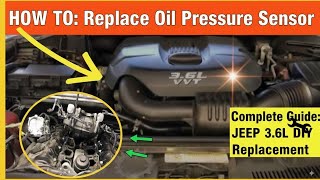
On the common 3.6L Pentastar V6 engine, the issue is often complicated by the location of the oil pressure sensor. It is buried deep in the 'V' of the engine, underneath the upper and lower intake manifolds. 🎬 Watch: Step-by-step guide to replacing the 3.6L oil pressure sensor. This turns a simple sensor replacement into a significant, labor-intensive job requiring several hours. Additionally, Chrysler/Jeep/Dodge engines are notoriously sensitive to oil filter quality, with non-OEM or incorrect filters frequently causing pressure-related codes like P1524. TSB S2109000001 specifically calls out checking for recently installed aftermarket oil filters as a primary diagnostic step.
Diagnostic Flowchart
Tap your situation to follow the diagnostic path that matches what you're seeing on this vehicle.
Symptoms You May Notice
- Check Engine Light (MIL) illuminated
- Reduced engine power or sluggish acceleration
- Rough or unstable idle
- Engine may produce ticking or rattling noises, especially between 1500-2000 RPM.
- Message on the dash indicating low oil pressure
- Inability to use remote start feature.
- Replacing VVT solenoids (phasers) without first checking the fundamental oil pressure and quality. The code disables the VVT system due to a pressure issue, not necessarily a fault with the solenoids themselves.
Most Likely Causes

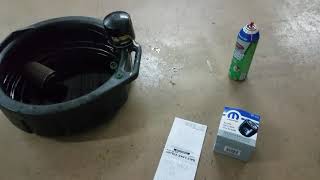
- Incorrect or Clogged Oil Filter 🔴 High Probability Chrysler/Jeep engines are known to be sensitive to oil filter quality. Aftermarket or incorrect filters (e.g., Fram, K&N, Amsoil, or generic shop brands like 'Carguard') can have poor bypass valve performance or construction, leading to pressure drops that trigger P1524, often immediately after an oil change. 🎬 See how a cheap oil filter can trigger code P1524. TSB S2109000001 directly points to checking for aftermarket filters.
How to confirm: Inspect the installed oil filter. If it is not a Mopar or equivalent high-quality OEM-spec filter (like Wix or Purolator), it is highly suspect. Many owners on forums report the code appearing after an oil change at a quick-lube shop.
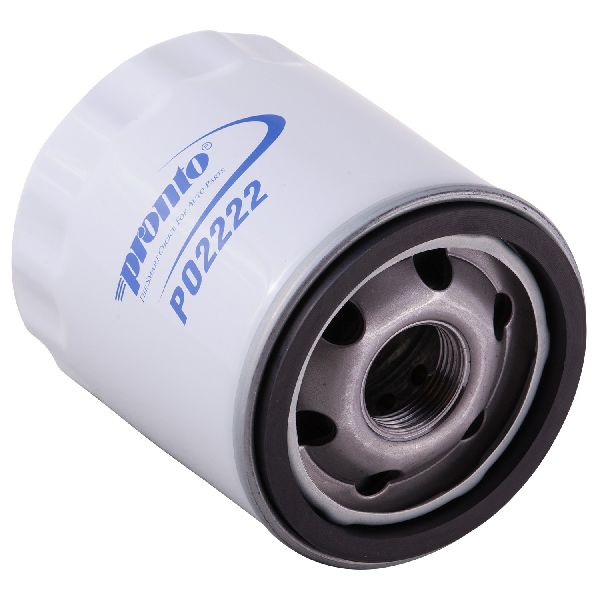
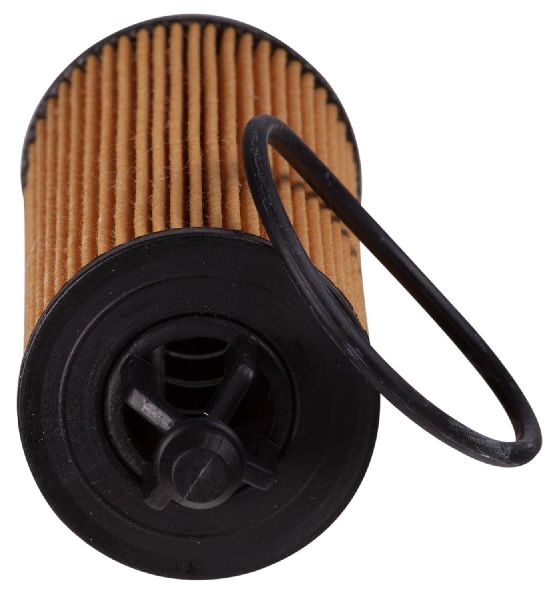
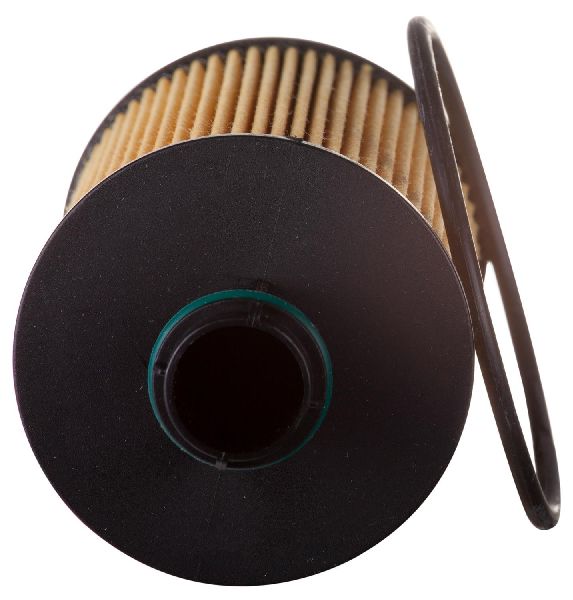
Typical fix: Perform an oil change using the correct viscosity oil and a high-quality OEM (Mopar) filter. Many owners have fixed the code with just a filter change.
Est. part cost: $15-$30 for an OEM filter - Low Engine Oil Level 🔴 High Probability Can be caused by leaks from known weak points like the oil filter housing/cooler assembly on the 3.6L engine, which is made of plastic and prone to cracking.
How to confirm: Check the engine oil dipstick when the engine is cold and on a level surface. The level should be at the 'Full' mark.
Typical fix: Top up the oil to the correct level. If the level is low, inspect for leaks, paying close attention to the oil filter housing assembly.
Est. part cost: $10-$20 for a quart of oil - Failing Oil Pressure Sensor 🟡 Medium Probability
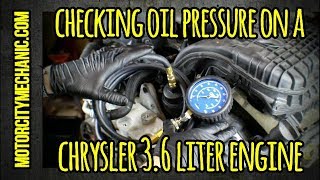
How to confirm: After confirming oil level and quality are correct, the sensor is the next suspect. A definitive test involves comparing the sensor's reading on a scan tool to a mechanical oil pressure gauge. 🎬 Watch: How to properly test oil pressure on Pentastar engines. However, given the part's high failure rate and difficult access on the 3.6L, it's often replaced if the intake is already off for other service.
Typical fix: Replace the oil pressure sensor. On the 3.6L V6, this requires removing the upper and lower intake manifolds. On the 5.7L Hemi, the sensor is more accessible, located near the oil filter housing.
Est. part cost: $30-$60 - Incorrect Oil Viscosity or Degraded Oil 🟡 Medium Probability Using oil thicker or thinner than specified (e.g., 5W-30 instead of 5W-20) can cause the pressure to be out of the range expected by the PCM. Old, degraded, or foamy oil can also lose its pressure-holding capability.
How to confirm: Check service records or the oil cap to verify the correct oil is being used. If the oil is very dark, past its change interval, or appears aerated/foamy on the dipstick, it should be replaced.
Typical fix: Change the engine oil and filter with the manufacturer-specified viscosity (typically 5W-20 or 0W-20 depending on the engine and year) and an OEM filter.
Est. part cost: $50-$90 for oil and filter - Failing Oil Pump ⚪ Low Probability
How to confirm: This is confirmed by measuring the oil pressure directly with a mechanical gauge. If the pressure is actually low across the RPM range (e.g., not building past ~30-35 psi when revved to 3000 RPM) and all other causes are ruled out, the pump is likely at fault.
Typical fix: Replace the engine oil pump. This is a major repair that often involves removing the oil pan.
Est. part cost: $150-$300
Rare But Worth Checking
- Clogged Oil Passages: In engines with a history of poor maintenance or sludge buildup, oil passages to the VVT solenoids or cylinder heads can become restricted, causing localized pressure drops.
- Damaged Wiring Harness: The wiring or connector for the oil pressure sensor can become damaged, especially on the 3.6L engine where it is buried in the valley. Rodents can chew on wires in this area, causing short circuits or open connections that lead to false readings.
Diagnosis Steps
- Check the engine oil level using the dipstick. Top up if low and re-test.
- Verify the last oil change used the correct oil viscosity (e.g., 5W-20) and a high-quality, OEM-spec oil filter. If an aftermarket filter is installed (especially from a quick-lube shop), perform an oil and filter change using Mopar parts as the first step.
- Scan for other codes. If P06DD, P0520, or P0521 are present, it further points towards a pressure sensing or delivery issue.
- For advanced diagnosis, connect a mechanical oil pressure gauge to verify the actual engine oil pressure. Expected pressure is a minimum of 4-8 psi at hot idle and 25-80+ psi at 3000 RPM. Crucially, pressure must exceed ~42 psi for VVT to enable. If the gauge shows pressure is good but the dash/scanner shows it's low, the sensor is bad.
- If the mechanical gauge confirms low pressure, the problem is mechanical (oil pump, clogged passages, internal engine wear).
- If the code returns after an oil/filter change and pressure is mechanically verified as good, the next logical step is to replace the oil pressure sensor. On the 3.6L V6, this is a significant job requiring intake manifold removal.
- While the intake is off (on the 3.6L), inspect the sensor's wiring harness for any signs of damage, such as from rodents.
Parts You'll Likely Need

- Engine Oil Pressure Sensor
(OEM #05149062AB (supersedes 05149062AA))— This sensor is a common failure point and provides the data that triggers the code. The part number has been updated, indicating a potential revision.
Trusted brands: Mopar
OEM price range: $40-$70
Aftermarket price range: $25-$45 - Engine Oil Filter
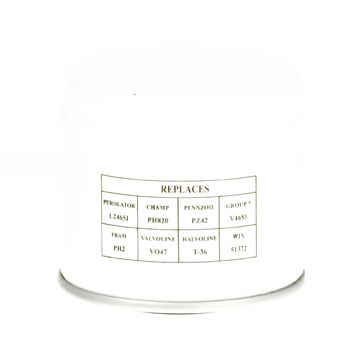
(OEM #Contact dealer with VIN)— Using a non-OEM or poor quality filter is a very common cause of this code on Jeep/Chrysler/Dodge vehicles. Sticking with the Mopar filter is the safest bet.
Trusted brands: Mopar, Wix, Purolator
OEM price range: $15-$30
Aftermarket price range: $5-$15 - Intake Manifold Gasket Set (3.6L V6)
(OEM #05281823AA (Upper), 68232614AA (Lower))— Required when replacing the oil pressure sensor on the 3.6L V6, as the upper and lower intake manifolds must be removed. These should always be replaced, not reused.
Trusted brands: Mopar, Fel-Pro (MS97204), Mahle (MS19879)
OEM price range: $50-$80
Aftermarket price range: $30-$50
Related Codes That Often Appear With This One
- P06DD — This code means 'Engine Oil Pressure Control Circuit Stuck Off'. It often appears with P1524 because both relate to the engine's dual-stage oil pump and pressure regulation system. Seeing both strongly points to a core oil pressure problem.
- P0520 — This code indicates a general 'Engine Oil Pressure Sensor/Switch Circuit' fault. It can appear alongside P1524 as the sensor is the primary source of the pressure reading for the PCM.
- P0521 — This code for 'Engine Oil Pressure Sensor Range/Performance' often accompanies P1524, indicating the sensor's readings are illogical or inconsistent, even if the circuit isn't completely failed.
Technical Service Bulletins (TSBs) & Recalls
- S2109000001: 'Customer may complain of a MIL lamp on. Upon further investigation there could be a fault code in the PCM for P1524... If the customer is experiencing the above conditions, check to see if the customer recently had the oil filter changed and had an AMSOIL brand oil filter installed.' The TSB advises replacing the filter with a Mopar part and clearing the code.
Platform-Specific Known Issues

- On the 3.6L Pentastar engine, the oil pressure sensor is located under the lower intake manifold, making replacement a 4-6 hour job for a professional or experienced DIYer.
- The integrated oil filter and cooler housing on the 3.6L engine is made of plastic and is a known failure point, often developing leaks. It also contains internal bypass valves that can fail and cause pressure issues.
Mechanic-Grade Diagnostic Values
- 3.6L Oil Pressure Sensor Connector Voltage Test — expected: With the key on and engine off, test the connector pins: The pin towards the driver's side should have 5V reference. The pin towards the passenger's side is ground and should show ~12V when tested against the battery positive terminal. The center pin is the signal wire.. Failure: Absence of 5V reference or a bad ground indicates a wiring or PCM issue, not a sensor failure.
- Engine Oil Pressure (Scan Tool or Mechanical Gauge) — expected: Normal operating pressure is approximately 40-41 PSI at hot idle and 55-65 PSI while cruising. The VVT system requires pressure to exceed ~42 PSI to become enabled and must remain above 31 PSI to stay active.. Failure: Pressure that is stuck low (e.g., 30-35 PSI) regardless of RPM, or pressure that does not rise above the 42 PSI threshold when revved, will trigger P1524.
Wiring & Ground Locations
- 3.6L Oil Pressure Sensor — Located deep in the engine valley, underneath the upper and lower intake manifolds. It is screwed into the oil filter/cooler housing assembly, just below the oil temperature sensor.. This is the sensor that provides the pressure reading to the PCM. Its inaccessible location makes diagnosis and replacement labor-intensive.
- 5.7L Oil Pressure Sensor — Located on the engine block, near the oil filter housing. It is accessible from underneath the vehicle after removing a splash shield.. This is the sensor providing the pressure reading. Its location is far more accessible than on the 3.6L V6, making replacement much simpler.
- 3.6L Oil Pressure Sensor Connector — A 3-pin connector attached to the sensor in the engine valley. Pinout (facing connector): Pin on driver's side is 5V supply, center is signal, pin on passenger's side is ground.. Confirming power and ground at this connector is a critical step to rule out a wiring harness issue before undertaking the difficult job of replacing the sensor itself. Rodent damage is common in this area.
Real Owner Repair Stories
- Reddit user Original-Shock-3349 (Ram 1500 (shared engine/code logic)) — Check engine light for P1524, oil pressure stuck at 35 PSI regardless of RPM.
❌ Tried (didn't work) Considered taking it to a dealer, assuming a simple oil/filter change wouldn't work.
✅ What actually fixed it Replacing a generic 'Carguard' oil filter with an OEM Mopar filter and fresh oil. Oil pressure immediately returned to a normal 55-60 PSI while driving. - RamForum.com user (Ram 1500, 102,000 miles) — P1524 code appeared. Oil pressure was low: 26 PSI at idle, 34 PSI on the highway.
❌ Tried (didn't work) Replacing the oil pressure sensor did not fix the problem.
✅ What actually fixed it The owner had been using a standard Wix 57060 oil filter. Replacing it with a Wix 57060XP (a different model from the same brand) immediately restored oil pressure to 55 PSI on the highway and 41 PSI at idle, clearing the code. - YouTube video by user Dan (2016 Ram 1500 5.7L Hemi) — P1524 code with a strange rattling/vibration noise between 1500-2000 RPM.
❌ Tried (didn't work) Replacing the oil pressure sensor., Replacing the PCV valve., Using Amsoil oil with an Amsoil filter.
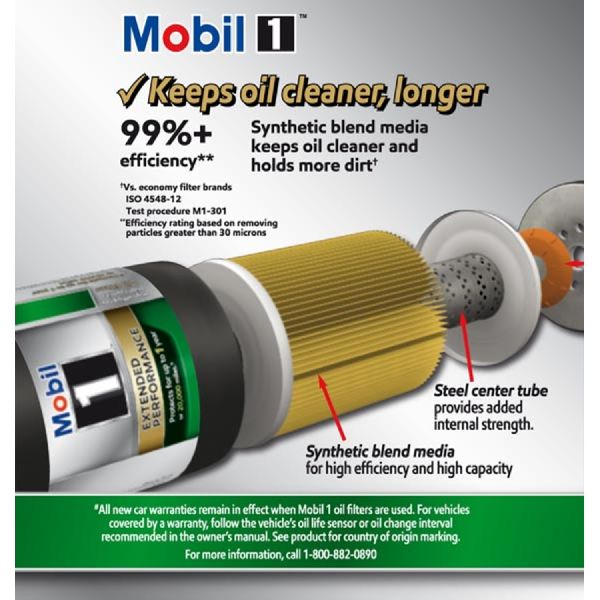
✅ What actually fixed it Switching back to Valvoline full synthetic oil and a Mobil 1 oil filter resolved the code. The issue was attributed to the specific oil filter brand being too restrictive or incompatible.
"I Checked Everything" — The Actual Cause
- The equivalent scenario for this code is when a mechanical gauge confirms oil pressure is good, but the P1524 code persists. In multiple documented cases, the root cause was not a faulty sensor or wiring, but an incompatible or poor-quality oil filter. The filter created a pressure differential or reading anomaly at the sensor that was not reflective of the true system pressure, leading to a false code. Replacing the filter with an OEM Mopar part resolved the issue.
When the Usual Fixes Don't Work
- While the oil pressure sensor is a common cause, multiple owner accounts provide strong counter-evidence against replacing it as the first step after an oil change. In several cases, a brand new sensor failed to fix the P1524 code. The problem was only resolved after replacing a recently installed aftermarket oil filter (including reputable brands like Wix) with a different filter, often an OEM Mopar part. This suggests that even if the sensor is the 'messenger,' the filter is frequently the root cause of the bad news, and should be addressed first.
OEM Part Supersession History
05149062AA→05149062AB— Part revision/update by manufacturer.
Heads up: None. 05149062AB is the correct and current direct replacement. Other superseded numbers include 56044777AA and 68060337AA.
Model Year Variations Within This Range
- 2018-2021: The recommended oil viscosity for the 3.6L V6 engine may vary. While 2018 models often specified SAE 5W-20, later models in this range (particularly 2019+) may specify SAE 0W-20. Using an oil viscosity that is thicker or thinner than what the PCM is calibrated for can directly cause the oil pressure to be 'out of range' and trigger P1524. Always confirm the correct viscosity on the oil cap or in the owner's manual for the specific model year.
Helpful Videos
Used OEM Parts in Stock


New Aftermarket Parts Available


The information in this article is provided for general reference and educational purposes only. Vehicle specifications, procedures, and part compatibility can vary by production date, trim level, and region. Always consult your vehicle's factory service manual and verify part numbers before purchasing or performing repairs. Safety-critical components such as airbags, seat belts, and braking systems should be installed by a qualified professional.
- Jeep GRAND CHEROKEE:
- 🎬 Helpful Videos
- 🛍️ Shop This Part
- What's Unique About the 2018-2021 Jeep GRAND CHEROKEE
- Diagnostic Flowchart
- Symptoms You May Notice
- Most Likely Causes
- Rare But Worth Checking
- Diagnosis Steps
- Parts You'll Likely Need
- Related Codes That Often Appear With This One
- Technical Service Bulletins (TSBs) & Recalls
- Platform-Specific Known Issues
- Mechanic-Grade Diagnostic Values
- Wiring & Ground Locations
- Real Owner Repair Stories
- "I Checked Everything" — The Actual Cause
- When the Usual Fixes Don't Work
- OEM Part Supersession History
- Model Year Variations Within This Range
- 🎟️ Get 5% Off