

P1524 on 2018-2021 Dodge Durango: Oil Pressure and Cam Timing Fixes
Code P1524 on a Dodge Durango almost always points to an oil-related issue. Before buying any parts, check your oil level and ensure you are using a high-quality or OEM Mopar oil filter. A simple oil and filter change often resolves the problem for under $100. Aftermarket filters, even from reputable brands, are a known cause of this specific code.
- P1524 means your engine's oil pressure is too low for the VVT system, which the car has disabled to protect itself.
- The most common fix is the simplest: check your oil level and perform an oil change using the correct oil and an OEM Mopar filter.
- Do not immediately assume a sensor is bad. Rule out basic maintenance items (oil level, oil filter) first to avoid unnecessary expense.
- Driving with this code active is risky; low oil pressure can cause serious and expensive engine damage.
- If a proper oil and filter change doesn't fix it, the next logical step is to replace the oil pressure sensor.
What's Unique About the 2018-2021 Dodge DURANGO
Dodge engines, particularly the Hemi and Pentastar found in the Durango, are known to be sensitive to oil quality and filter type. Using aftermarket oil filters that lack the correct internal bypass valve pressure or flow characteristics is a very common cause of this code. A Technical Service Bulletin (TSB) specifically calls out at least one aftermarket brand, AMSOIL, as a potential cause for this code, instructing technicians to replace it with a Mopar filter if found. Many owners report that switching from a generic or even a premium aftermarket filter to an OEM Mopar filter resolves the P1524 code immediately after an oil change.
🎬 Watch: How a simple oil change can fix code P1524Diagnostic Flowchart
Tap your situation to follow the diagnostic path that matches what you're seeing on this vehicle.
Symptoms You May Notice
- Check Engine Light is on
- Message on the dashboard indicating low oil pressure
- Remote start may fail to keep the engine running
- Noticeable change in engine sound or a slight vibration, sometimes described as a rattle or drone between 1500-2000 RPM.
- Reduced engine performance or hesitation.
- Multi-Displacement System (MDS) will not activate, meaning the engine will not switch to 4-cylinder mode.
- Replacing the camshaft position sensors. This code is about the oil pressure required to operate the cam phasing system, not the sensors that report the cam's position.
- Replacing VVT solenoids. While related to the VVT system, the code specifically points to the oil pressure being out of range *before* the solenoids are even commanded to operate. The solenoids are the victims of the low pressure, not the cause.
Most Likely Causes
- Incorrect or Low-Quality Oil Filter 🔴 High Probability These engines are sensitive to oil filter specifications. Aftermarket filters may have incorrect bypass pressure ratings or restrictive flow media, causing a pressure drop that triggers the code. TSB S2109000001 specifically identifies certain aftermarket filters as a potential cause.
How to confirm: Inspect the installed oil filter. If it is not an OEM Mopar part, it is highly suspect. Brands mentioned by owners as causing issues include Fram and other quick-lube replacements.
Typical fix: Perform an oil change using the correct viscosity oil and an OEM Mopar oil filter. Mopar part number for the 3.6L V6 is typically 68191349AC (or MO-349), and for the 5.7L Hemi is often 4892339AB (or MO-339).
Est. part cost: $40-$90 - Low Engine Oil Level 🔴 High Probability All engines consume some oil over time, and a low level is the simplest cause of low pressure. This is the first thing to check.
How to confirm: Check the engine oil dipstick when the engine is cold and on a level surface.
Typical fix: Top off the oil to the full mark with the manufacturer-specified viscosity (e.g., 5W-20 for the 5.7L Hemi, 5W-20 or 0W-20 for the 3.6L Pentastar depending on the year - check your owner's manual).
Est. part cost: $10-$20 - Dirty or Incorrect Viscosity Engine Oil 🟡 Medium Probability Old, degraded, or sludged oil can clog passages and the oil filter, reducing pressure. Using the wrong weight (e.g., 0W-20 instead of 5W-20 where specified) can also cause pressure to fall out of the required range.
How to confirm: Check the vehicle's service history or inspect the oil's condition on the dipstick. If it's dark, thick, foamy, or past its change interval, it should be replaced.
Typical fix: Perform an oil change with a high-quality synthetic oil of the correct viscosity as specified in the owner's manual, using an OEM Mopar filter.
Est. part cost: $40-$90 - Faulty Engine Oil Pressure Sensor 🟡 Medium Probability The sensor itself can fail, providing inaccurate readings to the PCM. This is a common failure point on many Chrysler/Dodge/Jeep vehicles.
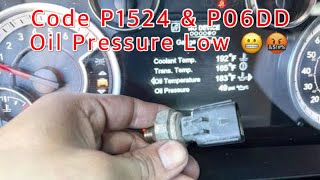
How to confirm: With a scan tool, compare the sensor's pressure reading to a reading from a mechanical oil pressure gauge. If the readings differ significantly, the sensor is likely bad. The sensor for the 5.7L Hemi is located on the front of the engine, near the passenger side, just above the oil filter. 🎬 See this 5.7L Hemi oil pressure sensor replacement walkthrough For the 3.6L V6, the sensor is located in the engine valley, under the intake manifold, as part of the oil filter housing assembly. 🎬 Watch: Replacing the oil pressure sensor on a 3.6L Durango
Typical fix: Replace the engine oil pressure sensor and its gasket/o-ring. An OEM part is recommended. The Mopar part number is often a variation of 5149062AB.
Est. part cost: $30-$70
Rare But Worth Checking
- PCM Software Issue: In some cases, the PCM may be too sensitive and set the code erroneously. TSB 18-089-23 was issued for 2023 Ram 1500s with the 5.7L engine for P1524, indicating a software update is the fix. It's worth checking with a dealer for any available software updates for your specific Durango VIN.
- Failing Oil Pump or Internal Engine Wear: This is the worst-case scenario. If oil pressure is confirmed to be genuinely low with a mechanical gauge even with the correct oil and filter, it may indicate a worn oil pump or excessive clearances in the engine bearings from wear. This requires professional diagnosis.
- Clogged Oil Passages: In engines with a poor service history, oil sludge can build up and clog the small passages that feed oil to the VVT solenoids and cam phasers, or even the port for the oil pressure sensor itself.
Diagnosis Steps
- Check Engine Oil Level and Condition: Turn the engine off and let it sit for 5-10 minutes. Check the dipstick. If the level is low, top it off with the correct oil type and clear the code. If the oil is very dark or past its service interval, proceed to the next step.
- Perform an Oil and Filter Change: This is the most common fix. Change the oil using the manufacturer-recommended viscosity. Crucially, use an OEM Mopar oil filter. Many aftermarket filters are known to cause this code. After the change, clear the code and drive the vehicle to see if it returns.
- Verify Oil Pressure with a Mechanical Gauge: If the code returns, you must verify the actual oil pressure. Remove the oil pressure sensor (on the 5.7L Hemi, it's on the front of the engine near the passenger side), install a mechanical pressure gauge, and start the engine. Compare the gauge's reading to the manufacturer's specifications (must be able to exceed 42 psi).
- Test the Oil Pressure Sensor: If the mechanical gauge shows good pressure but the code persists, the sensor is the likely culprit. You can test the sensor's circuit for proper voltage and ground, but replacement is often the most practical step. An OEM sensor is strongly recommended.
- Check for TSBs and PCM Updates: Contact a Dodge dealership with your VIN to see if any Technical Service Bulletins (TSBs) or PCM software updates apply to your vehicle for this code, such as TSB S2109000001 or potential software flashes similar to TSB 18-089-23 for other models.
- Inspect for Internal Engine Issues: If a mechanical gauge confirms that oil pressure is genuinely low, the problem is internal. This requires professional diagnosis to check for a failing oil pump, clogged oil passages, or worn engine bearings.
Parts You'll Likely Need
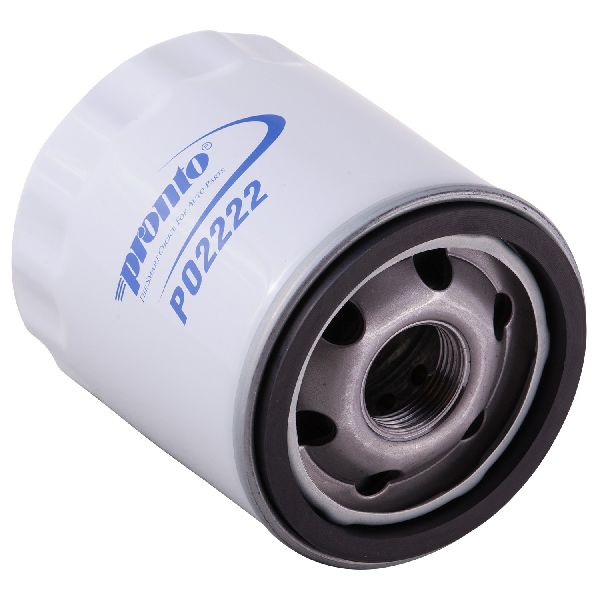
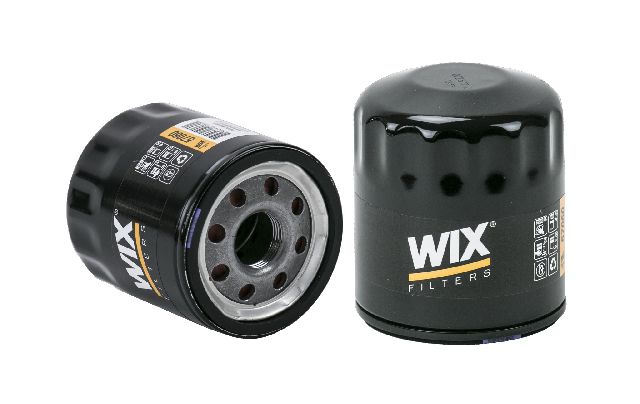
- Engine Oil Filter
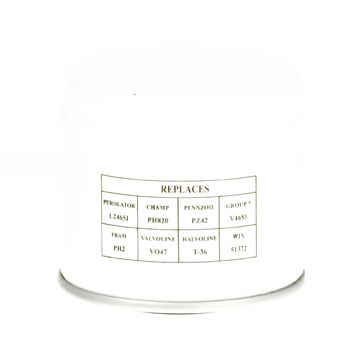
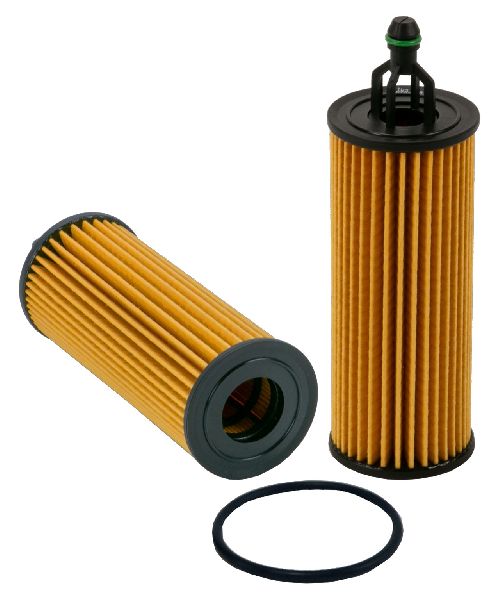
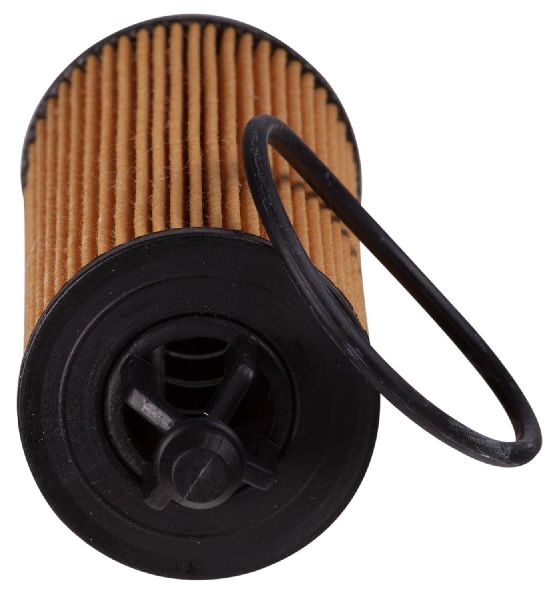
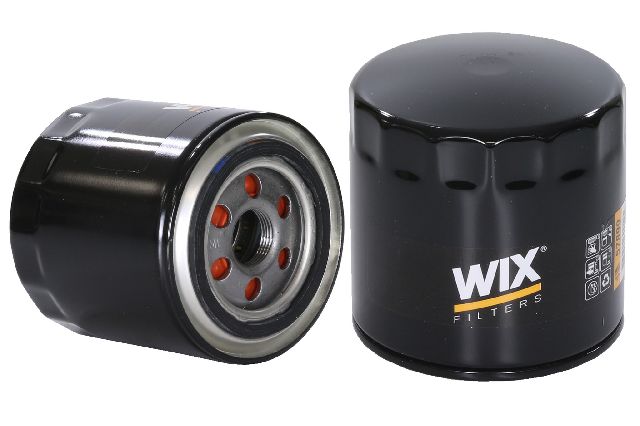
(OEM #Mopar 68191349AC (3.6L V6); Mopar 4892339AB (5.7L V8))— Using a non-OEM filter is a very frequent cause of P1524. The correct Mopar filter ensures proper flow and bypass characteristics.
Trusted brands: Mopar
OEM price range: $10-$20
Aftermarket price range: $5-$15 - Engine Oil Pressure Sensor/Switch
(OEM #Mopar 5149062AB (or similar supersession))— If oil level, quality, and filter are correct, a faulty sensor giving false low-pressure readings is the next most likely cause.
Trusted brands: Mopar, Standard Motor Products (SMP)
OEM price range: $50-$80
Aftermarket price range: $25-$50
Related Codes That Often Appear With This One
- P0521: Engine Oil Pressure Sensor Range/Performance
- P06DD: Engine Oil Pressure Control Circuit Stuck Off
Technical Service Bulletins (TSBs) & Recalls
- S2109000001: Confirms the code definition and its appearance on the 2018-2021 Dodge Durango and directly links the code to the use of aftermarket oil filters.
- 18-089-23: While for a 2023 Ram 1500, it shows that a PCM software update can be a fix for P1524, suggesting it's a possible solution for Durangos as well.
Platform-Specific Known Issues
- A Technical Service Bulletin (TSB #S2109000001) was issued for 2018-2021 Durangos, explicitly mentioning that a customer may complain of a MIL lamp and find fault code P1524. The TSB guides technicians to check if an aftermarket oil filter (specifically mentioning AMSOIL) was recently installed and to replace it with a Mopar filter to see if the fault clears.
Mechanic-Grade Diagnostic Values
- VCT Enable/Disable Oil Pressure Threshold — expected: System requires ~42 PSI to enable VCT and will disable if pressure drops below 31 PSI.. Failure: If scan tool data shows pressure hovering at or below 31 PSI when the code sets, it confirms a pressure issue.
- 3.6L Pentastar V6 Oil Pressure (Warmed Up) — expected: At hot idle: 20-30 PSI. Under load (e.g., 3,000 RPM): Can rise to 75-90 PSI. The engine uses a two-stage oil pump.. Failure: Pressure that does not rise significantly with RPM or stays consistently below 20 PSI at hot idle.
- 5.7L Hemi V8 Oil Pressure (Warmed Up) — expected: At hot idle: 25-40 PSI. Cruising/3,000 RPM: 50-65 PSI.. Failure: Pressure stuck at a low value (e.g., 30-35 PSI) regardless of RPM, or failing to exceed 40 PSI under load.
- Oil Pressure Sensor Circuit Voltage Test — expected: With ignition on (engine off), jumpering the sensor ground and signal circuits at the connector should cause the voltage on a scan tool to drop from ~4.5-5.0V to less than 0.5V.. Failure: If the voltage does not drop when the circuits are jumpered, it indicates a problem in the wiring harness or PCM, not the sensor.
- Oil Pressure Sensor Circuit Resistance Test — expected: Resistance on the sensor ground circuit back to the PCM should be below 5.0 Ohms.. Failure: Resistance higher than 5.0 Ohms indicates excessive resistance in the ground circuit, which can cause faulty readings.
Scan Tool Commands That Help
- Generic Scan Tool or wiTECH: Live Data Monitoring (Engine Oil Pressure) — This is a fundamental first step to observe the oil pressure reading being sent to the PCM. It should be used to see if the pressure reading is stuck, erratic, or fails to rise with engine RPM. This data is then compared against a mechanical gauge reading to determine if the sensor is faulty.
Wiring & Ground Locations
- Oil Pressure Sensor (5.7L Hemi) — On the front of the engine block, passenger side, located just above the oil filter housing.. This is the sensor providing the direct pressure reading to the PCM. Its wiring is in a hot, tight area and can be subject to damage or corrosion.
- Oil Pressure Sensor (3.6L Pentastar) — In the engine valley, beneath the upper and lower intake manifolds. It is part of the integrated oil filter/cooler housing assembly.. Its location makes replacement labor-intensive. The entire housing is a common failure point (cracking/leaking), and the sensor can fail independently. A failure here often necessitates replacing the entire housing assembly.
- (G6) Engine Oil Pressure Signal Circuit — This is the wire running from the oil pressure sensor connector to the PCM.. A short to voltage or an open in this wire will cause incorrect pressure readings and trigger fault codes. Diagnostic procedures involve testing this specific circuit.
- (K900) Sensor Ground Circuit — This is the ground wire running from the oil pressure sensor connector to the PCM.. High resistance or an open in the ground circuit will cause the sensor to read incorrectly, often leading to P1524 or related codes.
Real Owner Repair Stories
- Reddit user, r/ram_trucks (Ram 1500 (Hemi engine)) — Check engine light with code P1524. Oil pressure was stuck at 35 PSI regardless of RPM.
❌ Tried (didn't work) Initially considered taking it to a dealer for complex diagnosis.
✅ What actually fixed it Replacing a cheap 'Carguard' oil filter installed by Carmax with an OEM Mopar filter and fresh oil. Oil pressure immediately returned to a normal 55-60 PSI while driving. - YouTube channel 'Auto Guy Diy' (2009 Ram 1500 (Hemi engine)) — P1524 code appeared a few days after adding 'Engine Restore' additive. Oil pressure would not go above 33 PSI while driving, when it normally ran at 42-45 PSI.
❌ Tried (didn't work) Ruled out the oil pressure sensor because no sensor-specific codes (P0520-P0524) were present.
✅ What actually fixed it An oil and filter change. Upon cutting the old filter open, it was found to be completely clogged with the metallic particles from the Engine Restore additive, restricting flow and causing the low pressure. - YouTube channel 'Attached 2 My Garage' (2016 Ram 1500 5.7L Hemi) — P1524 code, vibration between 1500-2000 RPM. Had recently performed an oil change with AMSOIL oil and an AMSOIL filter.
❌ Tried (didn't work) Verified with a mechanical gauge that oil pressure was genuinely low (25-30 PSI at 3,000 RPM), failing to meet the 31 PSI minimum to keep VVT enabled.
✅ What actually fixed it Contacted AMSOIL, who suggested the filter might be the issue. Replacing the AMSOIL filter with a Purolator Boss filter resolved the code and restored normal oil pressure. AMSOIL provided a complimentary oil change kit afterward. - YouTube channel 'guitman32' (2013 Dodge Durango 3.6L V6) — Check engine light with code P0520 (Engine Oil Pressure Sensor Circuit), reading was stuck at 99 PSI even with the engine off.
❌ Tried (didn't work) A mobile mechanic first replaced the entire oil filter housing assembly, which includes a new sensor. The code returned after a couple of days.
✅ What actually fixed it The technician diagnosed the circuit and found the brand new sensor that came with the housing assembly was faulty out of the box. Plugging in another new sensor (without even installing it) showed correct (0 PSI) readings on the scan tool, confirming the new part was the problem. Final fix was replacing the sensor a second time.
"I Checked Everything" — The Actual Cause
- A common scenario for this code is the 'mechanical gauge is good, but the code persists' pattern. If a technician verifies with a mechanical gauge that the oil pressure is within spec (e.g., over 42 PSI), but the scan tool continues to show a low reading and the P1524 code returns, the root cause is almost certainly a faulty Engine Oil Pressure Sensor giving false information to the PCM. The sensor itself has failed, not the engine's ability to produce pressure.
OEM Part Supersession History
5149062AA, 68060337AA→5149062AB— Standard part revision and consolidation by the manufacturer.
Heads up: No known incompatibilities; 5149062AB is the correct service replacement for the earlier numbers.
Model Year Variations Within This Range
- 2018-2021: For the 3.6L V6 engine, the specified oil is 0W-20 meeting Chrysler MS-6395. Earlier Pentastar models used 5W-20 or 5W-30. Using the incorrect, heavier viscosity oil in a vehicle specified for 0W-20 could potentially cause pressure issues, especially on cold starts.
- 2018-2021: For the 3.6L V6, the original plastic oil filter/cooler housing (PN ending in AD, AE, etc.) is known to crack. An improved OEM design and aftermarket aluminum replacements (like Dorman 926-959) are available. When retrofitting the improved housing to pre-2014 models, the newer 2014+ style cartridge filter must be used.
Helpful Videos
We Have This Part in Stock

The information in this article is provided for general reference and educational purposes only. Vehicle specifications, procedures, and part compatibility can vary by production date, trim level, and region. Always consult your vehicle's factory service manual and verify part numbers before purchasing or performing repairs. Safety-critical components such as airbags, seat belts, and braking systems should be installed by a qualified professional.
- Dodge DURANGO:
- 🎬 Helpful Videos
- 🛍️ Shop This Part
- What's Unique About the 2018-2021 Dodge DURANGO
- Diagnostic Flowchart
- Symptoms You May Notice
- Most Likely Causes
- Rare But Worth Checking
- Diagnosis Steps
- Parts You'll Likely Need
- Related Codes That Often Appear With This One
- Technical Service Bulletins (TSBs) & Recalls
- Platform-Specific Known Issues
- Mechanic-Grade Diagnostic Values
- Scan Tool Commands That Help
- Wiring & Ground Locations
- Real Owner Repair Stories
- "I Checked Everything" — The Actual Cause
- OEM Part Supersession History
- Model Year Variations Within This Range
- 🎟️ Get 5% Off