

OBD-II Code P1521: Manufacturer-Specific Fault
What P1521 means, why it triggers, and how to fix it
- P1521 is a manufacturer-specific code: it means incorrect engine oil on Chrysler/Dodge/Jeep, a faulty power steering switch on Hyundai/Kia, or a bad brake light switch on Subaru.
- On Chrysler 5.7L Hemi engines, P1521 is most often caused by using the wrong oil viscosity (like 5W-30 instead of 5W-20) and frequently does not trigger the Check Engine Light.
- If P1521 appears alongside P0520 on a Chrysler, replace the oil pressure sensor (Mopar P/N 5149062AB); the issue is electrical, not the oil itself.
- For Subaru models from 2008-2017, P1521 disables cruise control and VDC; check NHTSA Recall #19V149000 for a free brake light switch replacement before buying parts.
- Do not replace any sensors until you verify the correct oil viscosity is installed and check live scan tool data for impossible readings (like 51.6 PSI with the engine off).
What Does P1521 Mean?

P1521 is a manufacturer-specific code. For Chrysler, Dodge, Jeep, and Ram, it indicates the computer detected the wrong engine oil viscosity. For Hyundai and Kia, it points to a power steering system fault. For BMW, it signals a failed oil condition sensor. For Subaru, it indicates a malfunctioning brake light switch.
Technical definition: Definitions vary by manufacturer: Incorrect Engine Oil Type (Chrysler/Dodge/Jeep/Ram), Power Steering Switch Circuit (Hyundai/Kia), Variable Intake Solenoid #1 Circuit Malfunction (Peugeot/Citroen/Mazda/Ford), Oil Condition Sensor Malfunction (BMW), Brake Light Switch Circuit Range/Performance (Subaru), and Transmission Engaged At High Throttle Angle (General Motors).
Can I Drive With P1521?

Yes, But With Caution. Yes, but prompt diagnosis is crucial. On Chrysler/Dodge/Jeep vehicles, running incorrect oil accelerates wear on MDS lifters, risking a $3,000+ camshaft repair. On Hyundai/Kia, a failing power steering switch causes stalling in low-speed turns. On Subaru, a bad brake switch disables Vehicle Dynamics Control (VDC). Limit driving to under 100 miles until diagnosed.
Common Causes

- Incorrect engine oil viscosity (Chrysler/Dodge/Jeep/Ram) (Very Common) — Using oil outside the manufacturer's recommended viscosity (e.g., 5W-30 instead of 5W-20) is the primary cause on Chrysler vehicles. The PCM uses oil pressure and temperature sensors to infer viscosity; if it falls outside programmed parameters, it triggers P1521.
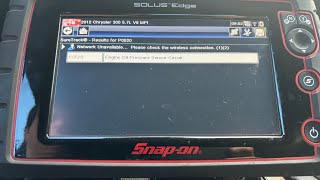
- Faulty engine oil pressure sensor or switch (Common) — A failed oil pressure sensor sends inaccurate data to the PCM, mimicking incorrect oil viscosity. This is the definitive cause when P1521 appears alongside code P0520. 🎬 Watch: Diagnosing the P0520 and P1521 oil pressure circuit fault.
- Faulty power steering pressure switch (Hyundai/Kia) (Common) — This switch signals the ECU to increase idle speed during steering maneuvers to prevent stalling. Internal failure or fluid leaks trigger the code.
- Faulty Brake Light Switch (Subaru) (Common) — A failing brake light switch sends implausible signals to control modules. Subaru issued Technical Service Bulletin 06-55-16R and a major recall for a redesigned part to fix this.
- Dirty, low, or contaminated engine oil (Less Common) — Severely degraded oil, extreme low levels, or heavy use of aftermarket oil thickeners alters fluid viscosity enough to trigger the code.
- Damaged or corroded sensor wiring (Less Common) — Oil leaking through a failed pressure sensor into the wiring harness, or moisture corroding the BMW oil condition sensor connector, disrupts the signal and sets the code.
- Faulty Oil Temperature Sensor (Chrysler/Dodge/Jeep) (Less Common) — The PCM requires accurate oil temperature data to calculate viscosity. A failed temperature sensor skews this calculation, triggering P1521 even if the oil and pressure sensor are perfect.
- Powertrain Control Module (PCM) software issue (Rare) — Specific 2006 Chrysler/Dodge/Jeep 5.7L models featured overly sensitive PCMs that triggered P1521 erroneously. TSB 18-008-08 REV. A outlines the required dealer software update.
Symptoms

- Check Engine Light is on (or remains off on Chryslers) — While the MIL illuminates for most brands, Chrysler products frequently store P1521 as a silent, informational code found only during a diagnostic scan.
- Engine stalls during low-speed turns (Hyundai/Kia) — The engine stumbles or dies when turning the steering wheel in parking lots because the PCM fails to raise the idle speed to compensate for the power steering pump load.
- Disabled cruise control, VDC, or ABS (Subaru) — A failed brake light switch disables cruise control, illuminates the VDC and Hill Start Assist warning lights, and occasionally locks the gear selector in Park.
- Oil level warning on dash (BMW) — A failed oil condition sensor illuminates a yellow oil warning light and disables the iDrive system's ability to measure or display the engine oil level.
- Poor engine performance or rough idle — If related to a variable intake solenoid (Mazda/Ford) or a failing MDS lifter (Chrysler), the engine hesitates during acceleration or idles roughly.
Diagnostic Flowchart
Tap your situation to follow the diagnostic path that matches what you're seeing on this code.
Common Fixes & Costs
- Change Engine Oil and Filter — Parts: $40-$90, Labor: $50-$100, ~0.5 hr book time (DIY)
- Replace Engine Oil Pressure Sensor — Parts: $30-$80, Labor: $120-$200, ~1.5 hr book time (Intermediate)
- Replace Power Steering Pressure Switch (Hyundai) — Parts: $40-$90, Labor: $100-$150, ~0.8 hr book time (DIY)
- Replace Brake Light Switch (Subaru) — Parts: $25-$65, Labor: $80-$140, ~0.5 hr book time (DIY)
- Replace Oil Condition Sensor (BMW) — Parts: $150-$300, Labor: $150-$250, ~1.8 hr book time (Intermediate)
Used vs. New Parts: Buying Guide
When a used part is worth it: Buying used electronic sensors or switches (oil pressure, brake light, power steering) is never recommended due to unknown remaining lifespans.
Donor-vehicle mileage cap: roughly under 20000 miles for the part to have meaningful remaining life.
Donor quality checklist:
- Sensors lack visual cues to determine internal quality.
- New aftermarket parts offer warranties and guaranteed functionality, providing better value than salvage parts.
Decision logic:
- If The part is an electronic sensor or switch. → Buy a new OEM or quality aftermarket part. The minimal savings of a used part do not justify the risk of repeat labor costs.
- If The vehicle is older and budget is the absolute primary concern. → A used part from a reputable salvage yard with a warranty is a last resort, but new is strongly preferred.
Warranty tradeoff: Salvage yard parts carry 30-90 day warranties. New aftermarket parts offer 1-year to lifetime warranties.
Worst-case if a used part fails: $150-$300 in repeated labor costs if a used sensor fails immediately after installation.
What Happens If You Wait — Timeline
- 0-3 months: For Chrysler, P1521 is set, often with no CEL; MDS functions erratically. For Subaru, VDC/ABS lights appear. For Hyundai, occasional stalling in parking lots. (MPG impact: 1-5%% · Added cost: $0-$50 in wasted fuel.)
- 3-9 months: On a Chrysler Hemi, running incorrect oil viscosity accelerates wear on the MDS lifters. A faint 'Hemi tick' becomes audible at idle as lifter rollers lose lubrication. (MPG impact: 5-10%% · Added cost: $50-$150 in wasted fuel.)
- 9-18 months: The Hemi tick becomes persistent. A lifter roller seizes and skids against the camshaft lobe. Misfire codes (P030X) appear as the valve fails to open correctly. (MPG impact: 10-15%% · Added cost: $2,500+ (Camshaft replacement is now required).)
- 18+ months: Catastrophic failure. The damaged lifter completely fails, grinding down the camshaft lobe. Metal shavings travel throughout the engine, damaging bearings. (MPG impact: 20%+% · Added cost: $5,000-$7,500+ (Full engine replacement may be required due to severe metal contamination).)
Cost of Not Fixing It
- 0-3 months: Chrysler MDS functions erratically, reducing fuel economy. Hyundai vehicles risk stalling in low-speed turns. Subaru VDC and ABS systems disable, increasing accident risk. (Added cost: Negligible, aside from increased fuel costs.)
- 3-12 months: On Chrysler 5.7L Hemi engines, continued operation with incorrect oil viscosity accelerates wear on the MDS lifters, initiating the characteristic 'Hemi tick'. (Added cost: $0)
- 12+ months: Prolonged use with incorrect oil causes catastrophic lifter and camshaft failure in Chrysler Hemi engines. Lifters collapse or seize, grinding down the camshaft lobes. (Added cost: $2,500-$5,000)
Diagnosis Steps
- Identify Vehicle-Specific Definition
Search your vehicle's make, model, and 'P1521' to determine the exact system at fault (e.g., Chrysler = oil, Hyundai = power steering, Subaru = brakes). All subsequent steps depend on this definition.
Tools: OBD-II scanner, Smartphone (Beginner) - Scan for Companion Codes
Check for stored codes. P0520 on a Chrysler confirms a failed oil pressure sensor. C1531 on a Subaru confirms a failed brake light switch. 279A on a BMW confirms an oil condition sensor fault.
Tools: OBD-II scanner (Beginner) - Check TSBs and Recalls
Search NHTSA for recalls. Subaru models have a massive recall (WUE-90) for the brake light switch. 2006 Chrysler 5.7L models have a TSB (18-008-08 REV. A) requiring a PCM software update.
Tools: Smartphone or Computer (Beginner) - Verify Engine Oil Viscosity and Level
For Chrysler/Dodge/Jeep, verify the oil level. If the oil was recently changed, assume the shop used the wrong viscosity (e.g., bulk 5W-30 instead of 5W-20). Change the oil and filter using the exact manufacturer specification before replacing parts.
Tools: Shop towel, Dipstick (Beginner) - Inspect Sensor Wiring and Connectors
Visually inspect the wiring for the suspect component. Look for oil saturation inside the Chrysler oil pressure sensor connector, or moisture/corrosion on the BMW oil condition sensor plug.
Tools: Flashlight (Intermediate) - Read Live Sensor Data
Use a scan tool to view live data. For Chrysler, oil pressure must read 0 PSI with the engine OFF; a reading of 50+ PSI confirms a dead sensor. For Subaru, verify the brake switch status toggles On/Off when pressing the pedal.
Tools: Advanced scan tool (Intermediate) - Test Component Electrical Continuity
Use a multimeter to test the suspect part. Chrysler oil pressure switch: check for continuity to ground (engine off). Hyundai power steering switch: check for continuity (engine off) and open circuit (engine running). Subaru brake switch: verify the two internal circuits open and close inversely when the pedal is pressed.
Tools: Multimeter, Back-probe pins (Advanced) - Perform a Mechanical Oil Pressure Test
If Chrysler sensor tests are inconclusive, remove the oil pressure sensor and install a mechanical gauge. Start the engine to verify actual oil pressure matches manufacturer specifications (e.g., >4 PSI at hot idle for a 5.7L Hemi).
Tools: Mechanical oil pressure gauge, Wrench set (Advanced)
When This Code Triggers (Freeze-Frame Conditions)
- Engine Coolant Temp: 180-210°F (The engine must be fully warmed up for the PCM to accurately assess oil viscosity.)
- RPM: 1200-2500 RPM (The code sets during steady-state driving or light acceleration, not typically at idle.)
- Engine Load: 20-50% (Occurs under normal driving conditions where the PCM expects predictable oil pressure responses.)
- Vehicle Speed: 30-60 mph (Triggers during city or highway cruise conditions as part of a standard drive cycle check.)
Related Codes
- P0520 — Indicates an electrical fault in the Engine Oil Pressure Sensor circuit. If present with P1521 on a Chrysler, the sensor or wiring is the definitive cause, not the oil itself.
- P0521 — Indicates the oil pressure sensor is working electrically, but readings are out of range. Points toward a mechanical issue (wrong oil, low oil, failing pump) rather than an electrical one.
- P0198 — Indicates Engine Oil Temperature Sensor Circuit High. The PCM requires temperature data to calculate viscosity; a failed temp sensor triggers P1521 even if the oil is correct.
- C1531 — Subaru code for Brake Switch Circuit Malfunction. Seeing C1531 alongside P1521 confirms the brake light switch is the root cause.
Climate & Environmental Factors
- Extreme Cold/Hot Temperatures: For Chrysler/Dodge/Jeep, the PCM's viscosity calculation is temperature-dependent. Extreme cold makes correct oil appear thicker, while extreme heat makes it appear thinner, potentially triggering P1521 if perceived viscosity falls outside programmed ranges.
- High Altitude: Modern automotive oil pressure sensors measure gauge pressure relative to the surrounding atmosphere and compensate for altitude changes. High altitude does not trigger P1521.
- Humidity / Contaminants: Subaru's official recall notes that silicone gas from interior cleaning products seeps into the unsealed brake light switch housing. This forms a non-conductive silicon dioxide deposit on the contacts, causing switch failure.
How to Talk to a Mechanic About This Code
Say this: "I have a P1521 code on my [Make, Model, Year]. For my car, I believe this code points to the [oil system/power steering switch/brake light switch]. Can I book a diagnostic appointment to confirm this specific issue?"
This immediately tells the shop you've done research and directs them to the correct system for your vehicle, saving diagnostic time and preventing them from chasing the wrong problem.
Avoid saying:
- 'My check engine light is on, can you just fix it?'
- 'I'm not sure what's wrong, just do whatever it takes.'
- 'A friend told me it might be [incorrect part].'
Questions to ask before authorizing the repair:
- For Chrysler: Did you verify the oil pressure reading is 0 PSI with the engine off?
- For Subaru: Did you check if my VIN is covered by the brake light switch recall (WUE-90)?
- For Hyundai: Did you test the continuity of the power steering switch with the engine on and off?
- For BMW: Did you inspect and clean the oil condition sensor connector before recommending replacement?
- What is the warranty on the recommended part and the labor?
Where to Take It: Dealer vs Independent vs Chain
- Dealer:
Best for: Vehicles under warranty., Performing recalls (like the Subaru brake switch) or TSB software updates (like for 2006 Chrysler/Dodge/Jeep vehicles), which are often free., Complex diagnostics on German brands like BMW.
Downsides: Typically the highest labor rates., May recommend replacing an assembly when an independent shop might replace a smaller component. (Typical cost: +50% vs. baseline) - Independent Shop:
Best all-around fit for most out-of-warranty P1521 repairs. A good independent shop easily handles common sensor and switch replacements at a lower cost than the dealer.
Best for: Out-of-warranty vehicles where cost is a factor., Common P1521 fixes like replacing an oil pressure sensor, brake light switch, or power steering switch.
Downsides: Quality varies greatly; look for ASE certifications and good reviews., May lack access to the very latest TSBs or brand-specific specialty tools. (Typical cost: +0% vs. baseline) - Chain Shop:
Acceptable ONLY for a directed oil change if you've already diagnosed 'Incorrect Engine Oil Type'. AVOID for any diagnostic work related to P1521.
Best for: Simple oil changes. If the P1521 on a Chrysler is due to wrong oil, they can perform the oil change.
Downsides: Technician skill varies dramatically; not recommended for diagnosis., High potential for misdiagnosis (e.g., not knowing the code means different things on different brands) and upselling unnecessary services. (Typical cost: -10% vs. baseline)
When to Walk Away From the Repair
If a single estimated repair cost exceeds 40-50% of the car's private-party value, seriously consider selling or trading in the vehicle instead of repairing it.
- Car worth $5000, fix is $300: Fix it. The repair cost is a small fraction of the car's value.
- Car worth $7000, fix is $3500: Borderline. This is the 50% threshold. Get a second opinion and assess the car's overall health before proceeding.
- Car worth $4000, fix is $4500: Walk away. The repair costs more than the car is worth. This applies to a worst-case P1521 scenario like a full camshaft/lifter replacement on a Hemi engine.
What Scan Tool You Need for This Code
Minimum: A scanner that reads manufacturer-specific codes and displays live sensor data.
A basic $20 code reader only shows 'P1521' without context. It won't provide the manufacturer-specific definition or show the live data (like oil pressure in PSI or brake switch status) needed to confirm the faulty part.
Budget: BlueDriver Pro or Autel AP200 (~$99) — These Bluetooth dongles connect to your smartphone to read manufacturer-specific codes and stream live data, essential for seeing if oil pressure reads incorrectly on a Chrysler or if the brake switch responds on a Subaru.
Mid-range: Innova 5610 or Foxwell NT510 Elite (~$280) — These handheld scanners offer robust features, including bidirectional controls to test components directly, helpful for complex electrical issues.
Professional: Autel MaxiCOM MK808 / Launch X431 Series (~$450-900) — Provides full bidirectional control, ECU coding capabilities, and access to all vehicle modules. Necessary for tasks like performing a PCM software update or diagnosing deep network communication issues.
Rent vs buy: Auto parts stores loan basic code readers for free, but these often lack live data and manufacturer-specific code capabilities. Buying a budget pick like the BlueDriver is a worthwhile investment for P1521 diagnosis.
How to Clear the Code After You Fix It
- Use an OBD-II scan tool to clear the diagnostic trouble codes.
- Perform a complete drive cycle to allow the vehicle's readiness monitors to run.
- Rescan the vehicle to ensure the P1521 code has not returned as a pending or active fault.
Drive cycle (~20 minutes): A general Chrysler drive cycle involves: 1) Cold start followed by a 5-minute idle. 2) Drive steadily between 40-60 mph for 8 minutes. 3) Stop and idle for 3 minutes. 4) Drive over 20 mph for 2 minutes. 5) Turn ignition off for 10 minutes.
Readiness monitors affected: Catalyst Monitor, O2 Sensor Monitor, EGR System Monitor
Before emissions retest: drive at least 50 miles to fully set monitors.
Watch out for:
- Disconnecting the battery clears the code but resets all readiness monitors to 'Not Ready', causing an automatic emissions failure.
- The code returns within three drive cycles if the root cause (e.g., wrong oil viscosity) is not corrected.
- Failing to let the vehicle cool down completely before starting a drive cycle prevents certain monitors from running.
Will This Fail Emissions / State Inspection?
Yes — this code typically fails an OBD-II emissions inspection.
- California: An illuminated Check Engine Light results in an automatic failure. After repairs, a complete drive cycle must set the readiness monitors before re-testing.
- New York: Vehicles automatically fail the emissions portion if the Check Engine Light is on. Clearing the code right before the test results in a 'Not Ready' failure.
- Texas: In the 17 counties requiring emissions testing, an illuminated MIL causes an OBD-II failure. For 2001+ vehicles, only one readiness monitor can be 'Not Ready'.
Most Commonly Affected Vehicles
- Dodge Ram 1500 (2006-2018) — Highly prone to the 'Incorrect Engine Oil Type' code on 5.7L Hemi engines with MDS. 2006 models require a PCM software update via TSB 18-008-08 REV. A.
- Chrysler 300 (2006-2020) — The 5.7L Hemi is sensitive to oil viscosity. A failed oil pressure sensor frequently reads 50+ PSI with the engine off, triggering P1521 alongside P0520.
- Jeep Grand Cherokee (2006-2018) — Triggers P1521 due to incorrect oil viscosity or a faulty oil pressure sensor. Often stores the code without illuminating the Check Engine Light.
- Hyundai Sonata (2005-2015) — Prone to the 'Power Steering Switch Circuit' fault, causing the engine to stall during low-speed parking maneuvers.
- Hyundai Tucson (2005-2015) — Frequently experiences P1521 related to a failing power steering pressure switch, which occasionally leaks fluid externally.
- BMW 3-Series (E90/E91/E92), 5-Series, X5 (2006-2016) — P1521 indicates a fault with the Oil Condition Sensor, disabling the electronic oil level display. Often appears with BMW-specific code 279A.
- Subaru Impreza, Forester, Crosstrek, Outback (2008-2017) — P1521 points to a Brake Light Switch Circuit problem, disabling cruise control and VDC. Covered under NHTSA Recall #19V149000.
- Chevrolet / GMC Silverado, Tahoe (2000-2010) — P1521 means 'Transmission Engaged At High Throttle Angle.' This rare definition indicates the vehicle was shifted into gear while revving, not a part failure.
Manufacturer-Specific Notes

- Chrysler/Dodge/Jeep/Ram: P1521 frequently does not illuminate the Check Engine Light. It acts as a silent, informational code stored in memory to alert technicians of incorrect oil viscosity.
- Hyundai/Kia: P1521 is exclusively tied to the power steering system. The pressure switch signals the ECU to adjust idle speed during turns to prevent stalling.
- BMW: P1521 indicates a fault with the electronic oil condition sensor. A failure disables the iDrive system's ability to display the oil level, as these vehicles lack traditional dipsticks.
- Subaru: P1521 is a brake system code indicating an implausible signal from the brake light switch. A major recall (WUE-90) was issued because silicone interior cleaners contaminated the switch contacts.
Real Owner Stories
2011 Dodge Ram 1500 5.7L Hemi at 110K miles
Owner scanned for codes out of curiosity and found a stored P1521. The Check Engine Light was NOT on, and no symptoms were perceived.
What they tried:
- Owner had recently performed an oil change themselves using the correct 5W-20 oil and a quality filter.
Outcome: The owner learned P1521 is an informational code on these trucks that doesn't always indicate a current fault. They cleared the code and it did not return.
Lesson: On Chrysler/Dodge/Jeep vehicles, a stored P1521 without a Check Engine Light is often a historical code. Ensure the correct oil is installed, clear the code, and see if it returns before replacing parts.
2013 Subaru Crosstrek at 85K miles
ABS, traction control, and Hill Assist warning lights illuminated simultaneously. Cruise control stopped working.
What they tried:
- The owner suspected the brake light switch based on forum research. They purchased the updated OEM part (Subaru P/N 83311FJ001) and replaced it themselves.
Outcome: Replacing the brake light switch took 15 minutes and immediately solved the problem. All warning lights extinguished and cruise control functionality returned.
Lesson: On a Subaru, a cluster of warning lights (ABS, VDC, Hill Assist) is a classic symptom of a failed brake light switch. This is a common, inexpensive DIY fix.
2012 Chrysler 300C 5.7L Hemi
Check Engine Light illuminated. A scan revealed codes P1521 (Incorrect Oil Viscosity) and P0520 (Engine Oil Pressure Sensor Circuit).
What they tried:
- The owner performed an oil change to ensure correct viscosity, but the codes returned immediately.
- Using a scan tool to view live data with the engine OFF, oil pressure read 51.6 PSI.
Outcome: The impossible pressure reading confirmed a faulty oil pressure sensor. After replacing the sensor, live data read 0 PSI with the engine off, and both codes cleared permanently.
Lesson: When P1521 appears with P0520, the problem is the oil pressure sensor or wiring. A live data pressure reading above 0 PSI with the engine off is a definitive sign of a bad sensor.
BMW E90 3-series, 14 years old
Vehicle displayed codes P1521 and 279A. The iDrive system could not display the engine oil level.
What they tried:
- Before buying a new sensor, the owner unplugged the sensor's electrical connector at the oil pan, cleaned the contacts, applied dielectric grease, and reconnected it.
Outcome: Cleaning the connector resolved the communication error. The codes cleared, and the electronic oil level reading function was restored.
Lesson: For sensor communication errors, inspect and clean the electrical connector before assuming the sensor has failed. Dirt and moisture frequently disrupt the signal.
How to Prevent This Code From Triggering
- Use the exact specified oil viscosity (e.g., 5W-20 for Hemi MDS). (Every oil change) — Systems like Chrysler's MDS use oil pressure to actuate mechanical components. Incorrect viscosity changes the pressure curve, preventing system function and triggering codes.
- Reduce oil change intervals to 5,000 miles or less. (Consistently) — Shorter intervals prevent oil breakdown and sludge formation that clogs the tiny passages feeding complex MDS lifters, starving them of oil.
- Avoid using silicone-based interior cleaners/detailers (Subaru). (Every car wash/detailing) — Silicone gases from detailing products get drawn into the unsealed brake light switch, creating a non-conductive layer on the contacts and causing failure.
- Allow the engine to warm up for 30-60 seconds before driving. (Daily habit) — Gives cold, thick oil time to circulate to the upper valvetrain and lifters before they are put under load, reducing dry start wear on camshaft lobes.
- Periodically clean sensor electrical connectors. (During other maintenance) — Unplugging exposed connectors (like the BMW oil condition sensor), cleaning contacts, and applying dielectric grease prevents moisture and corrosion from causing communication errors.
Frequently Asked Questions
Can I just clear the P1521 code and keep driving?
You can clear it, but it returns quickly if the underlying problem remains. If the cause is incorrect oil, the code resets after a few drive cycles. Diagnose the issue immediately to avoid engine wear, stalling, or disabled safety systems.
I just changed my oil and now I have a P1521 code. What happened?
The shop almost certainly used the wrong oil viscosity. Even if the receipt lists the correct oil, bulk dispensing mistakes happen frequently. Change the oil and filter again using the exact manufacturer-specified viscosity.
My Check Engine light is on with a P1521 code. Should I replace my oil pressure sensor?
Not immediately. On Chrysler vehicles, P1521 often does not illuminate the light by itself, meaning another code is responsible. Scan for all codes; if P1521 is alone, confirm you have the correct oil before replacing parts.
I have the correct oil, but the P1521 code keeps coming back. What's next?
If you are 100% certain the oil viscosity is correct, inspect the sensors. Test the oil pressure sensor and wiring on a Chrysler, the power steering pressure switch on a Hyundai, or the oil condition sensor connector on a BMW.
Will using a thicker oil like 5W-30 instead of 5W-20 really cause a problem?
Yes. Engines with Variable Valve Timing (VVT) or Multi-Displacement Systems (MDS) rely on specific oil pressure and flow characteristics. Incorrect viscosity impairs these systems, reduces fuel economy, and triggers P1521.
Can adding an oil additive cause a P1521 code?
Yes. Oil thickeners change the overall viscosity of your engine oil. The PCM detects this change, interprets it as incorrect oil, and triggers the code. Use high-quality oil meeting manufacturer specs without aftermarket additives.
Can I pass an emissions inspection with a P1521 code?
No, if the P1521 code illuminates the Check Engine Light, you automatically fail. Even if the light is off (common on Chryslers), the stored code or incomplete readiness monitors cause a failure in strict states like California or New York.
My mechanic wants to update my car's computer for a P1521 code. Is this a real fix?
Yes. Specific 2006 Chrysler, Dodge, and Jeep models with the 5.7L engine have overly sensitive PCMs. Technical Service Bulletin 18-008-08 REV. A outlines an official dealer software update to resolve this false trigger.
Key Takeaways
- P1521 is a manufacturer-specific code: it means incorrect engine oil on Chrysler/Dodge/Jeep, a faulty power steering switch on Hyundai/Kia, or a bad brake light switch on Subaru.
- On Chrysler 5.7L Hemi engines, P1521 is most often caused by using the wrong oil viscosity (like 5W-30 instead of 5W-20) and frequently does not trigger the Check Engine Light.
- If P1521 appears alongside P0520 on a Chrysler, replace the oil pressure sensor (Mopar P/N 5149062AB); the issue is electrical, not the oil itself.
- For Subaru models from 2008-2017, P1521 disables cruise control and VDC; check NHTSA Recall #19V149000 for a free brake light switch replacement before buying parts.
- Do not replace any sensors until you verify the correct oil viscosity is installed and check live scan tool data for impossible readings (like 51.6 PSI with the engine off).
Helpful Videos

The information in this article is provided for general reference and educational purposes only. Vehicle specifications, procedures, and part compatibility can vary by production date, trim level, and region. Always consult your vehicle's factory service manual and verify part numbers before purchasing or performing repairs. Safety-critical components such as airbags, seat belts, and braking systems should be installed by a qualified professional.
- 🎬 Helpful Videos
- What Does P1521 Mean?
- Can I Drive With P1521?
- Common Causes
- Symptoms
- Diagnostic Flowchart
- Common Fixes & Costs
- Used vs. New Parts: Buying Guide
- What Happens If You Wait — Timeline
- Cost of Not Fixing It
- Diagnosis Steps
- When This Code Triggers (Freeze-Frame Conditions)
- Related Codes
- Climate & Environmental Factors
- How to Talk to a Mechanic About This Code
- Where to Take It: Dealer vs Independent vs Chain
- When to Walk Away From the Repair
- What Scan Tool You Need for This Code
- How to Clear the Code After You Fix It
- Will This Fail Emissions / State Inspection?
- Most Commonly Affected Vehicles
- Manufacturer-Specific Notes
- Real Owner Stories
- 2011 Dodge Ram 1500 5.7L Hemi at 110K miles
- 2013 Subaru Crosstrek at 85K miles
- 2012 Chrysler 300C 5.7L Hemi
- BMW E90 3-series, 14 years old
- How to Prevent This Code From Triggering
- Frequently Asked Questions
- Can I just clear the P1521 code and keep driving?
- I just changed my oil and now I have a P1521 code. What happened?
- My Check Engine light is on with a P1521 code. Should I replace my oil pressure sensor?
- I have the correct oil, but the P1521 code keeps coming back. What's next?
- Will using a thicker oil like 5W-30 instead of 5W-20 really cause a problem?
- Can adding an oil additive cause a P1521 code?
- Can I pass an emissions inspection with a P1521 code?
- My mechanic wants to update my car's computer for a P1521 code. Is this a real fix?
- Key Takeaways
- 🎟️ Get 5% Off