

P1516 on 2014-2018 GMC Yukon: Reduced Power Causes and Fixes
On a 2014-2018 GMC Yukon, code P1516 almost always triggers 'Reduced Engine Power' mode. The most likely cause is a dirty throttle body that needs cleaning, a simple DIY fix. If that doesn't work, inspect and clean all major engine and chassis ground connections, as poor grounds are a very common culprit. If the issue persists, the entire throttle body assembly often needs replacement, costing around $365-$537.
- Always start by cleaning the throttle body. This is the cheapest and most common fix for P1516.
- If the problem is intermittent or returns after cleaning, inspect and improve the engine's ground connections before buying parts.
- If a part is needed, the entire throttle body assembly must be replaced; the sensors are not sold separately.
- This code will put your vehicle in 'Reduced Engine Power' mode, making it unsafe to drive normally. Address the issue promptly.
What's Unique About the 2014-2018 Gmc YUKON
On this generation of GMC Yukon and its platform mates (Tahoe, Silverado, Sierra, Escalade), P1516 is a very common code that appears as the vehicles accumulate mileage. The issue is frequently not a complex electronic failure but one of two simple problems: heavy carbon buildup on the throttle plate causing it to stick, or poor electrical grounds. TSB #PIP4578B specifically notes this code can appear 🎬 Watch: This video explains the mystery behind P1516 and P2101. on high-mileage vehicles due to carbon buildup. Many owners have resolved persistent issues by cleaning the throttle body or by cleaning and adding redundant ground straps between the engine, firewall, and chassis.
Diagnostic Flowchart
Tap your situation to follow the diagnostic path that matches what you're seeing on this vehicle.
Symptoms You May Notice
- "Reduced Engine Power" message displayed on the instrument cluster
- Check Engine Light is on
- Little to no throttle response; the gas pedal feels unresponsive
- Unstable, rough, or surging idle
- Engine may stall, especially when coming to a stop
- Hesitation or bucking during acceleration
- Replacing the accelerator pedal assembly when the fault is actually at the throttle body or in the wiring/grounds.
- Replacing the throttle body assembly when the actual root cause is a simple corroded ground connection.
Most Likely Causes
- Dirty or Sticking Throttle Body 🔴 High Probability The PCV (Positive Crankcase Ventilation) system routes oil vapors and combustion byproducts back into the intake, which bake onto the throttle body and plate over time. As this carbon builds up, the PCM learns to open the throttle plate more at idle to compensate. Eventually, the buildup becomes too great for the PCM to manage, or it causes the plate to physically stick, triggering the code.
How to confirm: Remove the air intake tube from the throttle body and visually inspect for a thick, black ring of carbon around the throttle plate and bore. Manually (with the engine off and key out) push the plate to feel for any binding or stickiness. Be gentle, as forcing it can damage the internal gears.
Typical fix: Thoroughly clean the throttle body bore and plate with a dedicated throttle body cleaner and a soft cloth or brush. It is best to remove the throttle body for cleaning. A throttle relearn procedure is required afterward.
Est. part cost: $5-$15 - Poor Ground Connections 🟡 Medium Probability GM trucks of this era are known to develop grounding issues as they age due to corrosion at the connection points. The TAC module and PCM are sensitive to poor grounds, which can cause erratic voltage and trigger this code intermittently, especially when hitting bumps. Common problem spots are grounds on the firewall, engine block, and frame rails under the driver's side door.
How to confirm: Visually inspect the main ground straps from the engine block to the chassis and firewall. Look for corrosion, looseness, or fraying. However, a ground can be faulty even if it looks intact. A voltage drop test across the ground connections is the most definitive test.
Typical fix: Remove, clean all ground connection points (strap ends and mounting surface) to bare metal, and re-secure them tightly. Many owners have permanently fixed the issue by adding new, redundant 10-gauge ground wires 🎬 See how to fix reduced engine power with new grounds. from the engine block and/or TAC module directly to the firewall or chassis.
Est. part cost: $10-$20 - Failed Throttle Body Assembly 🟡 Medium Probability The internal electronic motor or the integrated throttle position sensor (TPS) can wear out over time, leading to dead spots or complete failure. The potentiometer tracks inside the TPS can develop worn spots from constant use, causing the sensor to send an erratic signal.
How to confirm: If cleaning the throttle body and verifying grounds does not resolve the code, the assembly itself is the likely culprit. A scan tool can graph the commanded vs. actual throttle position to look for dropouts or discrepancies as the pedal is pressed.
Typical fix: Replace the entire throttle body assembly. The TPS is not typically sold as a separate component for these models and is integrated into the assembly.
Est. part cost: $150-$450 - Damaged Wiring or Connector at Throttle Body ⚪ Low Probability The wires in the harness leading to the throttle body connector can fatigue and break internally from engine vibration and heat over many years. The break can be inside the insulation, making it invisible to the eye.
How to confirm: Visually inspect the wiring harness and connector going to the throttle body. With the engine running, carefully wiggle the connector and harness to see if it triggers the fault. Check for loose pins, corrosion, or broken wires. A 'tug test' on each individual wire at the connector can sometimes reveal a broken internal strand.
Typical fix: Repair the damaged section of wire or replace the connector pigtail. GM offers a harness repair kit (Part #88986255 for some applications).
Est. part cost: $15-$60
Rare But Worth Checking
- Failing Powertrain Control Module (PCM): This is extremely rare. The PCM should only be considered after all other possibilities, including the throttle body, wiring, and grounds, have been definitively ruled out.
- Failing Accelerator Pedal Position (APP) Sensor: While it is part of the overall throttle control system, a failing APP sensor usually triggers its own specific trouble codes (like P2138). It's an unlikely cause for an isolated P1516.
Diagnosis Steps
- Read all stored DTCs with a capable OBD-II scanner. Note any other codes that appear with P1516, as they can provide clues.
- Disconnect the air intake hose from the throttle body.
- Visually inspect the throttle body bore and plate for heavy carbon buildup.
- Regardless of appearance, thoroughly clean the throttle body using a dedicated cleaner and a soft rag. It's best to remove the 4 bolts and take it off the intake for a complete cleaning. 🎬 Watch: A mechanic's guide to troubleshooting these throttle control codes.
- Inspect the throttle body electrical connector for corrosion, moisture, or loose pins. Ensure it is seated firmly. Wiggle the harness near the connector with the engine running to check for intermittent faults.
- Locate and inspect the main engine ground straps. Key locations include a strap to the firewall (passenger side), the main battery negative cable to the engine block, and grounds on the frame rail under the driver's side. Disconnect, clean the contact points to bare metal, and securely retighten.
- Reassemble the intake, clear the codes, and perform a throttle relearn procedure. A common method for these trucks is to start the engine and let it idle in Park for 3 minutes, turn the engine off for 60 seconds, then restart and idle for another 3 minutes.
- If the code returns quickly, the most likely cause is a faulty throttle body assembly.
- If the problem is intermittent, strongly suspect a wiring or grounding issue. Adding a redundant ground wire from the engine block to the firewall is a common, effective fix reported by many owners.
Parts You'll Likely Need
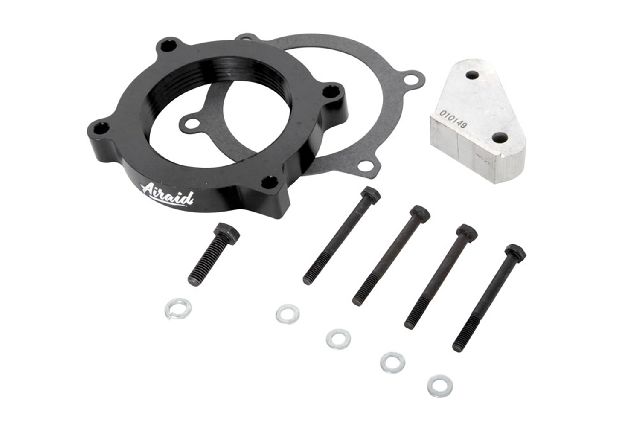
- Throttle Body Assembly
(OEM #12729500)— This is the most common part to fail if cleaning the original unit and checking grounds does not resolve the issue. The internal motor and sensors are integrated and not serviced separately. This part number supersedes previous numbers like 12678224.
Trusted brands: ACDelco (Genuine GM), Standard Motor Products, Dorman, Hitachi
OEM price range: $200-$350
Aftermarket price range: $120-$250 - Throttle Body Connector Pigtail
(OEM #88986255 (example, verify for specific application))— If the wiring is found to be broken at the connector, replacing the pigtail is the standard repair. The wires can break internally from vibration and heat, causing intermittent faults.
Related Codes That Often Appear With This One
- P2101 — This code, 'Throttle Actuator Control Motor Circuit Range/Performance', is often set alongside P1516 as it directly relates to the performance of the motor inside the throttle body.
- P0121 — This code relates to 'Throttle/Pedal Position Sensor 'A' Circuit Range/Performance'. It indicates a problem with the sensor's output, which can be a cause or a result of the P1516 fault.
- P2176 — This code, 'Throttle Actuator Control System - Idle Position Not Learned', often appears after a throttle body has been cleaned or replaced and the idle relearn procedure has not been completed successfully.
- P2135 — This code, 'Throttle/Pedal Position Sensor/Switch A/B Voltage Correlation', often appears with P1516 when the issue is related to the throttle position sensor itself or the wiring, causing a disagreement between the two internal TPS circuits.
Technical Service Bulletins (TSBs) & Recalls
- PIP4578B: Mentions that DTC P1516 may be experienced on high mileage vehicles and can be related to idle surge and reduced engine power mode, often due to carbon buildup in the throttle body requiring cleaning and an idle learn reset.
Platform-Specific Known Issues
- A known issue on these GM platforms is intermittent electrical faults caused by poor or corroded grounds. Before replacing expensive parts for a P1516 code, it is highly recommended to inspect, clean, and even add redundant ground wires from the engine to the chassis/firewall.
- The wiring harness to the throttle body is prone to internal wire breaks near the connector due to engine vibration over time. A wiggle test is a key diagnostic step.
Mechanic-Grade Diagnostic Values
- Throttle Position Sensor (TPS) Percentage (Key On, Engine Off) — expected: 13% to 19%. Failure: A reading that jumps to a higher number, like 26%, without pedal input can indicate a faulty throttle body.
- Throttle Position Sensor (TPS) Percentage (Wide Open Throttle) — expected: Should reach 100%. Failure: Failure to reach 100% can indicate a sensor or mechanical issue within the throttle body.
- TPS Sensor Voltage — expected: Approximately 0.5V at closed throttle to 4.5V at wide-open throttle.. Failure: Voltage that is erratic, has dropouts, or does not sweep smoothly through the range indicates a failing sensor.
- 5V Reference to Throttle Position Sensors — expected: A steady 5 volts. Failure: The voltage dropping to 0V, even intermittently, points to a short or wiring issue, which can trigger P1516.
Scan Tool Commands That Help
- GDS2 / Tech2 (or capable aftermarket scanner): Idle Relearn / Module Setup — This function is used after cleaning or replacing the throttle body to reset the learned idle values in the ECM. Failure to perform this can result in a high idle and other throttle-related codes like P2176.
- GDS2 / Tech2 (or capable aftermarket scanner): Live Data Graphing: Commanded vs. Actual Throttle Position — This is a primary diagnostic step to confirm a P1516 fault. Graphing both parameters while slowly pressing the accelerator pedal can reveal discrepancies, lag, or dropouts that confirm the PCM's command is not matching the throttle plate's actual movement.
Wiring & Ground Locations
- G103 — On the front of the passenger side (right) cylinder head.. This is a primary engine ground point. Corrosion or looseness here can cause a host of electrical issues, including erratic behavior of the throttle control system.
- G104 — On the rear of the driver's side (left) cylinder head, often connected via a ground strap to the firewall.. This ground is critical for components on the driver's side of the engine and their connection to the body/firewall. A poor connection here is a frequently cited cause for intermittent P1516 codes.
- Frame Grounds — On the frame rails, with a notable location right behind both front wheels.. These grounds are in a terrible location where they are constantly exposed to road spray, making them highly susceptible to corrosion which can lead to intermittent and hard-to-diagnose electrical faults.
- Throttle Body Connector — The 8-pin electrical connector on the throttle body assembly itself.. All power and signal for the throttle motor and position sensors pass through this single connector. Internal wire breaks, pin corrosion, or a poorly-seated connector are common failure points.
Real Owner Repair Stories
- Tahoe Yukon Forum user (2003-2007 GM Truck/SUV (GMT800, but same principle applies)) — Persistent 'Reduced Engine Power' message and P1516 code, especially when hitting bumps or on cold starts.
❌ Tried (didn't work) Replacing the TPS sensor, Replacing the pigtail connector (initial repair was done poorly), Initial attempt at adding a single ground wire
✅ What actually fixed it The user ultimately fixed the problem by adding multiple, redundant 10-gauge ground wires. The successful configuration included new grounds from the battery to the TAC module, TAC module to the firewall, firewall to the alternator bracket, and throttle body to the alternator bracket. This suggests the original factory grounding was insufficient or had degraded, and only by creating a robust, multi-point ground path was the issue resolved. - Chevrolet Forum user (2003 Silverado 4.8L with 230,000 miles) — Intermittent P1516, stalling, and eventually a no-start condition. Also saw codes P0171, P0174, P0120, and P0220 at various times.
❌ Tried (didn't work) Cleaning the throttle body and MAF sensor, Charging the battery, Replacing with a Cardone (aftermarket) throttle body
✅ What actually fixed it The problem was finally solved by replacing the aftermarket throttle body with a genuine ACDelco throttle body. The assumption was that the aftermarket unit was binding internally, causing the persistent codes.
When the Usual Fixes Don't Work
- While cleaning the throttle body and checking grounds are the most common fixes, there are numerous documented cases where the issue persisted until the entire throttle body assembly was replaced with a new, genuine OEM part. In one instance, a user tried an aftermarket (Cardone) throttle body which did not fix the issue, but installing an ACDelco unit resolved the problem immediately, suggesting potential quality or calibration differences in aftermarket parts. In another persistent case, the final solution was adding an extensive network of redundant ground straps, far beyond just cleaning the factory points, indicating that for some high-mileage or corrosion-prone vehicles, the original grounding design is insufficient to maintain a stable voltage for the sensitive throttle control system.
OEM Part Supersession History
12678224→12729500, 12740725— GM regularly updates service parts to integrate new materials, technologies, or manufacturing processes.
Heads up: Part number 12678224 has been superseded by 12740725 according to some parts catalogs. However, part number 12729500 is also widely sold as the correct replacement for the 2014-2018 Yukon. It is critical to verify the correct part number using the vehicle's VIN, as there can be subtle differences. Aftermarket parts may also cross-reference older numbers like 12617792.
Model Year Variations Within This Range
- 2018: In 2018, a 10-speed automatic transmission was introduced on some trims (like the Denali), which changed some powertrain calibrations, but the throttle body part number for the 5.3L V8 engine (L83) generally remained the same as prior years.
Helpful Videos


Used OEM Parts in Stock


New Aftermarket Parts Available

The information in this article is provided for general reference and educational purposes only. Vehicle specifications, procedures, and part compatibility can vary by production date, trim level, and region. Always consult your vehicle's factory service manual and verify part numbers before purchasing or performing repairs. Safety-critical components such as airbags, seat belts, and braking systems should be installed by a qualified professional.
- Gmc YUKON:
- 🎬 Helpful Videos
- 🛍️ Shop This Part
- What's Unique About the 2014-2018 Gmc YUKON
- Diagnostic Flowchart
- Symptoms You May Notice
- Most Likely Causes
- Rare But Worth Checking
- Diagnosis Steps
- Parts You'll Likely Need
- Related Codes That Often Appear With This One
- Technical Service Bulletins (TSBs) & Recalls
- Platform-Specific Known Issues
- Mechanic-Grade Diagnostic Values
- Scan Tool Commands That Help
- Wiring & Ground Locations
- Real Owner Repair Stories
- When the Usual Fixes Don't Work
- OEM Part Supersession History
- Model Year Variations Within This Range
- 🎟️ Get 5% Off