

P1516 on 2015-2019 GMC Sierra 1500: Causes and Fixes for Reduced Power
P1516 on a 2015-2019 GMC Sierra almost always points to a problem with the electronic throttle body. The most common fix is replacing the entire throttle body assembly, but checking the wiring connector and engine grounds first can save you money.
- P1516 on a 2015-2019 Sierra will almost always put the truck into "Reduced Engine Power" mode.
- The most likely culprit is a faulty electronic throttle body assembly.
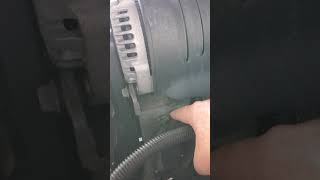
- Before replacing the throttle body, always inspect the wiring connector for damage and check engine ground connections (especially G103 and G104) for looseness or corrosion.
- Do not replace the accelerator pedal sensor; it is rarely the cause of P1516.
- After replacing the throttle body, a relearn procedure is mandatory for proper idle and performance.
What's Unique About the 2015-2019 Gmc SIERRA 1500
The 2015-2019 GMC Sierra, particularly models with drive-by-wire throttle, has a known history of throttle body issues, as documented by multiple GM Technical Service Bulletins (TSBs). These bulletins specifically mention P1516 in conjunction with reduced power messages, pointing to potential internal throttle body problems. This makes a faulty throttle body a much higher probability on these trucks compared to other potential causes. Furthermore, grounding issues are a well-documented secondary cause on these GM truck platforms, often leading to intermittent P1516 codes that can be difficult to diagnose.
Diagnostic Flowchart
Tap your situation to follow the diagnostic path that matches what you're seeing on this vehicle.
Generation note: The 2015-2019 year range covers the end of the third generation (K2XX, 2014-2018/19) and the beginning of the fourth generation (T1XX, 2019-present). TSBs confirm that P1516 is a known issue on both, specifically citing the "2019... (New Model)" Sierra, indicating the throttle body issue persists across these generations.
Symptoms You May Notice
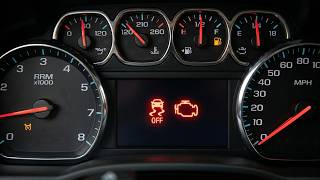
- "Reduced Engine Power" message on the dashboard
- Check Engine Light is on
- Severely limited acceleration (limp mode)
- Unstable or rough idle
- Engine may stall, especially at idle
- Little to no response from the gas pedal
- Audible clicking from the throttle body as it attempts to find its position before going into limp mode.
- Replacing the Accelerator Pedal Position (APP) sensor. While the APP sensor is part of the throttle control system, P1516 is more directly related to the throttle body's execution of commands, not the driver's input from the pedal. While an APP sensor can fail, it typically sets other codes like P2135 or P2138.
Most Likely Causes
- Faulty Throttle Body Assembly 🔴 High Probability Manufacturer TSBs #PIP5660B and #PIP4578B directly link P1516 to throttle body issues on these trucks, including internal contamination or electronic failure. 🎬 See how to diagnose the P1516 and P2101 codes. High-mileage wear on the internal motor and position sensors is a primary factor.
How to confirm: After confirming wiring is intact, use a scan tool to monitor desired vs. actual throttle position. If they don't match or the throttle is unresponsive, the assembly is likely bad. A visual inspection may also reveal a throttle plate that is stuck or slow to move.
Typical fix: Replace the entire throttle body assembly. After replacement, a throttle relearn procedure is required.
Est. part cost: $150-$300 - Wiring or Connector Issue at Throttle Body 🟡 Medium Probability The engine environment (heat and vibration) can cause wires to break inside the insulation or terminal connections to loosen over time. The pigtail connector to the throttle body is a known weak point.
How to confirm: Visually inspect the throttle body connector for corrosion or backed-out pins. Perform a "wiggle test" on the harness with the engine running to see if it triggers the fault. Gently tug on each wire to ensure it's secure in the connector. Check for voltage and ground at the connector with a multimeter.
Typical fix: Repair the damaged section of wiring or replace the connector pigtail.
Est. part cost: $20-$50 - Poor Engine/Chassis Grounds 🟡 Medium Probability GM trucks of this era are known to develop grounding issues, with some estimates suggesting grounds account for a high percentage of intermittent electronic problems. A poor ground for the TAC module or PCM can cause erratic sensor readings. Key grounds like G103 and G104 are specifically called out in service information for this issue.
How to confirm: Locate the main engine-to-chassis and PCM ground straps. On K2XX trucks, G103 is on the front of the passenger side cylinder head, and G104 is often on the rear of the driver's side head. Check for looseness or corrosion. Perform a voltage drop test on the ground circuit.
Typical fix: Remove, clean, and securely re-tighten the ground connections. Many owners add redundant ground wires from the firewall to the engine block as a preventative measure.
Est. part cost: $0-$15
Rare But Worth Checking
- Faulty Powertrain Control Module (PCM): This is very rare. TSB #PIP5660B specifically advises NOT to replace the ECM on pre-2019 vehicles for this code unless the throttle body and wiring have been ruled out first.
Diagnosis Steps
- Scan for all DTCs. Note any other codes that appear with P1516, especially P2101.
- Visually inspect the wiring harness and connector at the throttle body. Look for any signs of damage, corrosion, or loose pins. Perform a wiggle test on the harness.
- Inspect the main engine and PCM ground connections for looseness and corrosion, specifically G103 (front passenger cylinder head) and G104 (rear driver cylinder head). Clean and tighten them as a preventative measure.
- With the engine off, remove the intake ducting and inspect the throttle body bore and plate for heavy carbon buildup. A dirty throttle plate can stick and cause this code. Clean if necessary.
- If you have a capable scan tool, command the throttle plate to move while observing its actual position percentage and voltage. A lagging, non-responsive, or noisy throttle indicates a faulty throttle body.
- If wiring, grounds, and physical inspection check out, the most likely cause is a failed throttle body assembly.
- Replace the throttle body assembly.
- Perform a throttle relearn procedure after replacement. This can often be done without a scan tool by following a specific sequence, such as idling the engine in Park for 3 minutes, turning the ignition off for 60 seconds, and then idling again for 3 minutes.
Parts You'll Likely Need
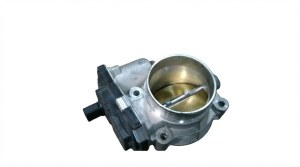
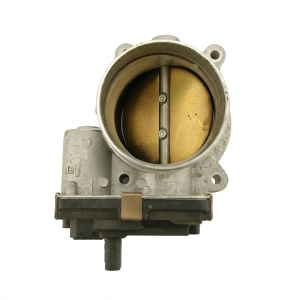
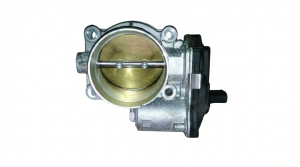
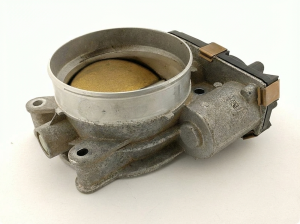
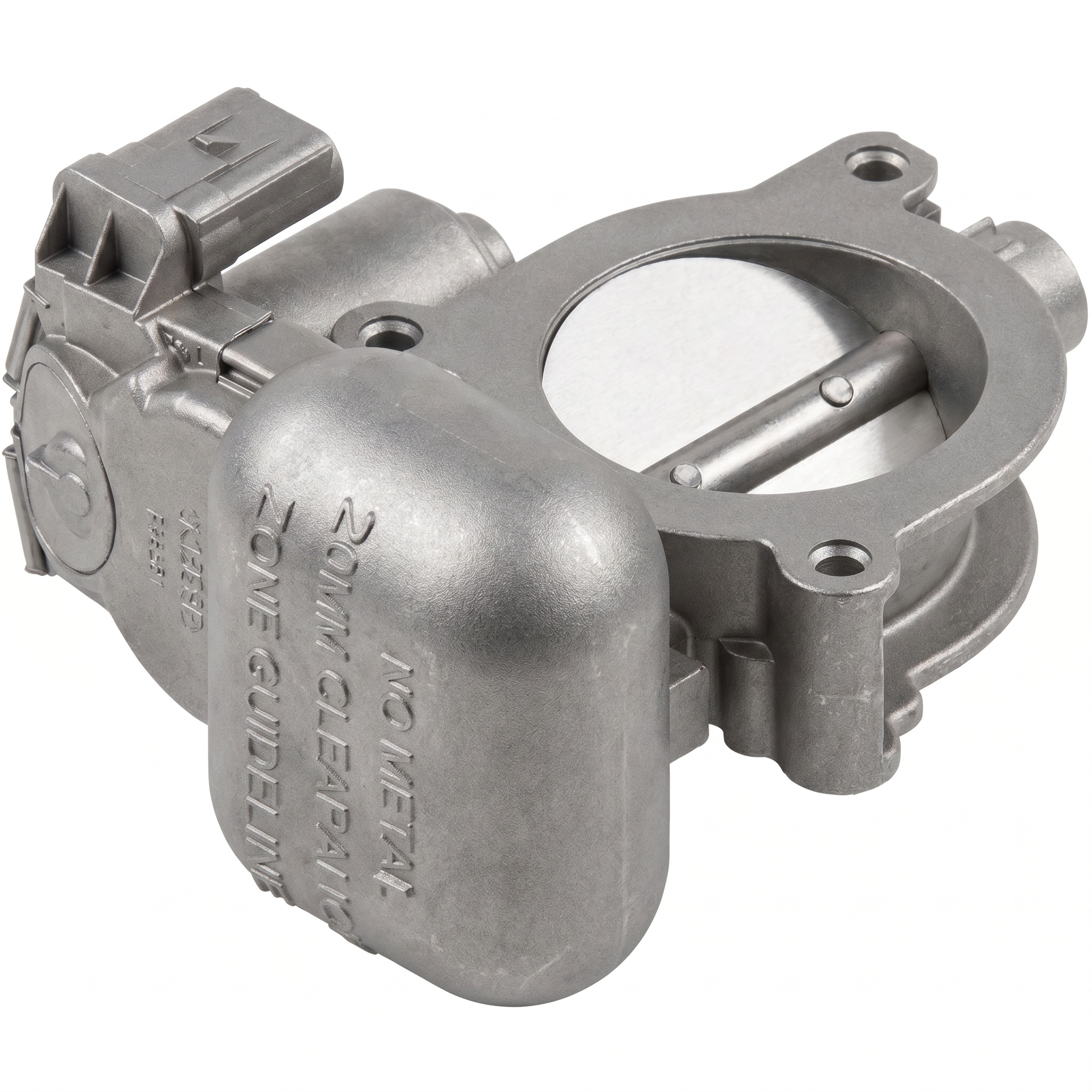
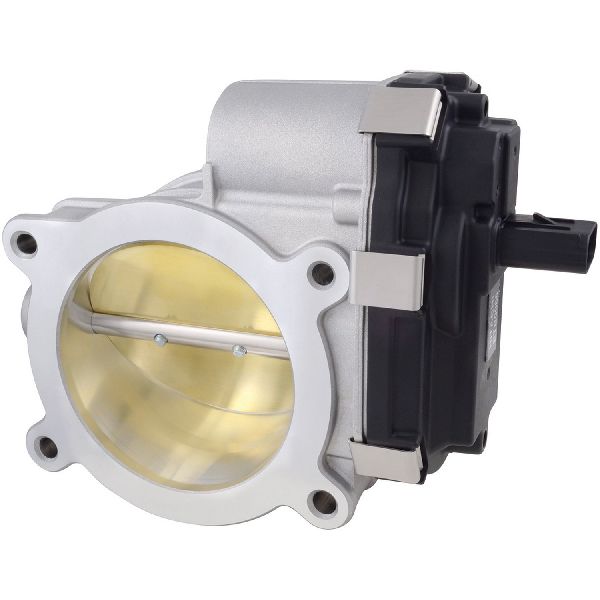
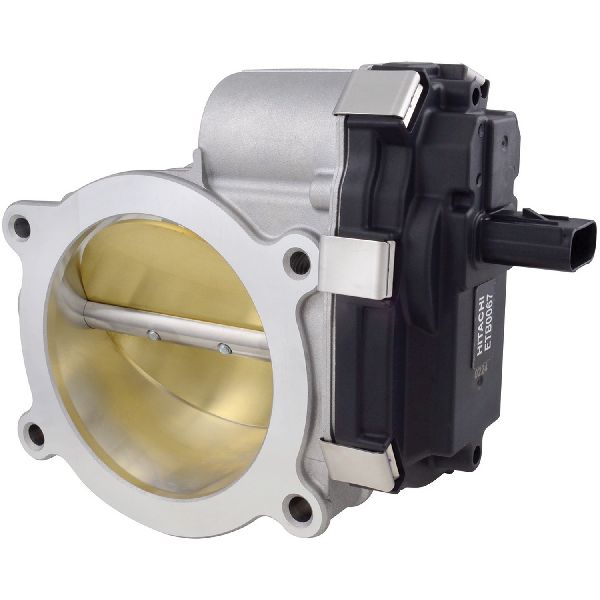
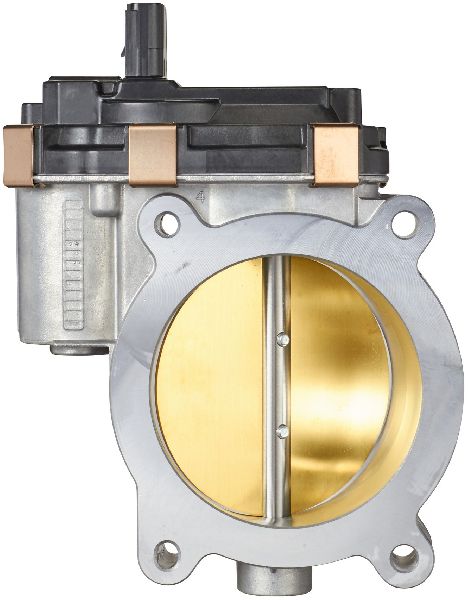
- Throttle Body Assembly
(OEM #ACDelco 12670839 (Supersedes 12629992, 12670834))— This is the most frequent point of failure for code P1516 on these trucks, as confirmed by TSBs and extensive field data. The internal electronics or motor fail over time.
Trusted brands: ACDelco, Bosch, Standard Motor Products (S20223), Cardone
OEM price range: $170-$250
Aftermarket price range: $120-$220 - Throttle Body Connector Pigtail
(OEM #ACDelco PT2628 (8-way))— If the diagnostic steps reveal broken wires or corroded terminals at the throttle body connector, replacing the pigtail is the correct repair.
Trusted brands: ACDelco, Dorman
OEM price range: $30-$50
Aftermarket price range: $20-$40
Related Codes That Often Appear With This One
- P2101 — This code, 'Throttle Actuator Control Motor Circuit Range/Performance,' is very commonly seen with P1516 and is mentioned in the same TSBs. It also points directly to a throttle body problem.
- P0068, P0121, P2119, P2176 — These are all throttle or air-flow related codes. Their presence alongside P1516 reinforces a diagnosis centered on the throttle body and its sensors.
- P2135 — Throttle/Pedal Position Sensor/Switch 'A'/'B' Voltage Correlation. While often related to the pedal sensor, it can appear with P1516 if the PCM sees a conflict between multiple throttle position inputs.
Technical Service Bulletins (TSBs) & Recalls
- PIP5660B: Communicates the possibility of a reduced power message with DTC P2101 and/or P1516 due to potential throttle body issue. Advises against replacing the PCM for this code alone.
- PIP4578B: Superseded bulletin that updated model years and information concerning idle surge, reduced engine power mode, and DTC P1516, among others, on high-mileage vehicles.
Platform-Specific Known Issues
- TSB #PIP5660B: Addresses the possibility of a reduced power message with DTC P2101 and/or P1516 due to a potential throttle body issue.
- TSB #PIP4578B: Mentions P1516 in a list of DTCs that may occur on high-mileage vehicles, leading to idle surge and reduced engine power.
- Grounding Locations: The ground points G103 and G104 are frequently cited as culprits for intermittent P1516 codes on this platform. G103 is typically on the front of the passenger-side cylinder head, while G104 is on the rear of the driver's-side head.
Mechanic-Grade Diagnostic Values
- Throttle Position Sensor 1 (TP1) Voltage — expected: Approx. 1.0V at 0% throttle, increasing to over 3.5V at 100% throttle.. Failure: Voltage is erratic, does not follow a smooth progression, or is outside the expected range.
- Throttle Position Sensor 2 (TP2) Voltage — expected: Approx. 3.8V at 0% throttle, decreasing to under 1.0V at 100% throttle.. Failure: Voltage is erratic, does not follow a smooth inverse progression compared to TP1, or is outside the expected range.
- Throttle Actuator Control (TAC) Motor Resistance — expected: Approximately 4.4 Ω. Failure: Resistance is significantly higher, lower, or open (infinite).
- TAC Module Operating Voltage — expected: Normal battery/system voltage (12.6V - 14.5V).. Failure: In some cases, the module operating at a low voltage between 4.5V and 5.0V can set a P1516 code, sometimes without any noticeable performance issues.
Scan Tool Commands That Help
- Professional Scan Tool (e.g., Snap-on, Autel, GM GDS2): Throttle Position Control / Bi-Directional Test — With the key on and engine off, this command allows the technician to manually open and close the throttle plate from 0% to 100%. Use this to verify if the actual throttle position (reported by TP sensors) matches the commanded position and to check for any sticking, lag, or audible noise from the motor.
- GM GDS2 / Snap-on Solus or similar: Idle Learn Reset / Throttle/Idle Relearn — This function must be used after cleaning or replacing the throttle body. It resets the learned idle airflow compensation values in the PCM. Failure to perform this reset can result in an incorrect idle speed and may cause other codes like P0506 or P0507 to set.
- GM GDS2 or equivalent: ECM/PCM Reprogramming — In some documented cases, particularly with the E38 ECM, an outdated software calibration can cause a disagreement between the throttle position sensors. If all hardware and wiring checks out, updating the PCM to the latest software version can be a fix.
Wiring & Ground Locations
- G103 — On the front of the passenger-side cylinder head.. This is a primary engine ground point. Corrosion or looseness here can cause a voltage drop and erratic behavior in the entire throttle control system. It is frequently cited in service information as a key location to check for P1516.
- G104 — On the rear of the driver's-side cylinder head, often where a ground strap from the firewall connects.. Similar to G103, this ground is critical for the engine electronics. A poor connection here is a well-documented cause of intermittent 'Reduced Engine Power' events and P1516 codes.
- Throttle Body Connector (X109) — The 8-pin electrical connector plugged directly into the throttle body.. This is the single point of connection for the throttle motor and both throttle position sensors. Wires can break inside the insulation within a few inches of the connector due to engine vibration and heat, causing intermittent faults that are hard to find visually.
- TPS1 Signal Wire — Dark Green wire running from the throttle body connector to the ECM.. In a rare but difficult-to-diagnose scenario, this specific wire can suffer from 'cross-talk' or signal interference from other wires in the harness, causing the PCM to see an incorrect voltage even if the wire tests good for continuity.
Real Owner Repair Stories
- Tahoe Yukon Forum & YouTube User '777boatman' (2005 Yukon Denali (similar GM platform and TAC system)) — Persistent 'Reduced Engine Power' message and P1516 code, especially when hitting bumps.
❌ Tried (didn't work) Throttle body pigtail harness replacement, Throttle Position Sensor (TPS) replacement
✅ What actually fixed it Adding multiple new, redundant 10-gauge ground wires. Key connections were made from the firewall to the engine block, TAC module to the firewall, and directly grounding the PCM chassis. This created a robust ground path that solved the intermittent voltage drop issue. - GM Forum user (2006 GMC Sierra 2500HD 6.0L) — P1516 and 'Reduced Engine Power' mode, primarily triggered at idle or when coming to a stop. Audible clicking from the throttle body before limp mode.
❌ Tried (didn't work) Cleaning the throttle body, Replacing the standalone throttle position sensor on the side of the throttle body
✅ What actually fixed it Replacing the entire throttle body assembly finally resolved the codes and symptoms. - Chevrolet Forum user (2003 Silverado 4.8L) — P1516 and 'Reduced Engine Power'
❌ Tried (didn't work) Replacing the throttle body with a remanufactured Cardone unit, Paying a GM dealer for diagnostics and a PCM software update
✅ What actually fixed it Replacing the throttle body with a new ACDelco (OEM) unit. The user suspected the aftermarket part was binding internally, causing the issue to persist.
"I Checked Everything" — The Actual Cause
- A confirmed repair story from a professional mechanic detailed a vehicle where all wiring from the throttle body to the PCM tested good for continuity, power, and ground using a headlight bulb for load testing. Despite this, the code persisted. The root cause was discovered to be 'cross-talk' where the signal from the dark green TPS1 wire was bleeding into another wire within the main harness. The fix was to bypass the factory wire by running a new, separate wire from the throttle body connector directly to the correct pin on the ECM.
When the Usual Fixes Don't Work
- While replacing the throttle body is the most common fix, a significant number of owners have found this does not resolve the issue. In many of these cases, the true root cause was a poor or intermittent ground connection. Multiple owners have reported that after replacing the throttle body and pigtail connector with no success, the problem was finally and permanently solved by cleaning all major engine/chassis grounds (especially G103 and G104) and adding new, redundant ground wires between the battery, firewall, engine block, and PCM. This suggests that a voltage drop test on the ground circuits should be considered a mandatory diagnostic step before ordering an expensive throttle body.
OEM Part Supersession History
12620292, 12631186→12679525 (ACDelco 217-3441)— GM often updates parts to improve reliability and integrate new materials or technologies. Failures of the internal position sensors in earlier designs were common.
Heads up: The part number 12670839, often listed online, is for 2.5L 4-cylinder engines and will NOT work on the 5.3L or 6.2L V8 engines. Using the wrong throttle body can cause persistent codes and driveability issues. Always verify the part number for your specific engine.
Model Year Variations Within This Range
- 2015-2018 (K2XX Platform): These models typically use the E38 Powertrain Control Module (PCM). Some P1516 issues on these trucks have been resolved by a PCM software update to the latest calibration, which addresses logic errors in how the PCM interprets sensor data.
- 2019 (T1XX Platform): The new-body-style 2019 trucks use GM's new Global B electrical architecture with different engine controllers (e.g., E90). While the throttle body failure mode is similar, diagnostic procedures and software-related fixes for the older K2XX platform may not apply.
Helpful Videos


Used OEM Parts in Stock

New Aftermarket Parts Available


The information in this article is provided for general reference and educational purposes only. Vehicle specifications, procedures, and part compatibility can vary by production date, trim level, and region. Always consult your vehicle's factory service manual and verify part numbers before purchasing or performing repairs. Safety-critical components such as airbags, seat belts, and braking systems should be installed by a qualified professional.
- Gmc SIERRA 1500:
- 🎬 Helpful Videos
- 🛍️ Shop This Part
- What's Unique About the 2015-2019 Gmc SIERRA 1500
- Diagnostic Flowchart
- Symptoms You May Notice
- Most Likely Causes
- Rare But Worth Checking
- Diagnosis Steps
- Parts You'll Likely Need
- Related Codes That Often Appear With This One
- Technical Service Bulletins (TSBs) & Recalls
- Platform-Specific Known Issues
- Mechanic-Grade Diagnostic Values
- Scan Tool Commands That Help
- Wiring & Ground Locations
- Real Owner Repair Stories
- "I Checked Everything" — The Actual Cause
- When the Usual Fixes Don't Work
- OEM Part Supersession History
- Model Year Variations Within This Range
- 🎟️ Get 5% Off