

P1516 on 2007-2014 GMC Sierra 1500: Causes and Fixes for Reduced Engine Power
On a 2007-2014 GMC Sierra, code P1516 almost always points to a problem with the electronic throttle body, its wiring, or its ground connections, causing the truck to enter 'Reduced Engine Power' mode. The most common fix is replacing the entire throttle body assembly, which costs between $150 and $300 for the part. However, checking for corroded grounds and damaged connector wires is a critical first step.
- P1516 will almost certainly put your truck in 'Reduced Engine Power' mode.
- The most likely cause is a failing electronic throttle body assembly.
- Before replacing the expensive throttle body, always inspect and clean the main engine ground connections, as this is a known GM issue and a much cheaper fix.
- Also check the wiring and connector at the throttle body for any visible damage.
- After cleaning or replacing the throttle body, a throttle relearn procedure is mandatory for the engine to idle correctly.
What's Unique About the 2007-2014 Gmc SIERRA 1500

The 2007-2014 Sierra, like most modern trucks, uses a 'drive-by-wire' system with no physical cable between the gas pedal and the throttle. This system is sensitive to electrical issues. As these GMT900-platform trucks age, they become particularly prone to problems with poor ground connections and failing electronic throttle bodies, which can trigger a P1516 code. A GM Technical Service Bulletin (TSB PIP4578B) acknowledges that this and related codes can occur on high-mileage vehicles due to carbon buildup, requiring a thorough cleaning and an idle relearn procedure. This issue is so prevalent that it has sparked discussions about class-action lawsuits among owners.
Diagnostic Flowchart

Tap your situation to follow the diagnostic path that matches what you're seeing on this vehicle.
Generation note: This year range covers two generations of the GMC Sierra: the GMT900 (2007-2013) and the first year of the K2XX (2014). While both use an electronic throttle control system, the specific part numbers for the throttle body and the locations of grounding points may differ slightly. However, the fundamental causes and diagnostic principles for P1516 are the same across both generations. The issue is very common across the entire GMT900 platform.
Symptoms You May Notice
- "Reduced Engine Power" message on the dashboard.
- Check Engine Light is on.
- Severely limited throttle response and acceleration.
- Unstable or rough idle, sometimes followed by stalling.
- Engine may stall, especially at idle.
- Audible clicking from the throttle body area just before the error occurs.
- Replacing the Accelerator Pedal Position (APP) Sensor. While the APP sensor is part of the overall throttle control system, P1516 specifically points to a discrepancy at the throttle body itself, not the pedal. Other codes, like P2138 or P2135, are more specific to the pedal sensor.
Most Likely Causes

- Faulty Throttle Body Assembly 🔴 High Probability The electronic motor and position sensors inside the throttle body assembly are a common failure point on these trucks, especially at higher mileage. The internal components wear out, leading to erratic behavior.
How to confirm: Use a scan tool to monitor the desired vs. actual throttle position. If the actual position is erratic, jumps, or doesn't respond to commands, the throttle body is the primary suspect. A definitive repair story from a 2006 Sierra 2500HD owner on GM-Trucks.com confirmed that after trying other fixes, only a new throttle body solved the P1516 and associated codes.
Typical fix: Replace the entire throttle body assembly. After replacement, a throttle relearn procedure must be performed using a capable scan tool or by following a specific manual procedure to reset idle values.
Est. part cost: $150-$350 - Damaged Wiring or Connector at Throttle Body 🟡 Medium Probability The wiring harness leading to the throttle body is subject to engine vibration and heat, which can cause wires to break internally (often within 1-4 inches of the connector) or terminal pins to lose their grip over time. The brown and yellow wires are frequently mentioned as culprits.
How to confirm: Visually inspect the wiring harness for any signs of chafing, melting, or damage. With the engine idling, gently wiggle the connector and wiring to see if it triggers the fault or makes the idle erratic. A 'drag test' on the connector terminals can confirm if they have lost tension. A user on PerformanceTrucks.net shared a common diagnostic tip: 'Pull on the Brown and yellow wires by the TB. If you feel them stretch, they are broken inside.'
Typical fix: Repair the damaged section of wire or replace the throttle body connector pigtail. Splicing in a new pigtail is a common and reliable repair.
Est. part cost: $15-$40 - Poor Ground Connections 🟡 Medium Probability GM trucks from this era are notorious for having ground points that can corrode or become loose over time, particularly grounds G103 (front passenger side cylinder head) and G104 (rear driver's side cylinder head). This creates electrical interference that disrupts the sensitive TAC system.
How to confirm: Locate the main engine and body ground points. A video guide by DrShock on YouTube provides detailed locations for GMT900 grounds. 🎬 Watch this video to find and inspect your ground locations. Inspect them for looseness and corrosion. Perform a voltage drop test on the ground circuits for the TAC module and PCM to confirm a solid connection.
Typical fix: Remove, clean with a wire brush, and securely re-tighten all relevant ground connections. Many owners add redundant ground straps from the engine block to the firewall or from the TAC module to a clean chassis point as a preventative measure. A user on Tahoe Yukon Forum provided a detailed guide on adding extra grounds to solve this exact issue.
Est. part cost: $0-$20 - Dirty or Carbon-Clogged Throttle Body ⚪ Low Probability Over time, carbon from the PCV system can build up around the throttle plate, restricting its movement and causing the motor to work harder, which the PCM can interpret as a performance error.
How to confirm: Remove the intake duct and visually inspect the throttle bore and plate for heavy carbon buildup.
Typical fix: Clean the throttle body thoroughly with a dedicated throttle body cleaner and a soft brush. Do not force the plate open by hand; have a helper turn the key to the 'on' position (engine off) and press the gas pedal to open the plate electronically. A throttle relearn procedure is required after cleaning to reset the learned idle compensation values, as stated in TSB PIP4578B. 🎬 See how to properly clean the throttle body and bore.
Est. part cost: $5-$15
Rare But Worth Checking
- Faulty Powertrain Control Module (PCM): This is rare. The PCM should only be considered after all other possibilities, including wiring and grounds, have been exhaustively checked and ruled out. A forum member on ChevroletForum.com mentioned that some complex cases required PCM replacement as part of a larger repair including the throttle body and grounds.
Diagnosis Steps
- Check for other stored DTCs. Codes like P2101, P2119, or U0107 can help confirm the issue is with the throttle system.
- Visually inspect the throttle body connector and its wiring harness for any obvious damage, chafing, or loose connections. Perform a 'wiggle test' on the harness with the engine running to see if it induces a stall or code.
- Remove the intake tube and inspect the throttle body bore for heavy carbon buildup. Clean if necessary, and perform an idle relearn procedure.
- Inspect and clean the main engine and body ground connections. For GMT900 trucks, pay special attention to G103 (front passenger head) and G104 (rear driver head). A document from Simple Engineering provides a helpful visual guide for ground locations on similar platforms.
- With a scan tool, monitor the live data for 'Commanded Throttle Position' and 'Actual Throttle Position'. Command the throttle using the scan tool's bidirectional controls or by pressing the gas pedal (engine off, key on). The actual position should closely mirror the commanded position. If it's erratic, jumps, or doesn't respond, the throttle body is the primary suspect.
- If the throttle body and grounds are good, perform a voltage and resistance check on the wiring between the PCM and the throttle body connector to rule out an open or shorted wire. Pay close attention to the brown and yellow wires.
Parts You'll Likely Need

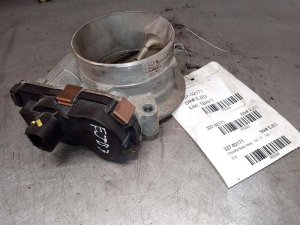
- Throttle Body Assembly
(OEM #12678223 (superseded by 12733469 for some 2014+ models))— The internal electronics of the original throttle body are the most frequent point of failure for this code. Replacement of the complete assembly is the most reliable fix.
Trusted brands: ACDelco, Bosch, Hitachi
OEM price range: $250-$350
Aftermarket price range: $150-$250 - Throttle Body Connector Pigtail
(OEM #ACDelco PT2713 / GM 13584095)— The wires near the throttle body connector are prone to breaking internally from heat and vibration. Splicing in a new pigtail is often required to fix intermittent connections.
Trusted brands: ACDelco, Dorman
OEM price range: $25-$40
Aftermarket price range: $15-$30
Related Codes That Often Appear With This One
- P2101 — This code means 'Control Module Throttle Actuator Position Performance' and is very similar to P1516, often appearing with it. It indicates a problem with the TAC motor's performance.
- P2119 — This code relates to 'Throttle Actuator Control Throttle Body Range/Performance', indicating the throttle plate's movement is not within its expected range.
- P0068 — This code indicates a correlation error between the MAP sensor, MAF sensor, and the throttle position. A faulty throttle body can provide incorrect airflow, causing this conflict.
- U0107 — This is a communication code meaning 'Lost Communication With Throttle Actuator Control Module'. It often points to a wiring, ground, or connector issue preventing the PCM from talking to the throttle body.
- P2135 — Throttle/Pedal Position Sensor/Switch 'A'/'B' Voltage Correlation. While often related to the pedal, it can be triggered alongside P1516 if the system cannot determine the source of the conflicting data, as seen in a GM-Trucks.com forum thread.
Technical Service Bulletins (TSBs) & Recalls
- PIP4578B: Addresses idle surge, reduced power, and DTCs P0068, P0121, P1516, P2101, P2119, and/or P2176 on high-mileage vehicles. The fix involves cleaning the throttle body and performing an idle learn reset.
- PIE0548: An engineering information request for 2019-2020 models regarding loose grounds at G110 and G114, showing that ground issues continue to be a focus for GM on newer generations.
Platform-Specific Known Issues
- A known issue on these trucks involves poor or corroded ground connections, which can cause a variety of difficult-to-diagnose electrical problems, including the P1516 code.
- Technical Service Bulletin PIP4578B notes that P1516 and other related throttle codes can appear on high-mileage vehicles due to carbon buildup, suggesting it's a recognized wear-and-tear issue by GM.
- The wiring harness to the throttle body is prone to internal wire breaks, particularly within a few inches of the connector, due to heat and vibration.
Mechanic-Grade Diagnostic Values
- Throttle Position Sensor (TPS) Voltage Sweep — expected: A smooth, linear voltage change from approximately 0.5V at closed throttle to 4.5V at wide-open throttle.. Failure: Any sudden drops, spikes, or dead spots in the voltage reading as the throttle plate is moved indicates a faulty sensor.
- 5-Volt Reference at Throttle Body Connector — expected: Approximately 5.0 volts on the gray wire at the throttle body connector with the key on, engine off.. Failure: Significantly lower or no voltage indicates a problem with the PCM or the wiring from the PCM.
- Voltage Drop Test on Ground Circuits — expected: A very low reading, ideally less than 0.1-0.2 volts, between the ground point (e.g., G103/G104) and the negative battery terminal.. Failure: A higher voltage reading indicates high resistance in the ground connection, which needs to be cleaned or repaired.
Scan Tool Commands That Help
- Tech2 / GDS2 / Professional Scan Tool: Bidirectional Control: Throttle Position Control — Use this function with the key on, engine off, to command the throttle plate to specific percentages (e.g., 10%, 25%, 50%). While commanding the throttle, watch the 'Actual Throttle Position' PID. It should match the commanded value precisely. This directly tests the motor, sensors, and wiring.
- Tech2 / GDS2 / Professional Scan Tool: Service Function: Idle Learn / Throttle Learn Reset — This must be performed after cleaning the throttle body or replacing the assembly. It resets the learned idle airflow compensation values in the PCM, preventing an unstable or high idle after the repair.
Wiring & Ground Locations

- G103 — On the passenger side of the engine. Typically located on the rear of the passenger side cylinder head or on the engine block nearby.. This is a primary engine harness ground. Corrosion or looseness here can cause erratic sensor readings and is specifically called out in GM service literature for causing TAC module-related codes.
- G104 — On the driver's side of the engine, typically on the rear of the driver's side cylinder head. This ground can be very difficult to access.. Like G103, this is a critical engine ground. A poor connection here can disrupt the sensitive electronics of the drive-by-wire system.
- Throttle Body Connector Wiring — The first 1-4 inches of the wiring harness connected to the throttle body.. Due to engine heat and vibration, the copper wire strands can break inside the insulation in this specific area, causing an intermittent open circuit that is not visually apparent. A 'wiggle test' of this harness section is crucial.
Real Owner Repair Stories
- Tahoe Yukon Forum user (GM SUV (Tahoe/Yukon platform, similar to Sierra)) — Recurring 'Reduced Engine Power' message and P1516 code, especially after hitting bumps.
❌ Tried (didn't work) Cleaning grounds, Replacing parts without addressing the core grounding scheme.
✅ What actually fixed it After replacing the throttle body, the user added multiple redundant 10-gauge ground wires. Key additions included: a new ground from the firewall to the engine block, from the TAC module to the firewall, and from the alternator bracket to the PCM. This extensive grounding finally provided a stable electrical environment and resolved the code. - Chevrolet Forum user (Chevrolet Truck) — Persistent 'Reduced Engine Power' and associated codes.
❌ Tried (didn't work) Unknown prior attempts.
✅ What actually fixed it The dealership ultimately built a completely new wire harness from the throttle body to the ECM using new wires and terminals, and also replaced the throttle body assembly. This indicates a severe and hard-to-find wiring failure was the root cause. - LS1Tech Forum user (Vehicle with LS2 engine swap (similar electronic throttle)) — Sporadic P1516 and 'Reduced Engine Power' message.
❌ Tried (didn't work) Using a plug-and-play adapter harness between the main harness and the throttle body.
✅ What actually fixed it The final fix was to completely remove the adapter harness and splice a new throttle body connector pigtail (GM 13584095 / ACDelco PT2713) directly into the engine harness, creating a more robust and reliable connection.
OEM Part Supersession History
12678223→12740727— Standard part revision and update by the manufacturer.
Heads up: Always verify the correct part number for a specific VIN, as there can be variations based on engine (5.3L vs 6.2L) and model year, especially around the 2014 platform change.
Model Year Variations Within This Range
- 2007-2014: While the 2007-2013 (GMT900) and 2014 (K2XX) are different platforms, the fundamental cause of P1516 (throttle body failure, wiring, grounds) and the diagnostic strategy remain consistent. The primary difference a mechanic will encounter is slightly different ground point locations and potentially different throttle body part numbers between the two generations. The core electrical principles of the TAC system are the same.
Helpful Videos
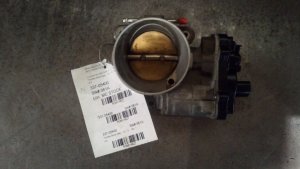
We Have This Part in Stock





The information in this article is provided for general reference and educational purposes only. Vehicle specifications, procedures, and part compatibility can vary by production date, trim level, and region. Always consult your vehicle's factory service manual and verify part numbers before purchasing or performing repairs. Safety-critical components such as airbags, seat belts, and braking systems should be installed by a qualified professional.
- Gmc SIERRA 1500:
- 🎬 Helpful Videos
- 🛍️ Shop This Part
- What's Unique About the 2007-2014 Gmc SIERRA 1500
- Diagnostic Flowchart
- Symptoms You May Notice
- Most Likely Causes
- Rare But Worth Checking
- Diagnosis Steps
- Parts You'll Likely Need
- Related Codes That Often Appear With This One
- Technical Service Bulletins (TSBs) & Recalls
- Platform-Specific Known Issues
- Mechanic-Grade Diagnostic Values
- Scan Tool Commands That Help
- Wiring & Ground Locations
- Real Owner Repair Stories
- OEM Part Supersession History
- Model Year Variations Within This Range
- 🎟️ Get 5% Off