

P1516 on 2005-2009 Chevrolet Trailblazer: Reduced Power Causes and Fixes
P1516 on a Trailblazer almost always means an issue with the electronic throttle body, triggering 'Reduced Engine Power' mode. The most common fix is cleaning the throttle body bore and plate. If that fails, inspect the wiring harness near the throttle body for broken wires or replace the entire throttle body assembly.
- P1516 will put your Trailblazer in 'Reduced Engine Power' mode; do not ignore it.
- Always start with the simplest and cheapest fix: thoroughly clean the throttle body.
- If cleaning doesn't work, carefully inspect the wiring harness at the throttle body connector for hidden breaks.
- Do not replace the gas pedal assembly; the problem is located at the engine's throttle body.
- If you replace the throttle body or disconnect the battery, a throttle relearn procedure is necessary.
What's Unique About the 2005-2009 Chevrolet TRAILBLAZER
On the GMT360 platform, which includes the 2005-2009 Trailblazer, the P1516 code is a very common issue, often related to component aging. Manufacturer bulletins point to problems on high-mileage vehicles and during very cold starts, suggesting that carbon buildup and wear-and-tear on the throttle body assembly are primary factors. [TSB #PIP4578B, TSB #PIP4573B] Owners frequently find that the wiring harness leading to the throttle body is also a weak point, with wires breaking internally from years of engine vibration, typically within 1 to 4 inches of the connector.
Diagnostic Flowchart
Tap your situation to follow the diagnostic path that matches what you're seeing on this vehicle.
Symptoms You May Notice
- "Reduced Engine Power" message on the instrument cluster.
- Check Engine Light is on.
- Severely limited throttle response and poor acceleration.
- Unstable or surging idle. [TSB #PIP4578B, 15]
- Engine may stall or be difficult to start.
- The engine may crank but fail to start at all.
- Replacing the Accelerator Pedal Position (APP) Sensor. The APP sensor is on the gas pedal and has its own set of codes (e.g., P2138). P1516 specifically points to a problem at the throttle body end of the system.
Most Likely Causes
- Dirty or Sticking Throttle Body 🔴 High Probability The PCV (Positive Crankcase Ventilation) system routes oil vapors and combustion byproducts back into the intake, which can bake onto the throttle plate and bore over time, causing it to bind and not respond correctly to PCM commands.
How to confirm: Remove the intake duct from the throttle body and visually inspect for a thick, black ring of carbon where the throttle plate closes. Manually push the plate open (with the key off) to feel for any stickiness or binding.
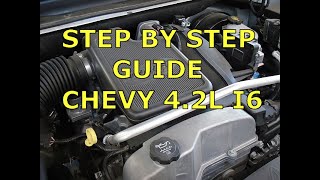
Typical fix: Thoroughly clean the throttle body bore and plate with a dedicated throttle body cleaner 🎬 Watch: Step-by-step guide to cleaning your Trailblazer throttle body. and a soft cloth or brush. A throttle relearn procedure may be required after cleaning.
Est. part cost: $5-$15 for cleaner - Damaged Wiring or Poor Connection at Throttle Body 🟡 Medium Probability Engine vibration over many years can cause the thin gauge wires in the harness to fatigue and break, often inside the insulation, right near the connector. This is a well-documented failure point on GMT360 forums.
How to confirm: With the engine running, carefully wiggle the wiring harness within 4 inches of the throttle body connector. If the engine stumbles, stalls, or the 'Reduced Power' light flickers, a wiring issue is extremely likely. Perform a 'tug test' on each individual wire at the connector to see if one stretches or pulls out, indicating an internal break.
Typical fix: Repair the broken wire(s) or replace the throttle body connector pigtail (ACDelco PT2628 is a common part).
Est. part cost: $15-$40 for a pigtail connector - Failed Throttle Body Assembly 🟡 Medium Probability
How to confirm: If cleaning the throttle body and verifying the wiring does not resolve the code, the internal actuator motor or position sensor has likely failed. The internal potentiometer contacts can wear out, or the plastic gears can strip, causing a discrepancy between the commanded and actual position. A scan tool that can command the throttle open and closed can confirm if it's responding correctly.
Typical fix: Replace the entire throttle body assembly. It is a single unit containing the motor and sensors.
Est. part cost: $120-$300 - Poor Ground Connection ⚪ Low Probability
How to confirm: This is often a cause of intermittent P1516 codes that come and go. On GM trucks, grounds G103 and G104 are frequently cited as culprits. Inspect the main engine and chassis ground straps for tightness and corrosion. A forum user on Tahoe Yukon Forum fixed their issue by adding a redundant ground wire from the firewall to the engine block and another from the TAC module to the firewall.
Typical fix: Clean and tighten all ground connections, especially G103/G104 if applicable. Add a redundant ground wire if necessary.
Est. part cost: $5-$10 for a ground strap
Rare But Worth Checking
- Failing Powertrain Control Module (PCM): This is a last resort. The PCM is the least likely component to fail. All other possibilities, especially wiring and the throttle body itself, should be exhaustively ruled out before condemning the PCM.
- Faulty Underhood Fuse Block Relay: In a documented case on GMTNation, after extensive diagnosis including cleaning the throttle body and checking wiring, the P1516 code was ultimately resolved by replacing a faulty relay (#55) in the underhood fuse block. This is an unusual but possible cause.
Diagnosis Steps
- Check for other stored trouble codes that may provide more context.
- Visually inspect the throttle body for heavy carbon buildup. This is the most common cause.
- If dirty, remove the intake boot and clean the throttle body thoroughly with appropriate cleaner. Do not spray directly on the electronics.
- Inspect the wiring harness and connector at the throttle body. Check for chafed wires, corrosion, or loose pins. Perform a wiggle test on the harness with the engine idling, focusing on the first 4 inches from the connector.
- Perform a 'tug test' on each wire at the throttle body connector to check for internal breaks.
- Inspect and clean main engine ground points, particularly G103 and G104 on GM trucks. Consider adding a redundant ground wire as a diagnostic step.
- If the problem persists after cleaning and wiring checks, perform a throttle relearn procedure. This usually involves disconnecting the battery for 30 minutes, reconnecting, and then letting the vehicle idle for several minutes.
- Using a scan tool with live data, compare the 'Commanded Throttle Position' to the 'Actual Throttle Position'. If they do not match or the actual position is erratic, the throttle body assembly is likely faulty.
- Check for good power and ground at the throttle body connector using a multimeter.
- If all other steps fail, consider replacing the throttle body assembly.
Parts You'll Likely Need
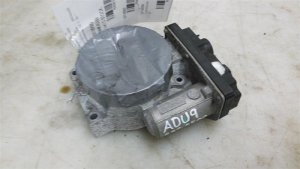
- Throttle Body Assembly
(OEM #12570800 (superseded by 19420713))— This is the most common part replaced to fix P1516 if cleaning and wiring checks fail. The assembly contains the actuator motor and position sensors which are the typical failure points.
Trusted brands: ACDelco (OEM), Hitachi (often the original supplier), Bosch, Dorman
OEM price range: $200-$300
Aftermarket price range: $120-$220 - Throttle Body Connector Pigtail
(OEM #ACDelco PT2628 (GM 13580112))— If a wiring test reveals broken wires at the connector, replacing the pigtail is the standard repair. The wires are known to break inside the insulation near the connector.
Trusted brands: ACDelco, Dorman (645-800)
OEM price range: $30-$50
Aftermarket price range: $15-$30
Related Codes That Often Appear With This One
- P2101 — Control Module Throttle Actuator Control Motor Circuit Range/Performance. This code is often logged with P1516 as it directly relates to the performance of the motor that moves the throttle plate. [TSB #PIP4578B, TSB #PIP4573B]
- P2119 — Throttle Closed Position Performance. This indicates a problem with the throttle returning to its resting position, often caused by the same carbon buildup or binding that triggers P1516. [TSB #PIP4578B, TSB #PIP4573B]
- P2176 — Throttle Actuator Control System - Idle Position Not Learned. This code is set when the PCM can't learn the minimum throttle position, which is required after a battery disconnect or throttle body cleaning/replacement. It often appears alongside P1516. [TSB #PIP4578B, TSB #PIP4573B]
- P0068 — MAP/MAF - Throttle Position Correlation. This code means the data from the mass airflow sensor doesn't align with what the throttle position sensor is reporting, which can happen when the throttle plate isn't where the computer thinks it is. [TSB #PIP4578B]
Technical Service Bulletins (TSBs) & Recalls
- PIP4578B: Mentions P1516 in relation to idle surge and reduced power on high-mileage vehicles, often accompanied by codes P0068, P0121, P2101, P2119, and/or P2176.
- PIP4573B: Notes that P1516 can be set during cold starts in extremely cold weather, along with codes P2101, P2119, and P2176. Recommends checking for a frozen PCV system, cleaning ice/sludge from the throttle body, and testing the battery.
Platform-Specific Known Issues
- High-mileage vehicles may experience this code due to carbon buildup causing idle surge or reduced power mode, as noted in TSB #PIP4578B.
- In very cold ambient temperatures (around -10°F / -23°C), the vehicle may set P1516 on a cold start, as documented in TSB #PIP4573B. This can be caused by a frozen PCV system allowing moisture/ice to form in the throttle body, or a weak battery that cannot supply enough voltage to the TAC module on a cold crank.
Mechanic-Grade Diagnostic Values
- Throttle Position Sensor 1 (TPS1) Signal Voltage — expected: About 4V with throttle closed, sweeping down towards 1V at wide-open throttle.. Failure: Voltage is erratic, does not sweep smoothly, or is out of range.
- Throttle Position Sensor 2 (TPS2) Signal Voltage — expected: About 1V with throttle closed, sweeping up towards 4V at wide-open throttle.. Failure: Voltage is the inverse of TPS1 and should sweep smoothly. Jumps or dead spots indicate a failure.
- Scan Tool Live Data: Commanded vs. Actual Throttle Position — expected: The 'Actual Throttle Position (%)' PID should closely mirror the 'Commanded Throttle Position (%)' PID with minimal lag as the accelerator is pressed.. Failure: A significant discrepancy between the two values, or the 'Actual' value sticking or jumping, points to a fault in the throttle body or wiring.
Scan Tool Commands That Help
- Tech 2 / GDS2 or equivalent bidirectional scanner: Throttle Position Control / Actuator Test — This function allows the technician to command the throttle plate to specific angles (e.g., 10%, 25%, 50%) while observing live data. It's used to confirm if the throttle body motor is responding correctly and if the position sensors are reporting accurately, isolating the fault to the throttle body itself.
- Tech 2 / GDS2 or equivalent bidirectional scanner: Idle Learn / Throttle Relearn — This service function should be performed after cleaning or replacing the throttle body. It resets the learned idle and closed-throttle position values in the PCM.
Wiring & Ground Locations
- Throttle Body Connector — The 8-pin electrical connector on the electronic throttle body assembly.. This is the primary connection for all power, ground, and signal wires for the throttle actuator motor and position sensors. Wires are known to break inside the insulation within inches of this connector. Pinout: A: (Yellow) TAC Motor Control -1, B: (Blk/Wht) Low Reference, C: (Brown) TAC Motor Control -2, D: (Black) Low Reference, E: (Lt Blu/Blk) 5V Reference, F: (Purple) TP Sensor 2 Signal, G: (Dk Grn) TP Sensor 1 Signal, H: (Grey) 5V Reference.
- G103 — On 2006 models, located on the left front of the engine compartment, on the side of the radiator support. On other GM trucks of the era, it can be on the cowl above the brake booster. On 2007+ V8 models, it's on the front of the passenger side cylinder head. Location may vary by year and engine.. This is a major chassis and PCM ground point. A poor connection here can cause intermittent and difficult-to-diagnose electronic issues, including P1516.
- G104 — On 2006 models, located on the underside of the hood, near the underhood lamp. On C/K trucks, this is also a critical ground to inspect.. While less directly tied to the PCM than G103, ensuring all major grounds are clean and tight is a critical step for resolving intermittent electronic faults like P1516.
Real Owner Repair Stories
- Tahoe Yukon Forum (2003 Chevrolet Tahoe (similar GMT800 platform)) — Intermittent 'Reduced Engine Power' message and P1516 code, especially on cold starts or when hitting bumps.
❌ Tried (didn't work) Replacing the throttle position sensor (TPS), Replacing the Throttle Actuator Control (TAC) module, Replacing the gas pedal sensor, Replacing the throttle body assembly
✅ What actually fixed it The final resolution involved two key steps: 1) Discovering and repairing a poorly crimped wire in the aftermarket throttle body pigtail connector, which was causing a loose connection. 2) Proactively adding several redundant 10-gauge ground wires between the firewall, engine block, and TAC module to ensure a robust ground path. The combination of fixing the bad pigtail and improving the grounds permanently solved the problem.
"I Checked Everything" — The Actual Cause
- While a smoke test is not applicable for this electronic code, a similar pattern exists: 'Cleaned throttle body, replaced pigtail, still have code.' In these cases, the root cause is often an intermittent electrical issue that standard tests miss. This can be a hairline fracture in a wire that only separates when hot or vibrated, or a corroded ground connection (like G103) that creates just enough voltage drop under load to trigger the fault. One owner fixed a persistent P1516 by adding multiple redundant ground straps after all other common fixes failed.
When the Usual Fixes Don't Work
- While replacing the throttle body assembly is a common and often successful fix, it is not a guaranteed solution. In a well-documented case, a vehicle owner replaced the throttle body, TPS, and TAC module, yet the P1516 code and 'Reduced Engine Power' mode persisted. The ultimate fix was found in the wiring itself: a poorly crimped connection on the aftermarket pigtail that had been previously installed. Wiggling this specific harness would trigger the fault, confirming the issue was not the new parts, but the connection to them. This was permanently resolved by repairing the crimp and adding redundant ground wires to fortify the electrical system against voltage drops. This proves that exhaustively testing the wiring and grounds should always be done, even if a new part is being installed.
OEM Part Supersession History
12570800→19420713— Standard part number update and revision by the manufacturer.
Heads up: No known incompatibilities; 19420713 is the direct replacement for 12570800 for the specified applications.
Model Year Variations Within This Range
- 2002-2005 vs 2006-2007: The wiring diagrams for the Throttle Actuator Control (TAC) system are different between these year groups. Technicians must use the correct diagram for diagnosis.
- Early models (e.g., 2003): Forum reports suggest that some earlier models in the GMT360/GMT800 family used a smaller gauge wire for the TAC module and pedal harness. GM reportedly updated to a thicker gauge wire in later models (2004+) to improve durability and prevent wire breakage issues that can lead to P1516.
Helpful Videos

Used OEM Parts in Stock



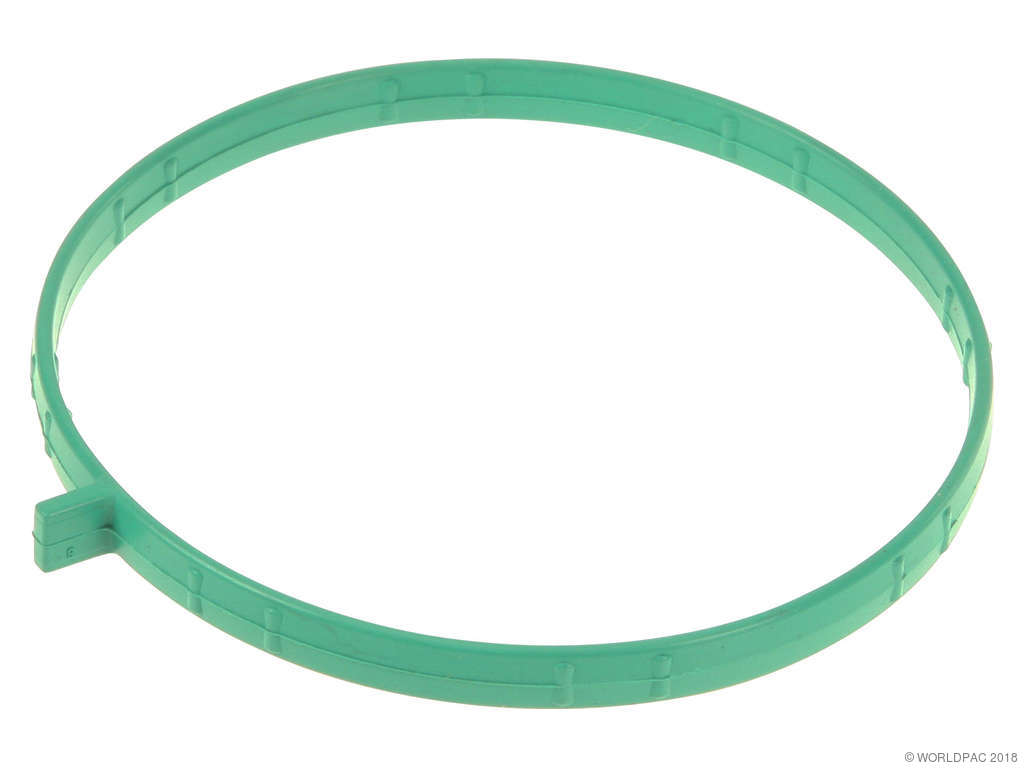
New Aftermarket Parts Available




The information in this article is provided for general reference and educational purposes only. Vehicle specifications, procedures, and part compatibility can vary by production date, trim level, and region. Always consult your vehicle's factory service manual and verify part numbers before purchasing or performing repairs. Safety-critical components such as airbags, seat belts, and braking systems should be installed by a qualified professional.
- Chevrolet TRAILBLAZER:
- 🎬 Helpful Videos
- 🛍️ Shop This Part
- What's Unique About the 2005-2009 Chevrolet TRAILBLAZER
- Diagnostic Flowchart
- Symptoms You May Notice
- Most Likely Causes
- Rare But Worth Checking
- Diagnosis Steps
- Parts You'll Likely Need
- Related Codes That Often Appear With This One
- Technical Service Bulletins (TSBs) & Recalls
- Platform-Specific Known Issues
- Mechanic-Grade Diagnostic Values
- Scan Tool Commands That Help
- Wiring & Ground Locations
- Real Owner Repair Stories
- "I Checked Everything" — The Actual Cause
- When the Usual Fixes Don't Work
- OEM Part Supersession History
- Model Year Variations Within This Range
- 🎟️ Get 5% Off